
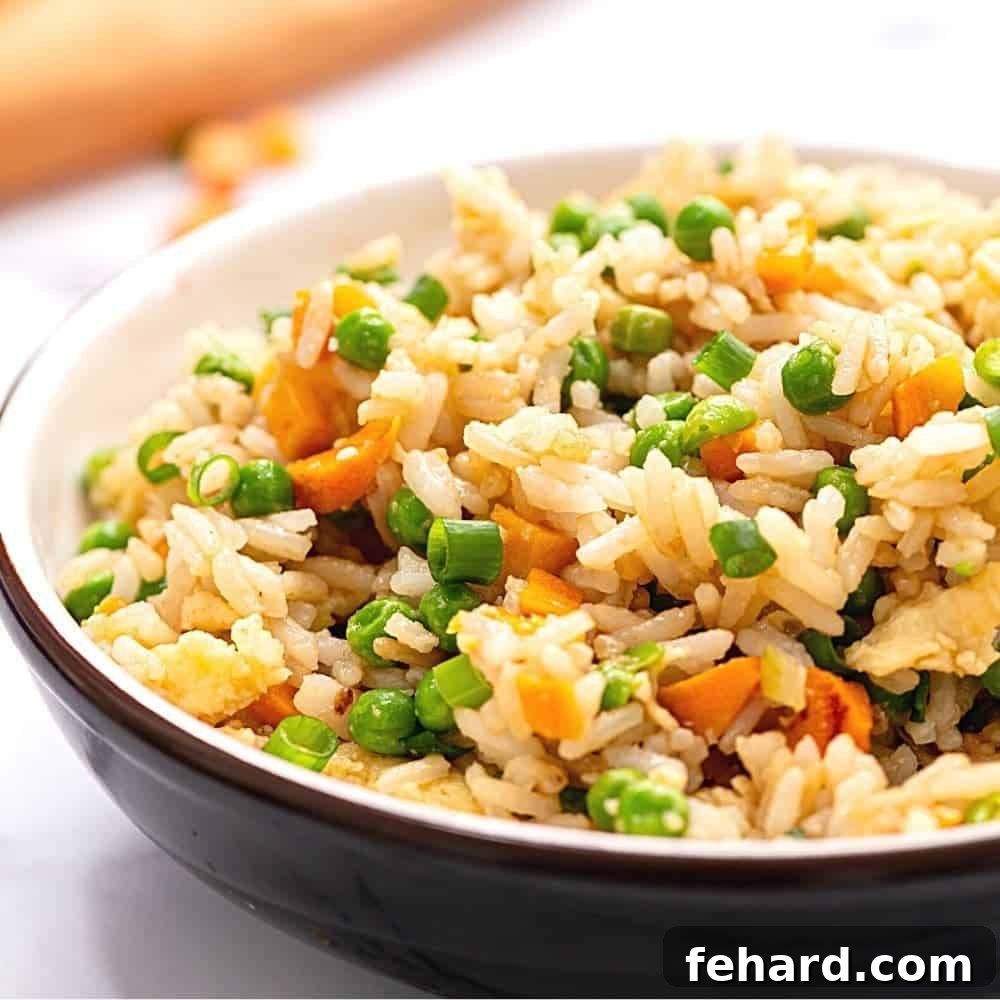
Craving the savory, satisfying flavors of your favorite Chinese takeout? Look no further! This incredible **homemade vegetable fried rice recipe** allows you to recreate that irresistible dish right in your own kitchen. In just 15 minutes, you can transform simple leftover rice into a **crave-worthy meal** that’s healthier, fresher, and bursting with flavor. Forget the wait and the mystery ingredients – get ready to master the art of **easy fried rice**!
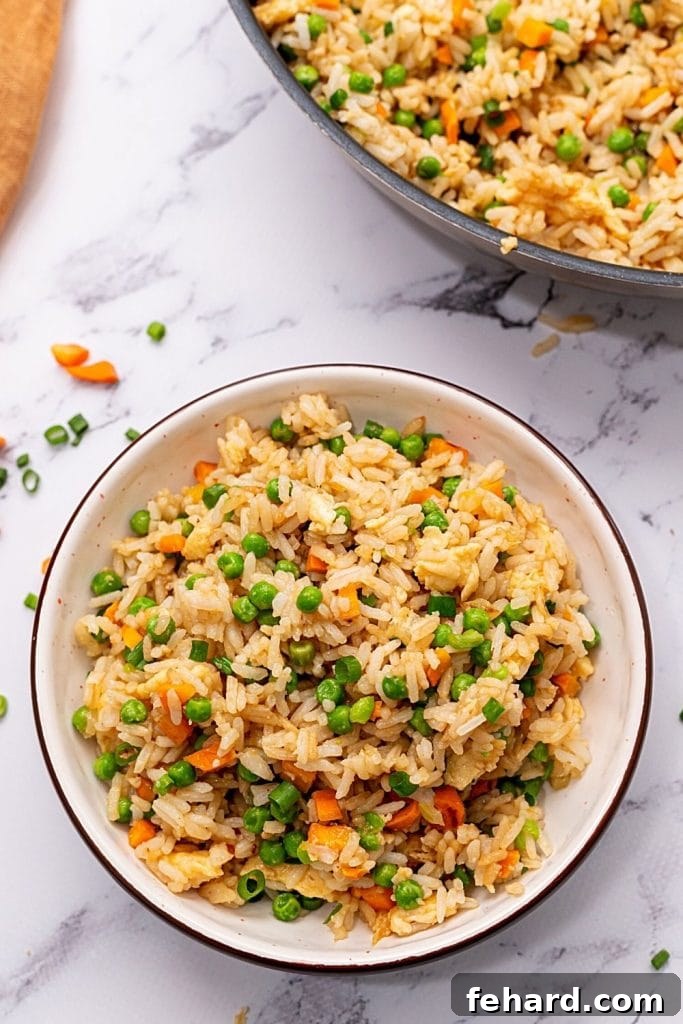
Mastering Easy Copycat Fried Rice at Home
There’s something uniquely comforting and utterly delicious about a plate of perfectly cooked fried rice. That delightful combination of salty, crispy, crunchy, soft, and buttery textures makes it a perennial favorite from Chinese takeout menus worldwide. But what if we told you that achieving that authentic, mouth-watering flavor is not only possible but incredibly easy to do right in your own kitchen?
Just like mastering other beloved Asian-inspired dishes such as Hunan beef, shrimp lo mein, or orange chicken at home, creating fantastic fried rice is surprisingly straightforward. In fact, opting for a homemade approach offers numerous advantages that make it the superior choice:
- Unbeatable Speed: A 15-Minute Marvel. This fried rice isn’t just easy; it’s astonishingly fast. Leveraging the magic of leftover rice, crisp-tender vegetables, and scrambled eggs (if you choose to include them), along with a perfectly balanced blend of seasonings, this dish comes together in a flash. It’s the ultimate humble yet powerfully flavorful meal, ideal for busy weeknights when you need dinner on the table without delay.
- The Perfect Solution for Leftovers. One of the secret weapons for truly great fried rice is cold, day-old rice. This recipe provides an excellent opportunity to repurpose any rice you have lingering in the fridge, preventing food waste and ensuring a superior texture. Furthermore, it’s a fantastic canvas for incorporating any leftover vegetables that need using up, turning potential waste into a culinary triumph.
- A Healthier Take on a Classic. Homemade fried rice puts you in complete control of the ingredients, which means you can significantly reduce the fat and sodium content often found in typical restaurant versions. By choosing fresh, wholesome components and managing portion sizes, you can enjoy this beloved dish guilt-free, knowing exactly what’s in it.
- Infinitely Customizable to Your Taste and Diet. When you’re the chef, the possibilities are endless. This recipe is wonderfully adaptable, allowing you to tailor it to specific dietary needs or personal preferences. Easily make it egg-free, dairy-free, or gluten-free with simple substitutions. Want more protein? Add chicken or shrimp. Craving extra veggies? Pile them in! This flexibility ensures everyone at your table can enjoy a personalized, delicious meal.
We are thrilled for you to embark on this culinary journey. Happy Cooking! xo Kristen
Essential Ingredients & Equipment for Authentic Fried Rice
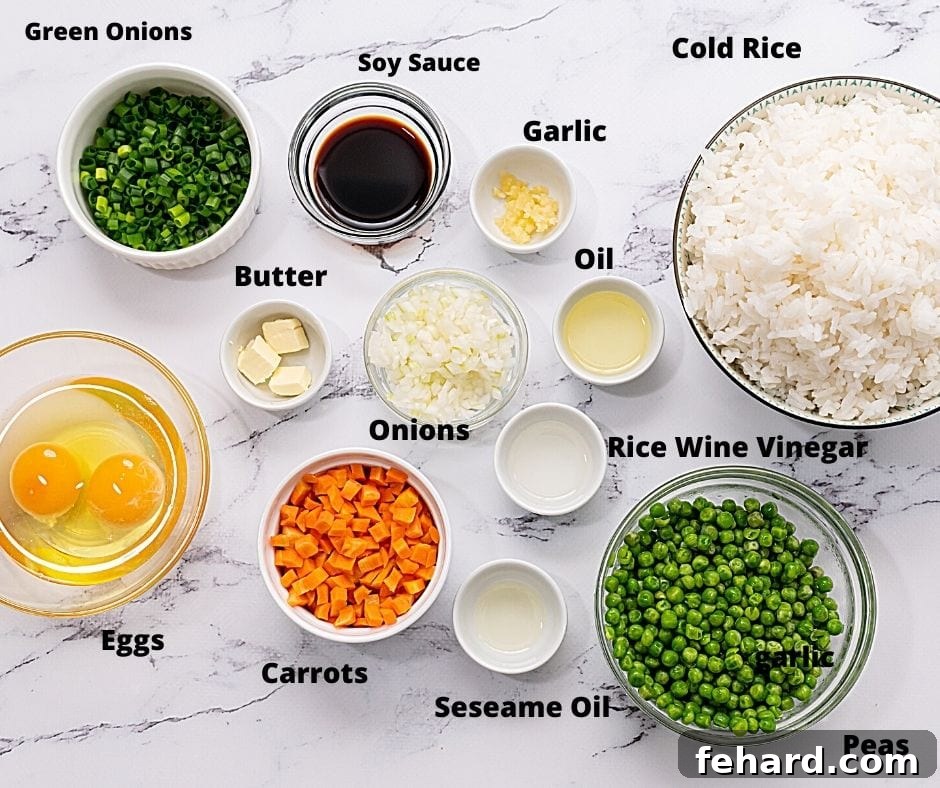
Creating truly great fried rice starts with understanding the role each ingredient plays and having the right tools. While this recipe is incredibly forgiving, paying attention to these details will elevate your dish from good to exceptional:
- Cold Cooked Rice: The Cornerstone of Crispy Fried Rice. This is perhaps the most critical component. It is absolutely essential to use cooked rice that has been thoroughly chilled, ideally for at least 24 hours. Cold rice is firmer and drier, which allows it to fry properly in the pan, developing those coveted slightly crispy edges without clumping together into a starchy, gooey mess. Freshly cooked, warm rice still contains too much moisture, which will steam rather than fry. Any leftover cooled rice works wonderfully, from Instant Pot Brown Rice to Instant Pot Jasmine Rice. If you don’t have leftover rice, you can cook it fresh, then spread it thinly on a baking sheet and refrigerate or even freeze it for 15-20 minutes to speed up the chilling process.
- Vibrant Vegetables: A Canvas for Color and Nutrition. While traditional fried rice often features a simple medley of white and green onions, finely diced carrots, and bright green peas, don’t hesitate to get creative! This dish is incredibly versatile, welcoming a wide array of vegetables you might have on hand. Consider adding shredded cabbage for a satisfying crunch, sugar snap peas for a touch of sweetness, edamame for extra protein, bell peppers, broccoli florets, or even mushrooms. Ensure all vegetables are cut into small, uniform pieces to ensure even and quick cooking.
- Eggs: The Classic Addition (and Easily Omissible). Scrambled eggs are a hallmark of authentic takeout fried rice, adding a wonderful richness, texture, and a boost of protein. They cook quickly and can be easily removed or omitted entirely for an egg-free or vegan version of the dish.
- The Right Fats: Butter for Flavor, Oil for High Heat. For scrambling the eggs, a touch of butter imparts a luxurious, rich flavor that’s hard to beat. However, when it comes to frying the rice and vegetables, you need an oil with a high smoke point. This ensures the ingredients cook at a sufficiently high temperature without burning or imparting off-flavors. Excellent choices include peanut oil (for an authentic Asian flavor profile), avocado oil, or canola oil. Avoid olive oil or butter for the main stir-fry as their lower smoke points will lead to burning and bitterness.
- Flavor Boosters: The Simple Yet Potent Seasonings. The beauty of fried rice seasoning lies in its simplicity and profound impact. Minced garlic creates a warm, aromatic base and depth of flavor. Toasted sesame oil, added at the very end, provides a wonderfully nutty aroma and richness. Rice wine vinegar adds a subtle tang that brightens and balances all the savory notes, making the flavors truly pop. And, of course, reduced-sodium soy sauce provides the essential umami and saltiness.
- The Versatile Pan: No Wok, No Problem! While a wok is iconic for stir-frying, you absolutely do not need one to make fantastic homemade fried rice. A large (10-12 inch) non-stick or stainless steel skillet with high sides works perfectly. The key is to use a pan that’s large enough to comfortably hold all your ingredients without overcrowding, allowing them to fry rather than steam.
Crafting the Perfect Fried Rice: Your Step-by-Step Guide
The journey to perfect homemade fried rice is a quick and rewarding one. Follow these detailed steps to achieve a dish that’s full of flavor and texture. You’ll find the precise ingredient quantities and comprehensive instructions in the full recipe card at the bottom of this page.
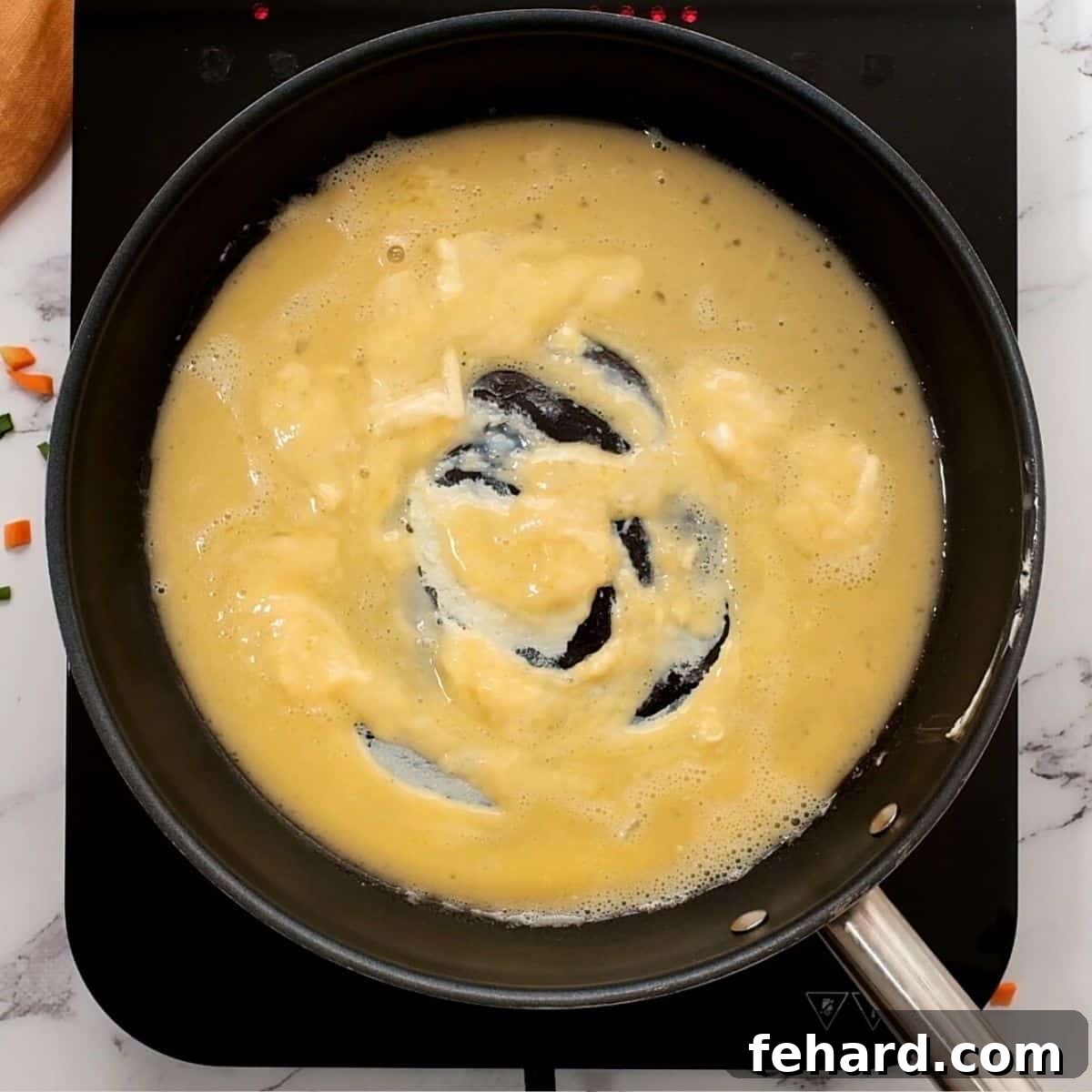
- Step 1: Scrambling the Eggs to Perfection. If you’re including eggs in your fried rice, this is where you begin. Heat your large non-stick or stainless steel skillet over medium heat and add about ½ tablespoon of unsalted butter, allowing it to melt evenly. While the butter melts, lightly whisk your two large eggs in a small bowl until the yolks and whites are just combined. Pour the whisked eggs into the hot skillet. Cook the eggs, gently stirring and breaking them into small pieces, until they are just set and still slightly soft, typically 1-2 minutes. Overcooking here will result in rubbery eggs. Once cooked, remove the scrambled eggs from the pan and set them aside on a plate; they’ll be added back in later.
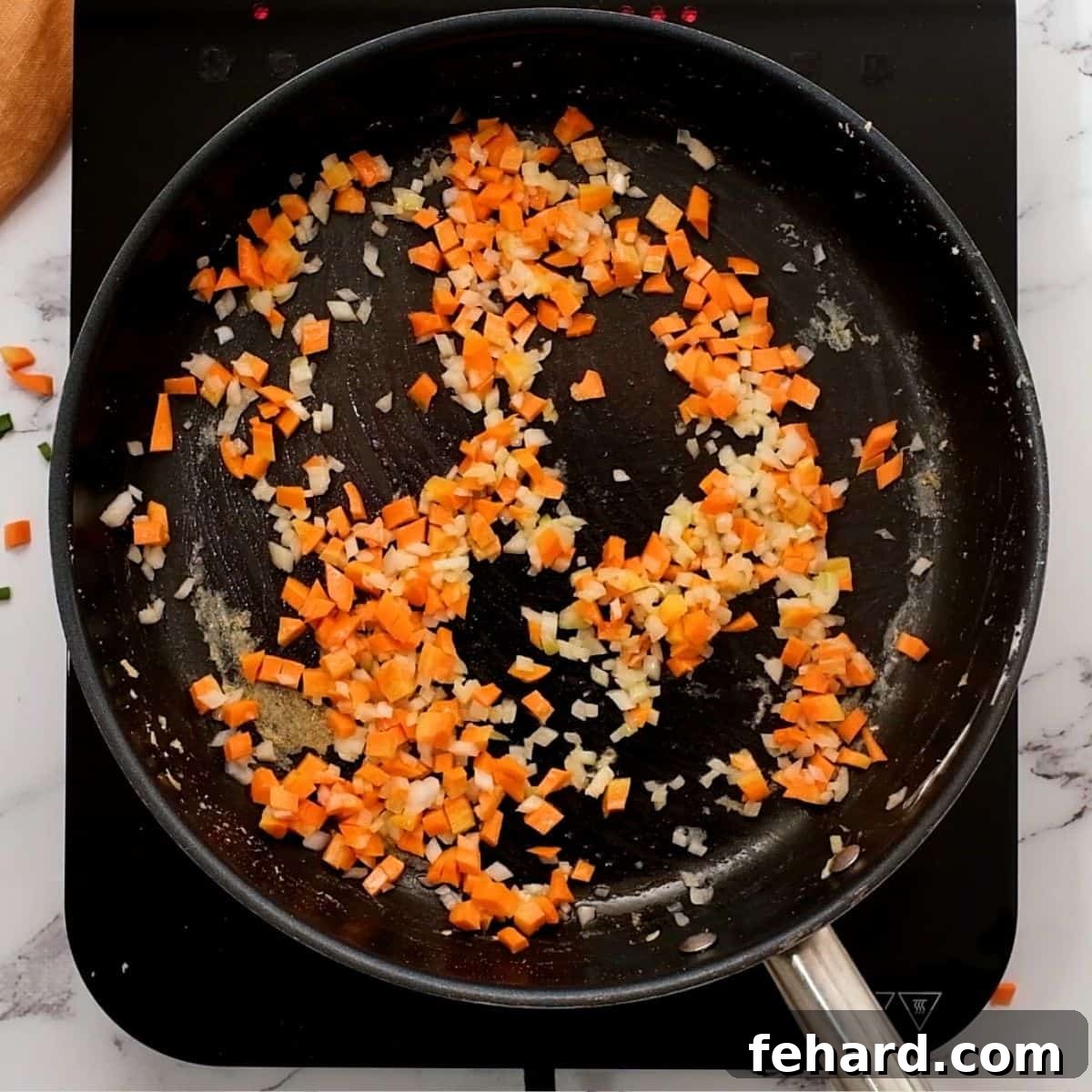
- Step 2: Building the Aromatic Vegetable Base. Into the same skillet (no need to clean it!), add ½ tablespoon of your chosen high-smoke point oil. Increase the heat slightly to medium-high. Once the oil shimmers, add the minced yellow onion and shredded carrots. Sauté these vegetables, stirring frequently, for about 3 minutes, or until the onions begin to soften and become translucent, and the carrots are slightly tender-crisp. Now, add the minced garlic. Sauté for just another 15-30 seconds, stirring constantly. The goal is to toast the garlic until it becomes fragrant, not to burn it, which can happen very quickly.
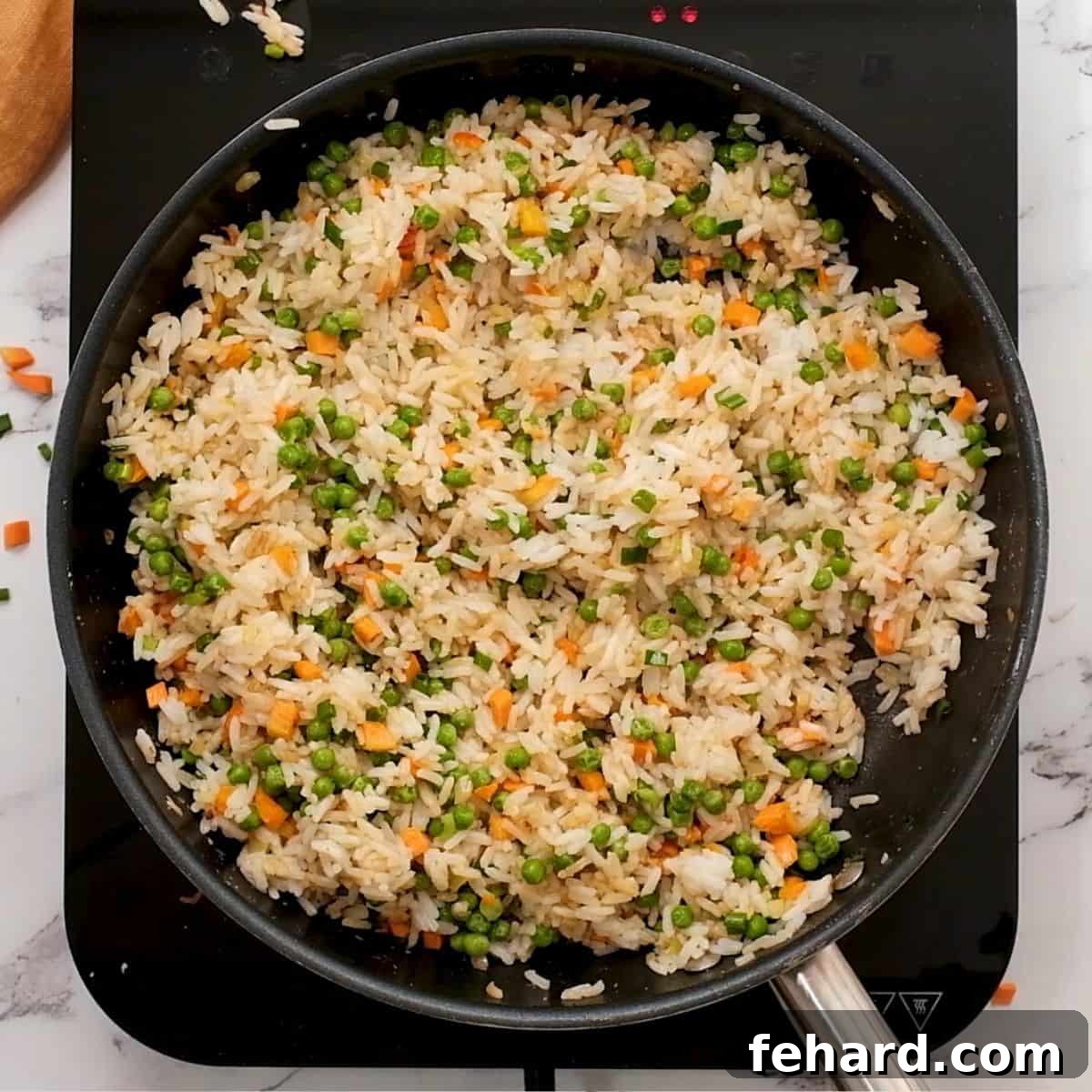
- Step 3: Frying the Rice and Adding Key Flavors. Once your vegetables are softened and fragrant, use your spatula to push them to one side of the skillet, creating an open space. Increase the heat to high and add the remaining ½ tablespoon of oil to the empty side of the pan. Let it heat for about 10-15 seconds until very hot. Then, add the 3 cups of cold, leftover rice, the defrosted frozen peas, the finely sliced green onions, and 1 tablespoon of reduced-sodium soy sauce. Immediately begin to stir everything together, ensuring the rice, vegetables, and seasonings are evenly distributed throughout the pan. Continue to stir constantly and vigorously over high heat. This high heat and continuous motion are crucial for achieving that authentic fried rice texture – slightly browned and crispy grains of rice, rather than mushy or sticky ones. This process typically takes 3-5 minutes, depending on the heat of your stove and the size of your skillet. You should hear the rice sizzle and see some grains start to brown.
- Step 4: The Finishing Touches and Final Seasoning. As soon as the rice is nicely browned and thoroughly warmed through, turn off the heat. Now, it’s time to bring everything together. Stir in the remaining 1 tablespoon of reduced-sodium soy sauce, the reserved cooked scrambled eggs, and the optional ½ teaspoon of toasted sesame oil (which adds a wonderful aromatic finish). Mix gently but thoroughly to incorporate all the ingredients evenly. Taste the fried rice and adjust the seasonings if needed. You might want a little more soy sauce, a dash of rice wine vinegar, or even a pinch of black pepper.
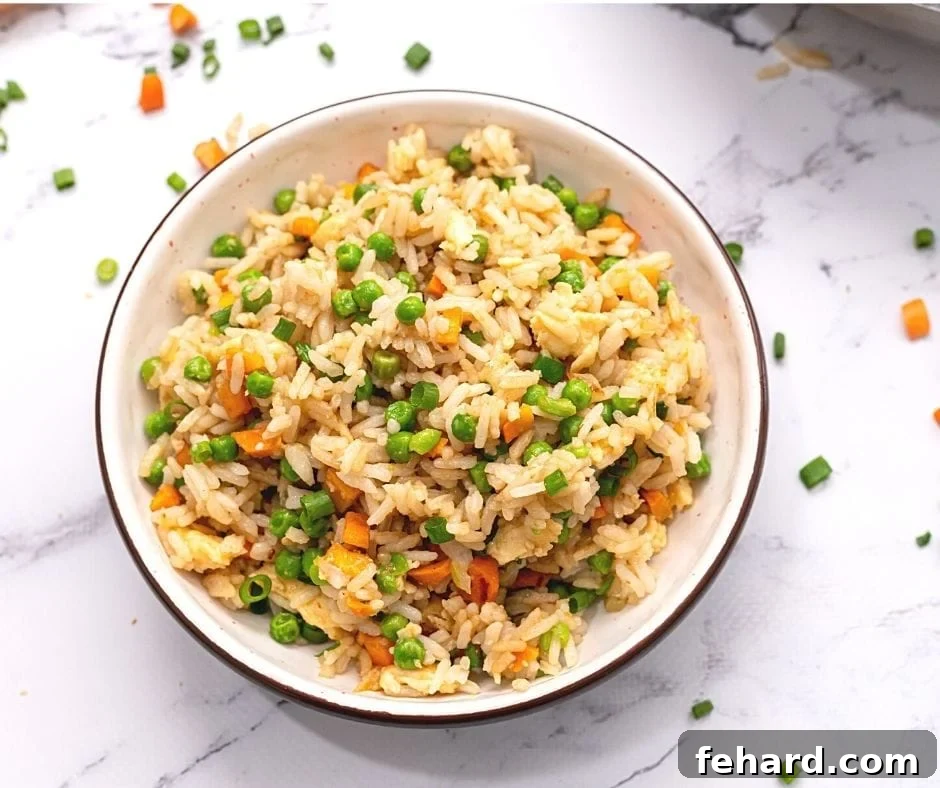
Garnish with extra sliced green onions for a fresh pop of color and flavor. Serve immediately with additional soy sauce and a side of Sriracha for those who enjoy a little heat.
Unlock the Secrets to Restaurant-Quality Fried Rice at Home
While this recipe is incredibly straightforward, a few expert tips can make all the difference, transforming your homemade dish into something truly spectacular, reminiscent of your favorite Chinese restaurant fare:
- The Golden Rule: Always Use COLD Rice. We cannot stress this enough. This is the single most important tip for achieving perfectly textured fried rice. Warm or hot rice will release too much moisture and starch when it hits the hot pan, resulting in a sticky, mushy, and unappealing dish. Cold rice, on the other hand, has dried out and firmed up, allowing the individual grains to separate, absorb the flavors, and develop that desirable slightly crispy, chewy texture when fried. If you’re in a pinch and don’t have leftover cold rice, cook fresh rice, then immediately spread it in a thin layer on a sheet pan. Pop it into the freezer for 15 to 20 minutes (or the refrigerator for at least an hour) to rapidly chill and dry it out.
- Layer Your Seasonings, But Skip the Extra Salt. The foundation of fried rice flavor comes from soy sauce, which provides a rich, complex umami depth and ample saltiness. Rather than adding all the soy sauce at once, or reaching for additional table salt, incorporate it in stages. Add an initial amount to the rice and vegetables, and then taste before adding more at the very end if needed. This layering technique allows the flavors to build without becoming overwhelmingly salty. The various components like garlic, sesame oil, and rice wine vinegar also contribute significantly to the overall taste, so let them shine.
- Work Fast, Stay Focused: High Heat is Your Friend. The beauty of fried rice lies in its rapid cooking process. This means it requires your full attention! Ensure your pan is screaming hot before adding the rice, and keep stirring constantly. This high heat helps to achieve browning and crispiness without overcooking the vegetables or drying out the rice. If you walk away, even for a moment, the high heat can quickly lead to burning. Embrace the fast-paced nature of stir-frying!
- Don’t Overcrowd Your Pan. This is another common pitfall. If you try to cook too much fried rice in one batch, the ingredients will steam instead of fry. This lowers the temperature of the pan, releases too much moisture, and prevents the rice from getting crispy. If you’re cooking for a crowd, it’s always better to work in two smaller batches. This ensures each ingredient gets adequate heat and space to achieve that perfect fried texture.
- Prep Everything Before You Start. Because fried rice cooks so quickly over high heat, there’s no time to chop vegetables or measure seasonings once you’ve started. This cooking style exemplifies the “mise en place” philosophy: have all your ingredients prepped, measured, and ready to go by your stovetop before you even turn on the burner. This makes the cooking process smooth, efficient, and stress-free.
Delicious Variations & Customizations for Your Fried Rice
One of the joys of cooking at home is the ability to adapt recipes to suit your preferences, dietary needs, or whatever ingredients you have on hand. This basic vegetable fried rice recipe serves as a fantastic foundation for endless delicious variations:
- Chicken Fried Rice: A Hearty Addition. To transform this into a satisfying chicken fried rice, you have a couple of options. You can sauté small, cubed pieces of boneless, skinless chicken breast along with the onions and carrots at the beginning of the recipe, ensuring the chicken is fully cooked through before proceeding with the rice. Alternatively, if you have leftover cooked chicken, simply fold it in during the final step when you add the eggs and sesame oil. Cooked chicken, like leftover grilled teriyaki chicken, slow cooker teriyaki chicken, or honey soy marinated chicken thighs, works exceptionally well here, adding both flavor and convenience.
- Shrimp Fried Rice: Quick and Flavorful Seafood. If you’re a fan of shrimp, this modification is incredibly fast. Heat a large skillet over high heat with a bit of your high-smoke point oil. Add 8 ounces of small, peeled, deveined shrimp (tails removed for easier eating) and sauté for just 30 seconds per side until they turn pink and opaque. Immediately remove the shrimp from the skillet and set aside. Then, proceed with cooking the eggs, followed by the vegetables and rice as directed. Add the cooked shrimp back into the fried rice right before serving to keep them tender and prevent overcooking.
- Beef Fried Rice: Savory and Satisfying. For beef lovers, thinly sliced beef (such as sirloin or flank steak) can be quickly stir-fried before the vegetables. Marinating the beef briefly in a little soy sauce and cornstarch can tenderize it and add extra flavor. Cook the beef until just browned, remove it, and then proceed with the recipe, adding the beef back in at the end with the eggs.
- Egg-Free Fried Rice: Simple Omission. If you have an egg allergy or simply prefer your fried rice without eggs, it’s incredibly easy to adapt. Just omit the eggs entirely from the recipe. The dish will still be packed with flavor from the vegetables and seasonings.
- Vegan Fried Rice: Plant-Based Perfection. To make this recipe completely vegan, simply omit the eggs. Ensure you use a high-smoke point oil (like canola or avocado oil) instead of butter for cooking any components. You can also add cubed firm or extra-firm tofu, pressed and lightly fried until golden, for a fantastic protein boost.
- Gluten-Free Fried Rice: Easy Swap. For a gluten-free version, the main adjustment is the soy sauce. Simply substitute regular soy sauce with a gluten-free tamari or a certified gluten-free soy sauce. All other ingredients are naturally gluten-free.
Explore More Favorite Copycat Take-Out Recipes
Love recreating your restaurant favorites at home? Here are more delicious recipes to add to your repertoire:
- Easy Thai Noodles
- Stir-Fried Chicken and Bok Choy
- Instant Pot Mongolian Beef
- Baked Egg Rolls
- Spring Rolls
- Instant Pot Beef and Broccoli
Loved this recipe?
If you enjoyed making and eating this delicious homemade fried rice, please consider leaving a comment and a 5-star review below. Your feedback helps us share more amazing recipes!
You can sign up for our newsletter to get delicious recipes like this one sent straight to your email.
5 from 12 votes
Quick & Easy Vegetable Fried Rice
Kristen Chidsey
6
5 mins
10 mins
15 mins
Leave a Review
Print Recipe
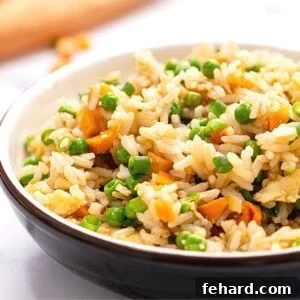
This easy vegetable fried rice recipe is your ticket to a healthier, faster, and more delicious takeout experience at home. Ready in just 15 minutes, it’s perfect for busy nights and wonderfully customizable!
Video Tutorial (if available)
A video tutorial for this recipe would typically appear here.
Ingredients
- ½ tablespoon unsalted butter
- 2 large eggs, whisked
- 1 tablespoon high-smoke point oil (such as peanut, avocado, or canola), divided
- ¼ cup minced yellow onion
- ½ cup shredded carrots
- ½ teaspoon minced garlic, optional but recommended
- 3 cups leftover COLD rice (day-old is best)
- 3 green onions, finely sliced (white and green parts), plus more for topping
- 1 cup frozen peas, defrosted
- 1 tablespoon reduced-sodium soy sauce, for the rice
- ½ tablespoon rice wine vinegar
- ½ teaspoon toasted sesame oil, optional (for finishing)
- 1 tablespoon reduced-sodium soy sauce, for serving (optional, to taste)
Instructions
-
Heat a large non-stick or stainless steel skillet over medium heat. Add ½ tablespoon of unsalted butter and allow it to melt completely, coating the bottom of the pan.
-
In a small bowl, whisk the 2 large eggs until the yolks and whites are fully combined. Pour the whisked eggs into the skillet with the melted butter. Cook the eggs, stirring frequently with a spatula, to form fluffy scrambled eggs. Once the eggs are just set (this should take about 1-2 minutes), remove them from the skillet and place them onto a clean plate. Set aside.
-
Add ½ tablespoon of your chosen high-smoke point oil to the same skillet. Increase the heat to medium-high. Add the ¼ cup minced yellow onion and ½ cup shredded carrots. Sauté, stirring frequently, for approximately 3 minutes, or until the onions begin to soften and become translucent. Next, stir in the ½ teaspoon minced garlic. Continue to sauté for just 15-30 seconds, stirring constantly, until the garlic is fragrant. Be very careful not to burn the garlic, as it can turn bitter quickly.
-
Use your spatula to push the sautéed vegetables to one side of the skillet, creating an empty space. Increase the heat to high and add the remaining ½ tablespoon of oil to the empty side of the pan. Allow it to heat for 10-15 seconds until very hot. Then, add the 3 cups of leftover COLD rice, 3 finely sliced green onions, 1 cup defrosted frozen peas, 1 tablespoon reduced-sodium soy sauce, and ½ tablespoon rice wine vinegar. Immediately begin to stir everything together vigorously, ensuring all ingredients are evenly distributed throughout the hot pan. Continue to stir constantly over high heat until the rice has begun to brown and get slightly crispy, and is thoroughly warmed through. This crucial step typically takes 3-5 minutes, depending on the heat of your stove and the size of your skillet.
-
Once the rice is perfectly fried and heated, turn off the heat. Stir in the remaining 1 tablespoon reduced-sodium soy sauce (if desired for extra flavor), the cooked scrambled eggs, and the optional ½ teaspoon toasted sesame oil. Mix gently to combine all ingredients until evenly distributed.
-
Taste the fried rice and adjust seasonings as needed. Serve immediately, garnished with additional sliced green onions. Offer extra soy sauce and Sriracha on the side for those who prefer more flavor or heat. Enjoy your homemade masterpiece!
Recipe Notes & Expert Tips
The Importance of Cold Rice: For truly authentic, non-mushy fried rice, using cold, day-old rice is paramount. The drier texture ensures grains fry up individually and crisp beautifully. If you’re short on time, spread freshly cooked rice on a baking sheet and chill it in the freezer for 15-20 minutes before use.
Choosing Your Oil: While butter adds rich flavor to the eggs, ensure you use a high-smoke point oil like peanut, avocado, or canola for the main stir-frying. If these aren’t available, standard vegetable oil will also work effectively.
Dairy-Free Adaptations: To make this recipe dairy-free, simply swap the unsalted butter for canola oil or a non-dairy butter alternative when scrambling the eggs.
Vegetable Freedom: This recipe is incredibly adaptable! Feel free to incorporate your favorite vegetables or whatever you have on hand. Common additions include shredded cabbage, tender sugar snap peas, protein-rich edamame, finely diced bell peppers, or even mushrooms.
Optimal Storage & Reheating: Leftover fried rice can be stored safely in an airtight container in the refrigerator for up to 3 days. For the best reheating results and to maintain its delightful texture, heat a skillet over high heat. Add the leftover fried rice and sauté quickly for 2-3 minutes, stirring constantly, until it’s thoroughly heated through and some grains have re-crisped. Important Food Safety Note: If the rice you initially used was older than 24 hours when you started this recipe, it’s safest to consume any leftover fried rice within 24-48 hours of making it to prevent bacterial growth.
Nutrition Information (Approximate Per Serving)
Carbohydrates: 33g
Protein: 6g
Fat: 6g
Saturated Fat: 2g
Cholesterol: 60mg
Sodium: 225mg
Potassium: 175mg
Fiber: 3g
Sugar: 2g
Vitamin A: 2164IU
Vitamin C: 12mg
Calcium: 22mg
Iron: 2mg
Nutrition information is automatically calculated, so should only be used as an approximation.
Tried this amazing recipe?
Share your culinary creation! Mention @amindfullmom or tag #amindfullmom on Instagram. We’d love to see your delicious results!