
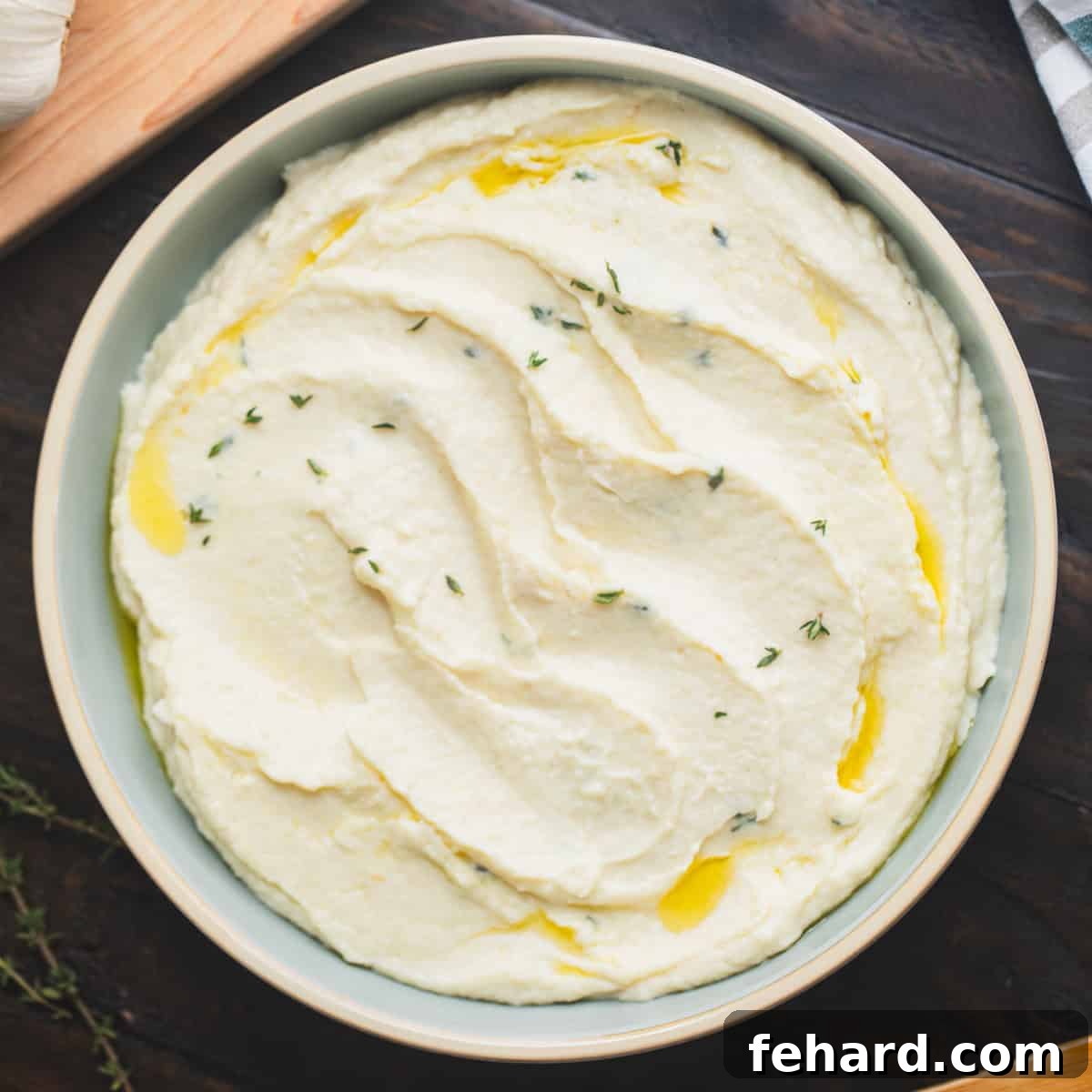
Creamy Parsnip Puree with Garlic and Horseradish: A Standout Side Dish
Transform your meal with this incredibly creamy, rich, and surprisingly simple Parsnip Puree featuring the delightful additions of garlic and horseradish. This isn’t just another side dish; it’s a culinary experience that will captivate your taste buds. Don’t be skeptical about the horseradish – its subtle kick is the secret ingredient that perfectly balances the natural sweetness and earthy, nutty flavor of the parsnips, elevating this puree from good to unforgettable.
This luxurious Parsnip Puree is incredibly versatile, making it a perfect accompaniment to a wide range of main courses. Whether you’re preparing Instant Pot Pork Chops, hearty Chopped Steaks, or a classic Roast Turkey, this creamy side adds an elegant touch and a burst of unique flavor.
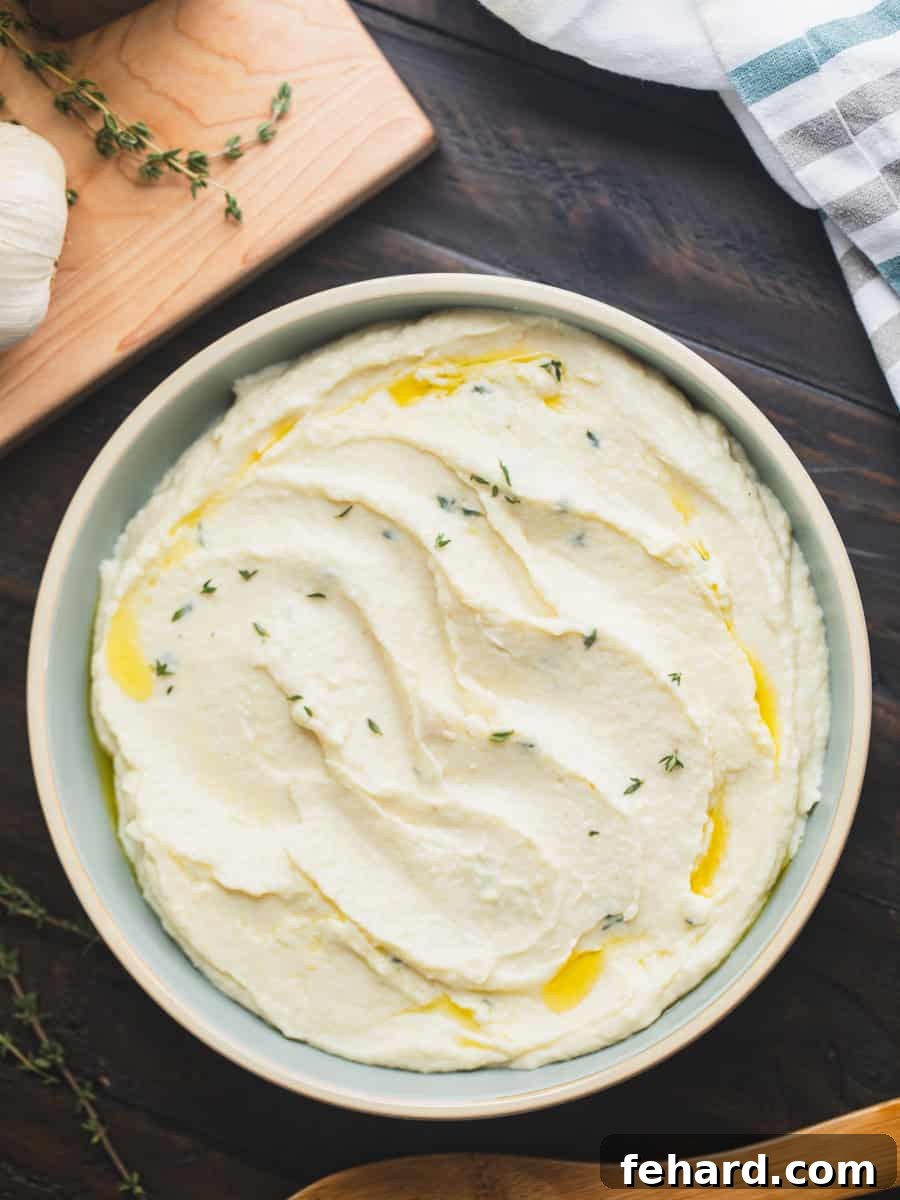
The Unforgettable Twist: Horseradish in Parsnip Puree
Parsnips have always held a special place in my heart due to their distinct nutty and subtly sweet profile, reminiscent of a sweeter, earthier carrot. However, it was a memorable dish from one of my favorite restaurants—creamed parsnips with horseradish—that truly transformed my appreciation for this humble root vegetable into an ardent passion. The unique combination sounded intriguing, and after experiencing its depth of flavor, I knew I had to recreate it for everyone to enjoy.
Horseradish, a powerful root with a sharp, pungent flavor, might seem like an unexpected pairing for the delicate sweetness of parsnips. Yet, its vibrant, slightly spicy notes cut through the richness and balance the inherent sweetness of the parsnips in a way that is nothing short of brilliant. It adds a sophisticated layer of complexity without overpowering the main flavor, making each spoonful truly memorable. If you’ve ever enjoyed the zing horseradish brings to a classic Instant Pot Pot Roast or the bright lift it gives to egg salad, you already know its potential to elevate familiar dishes.
This Parsnip Puree isn’t just a side; it’s a revelation. The creamy texture, achieved by pureeing instead of mashing, combines with the mellowed garlic and the bright, zesty horseradish to create a harmonious symphony of flavors. It’s a sophisticated alternative to traditional mashed potatoes, offering a lighter, yet equally satisfying, experience. Prepare to be amazed by how this seemingly simple addition transforms a basic root vegetable into a dish that’s both comforting and exciting. Trust me, after just one bite, you’ll understand the magic!
Essential Ingredients for the Best Parsnip Puree
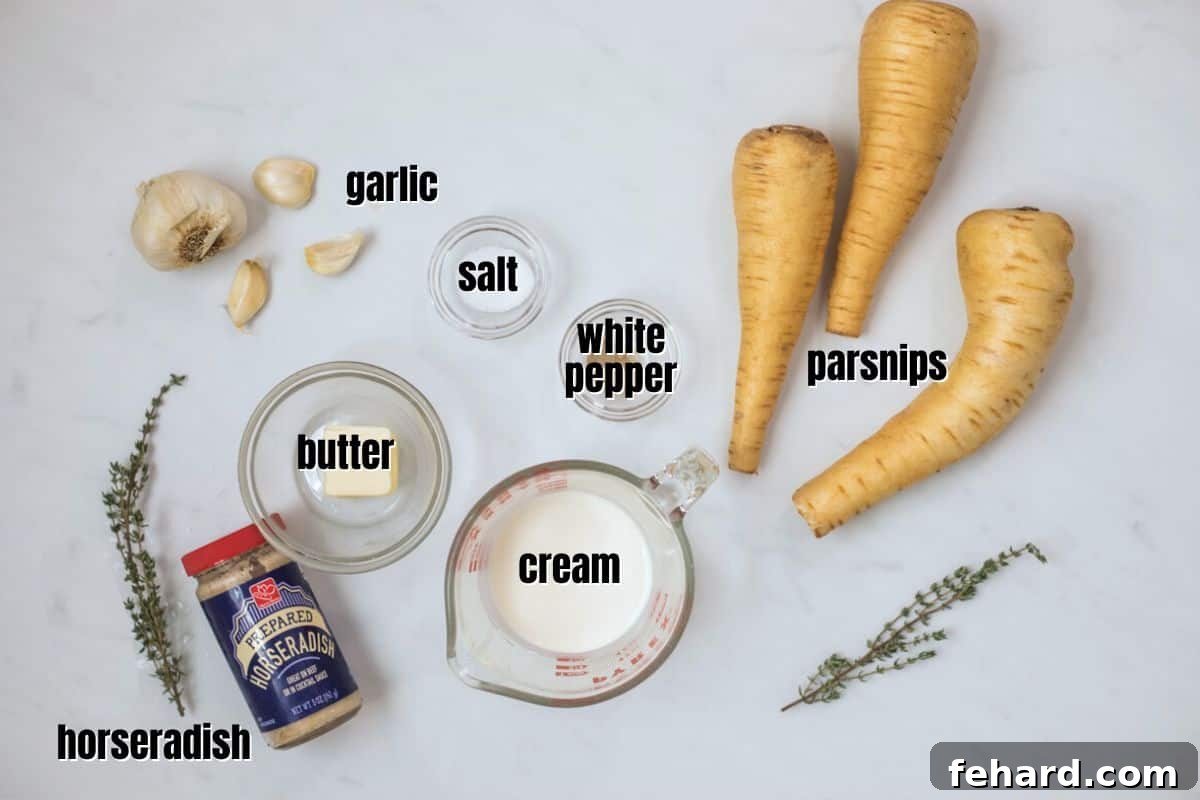
- Parsnips: These long, white root vegetables, resembling large carrots, are available year-round but are at their peak sweetness and flavor from fall through winter. When selecting parsnips, look for ones that are firm to the touch, smooth, and free from blemishes or soft spots. Smaller to medium parsnips tend to be more tender and less fibrous than very large ones.
- Garlic: For this recipe, we utilize whole garlic cloves, boiled alongside the parsnips. This method is crucial as it mellows the garlic’s pungent raw flavor, transforming it into a sweet, buttery, and almost roasted-like essence. Avoid using garlic powder or pre-minced garlic, as they won’t provide the same depth and nuanced flavor.
- Horseradish: While it may sound like a bold addition, a small amount of prepared horseradish (ensure it’s not horseradish sauce, which often contains cream or mayonnaise) is key. Its bright, piquant flavor cuts through the sweetness and richness of the parsnips and cream, providing a refreshing counterpoint that truly elevates the dish without making it overtly spicy. It’s the balancing act that makes this puree special.
- Kosher Salt: Salt is essential both for seasoning the boiling water, which infuses flavor into the parsnips as they cook, and for seasoning the finished puree to taste. Kosher salt provides a clean, pure saltiness without any metallic notes.
- White Pepper: I highly recommend white pepper for this puree, not just for its subtle, earthy brightness that complements the parsnips, but also because it won’t introduce black flecks, maintaining the puree’s pristine, creamy color. If white pepper isn’t available, you can omit it or use a very tiny pinch of freshly ground black pepper, understanding it will slightly alter the visual appeal.
- Butter: Unsalted butter is preferred, allowing you to control the overall saltiness of the dish. Adding it at room temperature ensures it emulsifies smoothly into the hot puree, contributing to its rich, velvety texture and enhancing the parsnips’ nutty undertones.
- Heavy Cream: Cream is what gives this puree its luxurious, silken texture and rich mouthfeel. For the ultimate indulgence, heavy cream is best. However, if you’re looking for a slightly lighter option or just using what you have, half-and-half or even whole milk can be substituted. Keep in mind that using lighter dairy may result in a slightly less rich consistency, so adjust accordingly.
Crafting the Perfect Parsnip Puree: Step-by-Step Guide
Achieving a perfectly smooth, flavorful, and creamy parsnip puree is simpler than you might think. Follow these detailed steps and expert tips to ensure flawless results every time. You’ll find specific ingredient quantities and comprehensive instructions in the recipe card at the bottom of this page, but these additional pointers will help you master the technique.
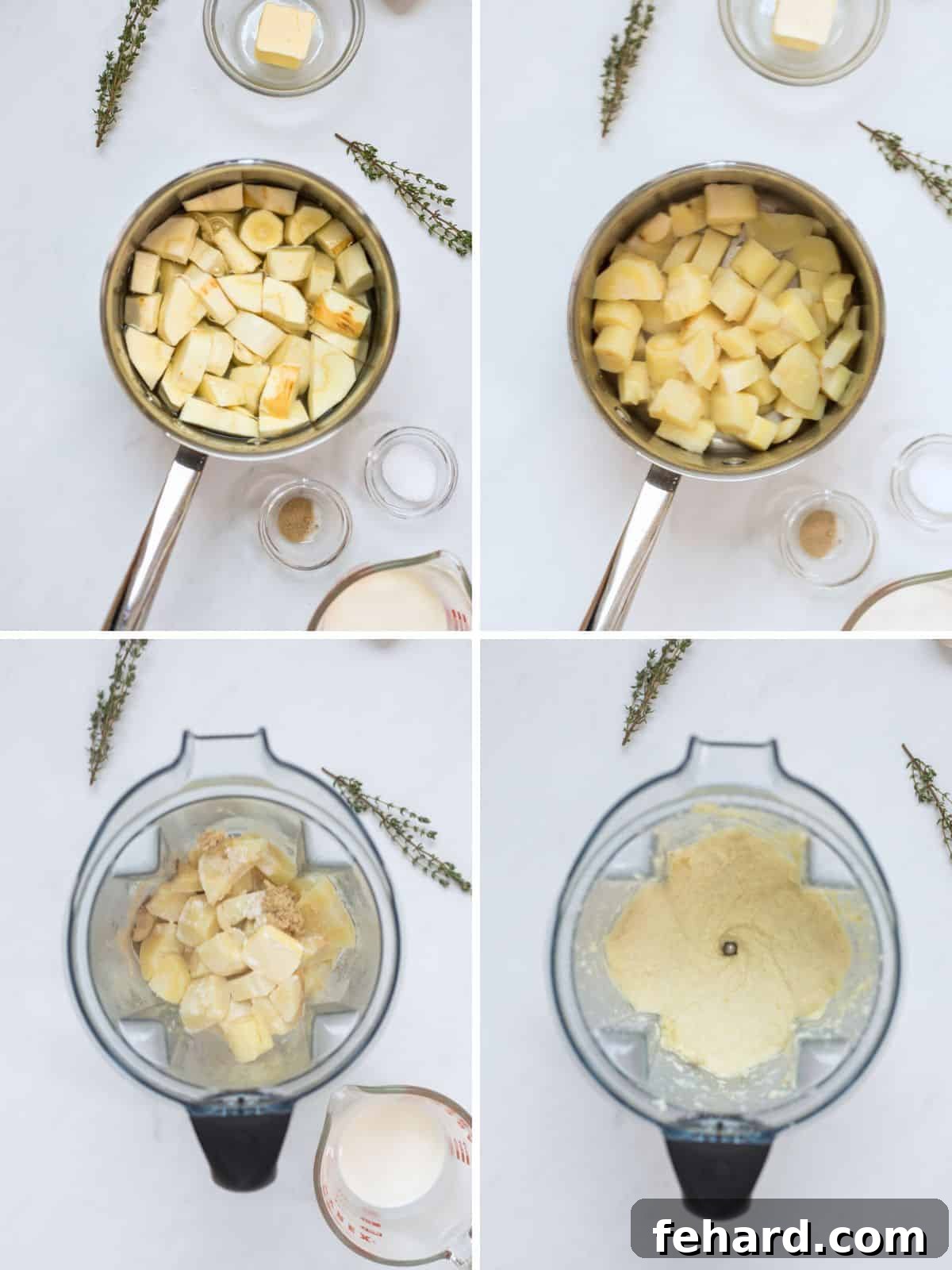
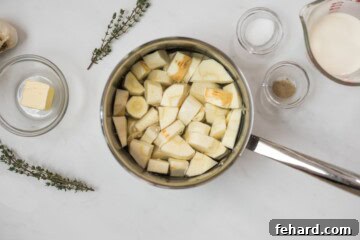
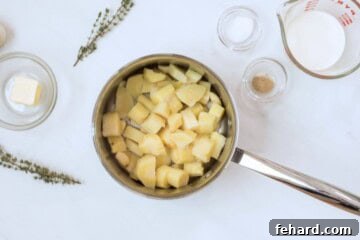
- Prepare and Boil Parsnips and Garlic in Heavily Salted Water: Begin by peeling your parsnips thoroughly, then cut them into uniform 1-inch chunks. This even sizing is crucial for consistent cooking, ensuring all pieces become tender at the same rate. Peel the garlic cloves but leave them whole. Place the diced parsnips and whole garlic cloves into a large, heavy-bottomed pot. Season the water generously with kosher salt—think of it like cooking pasta water; it should taste seasoned. Cover the vegetables with water by about an inch. Bring the pot to a rolling boil over medium-high heat, then reduce the heat to a gentle simmer. Continue to cook for approximately 12-18 minutes, or until the parsnips are absolutely fork-tender, easily pierced with no resistance. Overcooked parsnips are better than undercooked ones for a smooth puree, but avoid mushy, waterlogged vegetables.
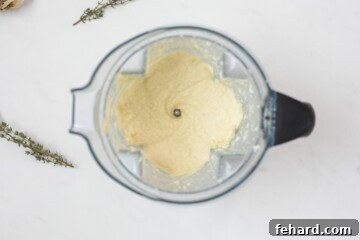
- Achieve Silky Smoothness by Pureeing: Unlike potatoes, which can become gummy if over-processed, parsnips thrive when blended or pureed. For the absolute silkiest, most luxurious texture, opt for an immersion blender, a high-speed blender, or a food processor fitted with an S-blade. Drain the cooked parsnips and garlic thoroughly before transferring them to your chosen blending device. Add the room-temperature unsalted butter, heavy cream (start with the smaller amount and add more if needed), white pepper, and prepared horseradish. Begin blending on low and gradually increase the speed until the mixture is completely smooth and free of lumps. If the puree appears too thick or stiff, gradually add a little more cream (or milk/broth if making it dairy-free) until it reaches your desired creamy consistency.
- Taste, Adjust, and Serve Immediately: Once the parsnip puree is beautifully smooth, give it a taste. This is your chance to perfect the seasoning. Depending on how much salt you used in the boiling water and your personal preference, you may want to add an additional ½ to 1 teaspoon of kosher salt. Adjust for creaminess as well, adding a touch more cream if you prefer a looser texture. Once seasoned to perfection, transfer the hot puree to a warmed serving bowl. For an extra touch of elegance and flavor, you can drizzle a little extra virgin olive oil over the top and garnish with fresh herbs like thyme or rosemary. Serve your exquisite Creamy Parsnip Puree immediately while it’s warm and luscious.
Creative Recipe Modifications and Variations
- Swap Butter for Olive Oil: While butter undeniably enhances the nutty depth of parsnips and adds a luxurious richness, extra virgin olive oil is an excellent alternative. It provides a slightly different, perhaps fresher, flavor profile while still contributing to the puree’s creamy texture. This substitution is also ideal for making the dish dairy-free.
- Add Fresh Herbs for Aroma and Color: To introduce an additional layer of aromatic complexity and a beautiful visual appeal, consider stirring in or sprinkling fresh herbs over the finished puree. Finely chopped fresh rosemary or fresh thyme leaves are particularly complementary to parsnips, offering earthy, fragrant notes that elevate the entire dish. A sprinkle of fresh chives or parsley can also add a bright, herbaceous finish.
- Make it Dairy-Free: It’s entirely possible to enjoy this delicious parsnip puree even if you’re avoiding dairy. Simply replace the heavy cream with an equal amount of flavorful vegetable broth or rich chicken stock. For the butter, swap it out for extra virgin olive oil or a dairy-free butter alternative. The resulting puree will still be wonderfully creamy and packed with flavor.
- Omit Garlic: If garlic isn’t to your liking or you simply prefer a more straightforward parsnip flavor, feel free to omit it from the recipe. The puree will still be incredibly tasty, showcasing the pure essence of the parsnips and the intriguing hint of horseradish.
- Spice it Up: For those who love a bit more heat, consider adding a pinch of cayenne pepper or a dash of hot sauce to the puree. This will amplify the subtle warmth from the horseradish and create an even more dynamic flavor profile.
- Introduce Other Root Vegetables: While this recipe celebrates parsnips, you could experiment by adding a small amount of other root vegetables. A single peeled and diced potato boiled alongside the parsnips can add extra creaminess, or a small carrot can enhance the natural sweetness. Just ensure all vegetables are cooked to the same tenderness for smooth blending.
Storage and Reheating Guidelines for Convenience
This parsnip puree is not only delicious fresh but also stores and reheats beautifully, making it an excellent option for meal prepping or enjoying leftovers. Proper storage ensures its creamy texture and vibrant flavor are preserved.
- Refrigerate: To store your leftover parsnip puree, first allow it to cool slightly to room temperature. Then, transfer it to an airtight container and place it in the refrigerator. It will maintain its quality and delicious flavor for up to 4 days.
- Freeze: For longer storage, parsnip puree freezes exceptionally well. Once the puree has completely cooled, transfer it to a freezer-safe container or a heavy-duty freezer bag, ensuring to remove as much air as possible to prevent freezer burn. Store in the freezer for up to 1 month. When you’re ready to enjoy it, defrost the puree overnight in the refrigerator before reheating.
- Reheat: Reheating parsnip puree is straightforward. For best results, place the desired amount in a small saucepan over low heat on the stovetop. To restore its creamy consistency, add a splash of cream, milk, or even vegetable broth as it heats, stirring frequently to prevent sticking and ensure even warming. Alternatively, you can reheat it in the microwave. Transfer the puree to a heat-safe bowl, cover it with a damp paper towel (to help retain moisture), and microwave in 60-second intervals, stirring thoroughly after each interval, until it is warmed through to your satisfaction.
Perfect Pairings: Serving Suggestions for Parsnip Puree
This garlic and horseradish-infused parsnip puree is remarkably versatile, making it equally suitable for an elegant holiday feast or a simple weeknight family dinner. Its rich flavor and silky texture complement a wide array of main dishes. Here are a few of my favorite entrees that truly shine when paired with this creamy pureed parsnip delight:
- Blackened Chicken: The spicy char of blackened chicken finds a wonderful counterpart in the cool, creamy, and subtly piquant parsnip puree.
- New York Strip Roast: The richness of a perfectly cooked strip roast is beautifully complemented by the earthy sweetness and horseradish kick of the puree.
- Bacon-Wrapped Pork Tenderloin: The savory, smoky notes of bacon and tender pork are enhanced by the creamy, complex flavors of the parsnip side.
- Glazed Baked Ham: The sweet and savory profile of a glazed ham is an ideal match for the parsnips’ natural sweetness and the horseradish’s balancing sharpness.
- Homemade Rotisserie Chicken: A simple, flavorful roasted chicken becomes an elevated meal when served alongside this sophisticated vegetable puree.
Pro Tip: For an incredible appetizer or a more robust side dish, try serving perfectly roasted Brussels sprouts nestled on a bed of this creamy parsnip puree. The combination of textures and flavors is absolutely divine—prepare for a burst of “WOW!” from your guests!
We love hearing from you! If you tried this recipe and enjoyed it, please consider leaving a review and comment below. Your feedback helps us and other home cooks discover new favorites!
Parsnip Puree
Kristen Chidsey
6
10 minutes
20 minutes
30 minutes
Rate

Ingredients
0.5x
1x
2x
3x
1x
2x
3x
- 2 pounds parsnips, ~3-4 medium parsnips, peeled and cut into 1″ chunks
- 3 cloves garlic, peeled
- 2 tablespoons unsalted butter, at room temperature
- ¼-⅓ cup heavy cream , or half and half or whole milk
- ½ teaspoon kosher salt , + more for boiling parsnips and to taste
- ¼ teaspoon white pepper, optional
- 1 teaspoon prepared horseradish
Instructions
-
Place 2 pounds parsnips, 3 cloves garlic, and 1 teaspoon kosher salt in a heavy-bottom large saucepan. Add enough tap water to cover the parsnips by 1-inch.

-
Bring to a boil over medium-high heat. Once boiling, reduce the heat to medium-low and simmer for 12-18 minutes, until the parsnips are fork-tender.
-
Drain the parsnips and garlic and then transfer to a high-speed blender or a food processor fitted with an s-blade. Add in 2 tablespoons unsalted butter, ¼-⅓ cup heavy cream , ¼ teaspoon white pepper, 1 teaspoon prepared horseradish, and ½ teaspoon kosher salt . Blend until smooth, adding in additional cream if needed to loosen.
-
Taste the mixture and add in ½-1 teaspoon of additional salt if needed. Transfer to a serving dish, top with a drizzle of olive oil and fresh thyme leaves (if desired) and serve immediately.

Notes
Make it Dairy-Free: Use vegetable broth or chicken stock in place of cream and olive oil in place of butter.
Storage: Allow the puree to cool slightly, transfer to an airtight container, and store in the fridge for up to 4 days. Alternatively, freeze in a freezer-safe container for up to 1 month.
Reheat: Place the parsnip puree in a small saucepan with a bit of cream to loosen and heat over low heat until warm, stirring often. Alternatively, place the parsnip puree in a heat-safe bowl, cover with a damp paper towel, and reheat in the microwave in 60-second intervals, stirring after each interval, until warmed through.
Nutrition
Carbohydrates: 28g
Protein: 2g
Fat: 8g
Saturated Fat: 5g
Polyunsaturated Fat: 0.4g
Monounsaturated Fat: 2g
Trans Fat: 0.2g
Cholesterol: 22mg
Sodium: 310mg
Potassium: 586mg
Fiber: 7g
Sugar: 8g
Vitamin A: 266IU
Vitamin C: 26mg
Calcium: 66mg
Iron: 1mg
Nutrition information is automatically calculated and should only be used as an approximation.
Tried this recipe?Mention @amindfullmom or tag #amindfullmom!