
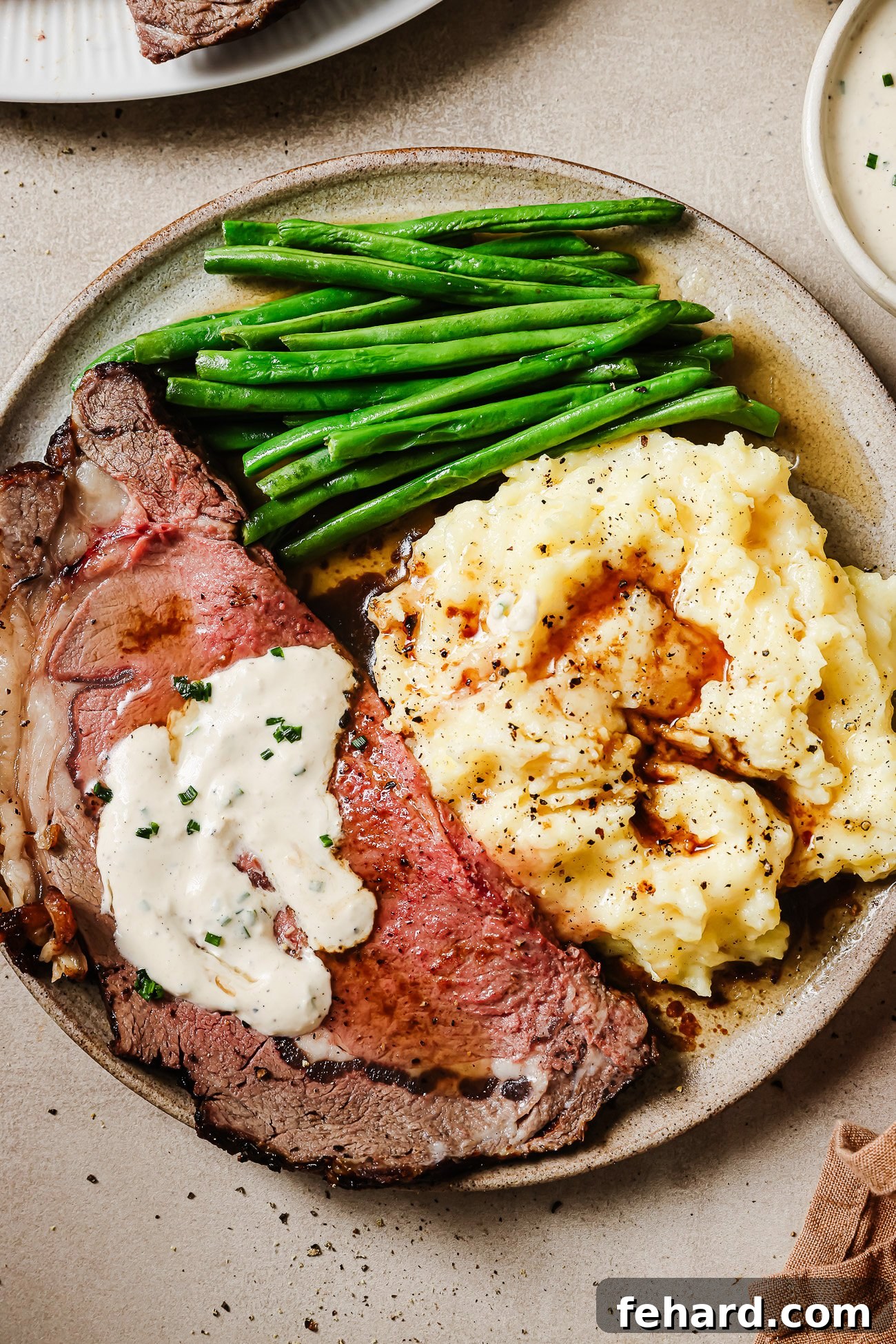
The **Reverse Sear Prime Rib** method is renowned among culinary enthusiasts and home chefs alike for consistently delivering a perfectly cooked roast that is undeniably the star of any meal. This technique guarantees an extraordinary dining experience, ensuring uniformly rosy, tender meat from edge to edge, while expertly sealing in all those coveted flavorful juices. The initial slow roast allows the rich beefy flavor to intensify, developing unparalleled depth, while the concluding high-heat sear masterfully crafts an irresistibly crispy, caramelized crust. It truly is the most reliable and foolproof approach to serving a truly show-stopping prime rib, making it an ideal centerpiece for festive holidays, significant gatherings, or any special occasion where an impressive meal is desired.
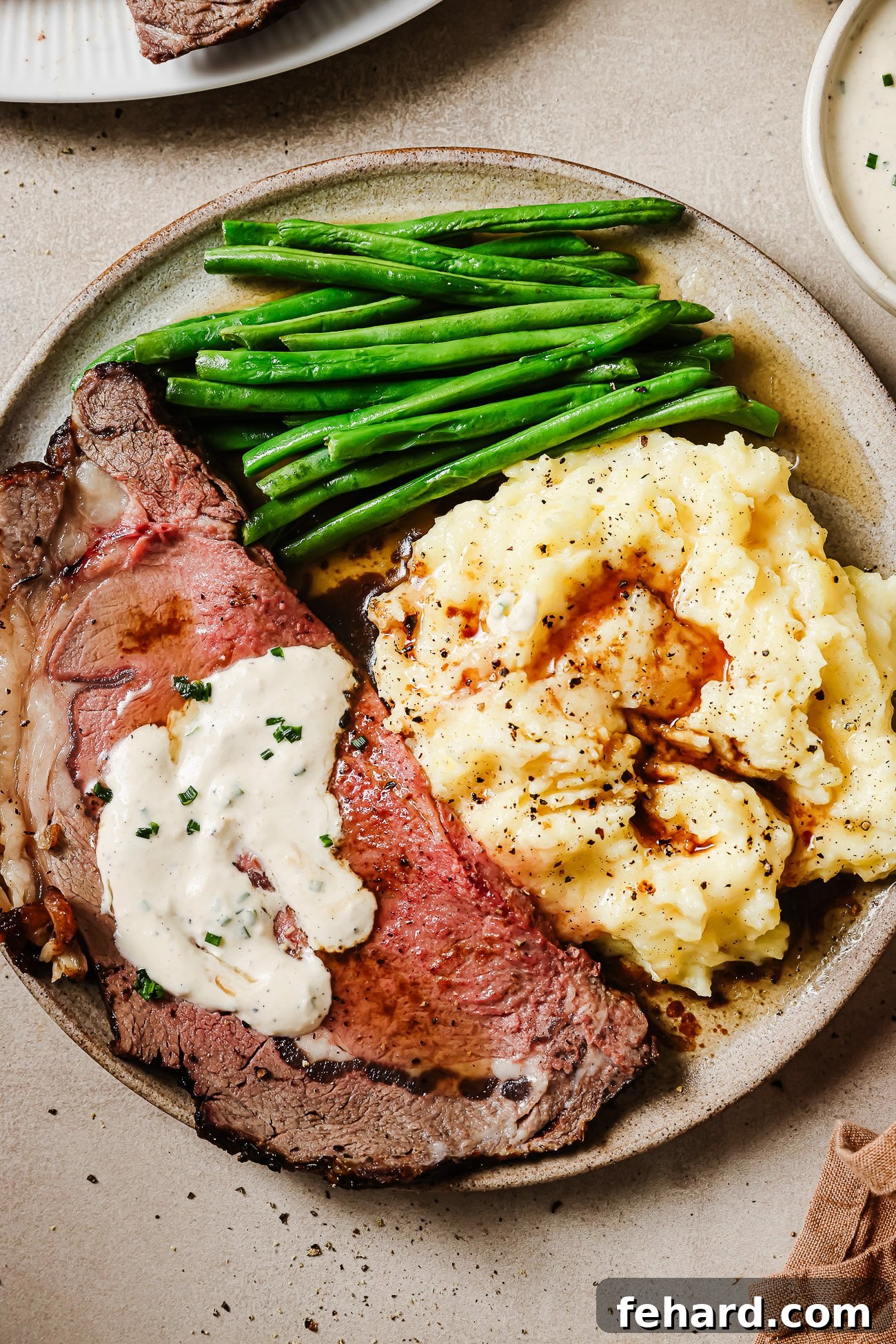
Why the Reverse Sear Method is a Game-Changer for Prime Rib
Few dishes command attention and evoke the spirit of a grand holiday feast quite like a perfectly roasted prime rib. Also magnificently known as a standing rib roast, this cut of beef stands as the ultimate centerpiece for Thanksgiving or Christmas dinner, rivaling even a succulent garlic butter roasted turkey or a tender beef tenderloin. While the idea of preparing such a regal dish might initially seem daunting, the **reverse sear method** simplifies the entire cooking process, eliminating guesswork and consistently guaranteeing flawless results every single time.
This innovative technique begins with a meticulous seasoning regimen, followed by a prolonged, gentle roast at a low temperature. This slow cooking phase is crucial for ensuring the meat cooks evenly throughout, preventing any dry, overcooked edges. The precision of this stage is greatly enhanced by using a reliable probe thermometer, which allows you to monitor the internal temperature with unwavering accuracy. The grand finale involves a quick, intense blast of high heat, which crisps up the exterior to a glorious golden-brown crust. This two-phase approach—slow cooking followed by a rapid sear—achieves that coveted perfect balance of deep flavor, tender texture, and an unbelievably crispy finish.
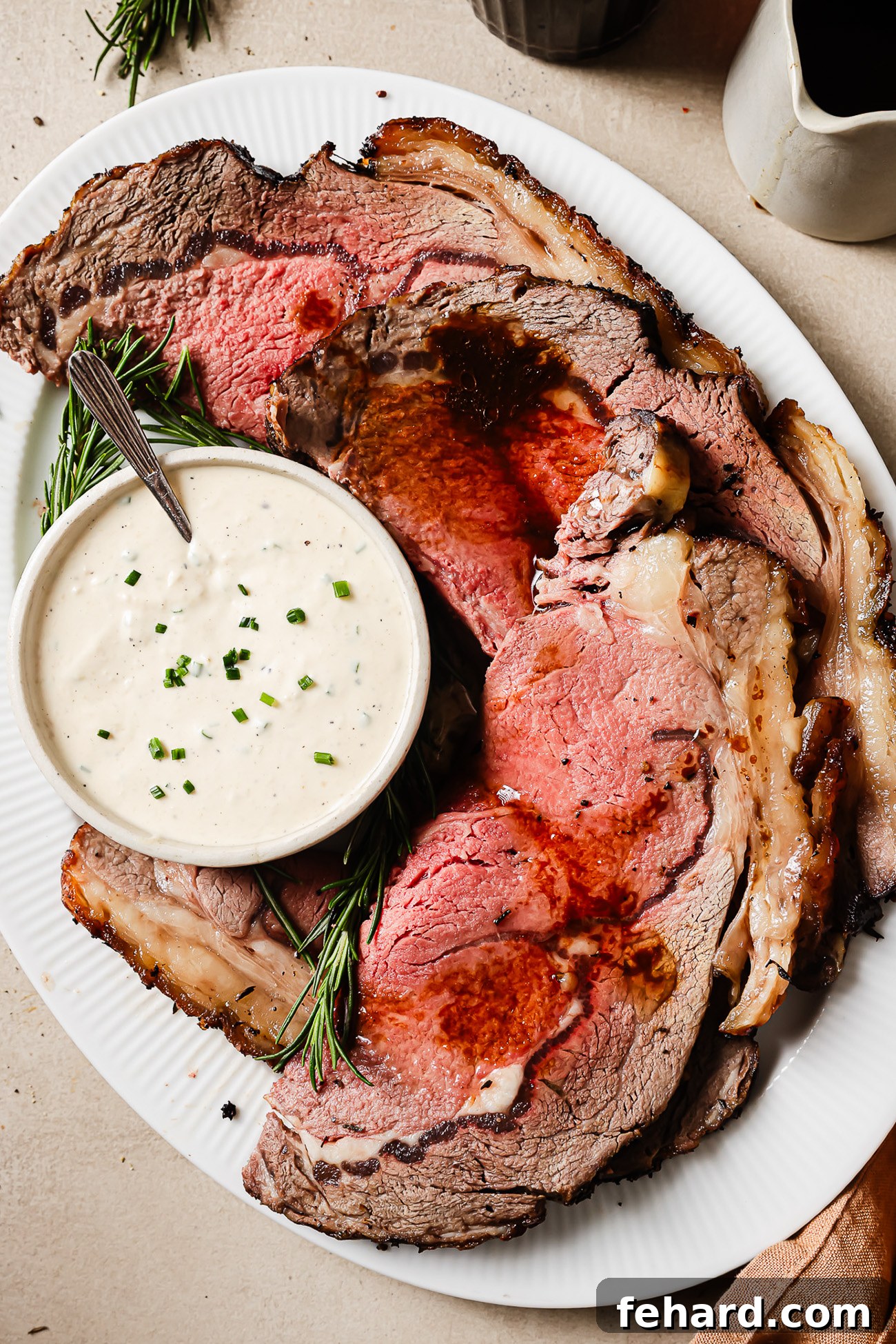
The culinary magic of the reverse sear method results in a roast adorned with a beautifully browned crust, yielding to an interior that is uniformly rosy and exquisitely tender from edge to edge. Each slice is bursting with rich, beefy flavor, complemented by the aromatic notes of garlic, fresh herbs, and the subtle tang of Worcestershire sauce. The beauty of this method lies in its ability to achieve this perfection without a single overcooked spot in sight, ensuring every guest enjoys a melt-in-your-mouth experience. Prepare to impress your family and friends with this magnificent creation. Enjoy every succulent bite!
Essential Ingredients for Your Perfect Reverse Sear Prime Rib
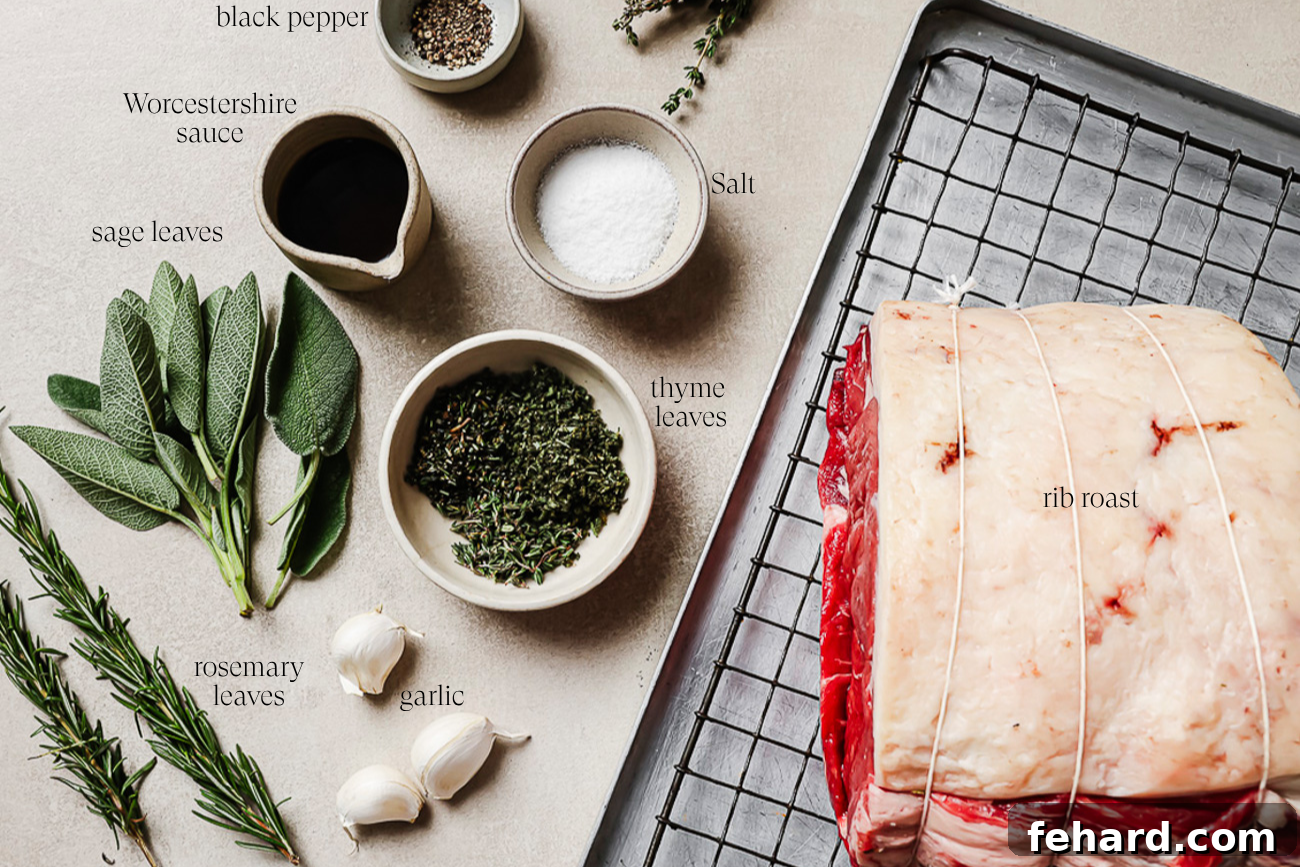
Crafting the ultimate reverse sear prime rib begins with selecting the finest ingredients and understanding their roles. All ingredients and their precise amounts are meticulously listed in the comprehensive recipe card located at the bottom of this post, but let’s delve deeper into what makes each component crucial.
Prime Rib Roast: The Heart of Your Feast
For an unparalleled depth of flavor and a truly impressive presentation, I wholeheartedly recommend choosing a **bone-in prime rib**. The bones are not merely for show; they contribute an incredible richness to the meat as it cooks, acting as natural insulators that help the roast cook more evenly and retain its precious juices, resulting in an exceptionally tender and moist interior. To simplify the carving process later, a clever trick is to ask your butcher to **remove the bones and then tie them back onto the roast**. This offers the best of both worlds: you gain all the flavor benefits and insulation from the bones during cooking, yet the carving becomes remarkably easier once the roast is done.
When you’re at the butcher’s counter, actively seek out a roast with **excellent marbling**. Marbling refers to the delicate, thin white streaks of fat intricately woven throughout the lean muscle. This intramuscular fat is a culinary marvel, as it slowly renders and melts during the cooking process, effectively self-basting the meat from within. This internal basting is what imparts that signature buttery, melt-in-your-mouth texture and keeps the prime rib incredibly moist and flavorful. Don’t be shy about discussing your needs with your butcher; they are an invaluable resource and can often guide you to the perfect cut.
Understanding the right size of prime rib to purchase is crucial for feeding your guests comfortably. To make your planning effortless, I’ve compiled a helpful chart below with general guidelines, ensuring you buy just the right amount for your gathering:
| Number of People | Bone-In Prime Rib | Boneless Prime Rib |
|---|---|---|
| 2–3 people | 3–4 lb roast | 2–3 lb roast |
| 4–6 people | 5–6 lb roast | 4–5 lb roast |
| 7–8 people | 7–8 lb roast | 6–7 lb roast |
| 9–10 people | 9–10 lb roast | 7–8 lb roast |
It’s important to note that if you opt for a **boneless prime rib**, the **cooking time will indeed vary**. Bone-in roasts typically require a slightly longer cooking duration because the bones act as a buffer, insulating the meat and slowing down the rate at which heat penetrates to the center. For a comparable weight, a bone-in roast usually adds approximately **20–30 extra minutes** to the cooking time. However, regardless of whether your roast is bone-in or boneless, the golden rule for perfect prime rib is to **always cook by internal temperature, not by a rigid timer**. Every roast is unique—its shape, fat content, bone thickness, and even the calibration of your oven can significantly influence cooking times. This is precisely why a high-quality meat thermometer is not just a useful tool, but your absolute best friend in ensuring consistently perfect, foolproof results every single time.
Flavor-Enhancing Ingredients
- Worcestershire Sauce: This unassuming condiment is a powerhouse of flavor, contributing a rich, savory, and subtly tangy base that forms the foundation of your prime rib’s exquisite taste. It also serves a practical purpose by helping the dry seasonings adhere more effectively to the surface of the roast, ensuring an even distribution of flavor. Worcestershire sauce expertly enhances the meat’s natural umami notes without ever overwhelming the delicate balance of fresh herbs.
- Garlic: Freshly minced garlic is indispensable, infusing every glorious bite with its warm, pungent, and deeply aromatic essence. When minced, garlic releases its potent oils more readily, seamlessly blending into the seasoning paste. This ensures that a savory aroma and distinct flavor permeate every single slice of the roast, delivering that quintessential robust taste.
- Fresh Rosemary, Sage, and Thyme: This classic trinity of fresh herbs is precisely what bestows upon the prime rib its iconic holiday aroma and flavor profile. Rosemary contributes an earthy, slightly pine-like, and wonderfully fragrant note; sage introduces a subtle peppery warmth and herbaceous depth; and thyme elegantly ties all these flavors together with its gentle, fresh, and slightly floral undertones. After extensive testing of various combinations, I’ve found that this specific balance of herbs provides just the right depth and complexity without ever overpowering the magnificent natural taste of the beef itself.
- Kosher Salt: Salt is far more than just a seasoning; it is a critical component for both flavor and texture in this recipe. Kosher salt is essential for the dry brining process, which not only deeply seasons the meat but also actively draws out moisture from the surface. This crucial step is what allows for the development of that incredibly flavorful, crispy, and beautifully caramelized crust. If you happen to be using finer table salt, remember to reduce the amount to about 1½ teaspoons, as it is more concentrated and can easily over-salt the meat.
Essential Equipment for a Flawless Reverse Sear Prime Rib
Achieving the perfect reverse-sear prime rib is not just about the ingredients and technique; having the right tools on hand makes an immense difference. These simple yet crucial pieces of equipment are designed to help you cook evenly, monitor temperatures with unwavering accuracy, and carve your magnificent roast like a seasoned professional, ensuring flawlessly delicious results every single time.
- Large Rimmed Baking Sheet + Wire Rack (or a Shallow Roasting Pan): This combination is fundamental for the reverse sear method. The wire rack elevates the prime rib, allowing hot air to circulate freely and evenly around all sides of the roast. This uniform heat distribution is key to achieving consistent doneness and a beautiful crust. The rimmed baking sheet underneath catches any flavorful drippings, making cleanup significantly easier and providing the base for potential au jus.
- Oven-Safe Probe Thermometer: This is arguably the most critical tool for success. An oven-safe probe thermometer ensures you can monitor the internal temperature of your roast in real-time without constantly opening the oven door. This precision is absolutely vital for hitting your desired doneness perfectly, eliminating all guesswork and preventing both undercooking and overcooking. It’s the secret to consistent perfection.
- Paper Towels: Simple yet effective, paper towels are essential for thoroughly patting the surface of the prime rib dry before seasoning and cooking. Removing excess moisture is a foundational step for developing that desired golden, crispy, and beautifully caramelized crust during the searing phase.
- Aluminum Foil: Aluminum foil serves multiple purposes in this recipe. It’s excellent for loosely tenting the roast during its crucial resting period after the slow roast. This tenting helps to keep the meat warm while allowing the internal temperatures to stabilize and the juices to redistribute throughout the roast, ensuring every slice is incredibly moist. Additionally, it can be used to line your baking sheet for even easier cleanup.
- Sharp Carving Knife + Cutting Board with Juice Groove: After all your hard work, a sharp carving knife is essential for making clean, effortless slices against the grain, which is paramount for tender results. A cutting board equipped with a juice groove is a thoughtful addition, as it conveniently catches all the rich, flavorful meat juices that will naturally release during carving, ensuring none of that deliciousness is lost.
Crafting the Perfect Reverse Sear Prime Rib: A Step-by-Step Guide
Mastering the reverse sear method is simpler than you might think, and the results are consistently spectacular. Follow these detailed steps to achieve a prime rib that will leave a lasting impression on your guests.
1. Prepare the Roast with Precision
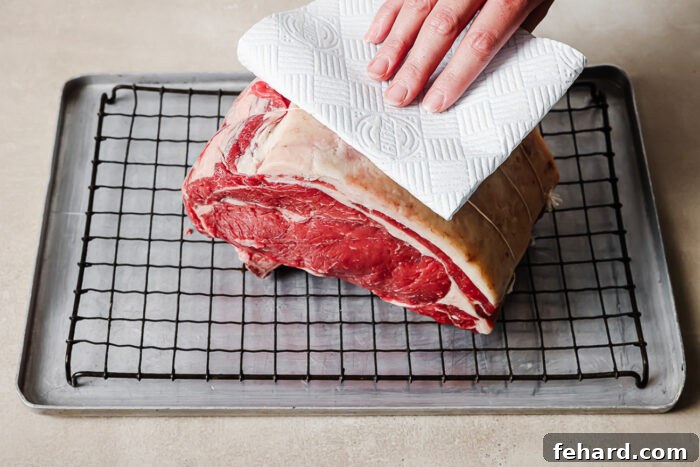
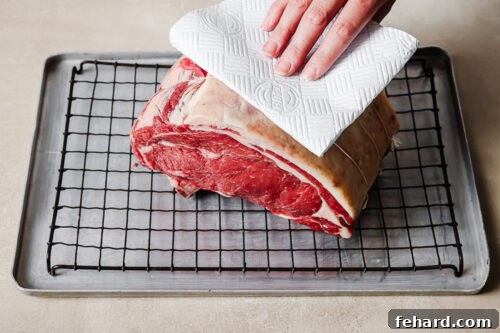
Step 1: Bone Preparation and Drying. If you requested your butcher to remove and then tie the bone section back onto the roast, ensure it remains securely tied. This is key for both flavor and easier carving later. Next, using paper towels, thoroughly pat the entire surface of the prime rib roast dry. This critical step removes excess moisture, which is fundamental for developing that desirable crispy, golden crust during the high-heat sear.
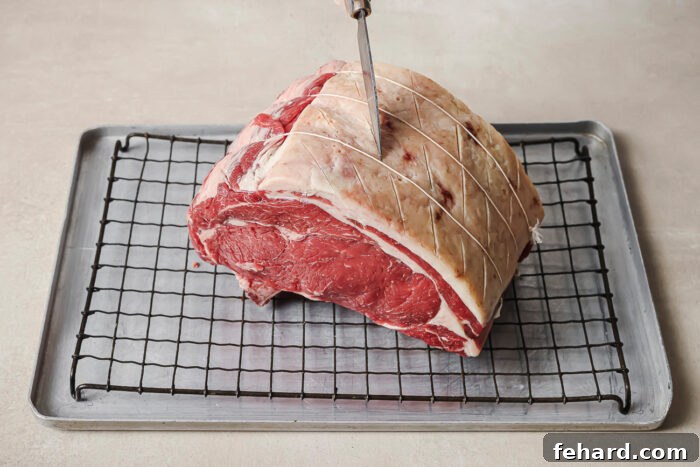
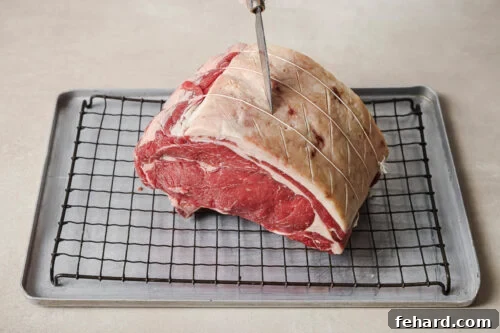
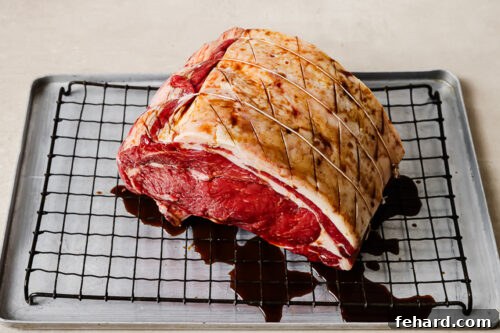
Step 2: Scoring the Fat Cap. Carefully and gently score the fat cap of the prime rib. Make shallow, thin cuts that penetrate just enough to mark the surface of the fat without cutting into the underlying meat. This technique serves two important purposes: it allows the seasonings to deeply absorb into the fat layer, enhancing flavor, and it also helps the fat render more efficiently during cooking, contributing to a more tender and juicy roast.
2. Seasoning and Dry Brining for Maximum Flavor
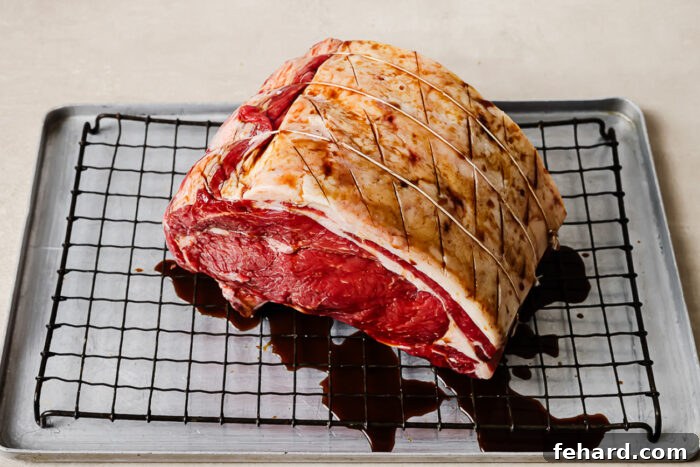
Step 3: Worcestershire Application. Generously rub the entire prime rib roast with Worcestershire sauce. This creates a foundational layer of savory, umami flavor and helps the upcoming dry seasoning blend adhere beautifully to the meat’s surface. Set the roast aside briefly as you prepare the herb mixture.
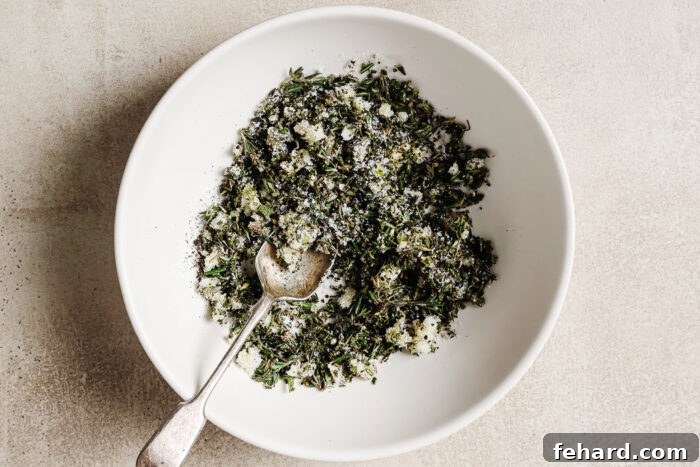
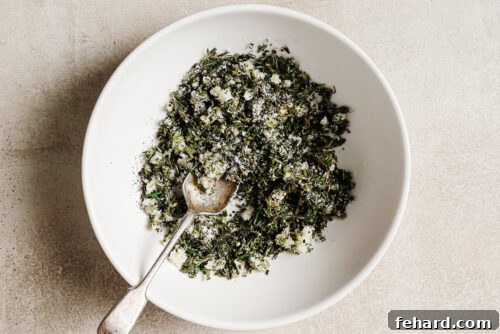
Step 4: Crafting the Herb Rub. In a small bowl, combine the minced fresh garlic, finely chopped fresh rosemary leaves, fresh sage leaves, fresh thyme leaves, kosher salt, and freshly ground black pepper. Mix these ingredients thoroughly until a fragrant, cohesive rub is formed. The fresh herbs are key to the traditional aroma and taste of prime rib.
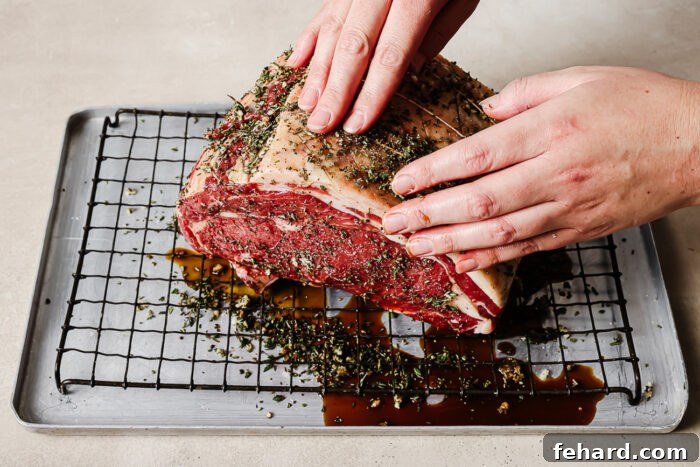
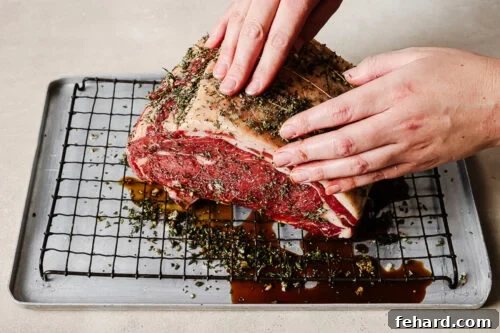
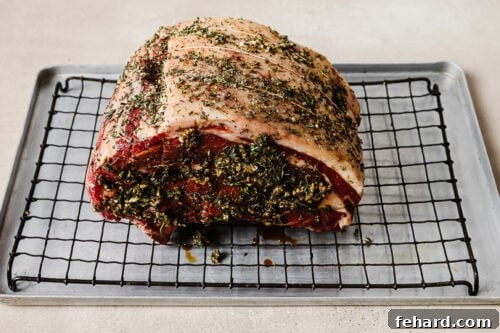
Step 5: Applying the Seasoning and Securing. Take the prepared herb mixture and rub it evenly and generously over all sides of the prime rib roast. Ensure every surface, including the ends, is coated for maximum flavor penetration. If, during this process, the string holding the bones loosened, gently re-tie the roast with kitchen twine to maintain its shape and ensure even cooking.
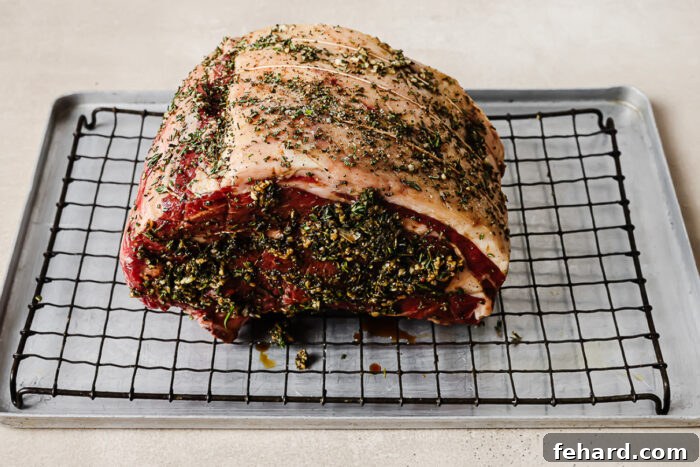
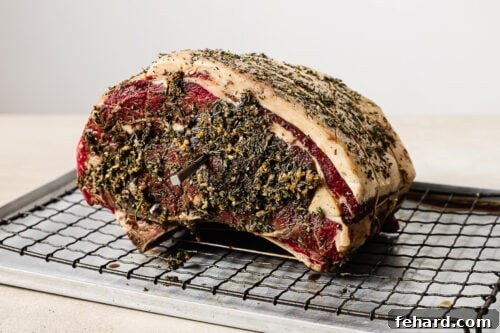
Step 6: The Essential Dry Brine. Place the seasoned roast on a wire rack, which should be set inside a foil-lined baking sheet (the foil makes cleanup much easier by catching drippings). Crucially, chill the roast uncovered in your refrigerator for a minimum of 12 hours, and ideally up to 24 hours. This dry brining process allows the salt and seasonings to deeply penetrate the meat, enhancing its flavor and, just as importantly, drying out the surface. A dry surface is absolutely essential for achieving that beautifully caramelized and crispy crust during the final sear.
3. Bringing to Room Temperature and Slow Roasting (Reverse Sear Part 1)
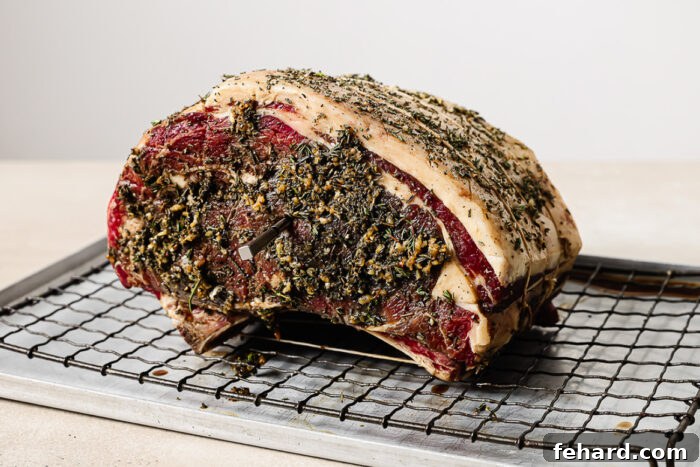
Step 7: Preheating and Thermometer Insertion. Preheat your oven to a low temperature of 250°F (121°C). Approximately one hour before you plan to put the roast in the oven, remove it from the refrigerator. Allowing it to come closer to room temperature helps ensure more even cooking. Insert an oven-safe probe thermometer into the center of the thickest part of the roast, being very careful to avoid touching any bone or large pockets of fat, as these can give inaccurate readings.
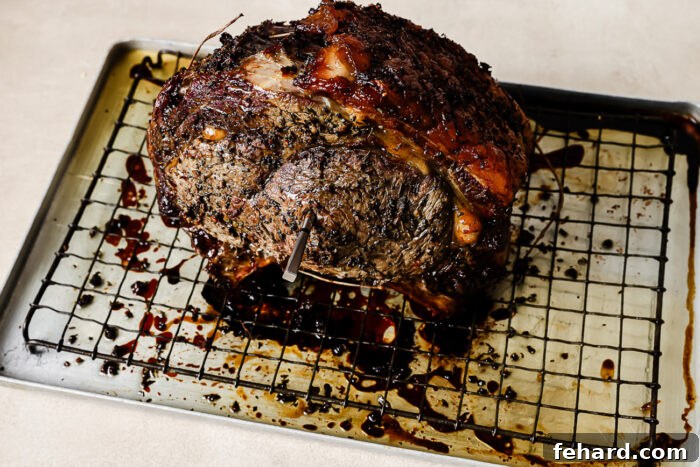
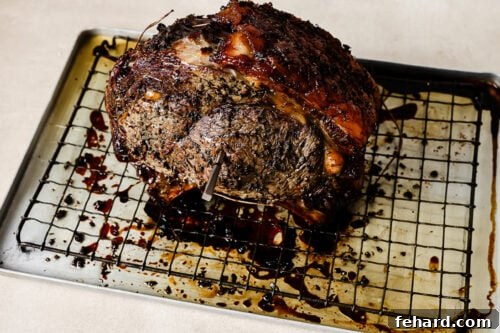
Step 8: The Slow Roast and Crucial Rest. Place the roast, still on its wire rack and baking sheet, into the preheated oven. Slowly roast until the internal temperature reaches 115°F (46°C) for a perfect medium-rare doneness. This slow roasting process typically takes around 3 to 3½ hours, but remember that actual times can vary based on the roast’s size, shape, and your oven’s specific calibration. Once it reaches the target temperature, carefully remove the roast from the oven, tent it loosely with aluminum foil, and allow it to rest for a full 30 minutes. This resting period is vital for the juices to redistribute throughout the meat, preventing them from escaping during the final sear. While the roast rests, increase your oven temperature to a very high 500°F (260°C) in preparation for the final searing stage.
4. The High-Heat Sear and Carving (Reverse Sear Part 2)
Once your oven has fully preheated to 500°F (260°C) and the roast has completed its resting period, return the roast to the oven, now uncovered. Cook for an additional 10–15 minutes, or until the internal temperature reaches 130–135°F (54–57°C) for a perfect medium-rare. Keep a very close eye on the thermometer during this stage, as the high heat will cause the temperature to rise rapidly. This quick sear develops that magnificent, deeply browned and crispy crust that is the hallmark of a reverse-seared prime rib. There is no need for further resting after this searing stage.
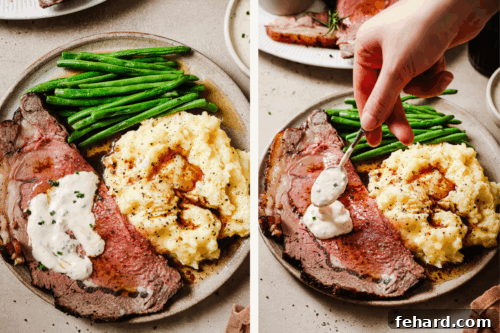
To carve your masterpiece, first remove the kitchen string that held the bones in place, and carefully separate the bones from the roast. Place the roast on your cutting board and slice it against the grain into ½–1-inch thick slices. Slicing against the grain is crucial for maximum tenderness. Serve your perfectly cooked prime rib immediately with your favorite complementary sides and sauces. I personally find it irresistible when paired with a creamy horseradish sauce. Your guests will undoubtedly adore this spectacular dish.
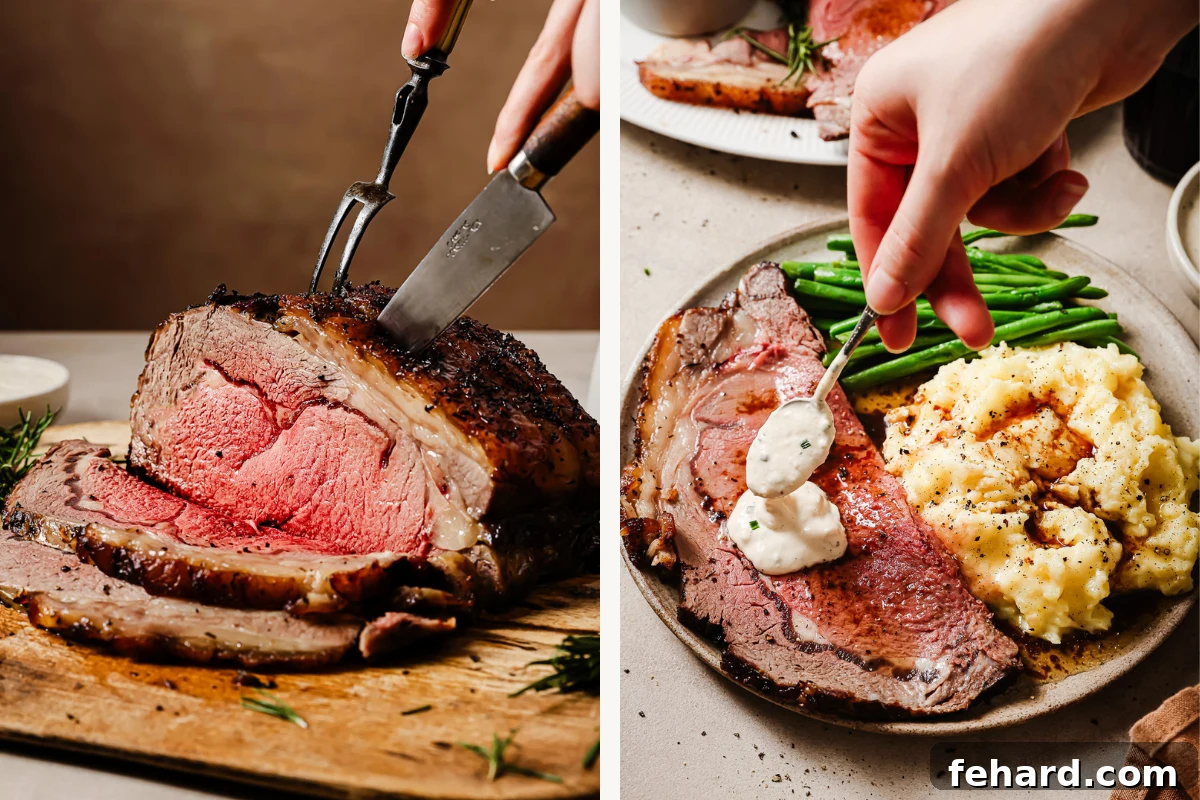
Reverse Sear Prime Rib Doneness Temperature Chart: Your Guide to Perfection
The true secret to a perfectly cooked prime rib, irrespective of its size or your oven’s quirks, lies in consistently monitoring its internal temperature, rather than rigidly adhering to a specific cooking time. This detailed temperature chart is your indispensable guide, helping you pinpoint the exact moment to remove your roast from the oven during the slow cook, and the ideal final temperature to aim for after the high-heat sear, ensuring your desired level of doneness is achieved every time.
| Doneness | Pull from Oven (Pre-Sear) | Final Temp (After Sear) | Color / Texture | Notes |
|---|---|---|---|---|
| Rare | 110°F / 43°C | 120–125°F / 49–52°C | Deep red, very juicy | Cool center, soft texture |
| Medium-Rare (best) | 115°F / 46°C | 130–135°F / 54–57°C | Warm red center, tender | Most flavorful & juicy |
| Medium | 125°F / 52°C | 140–145°F / 60–63°C | Pink throughout | Slightly firmer, still juicy |
| Medium-Well | 135°F / 57°C | 150–155°F / 65–68°C | Slightly pink center | Leaner, less juicy |
| Well Done | 140°F / 60°C | 160°F / 71°C+ | Mostly brown | Least juicy; not recommended |
Pro Tip: Understanding Carry-Over Cooking
It’s vital to account for carry-over cooking. Because you allow the roast to rest while the oven preheats to 500°F (260°C), its internal temperature will naturally continue to rise by approximately 5–10°F during this period. Therefore, always rely on the “Pull from Oven (Pre-Sear)” temperatures listed in the chart. By doing so, you’ll ensure that your prime rib reaches your desired final doneness perfectly after the high-heat sear, resulting in that ideal warm, rosy center.
Perfect Pairings: What to Serve with Your Magnificent Prime Rib
A truly spectacular prime rib deserves an equally impressive array of side dishes. I love complementing the richness of the roast with a thoughtful mix of cozy, classic, and fresh accompaniments that create a harmonious and unforgettable meal. Here are some of my top recommendations that pair beautifully with this show-stopping cut of beef:
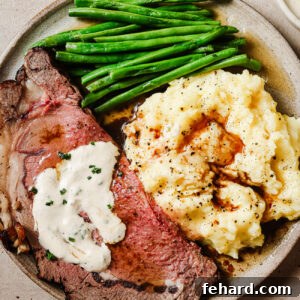
- Creamy Mashed Potatoes: The epitome of comfort food, velvety mashed potatoes are the quintessential pairing for prime rib. Their creamy, buttery texture provides a perfect contrast to the rich beef, and they are absolutely ideal for soaking up every last drop of flavorful au jus.
- Decadent Potato Gratin: For a truly indulgent holiday side, consider a rich potato gratin. Thinly sliced potatoes baked until tender in a luscious cream and cheese sauce offer an incredible depth of flavor and a comforting, cheesy warmth that elevates any meal.
- Crispy Roasted Brussels Sprouts: These humble sprouts transform into a savory delight when roasted until crispy on the outside and tender within. The addition of smoky bacon (if desired) provides an extra layer of savory flavor that beautifully complements the robust taste of prime rib.
- Fresh Green Beans: Lightly blanched or air-fried green beans offer a crisp texture and vibrant freshness that elegantly cuts through the richness of the roast. They provide a wonderful textural contrast and a refreshing earthy note.
- Complementary Sauces: While reverse-seared prime rib is so incredibly flavorful and juicy that it truly shines on its own, a well-chosen sauce can elevate the dining experience to an even higher level. For a classic steakhouse touch, drizzle each succulent slice with a bold, creamy Horseradish Sauce, which provides a delightful piquant kick. Alternatively, a rich, savory Prime Rib Au Jus made from the pan drippings is always a winner. If you’re feeling a bit more indulgent, a dollop of fragrant Garlic Butter, a zesty Garlic Aioli, or a homemade Gravy Without Drippings can add that perfect, melt-in-your-mouth finish to an already magnificent dish.
Expert Tips for the Best Reverse Sear Prime Rib
Position the Roast Bone-Side Down During Roasting: This seemingly simple step is an absolute game-changer! When placed bone-side down, the bones of your prime rib naturally act as a built-in roasting rack. This elevation ensures that air circulates evenly all around the meat, promoting consistent cooking and preventing the bottom from becoming soggy. Furthermore, the bones shield the bottom of the roast from overcooking, contributing to a more uniformly tender result and helping to keep those precious juices locked within the meat rather than pooling beneath it.
Monitor the Internal Temperature with Vigilance During the High-Heat Sear: The final searing stage at 500°F (260°C) is swift and intense. During this phase, the internal temperature of your prime rib can climb remarkably fast. Therefore, it is imperative to keep a very close eye on your probe thermometer. Constant monitoring will prevent you from accidentally overshooting your target doneness, ensuring that the exquisite, rosy interior you worked so hard to achieve remains perfect while the crust develops beautifully.
Keep the Roast Uncovered Throughout the Cooking Process: Resisting the urge to cover your prime rib while it roasts is key to achieving that coveted crispy crust. Leaving the roast uncovered allows its surface to dry out slightly during the initial slow cook. This drier surface is precisely what you want, as it provides the ideal conditions for the Maillard reaction to occur during the high-heat sear, resulting in that gorgeous, golden-brown, and intensely flavorful crust.
Reverse Sear Prime Rib – Slow Roasted & Seared for Perfection
Olivia Ribas
8
people
15
1
3
40
1
3
55
Ingredients
- 6 lbs bone-in prime rib roast (have butcher remove the bone and tie it back on – easier to carve but keeps flavor)
-
3 tablespoons
Worcestershire sauce
- 3 large garlic cloves (minced)
- 1 tablespoon fresh rosemary leaves (finely chopped)
- 1 tablespoon fresh sage leaves (finely chopped)
- 1 tablespoon fresh thyme leaves
- 1 tablespoon kosher salt (Windsor or Morton’s brand*)
- ½ tablespoon black pepper
Instructions
Prepare the Roast:
-
If your butcher removed and tied the bone back on, leave it tied. Pat the entire roast dry with paper towels.

-
Lightly score the fat cap with small shallow cuts (don’t cut into the meat). This helps seasoning penetrate.
Season and Dry Brine:
-
Rub the roast all over with Worcestershire sauce.
-
In a small bowl, mix garlic, rosemary, sage, thyme, salt, and pepper.
-
Rub the seasoning mixture evenly over all sides of the roast. If the string loosened, tie the roast again with kitchen twine.
-
Place the roast on a wire rack set inside a baking sheet. (Optional but helpful: Line or wrap the baking sheet with aluminum foil before placing the rack on top. This makes cleanup easier and helps catch any drips.)
-
Leave uncovered in the fridge overnight (at least 12 hours, up to 24 hours). This dry brine seasons deeply and dries the surface for a better crust.
Remove From Fridge & Insert Thermometer:
-
Take roast out of the fridge 1 hour before cooking to take the chill off. Insert a probe thermometer into the center of the thickest part (avoid bone and fat).
Slow Roast (Reverse Sear Part 1):
-
Preheat oven to 250°F (121°C). Place the roast (still on the rack set inside the foil-lined baking sheet) in the center of the oven.
-
Roast until the internal temperature reaches 115°F (46°C) for medium-rare. This usually takes about 3 to 3.5 hours, but time may vary by oven and roast shape. Keep in mind that the beef will keep cooking a bit even after it’s out of the oven, thanks to residual heat.
Rest the Roast (Very Important):
-
Remove roast from the oven, tent it loosely with aluminum foil and let it rest for 30 minutes while the oven preheats. Resting prevents juices from pushing out during the high-heat sear.
-
Increase oven temperature to 500°F (260°C).
High-Heat Sear (Reverse Sear Part 2)
-
Once the oven is preheated, return the roast (without the foil on top) and cook until it reaches: 130°F (54°C) internally for medium-rare. This takes about 5-10 minutes. Please, watch carefully because the temperature rises quickly during this step.
-
Once it’s done cooking, you can serve it immediately, no resting needed. To carve, cut the kitchen string and remove the bone section. Slice the roast against the grain into ½–1 inch slices. Serve immediately with your favorite sides and sauces.
Notes
Refrigerate: Let the prime rib cool completely, then store leftovers in an airtight container or wrap them tightly in foil or plastic wrap. Keep in the fridge for up to 4 days.
Freeze: For longer storage, slice the roast and wrap each piece tightly in plastic wrap, then place them in a freezer-safe bag or container. It will keep well for up to 3 months.
Reheat: To keep it juicy, reheat gently. Place slices in a baking dish with a splash of beef broth, cover with foil, and warm in a 275°F (135°C) oven until just heated through (about 10–15 minutes). Avoid the microwave. It can make the meat tough and dry.
Tip: Always store and reheat your prime rib before adding sauce or gravy. Add it right before serving to keep the flavors fresh and the texture perfect.
Nutrition
Serving:
1
/8
,
Calories:
411
kcal
,
Carbohydrates:
2
g
,
Protein:
57
g
,
Fat:
19
g
,
Cholesterol:
138
mg
,
Sodium:
575
mg
,
Potassium:
682
mg
,
Fiber:
1
g
,
Sugar:
1
g
,
Calcium:
4
mg
,
Iron:
22
mg
Nutrition information is automatically calculated, so should only be used as an approximation.
Did You Make This?
Follow @primaverakitchen on Instagram, snap a photo, and tag it #primaverakitchen. We’d love to see your recreation.