
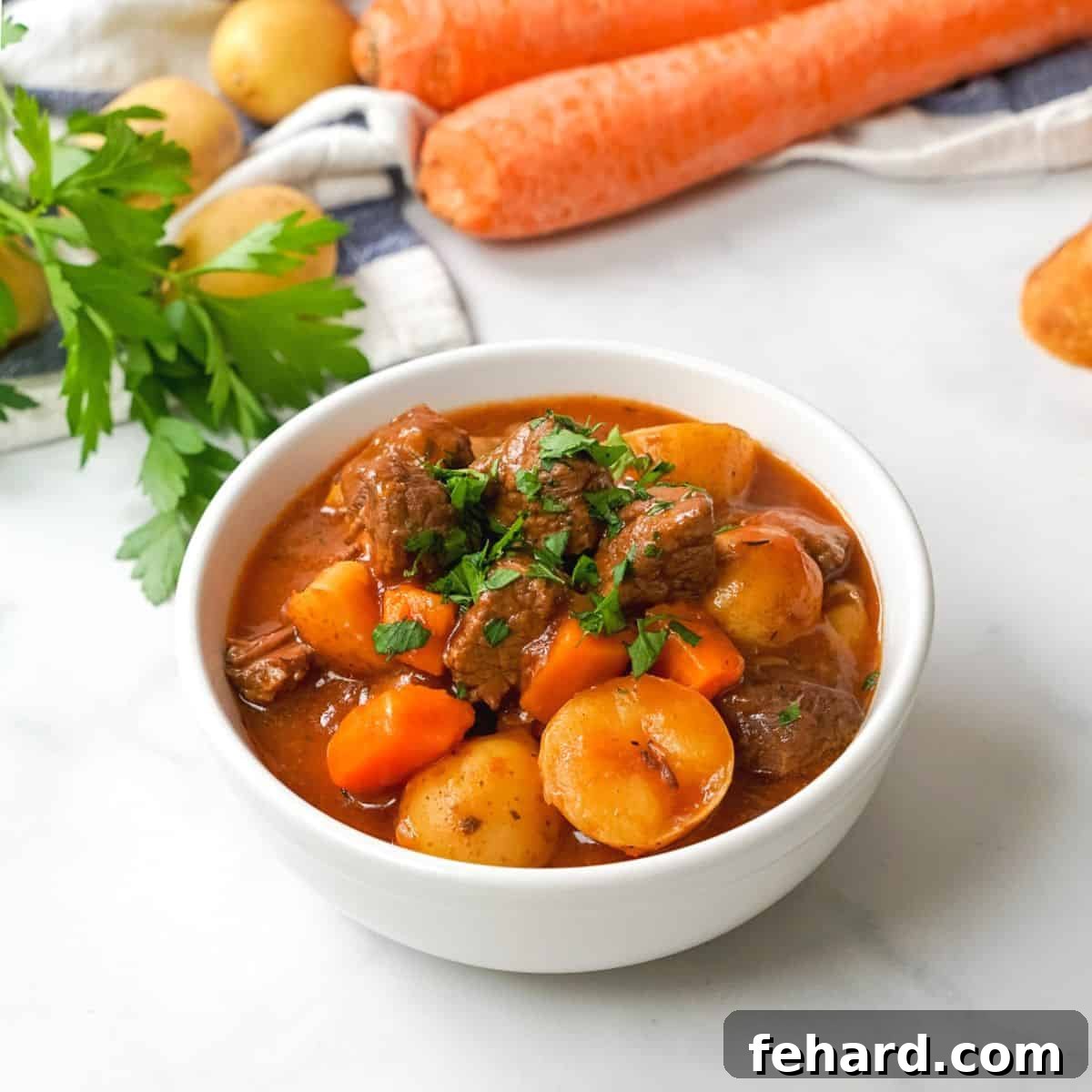
Transform your dinner routine with this sensational **Instant Pot Beef Stew**. Imagine succulent, fork-tender beef, wholesome vegetables, and a deeply rich, aromatic broth – all the comforting essence of a classic stew, but ready in a fraction of the traditional time. This recipe leverages the power of your Instant Pot to deliver an extraordinary meal with minimal fuss, making it perfect for busy weeknights or a cozy weekend gathering.
There’s nothing quite like a warm, hearty beef stew to chase away the chill of a cold evening. Our Instant Pot method ensures that even the toughest cuts of beef are rendered incredibly tender, bathed in a flavorful broth that’s been seasoned to perfection. If you don’t have an Instant Pot, don’t worry! You can still enjoy this timeless comfort food with my equally delicious Crockpot Beef Stew recipe.
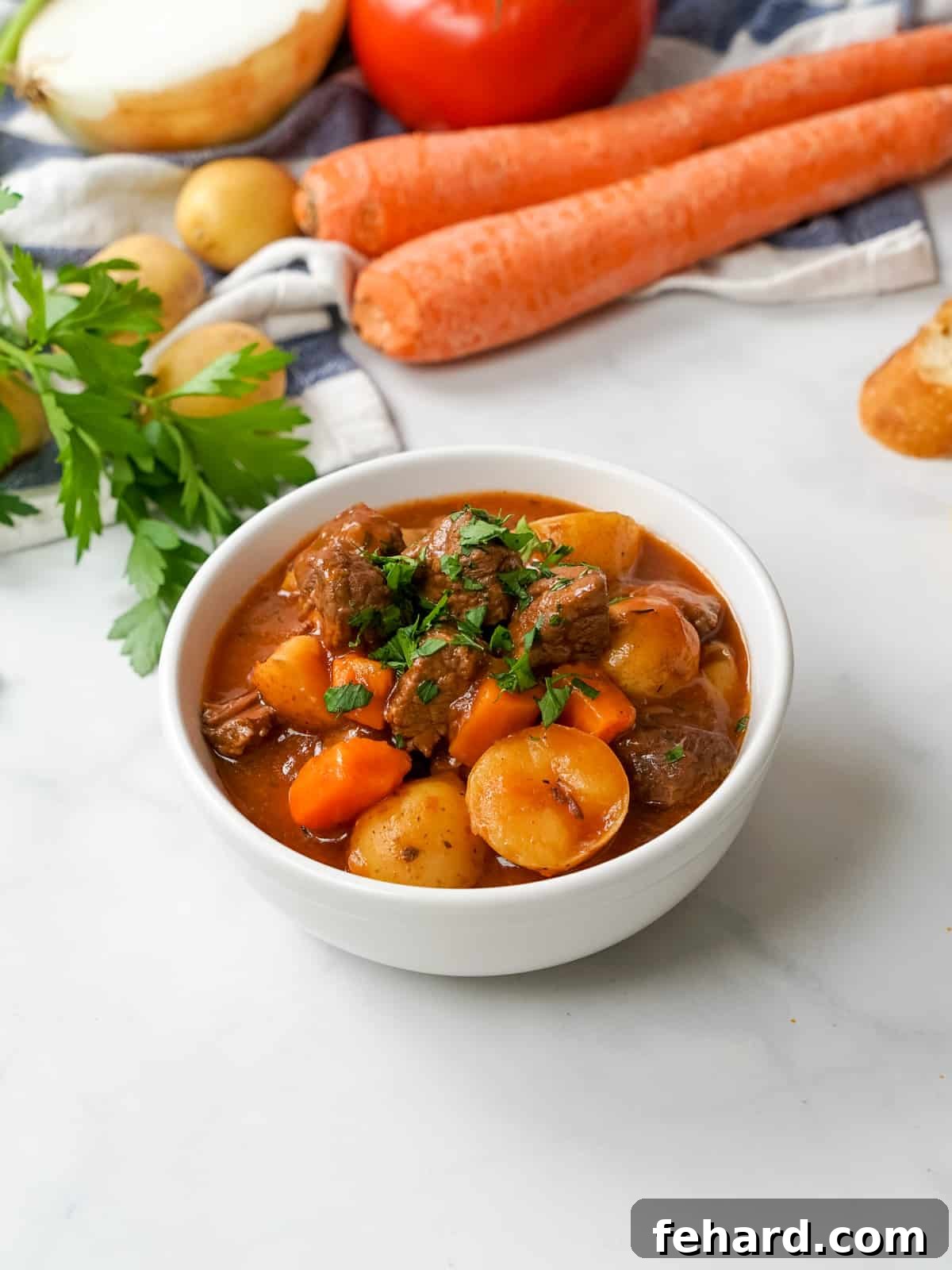
Mastering Instant Pot Beef Stew: Essential Tips for Perfection
My Instant Pot Pot Roast has long been a cherished favorite, praised for its incredibly tender beef, perfectly cooked vegetables, and unmatched flavor. This beef stew recipe draws inspiration from that beloved dish, adapting its winning flavor profile into the coziest form of stew. To achieve that same deep, incredible taste and texture, pay close attention to these critical steps:
- Sear the Beef and Onions First: This crucial step is the foundation of flavor for your stew. Searing the beef creates a beautiful caramelized crust, locking in juices and developing an unparalleled depth of flavor. The onions also caramelize, adding a sweet and savory base. While it adds about 10 minutes to your prep time, the resulting richness is absolutely worth the effort and makes a significant difference.
- Don’t Skip the Horseradish – It’s a Game-Changer: You won’t taste a distinct horseradish flavor in the final stew. Instead, it acts as a secret ingredient, imparting a subtle, zesty bite that brightens the rich flavors and, surprisingly, aids in tenderizing the beef. It’s the unique touch that will leave everyone wondering, “What’s your secret ingredient?” Be sure to use prepared horseradish, not creamy horseradish sauce.
- Red Wine for Deeper Flavor (Optional but Recommended): A dry red wine, such as Cabernet Sauvignon, Merlot, or Malbec, adds layers of complexity and a sophisticated depth to the stew’s broth, beautifully balancing its richness. If you prefer not to cook with alcohol, an equal amount of high-quality beef stock can be used, though the flavor profile will be slightly different.
- Layer Crushed Tomatoes on Top: This specific layering technique is vital for preventing the dreaded “Burn Notice” that can sometimes occur in Instant Pots, especially with acidic ingredients like tomatoes at the bottom. The tomatoes will slowly meld into the stew during pressure cooking without sticking to the pot’s base.
- Allow Natural Pressure Release Time: After the cooking cycle finishes, resist the urge to quick-release the pressure immediately. Allowing at least 15 minutes of natural pressure release (NPR) is essential. This gentle release of pressure helps the beef to relax, ensuring it remains incredibly tender and moist, rather than becoming tough or dry.
5-Star Reader Review
“The best and easiest stew recipe! I had bought a bunch of tough beef and tried a few recipes, but it was still tough. Yours was perfect and saved the meat; it was so tender! Thank you, it was well-written and a definite keeper!” – Diane⭐⭐⭐⭐⭐
Key Ingredients and Clever Substitutions for Instant Pot Beef Stew
While the complete list of ingredients and their exact measurements can be found in the comprehensive recipe card below, here are some invaluable tips to help you select the ideal components for your Instant Pot Beef Stew, ensuring maximum flavor and perfect texture.
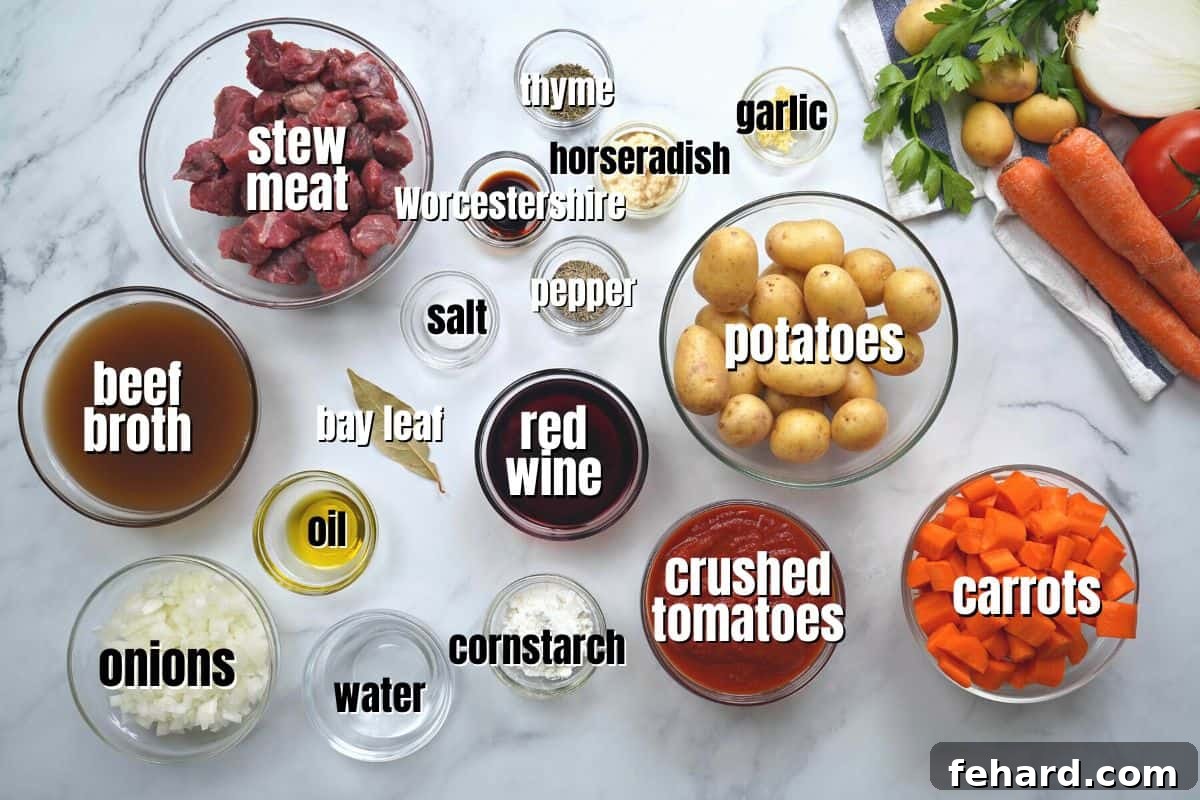
- Beef Selection: For the most exquisitely tender results, chuck roast is highly recommended. Its marbling and connective tissue break down beautifully under pressure, yielding a buttery-soft texture. Pre-cut stew meat is also a convenient option, and brisket or beef shank can be used if chuck roast isn’t available. Ensure your beef is cut into roughly 1-inch chunks for even cooking.
- Red Wine (Optional): Opt for a dry red wine such as Cabernet Sauvignon, Merlot, or Malbec. The rule of thumb is to use a wine you would genuinely enjoy drinking, as “cooking wine” often contains added sodium and flavors that can detract from your stew’s taste. If wine isn’t an option, a good quality beef stock will work as an excellent non-alcoholic substitute.
- Horseradish Insights: It’s crucial to use prepared horseradish, which typically contains only grated horseradish root, vinegar, and salt. Avoid creamy horseradish sauce, as it has a different flavor profile and consistency. You’ll usually find prepared horseradish in the refrigerated section of your grocery store, often near the deli or pickled items.
- Vegetable Choices: This recipe keeps it classic with yellow onions, hearty potatoes, and sweet carrots. Feel free to customize: add diced celery along with the onions during searing for extra aromatic depth, or stir in frozen peas at the very end when thickening for a burst of color and sweetness. For potatoes, Yukon Golds are fantastic as they maintain their shape wonderfully. Red potatoes are another excellent choice, while russet potatoes can be used, but be aware they tend to break down more, contributing to a slightly thicker broth.
- Thickening Agent: Cornstarch is used at the end to create that desirable thick, glossy texture for the stew’s broth. For a gluten-free alternative, arrowroot powder can be substituted in an equal amount.
- Beef Stock/Broth: Use a low-sodium beef stock or broth to control the overall saltiness of your stew. For a thicker stew, stick to 3 cups of broth. If you prefer a slightly thinner, more soup-like consistency, you can increase the broth to 4 cups.
How to Make Instant Pot Beef Stew: A Step-by-Step Guide
This detailed, step-by-step guide will ensure success, whether you’re an Instant Pot novice or a seasoned pressure cooking pro. Follow these instructions closely for a flawless and flavorful beef stew every time.
Step One: Perfectly Sear the Beef and Onions
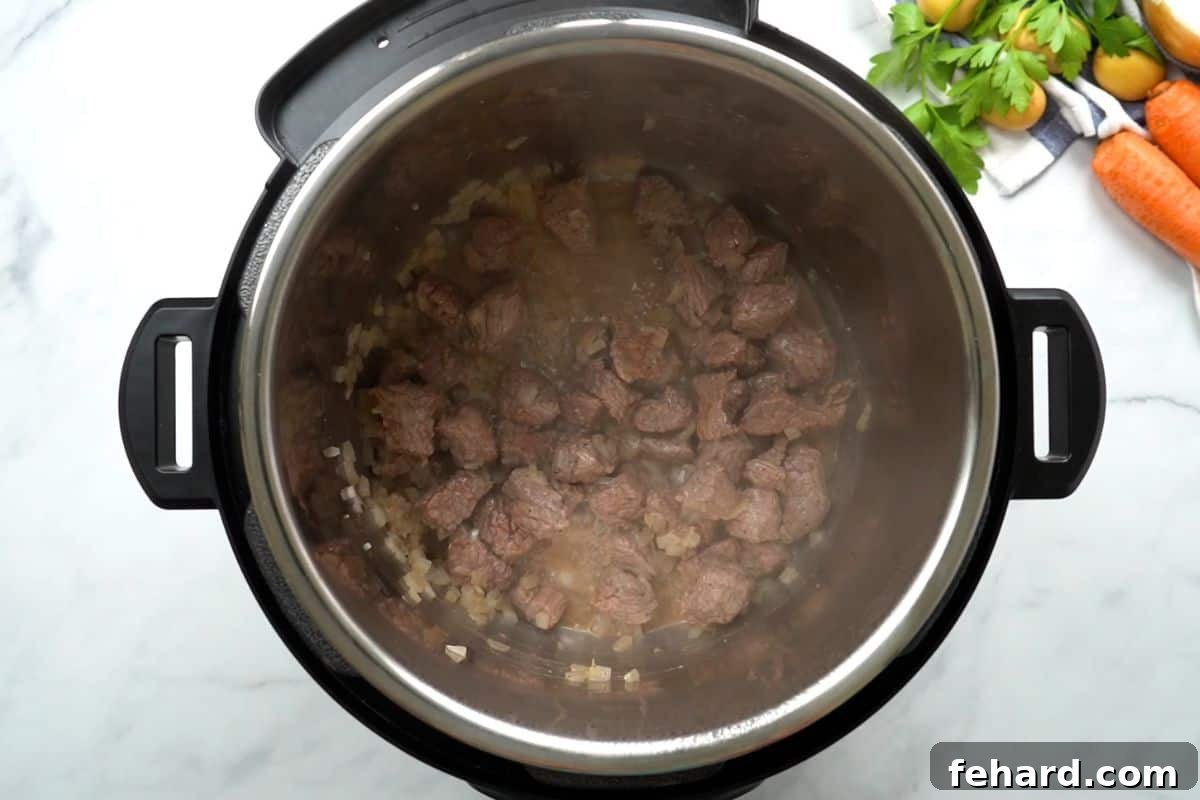
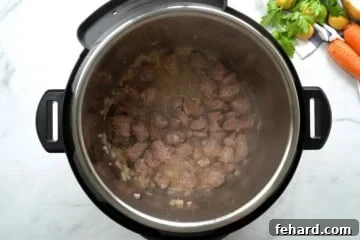
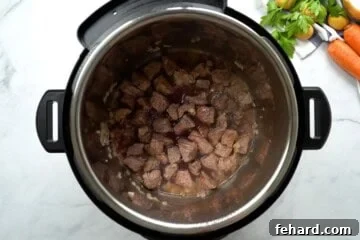
Begin by activating the “Sauté” function on your Instant Pot and add a touch of extra virgin olive oil. While the oil heats, generously season your beef stew chunks on all sides with kosher salt and freshly ground black pepper. Once the oil is shimmering, add the seasoned beef and minced yellow onion to the hot pot. Cook, stirring occasionally, until the beef develops a rich brown crust and the onions soften and turn lightly golden, typically 3-5 minutes. As the beef nears completion, stir in the minced garlic and sauté for an additional 30-60 seconds until fragrant.
👉🏻Expert Tip: To achieve optimal caramelization, avoid overcrowding the pot. If necessary, sear the beef in batches. This allows for proper browning rather than steaming, which is essential for deep flavor development.
Step Two: Deglaze the Inner Pot for Maximum Flavor
With the Instant Pot still on the “Sauté” function, carefully pour in the dry red wine (or additional beef broth). Immediately use a wooden spoon to scrape up all the delicious browned bits stuck to the bottom of the pot. These fond are packed with flavor and are crucial for a rich broth. Allow the liquid to simmer for a minute or two, letting the alcohol cook off and the liquid to slightly reduce. Once deglazed, press “Cancel” to turn off the sauté function.
👉🏻Important Step: Do not skip deglazing! This not only infuses your stew with incredible depth but also prevents a “Burn Notice” during pressure cooking by ensuring no food particles are sticking to the bottom.
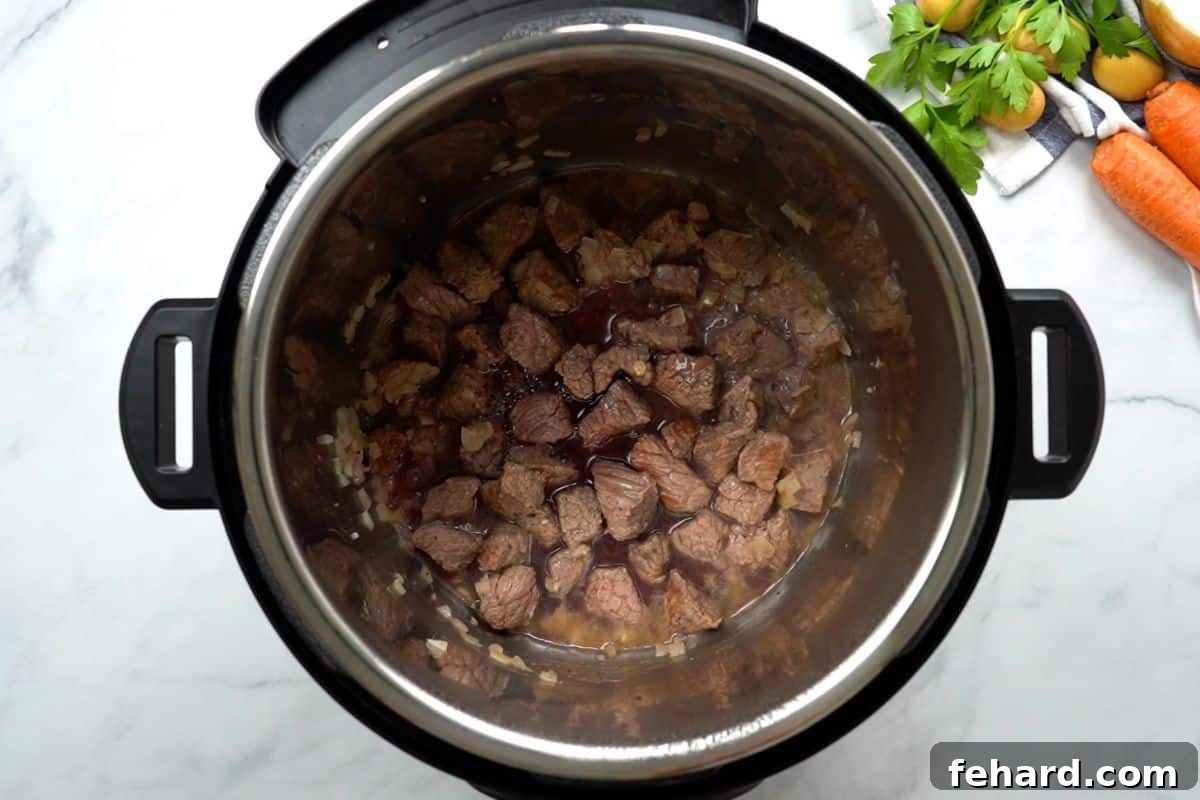
Step Three: Strategically Layer the Ingredients
Now, add the beef broth, potatoes, carrots, dried bay leaf, dried thyme leaves, Worcestershire sauce, and prepared horseradish to the pot. Stir these ingredients gently to combine them well. Finally, pour the crushed tomatoes directly on top of the other ingredients without stirring them in. This layering is critical for preventing the “Burn Notice.”
👉🏻Crucial Instruction: Seriously, do NOT stir the crushed tomatoes into the other ingredients! They will naturally incorporate into the stew as it pressure cooks. Stirring them in can cause them to settle at the bottom and potentially trigger a “Burn Notice,” especially in more sensitive Instant Pot models.
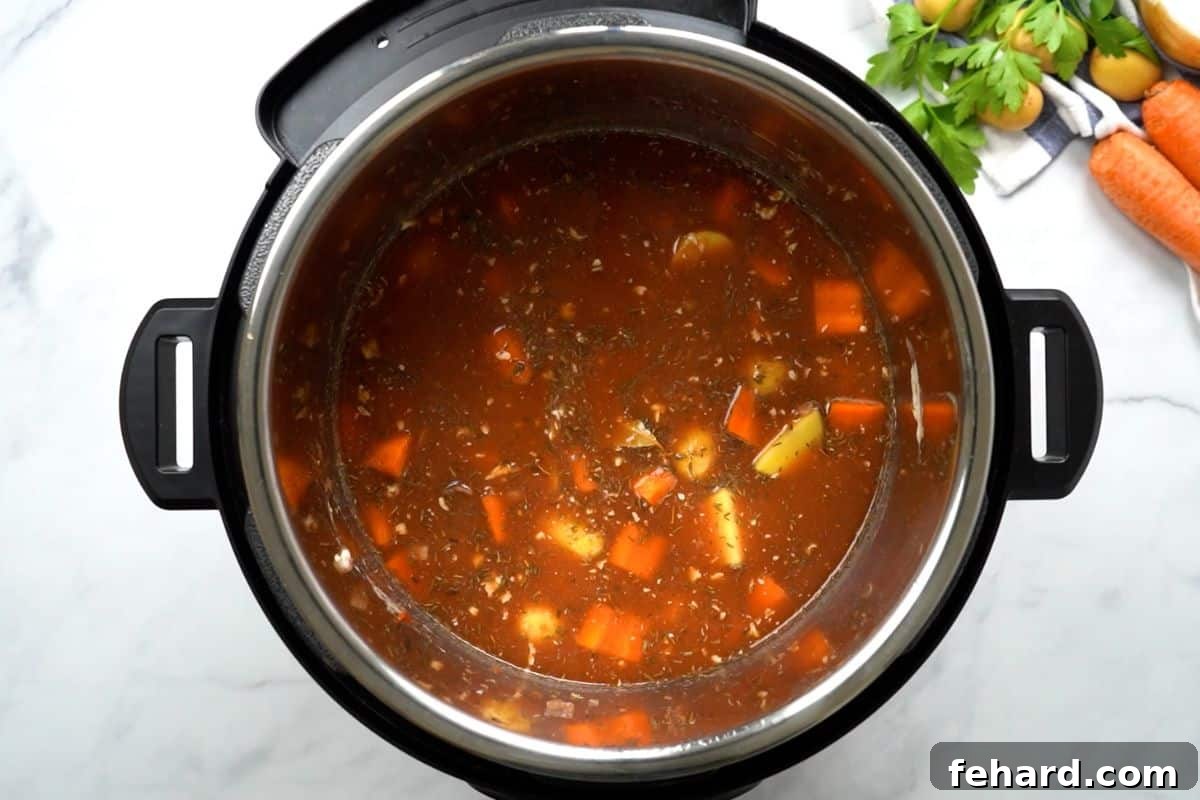
Step Four: Pressure Cook to Tender Perfection
Secure the Instant Pot lid, making sure the sealing valve is set to the “Sealing” position. Select the “Pressure Cook” or “Manual” button and adjust the cooking time to 30 minutes on HIGH pressure. Once the cooking cycle is complete, allow the pressure to release naturally for at least 15 minutes. After 15 minutes, you can carefully turn the sealing valve to “Venting” to quick-release any remaining steam until the float valve drops.
👉🏻Understanding Natural Pressure Release (NPR): Natural Pressure Release means simply leaving the Instant Pot undisturbed after the cooking time ends. It will automatically switch to “Keep Warm” and begin counting up (e.g., L0:01, L0:02). When the display shows L0:15, 15 minutes have passed. Allowing it to go longer is absolutely fine and often results in even more tender meat!
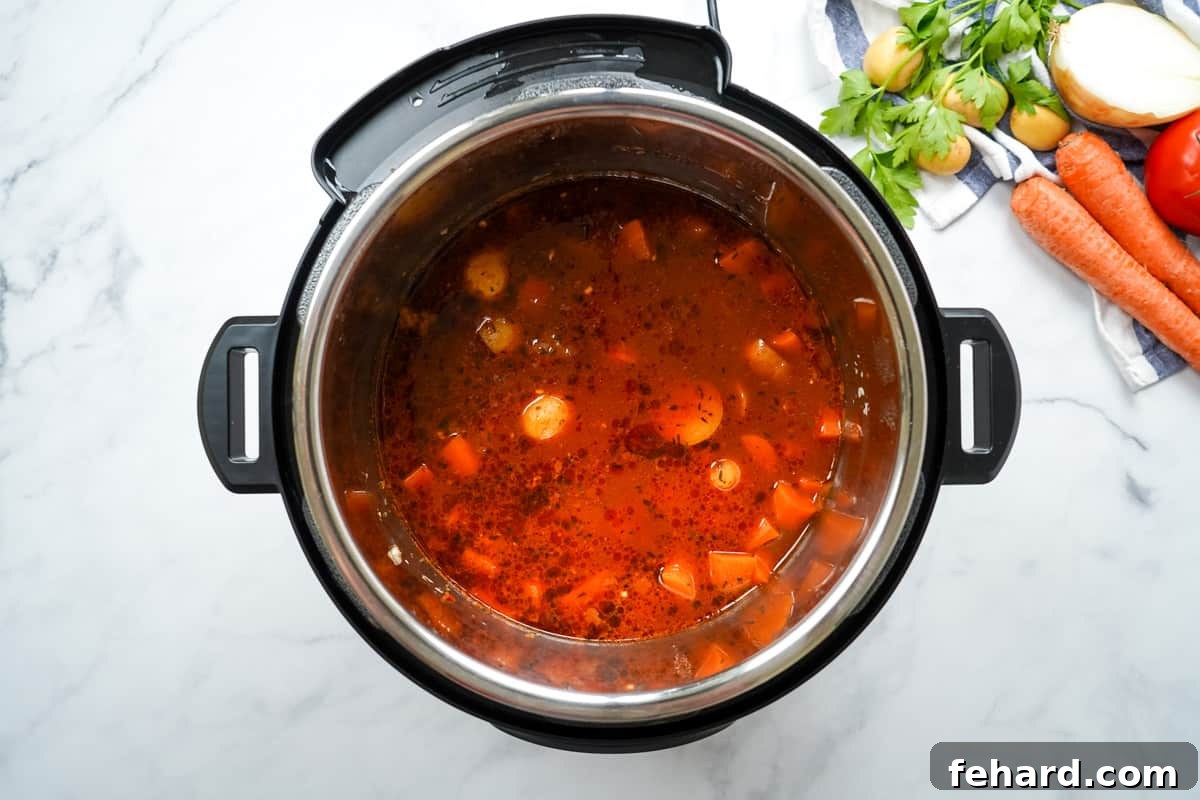
Step Five: Thicken the Stew (Optional for a Luscious Broth)
If you desire a wonderfully thick and glossy stew, this optional step is a must. After releasing the pressure, press “Cancel” to turn off the “Keep Warm” function, then select “Sauté” again. In a small bowl, whisk together 2 tablespoons of cornstarch with 3 tablespoons of cold water until a smooth slurry forms. Once the stew begins to bubble, slowly whisk the cornstarch slurry into the stew. Continue to cook, stirring constantly, for about 5 minutes, or until the stew has thickened to your desired consistency.
👉🏻For an ultra-luxurious finish: Stir in a tablespoon of unsalted butter just before serving. This adds a beautiful sheen and an extra layer of richness to your magnificent stew.
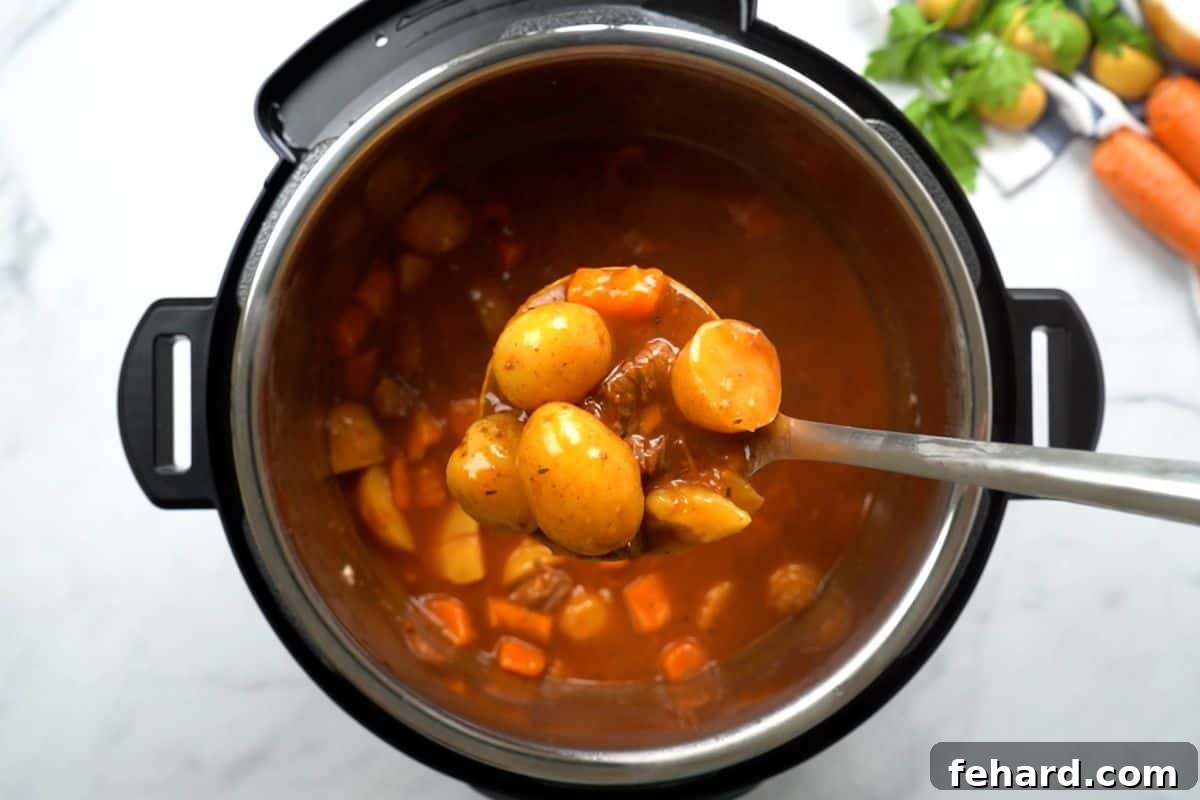
What to Serve with Instant Pot Beef Stew: Perfect Pairings
This Instant Pot Beef Stew is incredibly satisfying and robust enough to be a meal all on its own. However, for those who love to round out their comfort food experience, or simply want something to soak up every last drop of that amazing broth, consider these delightful accompaniments:
- For Dipping and Sopping Up: A crusty bread is essential! Think a rustic no-knead whole wheat Dutch oven bread, a batch of fluffy homemade cornbread, or warm, buttery whole wheat rolls. The texture contrast and ability to absorb the rich broth are simply divine.
- On the Side for Freshness: A simple, crisp green salad provides a wonderful counterpoint to the richness of the stew. Dress it lightly with a tangy balsamic vinaigrette or a creamy ranch dressing for a refreshing, palate-cleansing element.
Storage and Reheating Instructions for Instant Pot Beef Stew
Having leftovers of this delicious Instant Pot Beef Stew is a treat! Here’s how to properly store and reheat it to maintain its wonderful flavor and quality.
- Refrigeration: Once your stew has cooled down sufficiently, transfer any leftovers to an airtight container. It can be safely stored in the refrigerator for up to 4 days. This makes it a fantastic meal prep option for lunches or quick dinners throughout the week.
- Freezing Guidelines: While you can freeze leftover beef stew in a freezer-safe container for up to 3 months, it’s important to note a common textural change. Potatoes, unfortunately, do not always hold up well to freezing and defrosting; they can become somewhat mushy or slightly grainy. The beef and broth, however, freeze beautifully. If you plan to freeze large batches, you might consider adding fresh potatoes when reheating.
- Reheating Method: For refrigerated stew, reheat individual portions in heat-safe bowls covered with a damp paper towel. Microwave in 60-second intervals, stirring between each, until thoroughly warmed through. If reheating from frozen, it’s best to defrost the stew in the refrigerator overnight before reheating. You can also gently reheat larger quantities on the stovetop over low heat, stirring occasionally, until hot.
Discover More Favorite Instant Pot Comfort Food Recipes
If you’ve fallen in love with the ease and deliciousness of this Instant Pot Beef Stew, you’re in for a treat! The Instant Pot is a master at creating incredible comfort food with minimal effort. Don’t miss out on these other cherished recipes, perfect for cozying up your kitchen:
- Instant Pot Beef Bourguignon
- Instant Pot Potato Corn Chowder
- Instant Pot Chicken and Dumplings
- Instant Pot Beef and Barley Soup
- Instant Pot Red Beans and Rice
- Instant Pot Stuffed Peppers
- Instant Pot Meatloaf and Mashed Potatoes
- Instant Pot Short Ribs
Instant Pot Beef Stew
Rate

With tender chunks of beef, perfectly cooked vegetables, and a rich, savory broth, this Instant Pot Beef Stew delivers all the comfort of a classic stew in record time.
Video
Ingredients
- 2 teaspoons extra virgin olive oil
- 1 pound beef stew meat, cut into 1-inch chunks (chuck roast, brisket, or beef shank recommended)
- Kosher salt and pepper, to taste
- 1 small yellow onion, minced
- 2 cloves garlic, minced
- ½ cup dry red wine (Cabernet, Merlot, or Malbec), or additional beef stock
- 3 cups low-sodium beef stock (use 4 cups for a thinner stew)
- 3 cups baby potatoes, or potatoes cut into 1-inch cubes (Yukon Gold or red potatoes preferred)
- 2 cups carrots, cut into 1-inch chunks
- 1 dried bay leaf
- 1 teaspoon dried thyme leaves, or 2 fresh sprigs
- 1 tablespoon Worcestershire sauce
- 1 tablespoon prepared horseradish (not creamy horseradish sauce)
- 8 ounces crushed tomatoes (or tomato sauce)
- 2 tablespoons cornstarch (or arrowroot powder for gluten-free)
- 3 tablespoons water
Instructions
- Turn the Instant Pot to the “Sauté” function. Add 2 teaspoons extra virgin olive oil and let it heat for 30-60 seconds. While the oil heats, season the beef on all sides liberally with salt and pepper.
- Add the seasoned beef and minced onion to the Instant Pot. Sauté until the beef is browned on all sides and the onion has begun to soften, stirring often (about 3-5 minutes). Once the meat is almost fully browned, add the minced garlic and sauté for 30-60 seconds to lightly toast the garlic.

- Pour ½ cup dry red wine (or additional beef broth) into the inner pot. Use a wooden spoon to scrape up any browned bits off the bottom of the pot. Allow the alcohol to cook off for 1-2 minutes, then turn the “Sauté” function off by pressing “Cancel.”
- Add 3 cups low-sodium beef stock, potatoes, carrots, 1 dried bay leaf, 1 teaspoon dried thyme leaves, 1 tablespoon Worcestershire sauce, and 1 tablespoon prepared horseradish. Stir gently to incorporate all ingredients. Then, pour 8 ounces of crushed tomatoes on top without mixing. DO NOT STIR!
- Secure the lid on the Instant Pot and ensure the vent knob is closed to seal in pressure. Select the “Pressure Cook” (or “Manual”) button and set the cooking time to 30 minutes on high pressure.
- Once the cooking time has elapsed, allow the pressure cooker to release pressure naturally for AT LEAST 15 minutes. After 15 minutes, manually vent any remaining pressure, then carefully open the lid. Remove and discard the bay leaf and thyme sprigs.
- To thicken the stew (optional): Press “Cancel” on the Instant Pot to turn off the “Keep Warm” function, then select “Sauté.” In a small bowl, whisk together 2 tablespoons cornstarch with 3 tablespoons water to create a smooth slurry. Once the stew begins to bubble, whisk the cornstarch slurry into the beef stew. Allow it to bubble and thicken to your desired consistency, whisking constantly (about 5 minutes).
- Taste the stew and season with additional salt and pepper if needed. Press “Cancel” to turn off the Instant Pot and serve your delicious beef stew as desired.




Equipment
-
Electric Pressure Cooker (6 or 8 quart)
Notes
Beef: For the best results, use chuck roast, brisket, or beef shank, cut into 1-inch cubes. If you purchase pre-cut stew meat, ensure it’s from one of these cuts. If your CUBED beef is frozen, you can skip the searing step and pressure cook for 35 minutes on high pressure, then proceed with deglazing and adding other ingredients.
Beef Broth/Stock Note: For a classic, thicker stew consistency, use 3 cups of beef broth or stock. If you prefer a slightly thinner, more soup-like stew, increase the liquid to 4 cups of beef broth/stock.
Red Wine: A dry red wine like Merlot, Malbec, or Cabernet Sauvignon is ideal for deepening the stew’s flavor. Always use a wine you would enjoy drinking. If you prefer not to use wine, an equal amount of quality beef broth can be substituted.
Horseradish: Ensure you are using prepared horseradish, which is simply grated horseradish, salt, and often vinegar. Avoid creamy horseradish sauce, as it contains dairy and other ingredients that will alter the flavor profile significantly. Prepared horseradish is typically found in the refrigerated section of your grocery store, often near the deli or preserved foods.
Potatoes: Small, whole baby potatoes work wonderfully. Alternatively, you can use quartered red potatoes or Yukon gold potatoes. If using russet potatoes, cut them into 2-inch cubes. Be aware that russet potatoes have a higher starch content and may break down more during cooking, which can naturally thicken the stew further, but they may not hold their shape as well as gold or red varieties.
Crushed Tomatoes: If crushed tomatoes are not available, an equal amount of tomato sauce can be used as a substitute without significantly impacting the flavor or cooking process.
Gluten-Free Option: To make this recipe gluten-free, ensure that your Worcestershire sauce is certified gluten-free (some brands contain gluten). Also, verify that your beef broth is a gluten-free product. If thickening, use arrowroot powder instead of cornstarch.
Storage: Store any leftover stew in an airtight container in the refrigerator for up to 4 days. While the stew can be frozen in a freezer-safe container for up to 3 months, please be aware that the texture of the potatoes may become altered (mushy or grainy) upon thawing and reheating. The beef and broth, however, freeze very well.
Nutrition
Nutrition information is automatically calculated and should be used as an approximation only.
This post was originally published in 2019 but was updated with expanded content, improved clarity, and enhanced SEO in 2025.