
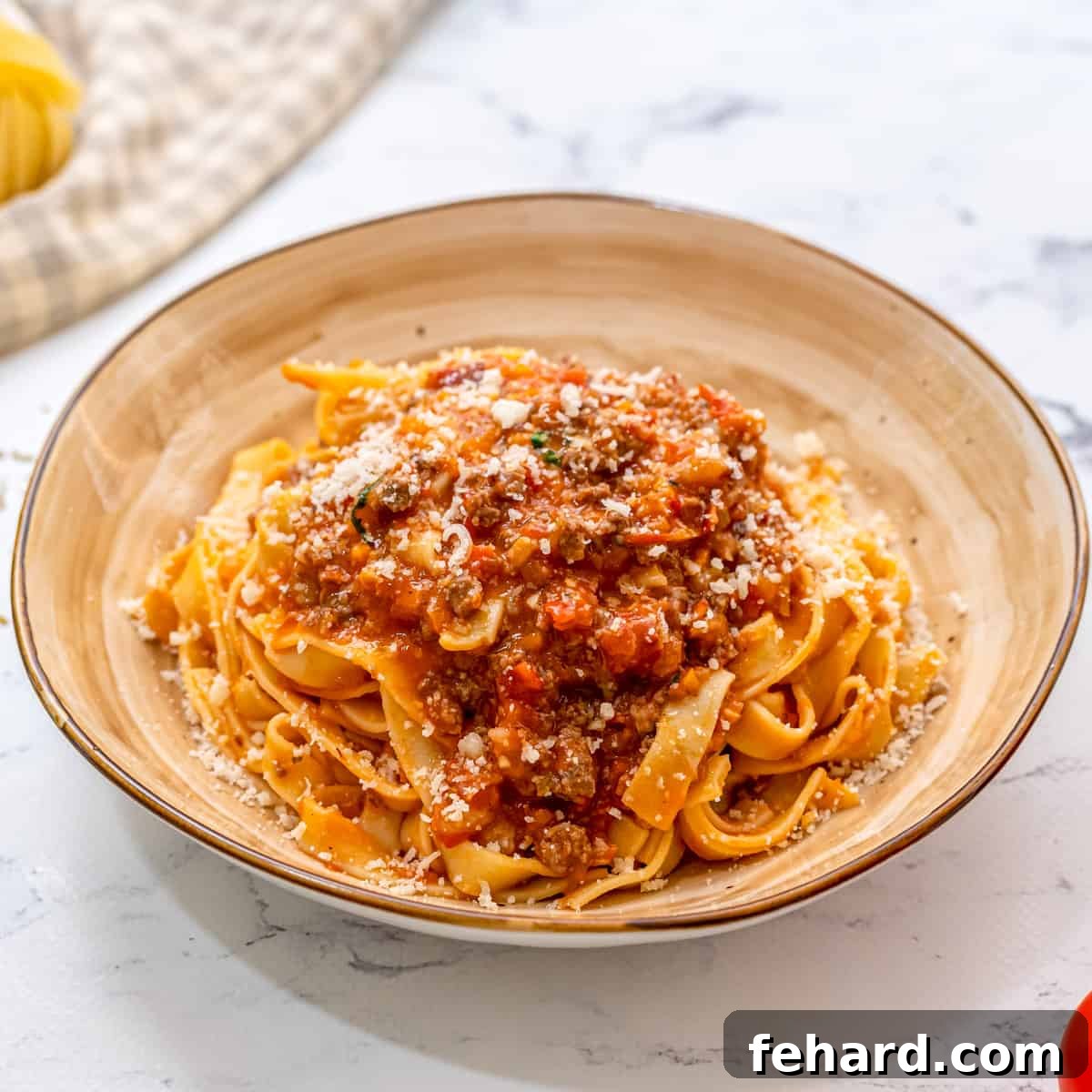
Authentic Bolognese Sauce: The Ultimate Italian Meat Sauce for a Perfect Pasta Night
Few dishes evoke the warmth and comfort of Italian cuisine quite like a truly authentic Bolognese sauce. This isn’t just any meat sauce; it’s a slow-simmered masterpiece, a luscious and hearty creation that transforms simple pasta into an extraordinary meal. Crafted with a harmonious blend of savory ground beef, flavorful Italian sausage, crisp pancetta, aromatic wine, and rich tomatoes, this recipe is designed to bring the true taste of Bologna, Italy, straight to your kitchen table. Prepare for a pasta dinner that’s not just satisfying, but truly unforgettable.
While this classic recipe celebrates the art of slow cooking, for those moments when time is of the essence, you can explore a quicker version. Discover my recipe for Instant Pot Bolognese to enjoy this beloved flavor with less simmering time.
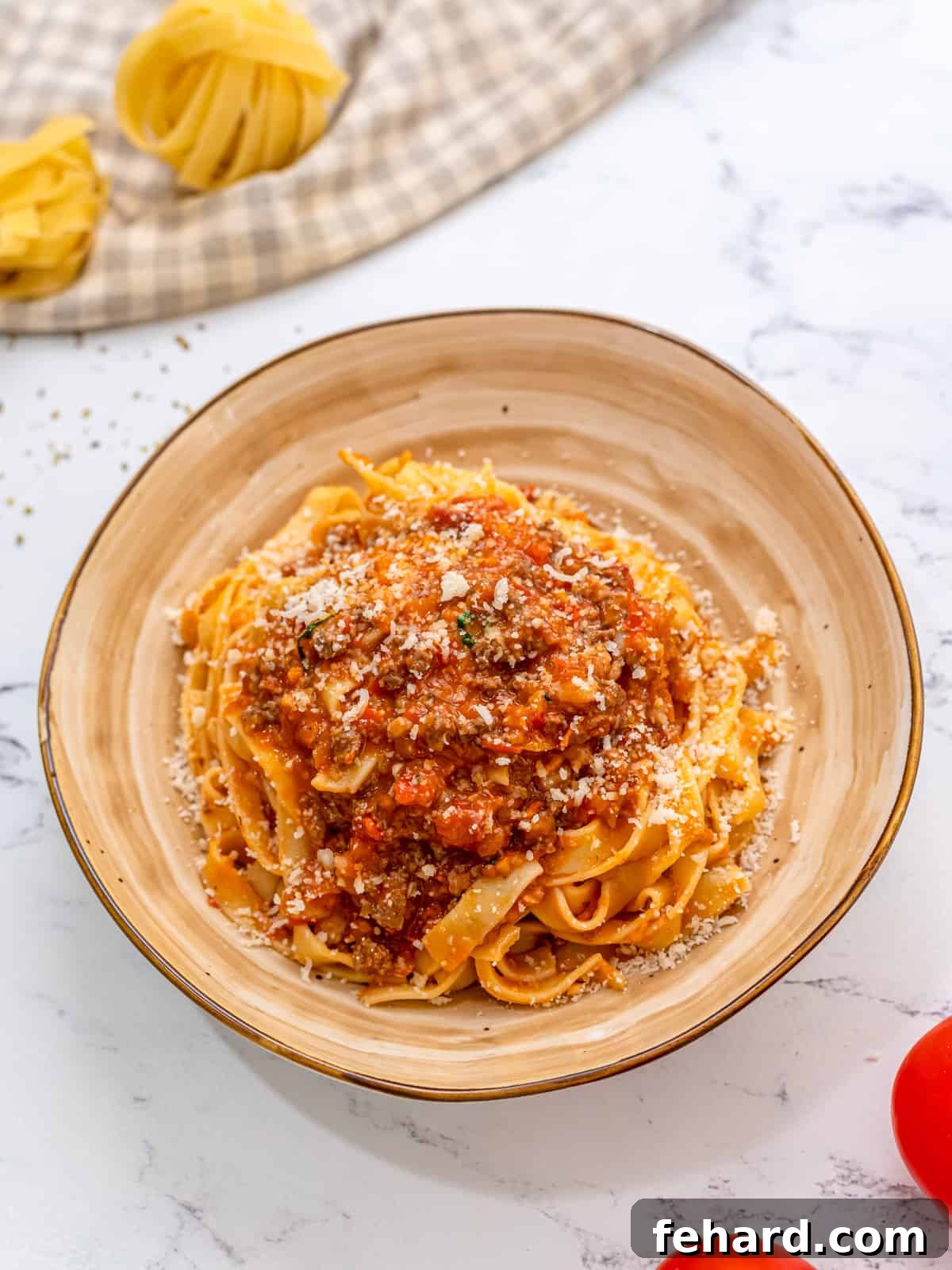
Why This Bolognese Recipe Stands Out as the Best
In the world of meat sauces, Bolognese holds a special place, often hailed as the richest and most flavorful. This particular recipe elevates the experience through several key elements, meticulously combined to create unparalleled depth and comfort:
- A Trio of Meats: Unlike simpler meat sauces, our Bolognese boasts a trifecta of flavors. The richness of ground beef, the savory spice of Italian sausage, and the salty, crisp texture of pancetta work in concert to build a complex, multi-dimensional flavor profile and a truly hearty texture that clings beautifully to pasta.
- The Essential Italian Soffritto: The foundation of any great Italian sauce, the soffritto in this recipe—a carefully sautéed blend of finely diced onions, carrots, and celery, enhanced with fragrant garlic—adds incredible aromatic depth and a subtle sweetness. It’s the secret to a nuanced, well-balanced sauce that’s anything but one-note.
- The Balance of Wine and Balsamic: To cut through the inherent richness of the meats and impart a sophisticated layer of flavor, this recipe uniquely incorporates both dry white wine and balsamic vinegar. The wine deglazes the pan, capturing all the flavorful browned bits, while the balsamic vinegar introduces a slight tang and complexity, perfectly balancing the sauce without overpowering its core essence.
- Slow Simmering Perfection: True Bolognese is a labor of love, and this recipe honors that tradition. A lengthy, gentle simmer allows the flavors to meld, deepen, and transform, resulting in an incredibly tender meat sauce with a velvety texture that simply melts in your mouth. This patient approach is what makes the sauce so profoundly comforting and deeply satisfying.
While preparing this classic Italian meat sauce does demand a dedicated investment of time, the effort is profoundly rewarded. The journey from raw ingredients to a simmering pot of rich, aromatic Bolognese is a culinary meditation, culminating in a dish so comforting and bursting with flavor that it’s destined to become a cherished family favorite for generations to come. Every spoonful tells a story of tradition, passion, and exquisite taste.
Key Ingredients for Crafting an Unforgettable Bolognese
Creating an exceptional Bolognese sauce begins with selecting the right ingredients. Each component plays a vital role in building the complex layers of flavor that define this iconic Italian dish. Here’s a closer look at the essential elements and why they matter:
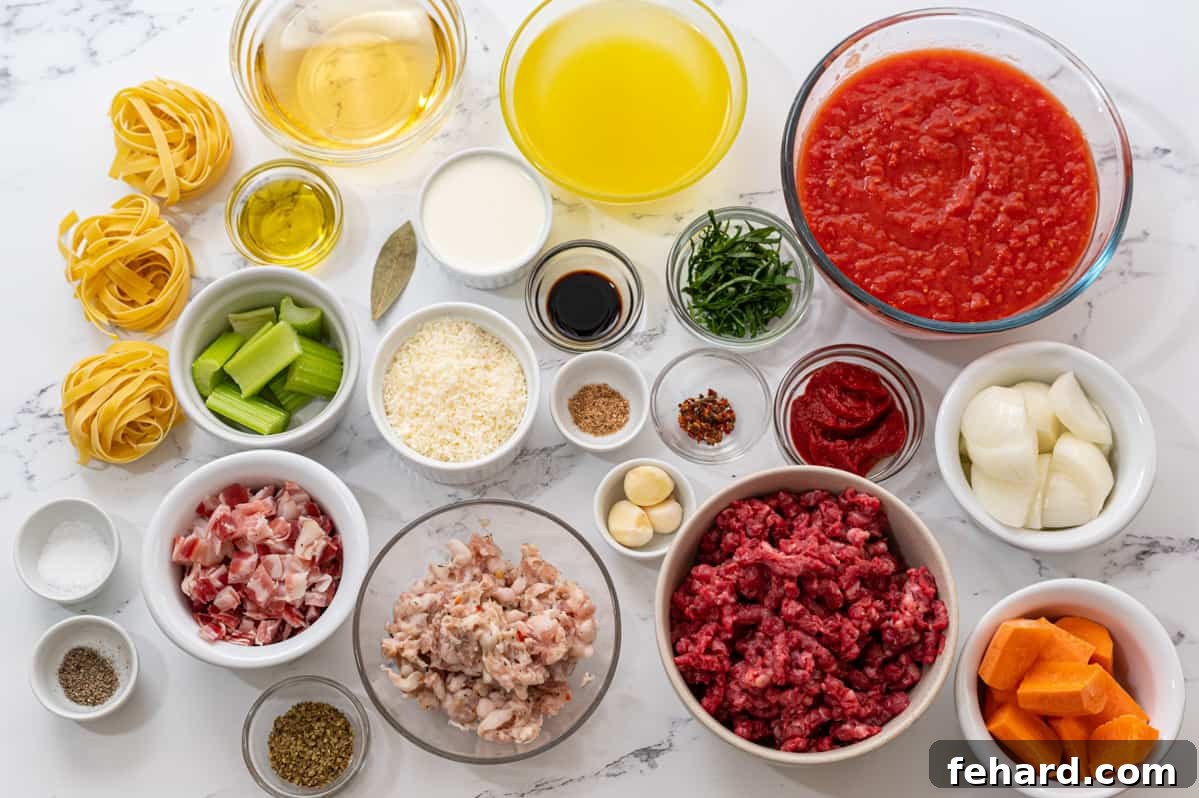
- Pancetta: This Italian cured pork belly is non-negotiable for authentic Bolognese. You can typically find it in the deli section of most grocery stores, often pre-cubed or in a thicker slice that you can dice yourself. The rendered fat from the pancetta provides the initial cooking oil and a foundational layer of salty, savory flavor that cannot be replicated. Avoid substituting with bacon, as its smoky flavor is too assertive and will overpower the delicate balance of the Bolognese.
- Italian Sausage: Crucial for depth and spice, ensure you use Italian-flavored sausage – whether mild or hot, depending on your preference. Do not opt for plain bulk sausage or breakfast sausage, as they lack the distinctive fennel and herb notes essential to the sauce. You can purchase raw links and remove the meat from their casings, or use pre-ground Italian sausage. Feel free to choose pork, turkey, or chicken Italian sausage; each offers a slightly different character while maintaining the core Italian flavor profile.
- Ground Beef: For the best texture and flavor balance, I highly recommend using lean ground beef, ideally 90/10. With the generous fat rendered from the pancetta and sausage, a leaner ground beef prevents the sauce from becoming overly greasy. If you only have 85/15, it will work, but you may need to drain a bit more fat after browning. This provides the robust beefy backbone of the sauce.
- The Soffritto (Vegetables): This aromatic base is the soul of Bolognese. The combination of finely diced celery, onion, carrots, and garlic adds a crucial layer of sweetness, depth, and freshness. This “holy trinity” of Italian cooking softens and caramelizes slowly, dissolving almost imperceptibly into the sauce, enriching its flavor without leaving large chunks of vegetables.
- Dry White Wine: Wine is more than just a liquid in Bolognese; it’s a flavor enhancer. A dry white wine, such as Chardonnay or Pinot Grigio, is ideal for deglazing the pan, lifting all the browned bits (fond) from the bottom, which are packed with concentrated flavor. It also adds a bright, acidic note that cuts through the richness of the meats. Always choose a wine you would enjoy drinking – avoid “cooking wine” as its inferior quality will negatively impact your sauce. If you prefer to omit alcohol, a good quality chicken stock can be used as a substitute, though the flavor will be slightly different.
- Chicken Stock: While a meat sauce, this recipe specifically calls for low-sodium chicken stock, not beef broth. Beef broth can sometimes be too assertive and overwhelm the nuanced flavors of the various meats and vegetables. Chicken stock offers a lighter yet savory base that allows other ingredients to shine. Using low-sodium stock gives you control over the final seasoning. You’ll need additional stock during the simmering process to maintain the perfect consistency.
- Crushed Tomatoes: The tomato component of Bolognese is often less prominent than in other Italian red sauces, serving more as a background flavor and rich base. Opt for high-quality crushed tomatoes or whole peeled tomatoes that you can puree yourself. Avoid tomato sauce, as it often contains added sugars, herbs, or preservatives that can alter the authentic flavor profile.
- Balsamic Vinegar: This seemingly small addition is a game-changer. A touch of balsamic vinegar at the end of the cooking process rounds out the sauce, adding a crucial acidic brightness and a hint of complex sweetness that balances the richness of the meats and long-simmered flavors. Do not overlook this ingredient – it elevates the entire dish!
- Heavy Cream: The finishing touch, heavy cream adds a luxurious, silky texture and a touch of sweetness that makes the Bolognese truly indulgent. It binds the flavors together and gives the sauce its signature creamy mouthfeel. For a lighter or dairy-free version, you can use half-and-half or simply omit it, though the classic richness will be slightly altered.
- Nutmeg: Just a pinch of freshly grated nutmeg might seem unusual, but it’s a traditional secret ingredient in Bolognese. It subtly enhances the savory notes of the meat and adds a delicate warmth that complements the other spices beautifully.
Step-by-Step Guide: How to Make Authentic Bolognese Sauce
Creating this deeply flavorful Bolognese sauce is a rewarding culinary journey. Follow these detailed steps to achieve perfect results. You’ll find specific ingredient quantities in the recipe summary section towards the end of this post.
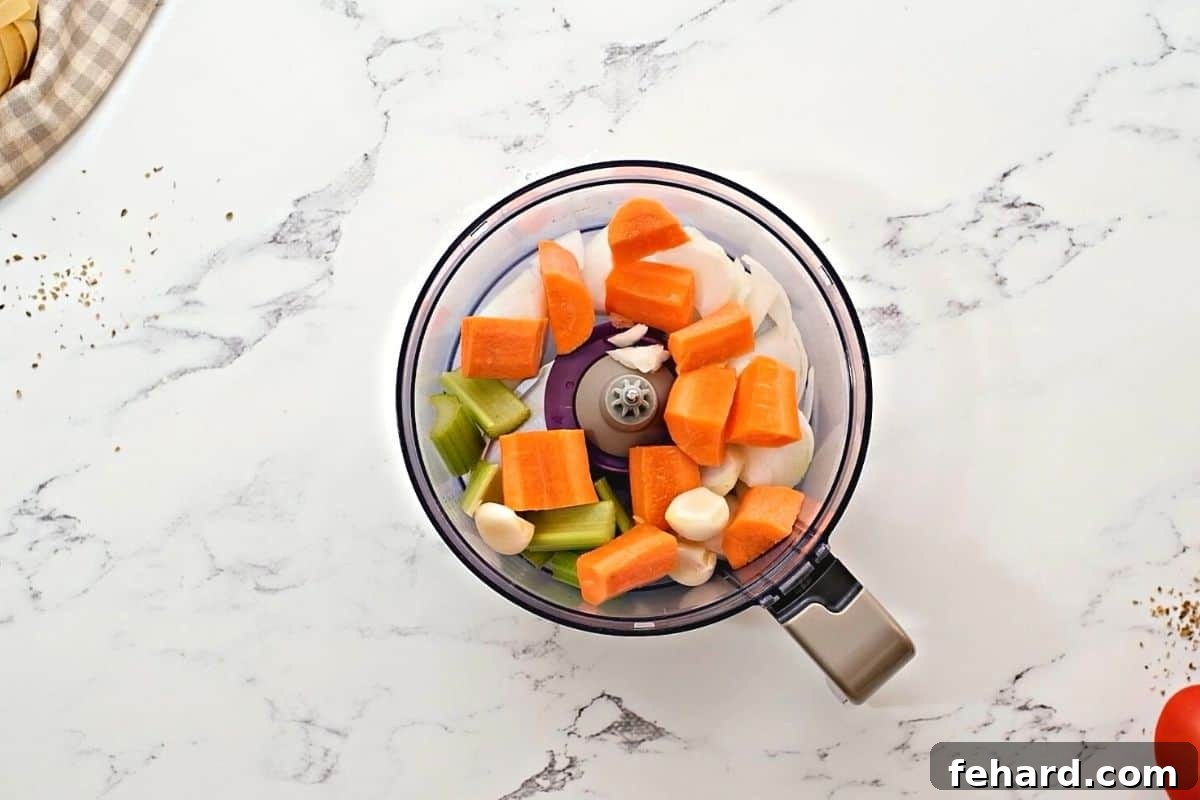
- Prepare the Soffritto: Before you begin cooking, finely mince your vegetables. In a food processor fitted with an s-blade, pulse together one medium onion, one large carrot (peeled), one stalk of celery, and three cloves of garlic until they are very finely minced. This technique not only saves time but ensures the vegetables practically melt into the sauce, adding flavor without noticeable texture. Set this mixture aside.
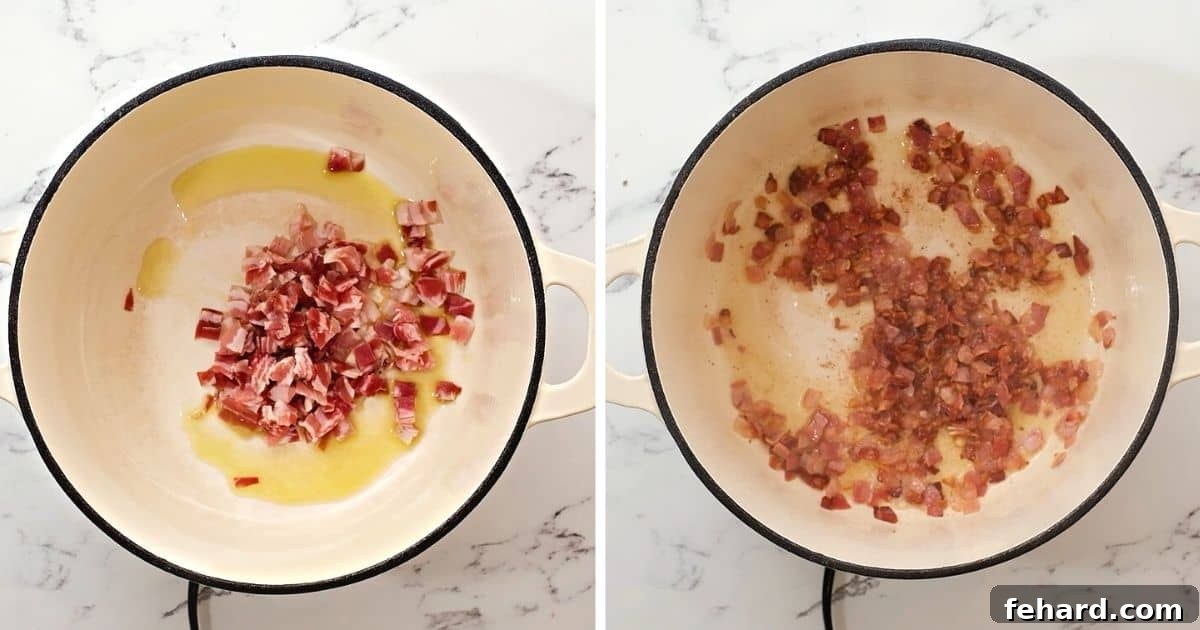
- Render the Pancetta: In a large Dutch oven or heavy-bottomed pot, heat one tablespoon of extra virgin olive oil over medium-high heat. Add the cubed pancetta and cook until it is golden brown and crispy, typically about 5 minutes. The goal is to render out its fat and achieve a beautiful crispness. Once cooked, remove the pancetta from the pan with a slotted spoon and reserve it; you’ll add it back to the sauce later. Leave the rendered fat in the pot as a flavor base.
- Brown the Meats: If the pancetta didn’t render much fat, add a tiny bit more olive oil to the pan. Add the lean ground beef and Italian sausage to the pot. Cook over medium-high heat, breaking the meat into small, uniform chunks with a spoon as it browns. Continue cooking until the meat is nearly fully browned, releasing its flavorful juices.
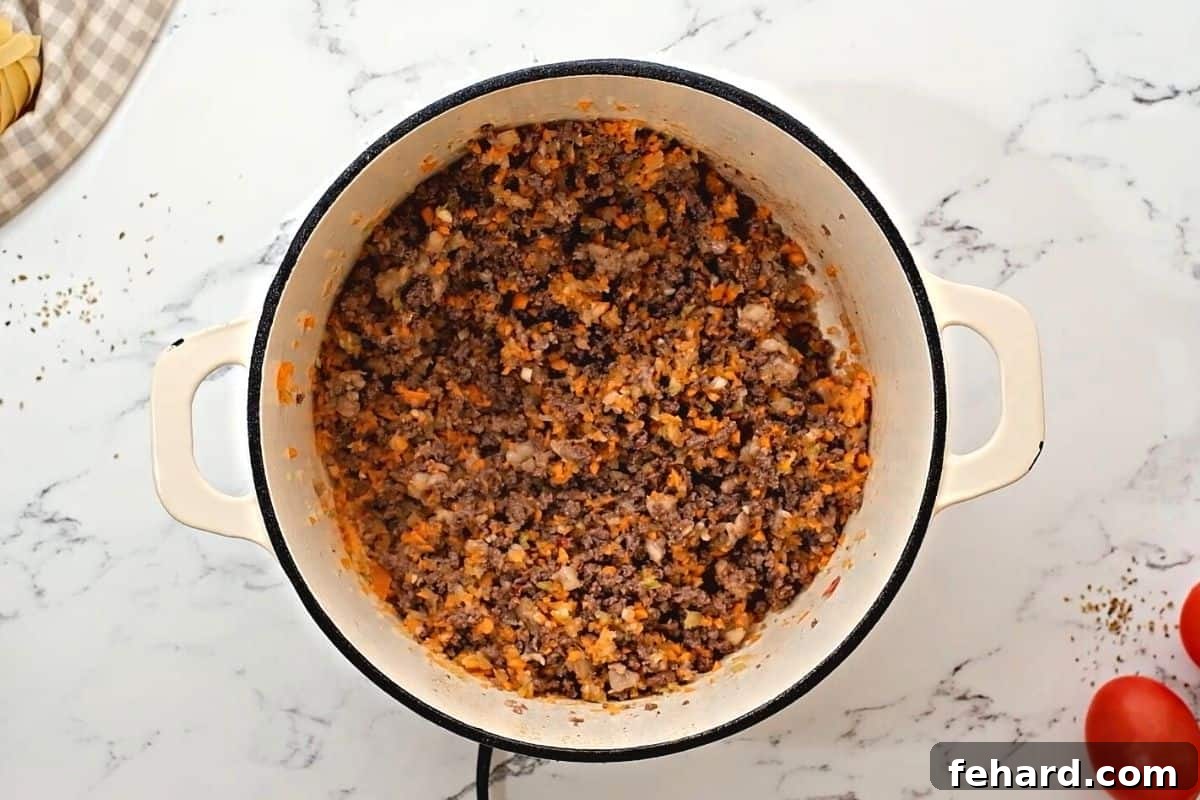
- Sauté the Soffritto with Meat: Drain any excess fat from the browned meat if necessary (especially if using less lean beef). Then, add the reserved finely minced vegetable mixture (soffritto) to the pot with the meat. Cook for about 5 minutes, stirring occasionally, until the vegetables soften and become fragrant, integrating their flavors with the meat.
- Toast Spices and Tomato Paste: Stir in the dried oregano, crushed red pepper flakes (for a subtle kick), kosher salt, ground black pepper, and tomato paste into the meat and vegetable mixture. Continue to cook for 1-2 minutes, stirring constantly. This crucial step toasts the tomato paste, deepening its flavor and removing any raw acidity, while allowing the spices to become more aromatic.
- Deglaze with Wine: Pour in the dry white wine (or additional chicken stock if omitting wine). Use a wooden spoon to scrape up all the flavorful browned bits (fond) stuck to the bottom of the pan. These bits are packed with concentrated flavor and will significantly enrich your sauce. Bring the wine to a boil and let it simmer for 2 to 3 minutes, allowing the alcohol to cook off and the liquid to reduce slightly, intensifying its flavor.
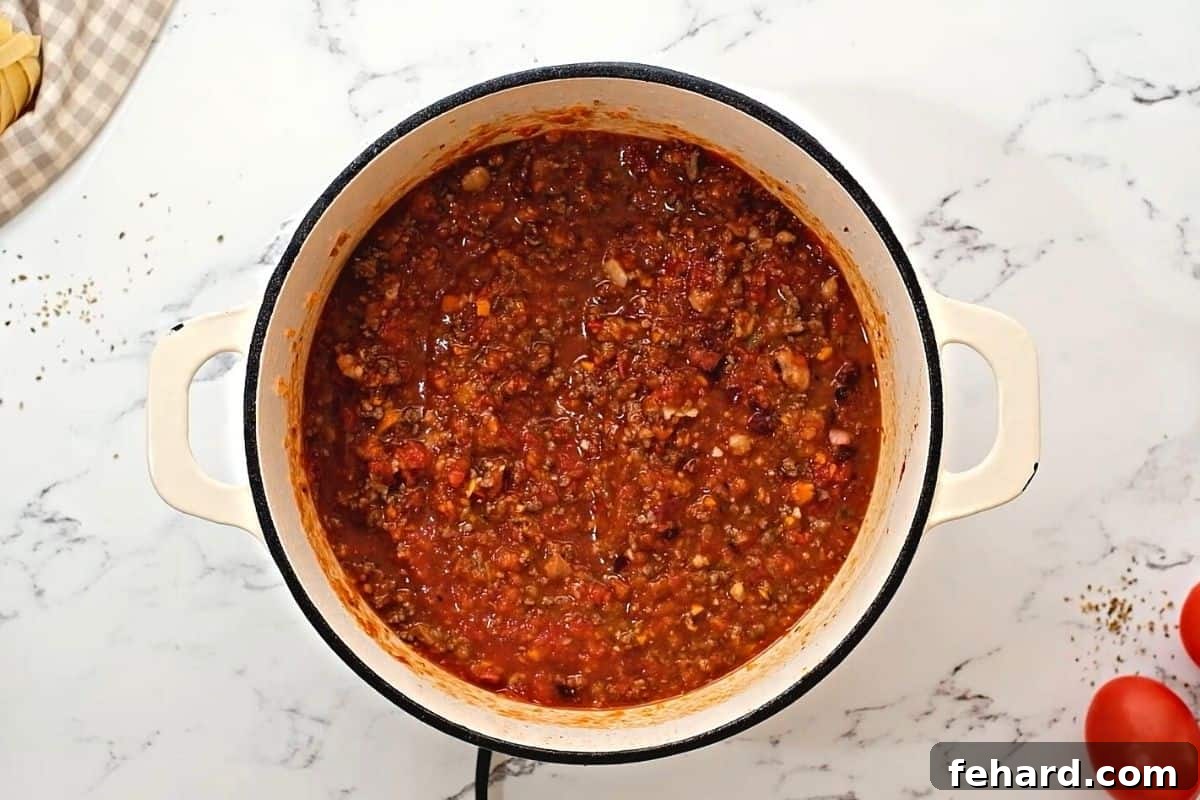
- Simmer the Sauce to Perfection: Stir in the crushed tomatoes, one cup of low-sodium chicken stock, the bay leaf, a pinch of freshly grated nutmeg, and the half tablespoon of balsamic vinegar. Add the reserved crispy pancetta back into the pot. Bring the sauce to a boil, then immediately reduce the heat to the lowest setting. Partially cover the pot and let the sauce simmer gently for a minimum of 2 to 3 hours. During this long simmer, check the sauce every 20-30 minutes, giving it a gentle stir and adding up to an additional half cup of stock if it becomes too thick. This slow cooking allows the flavors to deepen and the meat to become incredibly tender.
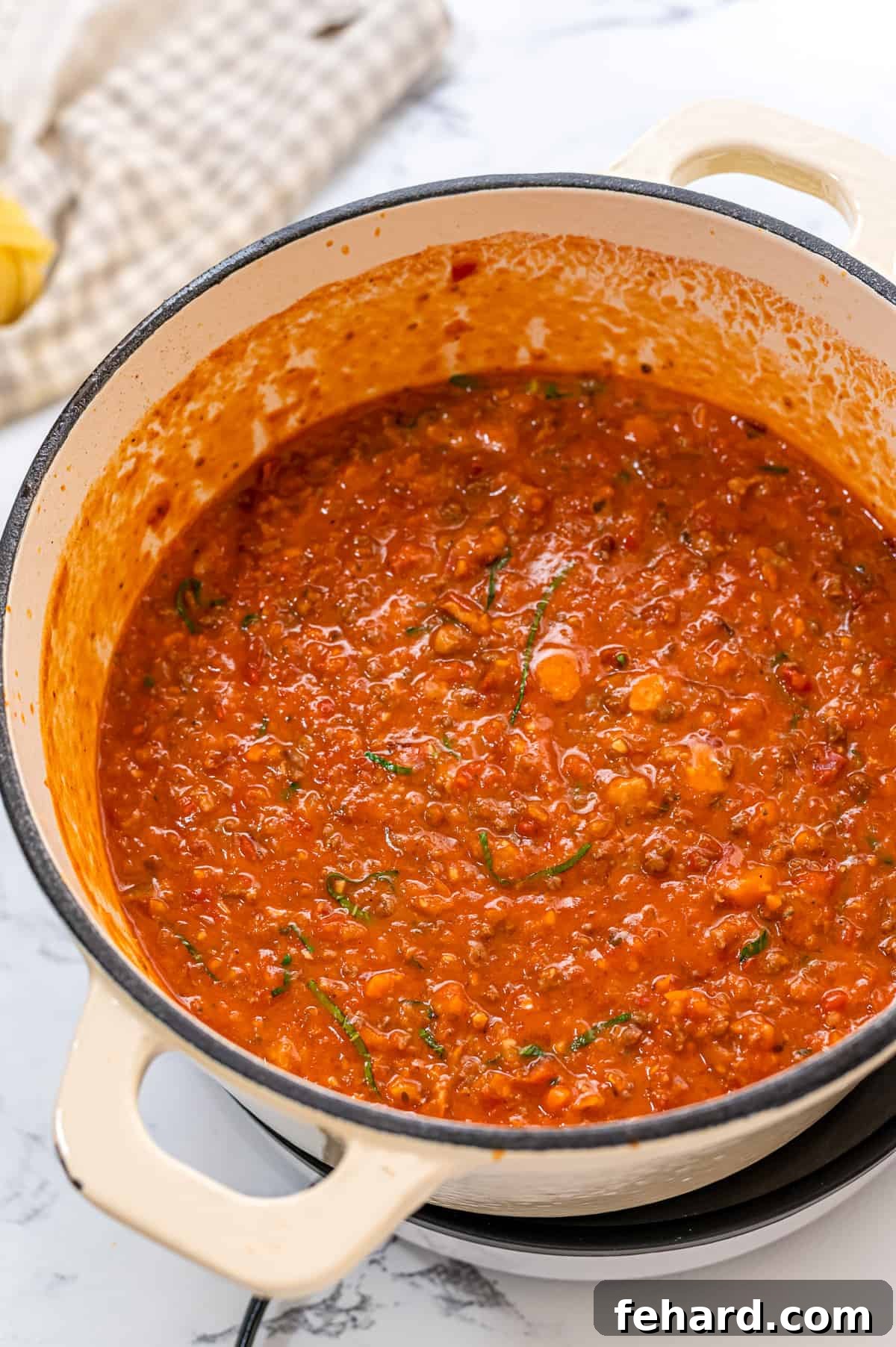
- Finish with Cream and Basil: Once the sauce has achieved its desired thickness and the meat is fork-tender, stir in the heavy cream and fresh basil. Allow it to heat through for another 3-4 minutes, letting the cream infuse the sauce with its luxurious richness and the basil brighten the overall flavor.
Expert Tips for the Best Bolognese Sauce
Achieving a truly exceptional Bolognese involves more than just following steps; it’s about understanding the nuances. Here are a few extra tips to elevate your sauce:
- Don’t Rush the Browning: Patience during the browning of the pancetta and meats is paramount. Those browned bits (fond) stuck to the bottom of the pan are flavor gold. Ensure you scrape them up thoroughly when deglazing with wine.
- Fine Soffritto is Key: The vegetables in your soffritto should be almost imperceptible in the final sauce. Using a food processor ensures this fine mince, allowing them to melt into the sauce and contribute flavor without a chunky texture.
- Taste as You Go: Seasoning is a journey, not a single step. Taste your sauce periodically during the simmering process and adjust salt, pepper, and even a tiny bit more balsamic or nutmeg if needed.
- Use Quality Ingredients: Since Bolognese is relatively simple in its components, the quality of each ingredient truly shines through. Opt for good quality canned tomatoes, fresh meats, and a wine you’d actually drink.
- Slow and Low Simmer: The longer and slower your Bolognese simmers, the more the flavors develop and the more tender the meat becomes. Resist the urge to crank up the heat; a gentle bubble is all you need.
- Pasta Choice Matters: Pair your rich Bolognese with thick, broad pasta shapes like tagliatelle or pappardelle, or sturdy tubes like rigatoni, which are excellent at holding onto the sauce.
Serving Suggestions for Your Perfect Bolognese
Bolognese sauce is a versatile culinary delight, but it finds its most iconic partner in pasta. To truly elevate your dish, select a pasta shape that is designed to capture and hold the rich, chunky sauce. Traditional choices like tagliatelle and pappardelle, with their broad, flat surfaces, are excellent. Other great options include cavatappi, rigatoni, or even wide fettuccine, as their grooves and shapes scoop up every delicious morsel of sauce.
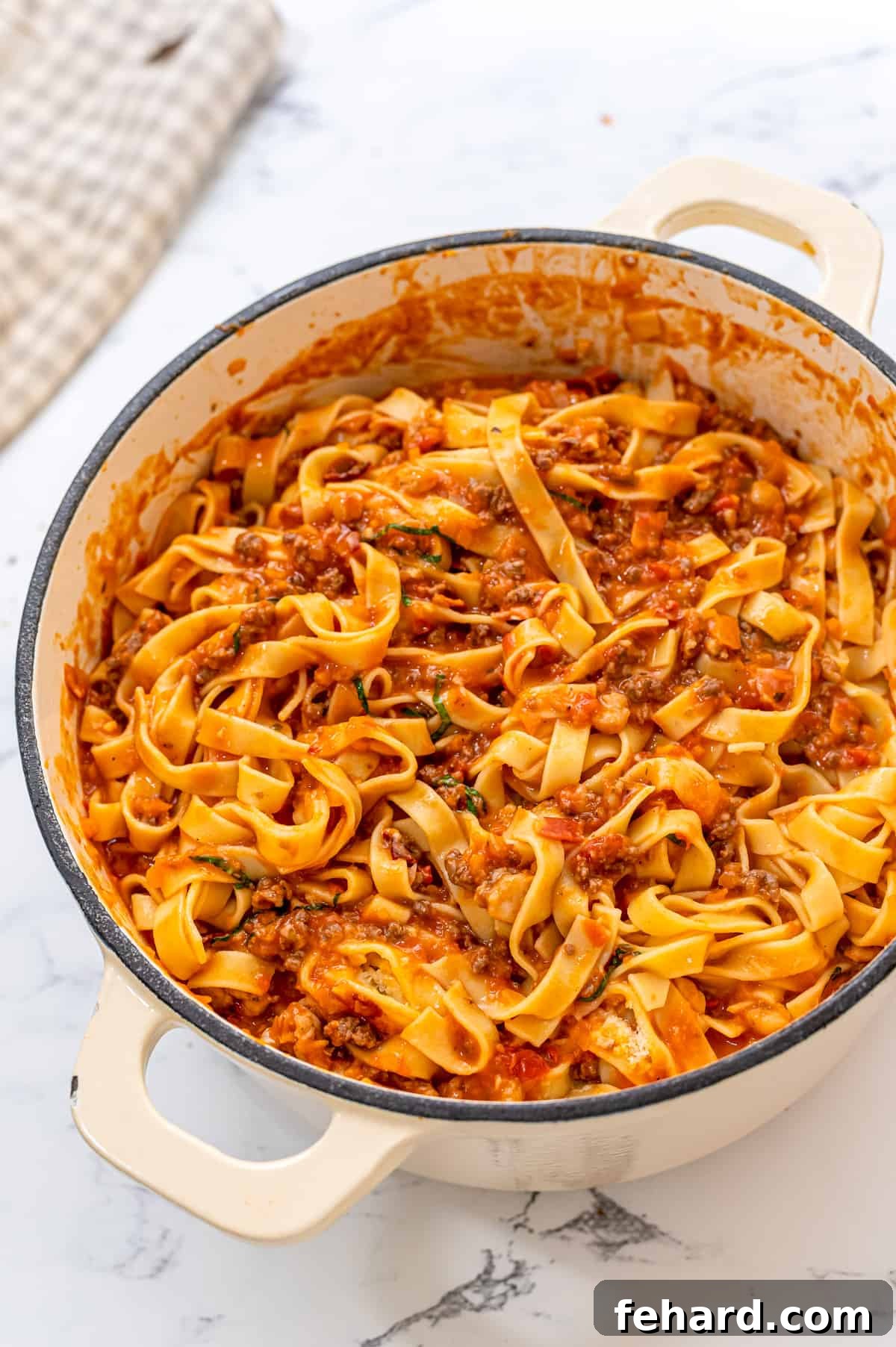
For an authentic Italian experience, I highly recommend a specific technique: partially cook your chosen pasta until it’s about 2 minutes shy of al dente according to package directions. Drain it, reserving about half a cup of the starchy cooking water. Then, transfer the partially cooked pasta directly into the simmering Bolognese sauce along with a splash or two of the reserved pasta water. Finish cooking the pasta in the sauce for a couple of minutes, tossing constantly. This allows the noodles to absorb the incredible flavors of the Bolognese and helps the sauce thicken and cling beautifully to the pasta, creating a cohesive and deeply integrated dish.
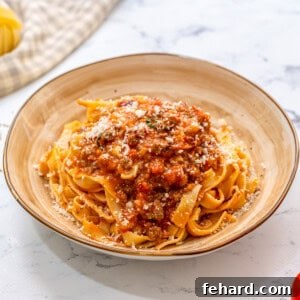
Garnish generously with freshly grated Parmesan cheese and a sprinkle of fresh basil ribbons for an added burst of flavor and a beautiful presentation. While pasta is traditional, Bolognese can also be enjoyed over creamy polenta, mashed potatoes, or even as a filling for lasagna or shepherd’s pie for a comforting twist.
Storage and Reheating Instructions for Bolognese Sauce
One of the many joys of Bolognese is that it often tastes even better the next day, making it perfect for meal prep. The sauce itself freezes and reheats exceptionally well, allowing you to enjoy this delicious meal long after it’s cooked. However, it’s generally best to store the sauce separately from the pasta, as pasta can become mushy or alter in texture after freezing and thawing.
- Refrigerating Pasta Bolognese: If you’ve already combined your pasta with the sauce, store any leftovers in an airtight container in the refrigerator for 3-4 days. To reheat individual servings, use a microwave in 30-second intervals, stirring occasionally, until thoroughly warmed.
- Refrigerating Bolognese Sauce (Alone): For maximum freshness and versatility, store only the Bolognese sauce in an airtight container in the refrigerator for 3-4 days. When ready to enjoy, reheat it gently over low heat on the stovetop, stirring until warmed through. You can then cook fresh pasta to serve with it.
- Freezing Bolognese Sauce: Bolognese sauce is an excellent candidate for freezing. Allow the sauce to cool completely after cooking. Transfer it to an airtight, freezer-safe container or heavy-duty freezer bags, leaving a small amount of headspace for expansion. Freeze for up to 3 months. To defrost, transfer the frozen sauce to the refrigerator overnight. Reheat on the stovetop over low heat, stirring occasionally, until it’s simmering and thoroughly warmed. You may need to add a splash of stock or water to adjust consistency if it appears too thick after thawing.
Bolognese Recipe FAQs
Here are answers to some common questions about making this classic Bolognese sauce:
- Is it necessary to add heavy cream to Bolognese sauce?
- While heavy cream is a traditional ingredient and adds a luscious, velvety texture and classic richness, you can certainly omit it if you prefer a dairy-free version or wish to reduce calories. The sauce will still be delicious and hearty, but its flavor profile will be slightly different, lacking that signature creamy finish.
- Is the addition of pancetta essential for authentic Bolognese?
- Pancetta is a cornerstone of authentic Bolognese, contributing an incredible depth of savory flavor and rich fat that forms the foundation of the sauce. While highly recommended for the most traditional taste, you can omit it if you don’t have it on hand. However, I strongly advise against substituting bacon for pancetta in this recipe, as bacon’s distinct smokiness will fundamentally alter and likely overpower the nuanced flavors of the Bolognese.
- Is wine a necessary ingredient in Bolognese?
- Wine plays a vital role in developing the deep, complex flavors of Bolognese. It deglazes the pan, incorporates flavorful browned bits, and adds a crucial touch of acidity that balances the richness of the meats. If you prefer not to use alcohol, you can substitute an equal amount of good quality chicken stock. While the flavor will differ slightly, it will still yield a delicious sauce.
- Can red wine be used instead of white wine in Bolognese?
- Absolutely! While dry white wine is traditionally used, a dry red wine such as Merlot or Cabernet Sauvignon makes an excellent substitute. Red wine will impart a richer, deeper color and a slightly more robust flavor to the sauce, with equally delicious results. Choose a dry red wine that you would enjoy drinking.
- What is the best way to get finely minced vegetables for the sofritto?
- For the classic, almost imperceptible sofritto in Bolognese, using a food processor fitted with an s-blade is highly recommended. It quickly and efficiently dices the onions, carrots, celery, and garlic into a very fine consistency, ensuring they melt into the sauce as it simmers, contributing flavor without noticeable texture. If you don’t have a food processor, take your time to finely hand-chop them.
- Why is slow simmering so important for Bolognese?
- Slow simmering is the heart of an authentic Bolognese. It allows all the distinct flavors from the meats, vegetables, wine, and tomatoes to meld, deepen, and concentrate over several hours. This process also breaks down the meat fibers, resulting in an incredibly tender texture and a truly rich, complex sauce that tastes far greater than the sum of its parts. Patience is key to unlocking the true potential of this dish.
More Italian-Inspired Favorite Recipes to Explore
If you loved crafting and savoring this authentic Bolognese sauce, we invite you to explore more of our cherished Italian-inspired recipes. Each one brings a piece of Italy’s rich culinary tradition to your home:
- Hearty Italian Wedding Soup
- Quick Instant Pot Zuppa Toscana
- Comforting Tortellini Soup
- Easy Homemade Lasagna
- Flavorful Pasta Puttanesca
- Perfect Italian Baked Meatballs
We hope this comprehensive guide inspires you to create your own magnificent Bolognese sauce. Your feedback is invaluable, so if you enjoyed this classic Bolognese recipe, please consider leaving a comment and review below. Happy cooking!
Bolognese Sauce: Recipe At A Glance
Rating: 5 out of 5 stars from 11 votes
Bolognese Sauce
By: Kristen Chidsey
Servings: 12
Prep Time: 10 mins
Cook Time: 2 hrs 30 mins
Total Time: 2 hrs 40 mins
This luscious, hearty Italian meat sauce is made with ground beef, Italian sausage, pancetta, wine, and tomatoes. It’s the perfect rich sauce for the most satisfying pasta dinner.
Ingredients
- 1 medium onion, cut into large chunks
- 1 large carrot, peeled, and cut into large chunks
- 1 stalk celery, cut into large chunks
- 3 cloves garlic
- 1 tablespoon extra virgin olive oil
- 3 ounces pancetta, cubed in ¼-inch pieces
- 1 pound lean ground beef
- ½ pound Homemade Italian sausage, turkey, or pork
- 2 teaspoons dried oregano
- ¼ teaspoon crushed red pepper flakes
- 1 bay leaf
- ½ teaspoon kosher salt
- ¼ teaspoon ground black pepper
- 2 tablespoons tomato paste
- 1 cup dry white wine, such as chardonnay
- 28 ounces crushed tomatoes
- 1 cup low-sodium chicken stock, + ½ cup more if needed
- ¼ teaspoon freshly grated nutmeg
- ½ tablespoon balsamic vinegar
- ¼ cup heavy cream
- 2 pounds dried pasta, such as tagliatelle, pappardelle, or rigatoni
- ½ cup freshly grated Parmesan cheese, plus more for serving
- 8 leaves basil, sliced into skinny ribbons
Instructions
- In a food processor fitted with an s-blade, pulse together 1 medium onion, 1 large carrot, 1 stalk celery, and 3 cloves garlic until finely minced. Reserve to add to the sauce.
- In a large dutch oven, heat 1 tablespoon extra virgin olive oil over medium-high heat. Once the oil is heated, add in 3 ounces pancetta, and cook until golden brown, about 5 minutes. Remove the pancetta from the pan and reserve for later.
- Add 1 pound lean ground beef and ½ pound Homemade Italian sausage into the same pan the pancetta cooked in. Cook the meat until the meat is browned, breaking up the meat into small chunks as it cooks.
- Add the vegetable mixture to the meat mixture and cook until the vegetables are softened about 5 minutes.
- Add in 2 teaspoons dried oregano, ¼ teaspoon crushed red pepper flakes, ½ teaspoon kosher salt, ¼ teaspoon ground black pepper, and 2 tablespoons tomato paste and stir into the meat mixture. Allow that to cook for 1-2 minutes to toast the tomato paste.
- Add in 1 cup dry white wine, and scrape up the browned bits on the bottom of the pan. Allow the wine to come to a boil and cook for 2 to 3 minutes allowing the alcohol to cook off.
- Stir in 28 ounces crushed tomatoes, 1 cup low-sodium chicken stock, 1 bay leaf, ¼ teaspoon freshly grated nutmeg, and ½ tablespoon balsamic vinegar. Bring to a boil, and then lower the heat to as low as it will go. Simmer the sauce, partially covered, for 2 to 3 hours, until the sauce is thickened and the meat is very tender. If the sauce becomes too thick as it simmers, add in up to ½ cup more stock.
- Stir in ¼ cup heavy cream and basil and allow to cook for 3-4 minutes.
- Meanwhile, cook 2 pounds dried pasta of your choice for 2 minutes less than package directions in heavily salted boiling water. Drain the pasta, reserving ½ cup of the cooking liquid.
- Add the cooked pasta, reserved cooking liquid, and ½ cup freshly grated Parmesan cheese to the sauce. Increase the heat to medium, bring to a simmer, and cook, tossing constantly, until pasta is al dente and liquid is slightly thickened about 2 minutes.
- Serve with additional parmesan and basil as desired.
Recipe Notes
- Pancetta: If you cannot find pancetta, simply omit it from the recipe. This is not a time to use bacon in its place.
- Sausage: Be sure to use Italian seasoned sausage. Pork, chicken, or turkey sausage are all acceptable options.
- Ground Beef: I recommend using 90/10 ground beef for Bolognese. You can get away using 85/15, but your sauce will be a bit greasier. Feel free to substitute ground turkey for the beef if desired.
- Wine: Select a dry white wine such as Chardonnay or Pinot Grigio. Be sure it is a wine suitable for drinking, do not use cooking wine, as the flavor will not be even close to the same. You can use a dry red wine if that is all you have on hand.
- Tomatoes: Be sure to use crushed or pureed tomatoes, not tomato sauce, as tomato sauce can have added ingredients.
- Heavy Cream: Feel free to use half and half or omit for a dairy-free Bolognese.
- Storage: Store Bolognese Sauce in an airtight container in the refrigerator for 3-4 days and reheat over low heat on the stove until warmed through.
- Freezing: You can freeze the Bolognese sauce, without the addition of pasta. Place cooled Bolognese Sauce in an airtight, freezer-safe container, leaving a bit of room for expansion, and freeze for up to 3 months. Defrost in the refrigerator overnight and reheat on the stove over low heat, until warmed through.
- Nutrition is based on pasta and Bolognese sauce.
Nutrition Information (per serving)
(Based on 12 servings)
- Calories: 489 kcal
- Carbohydrates: 66 g
- Protein: 25 g
- Fat: 12 g
- Saturated Fat: 5 g
- Polyunsaturated Fat: 2 g
- Monounsaturated Fat: 4 g
- Trans Fat: 1 g
- Cholesterol: 48 mg
- Sodium: 640 mg
- Potassium: 666 mg
- Fiber: 4 g
- Sugar: 7 g
- Vitamin A: 1354 IU
- Vitamin C: 14 mg
- Calcium: 111 mg
- Iron: 5 mg
Nutrition information is automatically calculated, so should only be used as an approximation.