
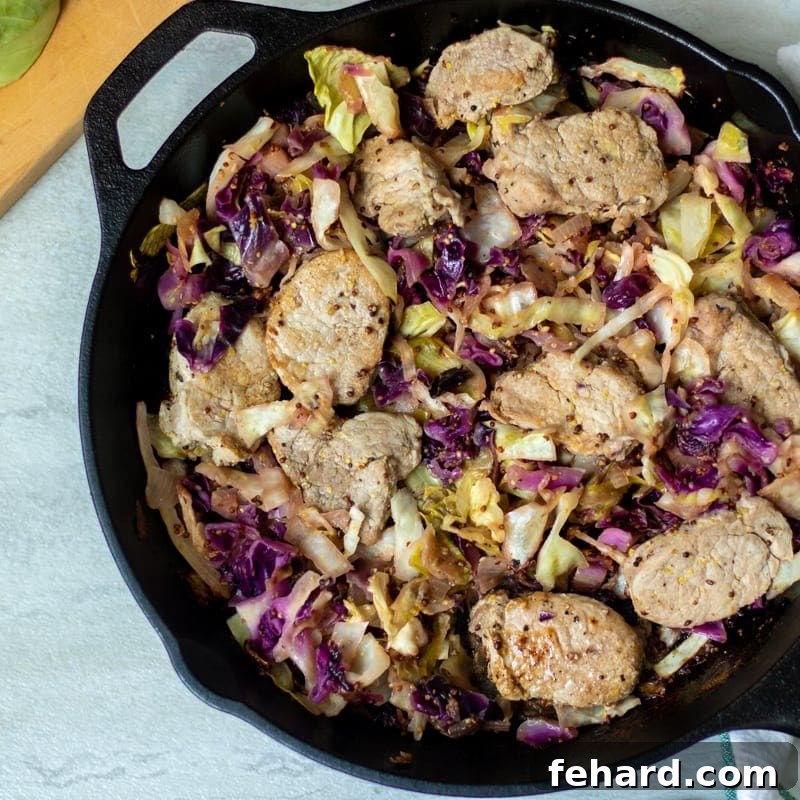
Skillet Pork Tenderloin with Cabbage is an incredibly easy, one-pot meal that brings together succulent pork and crisp-tender cabbage in a symphony of flavors. Featuring tender pork tenderloin chops, pan-seared to perfection with a delightful blend of mustard and apple cider, this dish offers a quick, healthy, and satisfying dinner that is both gluten-free and low-carb. Get ready to elevate your weeknight dining with this mouth-watering recipe that’s packed with taste.
In the quest for delicious yet simple weeknight dinners, this skillet pork tenderloin with cabbage stands out as a true culinary hero. It’s a dish that masterfully combines speed with exceptional taste, proving that you don’t need hours in the kitchen to create a meal that feels gourmet. The classic pairing of savory pork and earthy cabbage, enhanced by the sharp notes of mustard and the subtle sweetness of apple cider, culminates in a truly irresistible meal. Best of all, this entire culinary creation can be on your table in less than 30 minutes, making it an ideal choice for even the busiest of evenings.
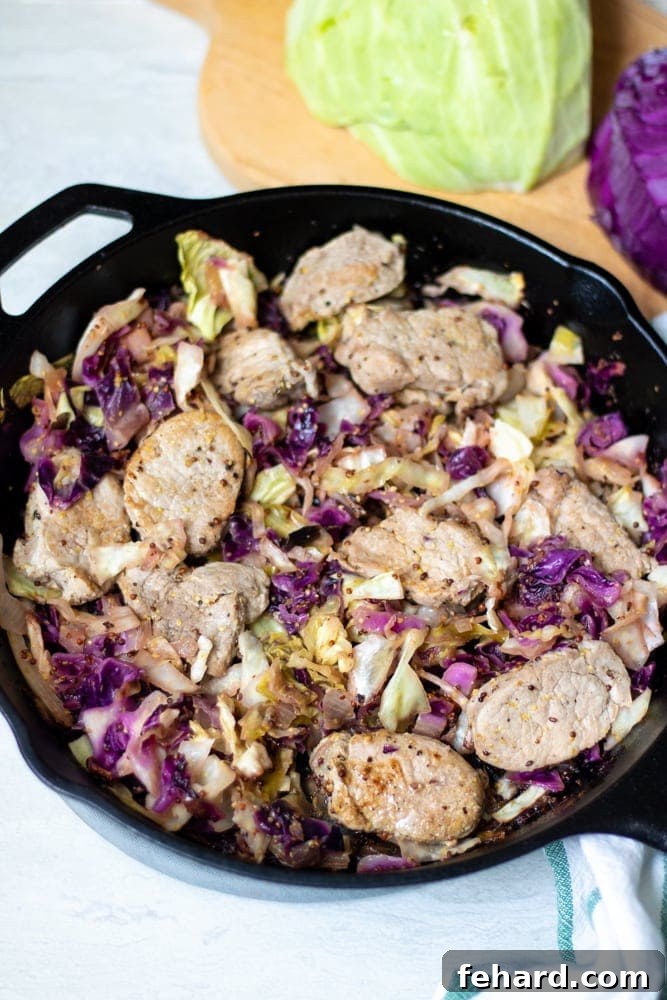
My childhood kitchen, situated in an area rich with Polish heritage, often filled with the comforting aromas of pork and cabbage dishes. This culinary tradition ingrained in me a deep appreciation for this timeless combination. Dishes like Pork & Sauerkraut were staples, and it’s easy to see why. The tender, savory qualities of pork are beautifully complemented by the distinct sharpness and slight bitterness of cabbage. This interplay of textures and flavors adds a wonderful dimension to what might otherwise be a milder cut of meat. When you introduce the zesty kick of mustard and the balanced sweetness of apple cider into the mix, you transform a simple dish into a truly flavorful and memorable dinner experience. This skillet version is a faster, more convenient take on traditional slow-braised pork roasts, perfectly suited for the demands of modern life without compromising on taste.
Unlike heartier pork roasts that require hours of slow cooking, this recipe smartly utilizes pork tenderloin. This lean, quick-cooking cut makes it an ideal choice for rapid preparation. It’s this efficiency that positions this recipe as a perfect solution for busy weeknights when you crave a wholesome, homemade meal but are short on time. Its simplicity doesn’t detract from its nutritional value; it’s a healthy, satisfying, and deeply flavorful dish that effortlessly fits into a balanced diet. Whether you’re aiming for a low-carb option, a gluten-free meal, or simply a delicious dinner everyone will love, this skillet pork tenderloin and cabbage delivers on all fronts.
Why You’ll Love This Skillet Pork Tenderloin with Cabbage
- Lightning Fast: Ready in under 30 minutes, it’s perfect for busy weeknights.
- One-Pot Wonder: Minimal cleanup with everything cooked in a single skillet.
- Bursting with Flavor: A delightful balance of savory pork, sweet apple cider, tangy mustard, and tender cabbage.
- Healthy & Wholesome: Naturally low-carb, gluten-free, and packed with nutrients.
- Family-Friendly: A comforting and approachable meal that appeals to a wide range of palates.
- Economical: Uses readily available and affordable ingredients.
Key Ingredients for Success
This remarkable skillet meal achieves its flavorful, sweet, and tangy profile with just a handful of thoughtfully chosen ingredients. Each component plays a crucial role in creating the dish’s distinctive taste.
- Pork Tenderloin: This is a key ingredient and cannot be substituted with pork loin without significant adjustments to cooking times and temperatures. Pork tenderloins are characteristically long and narrow, typically sold in packs of two. They are incredibly lean and cook very quickly, making them ideal for pan-searing. When purchasing, look for tenderloins that are a uniform pink color.
- Cabbage: You can use either green or red cabbage, or a vibrant combination of both to add striking color and visual appeal to your dish. Cabbage softens as it cooks, absorbing the flavors of the cider and mustard, while still retaining a slight bite. It’s a powerhouse of nutrients and adds a wonderful earthiness.
- Apple Cider: The natural sweetness and acidity of apple cider are a match made in heaven for pork. It contributes a subtle fruitiness, helps to tenderize the cabbage, and forms the base of a delicious pan sauce. Feel free to use regular apple cider, a hard apple cider for a more adult flavor profile, or even apple juice if preferred. Ensure it is not apple cider vinegar at this stage.
- Mustard: Stone-ground Dijon mustard is highly recommended for its grainy texture and balanced pungency, which cuts through the richness of the pork. If stone-ground is unavailable, a good quality spicy brown mustard can serve as a suitable alternative, adding a similar depth of flavor.
- Apple Cider Vinegar: A splash of apple cider vinegar at the very end of cooking is a game-changer. It brightens the entire dish, adding a crucial tangy finish that elevates all the other flavors. Do not skip this ingredient! If you don’t have apple cider vinegar, white wine vinegar is an acceptable substitute.
- Olive Oil: Essential for achieving a beautiful sear on your pork and sautéing the vegetables.
- Salt (Kosher): Used to season the pork and enhance the overall flavors of the dish.
- Yellow Onion: Thinly sliced, it adds a foundational aromatic sweetness and depth to the cabbage mixture as it sautés.
Mastering the Pan-Sear: How to Cook Pork Tenderloin
While this Skillet Pork and Cabbage recipe is celebrated for its ease and status as a one-pan dinner, understanding the nuances of pan-searing pork tenderloin is key to achieving truly tender and juicy results. Consider these steps as your personal kitchen guide to success, ensuring every bite is perfect.
Step One: Prepare and Season the Pork Tenderloin
Proper preparation is the foundation for a delicious meal.
- Remove Silver Skin: The silver skin is a tough, silvery membrane often found on pork tenderloin. To remove it, gently slip a sharp knife blade just under one end of the silver skin, creating a small tab you can hold onto. With one hand, firmly grasp this tab, and with the other, run the knife blade along the underside of the membrane, angling the knife slightly away from the meat. This technique ensures you remove only the tough silver skin and not the precious pork itself. Discard the membrane once removed.
- Season Generously: In a small bowl, combine 1 tablespoon of stone-ground mustard with 1 teaspoon of kosher salt. Brush this flavorful mixture evenly over the trimmed pork tenderloin. You can use your hands to rub it in thoroughly, ensuring every surface is coated. This mustard rub not only adds incredible flavor but also helps to tenderize the meat.
- Optional Marination: While not strictly necessary for this quick recipe, you can allow the seasoned pork to marinate in the mustard mixture for up to 12 hours in the refrigerator. This extra time allows the flavors to penetrate deeper into the meat, yielding an even more intensely flavored dish.
- Slice into Medallions: Once seasoned (and optionally marinated), slice the pork tenderloin into 1-inch thick medallions. Uniform thickness is important for even cooking.
Step Two: Achieve the Perfect Sear on Pork Chops
Searing is crucial for developing a rich, flavorful crust on your pork.
- Heat Your Skillet: Place a heavy-bottomed skillet or cast iron pan over medium-high heat. Add ½ tablespoon of extra virgin olive oil and allow it to heat until it shimmers slightly but is not smoking. A hot pan is essential for a good sear.
- Sear the Pork: Carefully place the pork medallions into the hot skillet in a single layer, ensuring not to overcrowd the pan. If necessary, work in batches to allow enough space for browning. Sear the pork for 1-2 minutes per side, or until a beautiful golden-brown crust develops. This browning, known as the Maillard reaction, adds significant depth of flavor.
- Rest the Pork: Once seared, remove the browned pork chops from the skillet and transfer them to a clean plate. Set them aside for now; they will finish cooking later with the cabbage.
Step Three: Sauté the Cabbage and Onions
Now it’s time to build the foundation for the delicious cabbage component.
- Add Vegetables to Skillet: With the remaining oil and flavorful drippings in the skillet, add the 2 cups of sliced cabbage and 1 large thinly sliced yellow onion.
- Sauté Until Tender: Sauté the cabbage and onion mixture for 3-4 minutes over medium-high heat, stirring occasionally. You want the cabbage to begin to soften and wilt slightly, but still retain a bit of its structural integrity – we’re aiming for tender-crisp, not mushy.
- Color Choice: As mentioned in the key ingredients, using a combination of green and purple cabbage can add a lovely visual contrast to the dish, but a single variety works perfectly fine.
Step Four: Simmer Pork with Cabbage for a Flavorful Finish
This final step brings all the elements together, allowing the flavors to meld beautifully.
- Create the Sauce: Pour in ⅔ cup of apple cider into the skillet with the sautéed cabbage and onions. Add an additional pinch of kosher salt and the remaining 1 tablespoon of stone-ground mustard. Stir well to combine, scraping up any browned bits from the bottom of the pan to incorporate all that delicious flavor. Bring the mixture to a gentle simmer.
- Return Pork to Skillet: Carefully nestle the seared pork tenderloin slices back into the skillet, ensuring they are partially submerged in the simmering cabbage and cider mixture.
- Simmer to Perfection: Reduce the heat to medium-low, cover the skillet if you have a lid, and let it simmer for approximately 5 minutes. This simmering time allows the pork to finish cooking through gently, absorbing the wonderful flavors, and the cabbage to become perfectly tender.
- Finish with Vinegar: Once the 5 minutes are up, turn off the heat. Stir in 1 teaspoon of apple cider vinegar. This final touch of acidity brightens the entire dish, cutting through the richness and enhancing the overall flavor profile. Serve immediately.
Achieving the Ideal Temperature for Pork Tenderloin
Cooking pork to the correct internal temperature is essential for both safety and optimal flavor and texture. The USDA recommends cooking pork tenderloin until it reaches an internal temperature of 145 degrees F (63 degrees C). For this particular recipe, I suggest a slight variation to ensure maximum juiciness:
- Cook the pork tenderloin medallions until they reach an internal temperature of 140 degrees F (60 degrees C). You can check this using an instant-read meat thermometer inserted into the thickest part of a medallion.
- Once removed from the heat, allow the pork to rest for 5 minutes before serving. During this resting period, the residual heat will continue to cook the meat, bringing its internal temperature up to the safe 145 degrees F mark. This carryover cooking also allows the juices to redistribute throughout the meat, resulting in incredibly tender and succulent pork tenderloin chops.
Serving Suggestions to Complete Your Meal
This Skillet Pork Tenderloin with Cabbage is a complete meal on its own, but it also pairs beautifully with a variety of sides:
- Creamy Mashed Potatoes: The perfect absorbent companion for the delicious pan sauce.
- Fluffy Rice or Quinoa: A lighter alternative that soaks up all the flavors.
- Crusty Bread: Ideal for dipping and enjoying every last drop of the savory sauce.
- Simple Green Salad: A fresh, crisp salad can offer a lovely contrast to the richness of the pork and cabbage.
- Roasted Root Vegetables: Carrots or parsnips roasted alongside would complement the dish wonderfully.
Variations & Customizations
Feel free to adapt this recipe to your taste and what you have on hand:
- Spice It Up: Add a pinch of red pepper flakes with the cabbage and onions for a subtle kick.
- Herbaceous Notes: Incorporate fresh thyme or rosemary sprigs during the simmering stage for an aromatic boost.
- Sweeter Touch: A teaspoon of maple syrup or brown sugar added with the apple cider can enhance the sweetness if you prefer.
- Add More Veggies: Sliced carrots, bell peppers, or even quartered mushrooms would be delicious additions to sauté with the cabbage and onions.
- Creamy Finish: Stir in a tablespoon of heavy cream or a dollop of sour cream at the end for a richer, creamier sauce.
Storage and Reheating Tips
This dish makes for excellent leftovers, tasting even better the next day as the flavors continue to meld.
- Storage: Allow the dish to cool completely before transferring it to an airtight container. It can be refrigerated for up to 3 days.
- Reheating: Gently reheat leftovers in a skillet over medium-low heat until warmed through. You may need to add a splash of chicken broth or apple cider to prevent it from drying out. Alternatively, microwave in short intervals until hot.
Troubleshooting Common Questions
Even simple recipes can sometimes present questions. Here are answers to some common queries:
- Why is my pork tough? Overcooking is the most common reason for tough pork. Use an instant-read thermometer and cook only until 140°F before resting. Also, ensure you are using pork tenderloin, not pork loin, as they require different cooking methods.
- Why is my cabbage soggy? Cabbage can become soggy if overcooked. Sauté it until it’s just softened, then simmer briefly. It should retain a slight bite.
- Can I use a different cut of pork? For this specific quick-cooking skillet recipe, pork tenderloin is highly recommended due to its lean nature and fast cooking time. Other cuts like pork loin or chops would require different cooking methods and durations.
- What if I don’t have apple cider? Apple juice (unsweetened if possible) is the best substitute. White grape juice could also work in a pinch, though the flavor profile will be slightly different.
More Delicious Pork Recipes to Try
If you enjoyed this skillet pork tenderloin, you might love exploring these other fantastic pork dishes:
- Instant Pot Pork Tacos
- Honey Garlic Pork Chops
- Balsamic Pork Tenderloin
- Bacon-Wrapped Pork Tenderloin
- Slow Cooker Apple Pork Roast
- Pork Chops with Apples
Recipe: Skillet Pork Tenderloin with Cabbage
This recipe for Skillet Pork Tenderloin with Cabbage yields a tender, flavorful, and incredibly quick meal perfect for any night of the week.
By: Kristen Chidsey
Servings: 4
Prep Time: 5 mins
Cook Time: 15 mins
Total Time: 20 mins
Tender pork tenderloin chops are pan seared with cabbage, mustard and cider for an easy, healthy, low carb pork tenderloin recipe.
Ingredients
- 1 pork tenderloin
- 1 tablespoon stone ground mustard, for pork
- 1 teaspoon kosher salt, + more to taste
- ½ tablespoon extra virgin olive oil
- 2 cups sliced cabbage, any color
- 1 large yellow onion, thinly sliced
- ⅔ cup apple cider
- 1 tablespoon stone ground mustard, for saute
- 1 teaspoon apple cider vinegar
Instructions
- To remove the silver skin from the pork tenderloin, slip a knife blade just under the silver skin making a “tab” to hold on to. Hold on to that tab with one hand and then run the blade of the knife under the membrane, keeping it angled away from the meat, to remove just the silver skin, not the meat itself. Discard the membrane and pat the pork dry with a paper towel.
- In a small bowl, combine 1 tablespoon stone ground mustard with 1 teaspoon kosher salt. Brush this mixture evenly over the trimmed pork tenderloin, rubbing with hands if needed to coat. Then slice the pork tenderloin into 1-inch medallions.
- Heat ½ tablespoon extra virgin olive oil in a heavy bottom skillet or cast iron pan over medium-high heat. Once oil has heated, sear pork tenderloin 1-2 minutes per side, or until browned. Remove chops from skillet and place onto a clean plate.
- Add 2 cups sliced cabbage and 1 large yellow onion (sliced) to skillet and sauté for 3-4 minutes, or until cabbage begins to soften.
- Add in ⅔ cup apple cider and an additional pinch of salt and bring to a simmer. Add pork tenderloin slices back to the skillet, nestling in cabbage and cider. Simmer for 5 minutes.
- Turn off heat and stir 1 teaspoon apple cider vinegar into the mixture and serve immediately.
Notes
- For Pork: Use pork tenderloin, not pork loin—they are different cuts of pork and require different cooking times.
- For Apple Cider: Use hard apple cider or apple juice in place of apple cider. NOT apple cider vinegar for the simmering stage.
- Storage: Leftovers can be refrigerated for up to 3 days in an airtight container.
Nutrition
Calories: 183kcal | Carbohydrates: 6g | Protein: 24g | Fat: 6g | Saturated Fat: 1g | Cholesterol: 73mg | Sodium: 1024mg | Potassium: 555mg | Fiber: 1g | Sugar: 4g | Vitamin A: 35IU | Vitamin C: 13.2mg | Calcium: 28mg | Iron: 1.4mg
Nutrition information is automatically calculated, so should only be used as an approximation.
Tried this recipe? Mention @amindfullmom or tag #amindfullmom!