
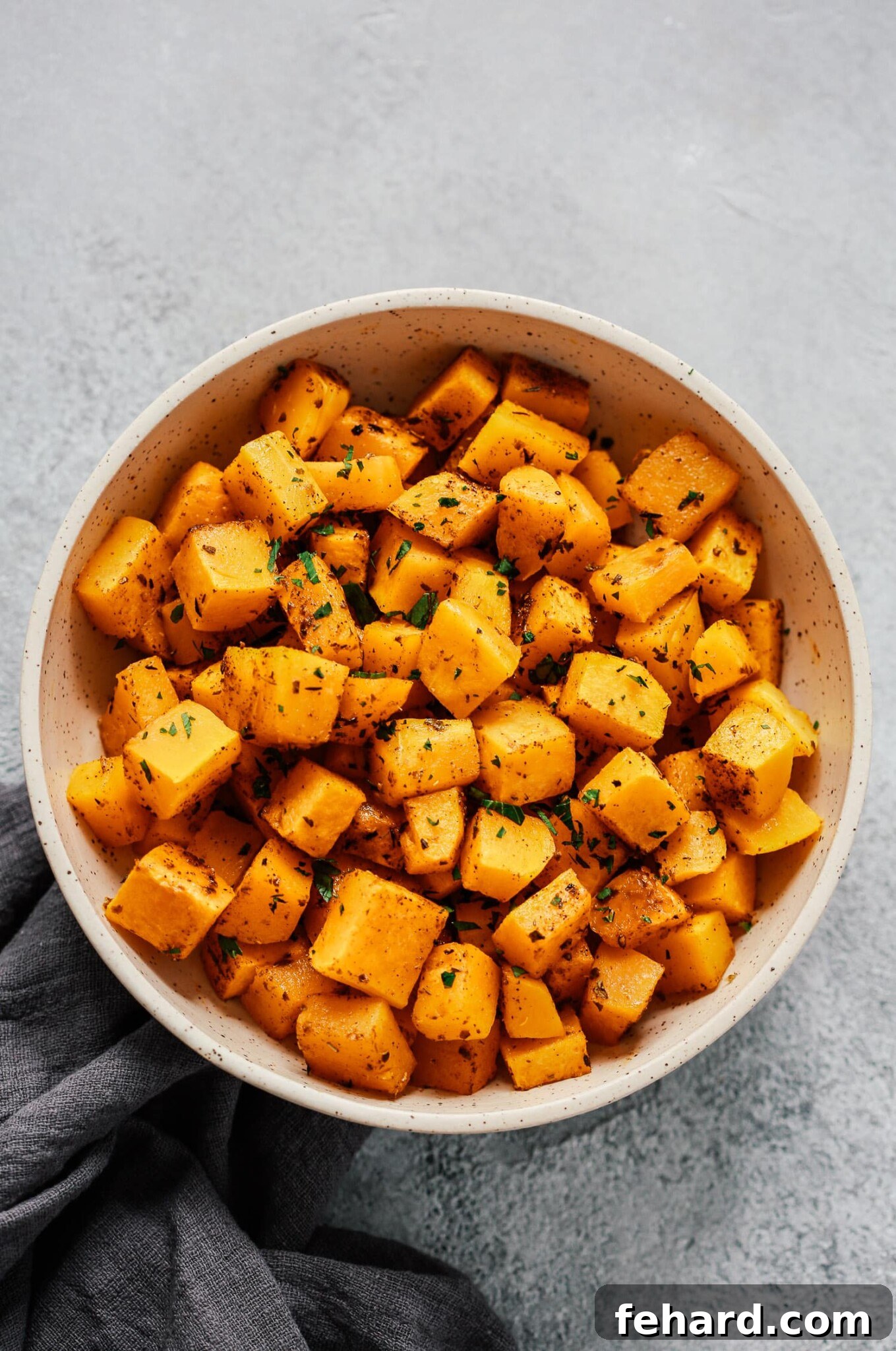
Welcome to the ultimate guide for creating the most delectable and vibrant roasted butternut squash! This versatile side dish is a true crowd-pleaser, perfect for elevating any lunch or dinner, and pairs beautifully with a wide array of main courses, from succulent beef and tender chicken to delicate fish. Forget complicated recipes; this tutorial will walk you through the process of roasting butternut squash in the easiest, most straightforward way, ensuring a consistently delicious outcome every single time.
Butternut squash holds a special place in the culinary world, renowned for its sweet, nutty flavor and creamy texture when cooked. It’s a cornerstone in countless healthy and comforting recipes, and mastering the simple art of roasting unlocks its full potential. While I adore many butternut squash creations, including Roasted Butternut Squash Mash, 20-Minute Butternut Squash Soup, No Bean Butternut Squash Chili, and Roasted Butternut Squash Cauliflower Salad, today we’re focusing on the classic roasted version – a testament to how simple preparations can yield extraordinary flavor.
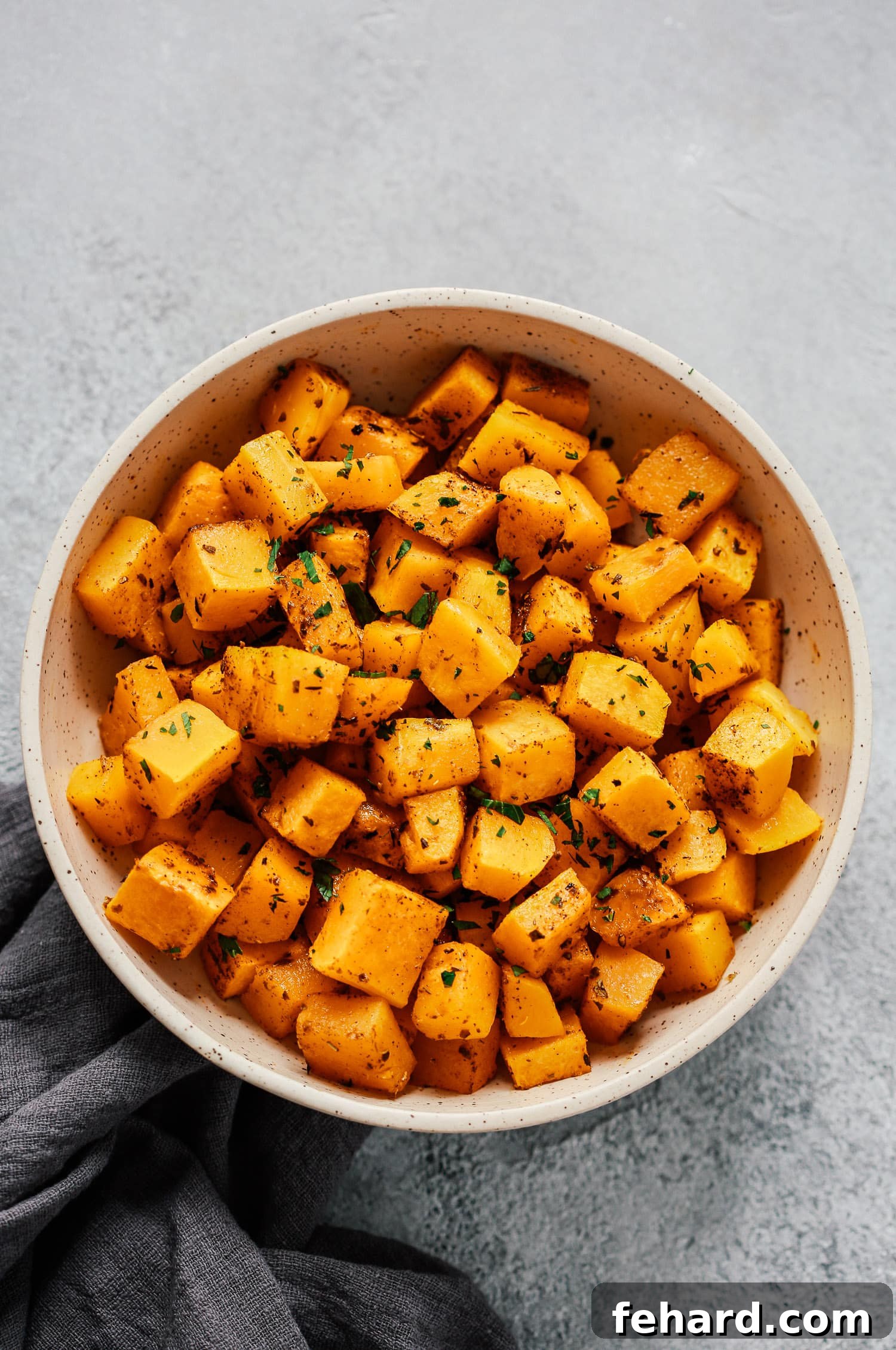
This roasted butternut squash recipe is my absolute favorite way to enjoy this delightful winter squash. It’s naturally sweet, incredibly flavorful, and wonderfully versatile. The beauty of this dish lies in its adaptability; you can effortlessly customize the flavor profile by experimenting with various seasonings and spices before roasting. Imagine a touch of warmth from cumin, a hint of pungency from garlic powder, the aromatic notes of coriander, or even an unexpected twist with cinnamon, cloves, and nutmeg for a truly autumnal or festive touch. Whether you’re aiming for a savory side or a slightly sweet treat, roasted butternut squash is a canvas for your culinary creativity.
Beyond its incredible taste and ease of preparation, roasted butternut squash is a nutritional powerhouse, packed with vitamins, minerals, and dietary fiber. It’s a fantastic healthy addition to any meal, complementing everything from lean chicken breast and perfectly baked salmon to robust pork chops. Get ready to transform a humble squash into a side dish that’s not only nutritious but also irresistibly delicious!
Why You’ll Love This Roasted Butternut Squash Recipe
- Effortlessly Delicious: With minimal effort, you can create a side dish bursting with natural sweetness and rich flavor. The roasting process caramelizes the squash, enhancing its inherent taste.
- Incredibly Versatile: This recipe is a culinary chameleon, easily adapted with different spices to suit any palate or cuisine. From savory herbs to sweet cinnamon, the possibilities are endless.
- Nutrient-Dense & Healthy: Butternut squash is a fantastic source of vitamins A and C, fiber, and potassium, making this dish a healthy addition to your diet. It’s naturally gluten-free and can be easily made vegan.
- Perfect for Any Occasion: Simple enough for a weeknight meal, yet elegant enough for holiday gatherings like Thanksgiving and Christmas. It adds a beautiful pop of color to your plate.
- Meal Prep Friendly: Roasted butternut squash can be prepared in advance, stored, and reheated, making it an excellent option for meal planning throughout the week.
Choosing the Perfect Butternut Squash
Selecting a ripe, high-quality butternut squash is the first step to a truly exceptional roasted dish. Look for squash that feels heavy for its size, indicating a good water content and dense flesh. The skin should be uniformly dull and hard, free from soft spots, blemishes, or green patches. A deep, consistent tan or beige color is a sign of ripeness; avoid any with green stripes, which means it wasn’t fully mature when harvested. The stem should be intact and dry. A healthy, firm squash ensures the best flavor and texture once roasted.
Essential Ingredients for Perfect Roasted Butternut Squash
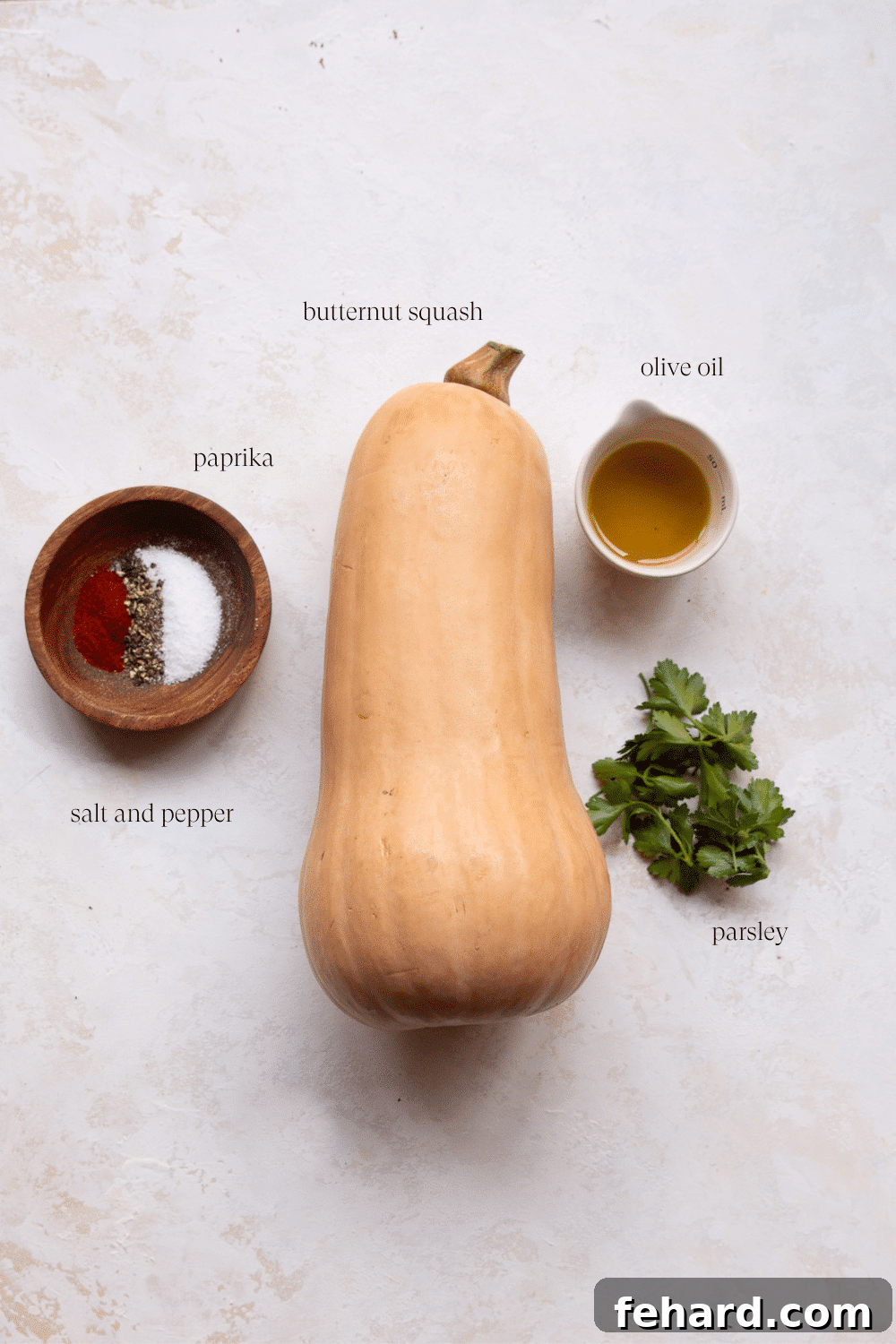
Crafting perfectly roasted butternut squash requires just a few simple, high-quality ingredients. Here’s what you’ll need to create this flavorful side dish:
- Butternut Squash: The star of our show! Opt for a fresh, firm squash as described above. Its natural sweetness and creamy texture are enhanced beautifully through roasting.
- Olive Oil: A good quality virgin olive oil is ideal for coating the squash, helping it to caramelize and achieve that lovely golden-brown exterior. Other great options include avocado oil or coconut oil, which also have high smoke points suitable for roasting.
- Salt and Black Pepper: These foundational seasonings are crucial for bringing out the squash’s natural flavors. Coarse salt and freshly ground black pepper provide the best taste and texture.
- Paprika: While optional, a dash of paprika adds a beautiful warm hue to the roasted squash, making it even more visually appealing. It also lends a subtle, earthy sweetness.
- Fresh Parsley (Garnish): A sprinkle of freshly chopped parsley after roasting adds a vibrant touch of color and a fresh, herbaceous counterpoint to the rich, sweet squash. If fresh isn’t available, dried parsley can be used, though fresh is preferred for presentation and brighter flavor. Feel free to explore other fresh herbs like thyme or rosemary if you prefer.
Mastering Butternut Squash Preparation: Peeling and Cutting
Preparing butternut squash can seem daunting due to its tough skin and dense flesh, but with the right tools and technique, it’s surprisingly straightforward. Safety and efficiency are key!
How to Peel Butternut Squash
To safely and effectively peel your butternut squash, you’ll need a sharp vegetable peeler or a sturdy chef’s knife. I highly recommend using a vegetable peeler, specifically a Y-peeler, as it’s generally much safer and easier to handle the squash while peeling. A peeler allows for precise skin removal without wasting much of the precious squash flesh. If you find the squash particularly hard, you can microwave it whole for 1-2 minutes before peeling to slightly soften the skin, making the process much smoother and safer.

How to Cut Butternut Squash
Once your butternut squash is peeled, it’s time to cut it into uniform pieces for even roasting:
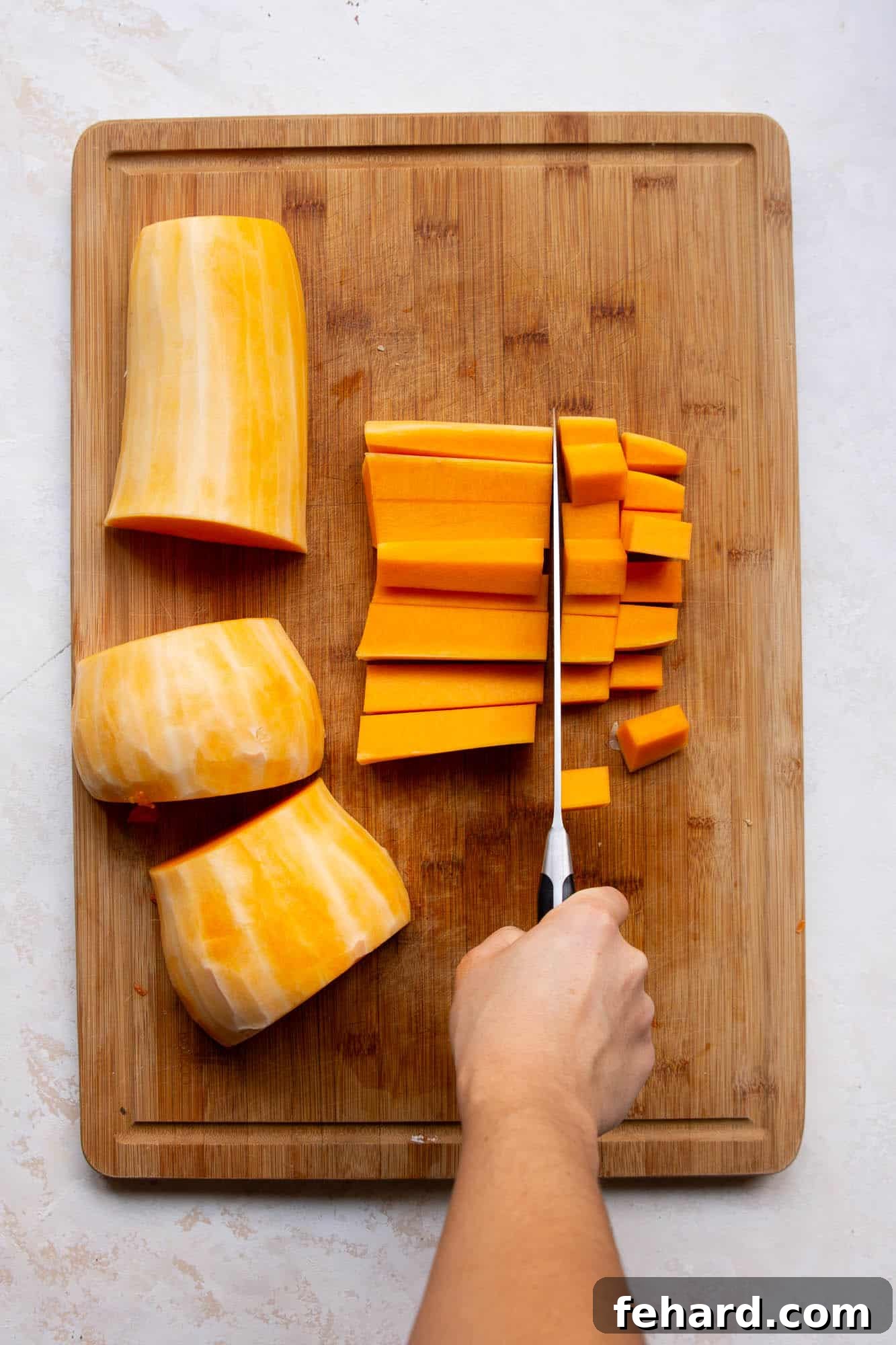
- First, carefully slice off both ends of the squash to create stable flat surfaces.
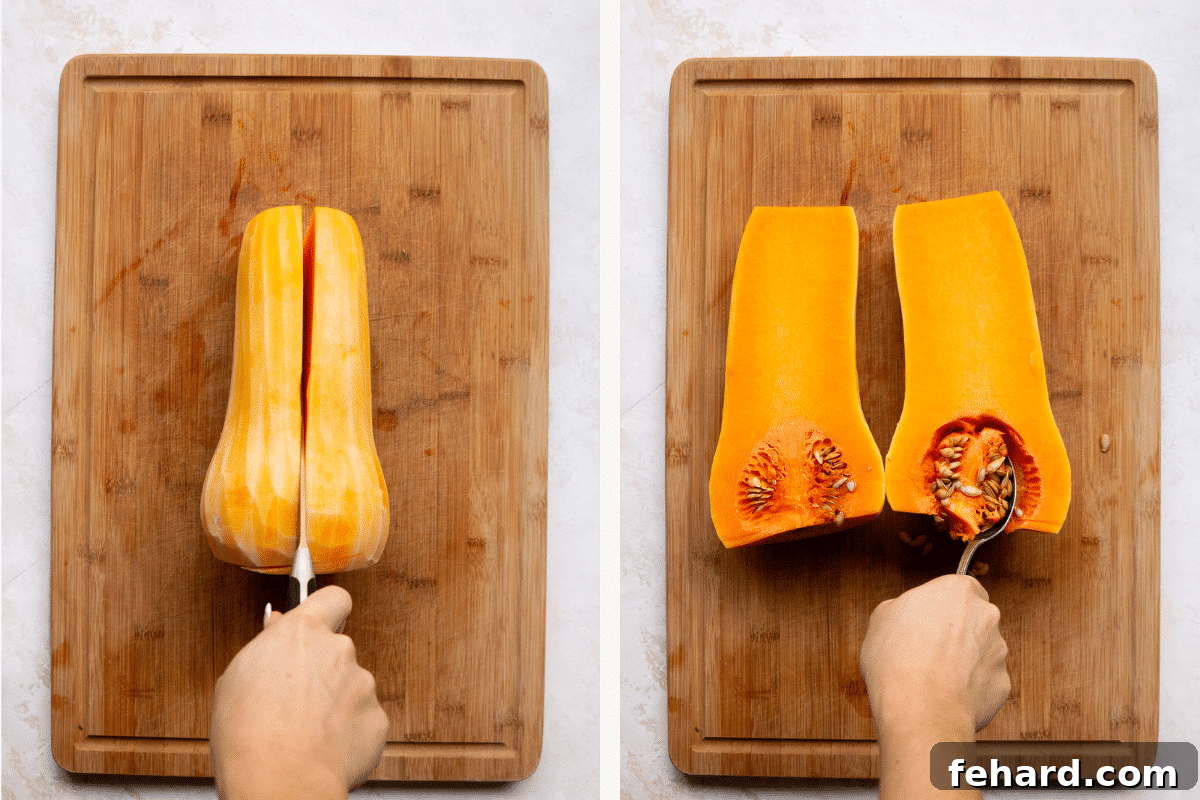
- Stand the squash upright on one of the flat ends. Using a sturdy chef’s knife, cut the squash lengthwise down the middle, splitting it into two halves.
- Now, you’re ready to remove the seeds and fibrous strands. A spoon, a melon baller, or even a stainless steel ice cream scoop works perfectly for scooping out the pulp from the cavity. Discard the seeds or save them for roasting later!
- Lay each squash half flat side down on your cutting board. This provides a stable base for dicing. For the bulbous end of the squash, you might cut it into two or three crescent-shaped sections. For the long, straight neck, cut it into thick planks.
- Finally, dice all sections into roughly 1-inch (2.5 cm) cubes. The key is to aim for pieces that are as close to the same size as possible. This uniformity is crucial for ensuring that all the squash cooks evenly, preventing some pieces from becoming mushy while others are still hard.
Step-by-Step Guide: How to Roast Butternut Squash to Perfection
Follow these simple steps to achieve beautifully caramelized and tender roasted butternut squash:
- Preheat Oven and Prepare Pan: Begin by preheating your oven to 425ºF (220ºC). Line a large baking sheet with parchment paper. This step is crucial, as parchment paper prevents the squash from sticking to the pan and burning, making cleanup a breeze. Set the prepared baking sheet aside.
- Prepare the Squash: Place your butternut squash on a clean cutting board. Using a sharp vegetable peeler (which is safer and faster), carefully peel the entire squash. Once peeled, cut the squash in half lengthwise and use a spoon or ice cream scoop to remove all the seeds and fibrous strands from the center.
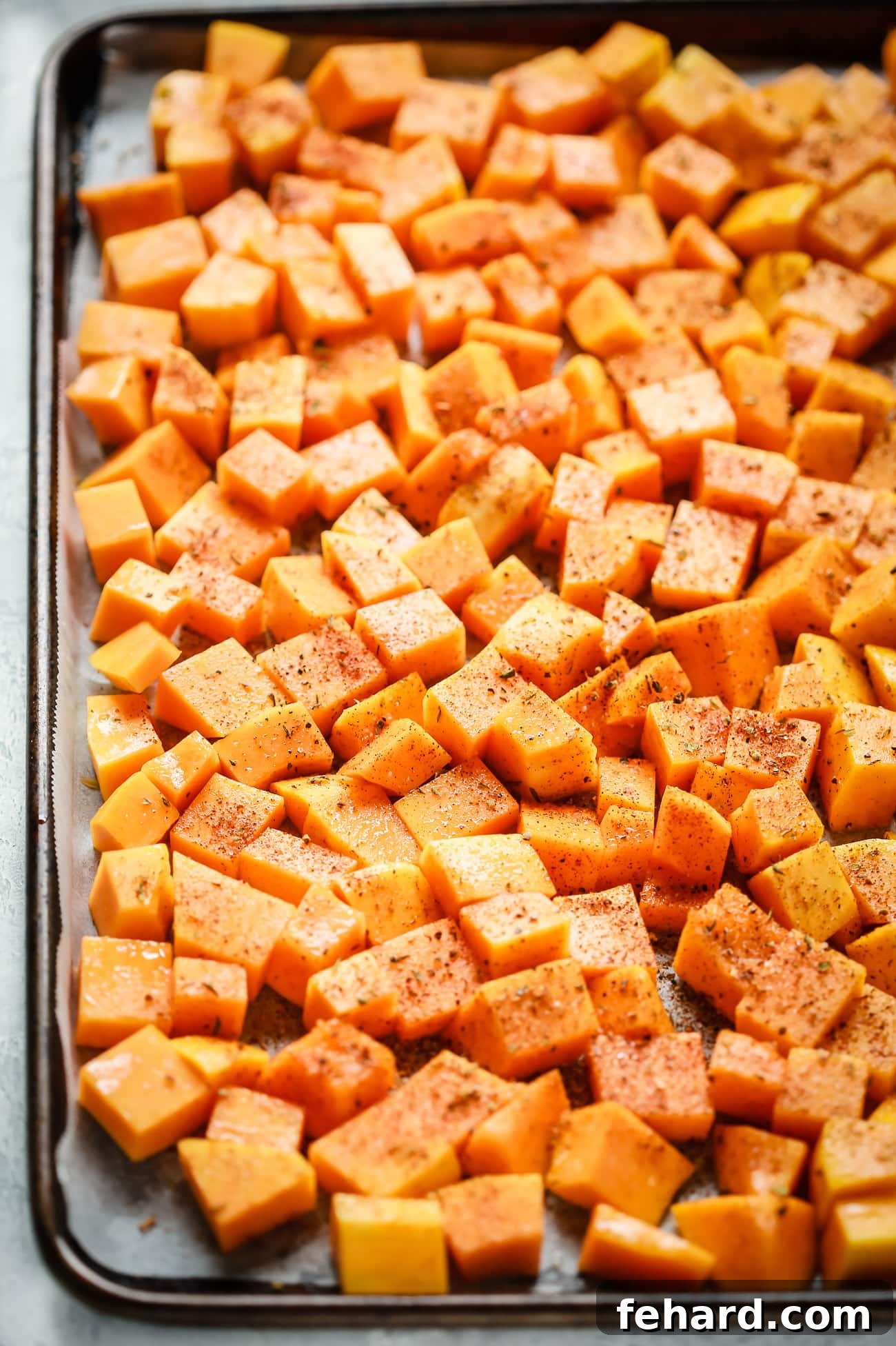
- Dice Evenly: Dice the peeled and deseeded butternut squash into bite-sized cubes, approximately 1-inch (2.5 cm) in size. It’s essential to aim for uniform cube sizes to ensure that every piece bakes evenly. Transfer the diced squash to the prepared baking sheet, ensuring they are spread out in a single layer. This prevents them from steaming and becoming mushy. If necessary, use two baking sheets to avoid overcrowding.
- Season and Toss: Drizzle the diced butternut squash generously with 2 tablespoons of olive oil. Season with 1/2 teaspoon of salt, 1/4 teaspoon of black pepper, and 1/2 teaspoon of paprika. You can also incorporate any other seasonings or spices you prefer at this stage. Toss the squash cubes with your hands directly on the baking sheet until every piece is thoroughly coated with oil and seasonings.
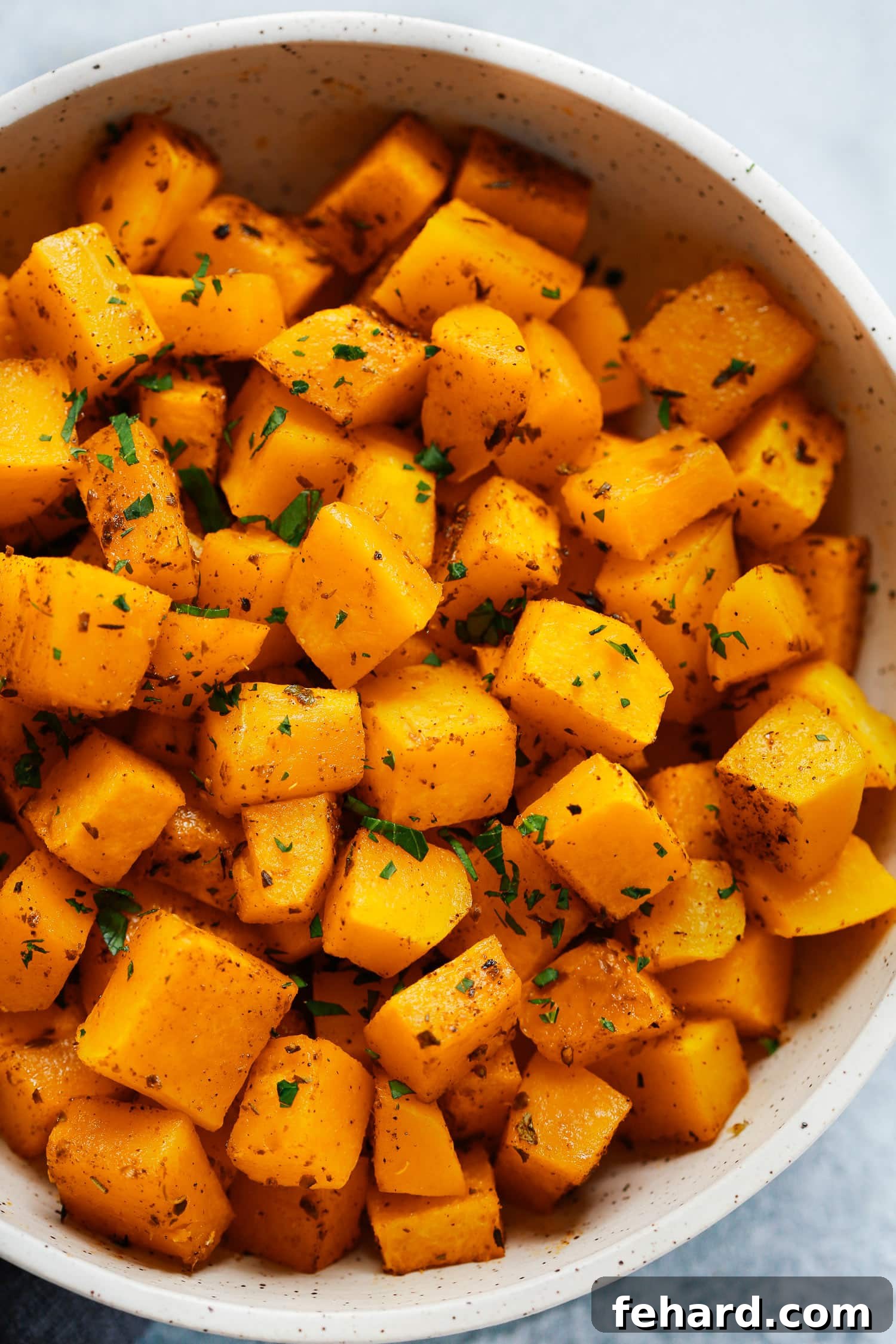
- Roast to Perfection: Place the baking sheet in your preheated oven. Roast for 15-20 minutes, or until the butternut squash cubes are tender when pierced with a fork and beautifully caramelized around the edges. The exact roasting time may vary slightly depending on the size and thickness of your squash cubes, so keep an eye on them.
- Garnish and Serve: Once roasted, remove the butternut squash from the oven. For an added layer of freshness and flavor, garnish with a sprinkle of fresh chopped parsley. Serve immediately as a delightful side dish with your favorite protein, such as a flavorful pork tenderloin. Enjoy every savory, sweet bite!
Expert Tips for the Best Roasted Butternut Squash
- Uniform Cubes are Key: Always strive to cut your butternut squash into pieces of roughly the same size. This ensures even cooking, preventing some pieces from becoming overly soft or burnt while others remain undercooked. Consistency leads to perfection!
- Don’t Overcrowd the Pan: For truly golden and caramelized roasted squash, give your cubes plenty of space on the baking sheet. If the pan is too crowded, the squash will steam instead of roast, resulting in a soft, mushy texture rather than crispy edges. Use multiple baking sheets if needed to ensure a single layer with sufficient breathing room between pieces.
- Generous Seasoning: Don’t be shy with the olive oil and seasonings. Coating the squash generously helps in caramelization and infuses every bite with flavor. Beyond salt, pepper, and paprika, consider adding a dash of warming spices like cinnamon or nutmeg, or a sprinkle of brown sugar for a delightful sweet and savory contrast, especially during colder months.
- High Heat for Caramelization: Roasting at a moderately high temperature, ideally around 400°F to 425°F (200°C to 220°C), is crucial. This high heat promotes the Maillard reaction, caramelizing the natural sugars in the squash and creating those desirable browned, slightly crispy edges while keeping the interior wonderfully tender.
Delicious Variations to Customize Your Roasted Butternut Squash
One of the best things about roasted butternut squash is how easily it can be adapted to suit different tastes and meal themes. Here are some fantastic variations to inspire your next batch:
- Sweet & Savory Delight: For those who enjoy a touch of sweetness, drizzle the squash with a little maple syrup or honey along with melted butter before roasting. This combination enhances the squash’s natural sweetness and creates a lovely glaze. A pinch of brown sugar can also achieve a similar effect.
- Herb Infusion: If you don’t have fresh parsley on hand, or simply want to explore different flavor profiles, try incorporating other fresh or dried herbs. Rosemary and thyme are classic pairings with butternut squash, offering earthy and aromatic notes. Sage is another excellent choice, especially for fall-inspired dishes.
- Spice It Up: Go beyond paprika with a more adventurous spice blend. Smoked paprika adds a deeper, more robust flavor. For a Middle Eastern twist, try a pinch of cumin, coriander, and a touch of cayenne pepper for subtle heat. For an Indian-inspired side, add a dash of curry powder.
- Garlic Lover’s Dream: Toss the squash with minced fresh garlic or garlic powder along with the olive oil for an irresistible aromatic kick. Roasted garlic adds a mellow, sweet flavor that complements the squash beautifully.
- Other Squash Varieties: This roasting method isn’t exclusive to butternut squash! It works wonderfully with other winter squashes like acorn squash, delicata squash, or even sweet potatoes. Just ensure they are cut into similar-sized pieces for even cooking.
What to Serve with Your Amazing Roasted Butternut Squash
Roasted butternut squash is incredibly versatile and makes a fantastic side dish for a wide range of main courses. Its sweet and savory profile, coupled with its tender texture, complements almost any protein or vegetarian meal. Here are some delicious ideas:
- Poultry Pairings: The natural sweetness of butternut squash is a superb match for chicken. Serve it alongside a hearty roasted whole chicken, simple and tender baked chicken breast, or juicy baked chicken thighs. It adds a lovely balance to the richness of the poultry.
- Seafood Sensations: Don’t underestimate how well butternut squash pairs with seafood. It’s a perfect accompaniment to a flavorful shrimp recipe, perfectly easy salmon, succulent baked salmon, or a delicate cod recipe. The sweetness of the squash beautifully contrasts with the savory notes of fish.
- Hearty Pork Dishes: For a comforting and satisfying meal, pair your roasted butternut squash with pork. It’s an excellent side for a classic Baked Pork Chops recipe. The sweetness helps cut through the richness of the pork.
- Fresh Salads: Incorporate roasted butternut squash into a vibrant salad for a boost of flavor and texture. It pairs wonderfully with a peppery arugula salad, a hearty quinoa salad, or a refreshing black bean salad, adding warmth and substance.
- Vegetarian & Vegan Mains: Roasted butternut squash is fantastic with plant-based meals like lentil loaf, black bean burgers, or alongside other roasted vegetables for a wholesome vegetarian platter.
Storage and Reheating Tips
Roasted butternut squash is an excellent candidate for meal prepping. Here’s how to store and reheat it to maintain its deliciousness:
- To Store: Allow any leftover roasted butternut squash to cool completely to room temperature. Transfer it to an airtight container and store it in the refrigerator for up to 4 to 5 days.
- To Freeze: For longer storage, spread the cooled roasted squash in a single layer on a baking sheet and freeze until solid (this prevents clumping). Then, transfer the frozen squash cubes to a freezer-safe bag or container, removing as much air as possible. It can be stored in the freezer for up to 3 months.
- To Reheat:
- Microwave: For a quick reheat, place the squash in a microwave-safe dish and microwave in 30-second intervals, stirring in between, until heated through. Be careful not to overcook, as it can become mushy.
- Oven: For the best texture, especially if you want to crisp up the edges again, spread the leftover squash on a baking sheet. Reheat in a preheated oven at 350°F (175°C) for 10-15 minutes, or until warmed through and slightly re-crisped.
Roasted Butternut Squash Recipe
Author: Olivia Ribas
Prep Time: 10 minutes
Cook Time: 20 minutes
Total Time: 30 minutes
Servings: 6 people
Roasted butternut squash is a delicious and colorful side dish recipe to make for lunch and dinner, and serve with meat, chicken, and fish. This tutorial will show you how to roast butternut squash in a very easy and simple way.
Ingredients
- 3 lb butternut squash, peeled, seeded, and diced into 1-inch cubes
- 2 tbsp olive oil
- 1/2 tsp salt
- 1/4 tsp black pepper
- 1/2 tsp paprika
- Fresh parsley, to taste (for garnish)
Instructions
- Preheat your oven to 425ºF (220ºC). Line a large baking sheet with parchment paper to prevent sticking and ensure easy cleanup. Set aside.
- Place the butternut squash on a clean cutting board. Using a sharp vegetable peeler, carefully peel the tough outer skin.
- Once peeled, cut the butternut squash in half lengthwise and use a sturdy spoon or ice cream scoop to remove the seeds and fibrous strands from the cavity.
- Dice the peeled and deseeded butternut squash into bite-sized pieces, roughly 1-inch (2.5 cm) cubes. Ensure the pieces are as uniform in size as possible to promote even cooking.
- Transfer the diced butternut squash to the prepared baking sheet. Drizzle with the olive oil, then season generously with salt, black pepper, and paprika. Toss with your hands to ensure all squash cubes are evenly coated. Spread them in a single layer on the baking sheet, making sure not to overcrowd the pan.
- Roast in the preheated oven for 15-20 minutes, or until the squash is fork-tender and the edges are lightly caramelized. The cooking time may vary based on the size of your cubes.
- Once roasted, remove from the oven and garnish with fresh chopped parsley before serving warm with your preferred protein.
Notes
- If you find the butternut squash particularly hard to cut, you can microwave it whole for 1-2 minutes to slightly soften the skin, making peeling and cutting easier and safer.
- For the best roasting results, avoid overcrowding the baking sheet. Spreading the squash in a single layer with space between each cube allows for proper caramelization and prevents the squash from steaming, which can lead to a mushy texture. Use two baking sheets if necessary.
- Uniformly cut cubes are crucial for even cooking, ensuring every piece reaches the perfect tender-crisp consistency at the same time.
- To Store: Store any leftover roasted butternut squash in an airtight container in the refrigerator for 4 to 5 days.
- To Freeze: To freeze, arrange cooled roasted squash in a single layer on a baking sheet and freeze until solid. Then, transfer the frozen cubes to a freezer-safe bag or container and store for up to 3 months.
- To Reheat: Reheat leftovers in the microwave for quick warming or spread on a baking sheet and warm in a 350°F (175°C) oven for 10-15 minutes to crisp up the edges.
Nutrition Information (Approximate per 1/6 serving)
Serving: 1/6, Calories: 143kcal, Carbohydrates: 27g, Protein: 2g, Fat: 5g, Sodium: 204mg, Potassium: 812mg, Fiber: 5g, Sugar: 5g
Nutrition information is automatically calculated and should be used as an approximation.
Roasting butternut squash is a simple yet incredibly rewarding culinary endeavor. With its vibrant color, sweet and earthy flavor, and tender texture, this versatile side dish is sure to become a staple in your kitchen. Whether you’re preparing a quick weeknight meal or a festive holiday feast, following these steps will ensure you achieve perfectly roasted squash every time. Don’t hesitate to experiment with different seasonings to make it your own. Enjoy the delightful taste and countless health benefits of this wonderful winter vegetable!