
Garlic Butter Beef Tenderloin: The Ultimate Guide to an Exquisite Meal
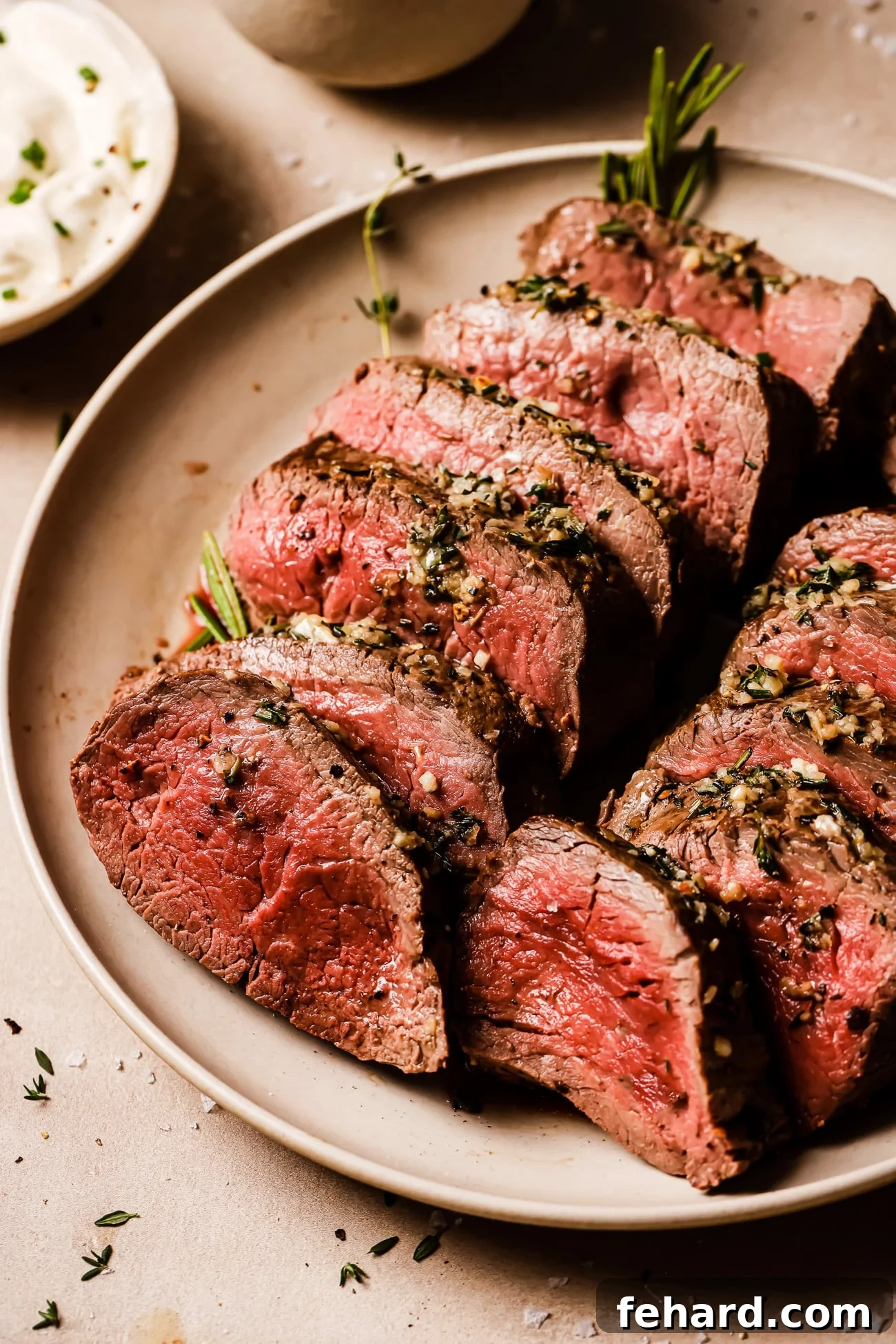
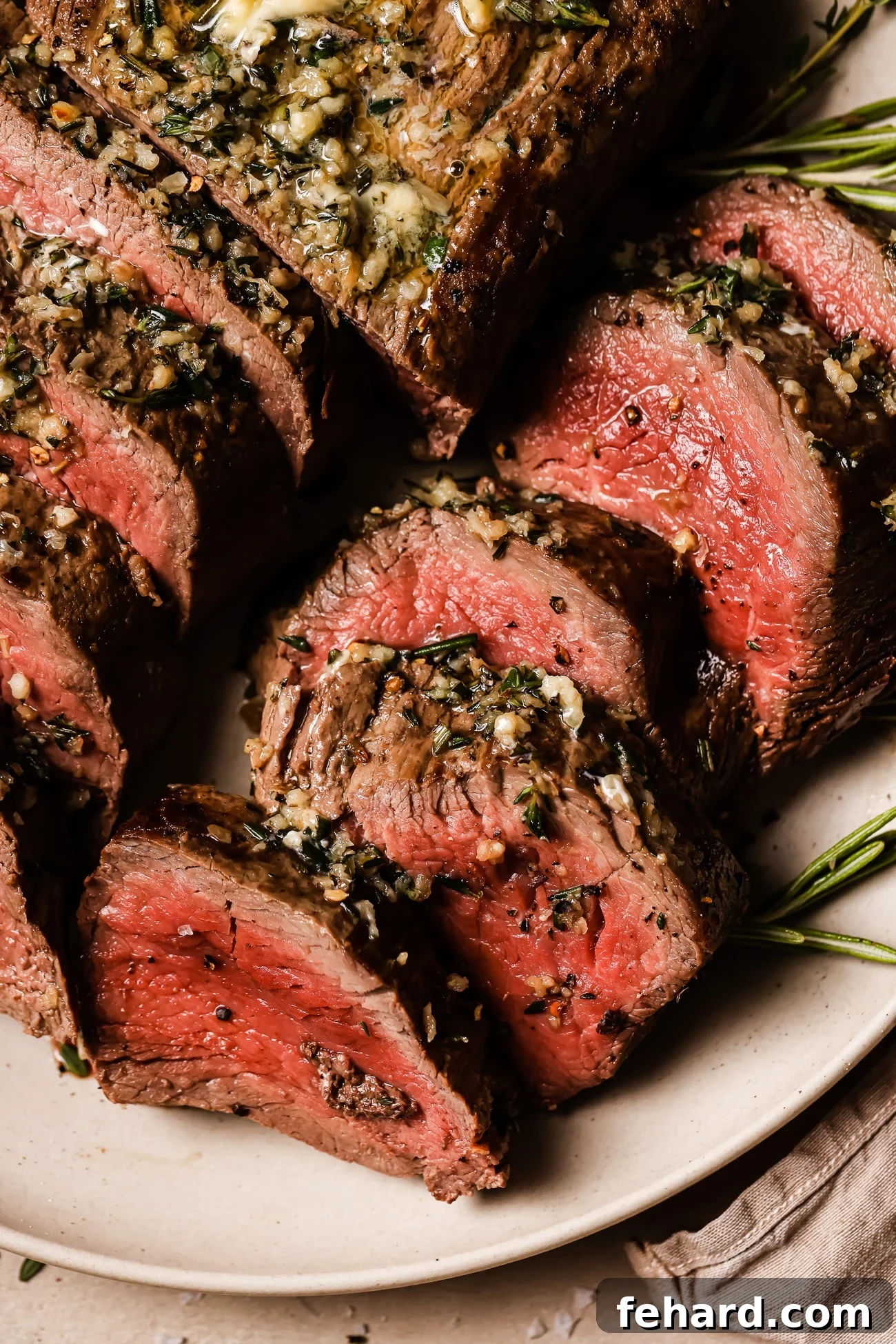
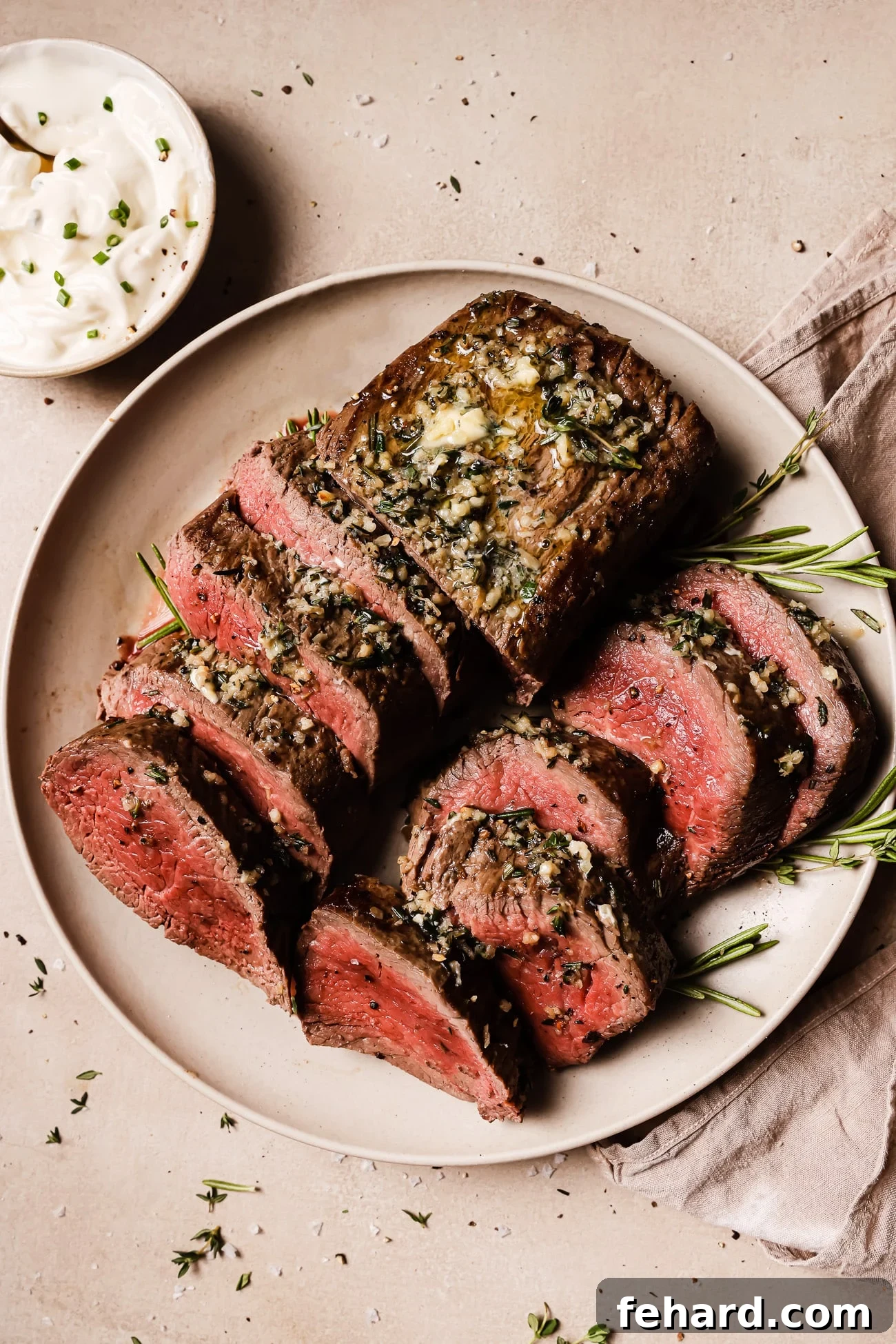
Garlic Butter Beef Tenderloin stands as a truly stunning main dish, effortlessly elevating any dining experience. This recipe focuses on achieving the pinnacle of flavor and texture: tenderloins seared to a perfect golden crust, lavishly topped with a fragrant herbed garlic butter, and then finished in the oven to create an incredibly succulent and buttery interior. It’s a dish that embodies simplicity, elegance, and profound deliciousness, making it a favorite for both special occasions and intimate gatherings.
To truly allow the magnificent beef tenderloin to be the star of your table, I recommend pairing it with complementary, yet simple, side dishes. Think creamy mashed potatoes, perfectly roasted asparagus, savory Brussels sprouts, vibrant broccoli, or crisp parmesan green beans. No matter your choice of accompaniment, this dish promises a gorgeous spread that your guests will adore, whether it’s for a festive Christmas dinner, a romantic Valentine’s meal, or any memorable special occasion.
Why Choose Garlic Butter Beef Tenderloin?
Unparalleled Tenderness & Flavor
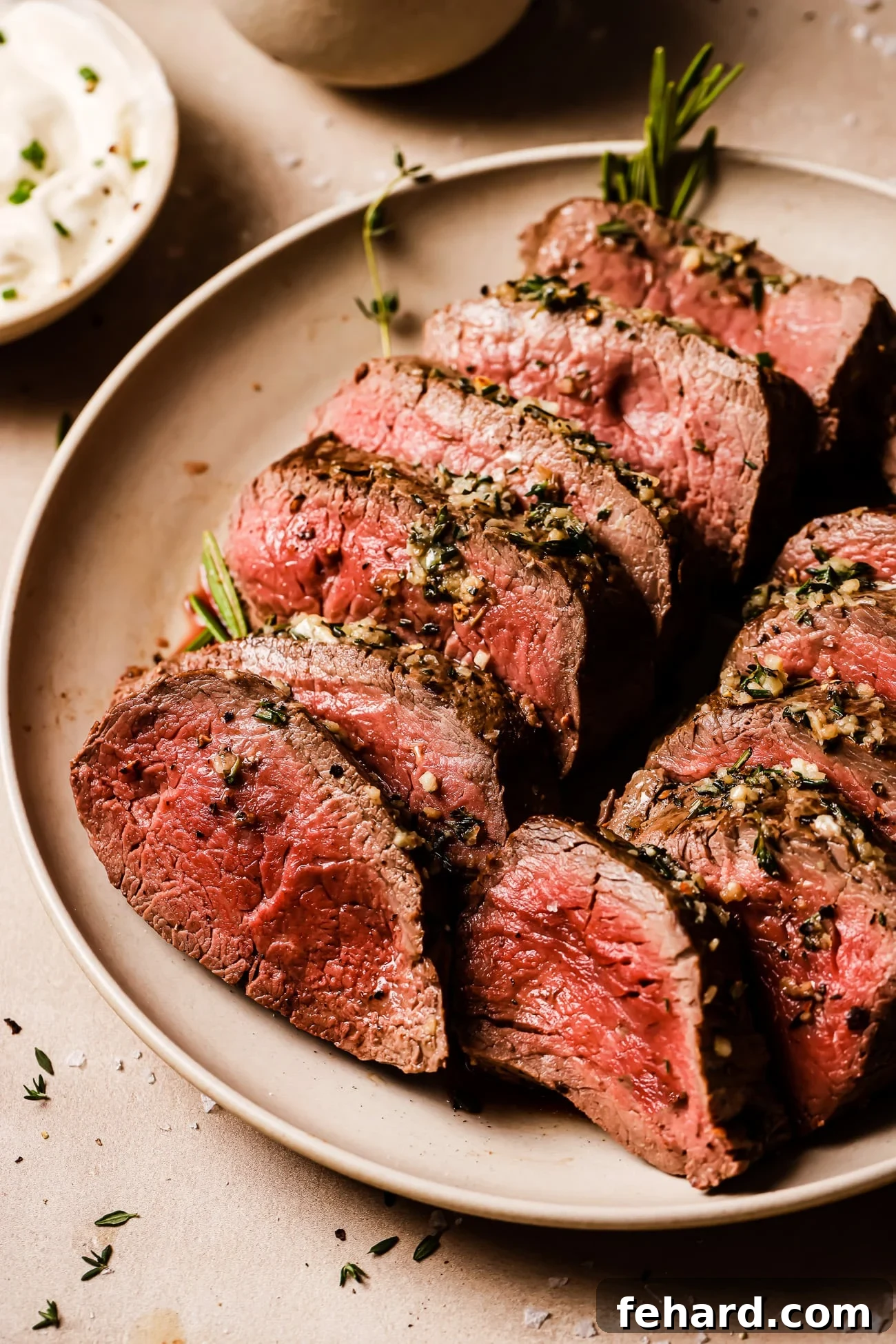
Beef tenderloin is unequivocally one of the most premium and tender cuts of meat available, renowned for its melt-in-your-mouth texture. It’s the very same cut from which exquisite filet mignon is derived, ensuring every bite is supremely succulent. This recipe takes that natural tenderness and enhances it with a rich, aromatic garlic butter sauce that permeates the meat, delivering an explosion of flavor.
Simple Ingredients, Gourmet Results
Despite its luxurious appeal, this dish requires surprisingly few and straightforward ingredients. The star of the show, beyond the beef itself, is the homemade garlic butter. Crafted from just a handful of fresh components – softened butter, finely minced garlic, and aromatic herbs like rosemary and thyme – this infused butter is what truly transforms the tenderloin, ensuring every morsel is bursting with savory goodness. Using high-quality butter and freshly chopped aromatics is key to unlocking the most profound flavors.
Versatile for Any Occasion
While Garlic Butter Beef Tenderloin certainly feels grand enough for significant celebrations, its ease of preparation makes it a versatile choice for any time you desire a truly exceptional meal at home. You don’t need to reserve this culinary delight solely for the holidays; it’s my personal go-to main dish when we crave an elevated dinner without excessive fuss. It provides that gourmet restaurant experience right in your own kitchen.
Essential Ingredients for Perfection
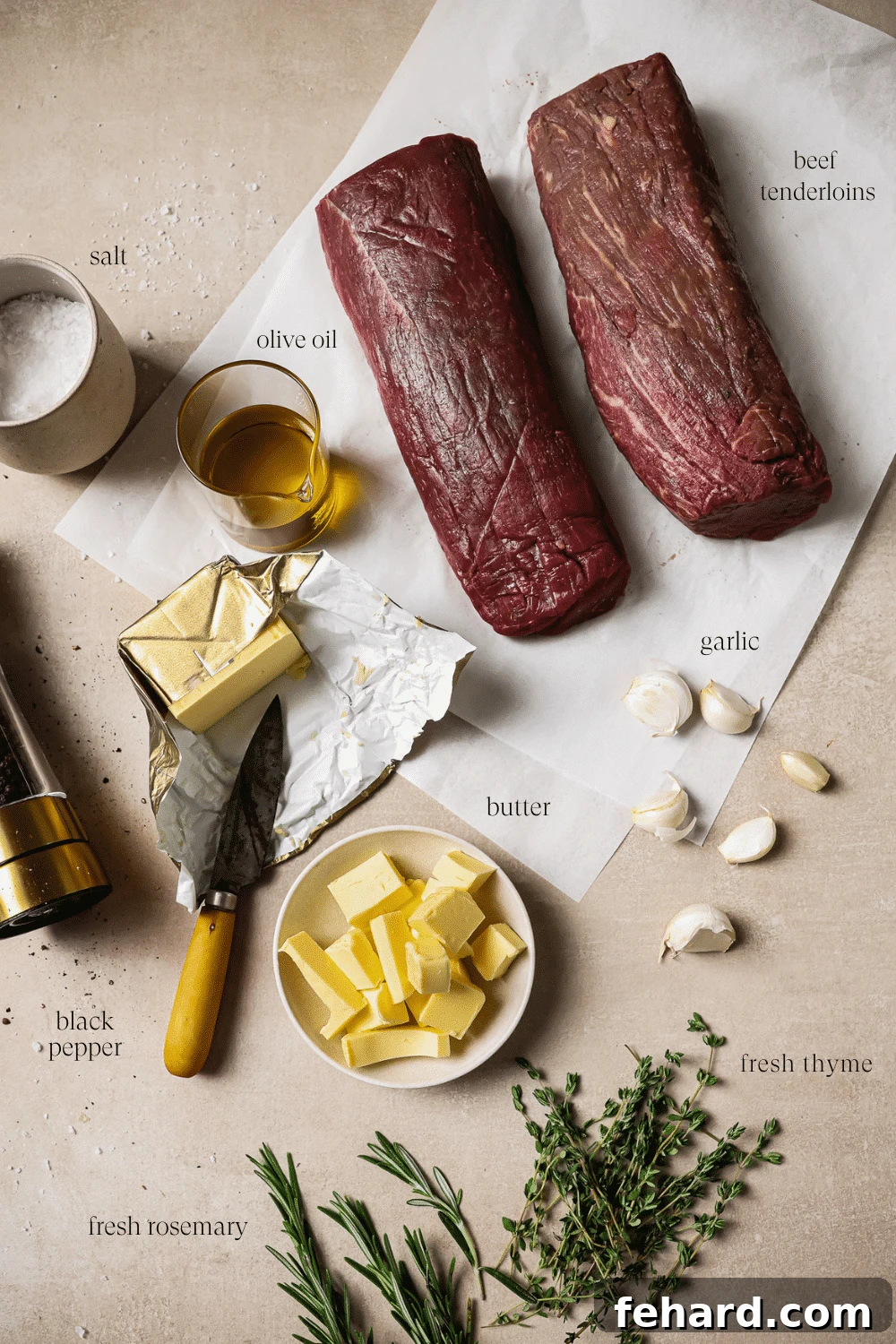
Given that beef tenderloin is a truly special cut, selecting the finest ingredients is paramount to the success of this recipe. The quality of your butter and the freshness of your aromatics directly contribute to how deeply the garlic butter infuses into the beef, ensuring the most potent and delicious flavor profile.
The Beef Tenderloin
When selecting your beef tenderloin, aim for a cut that is bright red with minimal marbling and silver skin. A whole tenderloin typically ranges from 4 to 6 pounds. You can purchase it pre-trimmed, or ask your butcher to do it for you, ensuring it’s of even thickness for uniform cooking. This premium cut is worth the investment for its unparalleled tenderness.
The Garlic Butter
For the garlic butter, unsalted butter is recommended as it gives you control over the overall sodium content. Fresh garlic, finely minced, is non-negotiable for its pungent, aromatic kick. And for the herbs, fresh rosemary and thyme are classic companions to beef, providing earthy and slightly floral notes. If these aren’t available, other fresh herbs like parsley, chives, or even oregano can offer a delightful variation.
Mastering Beef Tenderloin Prep
The tenderloin is a long, lean muscle cut that runs along the spine of the animal, deep within the loin. It’s naturally less used, which is why it’s so incredibly tender. This muscle tapers at one end, which often leads to confusion with filet mignon – and rightly so, as filet mignon is indeed cut from the smaller, tapered end of the beef tenderloin.
Trimming and Tying for Even Cooking
To prepare your tenderloin for cooking, you’ll need to meticulously trim any excess fat, the silver skin (a tough, silvery membrane that won’t render or tenderize during cooking), and any loose connective tissue. Once trimmed, it’s often beneficial to cut the tenderloin into two equal roasts, especially if it’s a larger cut, to ensure more manageable cooking. If the ends are significantly thinner than the middle, tie them up with kitchen twine to create a more uniform thickness. This prevents the thinner parts from overcooking before the thicker sections are done. Alternatively, you can always ask your butcher to trim and tie the tenderloins for you, ensuring they are perfectly prepped and ready for your culinary adventures once you get home.
The Room Temperature Advantage
Once prepped, it’s crucial to allow the tenderloins to come to room temperature for approximately 1 to 2 hours before cooking. This step is vital for achieving even cooking throughout the meat. If you start with cold beef, the outside will cook much faster than the inside, leading to a less uniform doneness. Bringing it to room temperature ensures that when the heat hits, the entire cut cooks more evenly, resulting in a more tender and perfectly cooked final product.
Step-by-Step Cooking Guide

Step One: Prep the Herbed Garlic Butter. In a small bowl, combine the softened unsalted butter with minced garlic, fresh rosemary, and fresh thyme. You can use your favorite fresh herbs here, but this combination offers a classic, aromatic profile. Mix until well combined and set it aside.
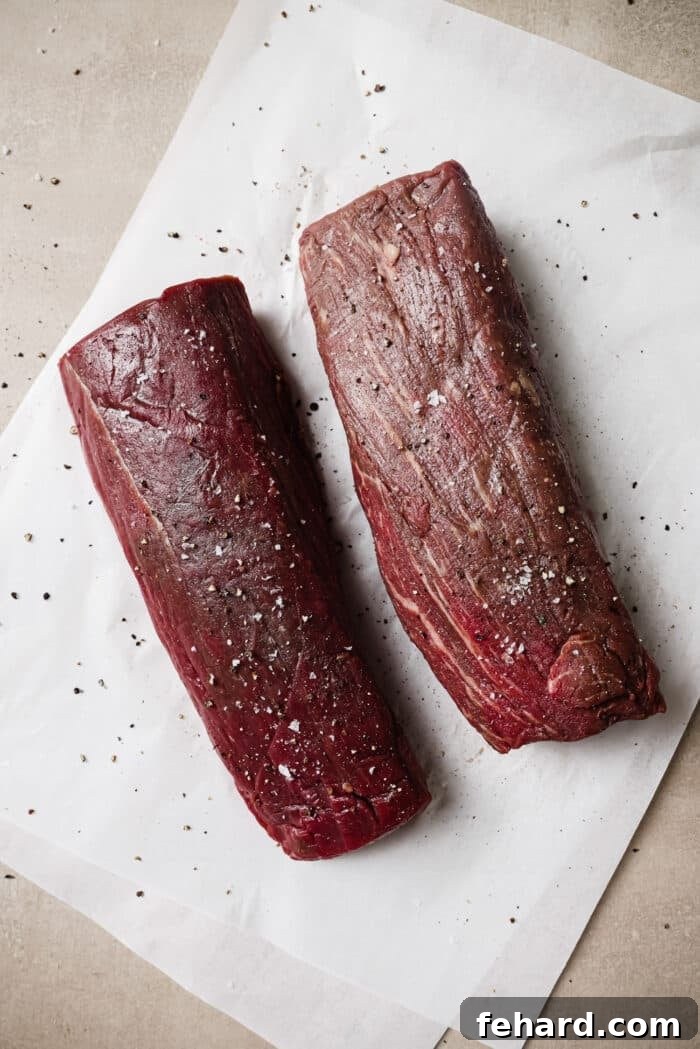
Step Two: Season the Beef Generously. Ensure your tenderloin filets are patted thoroughly dry with paper towels. This step is crucial for achieving a beautiful, crispy sear. Season them evenly and liberally with kosher salt and freshly ground black pepper on all sides. Don’t be shy with the seasoning; it forms the foundation of the flavor.
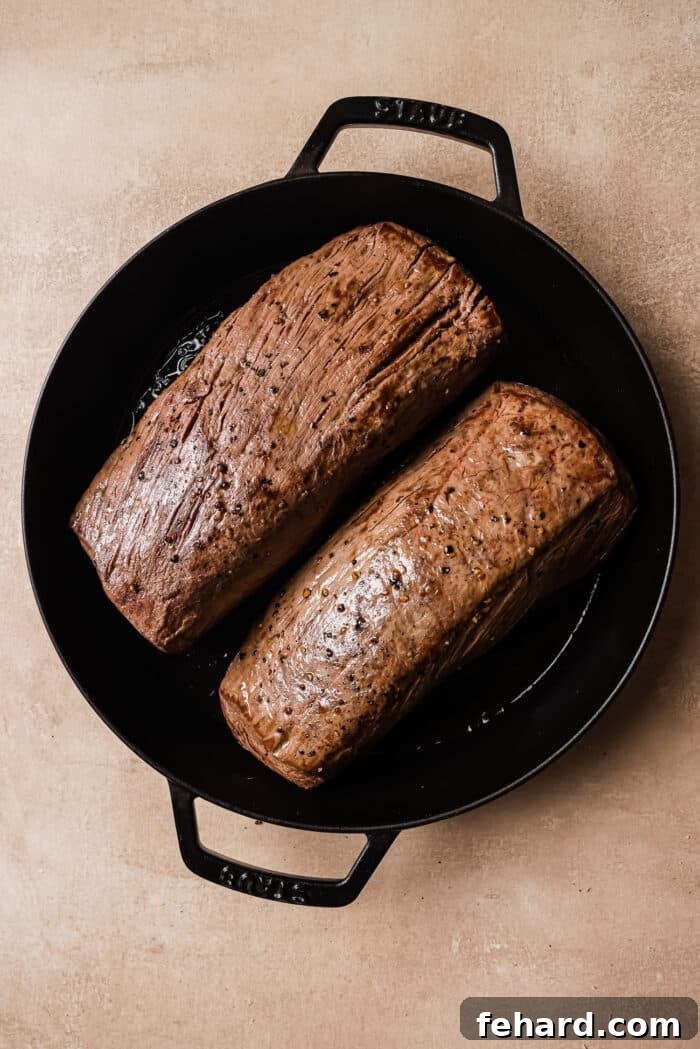
Step Three: Achieve a Perfect Sear. Heat olive oil in a large, heavy-bottomed cast iron skillet over medium-high heat until it shimmers. Place the seasoned tenderloins in the hot skillet and sear all sides until they develop a rich, deep brown crust. This process, known as the Maillard reaction, creates incredible flavor and texture on the exterior of the beef. This typically takes about 2-3 minutes per side.
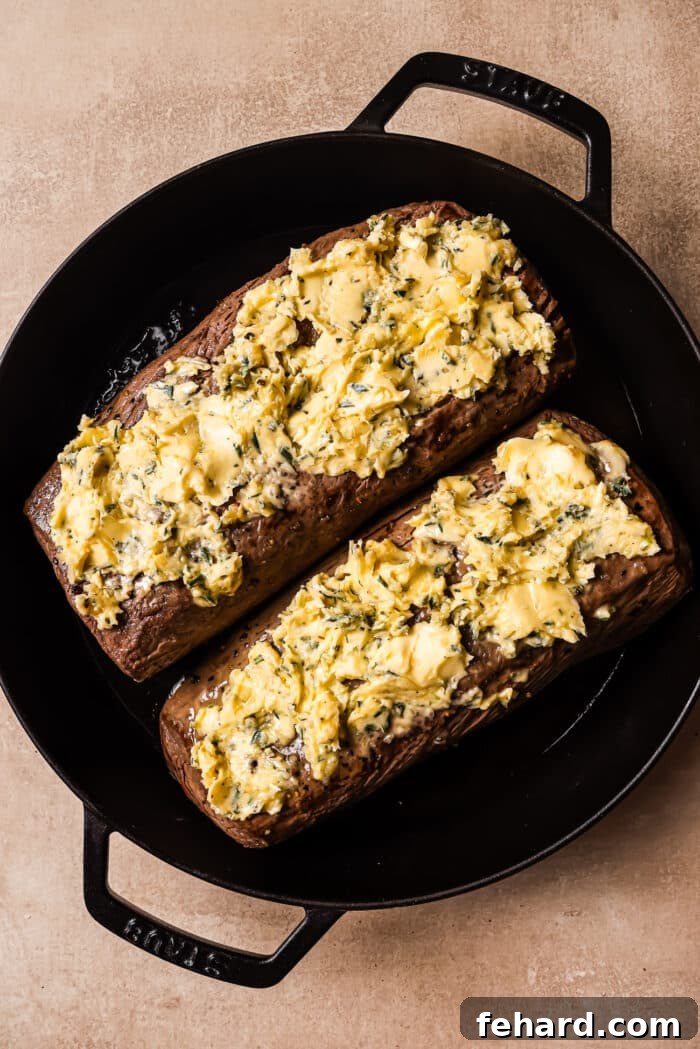
Step Four: Infuse with Garlic Butter & Roast. Carefully spread the prepared herbed garlic butter generously over the seared tenderloins. Transfer the skillet directly to a preheated 425°F (220°C) oven. If you’re using a probe thermometer, insert it into the thickest part of the meat now, ensuring it doesn’t touch any bone or fat, to monitor the internal temperature accurately.
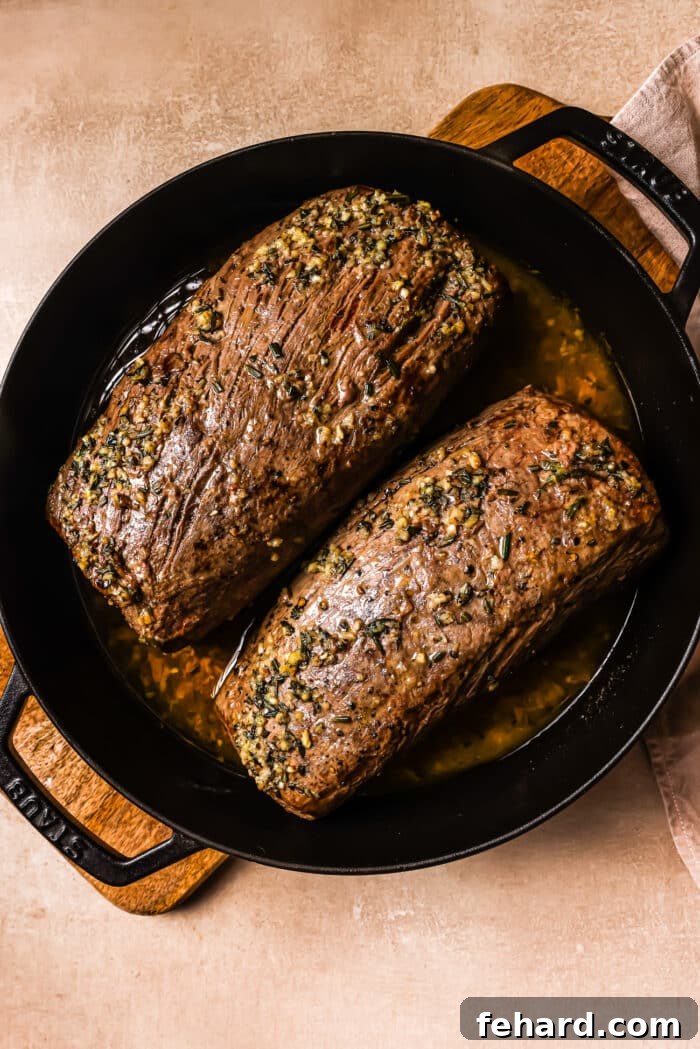
Step Five: Oven Roasting for Ideal Doneness. Roast the beef in the oven for approximately 15-20 minutes. The exact cooking time will depend on the thickness of your tenderloins and your desired level of doneness. Use your meat thermometer to guide you, removing the beef when it reaches a few degrees below your target temperature (refer to the doneness chart below).
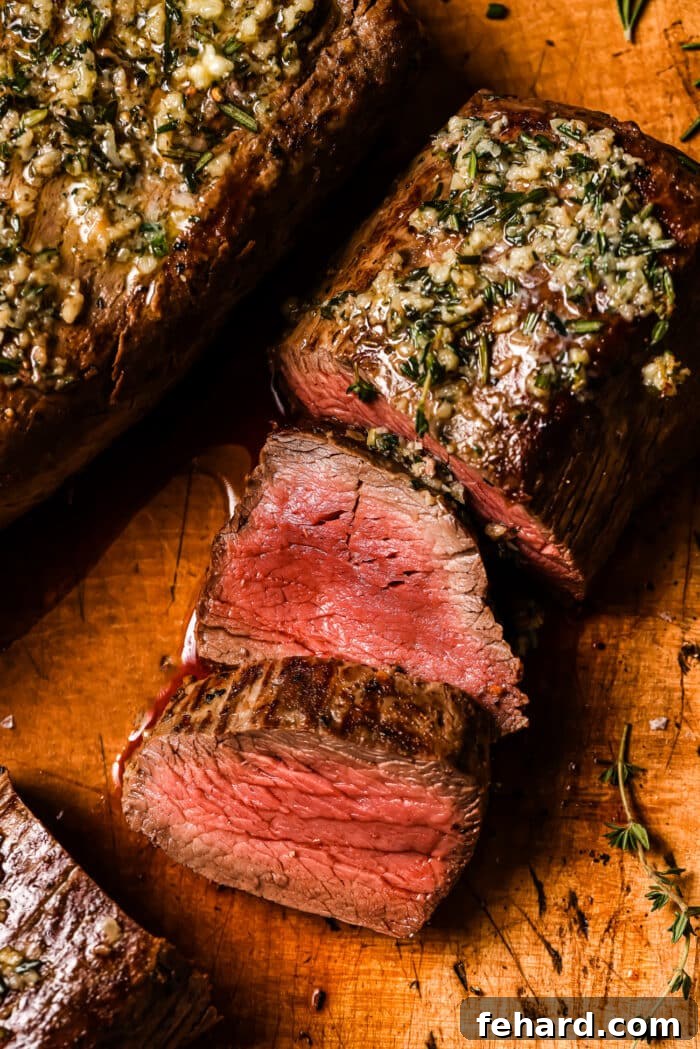
Step Six: The Crucial Resting Period & Slicing. Once cooked, remove the tenderloins from the oven and transfer them to a clean cutting board. Cover loosely with foil and allow them to rest for 10-15 minutes. This resting period is vital; it allows the juices to redistribute throughout the meat, resulting in a more tender and flavorful final product. After resting, remove any twine, then slice the tenderloin into beautiful 1-inch coins. Serve immediately and savor every melt-in-your-mouth bite.
Achieving Your Preferred Doneness
Cooking beef tenderloin to your exact preference is simple with a reliable meat thermometer. It’s the most accurate way to ensure perfect doneness every time. Remember that the internal temperature of the beef will continue to rise by about 5 degrees Fahrenheit during the resting period due to carryover cooking. Therefore, remove the beef from the oven just before it reaches your desired final temperature.
- Rare: 120-125°F (49-52°C) – Very red, cool center.
- Medium-Rare: 130-135°F (54-57°C) – Red, warm center, preferred by many for tenderloin.
- Medium: 135-140°F (57-60°C) – Pink, warm center.
- Medium-Well: 140-145°F (60-63°C) – Slightly pink, hot center.
Complementary Sauces & Sides
Elegant Sauce Pairings
While the garlic butter provides ample flavor, a complementary sauce can elevate your beef tenderloin even further. For those who appreciate a touch of heat, a zesty homemade horseradish sauce offers a delightful counterpoint to the rich, buttery tenderloin. The fresh, piquant kick of horseradish creates a wonderful balance.
Another classic and equally delicious option is to create a simple pan sauce. After removing the beef from the skillet, deglaze the pan with a splash of red wine or rich beef broth, scraping up all the flavorful browned bits from the bottom. Let it simmer and reduce slightly until it thickens into a simple yet incredibly rich and savory sauce.
For a different texture and added depth, I also highly recommend serving sautéed garlic butter mushrooms and onions. This healthy, veggie-packed topping adds an earthy dimension that pairs beautifully with the tender beef.
Perfect Side Dishes
As mentioned, the key to side dishes is to complement, not compete, with the tenderloin. Classic choices like creamy mashed potatoes, simply roasted asparagus, or steamed broccoli florets are excellent. For a pop of green and a nutty flavor, roasted parmesan green beans are always a hit. These simple sides ensure the beef remains the undisputed star of your meal.
Storing and Reheating Leftovers
Should you be fortunate enough to have any leftover beef tenderloin, storing it properly ensures you can enjoy its deliciousness for days to come. Place any remaining beef in an airtight container and refrigerate for up to 3 days. For longer storage, you can freeze it for up to 6 months; just be sure to wrap it tightly to prevent freezer burn.
To preserve the tender and buttery texture, reheat the tenderloin gently. The best method is “low and slow” in the oven at around 325°F (160°C) until it’s just warmed through, avoiding high heat that can dry out the meat. Interestingly, beef tenderloin is also quite delicious served cold or at room temperature. This makes it a fantastic option for meal prep, adding a touch of gourmet protein to winter salads, or crafting elegant sandwiches.
More Delicious Garlic Butter Creations You’ll Love
Garlic Butter Scallops Recipe
11 mins
Garlic Butter Pork Tenderloin Recipe
30 mins
Garlic Butter Salmon Recipe
19 mins
Garlic Butter Turkey Breast Recipe
1 hr 25 mins
If you love this Garlic Butter Beef Tenderloin recipe, be sure to leave a star rating and comment below! And if you wanna taste more, check out the full collection of delicious dinner recipes here at Primavera Kitchen.
Pin
Garlic Butter Beef Tenderloin
Equipment
-
1 Cast iron skillet
-
1 Food Thermometer
Ingredients
- 1 beef tenderloin roast 4 to 4 ½ pounds
- 6 tablespoons softened butter
- 5 garlic cloves minced
- 1 teaspoon fresh rosemary leaves finely chopped
- 1 teaspoon fresh thyme leaves finely chopped
- Salt and black pepper to taste
- 2 tablespoons olive oil
Instructions
-
Take the beef tenderloin out of the fridge and let it sit for 1 to 2 hours until it reaches room temperature.
-
In a small bowl, mix butter, garlic, rosemary, and thyme, and set aside.
-
Heat the oven to 425°F (220°C). Slice the beef tenderloin in half, trim it, and tie it if needed.
-
Pat the beef dry with paper towels and season both sides with salt and pepper.
-
Heat oil in a large cast-iron pan over medium-high heat. Add the beef and brown it on all sides for about 10 minutes.
-
Spread the herb butter mixture on top of the beef, then place the pan in the oven. If using a probe thermometer, insert it before roasting. Cook for 15 to 20 minutes, depending on your preferred doneness.
-
Remove the beef from the oven and let it rest on a cutting board for 10 to 15 minutes. Then, remove the twine and slice into 1-inch pieces.
Notes
- Beef tenderloin is best served as soon as it’s finished resting.
- For the best cut, use a sharp knife and take your time.
- Season the beef up to 24 hours ahead of time for even more flavor.
Nutrition
Calories: 479kcal,
Carbohydrates: 1g,
Protein: 46g,
Fat: 30g,
Cholesterol: 165mg,
Sodium: 165mg,
Potassium: 592mg,
Calcium: 35mg
Nutrition information is automatically calculated, so should only be used as an approximation.