
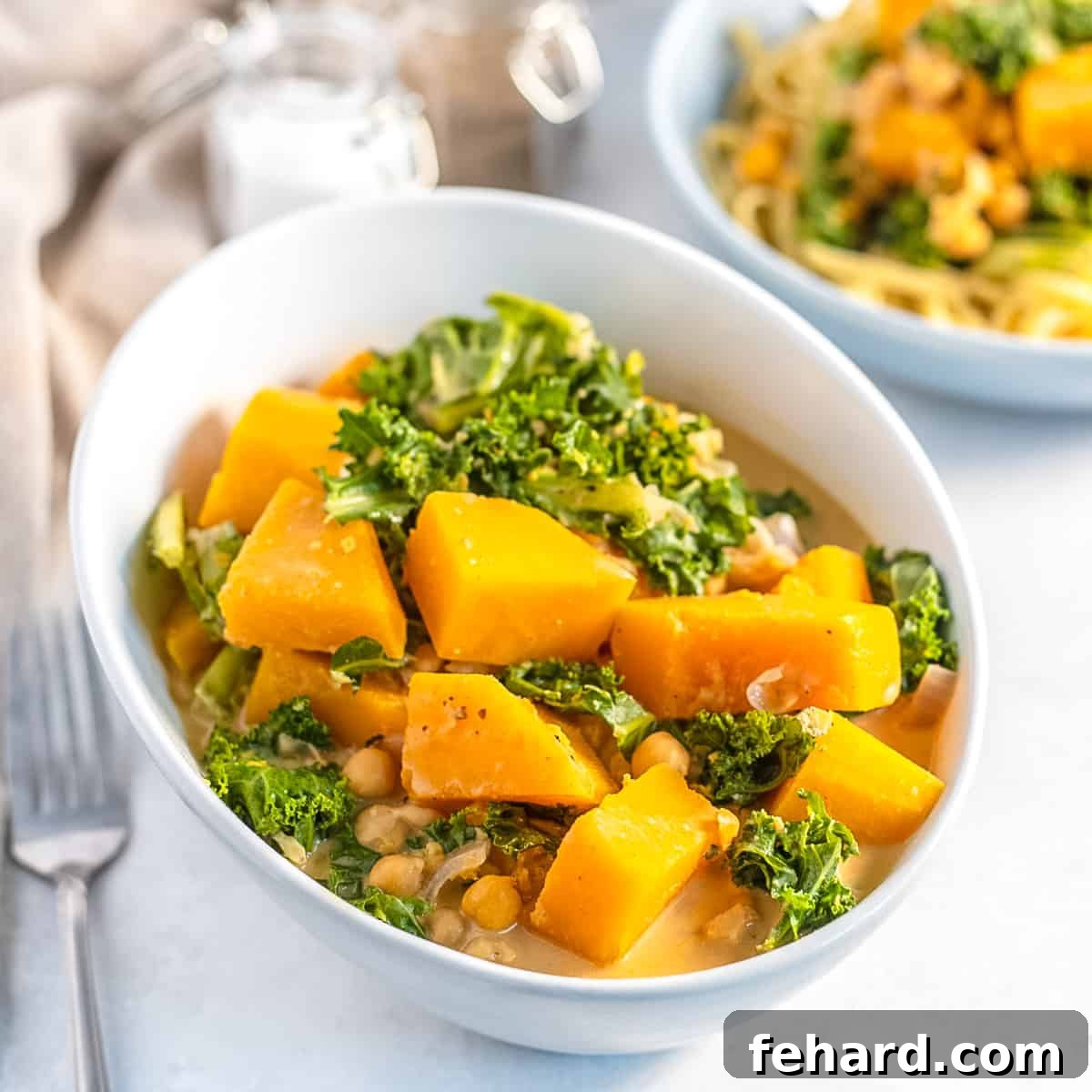
Creamy Butternut Squash Curry: Your New Favorite Weeknight Meal
Dive into a bowl of warm, comforting goodness with this incredibly easy butternut squash curry. Thanks to the magic of curry paste and a handful of fresh, seasonal ingredients, you can achieve a rich, complex flavor typically found in traditional curries, but in a fraction of the time. This recipe promises a satisfying, creamy experience that’s perfect for any occasion, from cozy family dinners to impressive gatherings.
Why You Will Absolutely Love This Butternut Squash Curry Recipe
This isn’t just another curry recipe; it’s a culinary revelation designed for modern life. Here’s why this vibrant, flavorful dish is destined to become a staple in your kitchen:
- Effortlessly Fast: Achieve deeply satisfying flavors in under an hour, making it ideal for busy weeknights when time is precious. Forget long simmering times – this curry comes together quickly with readily available ingredients.
- Budget-Friendly & Accessible: Crafted with common pantry staples and easy-to-find produce, this recipe proves that delicious, healthy eating doesn’t have to break the bank. You’ll likely have most ingredients on hand already.
- Incredibly Versatile: Naturally dairy-free, gluten-free, and completely vegan-friendly, this butternut squash curry caters to a wide range of dietary needs and preferences without compromising on taste. It’s a crowd-pleaser for everyone at the table.
- Rich & Complex Flavors: Despite its simplicity, the combination of aromatic spices, creamy coconut milk, and the sweetness of butternut squash creates a beautifully balanced and incredibly flavorful sauce that will tantalize your taste buds.
- Wholesome & Nourishing: Packed with nutrient-dense butternut squash, protein-rich chickpeas, and vitamin-packed kale, this curry is not just delicious but also incredibly healthy and filling.
- Minimal Cleanup: Designed as a one-pan dinner, this recipe minimizes the number of dishes you’ll need to wash, allowing you more time to enjoy your meal and less time scrubbing.
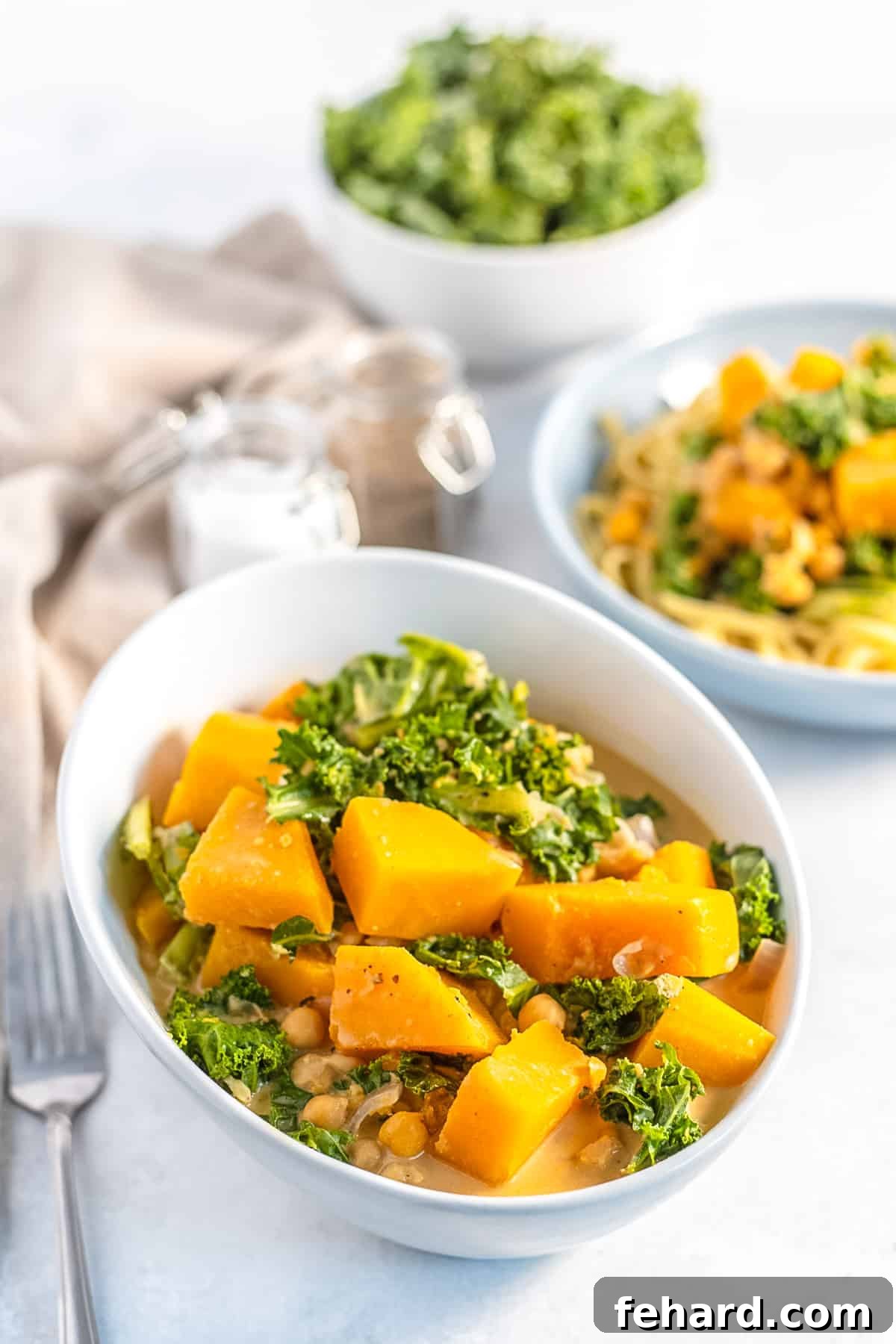
The Vegetarian Curry That Converted Even My Skeptical Family

Let me share a little secret with you. While I personally adore the aromatic spices and comforting warmth of curry, and enthusiastically embrace plant-based recipes, my family often approaches these dishes with a healthy dose of skepticism. So, when I announced that dinner would be a vegan-friendly curry, I was met with a chorus of collective groans and dubious glances.
You can imagine my surprise, and certainly theirs, when they didn’t just tolerate this curry, but absolutely *devoured* it! Every last drop was scraped from the pot, leaving me with precisely zero leftovers – a disappointment for my lunch plans, but an undeniable triumph for the recipe. This particular butternut squash curry didn’t just win over my family; it firmly cemented its place as a highly anticipated meal on our weekly rotation.
And the best part? For me (and for you!), it’s incredibly straightforward to prepare, proving that exceptional flavor doesn’t require hours in the kitchen. Get ready to convert your own skeptics with this fantastic dish!
Happy Cooking! xo Kristen
Essential Ingredients & Smart Substitutions for Your Butternut Squash Curry
Crafting a delicious butternut squash curry starts with quality ingredients, but flexibility is key! All the components for this recipe are simple, affordable, and readily available at most grocery stores. Plus, I’ve got some fantastic notes on substitutions to ensure this recipe works perfectly for whatever you have on hand or prefer.
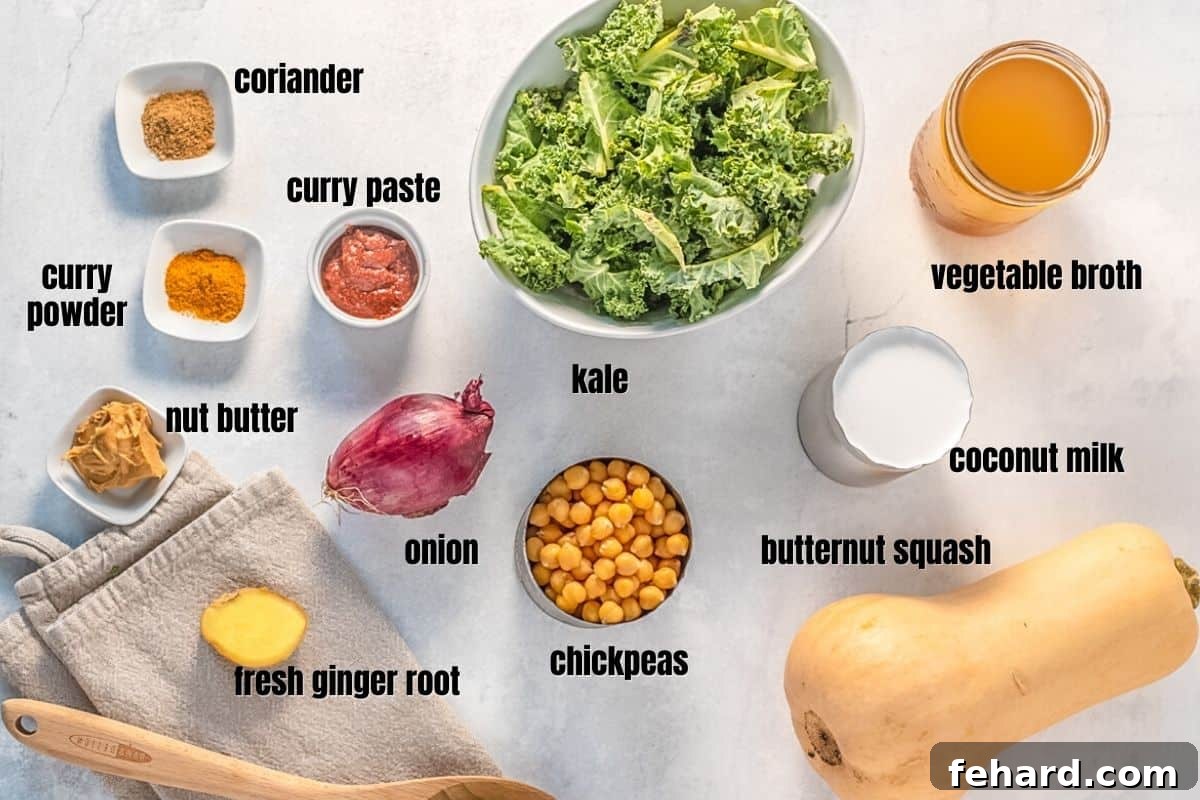
- Butternut Squash: This recipe calls for 4 cups of cubed butternut squash, which typically equates to one medium-sized squash. When selecting, look for a squash that feels heavy for its size and has a uniform, unblemished skin. For a fantastic shortcut, many grocery stores offer pre-diced butternut squash in the produce section, which can save you 5 to 10 minutes of prep time for about the same cost as a whole squash. If butternut squash isn’t available or you prefer a different flavor profile, feel free to substitute with diced sweet potatoes – no other changes to the recipe are needed.
- Curry Paste: The backbone of this curry’s flavor! For this specific recipe, I highly recommend using a mild red curry paste. Red curry paste offers a beautiful balance of heat and aromatic spices like lemongrass, galangal, and red chilies, creating a wonderfully rich base. If you prefer a milder flavor, you can start with a slightly smaller amount and add more to taste. Green curry paste tends to be spicier, while yellow curry paste is often milder and sweeter. Experiment to find your favorite!
- Kale: Fresh, hearty kale adds a lovely touch of green and extra nutrients to the curry. Remember to de-stem it and chop it into bite-sized pieces for the best texture. If kale isn’t your favorite, or you’re simply looking for an alternative, fresh spinach is an excellent substitute; it will wilt down much faster, so add it right at the end. You can also omit the greens altogether if you prefer, but they do add a wonderful freshness.
- Peanut Butter: This might seem like an unusual addition, but a tablespoon of creamy, all-natural, unsweetened peanut butter adds incredible depth, richness, and a subtle nutty undertone, contributing to the curry’s creamy texture. It’s crucial to use unsweetened, natural peanut butter (the kind that separates and needs stirring) for the best flavor and consistency. Sweetened or shelf-stable peanut butter will alter the taste profile significantly. As an alternative, creamy, all-natural almond butter or tahini can also be used for a similar effect, catering to different preferences or allergies.
- Coconut Milk: For the most luxurious, thick, and satisfying curry, full-fat canned coconut milk is your best friend. Its richness provides a fantastic mouthfeel and carries the flavors beautifully. If you’re looking to lighten things up, you can opt for light canned coconut milk, though the curry will be less creamy. It’s important to note that refrigerated coconut milk (the kind often found in cartons for drinking) is not suitable for this recipe as it has a thinner consistency and different flavor profile. Make sure to use canned varieties, often found in the Asian or baking aisle.
- Chickpeas: A fantastic source of plant-based protein and fiber, chickpeas add heartiness and texture to the curry, making it incredibly filling. One 15-ounce can, rinsed and drained, is perfect. Lentils or other beans could work as a substitute, but adjust cooking times accordingly.
- Aromatics & Spices: Fresh ginger and yellow onion form the aromatic base, building layers of flavor. Curry powder and coriander powder enhance the curry paste, adding warm, earthy notes. Don’t skip these for the full flavor experience!
Time Saving Tip for Butternut Squash
To significantly cut down on prep time, consider purchasing pre-diced butternut squash from your grocery store’s produce section. It often costs about the same as a whole squash but saves you the effort of peeling, deseeding, and cubing, allowing you to get this delicious curry on the table even faster!
Step-by-Step Guide: How to Prepare Your Delicious Butternut Squash Curry
This Butternut Squash Curry is designed to be a surprisingly easy one-pan dinner recipe. These detailed steps are provided to ensure your success in the kitchen, guiding you through each stage with confidence and ease. Think of it as me right there with you, helping you create a magnificent meal. 😊
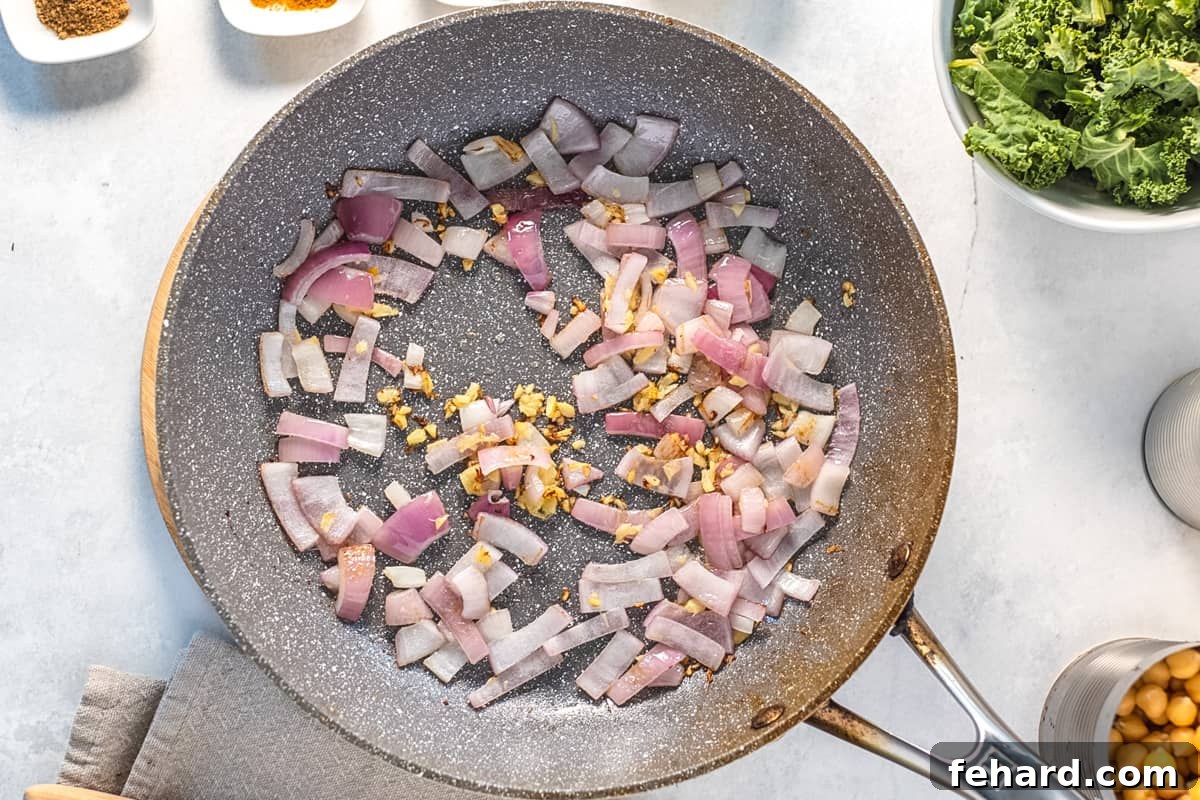
- Sauté the Aromatics to Build Flavor: In a large, heavy-bottomed saucepan or Dutch oven, begin by heating 1 tablespoon of extra virgin olive oil over medium heat. Once shimmering, add 1 small diced yellow onion. Sauté the onion for about 5 minutes, stirring occasionally, until it has softened and become translucent. Next, add 1 inch of peeled and grated fresh ginger. Cook for another minute, stirring continuously, until the ginger becomes wonderfully fragrant. This step is crucial for developing the foundational flavors of your curry.
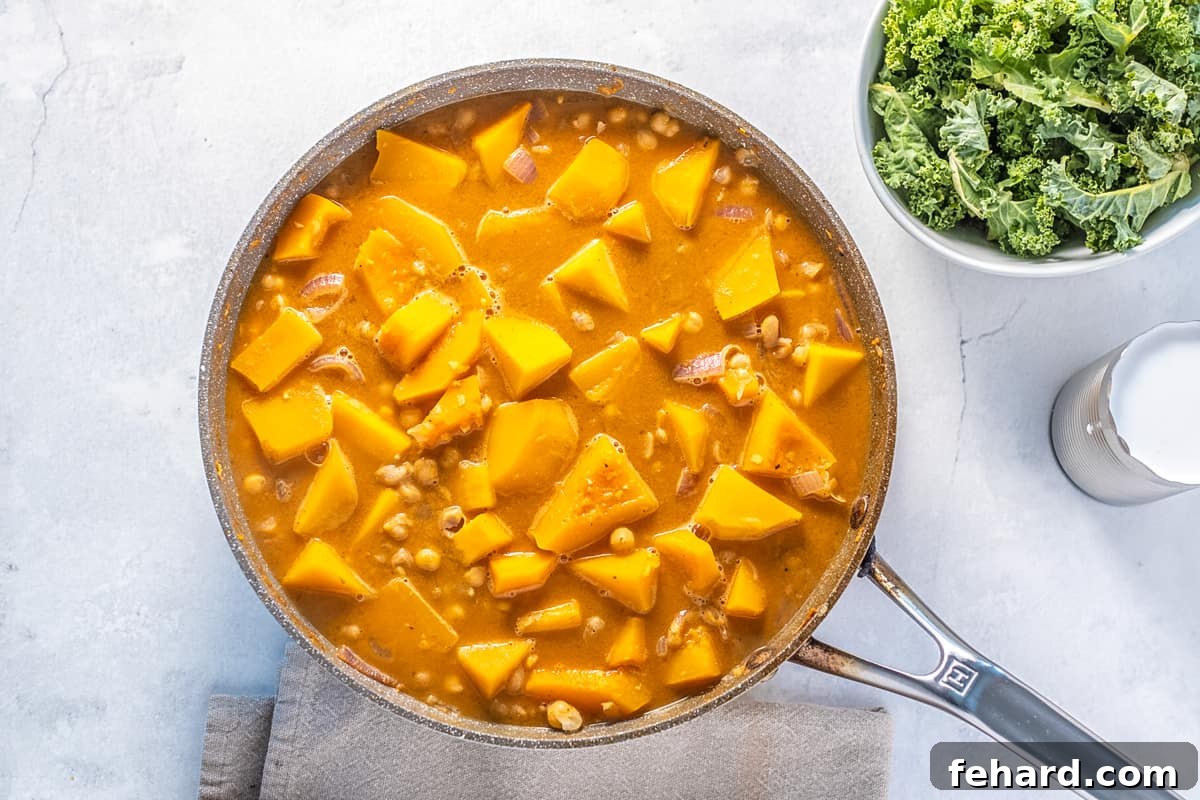
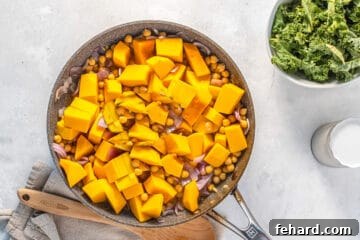
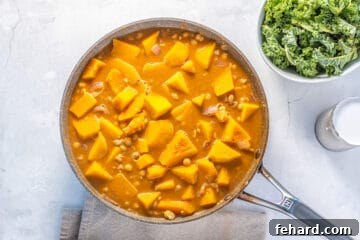
- Simmer the Curry Base with Squash and Chickpeas: To the pot with your sautéed aromatics, add 3 cups of low-sodium vegetable broth, 1 tablespoon of all-natural creamy peanut butter, 1 tablespoon of red curry paste, 1 teaspoon of curry powder, and 1 teaspoon of coriander powder. Whisk vigorously to combine all the ingredients until the peanut butter and curry paste are fully incorporated into the broth, forming a smooth, aromatic liquid. Next, stir in the 4 cups of 1-inch cubed butternut squash and 1 (15 oz) can of rinsed and drained chickpeas. Bring the mixture to a gentle boil over high heat. Once boiling, reduce the heat to medium-low, cover the saucepan, and let it simmer for 20-25 minutes, or until the butternut squash is perfectly fork-tender. Stir occasionally to prevent sticking.
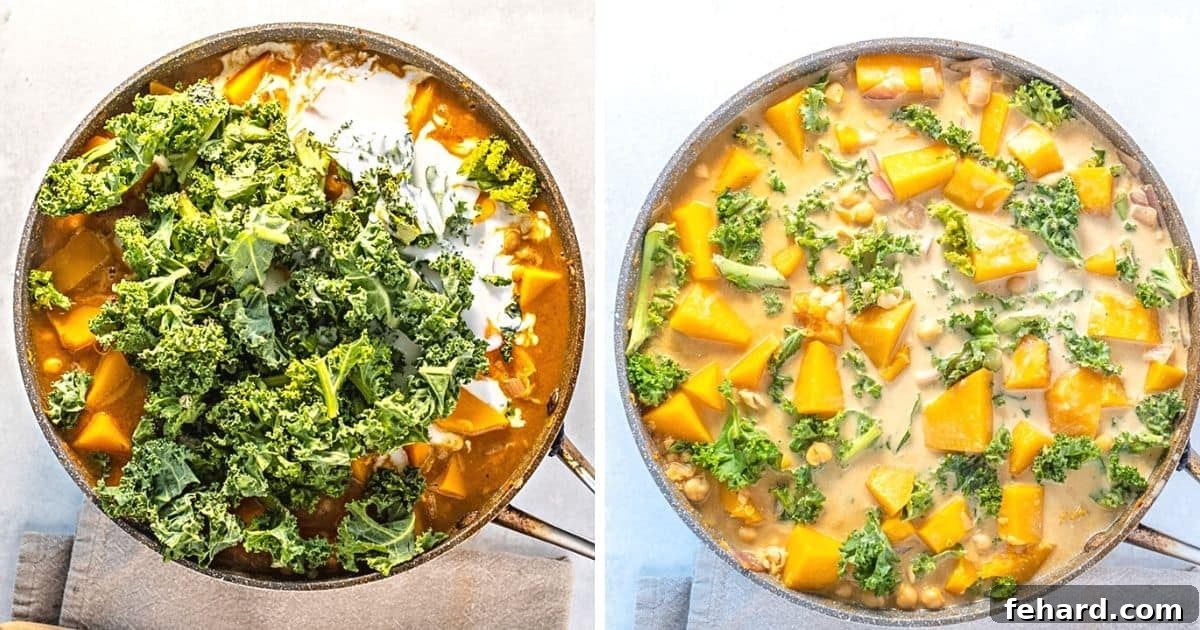
- Incorporate Fresh Kale and Creamy Coconut Milk: Once the butternut squash is tender and easily pierced with a fork, it’s time to add the finishing touches. Pour in 1 (13.5 oz) can of full-fat coconut milk and stir in 2 cups of de-stemmed and chopped kale. Continue to cook for another 1-2 minutes, or just until the kale begins to soften and wilt slightly. This preserves its vibrant color and a bit of its texture. If you prefer your kale very soft, you can add it earlier, during the last 10 minutes of the simmering stage with the squash.
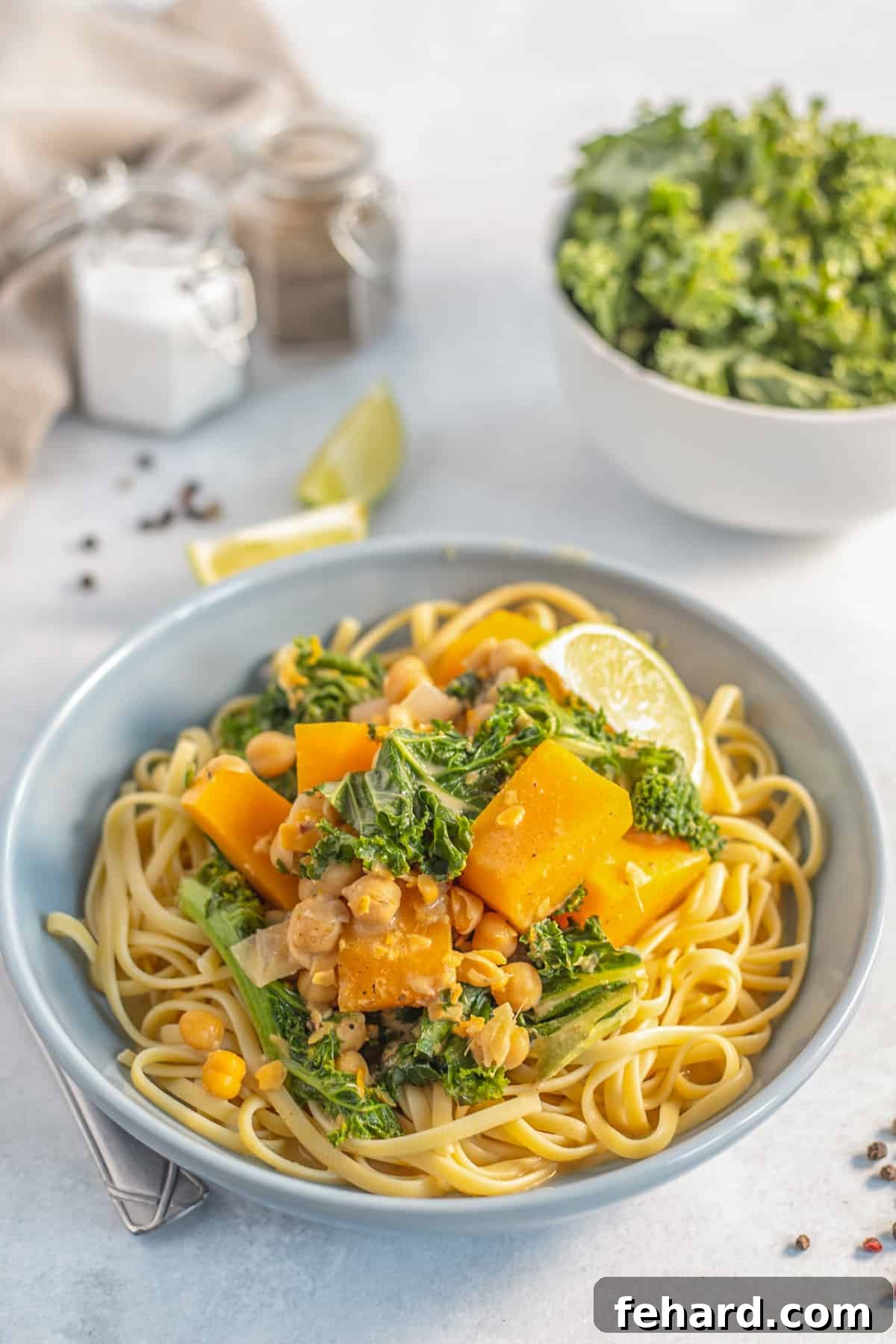
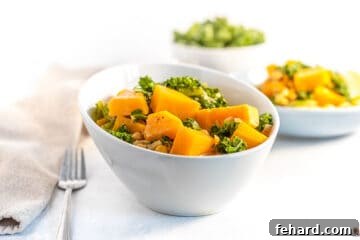
- Season and Serve Your Hearty Curry: Remove the saucepan from the heat. Taste the curry and adjust the seasoning with salt and freshly ground black pepper as needed. A final squeeze of juice from 1 small lime will brighten all the flavors beautifully, adding a zesty finish; stir it in thoroughly. This Butternut Squash Curry is wonderfully versatile. You can serve it on its own for a light but filling meal, or over fluffy Instant Pot Brown Rice, aromatic Instant Pot Jasmine Rice, couscous, or even tossed with your favorite pasta for a unique twist. Don’t forget a side of warm naan bread for scooping up every last drop of that rich sauce!
Storage & Reheating Instructions for Butternut Squash Curry
This butternut squash curry is fantastic for meal prep or enjoying as leftovers. Here’s how to properly store and reheat it to maintain its delicious flavor and texture:
- Refrigerate: Allow the leftover vegetarian curry to cool completely to room temperature. Transfer it to an airtight container and store it in the refrigerator for up to 5 days. The flavors often meld and deepen overnight, making it even more delicious the next day!
- Freeze: For longer storage, this curry freezes beautifully. Once cooled, portion the curry into freezer-safe containers or heavy-duty freezer bags. Ensure there’s minimal air in the container or bag to prevent freezer burn. Freeze for up to 3 months. Label with the date for easy tracking.
- Reheat: If reheating from frozen, it’s best to defrost the curry overnight in the refrigerator first. To reheat, transfer the desired amount to a saucepan and warm over low heat on the stovetop, stirring occasionally, until heated through. You can also heat individual servings in 1-minute intervals in the microwave, stirring between each interval, until hot. If the curry seems too thick after reheating, you can add a splash of vegetable broth or coconut milk to reach your desired consistency.
Explore More Delicious Vegan-Friendly Dinner Recipes
Looking to incorporate more wholesome and exciting vegan-friendly dinner recipes into your family’s meal plan? Expanding your plant-based repertoire is easier than you think. Check out a few more of our favorite, crowd-pleasing vegan dishes below that are sure to impress and nourish your loved ones:
- Flavorful Vegetarian Lettuce Wraps
- Hearty Sweet Potato Tacos
- Creamy Vegetarian Tikka Masala
- Nutrient-Rich Kale Pasta
- Savory Stuffed Portobello Mushrooms
Butternut Squash Curry
Kristen Chidsey
8
15
30
45
Ingredients
- 1 tablespoon extra virgin olive oil
- 1 small yellow onion, diced
- 1 inch fresh ginger, peeled and grated
- 3 cups low-sodium vegetable broth
- 1 tablespoon all-natural creamy peanut butter
- 1 tablespoon red curry paste (mild recommended)
- 1 teaspoon curry powder
- 1 teaspoon coriander powder
- 4 cups butternut squash, 1-inch cubes (from 1 medium squash or pre-cut)
- 1 (15 oz can) chickpeas, rinsed and drained
- 1 (13.5 oz) can full-fat coconut milk
- 2 cups kale, de-stemmed and chopped into bite-size pieces
- Salt and pepper to taste
- 1 small lime, for juicing
Units: US Customary (original) | Metric
Instructions
-
In a large, heavy-bottomed saucepan, heat 1 tablespoon extra virgin olive oil over medium heat. Add in 1 small diced yellow onion and cook for 5 minutes, or until softened. Add the 1 inch fresh grated ginger and cook for another minute, or just until fragrant.

-
Whisk 3 cups low-sodium vegetable broth, 1 tablespoon all-natural creamy peanut butter, 1 tablespoon red curry paste, 1 teaspoon curry powder, and 1 teaspoon coriander powder to the pot and whisk to combine. Stir in 4 cups butternut squash and 1 (15 oz can) chickpeas (drained).
-
Raise the heat to high and bring the curry to a gentle boil. Reduce the heat to medium-low, cover, and simmer for 20-25 minutes, or until the squash is fork-tender.
-
Once the squash is tender, add 1 (13.5 oz) can coconut milk and 2 cups kale (chopped) and cook for another minute or two, or until the kale softens slightly. Note: If you would like softer kale, add it to the pot when the curry still has 10 minutes left to simmer.
-
Remove the curry from the heat. Taste and season with salt and pepper if needed. Squeeze the juice of 1 small lime into the curry and stir to incorporate. Serve the curry over pasta, rice, or with a side of Naan bread.


Notes
Kale: Ensure the tough stems are removed from the kale and it’s chopped or torn into small, bite-sized pieces. For softer kale, add it during the last 10 minutes of simmering the curry. Fresh spinach can also be used as a substitute; it wilts quickly, so add it at the very end of cooking.
Peanut Butter: Use creamy, all-natural peanut butter or creamy, all-natural almond butter. Nut butters that require refrigeration after opening are generally best as they contain less added sugar and stabilizers compared to shelf-stable varieties.
Curry Paste: This recipe specifically calls for a red, mild curry paste to achieve its intended flavor profile.
Storage: Store cooled leftover vegetarian curry in an airtight container for up to 5 days in the refrigerator. For longer storage, freeze the curry in a freezer-safe container for up to 3 months. Thaw in the refrigerator overnight before reheating over low heat on the stovetop or in individual servings in the microwave.
Nutrition
Carbohydrates: 30g
Protein: 9g
Fat: 15g
Saturated Fat: 9g
Polyunsaturated Fat: 1g
Monounsaturated Fat: 3g
Sodium: 20mg
Potassium: 639mg
Fiber: 7g
Sugar: 6g
Vitamin A: 9428IU
Vitamin C: 37mg
Calcium: 105mg
Iron: 4mg
Nutrition information is automatically calculated and should only be used as an approximation.
Tried this recipe?
Mention @amindfullmom or tag #amindfullmom!