
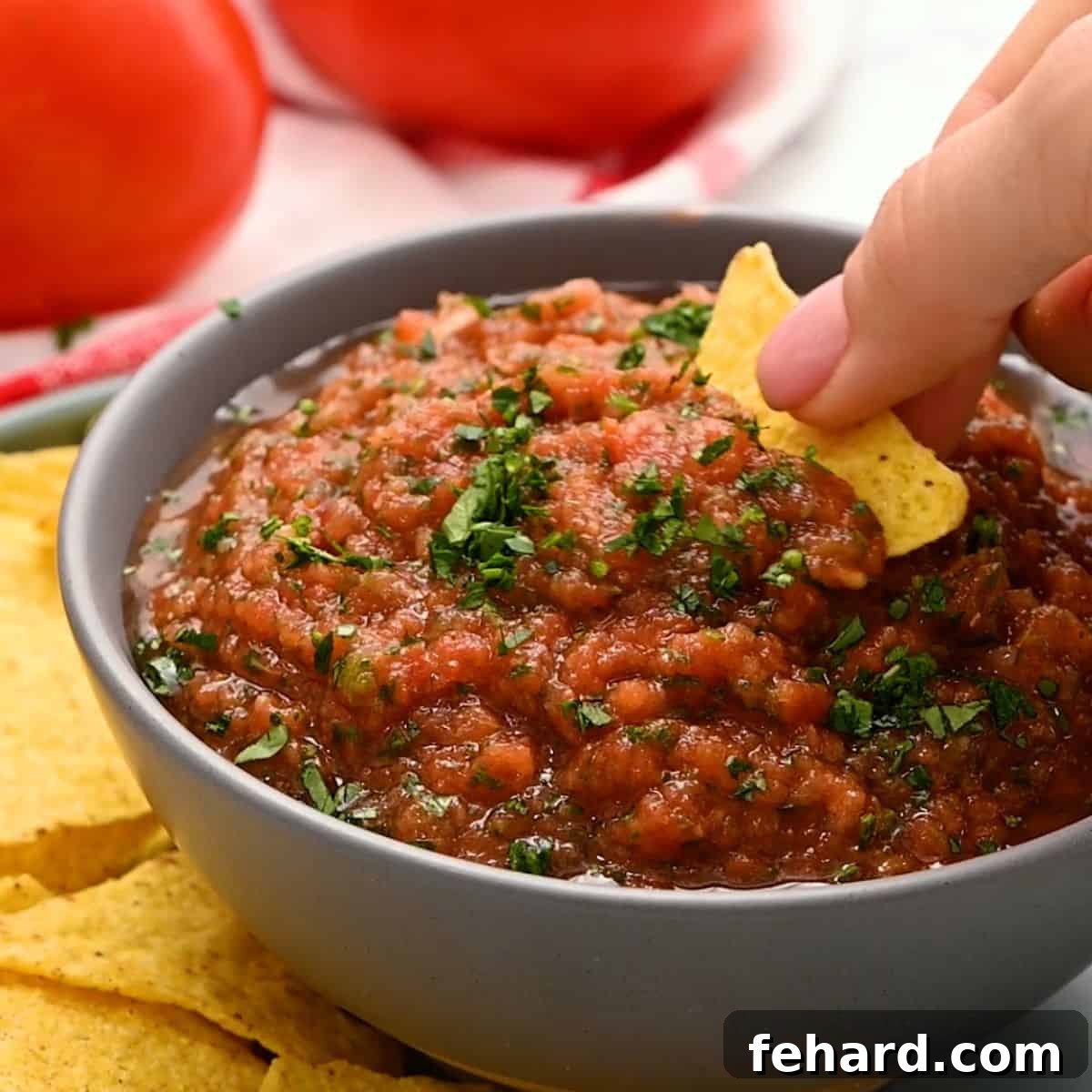
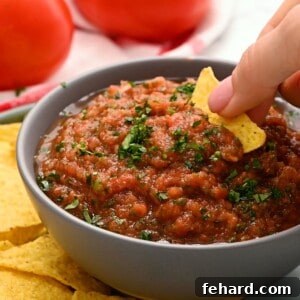
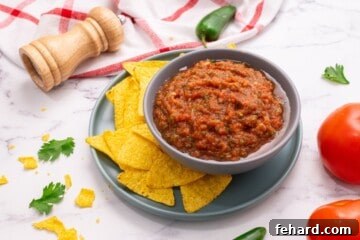
Unlock the secret to vibrant, flavorful homemade salsa that rivals your favorite Mexican restaurant, all in a matter of minutes. This revolutionary blender salsa recipe transforms fresh (or canned) tomatoes and a handful of simple ingredients into a spectacular dip that’s perfect for any occasion. Say goodbye to tedious chopping and hello to quick, delicious, and effortlessly fresh restaurant-style salsa!
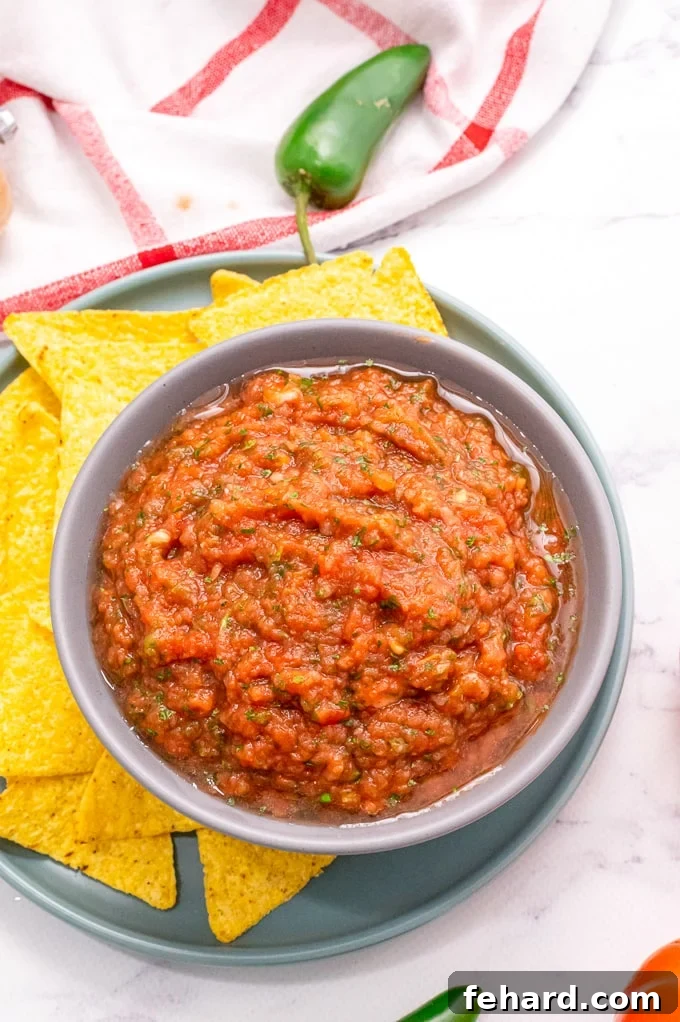
Effortless Fresh Tomato Salsa: A Culinary Revelation!

For many years, the end of summer meant an annual salsa-making tradition with my mother and aunt. It was a cherished ritual, filled with laughter, stories, and the undeniable aroma of ripe tomatoes. We would spend hours meticulously peeling and chopping fresh vegetables, turning them into batches of rich, zesty homemade salsa. While it was truly a labor of love, the process often stretched over an entire day, demanding significant time and effort.
But I’ve discovered a superior, incredibly streamlined method – an easier way to achieve that same authentic flavor and perfect texture without the exhaustive preparation!
Now, instead of enduring a marathon of chopping, I simply toss all the ingredients into a blender. The transformation is remarkable! What emerges is a vibrant, fresh, and intensely flavored salsa that boasts the exact consistency and taste profile of the premium salsa served at your beloved Tex-Mex establishment. It’s the very same nostalgic flavor I grew up savoring, but with one critical difference:
It takes mere minutes to prepare, rather than hours. This revolutionary approach makes it utterly perfect for those spontaneous moments when a craving for fresh, zesty tomato salsa strikes, or when you need a quick appetizer for unexpected guests. Embrace this simple yet powerful technique and elevate your culinary experience!
Happy Cooking! xo Kristen
Salsa Recipe Highlights & What You’ll Learn
- Discover the Easy Blender Salsa Method
- Essential Ingredients & Equipment for Perfect Salsa
- Step-by-Step Guide to Making Restaurant-Style Salsa with Fresh Tomatoes
- Customize Your Salsa: Flavor and Spice Modifications
- Creative Ways to Serve Your Homemade Salsa
Key Ingredients and Essential Equipment for Your Salsa
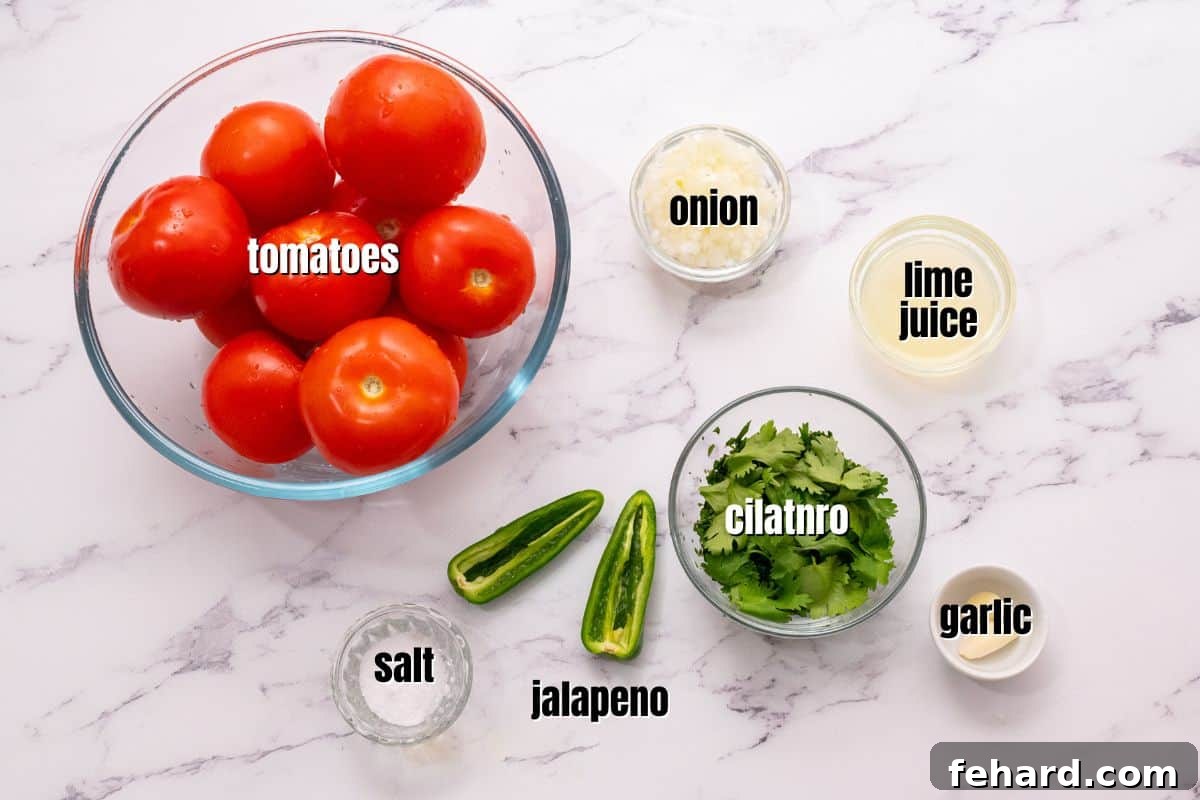
Crafting exceptional salsa begins with selecting the finest ingredients and having the right tools. Here’s a closer look at what you’ll need to achieve that desired restaurant-quality flavor and texture:
- Tomatoes: The foundation of any great salsa is its tomatoes. The fresher and riper your tomatoes are, the more profoundly flavorful your salsa will be. For optimal taste and consistency, I highly recommend using Roma tomatoes, Heirloom varieties, or vine-ripened tomatoes. Roma tomatoes are particularly excellent due to their meaty texture and lower water content, resulting in a richer salsa. Heirloom tomatoes offer unique, complex flavors, while vine-ripened tomatoes ensure a sweet and juicy base. When choosing, look for firm, vibrantly colored tomatoes with a fragrant aroma.
- Onions: Through years of perfecting this homemade salsa recipe, I’ve consistently found that a sweet onion, such as a Vidalia, provides the most balanced and complementary flavor. Its mild sweetness enhances the overall profile of the salsa without overpowering the other fresh ingredients. However, if a Vidalia isn’t available, a standard yellow onion can be used effectively, offering a slightly sharper but still delicious taste. Ensure your onion is roughly chopped to allow the blender to break it down evenly.
- Jalapeño: Even if you prefer a milder salsa, a hint of jalapeño is crucial. It adds a subtle “kick” that awakens the taste buds and provides that signature zest characteristic of authentic Mexican salsa. For a mild version, use as little as half a jalapeño. If you crave more heat, you can increase the amount up to two jalapeños. A critical tip for controlling the spice level: always remove the seeds and the white ribs of the jalapeño. These parts contain the majority of the capsaicin, which is responsible for the heat. Omitting them will prevent your salsa from becoming overwhelmingly spicy. Always handle jalapeños with care, and wash your hands thoroughly afterward.
- Cilantro: Cilantro is often a polarizing herb – you either adore its fresh, citrusy notes or find its flavor challenging. If you belong to the latter group, by all means, omit it entirely; your salsa will still be delicious. For cilantro lovers, however, it imparts an incomparable freshness and authentic herbal aroma that truly elevates this salsa recipe. Use about half a bunch, ensuring the tough stems are removed, as the leaves carry the most flavor.
- Garlic: Fresh garlic is non-negotiable for adding a pungent, aromatic depth and a delightful underlying kick to your salsa. While jarred minced garlic can be convenient, fresh cloves offer superior flavor and potency. If you’re not a fan of garlic, you can certainly leave it out, but it’s a key component in achieving that classic restaurant taste. Peel and roughly chop the cloves for easy blending.
- Lime Juice: The bright acidity of lime juice is essential for balancing the flavors and adding a zingy freshness to your homemade salsa. This is one ingredient where quality truly matters: always use freshly squeezed lime juice. Bottled or jarred lime juice simply doesn’t compare in terms of flavor intensity and brightness. Similar to my recipe for homemade guacamole, I firmly believe that fresh lime juice is vastly superior to lemon juice or any artificial alternative for salsa, providing that authentic tang.
- Salt: Salt is not just for seasoning; it’s a flavor enhancer. I prefer using kosher salt because its coarser texture and pure flavor help to amplify the natural tastes of the fresh vegetables without merely making the salsa taste salty. The exact amount of salt needed will vary based on the ripeness of your tomatoes and your personal preference. Begin with one teaspoon and adjust after blending, tasting as you go until you reach perfection.
- Blender or Food Processor: The star equipment for this recipe! You can achieve that smooth, restaurant-style consistency with either a powerful blender or a food processor fitted with an S-blade. Both tools efficiently chop and combine the ingredients, eliminating the need for tedious hand-chopping. A high-powered blender can even break down tomato skins, making the optional peeling step unnecessary for some.
Crafting Your Blender Restaurant-Style Salsa: A Simple Guide
Achieving that coveted restaurant-quality salsa is surprisingly straightforward with these proven tips. The key is in the preparation and understanding how each step contributes to the final masterpiece. You will find precise ingredient quantities and comprehensive instructions conveniently located in the recipe card at the bottom of this post.
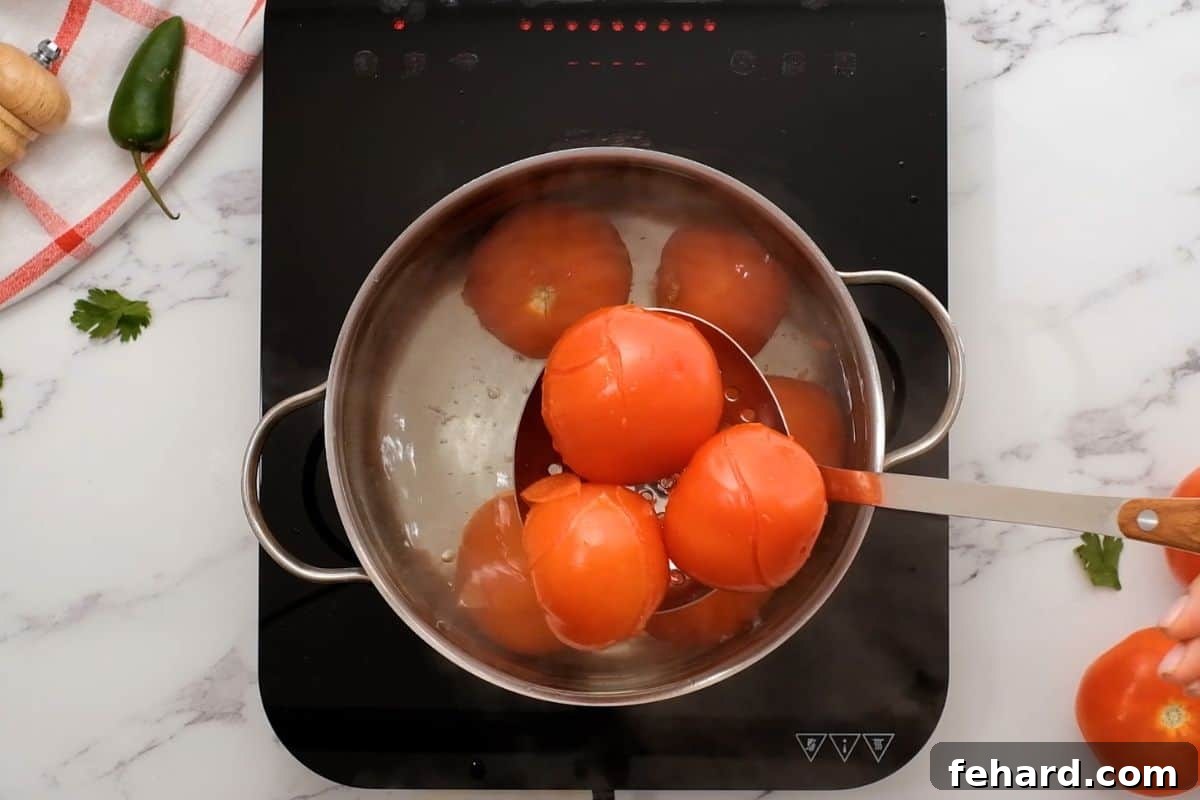
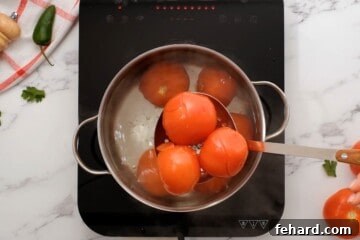
- Prepare Tomatoes (Optional Peeling). The decision to peel your tomatoes is a matter of personal preference and can significantly impact the final texture of your salsa. Peeled tomatoes will yield the silkiest, most authentic restaurant-style texture, free from any fibrous skin. The easiest method for peeling tomatoes is similar to how you’d prepare peaches for a dessert like peach cobbler:
- First, score a small “X” on the bottom of each tomato.
- Bring a large pot of water to a rolling boil.
- Carefully immerse the scored tomatoes into the boiling water for just 30 to 60 seconds. You’ll notice the skin beginning to loosen and curl at the “X” marks.
- Immediately remove the tomatoes with a slotted spoon and plunge them into an ice bath to stop the cooking process.
- Once cool enough to handle, the skins will effortlessly peel right off.
However, if you possess a high-powered blender (like a Vitamix), you might find this step entirely unnecessary, as these blenders are often robust enough to break down tomato skins into an unnoticeable consistency, saving you precious time.
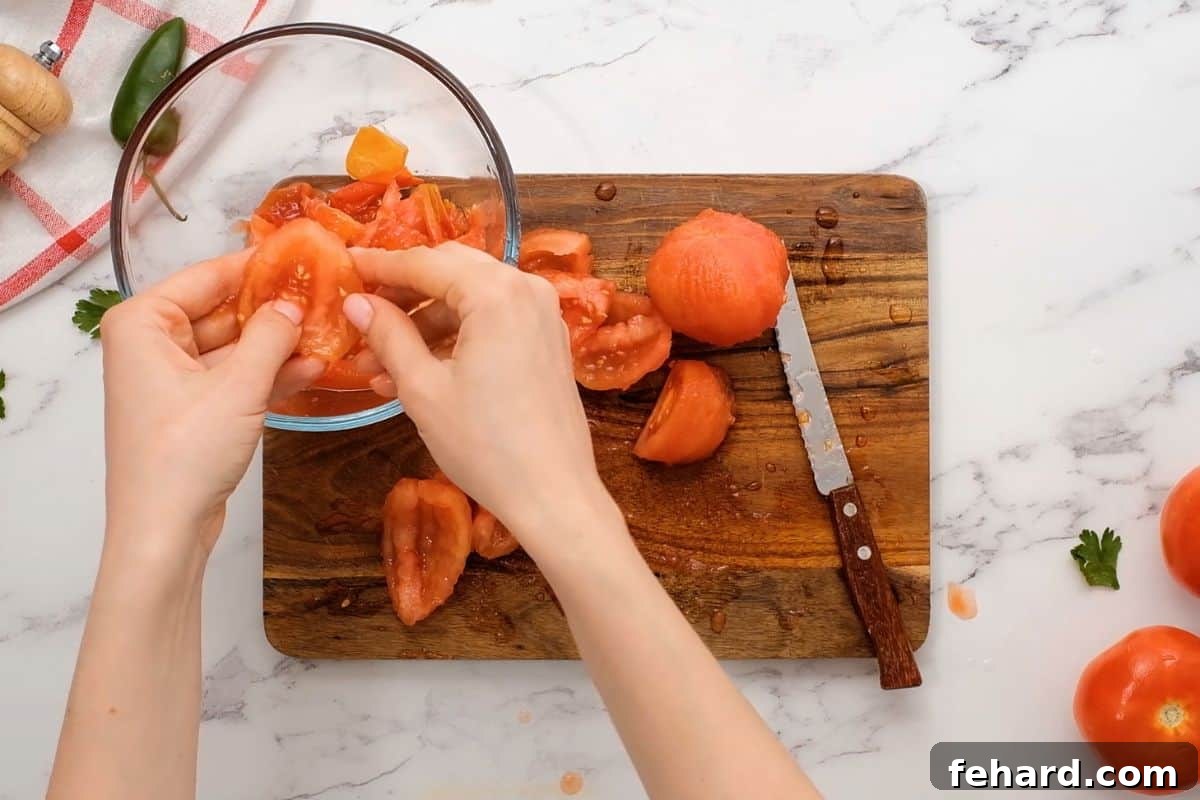
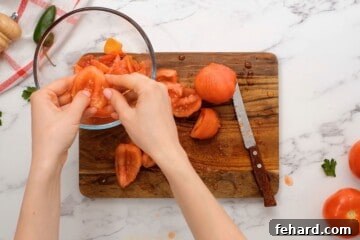
- Seed Your Tomatoes for Optimal Texture and Flavor. This step is particularly important if you are using vine-ripened tomatoes, which tend to have a higher water content than, say, Roma tomatoes. Removing some of the seeds and excess liquid is crucial to prevent your homemade salsa from becoming watery and to concentrate its rich flavors. To do this:
- Cut each prepared tomato into quarters.
- Gently squeeze each quarter over a bowl, sink, or garbage disposal, allowing the seeds and watery pulp to fall out. You don’t need to remove every single seed, just the majority of them.
This seemingly small action not only contributes to a thicker, more desirable final texture but also intensifies the natural tomato flavor, ensuring your salsa is packed with robust taste, not diluted liquid.
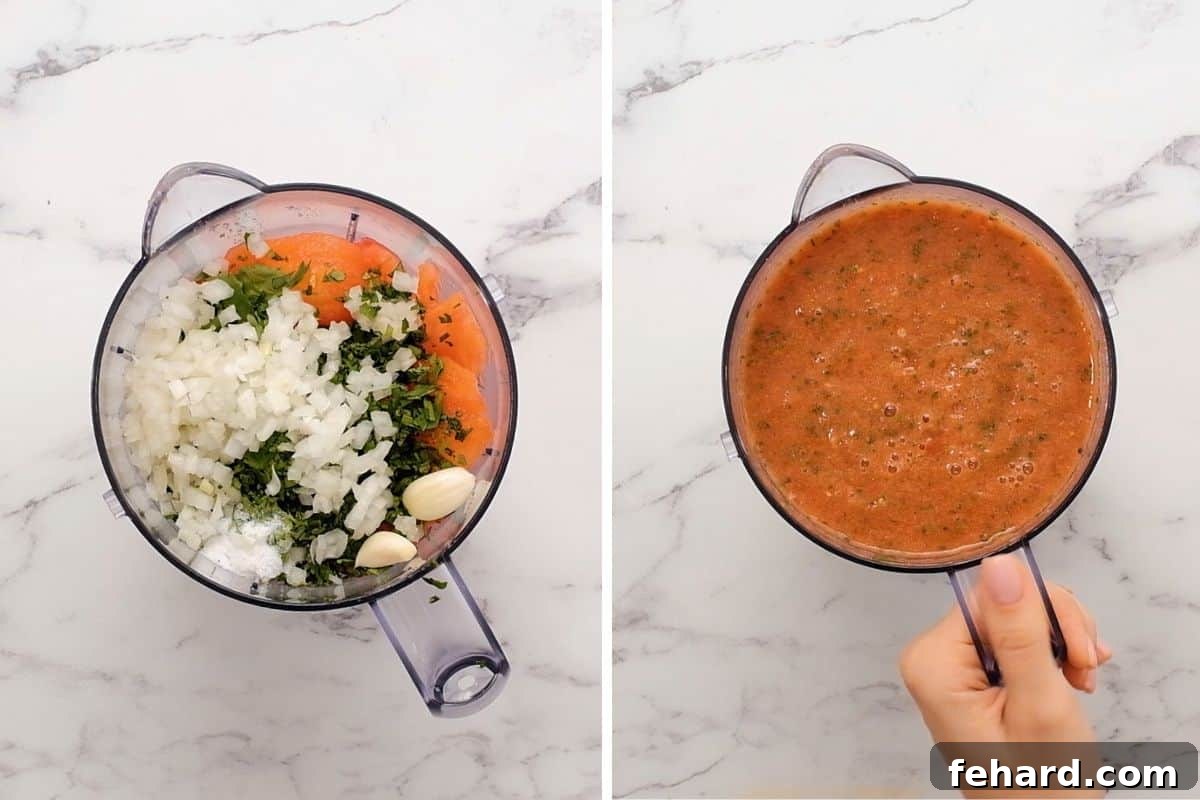
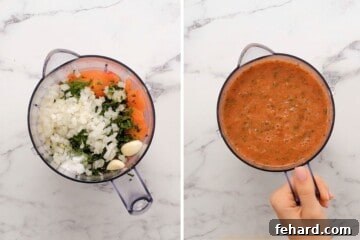
- Master the Blend for Perfect Consistency. This is where the magic happens and your blender truly shines. Transfer your seeded, quartered tomatoes into your blender or food processor, ensuring it’s fitted with an S-blade. Add the roughly chopped onion, prepared jalapeño (seeds and ribs removed for mild, or left in for heat), fresh garlic cloves, fresh cilantro leaves, a generous squeeze of fresh lime juice, and your initial measure of kosher salt.
- **The Key is Pulsing:** Instead of continuously blending, use short, controlled pulses. This technique allows you to achieve a “restaurant-style” consistency, which is typically chunky yet well-combined, rather than a completely smooth puree.
- **Monitor Texture:** Pulse several times, stopping to check the texture after each few pulses. You want the ingredients to be broken down, but still retain some discernible pieces, giving the salsa a satisfying mouthfeel. Avoid over-blending, which can result in a thin, frothy, or pureed texture.
Once you reach your desired consistency, the hardest part is over!
- Taste, Adjust, and Serve. The final, and arguably most crucial, step is to taste your freshly blended salsa. Spoon a small amount onto a chip or directly into your mouth and assess its flavor profile.
- **Adjusting Salt:** The ripeness of your tomatoes can greatly influence the perceived saltiness, so you may need to add a bit more kosher salt to truly make the flavors pop. Add half a teaspoon at a time, pulse briefly to combine, and taste again until it’s perfectly seasoned to your liking.
- **Enhancing Flavor:** If you feel it needs more zing, a touch more fresh lime juice can brighten it up. For extra heat, finely mince a small piece of jalapeño and stir it in (or blend briefly).
- **Immediate Enjoyment vs. Flavor Development:** Your salsa is ready to serve immediately, and it will be absolutely delicious. However, for an even deeper, more harmonious flavor, I highly recommend chilling it in an airtight container for at least 30 minutes (or even a few hours) in the refrigerator. This allows all the individual flavors to meld and deepen, creating an even more spectacular culinary experience.
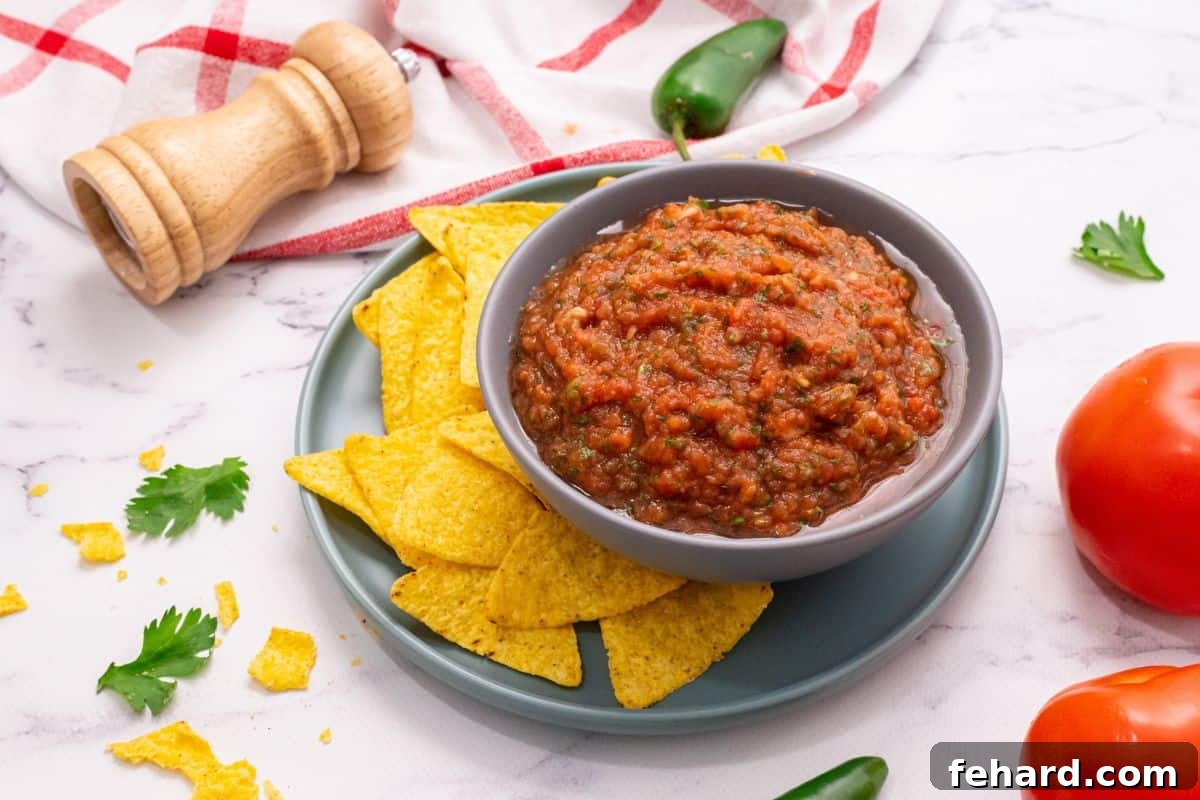
Once perfected, transfer your vibrant salsa to a serving bowl and prepare for rave reviews!
Customize Your Perfect Salsa: Recipe Modifications
The beauty of making salsa at home lies in your complete control over the flavor profile. You are the chef, which means you dictate the level of spice, the amount of salt, and the inclusion of specific ingredients. Don’t fancy cilantro? Leave it out! Adore garlic? Feel free to add an extra clove or two! The possibilities for customization are endless. While I believe the core recipe is quite perfect as written, here are a few expert notes to help you tailor the salsa precisely to your cravings:
- Using Canned Tomatoes for Convenience. While the unparalleled freshness of ripe, seasonal tomatoes will always yield the best homemade salsa, convenience sometimes calls for an alternative. You can absolutely achieve a fantastic salsa using canned tomatoes. Opt for a 28-ounce can of whole peeled tomatoes, preferably reduced-sodium. Drain the can, and you can proceed with the recipe as if they were fresh, omitting the blanching and peeling step. Canned fire-roasted tomatoes can also add a delightful smoky depth.
- For a Mild Salsa Experience: If you prefer a gentle warmth rather than a fiery kick, simply use half of a jalapeño pepper and ensure all seeds and white ribs are meticulously removed before blending. This will provide a subtle underlying spice without overwhelming the palate, making it enjoyable for all spice tolerances.
- Turning Up the Heat: Hot Salsa Variations: For those who crave serious heat, there are several ways to elevate the spice level. Increase the amount of jalapeño, potentially using two full peppers, and crucially, leave some or all of the seeds and ribs intact during blending. For an even more intense burn, consider substituting the jalapeño with a spicier pepper, such as a Serrano pepper, which offers a sharper, more concentrated heat. Remember to taste as you go!
- Adding a Bell Pepper for Different Flavor Notes: Some years, my family would incorporate green bell peppers into our homemade salsa. While it adds a distinct earthy, slightly bitter note, in truth, the salsa without the bell pepper often proved to be the crowd-pleaser, allowing the fresh tomato and lime flavors to truly shine. That said, if you appreciate the unique taste and added crunch of green bell peppers, feel free to add up to one seeded and roughly chopped green bell pepper to the blend. It’s a fun way to experiment with the flavor profile.
Beyond the Chip: Creative Serving Suggestions for Your Blender Salsa
While there’s no denying the classic, irresistible pairing of crunchy tortilla chips with freshly prepared homemade salsa, limiting yourself to just scooping is missing out on a world of culinary possibilities! This versatile blender salsa can elevate countless dishes and add a burst of fresh, zesty flavor. Here are some innovative ways to enjoy your homemade creation:
- As a Flavorful Recipe Ingredient: Integrate your homemade salsa into various recipes that call for salsa to infuse them with unparalleled freshness. Imagine the vibrant taste in dishes like Instant Pot Chicken Tacos, the robust Copycat Chipotle Sofritas, the incredibly easy Crockpot Salsa Chicken, or savory Shredded Chicken Tacos. Its bright flavors will truly shine.
- Enhancing Skillets and Casseroles: Use this homemade salsa to dramatically infuse flavor into one-pan meals. It’s a brilliant addition to a Turkey Taco Skillet, bringing moisture and zest, or layered into an Instant Pot Taco Lasagna for an extra dimension of taste.
- A Zesty Addition to Dips: For an incredible burst of fresh flavor, add a generous layer of this blender salsa to the top of a rich and cheesy refried bean taco dip. It provides a delightful contrast to the creamy textures below and brightens the entire appetizer.
- A Versatile Topping for Entrees: This fresh salsa isn’t just for dipping; it makes an exceptional topping! Spoon it generously over your favorite Taco Salad, add a dollop to Cauliflower Tacos or Sweet Potato Black Bean Tacos for a fresh counterpoint, or spread it as a vibrant layer in your Mexican Lasagna. It’s also fantastic over grilled chicken, fish, or scrambled eggs for a Tex-Mex inspired breakfast.
Explore More Delicious Tex-Mex Appetizer Recipes
- Bright & Tropical Pineapple Mango Salsa
- Hearty Black Bean and Corn Salsa
- Refreshing Watermelon Salsa
- The Most Amazing Layered Taco Dip
- Crispy Wonton Taco Cups
Loved this recipe?
If you’ve enjoyed making and tasting this easy blender salsa, please consider leaving a comment and a 5-star review at the bottom of the post. Your feedback is greatly appreciated!
Easy Blender Salsa
Ingredients
- 2 ½ pounds fresh tomatoes, about 4 average vine-ripened tomatoes, or 10 Roma tomatoes
- ½ small Vidalia onion, roughly chopped
- 1 small jalapeño , seeds removed and cut in half (adjust for desired heat)
- 2 cloves fresh garlic, peeled
- ½ bunch fresh cilantro, stems removed
- 1 teaspoon kosher salt, or to taste
- 1 medium lime, juiced (freshly squeezed is best)
Instructions
-
Optional Step: Peel Tomatoes for Smoothness. For the most authentic, silky restaurant-style salsa texture, consider peeling your tomatoes. Bring a large pot of water to a rapid boil. Gently score the top of each tomato by cutting a shallow “X.” Carefully drop the tomatoes into the boiling water for 30 seconds to 1 minute, until the skins begin to loosen. Immediately remove with a slotted spoon and transfer to an ice bath to cool quickly. Once cool enough to handle, simply peel away the loosened skins. If you have a powerful blender, you can often skip this step entirely.

-
Seed Tomatoes to Prevent Wateriness. Cut the prepared tomatoes (peeled or unpeeled) into quarters. Over a bowl, sink, or garbage disposal, gently squeeze each tomato quarter to remove the excess seeds and watery pulp. This crucial step helps concentrate the tomato flavor and ensures your salsa has a desirable thick consistency, preventing it from becoming thin and watery.
-
Blend for Perfect Restaurant-Style Texture. Transfer the seeded, quartered tomatoes into your blender or food processor (ensure it’s fitted with an S-blade). Add the ½ small Vidalia onion (roughly chopped), the 1 small jalapeño (seeds removed and cut in half for mild), the 2 cloves fresh garlic, the ½ bunch fresh cilantro (stems removed), the 1 teaspoon kosher salt, and the juice of 1 medium lime. Secure the lid and pulse the mixture together several times. Continue pulsing until the ingredients are broken down to your desired consistency – aim for a chunky, restaurant-style texture rather than a completely smooth puree. Taste and adjust the salt if needed, adding small amounts until perfect.
-
Taste, Adjust, and Serve. Once blended, give your salsa a final taste test. Depending on the flavor and ripeness of your tomatoes, you may wish to add a bit more salt, or perhaps a squeeze of extra lime juice for brightness. Serve your fresh salsa immediately with your favorite tortilla chips, or for optimal flavor development, cover and chill in the refrigerator for at least 30 minutes to allow the ingredients to meld beautifully.
Equipment
-
High-Powered Blender or Food Processor
-
Large Pot (for optional tomato peeling)
-
Large Bowl (for ice bath)
-
Slotted Spoon
Chef’s Notes & Tips
Controlling the Heat Level: Customize your salsa’s spice to perfection! For a mild salsa, use only half of a jalapeño and ensure all seeds and white ribs are thoroughly removed, as these hold most of the heat. If you prefer a spicier kick, you can increase the amount of jalapeño up to two whole peppers. For an even hotter salsa, consider leaving some of the seeds and ribs in, or try substituting with a Serrano pepper. Always handle hot peppers with care and wash your hands thoroughly afterward.
Onion Options: A sweet Vidalia onion provides the best, most balanced flavor profile for this salsa, offering a subtle sweetness that complements the tomatoes beautifully. However, a standard yellow onion is a perfectly acceptable substitute and will still yield a delicious result if Vidalias are unavailable.
Optimal Storage for Freshness: Store your homemade blender salsa in an airtight container in the refrigerator for up to 5 days. It’s common for fresh salsa to release more liquid as it chills, potentially becoming a bit watery. If this occurs, simply pour the salsa through a fine-mesh strainer for a few minutes before serving to remove any excess moisture, bringing it back to that perfect, restaurant-style consistency.
Nutrition Information (per serving)
Carbohydrates: 4g
Protein: 1g
Fat: 1g
Saturated Fat: 1g
Sodium: 198mg
Potassium: 193mg
Fiber: 1g
Sugar: 2g
Vitamin A: 730IU
Vitamin C: 12.6mg
Calcium: 10mg
Iron: 0.2mg
Nutrition information is an approximation and will vary based on exact ingredients used and preparation methods.