
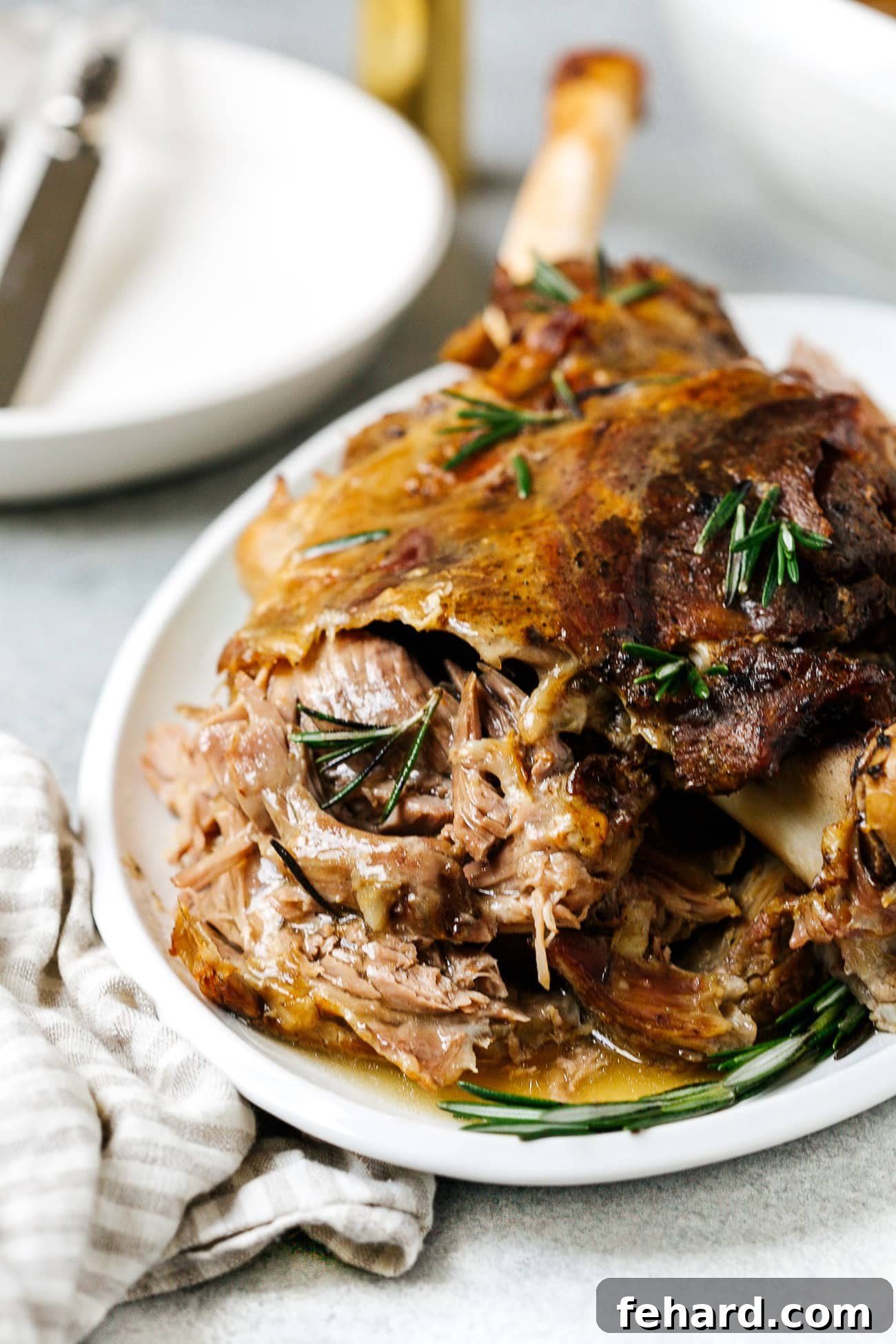
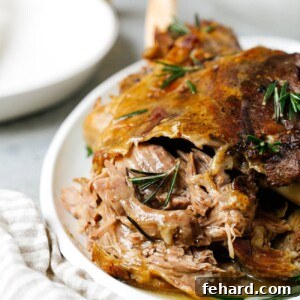
Transform your holiday celebrations or any special occasion with this incredible Slow Roast Leg of Lamb. Imagine a succulent, aromatic centerpiece, cooked to perfection, where the meat effortlessly falls off the bone, bursting with rich, savory flavors. This isn’t just a meal; it’s an experience. Despite its impressive outcome, this recipe is remarkably simple, requiring just a handful of everyday ingredients and a hands-off approach that allows you to enjoy your guests and other preparations.
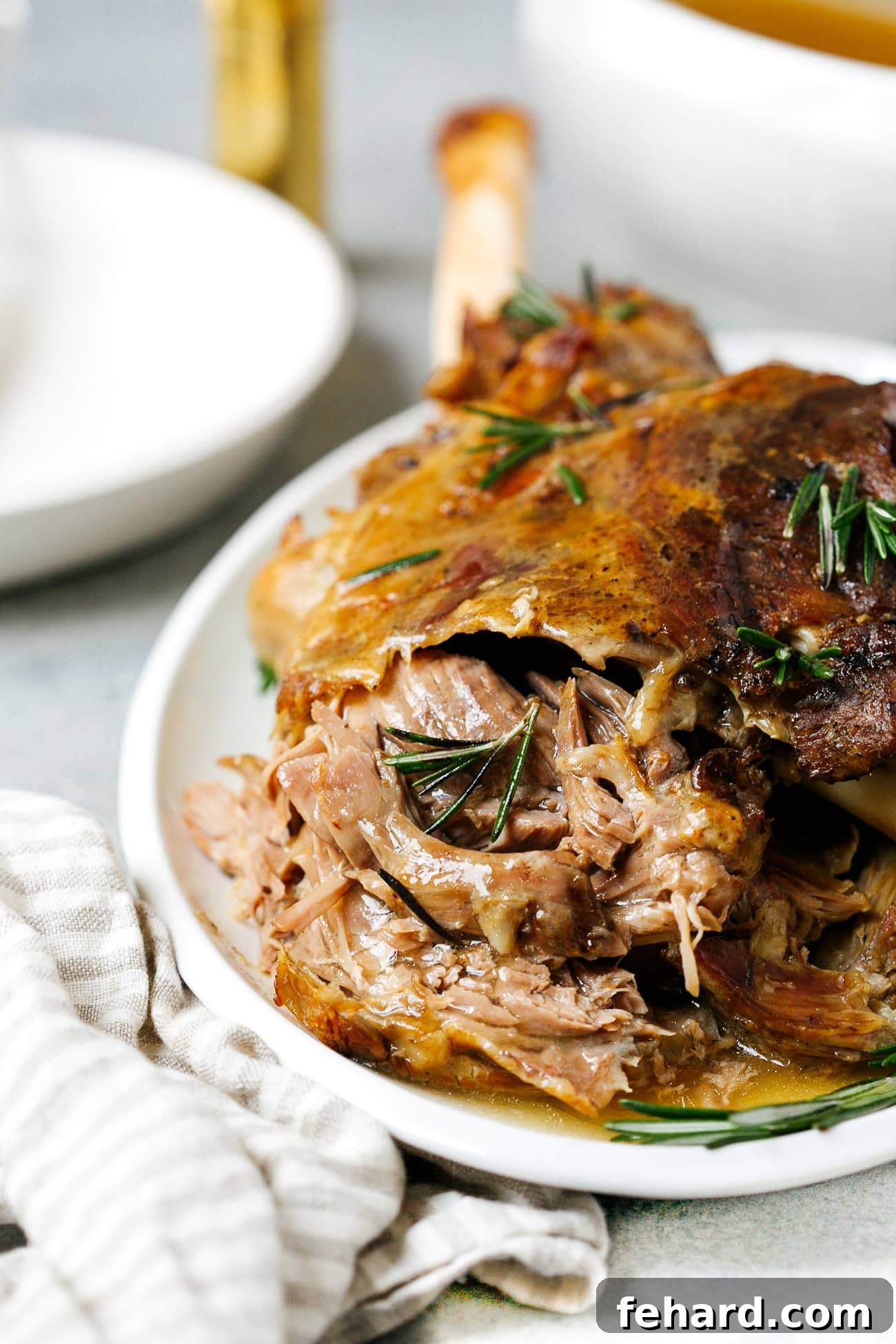
There’s a reason why slow roasting is the preferred method for many culinary experts when it comes to larger cuts of meat like lamb. The gentle, prolonged heat breaks down tough connective tissues, rendering the meat unbelievably tender, while allowing flavors from garlic and fresh herbs to deeply infuse every fiber. This makes it an ideal choice for holiday dinners, family gatherings, or any event where you want to impress without being tied to the kitchen. This slow roast leg of lamb recipe is my go-to for feeding a crowd, consistently delivering mouth-watering results that have everyone asking for seconds. Get ready for a dish where every bite melts in your mouth!
One of the greatest advantages of a slow-roasted leg of lamb is its “set it and forget it” nature. Once prepped and in the oven, you’re free to focus on other aspects of entertaining or simply relax. This makes it a stress-free main course, perfect for busy hosts. While the lamb slowly transforms into a culinary masterpiece, you can easily prepare complementary side dishes. Some of my favorites that pair beautifully include a rich Potatoes au Gratin, a crisp and refreshing Easy Coleslaw, or classic, creamy Mashed Potatoes. These sides are simple to whip up and provide a perfect balance to the rich flavors of the lamb.
How to Make this Irresistible Slow Roast Leg of Lamb
Creating a truly magnificent slow-roasted leg of lamb is simpler than you might think. The key lies in quality ingredients and a patient cooking process. Follow these straightforward steps to achieve a perfectly tender and flavorful roast that will be the highlight of any meal.
Essential Ingredients for Your Perfect Lamb Roast
The beauty of this recipe lies in its simplicity. A few fresh, high-quality ingredients are all you need to create a profound depth of flavor. Each component plays a crucial role in tenderizing the meat and enhancing its natural taste.
- Whole Garlic Head: Forget peeling individual cloves! Simply cut a whole head of garlic in half horizontally. As it roasts, the unpeeled cloves will slowly release their sweet, aromatic essence, infusing the lamb and pan juices with a gentle garlic flavor without any bitterness.
- Onion: A large onion, quartered, forms a flavorful bed for the lamb. As it cooks down, it caramelizes and adds a subtle sweetness to the pan juices. Yellow or sweet onions work wonderfully. For added depth and a touch of color, feel free to include a few chopped carrots or celery stalks.
- 2 Rosemary Sprigs: Fresh rosemary is the quintessential herb for lamb, offering a piney, fragrant aroma that complements the meat beautifully. The sprigs will release their essential oils as they slow roast, permeating the entire dish.
- Leg of Lamb (Bone-In or Shoulder Cut): For the most flavorful and tender results, I highly recommend using a bone-in leg of lamb. The bone adds extra flavor and helps the meat cook more evenly. If a leg isn’t available or preferred, a lamb shoulder cut is an excellent alternative, boasting more fat marbling which ensures a moist and succulent roast. A 4.5 lb cut is ideal for serving approximately 8 people.
- Salt and Pepper: These humble seasonings are paramount. Season the lamb generously with coarse sea salt and freshly cracked black pepper. While this minimalist approach highlights the lamb’s natural flavor, you can certainly experiment with other spices like dried oregano, paprika, garlic powder, or a touch of cumin for a different profile. The key is to rub the seasonings thoroughly into the meat for maximum flavor penetration.
- Olive Oil: A good quality olive oil helps to create a beautiful crust on the lamb and aids in browning. It also acts as a binder for your seasonings. If you don’t have olive oil, any neutral cooking oil with a high smoke point will work.
- Beef Broth: This liquid forms the base of your delicious pan juices, which will eventually become a flavorful sauce or gravy. I recommend using low-sodium, organic beef broth to control the overall saltiness of the dish, especially since you’ll be seasoning the lamb generously. Chicken or vegetable broth can also be used in a pinch, or for an even richer flavor, consider adding a splash of red wine.
- Water: Combined with beef broth, water ensures there’s enough liquid in the roasting pan to keep the lamb moist and create abundant pan juices for basting and serving.
Step-by-Step Instructions for Your Slow Roast Leg of Lamb
Prepare the Equipment
- Preheat your oven to a steady 335°F (165°C). This lower temperature is crucial for the slow roasting process, allowing the meat to cook gently and develop incredible tenderness.
- Ensure your oven rack is positioned in the middle of the oven. This provides optimal air circulation and even heat distribution around the roasting pan.
Prepare the Lamb
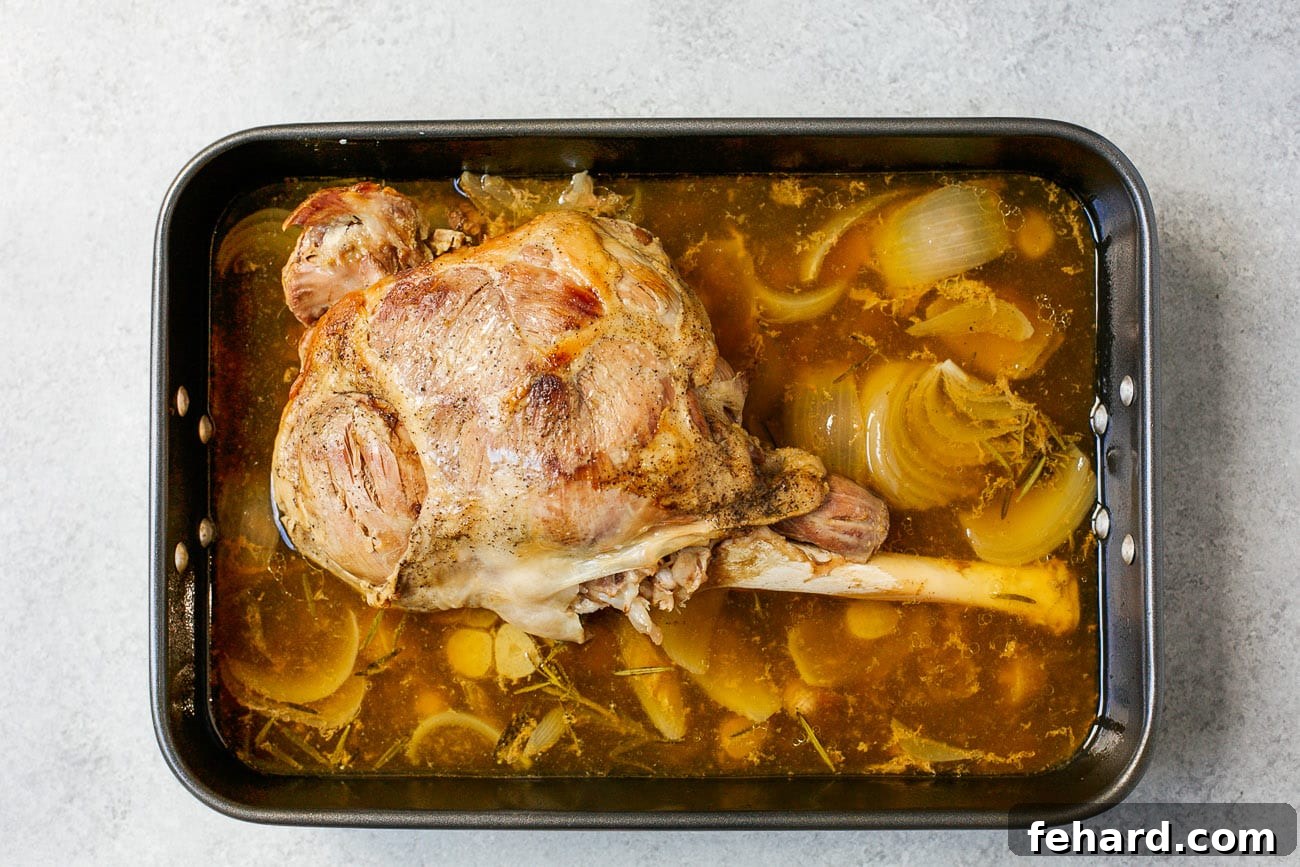
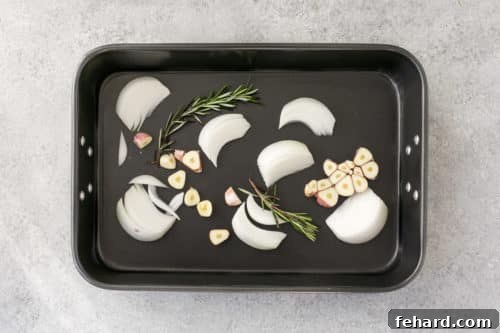
- In a large, sturdy roasting pan, create a aromatic bed by scattering the halved garlic head, quartered onion, and fresh rosemary sprigs. These will impart their delicious flavors into the lamb and the pan juices.
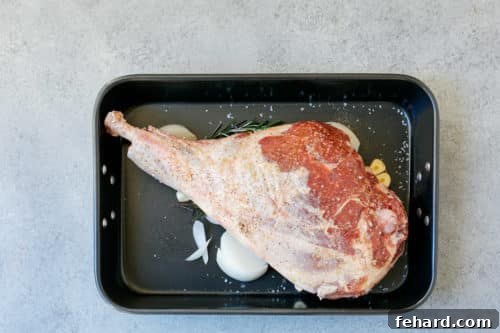
- Carefully place the leg of lamb directly on top of the garlic, onion, and rosemary.
- Generously season the entire lamb leg with salt and freshly cracked black pepper. Don’t be shy here; the lamb needs a good amount of seasoning to truly shine. Rub the salt and pepper thoroughly into the meat, ensuring all surfaces are coated.
- Drizzle a tablespoon and a half of olive oil evenly over the lamb leg. This will help the seasonings adhere and contribute to a lovely golden-brown crust later on.
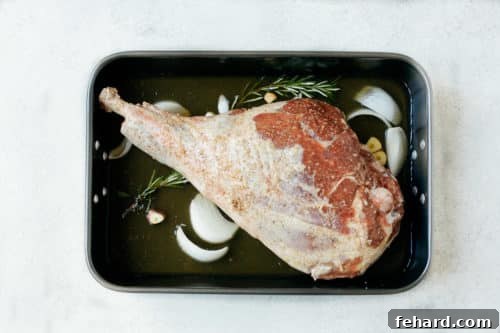
- Pour the beef broth and water into the bottom of the roasting pan, around the lamb. The liquid should partially submerge the lamb, creating a moist environment for slow cooking and forming the base of your rich pan juices.
Roast the Leg of Lamb to Perfection
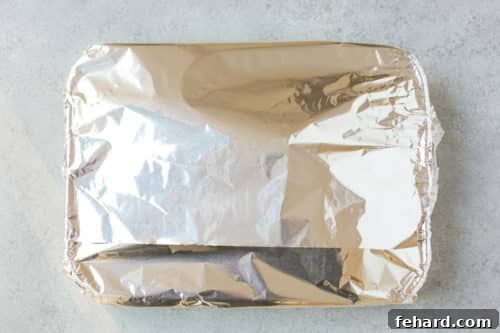
- Firmly cover the roasting pan with heavy-duty aluminum foil. Ensure it’s tightly sealed to trap the steam and moisture within the pan. This covered cooking phase is vital for achieving that fall-off-the-bone tenderness.
- Carefully place the covered roasting pan into your preheated oven. Roast for approximately 4 to 4.5 hours. The exact cooking time will vary depending on the size and thickness of your lamb leg. For larger cuts, lean closer to 4.5 hours.
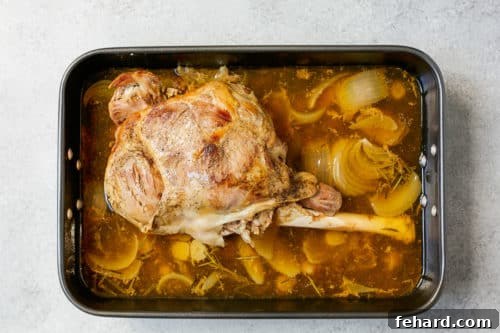
- After the initial roasting period, remove the pan from the oven. Carefully remove the foil. Using a set of large tongs and possibly a spatula for support, gently turn the lamb over to ensure even cooking and browning. Leave the lamb uncovered this time and return the pan to the oven.
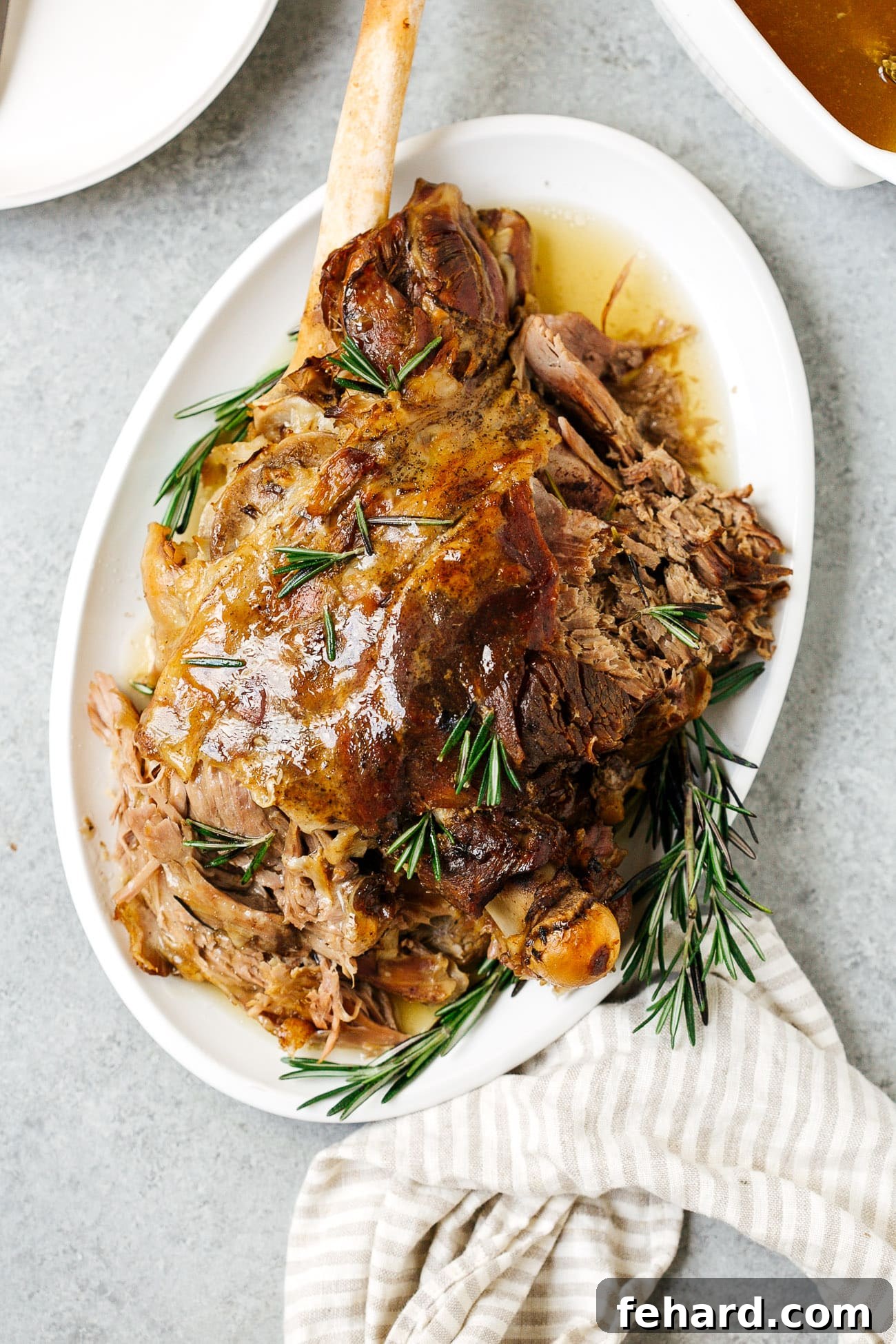
- Continue to roast for another 45 minutes, uncovered. This final stage allows the exterior of the lamb to develop a beautiful golden-brown crust while maintaining its internal juiciness.
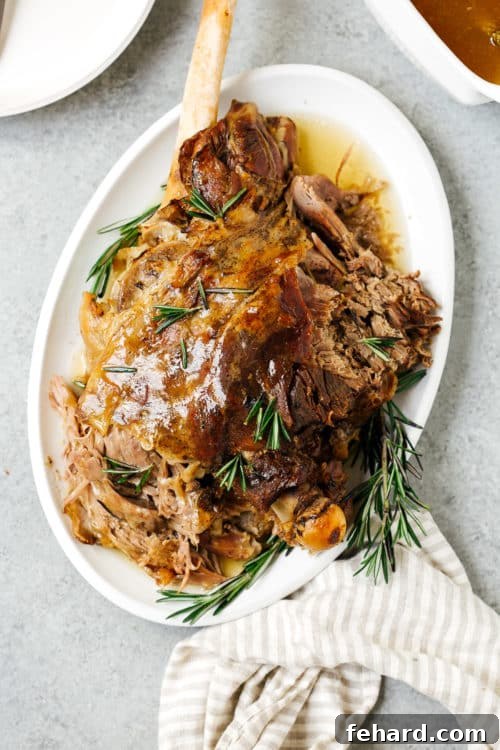
- Once roasted, remove the pan from the oven. Before serving, use a large spoon to baste the entire lamb leg generously with the flavorful pan juices. This not only adds moisture but also enhances the lamb’s rich taste. Allow the lamb to rest for at least 15-20 minutes before carving; this allows the juices to redistribute throughout the meat, resulting in a more tender and moist roast.
Expert Recipe Tips and Notes for Success
Achieving a perfectly slow-roasted leg of lamb is easy with these helpful tips and considerations:
- Herb Alternatives: While fresh rosemary is classic, don’t hesitate to experiment with other aromatic herbs. Fresh sage or thyme are fantastic alternatives that also pair wonderfully with lamb, offering slightly different but equally delicious flavor profiles.
- Moisture is Key: The liquid in the roasting pan—a combination of beef broth and water—is critical. Ensure the lamb is partially submerged. This creates a moist, steamy environment, effectively braising the bottom portion of the lamb and preventing it from drying out during the long cooking process. It also allows the incredible flavors from the garlic, onion, and herbs to infuse deeply into the meat.
- Choosing Your Cut: If you’re concerned about dryness, especially with a leaner leg cut, consider using a lamb shoulder instead. Lamb shoulder inherently has more fat and connective tissue, which breaks down beautifully during slow roasting, guaranteeing an exceptionally moist and flavorful result.
- Turning the Lamb: When it’s time to turn the lamb over, handle it with care. After hours of slow roasting, the meat will be incredibly tender and prone to falling apart. Use a set of large, sturdy tongs along with a wide spatula to provide ample support, minimizing the risk of breakage.
- Bone-In for Flavor: While boneless leg of lamb is available and can be roasted, I strongly advocate for a bone-in cut. The bone not only adds a significant depth of flavor to the meat and pan juices but also contributes to more even cooking. It’s a small detail that makes a big difference in the final taste.
- Doneness and Resting: Using a meat thermometer is the most accurate way to check for doneness. The lamb should reach an internal temperature of 145°F (63°C) for medium-rare, or higher if you prefer it more done. Always allow the lamb to rest for at least 15-20 minutes after removing it from the oven. This allows the muscle fibers to relax and reabsorb the juices, ensuring a more tender and moist slice.
- Making Gravy: Don’t let those flavorful pan juices go to waste! After removing the lamb, you can easily make a simple gravy. Skim off any excess fat, then deglaze the pan with a bit more broth or red wine, scraping up all the browned bits. Thicken with a cornstarch slurry for a rich, savory accompaniment to your lamb.
Can I Leave My Lamb Uncovered for the Entire Cooking Time?
No, I strongly advise against leaving the lamb uncovered for the majority of the cooking process. The initial period of roasting, where the lamb is tightly covered with aluminum foil, is crucial for two main reasons. First, the foil creates a sealed environment that traps steam from the liquid in the pan. This steam circulates, keeping the lamb incredibly moist and tender throughout the long cooking duration. Without it, the surface of the lamb would dry out quickly, leading to tough, chewy meat. Second, the trapped moisture helps to gently break down the connective tissues within the lamb, which is essential for achieving that desirable fall-off-the-bone tenderness. Only in the last 45 minutes do we remove the foil, specifically to allow the exterior to develop a beautiful, appealing golden-brown crust. Roasting for four hours uncovered would undoubtedly result in a dry, unappetizing lamb roast.
How Will I Know When the Lamb is Done?
The most reliable way to determine if your slow roast leg of lamb is perfectly cooked is by using a good quality meat thermometer. Insert the thermometer into the thickest part of the meat, avoiding the bone. For a perfectly cooked lamb, the recommended internal temperature is 145°F (63°C) for medium-rare. If you prefer your lamb cooked to medium, aim for 150-155°F (66-68°C), and for well-done, target 160°F (71°C) or higher. Keep in mind that the temperature will rise slightly (carry-over cooking) after you remove the lamb from the oven during the resting period. Always let your lamb rest for 15-20 minutes after cooking to allow the juices to redistribute, resulting in a more tender and moist roast. Cutting into it too soon will cause the juices to escape, leading to a drier result.
Can I Use Dried Herbs Instead of Fresh?
While fresh rosemary imparts a more vibrant and aromatic flavor, you absolutely can use dried herbs if fresh ones are not available. In a pinch, dried rosemary will still contribute a lovely flavor to your slow roast leg of lamb. A general rule of thumb for substitution is to use about 1/2 teaspoon of dried herbs for every sprig of fresh rosemary. Since dried herbs are more concentrated, less is needed. If using dried, rub them onto the lamb along with the salt and pepper to help release their oils during cooking. You can also experiment with other dried herbs like dried thyme, oregano, or a mixed Italian herb blend, adjusting quantities to your taste.
How Do I Store Leftovers?
Proper storage is key to enjoying your slow roast leg of lamb leftovers. Once the lamb has cooled to room temperature, transfer any remaining meat, along with a generous amount of the pan juices, into an airtight container. Store this in the refrigerator for up to 3 days. The pan juices are vital, as they help to keep the lamb moist and flavorful when you reheat it. Do not discard them! When you’re ready to reheat, you can do so in the microwave on a medium setting until warmed through, or gently reheat it in the oven. If using the oven, place the lamb and its liquid in an oven-safe dish, cover it with foil, and warm at a low temperature (around 300°F / 150°C) until heated through. Keeping it covered and with the liquid is crucial to prevent it from drying out.
Can I Freeze Leftover Leg of Lamb?
Yes, slow-roasted lamb leg freezes beautifully, making it an excellent option for meal prep or if you simply have an abundance of leftovers. For best results, I recommend removing the meat off the bone first. Cut the lamb into manageable portions or shred it, then transfer it to freezer-safe containers or heavy-duty freezer bags along with some of the delicious pan juices. The liquid is essential to protect the lamb from freezer burn and maintain its moisture upon reheating. Freeze for up to 2 months. When you’re ready to enjoy, thaw the lamb overnight in the refrigerator. To reheat, place the thawed lamb and its juices in a roasting pan, cover tightly with tin foil, and warm in a moderate oven (around 325°F / 160°C) until thoroughly heated. This method helps maintain its succulence and prevents it from drying out.
Delightful Serving Suggestions for Your Lamb Roast
A beautifully slow-roasted leg of lamb deserves equally delicious accompaniments. Here are some additional side dishes that will elevate your holiday meal or any dinner gathering:
- Creamy Savory Mashed Sweet Potatoes: Offering a delightful twist on traditional mashed potatoes, this dish uses wholesome sweet potatoes for a naturally sweet and earthy flavor, perfectly complementing the richness of the lamb.
- Garlic Butter Green Beans Recipe: This quick and vibrant veggie-packed side dish is always a crowd-pleaser. The tender-crisp green beans tossed in fragrant garlic butter provide a wonderful contrast in texture and a burst of fresh flavor.
- Parmesan Brussels Sprouts Salad: For a lighter, yet flavorful option, this salad combines fresh, thinly shaved Brussels sprouts with nutty Parmesan cheese and a bright citrus dressing. It cuts through the richness of the lamb beautifully, offering a refreshing element to your plate.
- Roasted Root Vegetables: Think carrots, parsnips, and potatoes roasted alongside the lamb or separately. Their earthy sweetness and caramelized edges make them a natural pairing.
- Crusty Bread: Don’t forget a good loaf of crusty bread to soak up all those incredible pan juices!
Explore More Delicious Lamb Recipes
If you’ve fallen in love with cooking lamb, there’s a world of incredible lamb dishes to explore beyond this roast. Here are some of my other favorite lamb recipes that are sure to tantalize your taste buds:
- Grilled Lamb Chops with Chimichurri Sauce
- Garlic Butter Lamb Chops
- Lamb Chops with Creamy Mustard Sauce
- Lemon Thyme Lamb Chops Recipe
- Garlic Herb Lamb Chops Recipe
Slow Roast Leg of Lamb
Olivia Ribas
8
People
15
minutes
5
hours
15
minutes
5
hours
30
minutes
Perfect for any holiday celebration, this Slow Roast Leg of Lamb is cooked low and slow until it’s juicy and fall-off-the-bone tender. Super easy to make with only a handful of simple everyday ingredients, this roast lamb recipe is perfect for anyone who’s entertaining and wants a hands-off recipe.
Ingredients
- 1 whole garlic head unpeeled, cut in half horizontally
- 1 onion peeled and quartered
- 2 rosemary sprigs
- 4.5 lb leg of lamb bone in (or shoulder)
- Salt and pepper
- 1.5 tbsp olive oil
- 3 cups beef broth
- 2 cups water
Instructions
-
Preheat oven to 335°F (165°C). In a large roasting pan, place garlic, onion and rosemary.

-
Place the lamb leg on top of the garlic, onion and rosemary. Season the whole lamb leg generously with salt and pepper and rub it in. Then, drizzle olive oil over the lamb leg.
-
Then, pour beef broth and water around the lamb.
-
Cover the roasting pan tightly with foil. Using foil is preferred over a lid as it helps trap steam more effectively while allowing some minor ventilation.
-
Place the roasting pan in the oven and roast for about 4-4.5 hours. Time will depend on the size of your lamb leg. Then, remove the roasting pan from the oven and carefully remove the foil so you can turn the lamb over. Return the pan to the oven, but this time uncovered.
-
Roast for an additional 45 minutes, uncovered. Remove from the oven and, using a spoon, pour the flavorful pan juices all over the lamb leg before serving and resting.
Notes
- Do not leave the lamb uncovered for the initial long roasting period, as it will lead to a dry leg of lamb.
- Other herbs such as fresh sage or thyme are great alternatives to rosemary, or you can use dried herbs (use 1/2 teaspoon dried per fresh sprig).
- If you cannot find leg of lamb, a lamb shoulder cut is an excellent alternative due to its higher fat content.
- To store leftovers: Place cooked lamb along with some of the liquid into an airtight glass container and keep it in the refrigerator for up to 3 days.
- To reheat leftovers: Rewarm in the microwave or in the oven alongside the liquid, covered, so the lamb does not dry out.
- To freeze leftovers: First, remove the meat off the bone. Store the lamb with liquid in freezer-safe containers or bags for up to 2 months. Thaw overnight in the fridge and reheat covered in the oven.
Recipe adapted from Recipe Tin Eats.
Nutrition
Calories: 444kcal,
Carbohydrates: 4g,
Protein: 56g,
Fat: 22g,
Cholesterol: 35mg,
Sodium: 876mg,
Potassium: 158mg,
Sugar: 2g
Nutrition information is automatically calculated, so should only be used as an approximation.
Did You Make This?
Follow @primaverakitchen on Instagram, snap a photo, and tag it #primaverakitchen. We’d love to see your recreation.