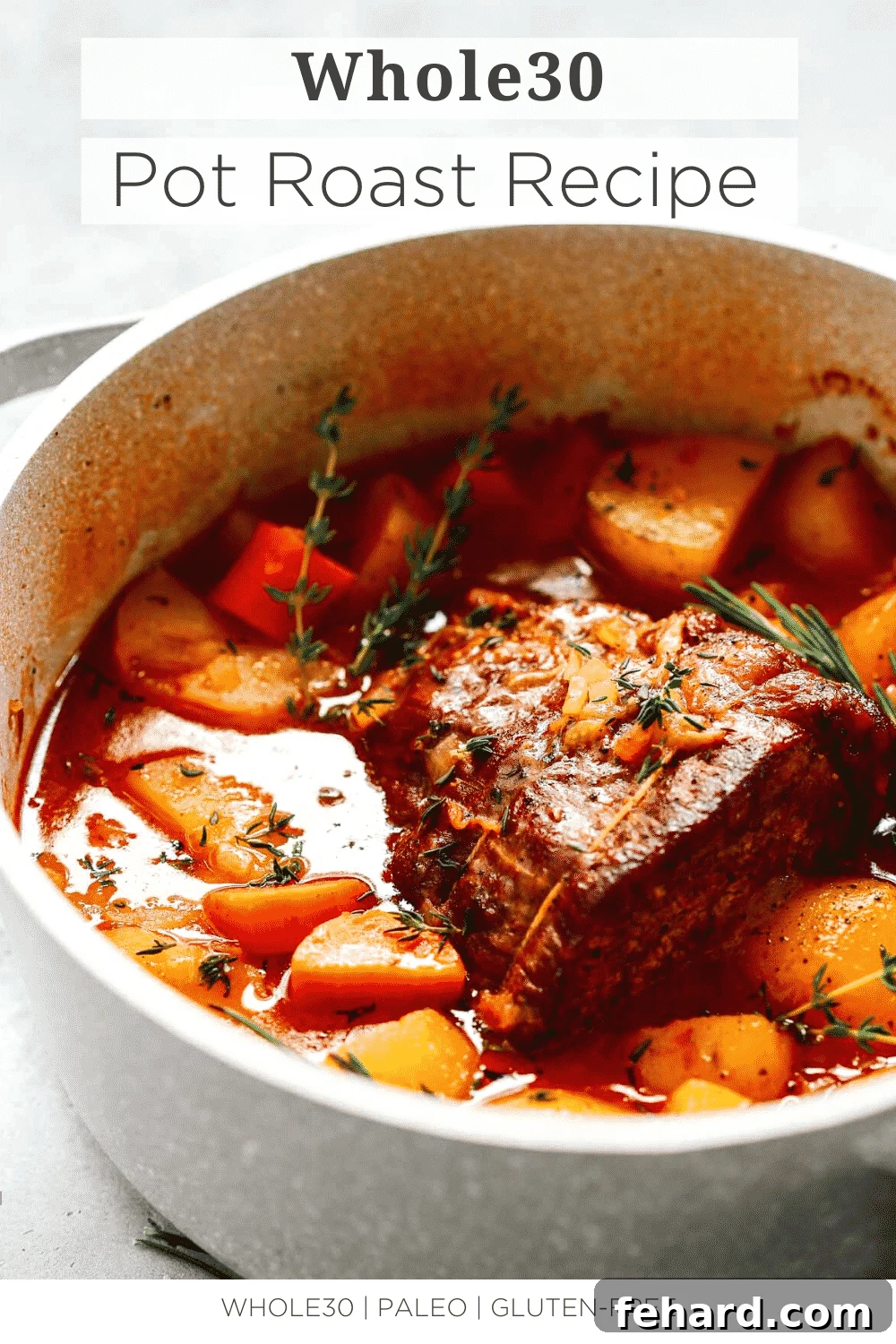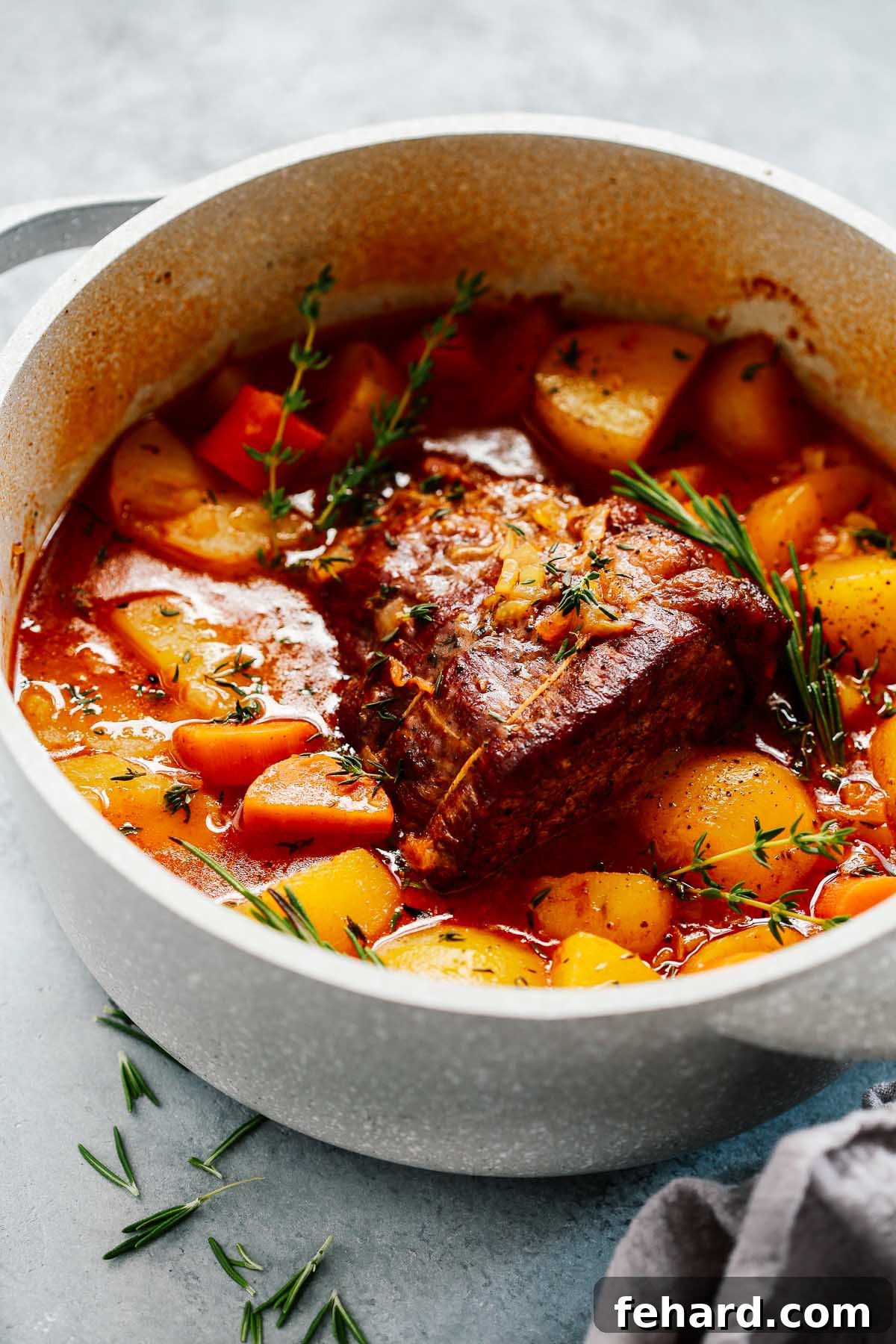
There’s nothing quite like the comforting aroma of a pot roast slowly cooking on a chilly winter afternoon. This classic dish, known for its deep flavors and fork-tender meat, becomes an even more appealing option when it aligns with specific dietary goals. Our Whole30 Pot Roast recipe is designed to deliver all the traditional richness and warmth you crave, while strictly adhering to Whole30 guidelines. Cooked low and slow in a single pot, this meal is not only incredibly hearty and filling but also incredibly convenient, as the accompanying vegetables cook right alongside the beef, absorbing all the delicious juices and seasonings.
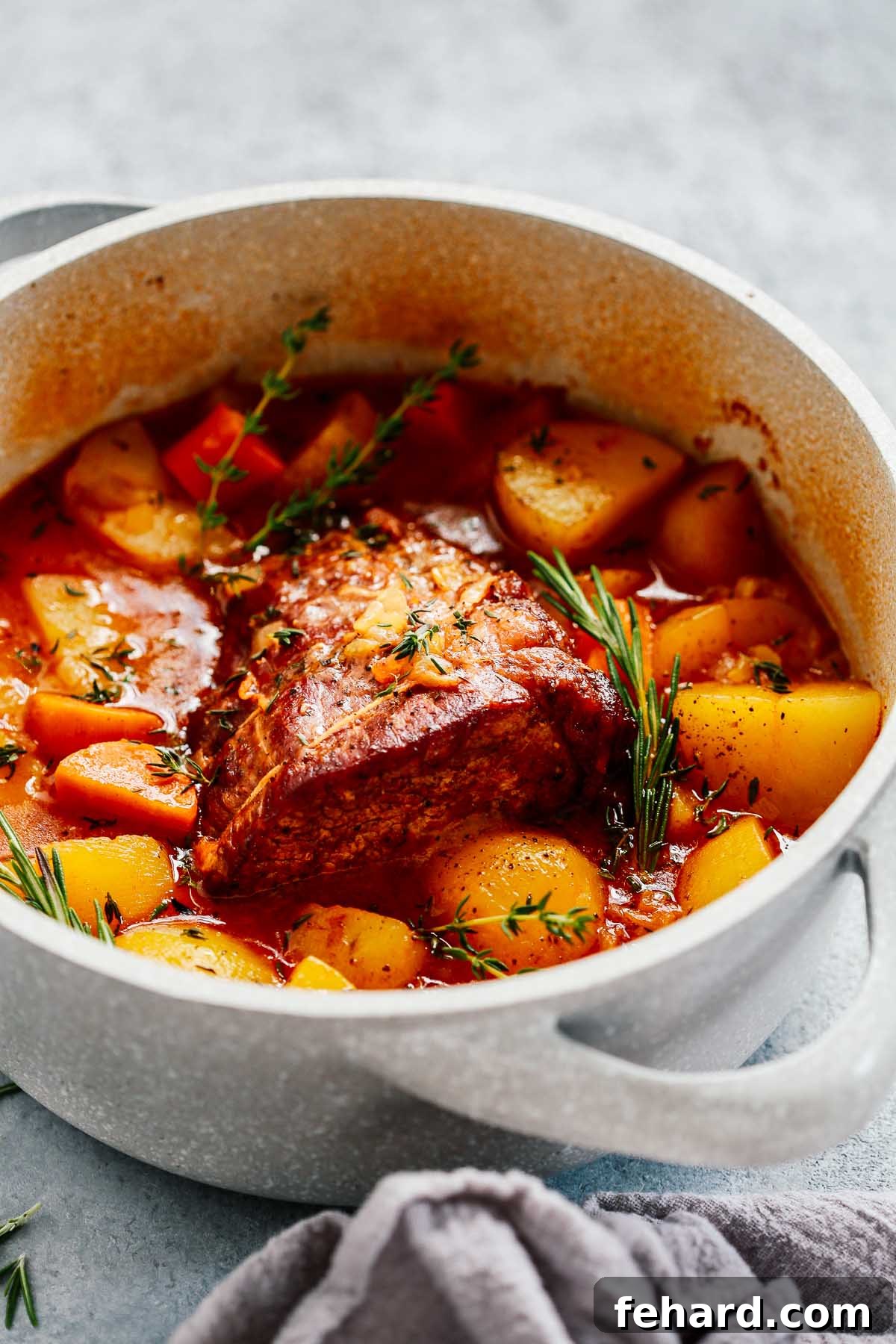
This meticulously crafted Whole30 pot roast recipe is naturally gluten-free, making it an excellent choice for a variety of eating plans. It effortlessly accommodates those following a low-carb diet, and its ingredients are entirely paleo-friendly. As the crisp weather sets in, a warm, high-protein meal is just what everyone needs, and this nutrient-packed version doesn’t require a special occasion. Its simple preparation method makes it ideal for a regular weeknight dinner, while its impressive flavor profile is worthy of Sunday supper. While the cooking time is extensive, requiring patience for that perfect tenderness, the active preparation and supervision needed are surprisingly minimal. Even better, all the delicious vegetables are cooked simultaneously in the same pan, simplifying both the cooking process and the cleanup. For those days when time is of the essence, consider trying an expedited version using a pressure cooker, such as my Instant Pot Pot Roast Recipe.
Choosing the Perfect Cut: What Meat to Use for Pot Roast
The foundation of an exceptional pot roast lies in selecting the right cut of beef. For this classic recipe, the undisputed champion is a beef chuck roast. This cut, sourced from the shoulder and neck region of the animal, is a heavily used muscle, which means it starts off quite tough. However, this inherent toughness is precisely what makes it ideal for pot roasting. The long, slow cooking process at a low temperature provides ample time for the connective tissues and collagen within the meat to gradually break down, transforming into succulent, juicy, and incredibly tender strands of beef.
Beef chuck is also renowned for its abundant marbling—those fine streaks of intramuscular fat distributed throughout the meat, rather than just a thick layer on top. This marbling is crucial; as the roast cooks, this fat renders, basting the meat from within, imparting an unparalleled depth of flavor and contributing significantly to its moist and tender texture. While it naturally contains a higher amount of saturated fat due to this marbling, the richness and taste it delivers are simply superior. Furthermore, a beef chuck roast provides a substantial serving of high-quality protein, making this meal not only delicious but also incredibly satisfying and nourishing for your body.
When selecting your chuck roast, look for a piece with good marbling. Avoid cuts that appear too lean, as they may result in a drier, less flavorful roast. A visual inspection for these white streaks of fat is your best guide to ensuring a deliciously tender outcome.
Crafting Your Ultimate Whole30 Pot Roast: A Step-by-Step Guide
Creating a truly remarkable pot roast is simpler than you might think, especially when you follow these clear, precise steps. With minimal active effort, you’ll achieve a deeply flavorful and meltingly tender meal that everyone will adore. This recipe focuses on maximizing flavor through careful searing and thoughtful layering of ingredients.
Essential Ingredients for a Flavorful Whole30 Pot Roast
Gathering your ingredients beforehand ensures a smooth and enjoyable cooking experience. Each component plays a vital role in building the complex flavors of this wholesome dish.
- Olive oil: A robust, healthy fat for searing. Feel free to use your preferred high-smoke-point oil if olive oil isn’t on hand.
- Butter: Adds a rich, creamy depth. If strictly adhering to Whole30, substitute with an equal amount of ghee, which is clarified butter and Whole30 compliant.
- Boneless beef chuck roast: The star of our show. Aim for a cut that is generously marbled with fat, typically around 4 to 5 pounds, for maximum tenderness and flavor. Avoid excessively lean cuts.
- Salt and pepper: Essential seasonings that enhance the natural flavors of the beef and vegetables. Use liberally to create a flavorful crust.
- Sweet onion: Chopped to provide a foundational sweetness and aromatic base. If a sweet onion isn’t available, a yellow onion works perfectly well and contributes a savory depth.
- Garlic: Minced fresh garlic is indispensable for adding a pungent, aromatic kick that complements the rich beef beautifully.
- Dry red wine: Used for deglazing and adding a layer of sophisticated flavor. For a strict Whole30 diet, substitute with an equal amount of balsamic vinegar, which offers a similar acidity and depth without alcohol.
- Beef broth: Opt for low-sodium beef broth to control the overall saltiness of the dish. It provides the essential liquid for slow braising, infusing the meat and vegetables with rich beefy notes.
- Potatoes: Approximately 1 pound of Yukon Gold potatoes, peeled and cut into uniform 2-inch pieces. Yukon Golds are preferred for their creamy texture and ability to hold their shape during long cooking. Other waxy potato varieties can also be used.
- Carrots: About 4 large carrots, peeled and cut on the diagonal into 2-inch pieces. This cut adds visual appeal and ensures even cooking. Carrots lend natural sweetness and earthy flavors to the roast.
- Fresh herbs: Aromatic herbs like fresh rosemary and fresh thyme sprigs are crucial for imparting a fragrant, herbaceous essence that elevates the entire dish. Their flavor deepens beautifully during the slow cook.
- Dried bay leaves: These add a subtle, savory note that helps to brighten and round out the other flavors without overpowering them. Don’t skip these; they make a noticeable difference.
Detailed Instructions for a Perfect Pot Roast
Follow these steps carefully to achieve a deeply flavorful and fall-apart tender Whole30 Pot Roast.
Step 1: Prepare and Sear the Beef
- Begin by preheating your oven to 325°F (160°C). This low and steady temperature is key to achieving tender results.
- In a heavy-bottomed Dutch oven or any large, oven-safe pot, combine the olive oil and butter (or ghee for Whole30) over medium-high heat. Allow the butter to melt completely and the oil to shimmer, indicating it’s hot enough for a good sear.
- While the pot heats, generously season the boneless beef chuck roast all over with salt and freshly ground black pepper. Don’t be shy; this initial seasoning creates a crucial flavor layer.
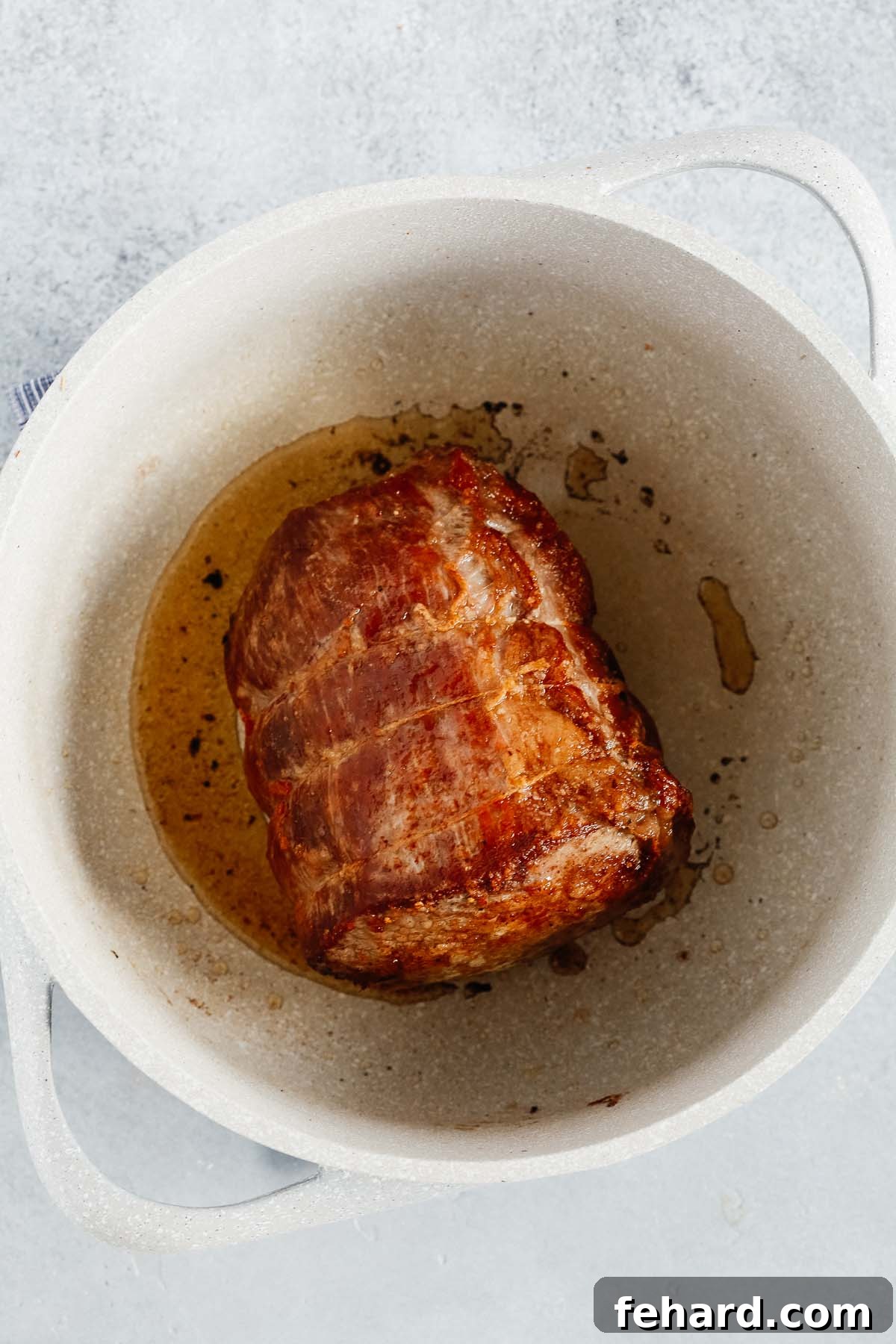
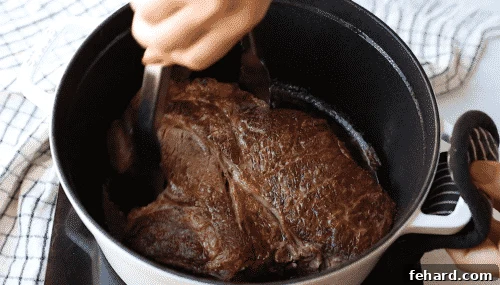
- Carefully place the seasoned chuck roast into the hot Dutch oven. Sear the beef on all sides, turning occasionally, for about 15 minutes in total, or until a beautiful, deep golden-brown crust forms on all surfaces. This searing step is vital for locking in juices and developing rich, caramelized flavors through the Maillard reaction. Once seared, remove the beef from the pot and set it aside on a plate.
Step 2: Build the Flavor Base and Simmer
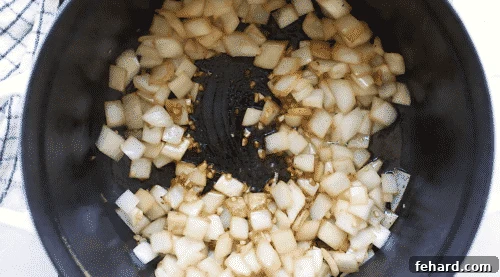
- Reduce the heat slightly if necessary. Add the chopped onions and minced garlic to the same Dutch oven, utilizing the flavorful fond (browned bits) left in the pot from searing the beef. Cook for approximately 2-3 minutes, stirring occasionally, until the onions soften and become translucent and fragrant.
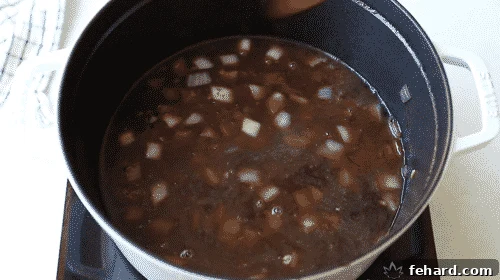
- Pour in the dry red wine (or balsamic vinegar for Whole30). Use a wooden spoon to vigorously scrape up all the browned bits from the bottom of the pot. This process, known as deglazing, incorporates all those concentrated flavors back into your liquid, forming the foundation of your pot roast’s rich sauce.
- Bring the liquid to a gentle simmer and let it cook until it reduces by about half. This concentrates the flavors even further.
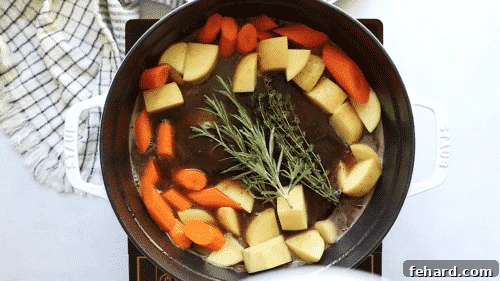
- Add the beef broth to the pot and bring it to a boil. Return the seared beef chuck roast to the pot. Carefully arrange the peeled and cut potatoes and carrots around the beef. Finally, add the fresh rosemary sprigs, fresh thyme sprigs, and dried bay leaves to the pot, nestling them among the ingredients.
Step 3: Slow Roast to Perfection in the Oven
- Place the lid tightly on your Dutch oven, ensuring it’s fully covered. If your pot doesn’t have a snug-fitting lid, you can create a tight seal by covering it with a layer or two of heavy-duty aluminum foil.
- Transfer the covered pot to your preheated oven. Roast for approximately 4 hours, or until the beef is incredibly tender and easily pulls apart with a fork. The exact time may vary slightly depending on the size and thickness of your roast, so check for tenderness around the 3.5-hour mark.
- Once the roast is done, carefully remove the pot from the oven. Discard the rosemary sprigs, thyme sprigs, and bay leaves from the pot; their flavor has been fully infused into the dish.
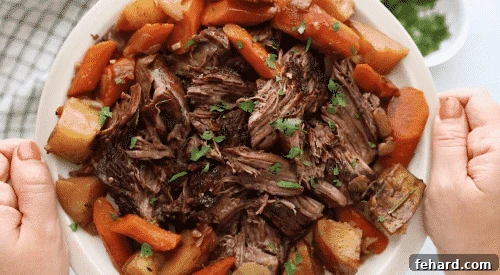
- Using a slotted spoon, gently remove the cooked vegetables and arrange them on a warm serving platter.
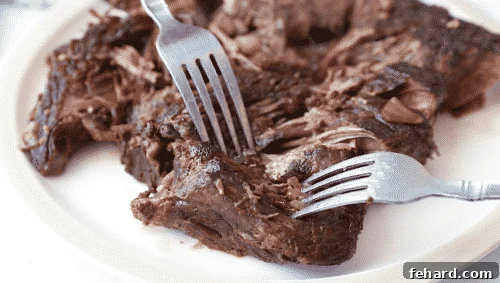
- Transfer the tender beef to the same platter. Using two forks, shred the beef into smaller pieces or pull it into rustic chunks, depending on your preference.
- Spoon a generous amount of the rich cooking liquid (the natural gravy) over the shredded beef and vegetables. Serve your delicious Whole30 Pot Roast warm, allowing everyone to savor the deep, comforting flavors.
Mastering Moisture: Does a Pot Roast Need to Be Covered in Liquid?
Absolutely, ensuring your pot roast is adequately covered, both with liquid and a lid, is paramount to achieving that desirable fall-apart tenderness. Due to the extended cooking time a pot roast requires in the oven, you need to rely on moist heat to effectively tenderize the tough muscle fibers and connective tissues in the beef chuck. The liquid creates a steamy, humid environment within the pot, preventing the meat from drying out and promoting the breakdown of collagen into gelatin, which contributes to both moisture and richness.
The best way to facilitate this moist-heat cooking is to cover your roast tightly while it is cooking. A heavy lid on your Dutch oven or oven-safe pot creates a self-basting environment, trapping steam and moisture, which keeps the meat moist and ensures consistent cooking. If your pot happens to lack a tight-fitting lid, a simple yet effective solution is to create a “tent” over the roast using heavy-duty aluminum foil. Ensure the foil is sealed securely around the rim of the pot to trap as much steam as possible, mimicking the effect of a lid. This crucial step guarantees a succulent, tender pot roast every single time.
Optimizing Your Vegetables: Do They Go on Top or Bottom?
The placement of your vegetables within the pot roast can significantly influence their final texture and flavor. There’s a simple rule of thumb to guide you:
If you prefer your vegetables to be exceptionally tender, almost melting into the sauce, then place them underneath your roast. In this position, they will be fully submerged in the cooking liquid and directly exposed to the heat, allowing them to cook faster and become very soft. Moreover, any delicious juices that render from the roast will drip directly onto and infuse them with even more savory flavor.
Conversely, if you prefer your vegetables to retain a bit more firmness and structure, or if you want them to steam rather than stew completely, then leave them on top of the roast. While they will still cook thoroughly, they won’t be as saturated with liquid, resulting in a slightly firmer bite.
Potatoes and carrots are traditional staples for a pot roast side, but many other hearty root vegetables can be incorporated to add variety and nutrients. Other hard veggies you may want to use and place according to your desired tenderness include:
- Carrots (as included in the recipe)
- Parsnips
- Radishes (large daikon or other hardy varieties)
- Winter squash (such as butternut or acorn squash, cut into cubes)
- Beets (peeled and quartered)
- Turnips
- Rutabaga
- Celery root (celeriac)
For an even more abundant vegetable serving, you might consider preparing additional roasted vegetables separately. You can easily make this Easy Roasted Vegetables Recipe in the oven while your pot roast is cooking, ensuring a vibrant and diverse side dish. If you’re looking for other convenient one-pot beef and vegetable dishes, consider trying this flavorful Quick Beef and Zucchini Skillet or the warming Instant Pot Sweet Potato Kale Beef Soup!
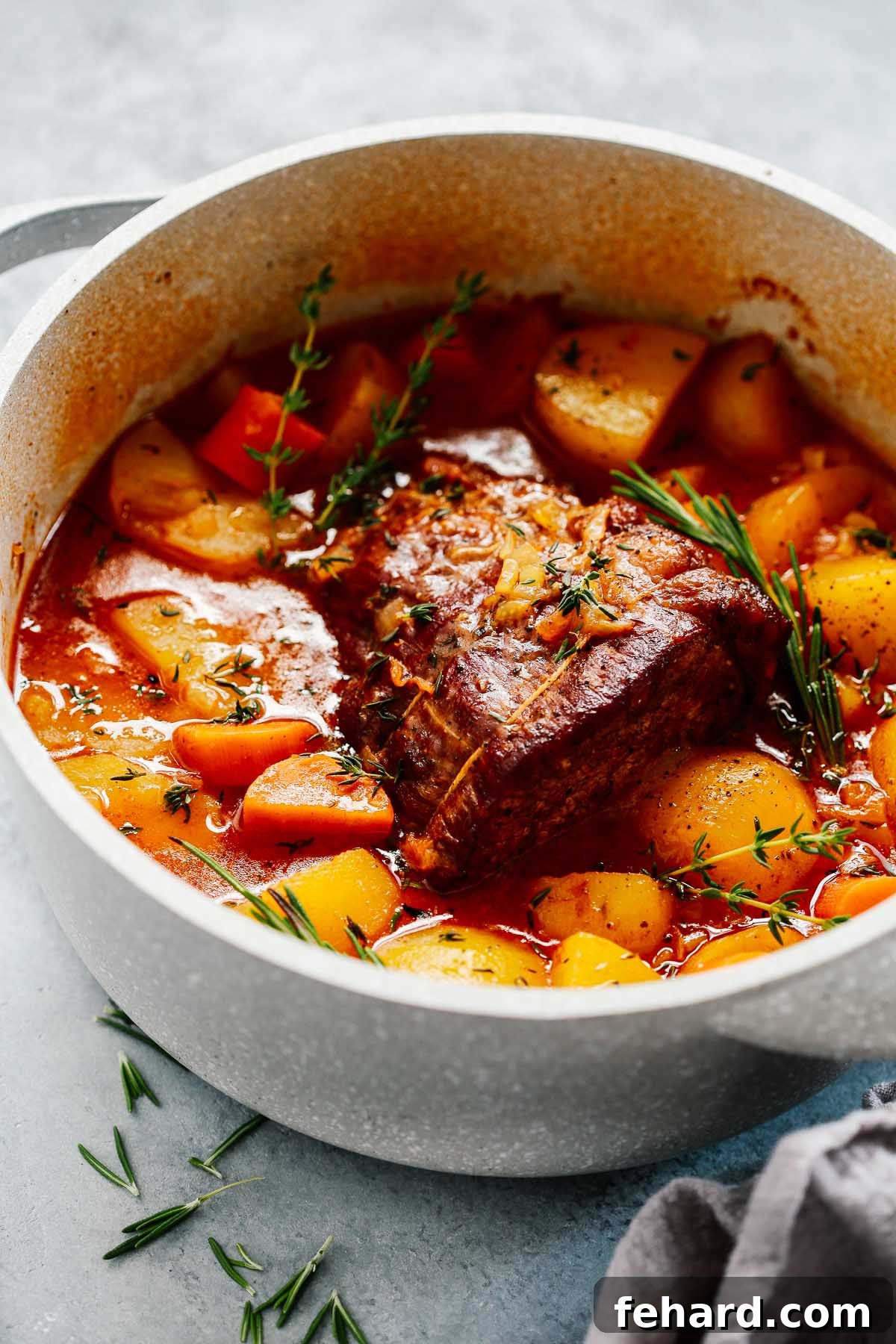
Achieving “Fork-Tender” Perfection: How to Know When Your Pot Roast is Done
The hallmark of a truly successful pot roast is its incredible tenderness—meat that effortlessly pulls apart with just a fork. To reach this ultimate state, your Whole30 pot roast needs ample time to cook. When baking in an oven set at 325°F (160°C), plan for approximately four hours of cooking time. While this may seem lengthy, remember that it’s mostly hands-off time, allowing the magic of slow cooking to happen.
For those who prefer a different method, a pot roast can also be cooked beautifully in a slow cooker. On the low setting, it will typically take about eight hours, making it an excellent option for busy days when you want to set it in the morning and come home to a delicious meal. On the high setting, it usually takes around 4-5 hours.
The definitive test for doneness is the “fork-tender” method. Simply insert a fork into the thickest part of the meat and try to twist it. If the meat easily shreds or pulls apart with minimal effort, your pot roast is perfectly done. If it still resists, or feels chewy, it needs more time. Don’t be afraid to let it cook a while longer; the goal is perfectly tender, succulent meat when you serve it. There’s no need for an internal temperature gauge for shredding cuts like chuck roast; tenderness is the key indicator here.
Once your delectable Whole30 pot roast is complete and devoured, if you find yourself with any delicious leftovers, don’t let them go to waste! You can transform them into another fantastic meal. Why not try this creative and comforting Leftover Shredded Roast Beef Pasta for a quick and satisfying follow-up dinner?
Expert Tips for the Best Whole30 Pot Roast Every Time
Elevate your pot roast from good to absolutely extraordinary with these essential tips and tricks. These small considerations can make a big difference in the final taste and texture of your dish.
- Don’t Be Tempted to Skip the Bay Leaves! While they may seem like a minor addition, dried bay leaves add a subtle, herbaceous, and almost floral note that lifts the entire dish. They help to balance the richness of the beef and allow the other flavors to shine without overpowering them. It’s a small, single ingredient step that contributes immensely to the overall complexity and depth of flavor.
- Ensure a Tight Seal: If your Dutch oven or oven-safe pot does not have a tightly fitting lid, don’t worry! You can easily create a perfect cooking environment by covering the pot securely with heavy-duty aluminum foil. Ensure it’s crimped tightly around the edges to trap all the steam and moisture inside, which is crucial for tenderizing the meat.
- Never Skip Searing the Meat: This is a non-negotiable step for a truly flavorful pot roast. Searing the beef chuck roast on all sides before braising creates a beautifully caramelized surface. This process, known as the Maillard reaction, develops deep, savory, and complex flavors that simply cannot be achieved otherwise. It locks in the savory juices and builds the foundational taste profile of your entire dish.
- Deglaze Thoroughly: After searing the meat and sautéing the aromatics, use the wine or balsamic vinegar to vigorously scrape up all the browned bits (fond) stuck to the bottom of the pot. These bits are packed with concentrated flavor and will significantly enhance your gravy.
- Allow the Meat to Rest: Once the pot roast is removed from the oven, allow it to rest for about 10-15 minutes before shredding. This allows the juices to redistribute throughout the meat, ensuring it remains incredibly moist and tender.
- Season in Layers: Don’t just season at the beginning. Taste the broth and adjust seasonings like salt and pepper towards the end of cooking, before serving. This ensures a perfectly balanced flavor profile.
Storage and Reheating Instructions for Leftovers
Proper storage ensures your delicious Whole30 pot roast remains fresh and flavorful, ready for delightful leftovers.
- Storage: Store any leftover pot roast, including the meat, vegetables, and cooking liquid, in an airtight container in the fridge for up to 3 to 4 days. You can also store it in the original pot if it has a tightly fitted lid, just ensure it cools down before refrigerating.
- Reheating: For best results, gently reheat leftover pot roast. You can use the microwave for a quick individual serving (heat in 30-second intervals until warmed through). Alternatively, reheat on the stovetop over low to medium heat until simmering, adding a splash more beef broth if needed to prevent drying. For larger portions, reheat in the oven at 300°F (150°C) until warmed through, covered with foil to retain moisture.
- Freezing: If you plan on freezing this dish, I strongly recommend freezing only the meat and its accompanying liquid. Potatoes and carrots, along with most other root vegetables, tend to become mushy and develop an unpleasant texture after being frozen and thawed. Freeze the shredded or chunked beef with some of the flavorful cooking liquid in a freezer-safe bag or airtight container for up to 2-3 months. Thaw overnight in the fridge before reheating.
More Delicious & Convenient One-Pot Dinner Recipes to Try:
If you love the ease and deliciousness of one-pot meals, explore these other fantastic recipes that minimize cleanup and maximize flavor:
- No Bean Whole30 Butternut Squash Chili: This No Bean Whole30 Butternut Squash Chili is a truly perfect recipe to indulge yourself with this fall. It’s wonderfully thick, rich, and incredibly hearty, while also being low-carb, paleo, and completely gluten-free.
- Easy One-Pot Cauliflower Curry Recipe: This incredibly easy One-Pot Cauliflower Curry Recipe is a weeknight savior, ready in just 20 minutes! It’s brimming with tender cauliflower, sweet green peas, diced tomatoes, aromatic curry powder, and creamy coconut milk. This recipe is also completely gluten-free and vegan.
- Instant Pot Short Ribs Recipe: Experience the tender, fall-off-the-bone flavor of short ribs without the hours of cooking time typically required, thanks to this amazing Instant Pot Short Ribs recipe. This set-it-and-forget-it recipe makes it effortlessly easy to cook perfectly succulent meat.
- Instant Pot Beef Stew Recipe (Whole30 & Paleo): Get ready for ultimate winter comfort food in a fraction of the traditional time with this Instant Pot Beef Stew. Made with protein-rich beef and an abundance of nutritious vegetables, it will be deeply satisfying on even the chilliest nights.
- Instant Pot Vegetable Beef Soup: Whip up a hearty and wholesome vegetable beef soup in record time with this incredible Instant Pot soup recipe. Say goodbye to all-day simmering; this is a quick and easy dinner solution for any busy weeknight. This delicious soup is also fully Whole30, paleo, and gluten-free.
Whole30 Pot Roast Recipe
Average Rating: 3.58 out of 5 stars from 64 votes
Author: Olivia Ribas
Servings: 6 people
Prep Time: 15 minutes
Cook Time: 4 hours
Total Time: 4 hours 15 minutes
Ingredients
- 1 tbsp olive oil
- 1 tbsp butter (use ghee for Whole30)
- 4 1/2 pound boneless beef chuck roast
- 1 tsp salt
- 1/2 tsp black pepper
- 1 large sweet onion (chopped)
- 5 garlic cloves (minced)
- 1 cup dry red wine (use balsamic vinegar for Whole30)
- 3 cups beef broth (low sodium)
- 1 pound potatoes (peeled and cut into 2-inch pieces, Yukon Gold)
- 4 large carrots (peeled and cut on the diagonal into 2-inch pieces)
- 3 sprigs fresh rosemary
- 3 sprigs fresh thyme
- 2 dried bay leaves
Instructions
-
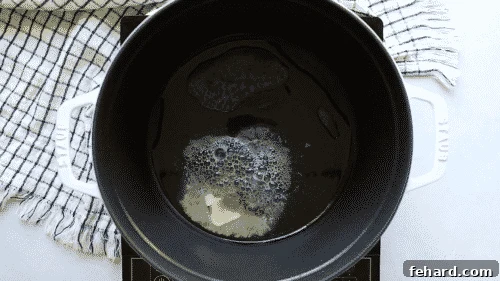
Preheat the oven to 325°F. In a Dutch oven or an oven-safe pot, add olive oil and butter over medium-high heat.

-
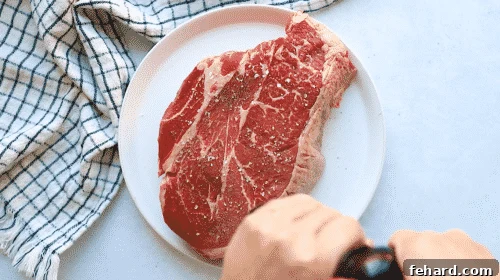
While the butter is melting in the pot, season the beef all over with the salt and pepper.
-
Place it in the Dutch oven and sear all the sides of it for about 15 minutes. Set aside.
-
In the same Dutch oven, add the onions and garlic and cook for about 2-3 minutes or until onions are translucent. Don’t forget to stir occasionally.
-
Add the wine and bring to a simmer. Using a wooden spoon, scrape up the brown bits on the bottom of the pot. Let the wine simmer until it reduces to half. Add the beef stock and bring to boil.
-
Return the beef to the pot and add potatoes, carrots, rosemary, thyme and bay leaves. Cover the pot with a lid and bring to the oven. Roast for about 4 hours or until the beef is super tender.
-
Discard the rosemary, thyme springs and bay leaves from the pot and place the veggies on a platter.
-
Using 2 forks, shred the beef or pull it into chunks.
-
Place the beef on the same platter you add the veggies, pour a little bit of the cooking liquid on top of the beef and serve warm. Enjoy!
Notes
- This recipe was adapted from the site: andiemitchell.com
- Searing the meat adds a ton of flavour to the pot roast. Don’t skip this quick and easy step.
- Feel free to use any type of potatoes if you do not have Yukon golds. You can even cut up russet potatoes.
- Cover the pot with tin foil if your pot doesn’t have a lid.
- To store: Store leftover pot roast for up to 4 days in the fridge.
- To reheat: You can reheat the pot roast in the microwave, stovetop, or oven.
- To freeze: The vegetables don’t freeze well but you can freeze the meat for up to 3 months.
Nutrition Information
Serving: 1/6, Calories: 571kcal, Carbohydrates: 19g, Protein: 68g, Fat: 23g, Cholesterol: 205mg, Sodium: 543mg, Potassium: 630mg, Fiber: 4g, Sugar: 4g
Nutrition information is automatically calculated, so should only be used as an approximation.
Did You Make This?
Follow @primaverakitchen on Instagram, snap a photo, and tag it #primaverakitchen. We’d love to see your recreation!