
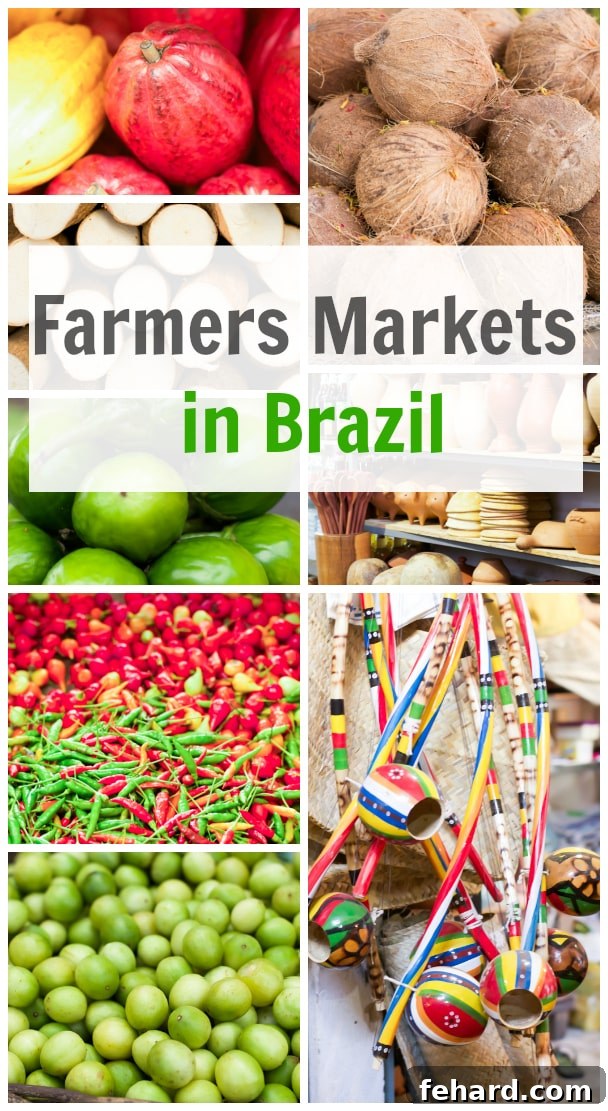
Embark on a captivating journey with me as we delve into the mesmerizing world of farmers’ markets in Brazil. This tropical nation, a vibrant tapestry of cultures and flavors, offers an unparalleled array of unique and intriguing fruits, vegetables, and artisanal goods. Prepare to discover the heart of Brazil’s culinary heritage, a sensory feast that promises to delight and inform.
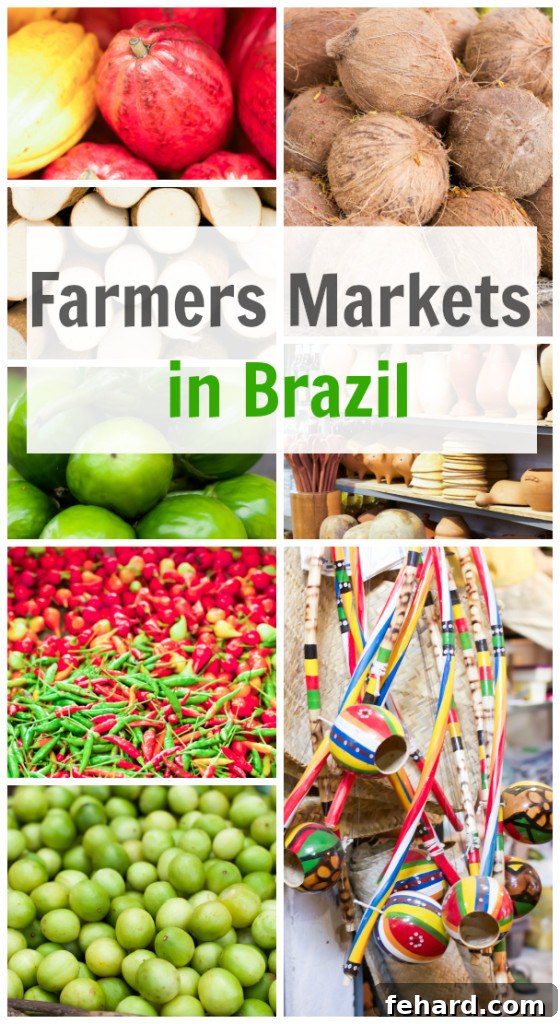
For those who have followed my journey, you’ll know my roots trace back to the sun-kissed lands of Brazil. My adventure began with a simple plan: a six-month exchange program in Canada to hone my English skills. Little did I know, life had a much grander script waiting to unfold. Five months into my Canadian sojourn, destiny introduced me to the most joyful Quebecois I had ever met, a man whose infectious smile and charming dimples I simply couldn’t resist. What started as a temporary stay blossomed into a beautiful life, and now, five years later, I am happily married and a proud resident of Canada.
The transformation from an exchange student to a Canadian resident has been an incredible chapter in my life. While I deeply cherish my life here, with its breathtaking landscapes and welcoming communities, a part of my heart will always yearn for Brazil. I often find myself missing the warmth of my family and friends, the endless hot days, and the serene beauty of the Brazilian beaches. This longing, however, only deepens my appreciation for the vibrant culture and unique treasures of my homeland, especially during my visits.
My family, including my sister who welcomed her first baby last November, still resides entirely in Brazil. This joyous occasion presented the perfect opportunity for me to return home, specifically to Bahia – one of Brazil’s 26 states, renowned for its rich Afro-Brazilian culture and stunning Atlantic coastline. I spent three wonderful weeks there, assisting my sister with my adorable new nephew, reconnecting with beloved family members, and catching up with childhood friends and university comrades. It was a period filled with warmth, laughter, and an undeniable sense of home.
Amidst the joyful family reunions, I carved out time to immerse myself in the vibrant local scene. My mission: to explore some of Brazil’s most authentic farmers’ markets and capture their essence through countless photographs. My goal was to share this rich cultural experience with all of you, offering a window into the incredible bounty and unique finds that define Brazilian markets. The largest and most iconic market in Salvador, the bustling city where my family lives, is famously known as “Feira de São Joaquim,” or simply “Sao Joaquim Market” in English.
Stepping into Feira de São Joaquim is an experience for all senses. It’s not just a market; it’s a living museum, a vibrant cultural hub pulsating with rich traditions, kaleidoscope colors, and an incredible diversity of offerings. Here, you can find everything from an astonishing array of fresh tropical fruits and vegetables to essential flours, the freshest seafood, various meats, exotic spices, traditional religious items, and charming local souvenirs. Each stall tells a story, and every corner holds a new discovery. I’ve carefully curated a selection of photos to guide you through this extraordinary market, providing insights and explanations for each unique item.
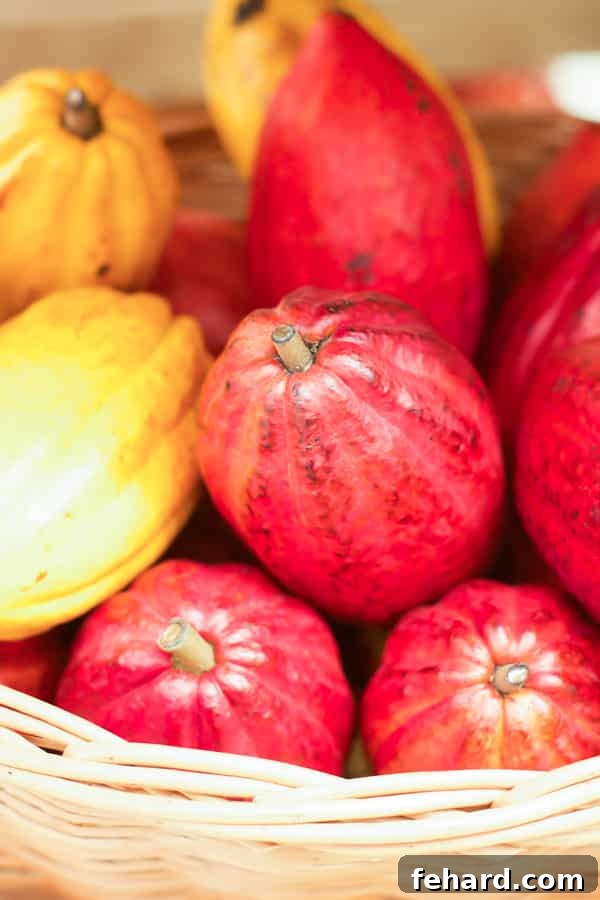
This magnificent fruit, known as Cacao, holds a special place in my heart and is undoubtedly one of Brazil’s most significant contributions to the global palate. For those unfamiliar, it is from the humble seeds of this fruit that the world’s beloved chocolate is derived. Bahia, particularly its southern regions, is home to vast plantations of cacao trees, flourishing in the ideal tropical climate. The fresh fruit, however, offers a completely different experience from the chocolate we know. When cracked open, the pulpy flesh surrounding the seeds is sweet, tangy, and incredibly refreshing, a true taste of the Amazonian rainforest.
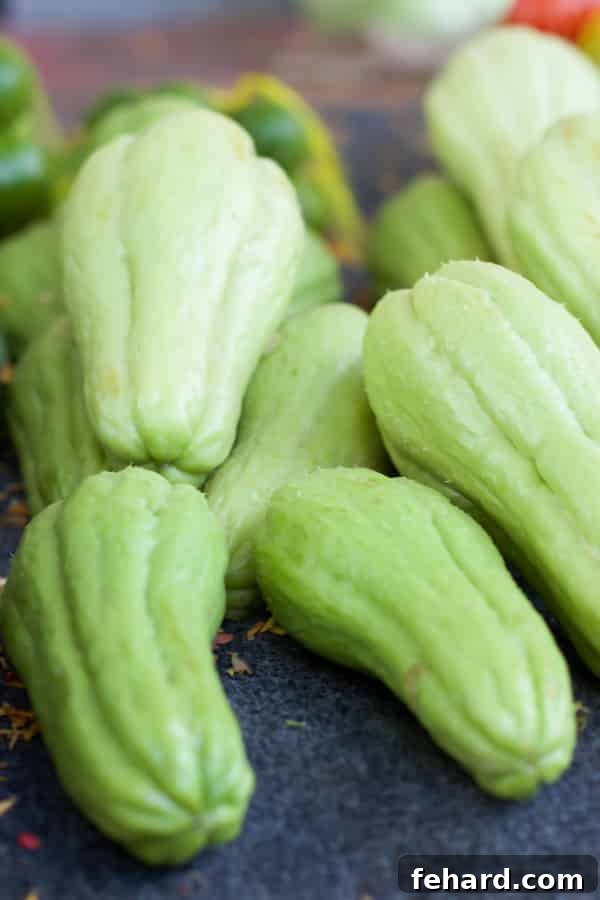
In Brazil, these distinctively ridged green vegetables are commonly referred to as “chuchu.” You might also know them by their Central American name, “chayote.” Regardless of what you call them, chuchu is a ubiquitous sight in every Brazilian market, often piled high and remarkably affordable. While its flavor profile is admittedly quite subtle on its own, a little bland perhaps, it truly comes alive when paired with the right spices and seasonings. Brazilians are experts at transforming chuchu into delicious dishes, from light and refreshing salads – often combined with potatoes – to hearty stews, making it a versatile and healthy staple in our cuisine.
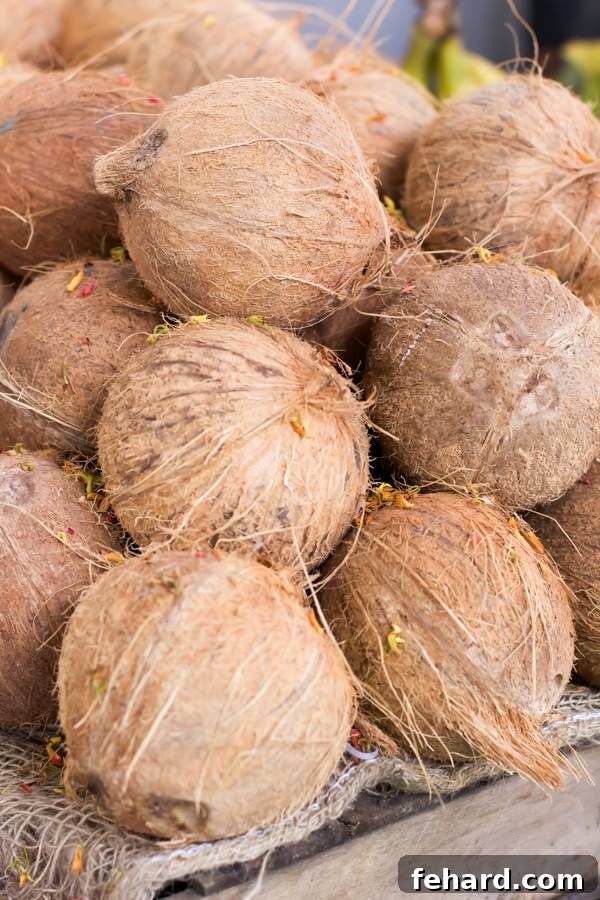
As a quintessential tropical country, Brazil boasts an abundance of coconuts, not only at its vibrant farmers’ markets but also lining its picturesque beaches. The sight of towering coconut trees swaying gently in the breeze is iconic. Fresh coconut water is an absolute favorite, especially during the hot Brazilian days. It’s a naturally hydrating and incredibly refreshing drink, often served chilled directly from the coconut itself, providing a sweet and electrolyte-rich refreshment that’s perfect for beating the heat. Beyond the water, the coconut flesh is used extensively in desserts, savory dishes, and delicious snacks, embodying the very essence of tropical living.
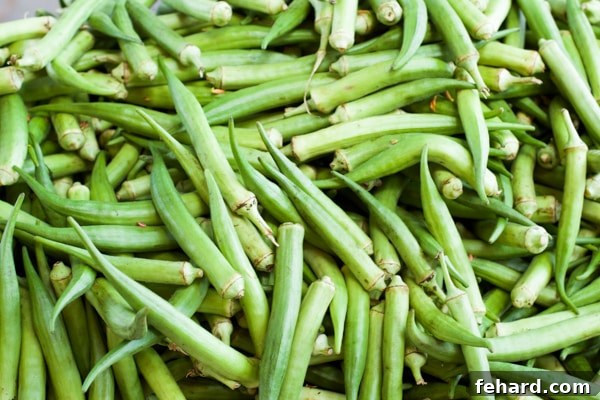
Known as “quiabo” in Portuguese, this distinctive green vegetable is recognized globally as okra or gumbo. While its origins trace back to North-Eastern Africa, okra has found a very comfortable home in tropical and warm temperate regions worldwide, making it particularly popular in the Northeast of Brazil. Here, it is a star ingredient in many traditional dishes, celebrated for its unique texture and ability to absorb flavors. It often features prominently in rich stews and side dishes, adding a delicious depth to Bahian cuisine. Its presence in the markets speaks volumes about its cultural and culinary importance.
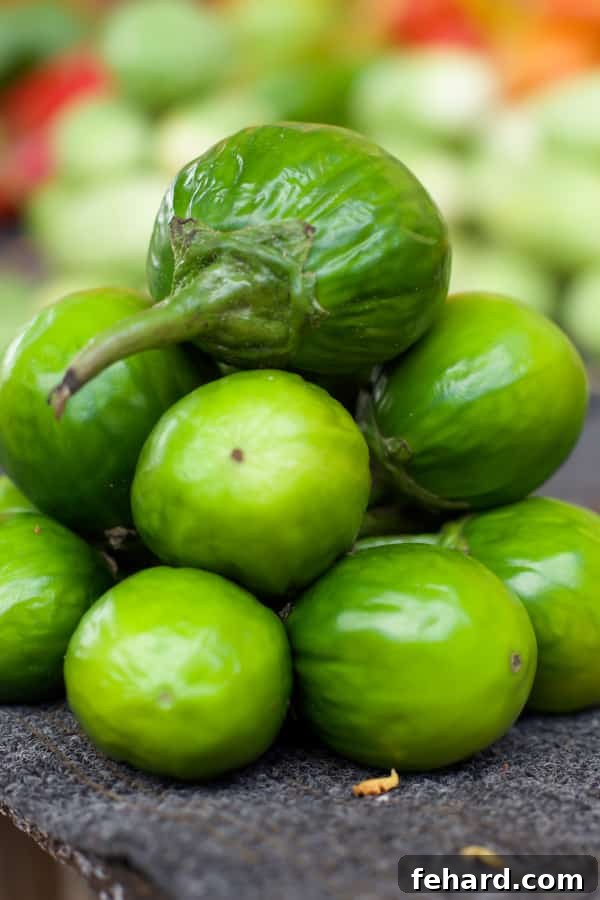
These fascinating green fruits, called “Jiló,” are members of the same botanical family as the eggplant, specifically known as Scarlet Eggplant in English. Their appearance is striking, often small, round, and vividly green. Jiló is quite distinctive for its pronounced bitter taste, which I must confess, isn’t entirely to my personal preference. However, for those who appreciate and even seek out bitter flavors in their cuisine, Jiló can be a truly rewarding culinary experience. It’s often prepared in specific ways to balance its bitterness, showcasing the diverse palates and cooking traditions within Brazil.
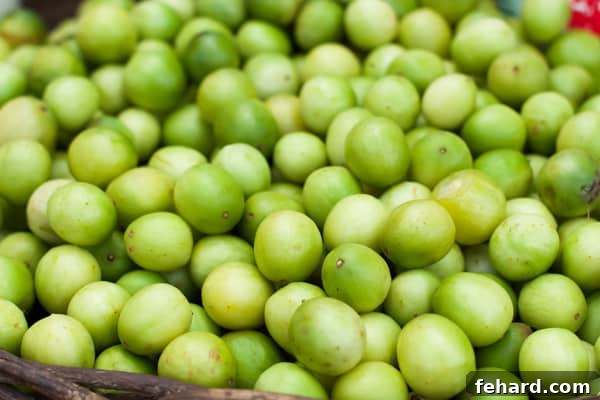
Another beloved gem from the culinary landscape of Northeast Brazil is the delightful fruit known as “umbu.” This is unquestionably one of my all-time favorites. Finding umbu outside of its native Northeast region can be a real challenge, making it a true regional delicacy. If you ever find yourself with the opportunity to taste it, please, seize the moment! Umbu is characterized by its soft, juicy pulp and a wonderfully unique sweet-sour flavor profile that is utterly delicious and incredibly refreshing. It’s often enjoyed fresh, as a juice, or transformed into exquisite jams and jellies, offering a genuine taste of the Brazilian hinterland.
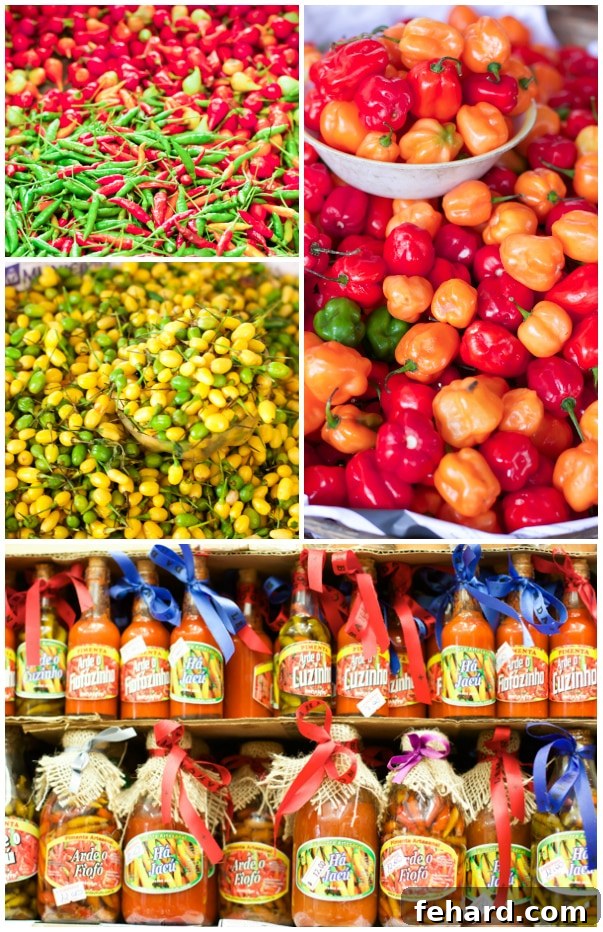
These vivid hot pepper pictures speak volumes about Brazil’s, particularly Northeast Brazil’s, passionate love affair with spicy food! My personal fondness for hot peppers and zesty dishes means I’m always thrilled to explore the incredible variety available. You can find an astonishing array of peppers – hot, hotter, and incredibly scorching – practically everywhere. From tiny, fiery malaguetas to larger, more aromatic varieties, they are integral to our culinary identity. These vibrant peppers are often sold fresh, or conveniently bottled as sauces, as shown above, allowing you to bring that essential Brazilian heat to any dish.
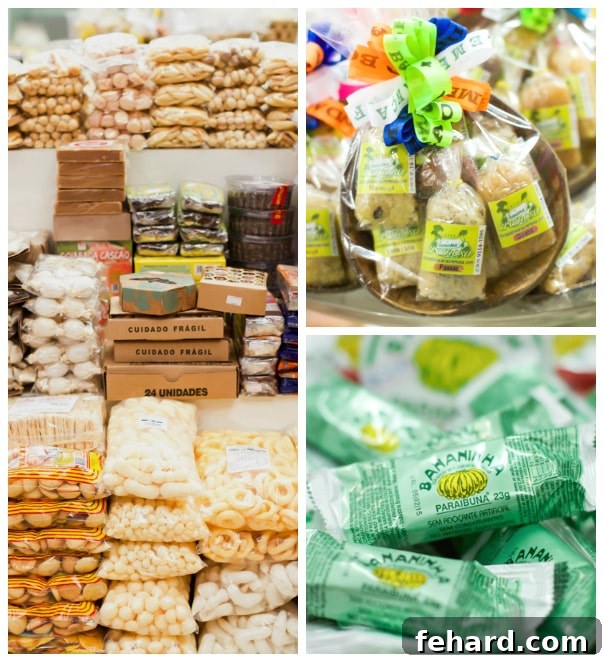
No visit to a Brazilian market is complete without indulging in our undeniably DELICIOUS range of snacks! While I must admit they aren’t always the healthiest options, they are certainly a treat for the taste buds and a quintessential part of the market experience. The stalls are laden with an enticing assortment of sweets, candies, and cookies. Among these, you’ll find traditional favorites like “avoador,” a light and crispy snack typically made from manioc starch, visible on the bottom left. Another popular choice is “bananinhas,” delightful sweet treats crafted from dried bananas, often seen on the bottom right, offering a natural and chewy sweetness.
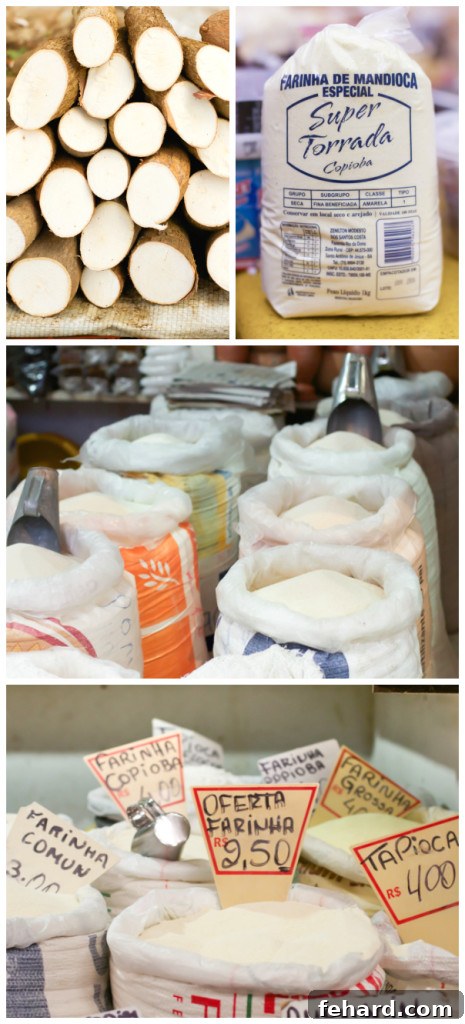
Central to Brazilian cuisine are these versatile flours, meticulously processed from the cassava root, also widely known as yuca, which you can see in its raw form on the top left of this image. Cassava is a staple food across Brazil, deeply embedded in our culinary traditions. What’s truly fascinating about this humble root is its regional nomenclature: depending on where you are in Brazil, it might be called “Aipim,” “Mandioca,” or “Macaxeira.” This reflects the vast cultural diversity within the country. From these roots, we derive various flours used to make everything from traditional farofa to tapioca, showcasing its incredible versatility and importance.
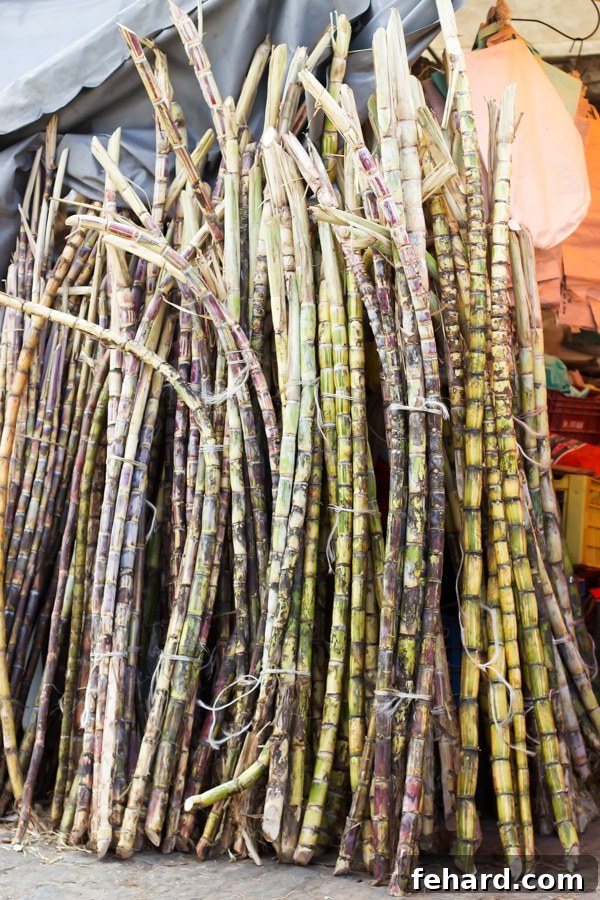
The sight of tall, fibrous bundles of sugarcane is a common and refreshing presence at Brazilian markets. These “awesome” stalks are the source of ‘caldo de cana’ or sugarcane juice, a ubiquitous and incredibly popular drink. You can find vendors everywhere pressing the stalks to extract its sweet, natural juice right before your eyes. It is wonderfully sweet, surprisingly refreshing, and provides an instant energy boost. This natural elixir is the perfect antidote to the tropical heat, offering a truly authentic taste of Brazil’s natural bounty.
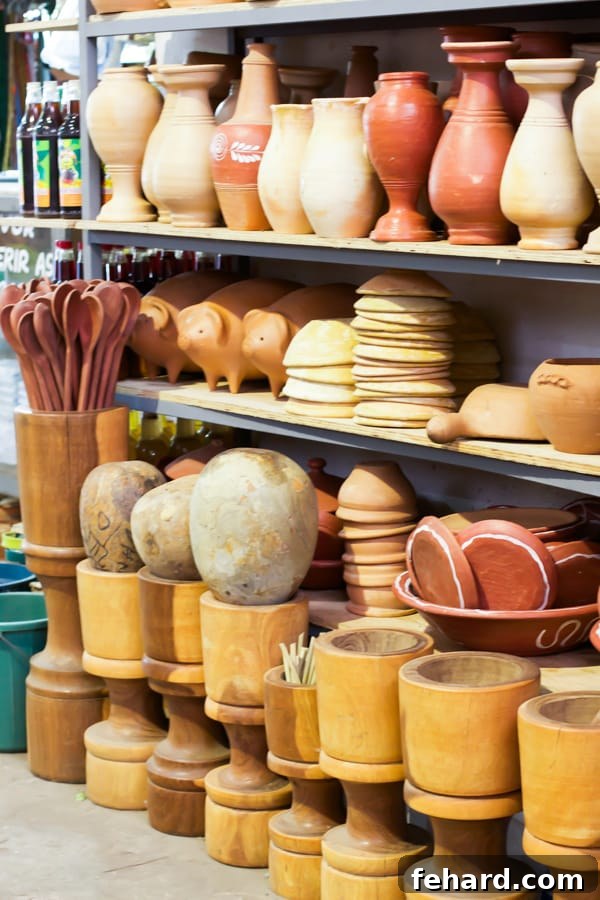
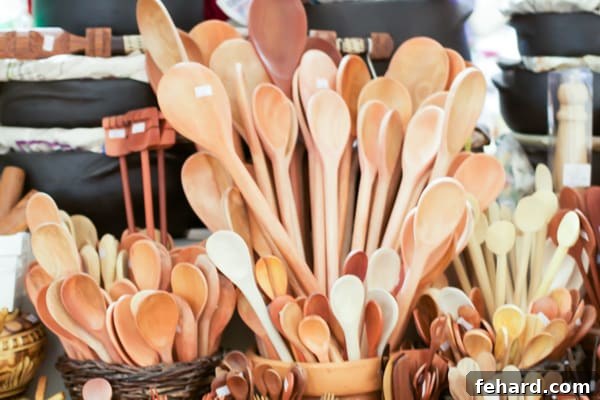
Beyond the edible delights, Brazilian markets also showcase traditional handicrafts and kitchen essentials. We have a profound appreciation for cooking with natural materials, and thus, terracotta pots and wooden spoons remain incredibly popular. Many families, including my own, continue to favor these types of pots for their cooking. And let me tell you, the flavor that these terracotta vessels impart to food is simply incomparable! They infuse dishes with a rustic depth and richness that modern cookware struggles to replicate, connecting each meal to centuries of culinary tradition. The handmade wooden spoons complement this traditional approach, making cooking an art form.
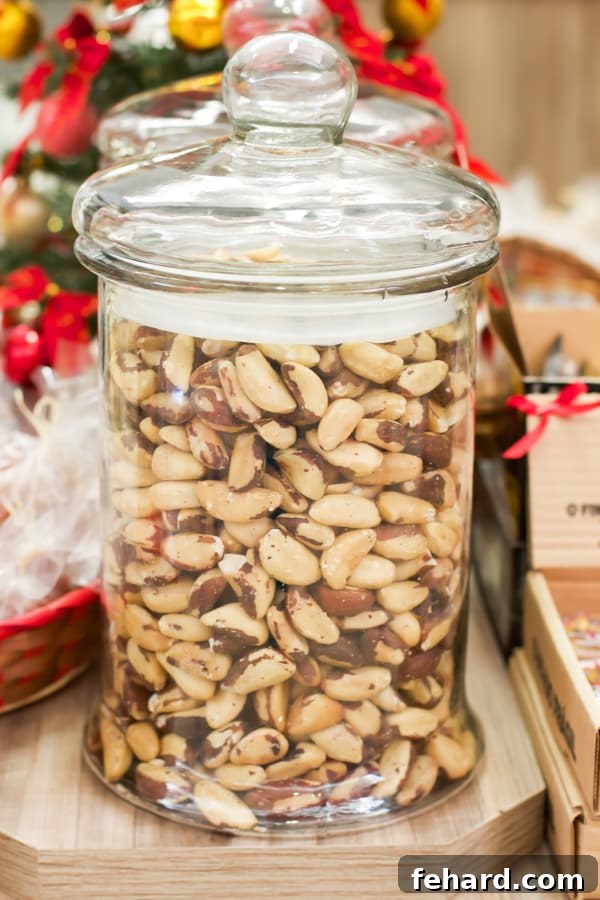
Among the array of local produce and goods, you’ll inevitably encounter large jars brimming with these familiar treasures. I imagine most of you recognize them instantly: Brazil Nuts. In Portuguese, we proudly call them “Castanha do Pará,” referencing their strong association with the Brazilian state of Pará and the Amazon rainforest where they primarily grow. These nutritious nuts are not only a delicious snack but also a source of healthy fats and selenium, embodying the natural richness of the Amazonian ecosystem. They are a true testament to Brazil’s incredible biodiversity.
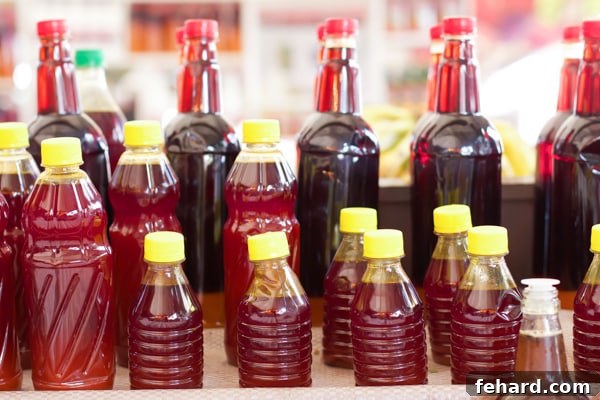
This striking amber-colored oil, known as “Óleo de Dendê” or Palm Oil in English, is far more than just a cooking ingredient; it’s the very soul of Bahian cuisine. The culinary traditions of Bahia are profoundly influenced by this delicious African oil, which arrived in Brazil through historical ties and has since become indispensable. Its distinctive flavor and vibrant color are central to countless iconic recipes. From the famous Acarajé, a beloved street food and beach snack made from deep-fried black-eyed pea fritters, to the creamy and savory Bobó de Camarão, a delicious shrimp stew, Óleo de Dendê lends an unmistakable authenticity and richness to every dish it graces.
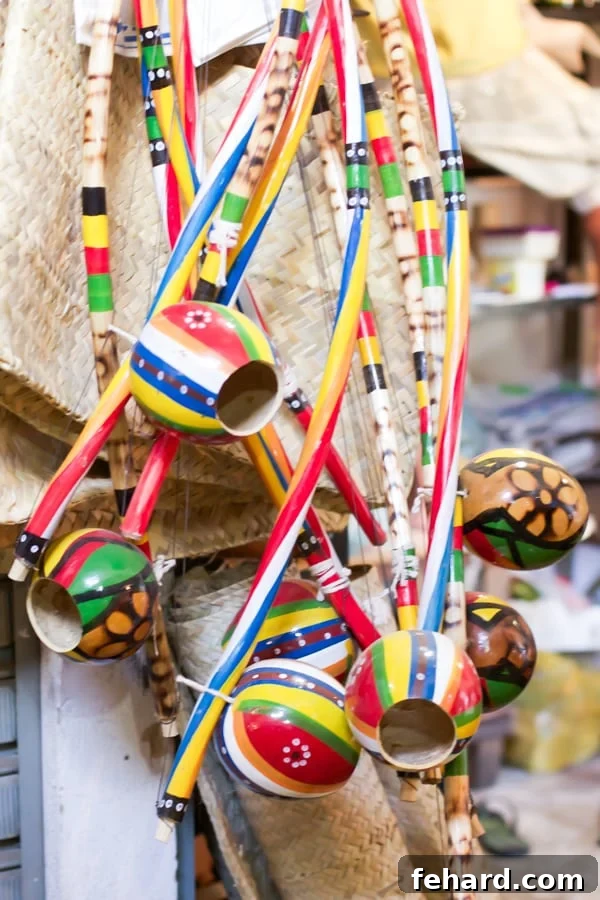
Last but certainly not least, amidst the bustling market stalls filled with food and crafts, you might encounter a deeply cultural artifact: the “Birimbau.” This unique musical bow, a percussion instrument, is iconic for its role in the practice of Capoeira, the mesmerizing Afro-Brazilian martial art that combines elements of dance, acrobatics, and music. The birimbau sets the rhythm, dictates the speed, and provides the spiritual energy for Capoeira rodas (circles). Its presence in the market is a powerful reminder that Brazilian culture is a rich tapestry of flavors, sounds, and movements, extending far beyond just its culinary offerings.
I truly hope you’ve enjoyed this virtual tour of Brazil’s vibrant farmers’ markets as much as I enjoyed sharing these cherished memories and insights with you. It’s a privilege to bridge my two worlds and present a glimpse into the heart and soul of my home country.
If this post has sparked your curiosity or brought a smile to your face, please consider sharing it with your friends and family. Eager for more delicious updates and cultural explorations? Subscribe to my newsletter and follow Primavera Kitchen on Twitter, Pinterest, Instagram, and Facebook for a continuous stream of delightful recipes and travel anecdotes. As always, your visit and engagement are deeply appreciated. Thank you for stopping by!