
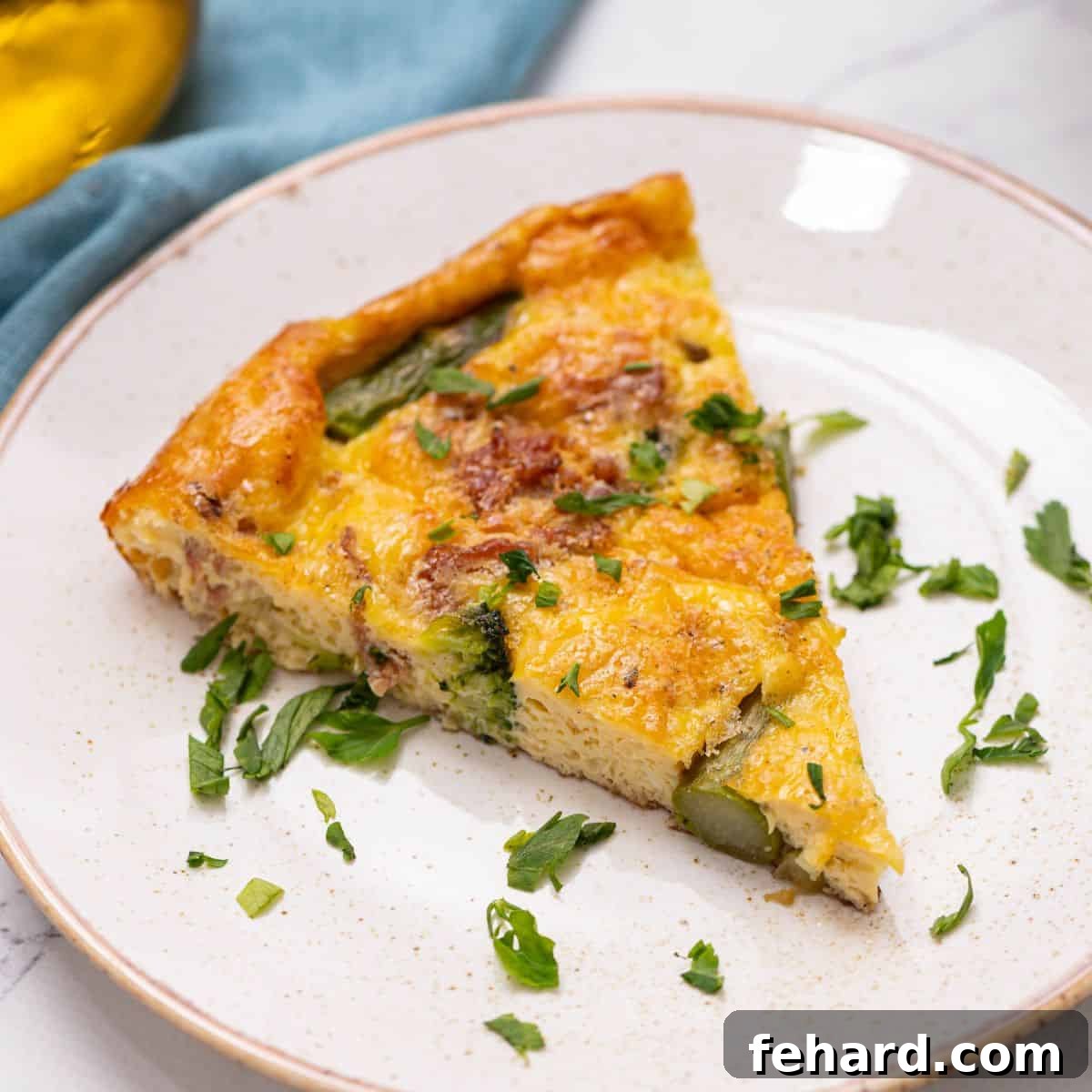
Savory Asparagus Frittata: Your Go-To Recipe for a Hearty and Flavorful Meal
Embrace the vibrant flavors of spring with this incredibly easy and utterly delicious Asparagus Frittata. Featuring crisp-tender asparagus and broccoli, savory bacon, and fluffy, cheesy eggs, this frittata is a hearty dish that effortlessly transitions from a quick weeknight dinner to an elegant weekend brunch. It’s a culinary staple that promises both satisfaction and simplicity.
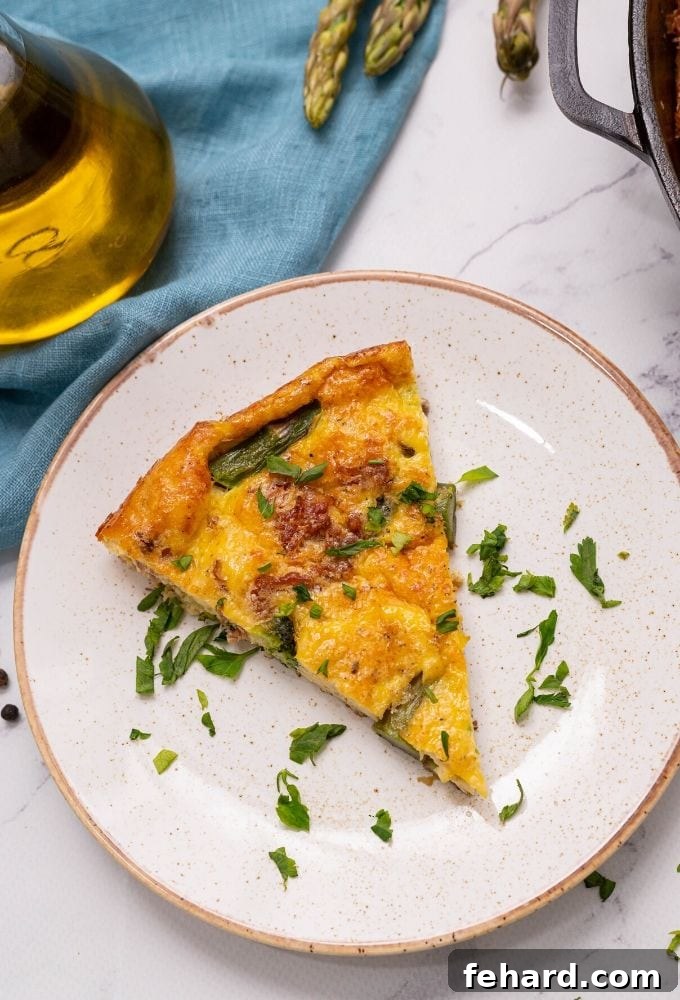
Why You’ll Adore This Asparagus Frittata
While I appreciate the versatility of many frittata recipes, from a comforting Spinach Frittata to a convenient Instant Pot Frittata or a robust Potato Frittata, this particular Asparagus Frittata holds a special place in my heart, especially during springtime. It truly is the ultimate celebration of fresh, seasonal produce, and here’s why:
- Exceptional Crisp-Tender Vegetables: This frittata isn’t just about eggs; it’s about the star vegetables. Sautéed onions, vibrant asparagus, and tender broccoli florets not only infuse the dish with incredible flavor but also add a delightful textural contrast that elevates every bite. The goal is perfectly cooked vegetables – not mushy, but with a slight bite.
- Irresistible Bacon Infusion: The addition of crispy bacon takes this frittata to another level. As the bacon renders, it imparts a rich, smoky depth to the vegetables, transforming them into something truly special. Even those who typically shy away from greens will find themselves reaching for seconds! For a vegetarian option, simply omit the bacon and use olive oil.
- Effortless Entertaining: Hosting brunch or a casual gathering? This Asparagus Frittata is your secret weapon. It’s incredibly forgiving and tastes equally delicious served warm, at room temperature, or even cold. This flexibility makes it ideal for preparing ahead of time, allowing you more time to enjoy with your guests. You can confidently leave it out for up to two hours.
- Simple and Approachable: Despite its gourmet appeal, making this frittata is surprisingly straightforward. With a few basic steps and common ingredients, you can create a culinary masterpiece that looks impressive but requires minimal fuss.
Happy Cooking! Enjoy the process of creating this fantastic dish. xo Kristen
Diving Deeper: Understanding Your Ingredients
While the full list of ingredients and precise quantities are detailed in the recipe card below, here’s an overview of what you’ll need and some tips for selecting the best quality to ensure your frittata is nothing short of perfect.
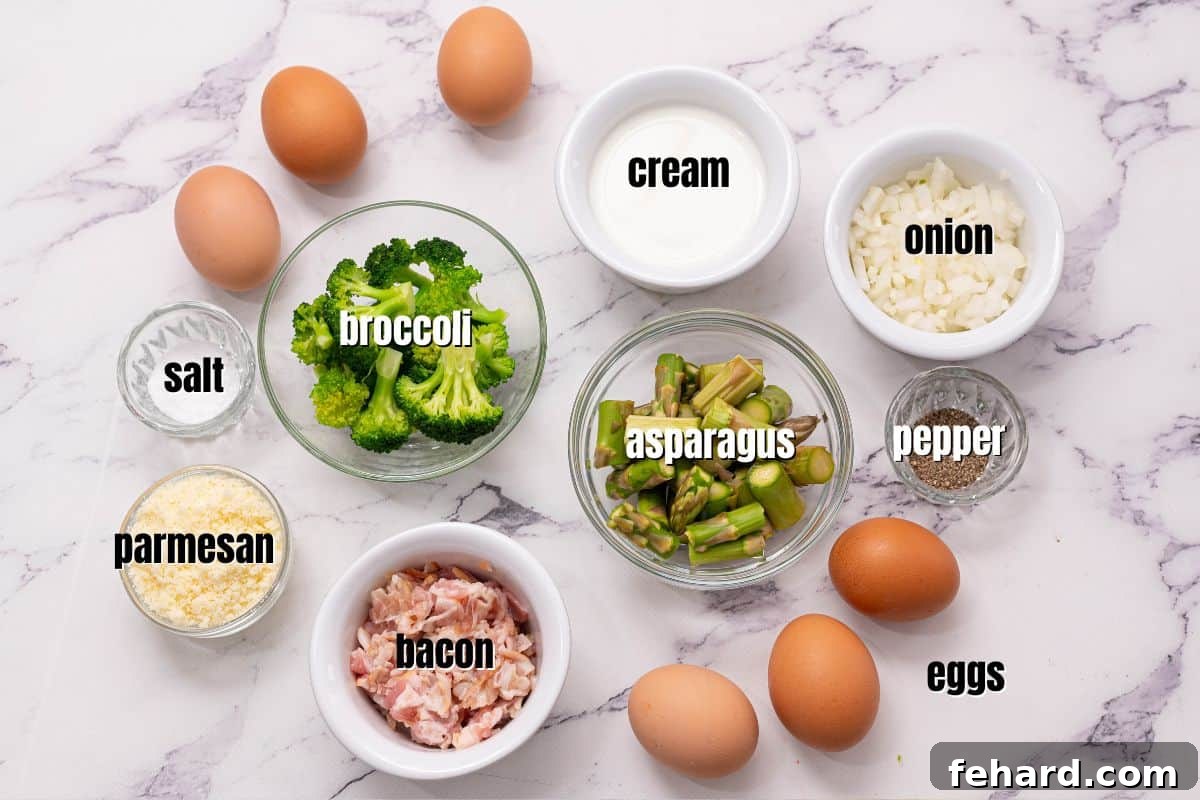
- Bacon: Whether you opt for classic pork bacon or a leaner turkey bacon, both will lend a wonderful savory and smoky flavor to this asparagus frittata recipe. Dicing it before cooking ensures even crispiness and distributes its flavor throughout the dish. For a vegetarian version, simply omit the bacon and sauté your vegetables in a tablespoon of extra virgin olive oil.
- Asparagus: When selecting asparagus, look for stalks that are firm and vibrant green, with tight, closed tips. Avoid any that look wilted or have open, flowering tips, as these indicate older asparagus. Fresh asparagus is key for that perfect crisp-tender texture.
- Broccoli: Choose broccoli florets that are rich in color and firm to the touch. Trim them into bite-sized pieces so they cook evenly and integrate well into the frittata without being too chunky. Broccoli adds both flavor and a lovely bright green hue.
- Onion: A sweet onion or a classic yellow onion works best in this frittata recipe. They mellow out beautifully when sautéed, adding a subtle sweetness and aromatic depth without overpowering the other ingredients.
- Cream: For the ultimate creamy and rich frittata, heavy cream is the preferred choice. However, this recipe is quite forgiving, and you can successfully use whole milk or half-and-half as alternatives without compromising too much on flavor or texture. The higher fat content of cream simply makes it more luxurious.
- Cheese: While grated Parmesan cheese is specified for its sharp, salty notes that complement the vegetables and bacon, feel free to experiment with other cheeses. Feta cheese offers a tangy, briny kick, while Swiss cheese melts beautifully and provides a nutty, mild flavor. Shredded cheddar or Gruyère would also be excellent choices.
- Eggs: Fresh, large eggs are the foundation of any great frittata. They bind all the ingredients together into a cohesive, fluffy dish.
- Seasonings: Kosher salt and freshly ground black pepper are essential to enhance all the natural flavors of the ingredients. Adjust to your taste preferences.
Equipment Note
Essential Equipment for Frittata Perfection
The right pan is crucial for a perfectly cooked frittata. You absolutely must use a 10-inch oven-safe skillet for this recipe. A cast iron skillet is ideal because it distributes heat evenly and can go straight from the stovetop to the oven, minimizing dishes. If you don’t possess an oven-safe skillet, don’t worry! You can still make this delicious frittata. Simply sauté your bacon and vegetables as instructed in a regular skillet, then carefully transfer the cooked ingredients to a 9 or 10-inch pie plate or a similar oven-safe baking dish. Pour the whisked egg mixture over the vegetables and bacon in the pie plate, then bake. Keep in mind that when using a different dish, you may need to add an extra 3-5 minutes to the bake time to ensure the eggs are fully set in the center.
Crafting Your Asparagus Frittata: Step-by-Step Guide
Follow these detailed steps to achieve a perfectly cooked, golden-brown Asparagus Frittata. You’ll find the precise ingredient quantities and comprehensive instructions in the dedicated recipe card located at the very end of this post.
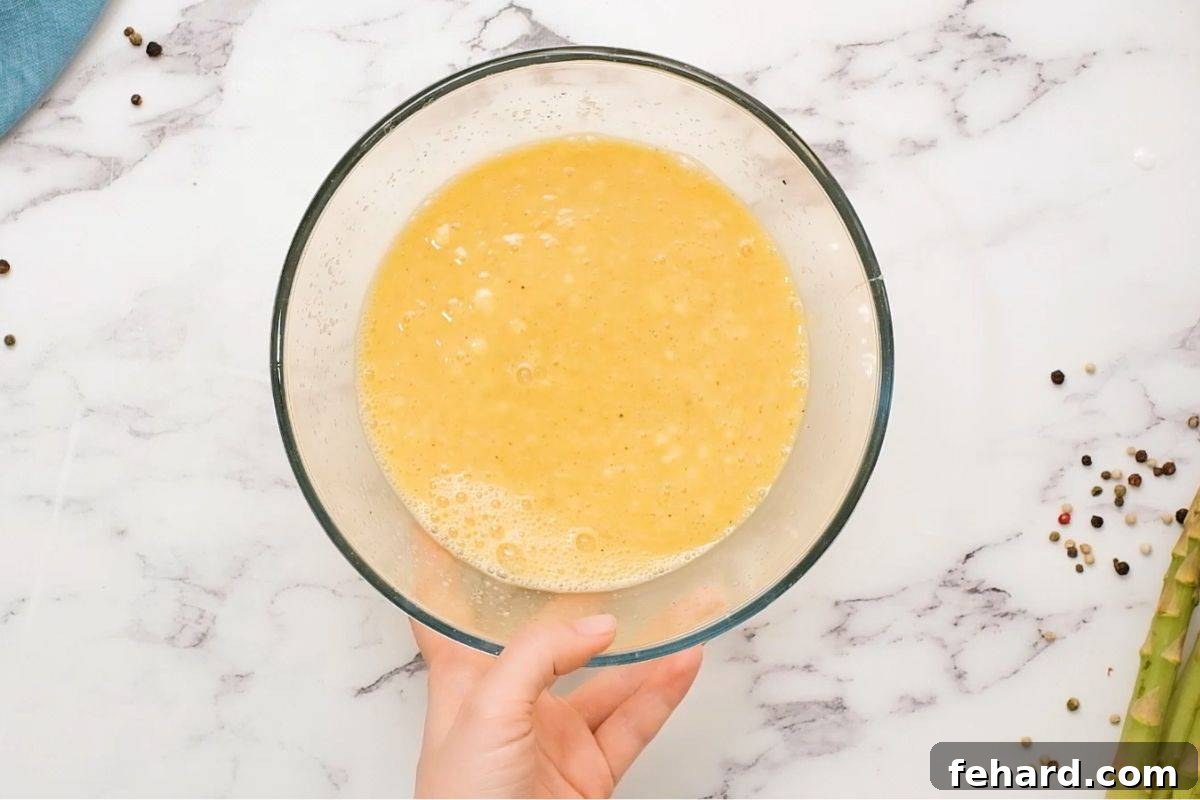
- Prepare the Eggs: Begin by preheating your oven to 350°F (175°C). In a medium mixing bowl, combine the large eggs, cream (or milk), grated Parmesan cheese, kosher salt, and black pepper. Whisk vigorously until the mixture is well combined and slightly frothy. Set this egg mixture aside; it will be added to the skillet later. This initial whisking is key to achieving a light and airy frittata.
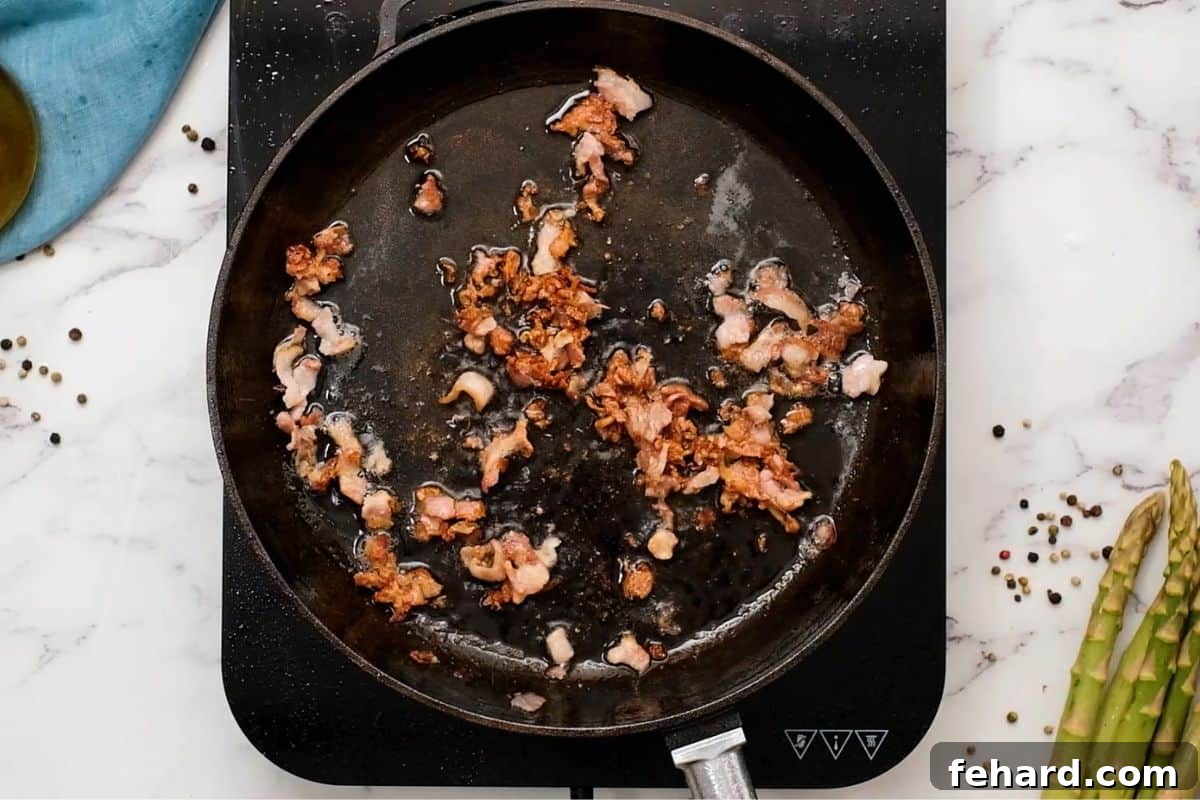
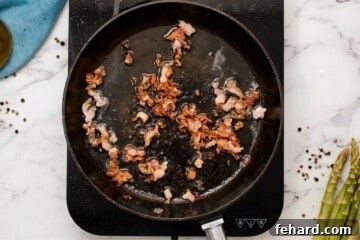
- Sauté the Bacon: Place your 10-inch oven-safe skillet (preferably cast iron) over medium-high heat. Add the diced thick-cut bacon and cook, stirring occasionally, until it becomes crisp and beautifully browned. Once cooked, use a slotted spoon to remove the crispy bacon from the skillet and transfer it to a plate lined with paper towels to drain any excess grease. This will keep the bacon perfectly crunchy. Importantly, drain off all but about 1 tablespoon of the rendered bacon grease from the skillet. That remaining fat will be essential for infusing the vegetables with a rich, smoky flavor.
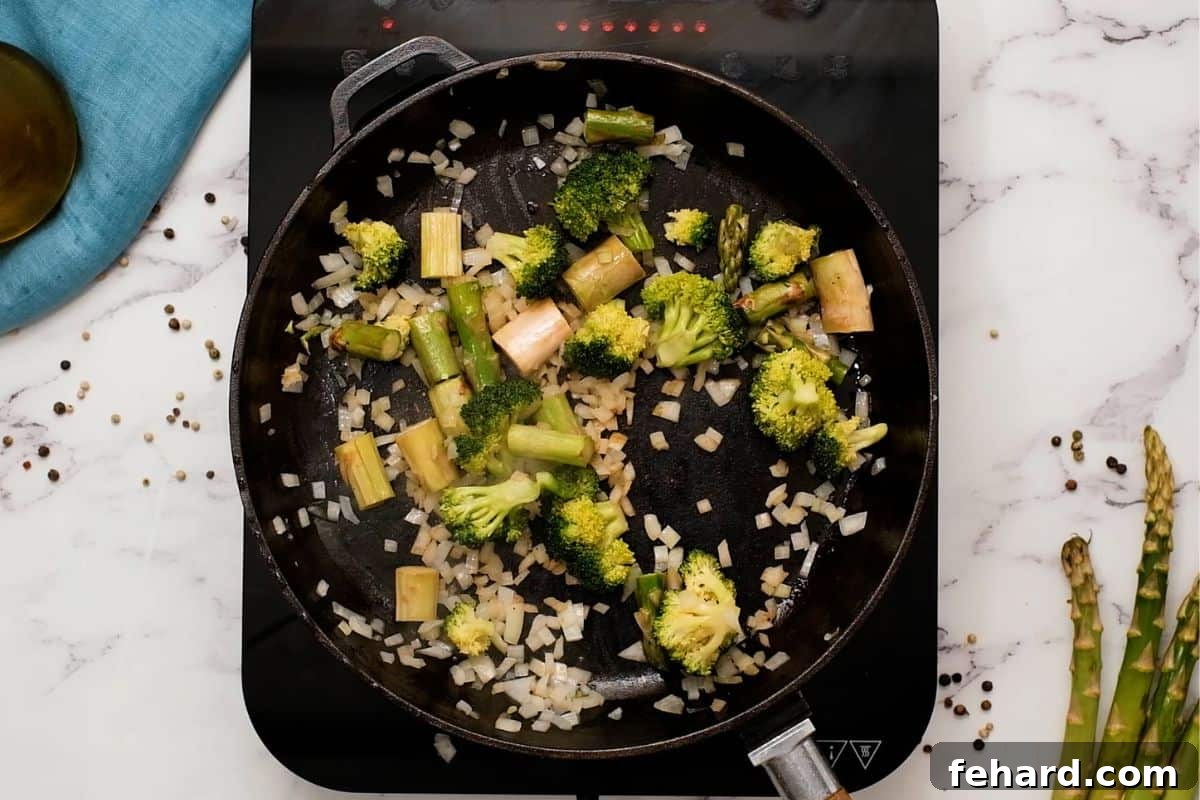
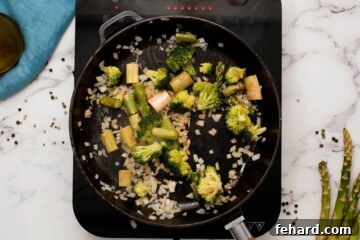
- Sauté the Vegetables: Return the skillet with the tablespoon of bacon grease to medium-high heat. Add the chopped broccoli florets, 1-inch pieces of asparagus, and minced onion to the hot skillet. Sauté for about 5 minutes, stirring frequently, until the vegetables are just beginning to become crisp-tender and retain their vibrant color. You don’t want them completely soft; a slight crunch adds wonderful texture to the frittata.
- Combine and Bake: Evenly sprinkle the reserved crispy bacon over the sautéed vegetables in the skillet. Gently pour the whisked egg mixture over the vegetables and bacon, ensuring it spreads evenly across the pan. Transfer the skillet directly into the preheated oven. Bake for approximately 20 minutes, or until the edges of the frittata are beautifully set and golden, and the center still has a slight, delicate wobble. This slight wobble indicates that the frittata is perfectly cooked and not overdone, ensuring a moist and tender texture.

- Rest Before Serving: Once baked, carefully remove the skillet from the oven. Allow the frittata to cool and rest in the skillet for 5-10 minutes before slicing and serving. This resting period helps the frittata set completely, making it easier to cut into clean, perfect wedges.
Perfect Pairings: Serving Suggestions
The versatility of this Asparagus Frittata means it can grace your table for nearly any meal. Whether you’re planning a lavish holiday brunch or seeking a light yet satisfying entrée, this frittata is guaranteed to impress.
- For Breakfast or Brunch: Elevate your morning meal by pairing this savory frittata with sweet and delightful baked goods. Consider serving it alongside a slice of moist Sour Cream Coffee Cake, a zesty Blueberry Lemon Coffee Cake, or a flaky Cream Cheese Danish. A refreshing Honey Lime Fruit Salad offers a bright contrast and completes the perfect brunch spread.
- As an Entrée: For a light, yet incredibly filling lunch or dinner, serve this frittata with a crisp, fresh salad. It pairs wonderfully with a peppery Spinach Bacon Salad, a vibrant Strawberry Spinach Salad, or a crunchy Fresh Broccoli Salad. The combination provides a balanced meal that’s both nutritious and satisfying.
- Simple Sides: A simple side of toasted artisanal bread, a fresh green salad with a light vinaigrette, or roasted potatoes would also make excellent accompaniments.

Unleash Your Creativity: Recipe Modifications
One of the best aspects of a frittata is its adaptability. Feel free to customize this recipe to suit your dietary needs or simply to use what you have on hand. Here are some popular modifications:
- Vegetarian Option: To make this frittata completely vegetarian, simply omit the bacon. Instead of using bacon fat, sauté the vegetables in 1 to 2 tablespoons of high-quality extra virgin olive oil. The frittata will still be incredibly flavorful and satisfying.
- Swap Out the Veggies: The combination of fresh asparagus, broccoli, and minced onion is fantastic in this frittata, celebrating classic spring flavors. However, don’t hesitate to make it your own! You can omit the onion if you prefer, or replace the asparagus with additional broccoli, or vice versa. Other great additions or substitutions include bell peppers, mushrooms, spinach, zucchini, or cherry tomatoes. Just ensure any high-moisture vegetables are sautéed sufficiently to remove excess water.
- Keep it Dairy-Free: For a dairy-free version, replace the heavy cream with an unsweetened non-dairy milk alternative, such as unsweetened soy milk, oat milk, or almond milk. Ensure it’s plain and unflavored. Additionally, either omit the cheese entirely or use your favorite brand of non-dairy shredded cheese.
- Add More Protein: If you’re looking to boost the protein content, consider adding cooked sausage, diced ham, or shredded chicken along with the bacon, or as a replacement.
- Herbacious Twist: Fresh herbs can brighten the flavor profile considerably. A sprinkle of fresh chives, parsley, dill, or thyme added to the egg mixture or as a garnish will elevate the dish.
- Low-Cholesterol Option: If you’re mindful of cholesterol intake, you can substitute some of the whole eggs with egg whites. For instance, use a combination of 3 whole eggs and 6 egg whites in place of 6 whole eggs for a lighter version.
Storing Your Delicious Frittata
This frittata is excellent for meal prep or enjoying leftovers throughout the week. Proper storage ensures it remains fresh and delicious.
- Refrigerate: Allow any leftover frittata to cool completely to room temperature before storing. Once cooled, transfer the frittata (either as a whole or in individual slices) to an airtight container. It will keep well in the refrigerator for up to 4 days. This makes it a perfect make-ahead option for busy mornings or quick lunches.
- Reheat: Frittatas are wonderfully versatile and can be enjoyed in several ways. You can serve leftover frittata chilled directly from the refrigerator for a quick snack or light lunch. Alternatively, let it come to room temperature for about 30 minutes before serving. If you prefer it warm, individual slices can be reheated in the microwave on a heat-safe plate for 30-45 seconds, or until heated through. For a slightly crispy edge, you can also warm slices in a preheated oven at 300°F (150°C) for about 10-15 minutes, or until hot.
- Freezing: While frittatas can be frozen, the texture of the vegetables may become slightly softer upon thawing. To freeze, wrap individual slices tightly in plastic wrap, then aluminum foil, and store in a freezer-safe bag for up to 2-3 months. Thaw overnight in the refrigerator before reheating.
Frequently Asked Questions About Frittatas
- What is the difference between a frittata and an omelet? A frittata is typically started on the stovetop and then finished in the oven, often includes ingredients mixed directly into the eggs, and is served flat and cut into wedges. An omelet, on the other hand, is cooked entirely on the stovetop, ingredients are usually added to one half and then folded, and it’s served individually. Frittatas are generally heartier and more suitable for feeding a crowd.
- How do I prevent my frittata from sticking to the pan? Using a well-seasoned cast iron skillet is your best defense. If using another oven-safe pan, ensure it’s non-stick or thoroughly greased with butter or cooking spray before adding ingredients. Cooking the eggs on medium-low heat initially also helps prevent sticking.
- Can I use frozen vegetables? Yes, you can use frozen broccoli or asparagus. However, it’s crucial to thaw them completely and pat them very dry before sautéing to prevent excess water from making your frittata soggy. You may need to sauté them for a few extra minutes to remove moisture.
- How do I know when my frittata is done? A frittata is perfectly cooked when the edges are set and golden brown, and the center is mostly set but still has a slight, delicate wobble when gently shaken. Overcooking can lead to a dry, rubbery texture.
- Can I add different herbs? Absolutely! Fresh herbs like chives, parsley, dill, or even a touch of tarragon would be wonderful additions to the egg mixture or as a garnish.
Explore More Brunch Favorites
If you loved this Asparagus Frittata, you’ll surely enjoy these other beloved brunch recipes that are perfect for any occasion:
- Easy Hashbrown Breakfast Casserole
- Quiche Lorraine
- Overnight French Toast Casserole
- Breakfast Strata with Spinach and Cheese
- Maple Candied Bacon
- Breakfast Sliders
Did you make this recipe? We’d love to hear your thoughts!
If you enjoyed this recipe, please share your experience and consider leaving a review. Thank you!
The Complete Asparagus Frittata Recipe Card
Rating: 5 out of 5 stars from 19 votes
By: Kristen Chidsey
Servings: 6
Prep Time: 10 minutes
Cook Time: 30 minutes
Total Time: 40 minutes
Asparagus and broccoli are sautéed with bacon and then baked with eggs to create a hearty and delicious Asparagus Frittata.
Ingredients
- 6 large eggs
- ½ cup cream or milk
- ⅓ cup grated parmesan cheese
- 1 teaspoon kosher salt
- 1 teaspoon pepper
- 3 strips thick bacon, diced
- 1 cup asparagus, chopped into 1-inch pieces
- 1 cup broccoli florets, chopped into 1-inch pieces
- ½ cup sweet or yellow onion, minced
Instructions
-
Heat the oven to 350℉ (175℃). In a medium mixing bowl, whisk together 6 large eggs, ½ cup cream or milk, ⅓ cup grated parmesan cheese, 1 teaspoon kosher salt, and 1 teaspoon pepper.

Whisked eggs ready for the frittata. -
In a 10-inch cast iron or oven-proof skillet, sauté 3 strips thick bacon over medium-high heat, until crispy and browned. Remove the browned bacon from the skillet and place it on a plate lined with paper towels.
Crispy bacon cooking in the skillet. -
Drain off all but one tablespoon of the grease from the skillet and then return the skillet to the heat. Add 1 cup chopped asparagus, 1 cup chopped broccoli florets, and ½ cup minced sweet or yellow onion to the rendered fat and sauté for 5 minutes, stirring often, until the vegetables are crisp-tender.
Vegetables cooking in the skillet with bacon fat. -
Sprinkle the reserved bacon evenly over the vegetables. Pour the egg mixture over the vegetables and bacon in the skillet.
Frittata ingredients ready for the oven. -
Place the skillet into the oven and bake for 20 minutes or until the eggs are set and the top is slightly browned.
The finished frittata, baked to perfection. -
Allow the frittata to cool for 5-10 minutes before serving.


Equipment
- 10 inch oven safe skillet
Notes
- Important Pan Note: You must use a 10-inch oven-safe skillet for this frittata. If you do not have one, sauté vegetables as indicated, then transfer them to a 9 or 10-inch pie plate. Pour the eggs over the vegetables and bake. You may need to add 3-5 minutes to the bake time.
- Cream/Milk Options: Feel free to use heavy cream, half-and-half, or whole milk in this recipe. For non-dairy milk, unsweetened soy milk provides the best texture.
- Cheese Alternatives: Instead of Parmesan cheese, Swiss or feta cheese are excellent substitutes.
- Egg Modifications: If you are monitoring cholesterol, you can use 9 egg whites in place of the 6 whole eggs.
- Bacon Options: Pork or turkey bacon can be used. For a vegetarian version, omit the bacon and sauté the vegetables in olive oil instead of bacon fat.
- Vegetable Customization: Feel free to omit the onion if desired. You can also swap out asparagus for additional broccoli, or vice versa, to suit your preferences.
- Serving and Storage: Frittatas are versatile and can be served warm, cold, or at room temperature. They are safe to leave out for up to 2 hours at room temperature. Store any leftovers in an airtight container in the refrigerator for up to 4 days.
Nutrition Information
Nutrition information is automatically calculated, so should only be used as an approximation.
- Calories: 119 kcal
- Carbohydrates: 3g
- Protein: 9g
- Fat: 7g
- Saturated Fat: 2g
- Cholesterol: 171mg
- Sodium: 573mg
- Potassium: 199mg
- Sugar: 1g
- Vitamin A: 590IU
- Vitamin C: 14.8mg
- Calcium: 124mg
- Iron: 1.4mg
Share Your Culinary Creation!
Tried this recipe? Mention @amindfullmom or tag #amindfullmom on social media!