
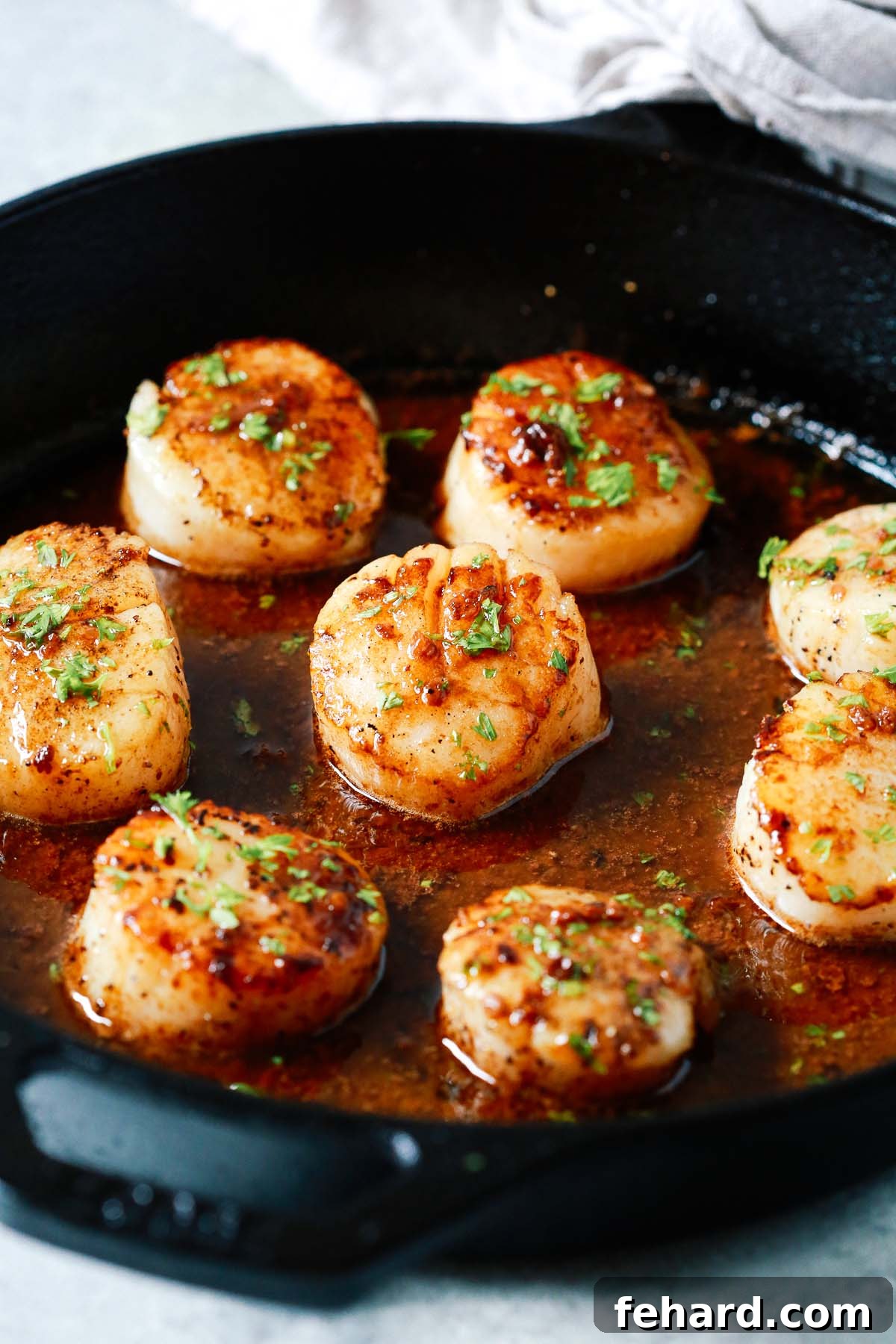
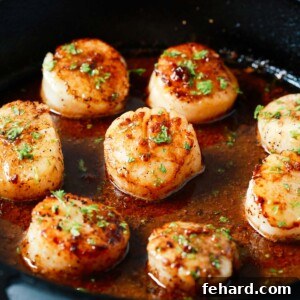
In the culinary world, few ingredients offer the sophisticated appeal and quick cooking time of scallops. This guide presents an incredibly simple yet profoundly delicious Garlic Butter Scallops Recipe, designed to bring gourmet seafood to your table in a mere 6 minutes. Whether you’re seeking an impressive dish for entertaining guests or a luxurious, fast weeknight meal, these succulent, perfectly pan-seared scallops will exceed expectations. Crafted with just 7 essential ingredients, this recipe promises a restaurant-quality experience for a fraction of the cost, making elegant dining accessible to everyone.
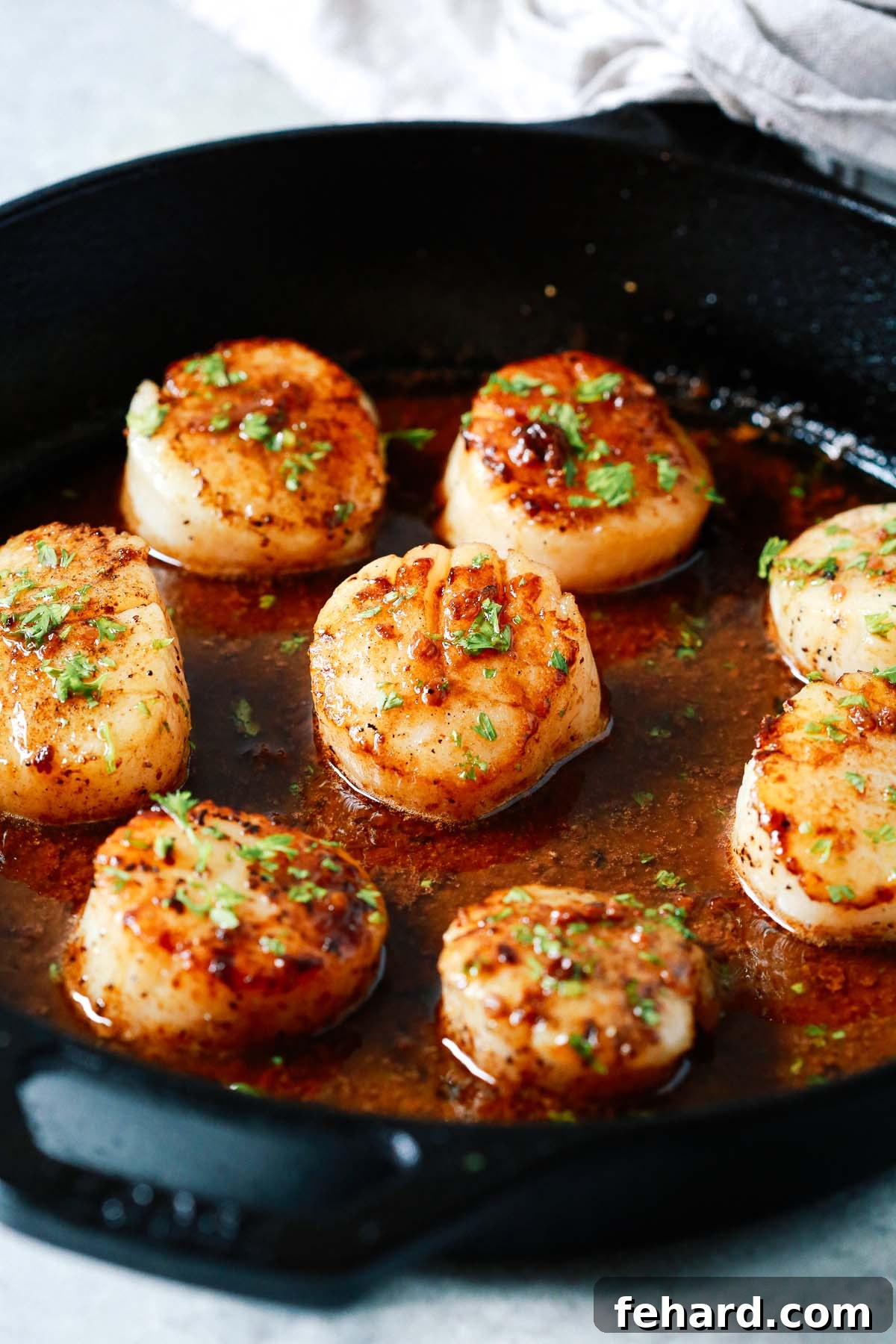
Mastering the art of cooking scallops can seem daunting, but fear not! This comprehensive guide will equip you with all the knowledge and tips needed to avoid the common pitfall of overcooking. Say goodbye to rubbery scallops and hello to tender, juicy morsels with a beautiful golden crust. By following our expert advice, you’ll consistently achieve perfectly cooked scallops every time, transforming your home kitchen into a five-star dining destination.
For achieving that coveted, irresistible golden sear on your scallops, a cast iron skillet is truly indispensable. Its superior heat retention and even distribution create the ideal surface for caramelizing the scallops’ natural sugars, locking in moisture and flavor. This is the same trusted method I employ for other beloved recipes that require a fantastic sear, such as my Pan-Seared Scallops, Pan-Seared Salmon Fillets, and Pan-Seared Steak with Mushrooms. The deep, rich crust it creates is unparalleled, elevating these garlic butter scallops from good to extraordinary.
How to Select the Freshest Scallops
Choosing the right scallops is the first crucial step towards a perfect dish. Scallops are widely available at most grocery stores, typically found in both the fresh seafood counter and the frozen section. For this particular recipe, we highly recommend opting for large sea scallops rather than the smaller bay scallops. Sea scallops offer a meatier bite and a more substantial texture, and their size allows for that beautiful, golden sear. While fresh scallops are preferred for their optimal flavor and texture, high-quality frozen scallops work just as well, provided they are properly thawed.
Understanding Wet vs. Dry Scallops
When selecting scallops, you might encounter the terms “wet” and “dry.” This distinction is incredibly important for achieving the best results:
- Wet Scallops: These have been treated with a phosphate solution, often sodium tripolyphosphate (STP), to preserve their freshness and increase their shelf life. This soaking causes them to absorb excess water, making them appear plumper. However, this added moisture makes it very difficult to achieve a proper sear, as the water steams off in the pan instead of allowing the scallop to brown. They also tend to have a slightly altered, less sweet flavor.
- Dry Scallops: These are untreated and are sold in their natural state, without any added water or chemicals. They have a more natural, creamy-white or light tan color and a much sweeter, purer scallop flavor. Crucially, their dry surface allows for a beautiful, golden-brown crust when seared, as there’s no excess moisture to evaporate. Always prioritize dry scallops if you can find them, as they will yield superior results in terms of texture and flavor for pan-searing.
If you purchase frozen scallops, ensure they are “dry-packed” if possible, or thaw them thoroughly and pat them exceptionally dry before cooking.
Key Ingredients for this Exquisite Scallops Recipe
The beauty of this garlic butter scallops recipe lies in its simplicity and the quality of its few ingredients. Each component plays a vital role in creating a harmonious and unforgettable flavor profile.
- Fresh Large Scallops: The star of the dish. As mentioned, opt for dry, large sea scallops. Before cooking, remember to remove the small, tough side muscle (adductor muscle) that is sometimes attached. This muscle is chewy and will detract from the tender texture of the scallop.
- Coarse Salt and Freshly Ground Black Pepper: Simple seasonings are all that’s needed to enhance the natural sweetness of the scallops. Coarse salt helps to draw out excess moisture and promote browning, while freshly ground pepper adds a subtle warmth.
- Olive Oil: Used for searing the scallops at a high temperature. Choose a good quality extra virgin olive oil for flavor, or a high smoke point oil like avocado oil if you prefer.
- Unsalted Butter: Essential for the rich, luscious garlic butter sauce. Using unsalted butter allows you to control the overall saltiness of the dish, especially since you’ll be seasoning the scallops directly. If only salted butter is available, adjust the added salt accordingly.
- Fresh Garlic Cloves: Minced finely, garlic forms the aromatic heart of the butter sauce. Fresh garlic is key for vibrant flavor; avoid pre-minced jarred garlic if possible.
- Freshly Chopped Parsley: Adds a bright, herbaceous note and a pop of color to finish the dish. Flat-leaf (Italian) parsley is generally preferred for its robust flavor. Feel free to experiment with other fresh herbs like thyme, chives, or basil for different flavor profiles.
- Fresh Lemon Juice: This is a non-negotiable ingredient! A squeeze of fresh lemon juice at the end cuts through the richness of the butter and garlic, brightening the entire dish and enhancing the scallops’ delicate flavor. Don’t skip it!
Expert Tips for Achieving the Best Scallops Every Time
Cooking scallops perfectly is all about technique and timing. Follow these crucial tips to ensure your garlic butter scallops are consistently tender, sweet, and beautifully seared:
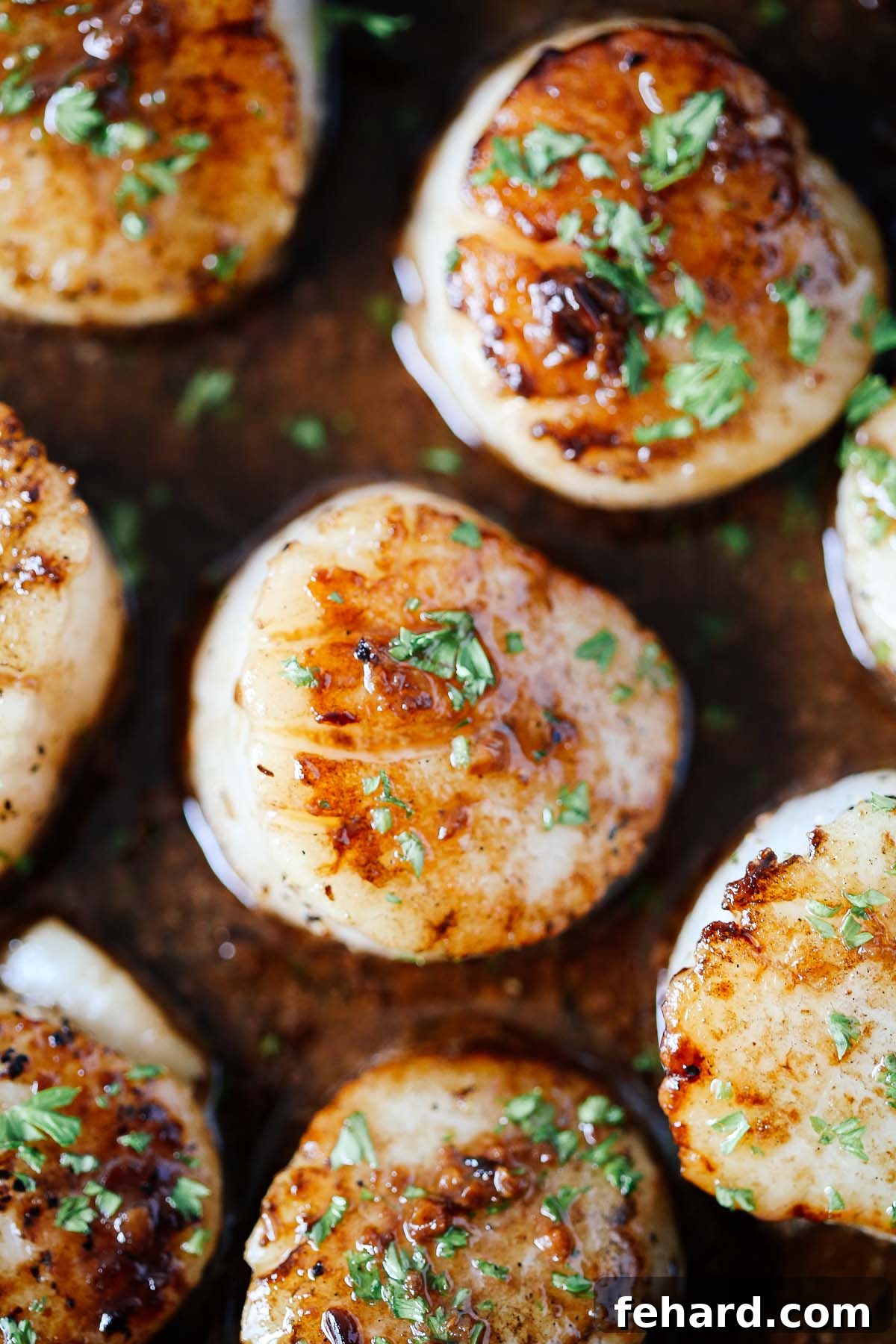
- The Golden Rule: Pat Them Dry, DRY, DRY! This is arguably the most important step for achieving a perfect sear. Moisture is the enemy of browning. Before adding your scallops to the pan, place them on a paper towel-lined cutting board and pat them meticulously dry with more paper towels. Repeat this step until no more moisture comes off. If your scallops are wet, they will steam in the pan instead of searing, resulting in a gray, rubbery texture instead of a beautiful golden crust.
- Use a Hot Pan: High heat is essential for searing. Ensure your skillet, ideally cast iron, is screaming hot before adding the scallops. This allows for immediate caramelization upon contact, creating that desirable crust quickly.
- Don’t Crowd the Pan: Overcrowding lowers the pan’s temperature and releases moisture, leading to steaming instead of searing. Cook scallops in a single layer, in batches if necessary, to ensure each scallop has enough space to brown properly.
- Cast Iron Skillet for Superior Sear: As highlighted, a cast iron skillet is highly recommended. Its ability to retain and distribute heat evenly is unparalleled, providing the best possible searing surface for scallops. A heavy-bottomed stainless steel pan can also work well, but cast iron truly excels.
- Timing is Everything: Scallops cook incredibly quickly. They only need about 2-3 minutes per side. Overcooking is the most common mistake and will turn your delicate scallops rubbery. Keep a close eye on them; they are done when they have a beautiful golden crust and are opaque throughout, with a slightly translucent center.
- Let Them Come to Room Temperature: Removing scallops from the fridge 15-30 minutes before cooking allows them to come closer to room temperature. This promotes more even cooking and helps prevent the outside from cooking too quickly while the inside remains cold.
Creative Recipe Variations to Explore
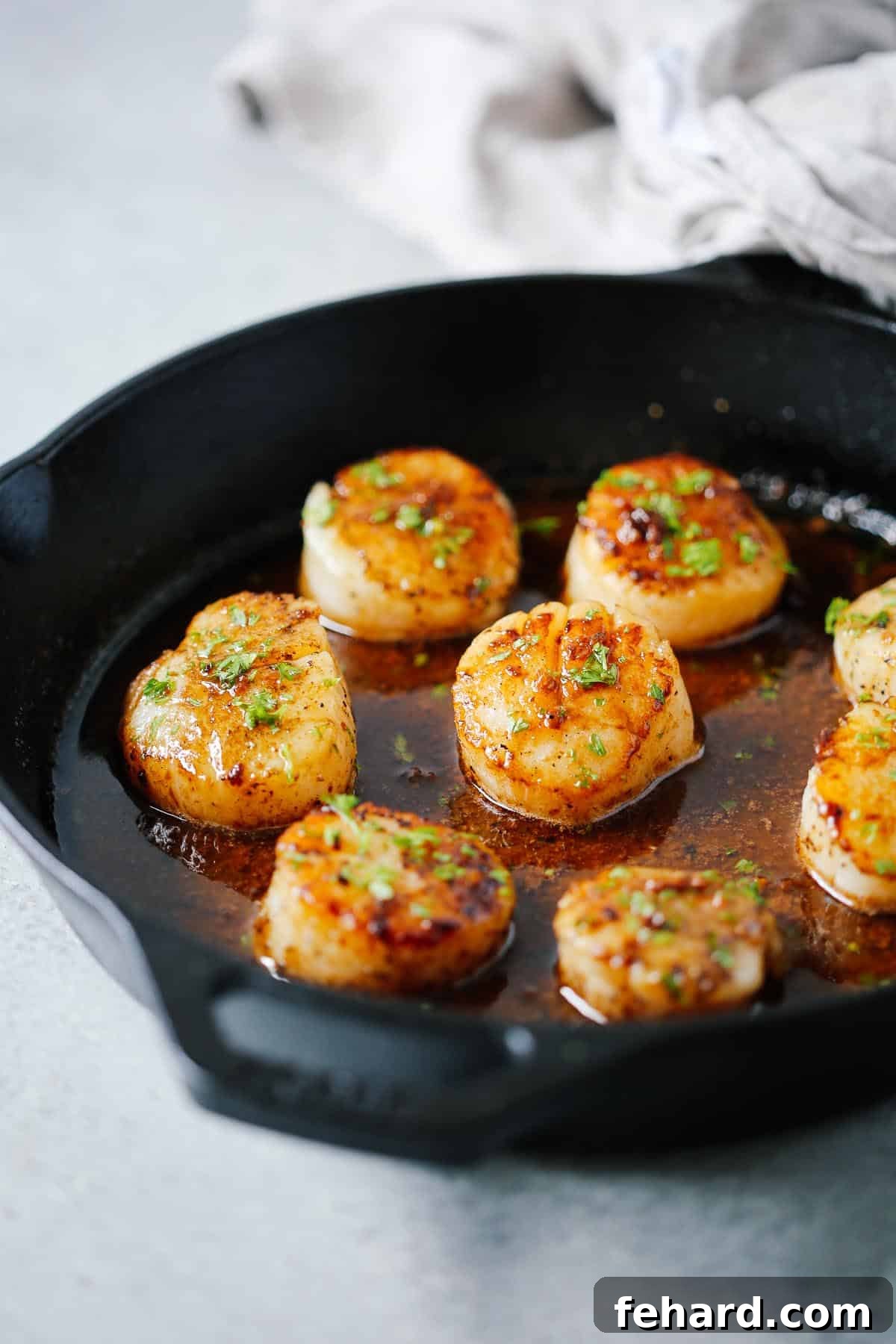
While this garlic butter scallops recipe is perfect as is, it also serves as an excellent foundation for culinary experimentation. Feel free to customize it to your taste preferences and available ingredients:
- Change Up the Seasoning: The flavor possibilities are endless! Beyond simple salt and pepper, you can season your scallops in many delicious ways. Try a pinch of smoked paprika for a hint of smoky sweetness, a dash of Cajun seasoning for a vibrant kick, a touch of cayenne pepper for subtle heat, or even a blend of Italian herbs. Lemon pepper, Old Bay seasoning, or a sprinkle of chili flakes can also add intriguing dimensions.
- Swap for Shrimp: If scallops aren’t available or you’re simply craving something different, this recipe translates beautifully to shrimp. Follow the same principles for searing, adjusting cooking time as needed for the size of your shrimp. My Garlic Butter Shrimp recipe is a fantastic alternative that uses similar flavors and techniques.
- Incorporate White Wine: Instead of, or in addition to, lemon juice, consider deglazing the pan with a splash of dry white wine (like Sauvignon Blanc or Pinot Grigio) after searing the scallops and before adding the butter and garlic. The wine adds another layer of sophisticated flavor and helps create a richer pan sauce. Cook off the alcohol for a minute or two before proceeding.
- Add a Touch of Spice: For those who enjoy a little heat, a pinch of red pepper flakes added to the butter and garlic will provide a delightful warmth that complements the sweetness of the scallops.
- Elevate with Shallots: For a more refined oniony flavor, sauté finely minced shallots with the garlic before adding the butter. This adds a delicate sweetness and aroma.
- Experiment with Herbs: While parsley is a classic choice, don’t hesitate to use other fresh herbs. Dill adds a fresh, slightly tangy note, tarragon brings an anise-like sophistication, and chives offer a mild oniony flavor.
What to Serve with These Exquisite Scallops
These versatile pan-seared scallops pair beautifully with a wide array of side dishes, making them suitable for almost any meal, from casual dinners to elegant gatherings. Here are some fantastic options to complete your culinary experience:
- Pasta Perfection: Transform these garlic butter scallops into a quick, restaurant-quality main course by tossing them with your favorite pasta. Think linguine, spaghetti, or fettuccine, perhaps with a light white wine sauce, a creamy Alfredo, or simply more of that incredible garlic butter from the pan. Add some cherry tomatoes, spinach, or asparagus for extra color and nutrition.
- Rice and Risotto: Scallops are heavenly served alongside a fluffy bed of rice, such as a simple steamed jasmine rice or a flavorful pilaf. For a truly indulgent meal, pair them with a creamy, rich risotto. Lemon risotto or asparagus risotto would be particularly delightful complements to the delicate seafood.
- Light and Fresh Salads: For a lighter meal, these seared scallops are fantastic atop a fresh green salad. Arugula with a lemon vinaigrette, mixed greens with avocado, or a classic Caesar salad would provide a refreshing contrast to the rich scallops.
- Vibrant Green Beans: The crisp texture and earthy flavor of green beans make them a perfect accompaniment. Their freshness beautifully balances the richness of the garlic butter scallops. Consider my Garlic Butter Green Beans Recipe for a cohesive flavor profile, or try Roasted Parmesan Green Beans for added zest and crunch.
- Hearty Roasted Vegetables: Roasting brings out the natural sweetness in vegetables, making them an ideal partner for scallops. For a simple and tasty dinner, try serving your garlic butter scallops with tender roasted cauliflower, a medley of easy roasted vegetables (like bell peppers, zucchini, and carrots), or sweet and savory roasted sweet potato wedges.
- Creamy Mashed Potatoes or Cauliflower Puree: For a comforting and elegant side, serve the scallops over a bed of creamy mashed potatoes or a lighter cauliflower puree. The garlic butter sauce will meld beautifully with either option.
- Crusty Bread: Don’t forget a good piece of crusty bread to soak up every last drop of that delectable garlic butter sauce!
Print Recipe
Garlic Butter Scallops
Average Rating: 3.45 out of 5 stars from 97 votes
Olivia Ribas
4 people
5 minutes
6 minutes
11 minutes
Ingredients
- 1 lb fresh large scallops* (side muscle removed)
- Coarse salt and ground black pepper to taste
- 1 tbsp olive oil
- 4 tbsp unsalted butter or ghee (for Whole30 and paleo)
- 3 garlic cloves, minced
- 1 tsp freshly chopped parsley
- 2 tbsp lemon juice
Instructions
- Remove the scallops from the fridge about 30 minutes to 1 hour before cooking. This helps them cook more evenly.
- Place the scallops on a paper towel-lined cutting board and pat them extremely dry with additional paper towels. This step is critical for a good sear!
- Season all sides of the scallops generously with coarse salt and freshly ground black pepper. Set them aside while you heat the pan.
- Heat the olive oil in a large cast iron skillet (or heavy-bottomed pan) over medium-high heat until it shimmers and just begins to smoke lightly.
- Carefully add the seasoned scallops to the hot skillet in a single layer, ensuring they don’t overcrowd the pan. If necessary, work in two batches to allow proper searing and browning.
- Sear the scallops for 2-3 minutes on the first side until a beautiful golden-brown crust forms. Flip them and sear for another 2-3 minutes on the second side, until they are golden and just cooked through, opaque with a slightly translucent center. Remove the cooked scallops from the skillet and set them aside on a plate.
- Reduce the heat to medium-low. Add the butter to the same skillet, allowing it to melt. Once melted, add the minced garlic and sauté for about 30 seconds until fragrant, being careful not to burn it. Stir in the freshly chopped parsley and fresh lemon juice.
- Return the seared scallops to the pan and gently toss them in the garlic butter sauce for about 30 seconds to heat through and coat evenly. Serve immediately and enjoy!
Notes
- If using frozen scallops, ensure they are fully thawed in cold water and then thoroughly patted dry before cooking.
- The key to a perfect sear is extremely dry scallops. Any moisture will cause them to steam rather than brown, preventing a desirable crust.
- A cast iron skillet provides the best sear due to its excellent heat retention. We highly recommend using one for optimal results.
- Scallops cook very quickly, usually in about 6 minutes total. Keep a close eye on them to prevent overcooking, which can lead to a rubbery texture.
- To store: Scallops are best enjoyed fresh. If you have leftovers, store them in an airtight container in the fridge for up to 2 days.
- To reheat: Gently reheat scallops on the stovetop over low heat with a tiny bit of butter or olive oil, just until warmed through, to avoid overcooking.
Nutrition
Serving: 1/4 of recipe
Calories: 263 kcal
Carbohydrates: 8g
Protein: 23g
Fat: 17g
Cholesterol: 77mg
Sodium: 904mg
Potassium: 372mg
Nutrition information is automatically calculated and should only be used as an approximation.
Troubleshooting Common Scallop Mistakes
Even with the best intentions, cooking scallops can sometimes go awry. Here are some common issues and how to fix or avoid them:
- Rubbery Scallops: This is almost always a sign of overcooking. Scallops cook very quickly, so reduce your cooking time. Aim for a total of 4-6 minutes for larger sea scallops. They should be opaque but still tender, not firm or chewy.
- No Golden Crust (Gray Scallops): The most frequent culprit here is moisture. Ensure your scallops are meticulously dry before they hit the pan. Also, ensure your pan is very hot and you’re not overcrowding it, which lowers the temperature and promotes steaming.
- Bland Flavor: While scallops are naturally sweet, a lack of proper seasoning before searing can lead to a dull taste. Don’t be shy with the coarse salt and pepper. The fresh lemon juice and garlic butter also contribute significantly to the overall flavor.
- Scallops Sticking to the Pan: This can happen if the pan isn’t hot enough, if there isn’t enough oil, or if the scallops aren’t dry enough. A well-seasoned cast iron skillet or a good quality non-stick pan (though cast iron is preferred for sear) with sufficient oil should prevent sticking. Don’t try to move them until they naturally release.
The Versatility of Scallops in Your Kitchen
Beyond this classic preparation, scallops are incredibly versatile. They can be grilled, baked, broiled, or even added to soups and stews. Their delicate flavor pairs well with a variety of global cuisines, from Italian to Asian-inspired dishes. Consider incorporating them into a light seafood risotto, a vibrant ceviche, or even a spicy stir-fry. Their quick cooking time makes them a fantastic option for a speedy protein boost in almost any meal.
With these comprehensive tips and the detailed recipe, you are now well-equipped to prepare dazzling garlic butter scallops that will impress everyone at your table. Remember, confidence in the kitchen comes from practice, and mastering scallops is a rewarding skill that opens up a world of delicious possibilities. Enjoy the process, savor the flavors, and delight in creating a truly memorable meal!