
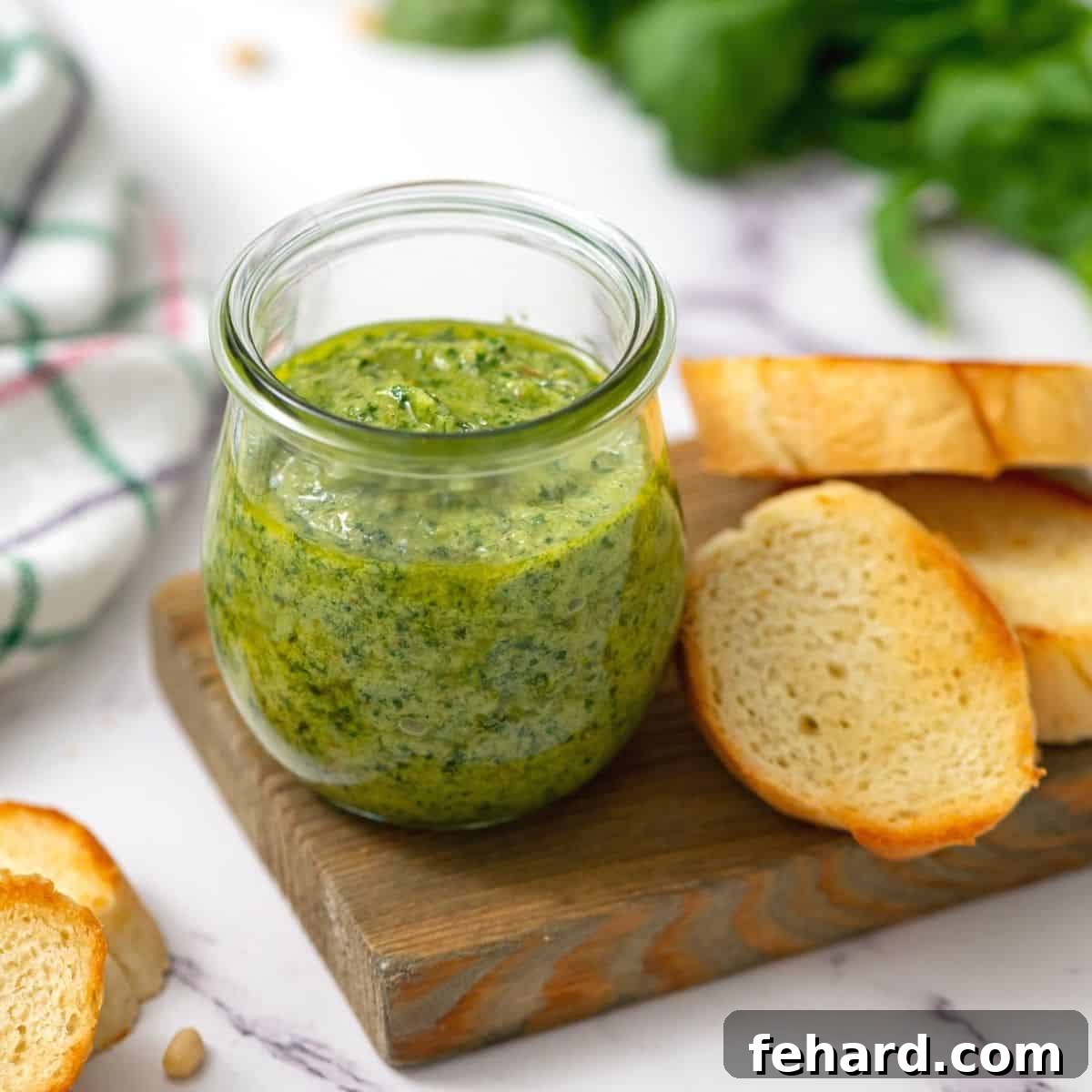
Unlock the secret to an incredibly flavorful and vibrant homemade basil pesto recipe that will revolutionize your kitchen. Forget about bland, store-bought jars – this easy-to-follow guide uses just 6 simple ingredients and takes a mere 5 minutes to prepare, delivering a fresh, herbaceous, salty, bright, and irresistibly cheesy sauce that far surpasses any commercial alternative. Perfect for elevating countless dishes, learning how to make your own pesto is a culinary skill that keeps on giving.
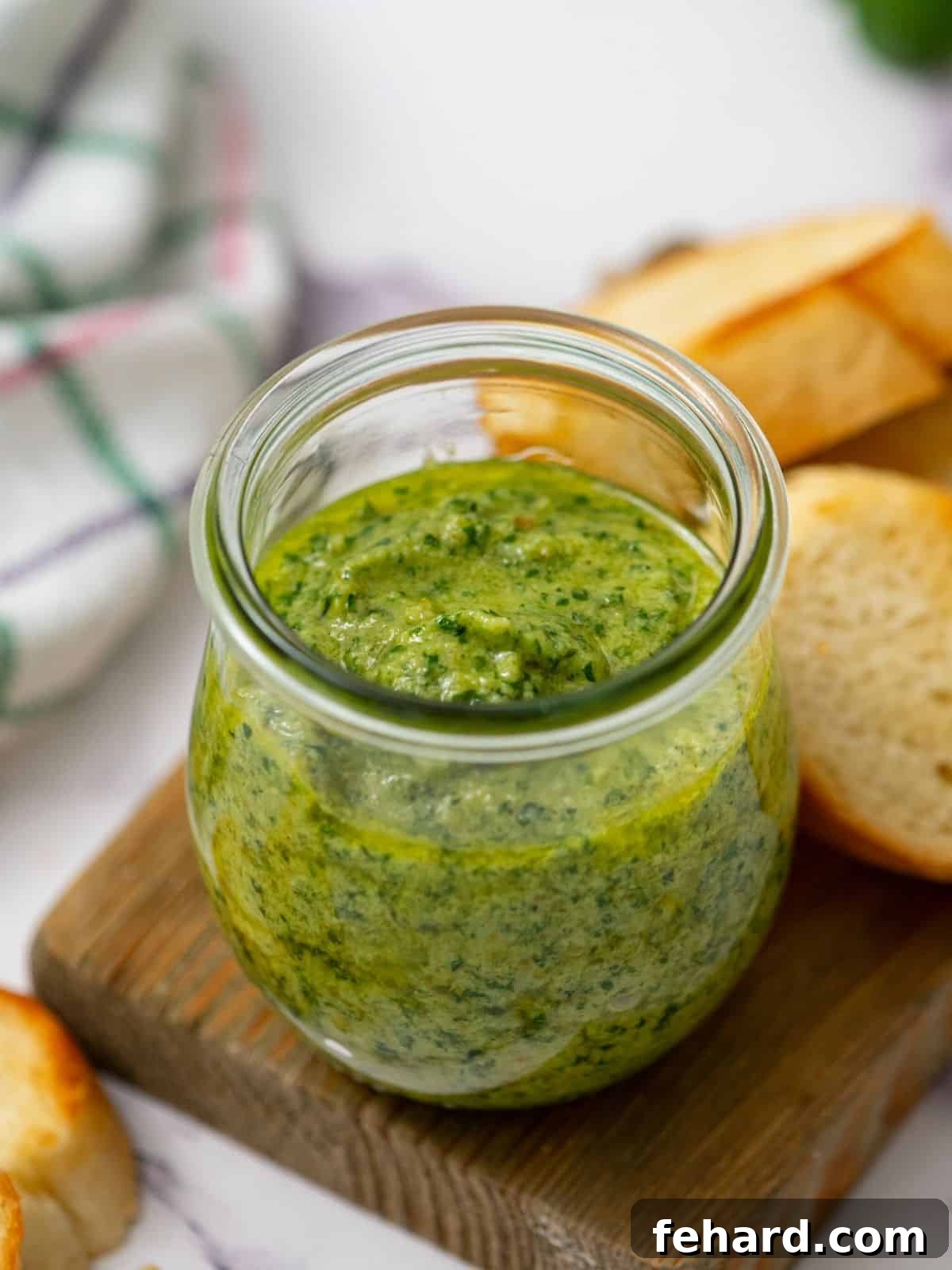
Why Homemade Pesto is a Must-Have in Your Kitchen

Few condiments boast the transformative power of a fresh basil pesto. Its bold, vibrant, and undeniably fresh flavor can elevate an astonishing array of dishes, turning simple meals into gourmet experiences. Imagine the burst of flavor in everything from tortellini skewers to a hearty pesto chicken, classic pesto pasta, or a delightful pesto pizza. While the convenience of store-bought pesto is tempting, the superiority of homemade pesto is undeniable. Let’s explore the compelling reasons why crafting your own pesto is always the better choice:
- Unrivaled Flavor Profile: Nothing compares to the taste of homemade pesto. When you combine fresh, high-quality ingredients like vibrant basil, aromatic garlic, toasted pine nuts, rich Parmesan cheese, zesty lemon juice, and premium extra virgin olive oil, the resulting flavor is exponentially richer and more complex than anything you’ll find in a jar. The subtle nuances of each ingredient truly shine, creating a harmonious and intensely satisfying sauce.
- Complete Quality Control: Making pesto from scratch puts you in complete control of what goes into your food. You can select the freshest basil, the finest cheese, and the purest olive oil. This also means leaving behind the unnecessary additives often found in commercial pestos, such as excessive sodium, artificial preservatives, and added sugars, ensuring a healthier and more natural product for you and your family.
- The Ultimate Basil Utilization: If you’re a home gardener with an abundant harvest of fresh basil, making pesto is hands-down the best way to utilize and preserve its exquisite flavor. Pesto captures the essence of summer basil, allowing you to enjoy its vibrant taste long after the growing season ends. It’s an effective and delicious method to prevent waste and savor nature’s bounty.
- Endless Adaptability: One of the greatest advantages of homemade pesto is its versatility. This recipe provides a fantastic base, but you can easily tailor it to your dietary needs and taste preferences. Whether you want to make it dairy-free, nut-free, or adjust the garlic intensity, the power is in your hands. This flexibility allows for creative culinary experimentation and ensures your pesto is always exactly how you like it.
Happy Cooking! xo Kristen
Article Overview: Your Guide to Perfect Pesto
- The Ultimate Basil Pesto Recipe
- Choosing the Best Ingredients for Pesto
- Step-by-Step: How to Make Homemade Pesto
- Creative Serving Suggestions for Basil Pesto
- Exciting Pesto Variations for Every Taste
- Mastering Pesto Storage for Lasting Freshness
The Essential Ingredients for Exceptional Basil Pesto
Pesto’s beauty lies in its simplicity, but this also means that the quality of each ingredient profoundly impacts the final flavor of your pesto sauce. Investing in the best fresh ingredients available will truly make a world of difference.
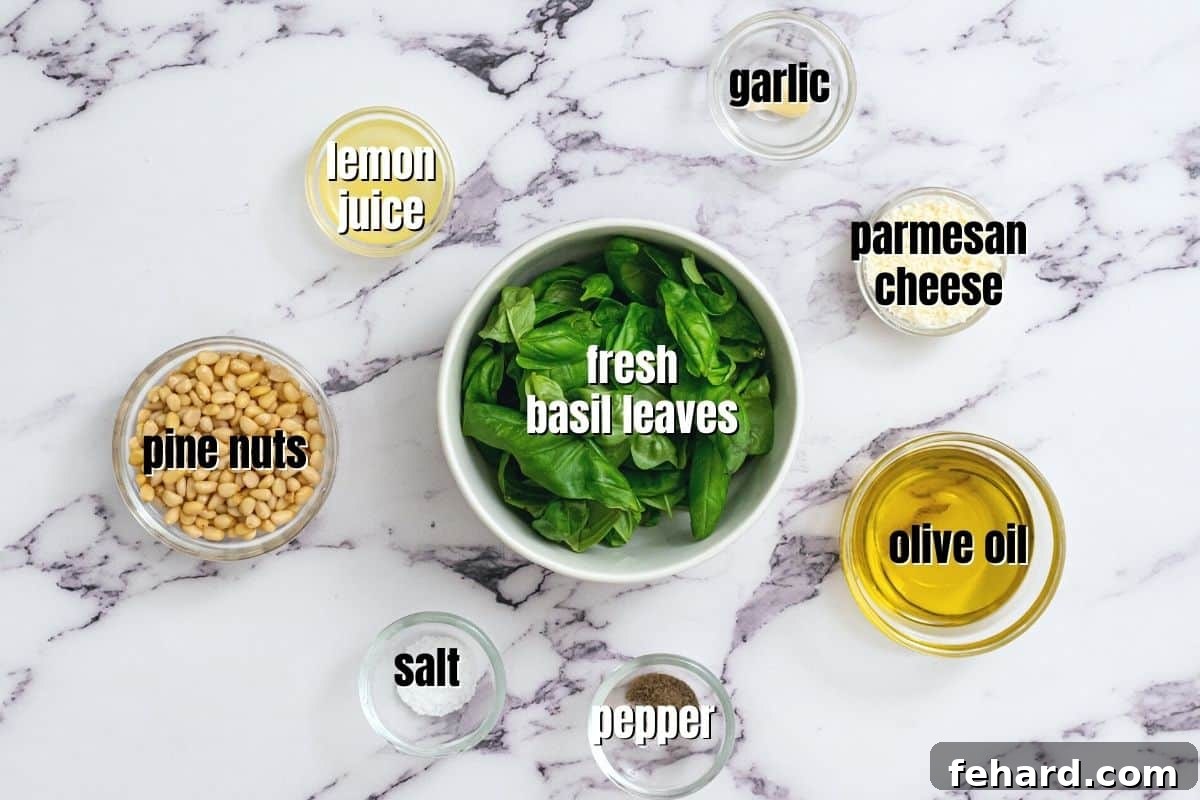
- Fresh Basil: This is the star of your pesto! Always opt for sweet basil, also known as Genovese basil, which is characterized by its large, vibrant green leaves and distinctly aromatic, slightly peppery, and sweet flavor. Avoid Thai basil or other varieties, as their flavor profiles are quite different. Sweet basil is readily available in most grocery stores and is a common favorite for home gardens. Look for crisp, bright green leaves without any wilting or dark spots for the best results.
- Pine Nuts: These small, elongated nuts are the classic choice for traditional basil pesto. They offer a mild, buttery, and slightly sweet flavor that perfectly complements the basil without overpowering it. Toasting the pine nuts before blending is a crucial step that intensifies their nutty aroma and deepens their flavor, adding another layer of complexity to your pesto.
- Fresh Garlic: The pungent, earthy kick of fresh garlic is indispensable in pesto. Using fresh cloves, rather than jarred minced garlic, is paramount for achieving the authentic, vibrant taste. Jarred garlic often contains preservatives and lacks the sharp, fresh flavor required. You can easily adjust the number of garlic cloves to suit your preference – for those who adore a bold, garlicky punch, more is always better!
- Parmesan Cheese (Parmigiano-Reggiano): A high-quality hard Italian cheese is non-negotiable for superior pesto. Authentic Parmigiano-Reggiano or Pecorino Romano (for a saltier, sharper kick) adds a depth of umami, saltiness, and savory richness that cannot be replicated. Steer clear of pre-grated parmesan in plastic tubs; its flavor is often diluted and its texture can be mealy. Always grate your cheese fresh from the block for the best flavor and texture.
- Fresh Lemon Juice: A squeeze of fresh lemon juice is a secret weapon in pesto making. It not only brightens and balances the rich flavors of the other ingredients but also helps to preserve the basil’s vibrant green color, preventing oxidation and browning. Always use freshly squeezed lemon juice for its superior zest and acidity compared to bottled alternatives.
- Extra Virgin Olive Oil: As a key component, your choice of olive oil significantly impacts the overall character of the pesto. This is the moment to reach for a good quality extra virgin olive oil. Look for one that is fruity, slightly peppery, and has a pleasant bitterness. It acts as the emulsifier, binding all the ingredients together into a smooth, luxurious sauce while imparting its own wonderful flavor notes.
Mastering the Art of Homemade Basil Pesto: A Simple Guide
Creating your own fresh basil pesto is surprisingly simple, especially with the right techniques. These detailed tips are designed to guide you through each step, ensuring perfect, restaurant-quality results every time. You’ll find precise ingredient quantities and comprehensive instructions in the full recipe card below this post, but let’s walk through the process to ensure you understand the “why” behind each action.
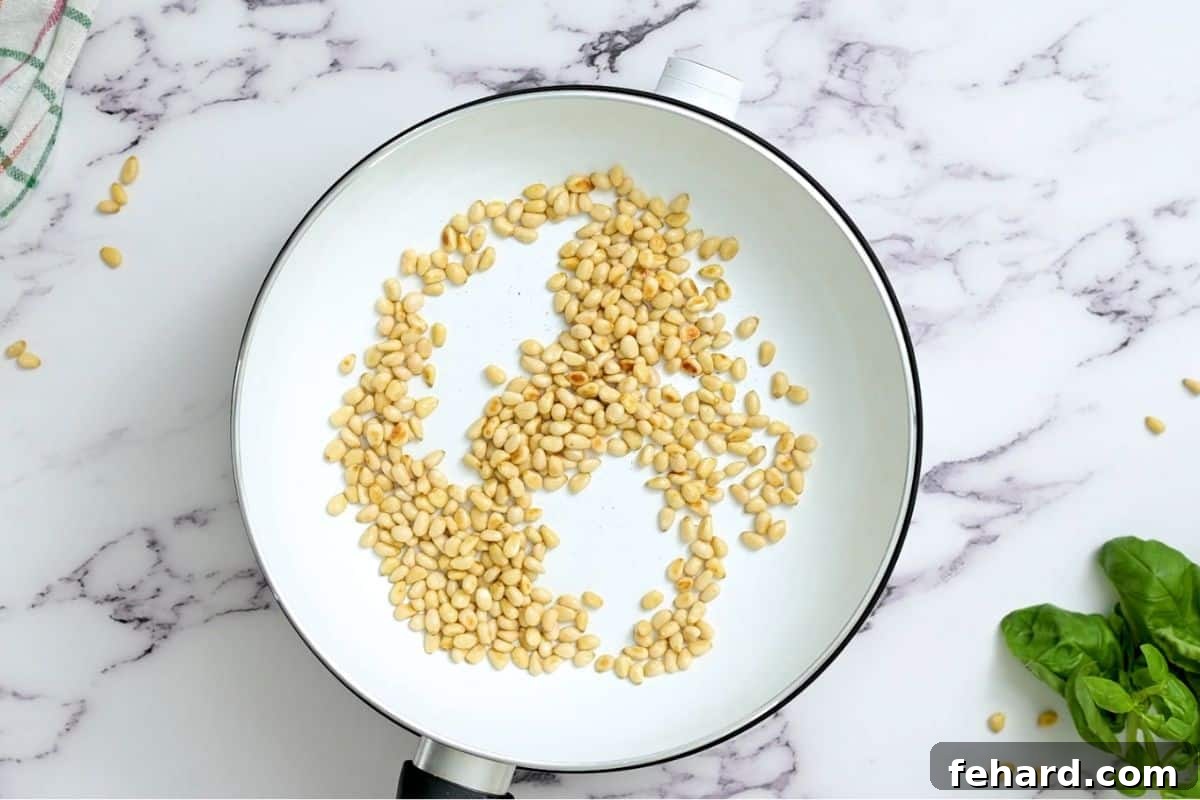
- Toast the Pine Nuts to Perfection: This initial step is paramount for unlocking the full flavor potential of your pine nuts. Toasting them gently in a dry skillet causes their natural oils to release, intensifying their inherent nutty and buttery flavors. To do this, simply place the pine nuts in a dry (no oil needed) skillet over low to medium-low heat. Stir or toss them frequently to ensure even browning. Keep a close eye on them, as they can burn quickly! The nuts are perfectly toasted when they turn a light golden color and you begin to smell their fragrant, nutty aroma. This usually takes only 3-5 minutes. Immediately remove them from the hot skillet to a plate to cool slightly, as they will continue to cook from residual heat. This small effort makes a huge impact on the depth of flavor in your finished pesto.
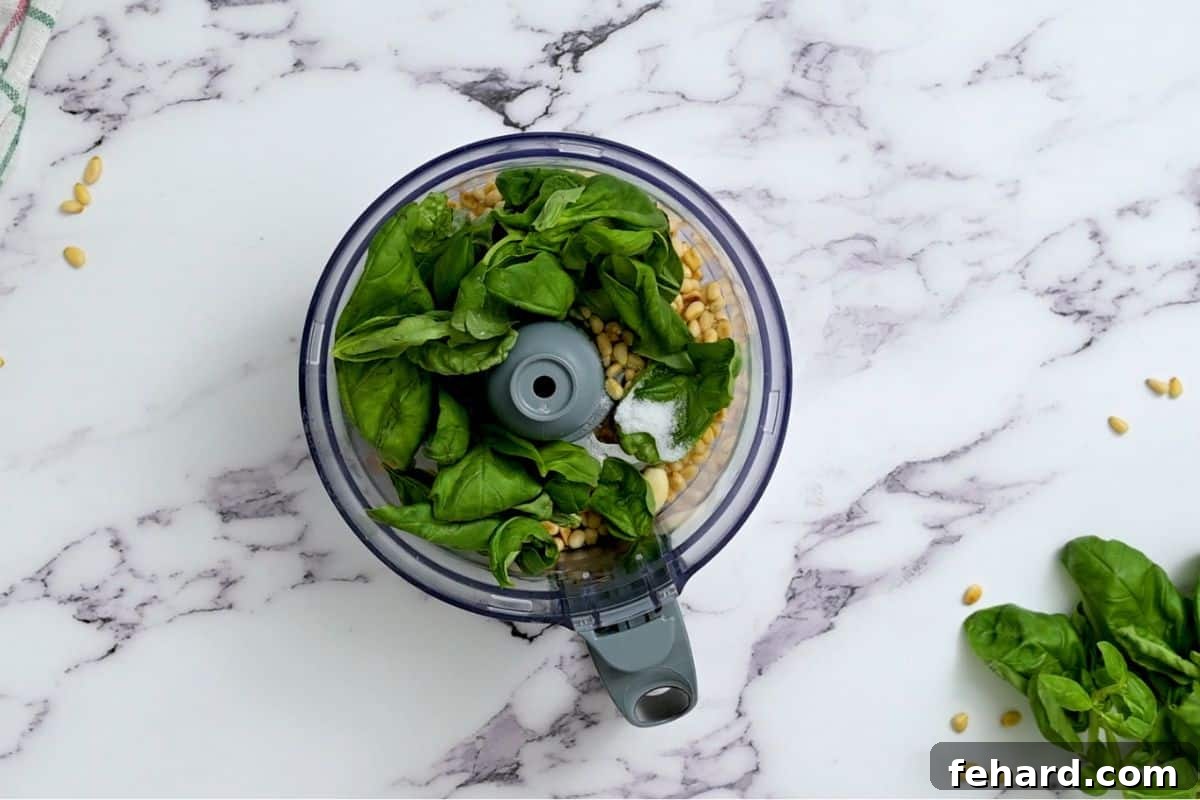
- Process the Core Ingredients: Once your pine nuts have cooled, it’s time to bring everything together in your food processor. Fit your food processor with the S-blade – this is essential for achieving a finely textured pesto. Add the toasted pine nuts, fresh basil leaves, peeled garlic clove(s), freshly grated Parmesan cheese, a pinch of kosher salt, and a dash of freshly ground black pepper, along with the fresh lemon juice. Pulse these ingredients several times until they are thoroughly broken down and well combined into a coarse, textured paste. It’s important to stop the food processor, open the lid, and use a spatula to scrape down the sides of the bowl. This ensures all ingredients are evenly incorporated and prevents larger pieces from being left behind, setting the stage for a perfectly smooth pesto.
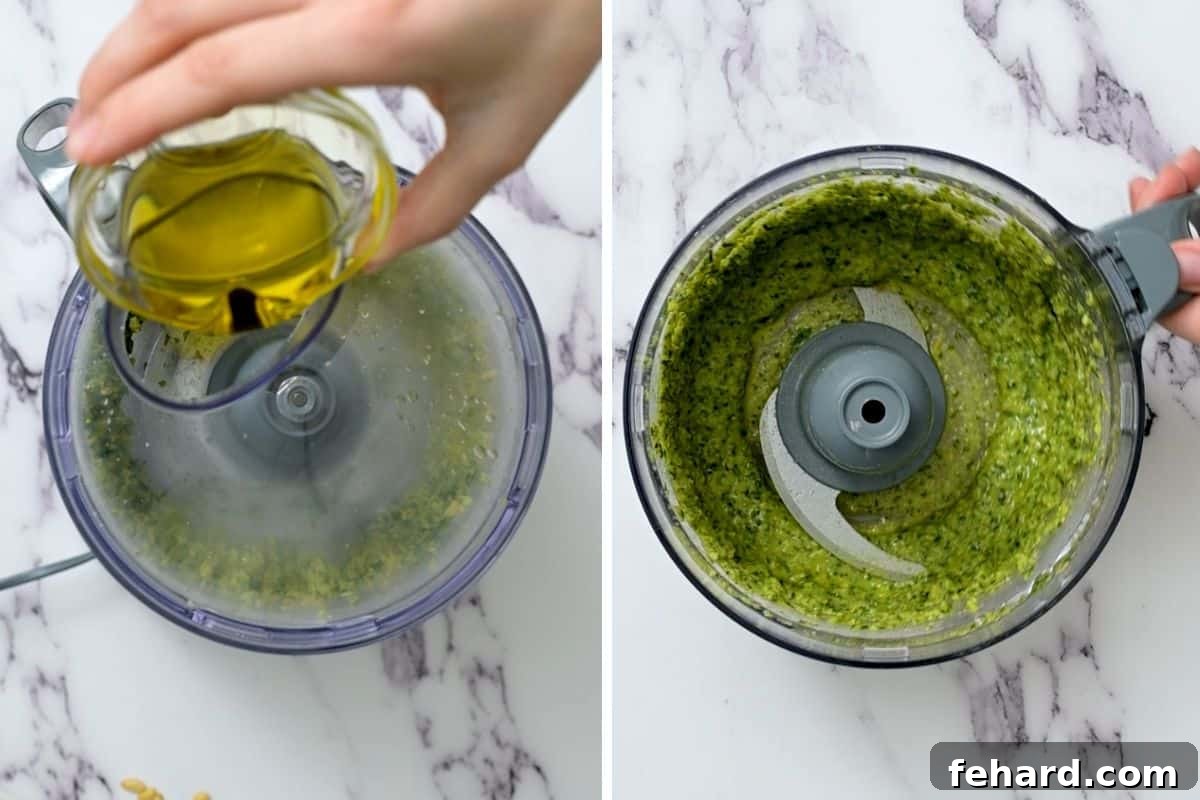
- Slowly Drizzle in the Olive Oil: This step is crucial for achieving that beautiful, emulsified texture characteristic of a perfect pesto. With the food processor running continuously, slowly drizzle in the extra virgin olive oil through the feed tube in a steady, thin stream. The slow addition allows the oil to gradually combine with the other ingredients, creating a smooth, creamy, and cohesive sauce that won’t separate. Continue processing until the pesto reaches your desired consistency – some prefer it slightly chunkier, while others like it very smooth. If you desire an even smoother pesto, feel free to add an additional tablespoon or two of olive oil, continuing to drizzle it in slowly. Finally, taste your homemade pesto and adjust the seasonings with more salt, pepper, or lemon juice as needed to achieve your ideal flavor balance.
Creative Ways to Enjoy Your Homemade Basil Pesto
Your freshly made basil pesto is incredibly versatile, far beyond just pasta! It can be served as a delightful dip, incorporated into recipes for a flavor boost, or simply added to dishes to elevate their taste. Here are some of my favorite and most creative ways to incorporate this vibrant sauce into your meals:
- Enhance Your Pasta Dishes: Transform ordinary pasta into an extraordinary meal. Make quick and easy pesto pasta by tossing it with your freshly made sauce. Swirl a generous dollop into creamy cavatappi or mix it into the rich filling of stuffed shells for a bold, herbaceous flavor that will have everyone asking for seconds. Pesto pairs wonderfully with almost any pasta shape.
- Baked Pesto Chicken: This is a simple yet incredibly flavorful weeknight dinner solution. Spread a generous layer of pesto sauce over chicken breasts, top with a sprinkle of cheese, and bake until golden and tender. The pesto infuses the chicken with moisture and an irresistible aroma, creating a fast and flavorful meal.
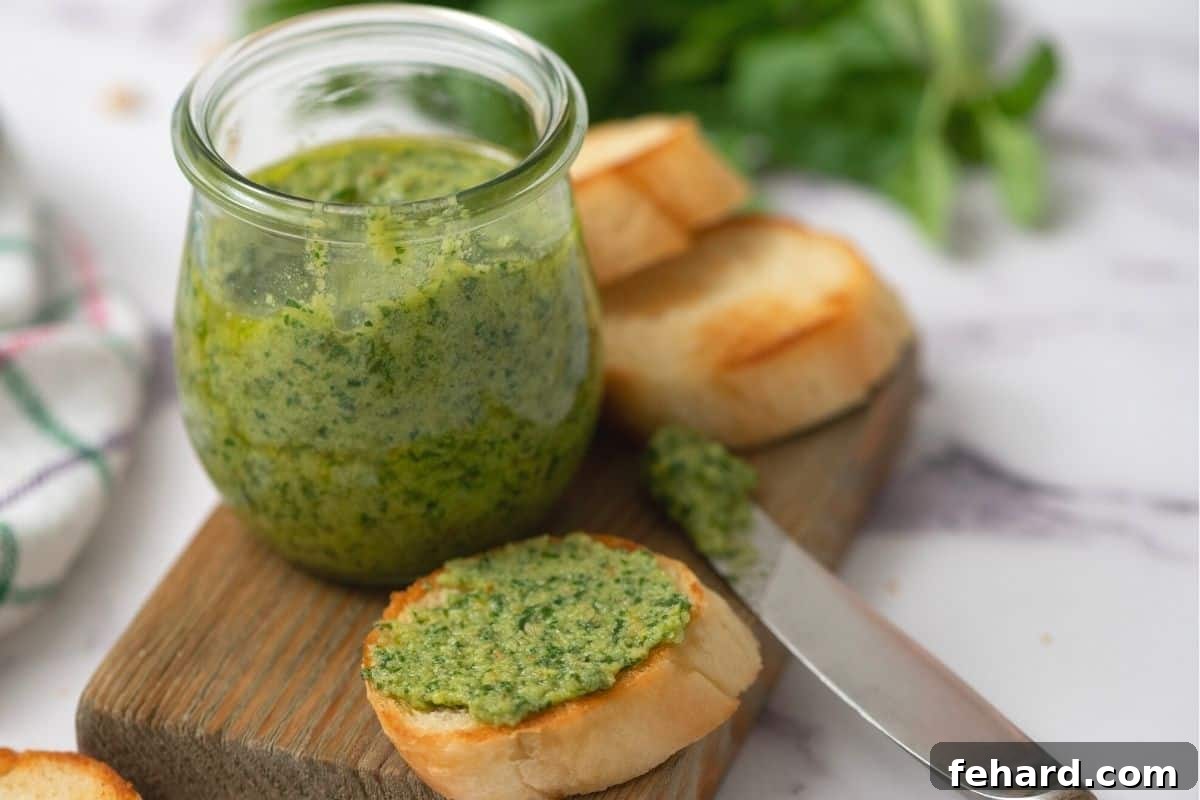
- Gourmet Pesto Toast: Elevate your breakfast or snack game with pesto toast. Spread your vibrant pesto on slices of perfectly toasted sourdough or a rustic baguette. For an extra luxurious touch, top it with a perfectly poached egg, a sprinkle of red pepper flakes, or some fresh cherry tomatoes for a sophisticated and satisfying bite.
- A Delicious Dip or Spread: Serve your homemade pesto as an appetizer alongside crisp vegetable sticks, crunchy crackers, or warm, crusty Italian bread for dipping. It’s also a fantastic addition to an antipasto platter, adding a burst of freshness and flavor.
- Savory Pesto Eggs: Take your scrambled eggs to a new level by adding a teaspoon or two of prepared pesto before cooking. The pesto melts into the eggs, infusing them with an incredible depth of flavor and a beautiful green hue. It’s a simple trick for a surprisingly delicious breakfast.
- Delectable Pesto Pizza: Reimagine pizza night by swapping traditional pizza sauce for your homemade pesto. This creates a vibrant, flavorful base for your favorite toppings, offering a unique and refreshing spin on classic pizza that’s sure to be a hit.
- Flavorful Sandwich Spread: Upgrade your everyday sandwiches with a smear of pesto. It works wonders on a classic turkey and provolone, a fresh caprese sandwich with mozzarella and tomatoes, or even as a base for bruschetta. Pesto adds a complex, herbaceous note that transforms a simple meal.
- Aromatic Marinade for Proteins: Pesto makes an excellent marinade for chicken, shrimp, or even firm fish. Toss your protein with a few tablespoons of pesto, let it marinate for 2-3 hours (or even overnight for deeper flavor), and then grill, bake, or pan-fry as desired. The pesto tenderizes the protein and infuses it with incredible flavor.
Exciting Pesto Variations for Every Palate and Diet
The beauty of homemade pesto lies in its incredible adaptability. Once you master the basic basil pesto recipe, you can easily experiment with different ingredients to create unique flavor profiles and accommodate various dietary needs. Here are some fantastic ways to customize your pesto:
- Experiment with Different Nuts: While pine nuts are traditional, many other nuts make excellent substitutes, each offering a distinct flavor. Try walnuts for an earthier, slightly bitter note, cashews for a creamier, milder pesto, or pistachios for a vibrant green hue and a delicate, sweet crunch. Remember to toast any nut you choose to enhance its flavor.
- Nut-Free Pesto Solutions: For those with nut allergies or preferences, creating a nut-free pesto is simple and delicious. Instead of nuts, use pepitas (pumpkin seeds) or sunflower seeds. Toast them just as you would pine nuts to bring out their inherent nutty flavor and crunchy texture. This ensures everyone can enjoy your flavorful pesto.
- Swap Out the Herbs for New Flavors: Basil is classic, but you can achieve a completely different and equally delicious flavor profile by swapping or combining other fresh herbs and greens. Consider parsley for a milder, fresher taste, cilantro for a bright, zesty pesto perfect for Mexican or Asian-inspired dishes, or arugula for a peppery kick that adds a wonderful zing.
- Dairy-Free or Vegan Pesto: Adapting this recipe for dairy-free or vegan diets is straightforward. Simply omit the Parmesan cheese entirely for a simplified version, or replace it with an equal amount of nutritional yeast. Nutritional yeast provides a savory, cheesy flavor that mimics Parmesan beautifully without any dairy. You can also explore vegan Parmesan alternatives available in most health food stores.
- Craft an Oil-Free Pesto: Traditional pesto relies heavily on olive oil for its texture and richness. However, if you’re looking to reduce oil content, you have flavorful alternatives. I’ve had great success using about 2 tablespoons of vegetable broth blended with 1 ripe avocado. The avocado lends a creamy, smooth, and rich texture without the need for additional oil. Another clever trick is to use ¼ cup of aquafaba (the liquid from a can of chickpeas), which helps emulsify and create a lovely consistency.
- Infuse Additional Flavors: Don’t hesitate to add extra ingredients to boost your pesto’s complexity. Incorporate additional garlic for a bolder flavor, sun-dried tomatoes for a sweet and tangy depth, briny olives for a Mediterranean twist, a pinch of red pepper flakes for a subtle heat, or even roasted red peppers for a smoky, sweet note. These additions can transform your basic pesto into a gourmet creation.
Preserving Your Pesto: Tips for Lasting Freshness and Vibrant Color
Homemade pesto is best enjoyed fresh, but it can brown quickly due to oxidation. Fortunately, with a few simple storage techniques, you can keep your pesto looking and tasting fresh and vibrant for an extended period, ensuring you always have this delicious sauce on hand.
- Refrigeration for Short-Term Freshness: To store pesto in the refrigerator, transfer it to a clean glass jar or an airtight container. Before sealing, gently drizzle a thin layer of extra virgin olive oil over the top of the pesto. This layer of oil acts as a natural barrier, protecting the pesto from air exposure and significantly slowing down the oxidation process, which is responsible for the browning. The pesto will retain its beautiful green color and fresh flavor for up to 7 days when stored this way in the fridge.
- Freezing for Long-Term Enjoyment: For longer storage, freezing is an excellent option that preserves pesto’s flavor and color for months. The most convenient method is to spoon the prepared pesto into ice cube trays. Each compartment of a standard ice cube tray typically holds about 1 tablespoon, making it easy to portion for future use. Place the filled trays in the freezer for 3-4 hours, or until the pesto cubes are frozen solid. Once frozen, pop the cubes out and transfer them to a freezer-safe bag or container, removing as much air as possible to prevent freezer burn. Your frozen pesto will keep beautifully for up to 3 months. When ready to use, simply thaw the desired number of cubes in the refrigerator or add them directly to warm dishes like pasta sauce, soups, or stews.
Did you make this recipe?
If you enjoyed this recipe, please leave a comment with a 5-star review at the bottom of the post. Your feedback is greatly appreciated!
Basil Pesto Recipe
Kristen Chidsey
16 servings
5 mins
5 mins
Ingredients
- ½ cup pine nuts
- 2 tablespoons fresh lemon juice, about 1 large lemon
- 1 clove garlic, peeled (adjust to taste, up to 3 cloves for more garlicky flavor)
- 2 cups fresh basil leaves, packed
- ⅓ cup grated Parmesan cheese, freshly grated Parmigiano-Reggiano or Pecorino Romano
- ¼ teaspoon kosher salt
- freshly ground black pepper, to taste
- ¼ cup extra-virgin olive oil, plus up to 1-2 tablespoons more for a smoother pesto
Instructions
-
Place ½ cup pine nuts in a dry skillet. Toast them over medium-low heat, tossing frequently, just until the nuts begin to turn golden and you can smell their inviting aroma. This process typically takes only 3-5 minutes. Immediately remove the nuts from the heat and allow them to cool slightly on a plate.
-
Once cooled, transfer the toasted pine nuts to a food processor fitted with an S-blade. Add in the 2 tablespoons fresh lemon juice, 1 clove garlic (or more, to your preference), 2 cups packed basil leaves, ⅓ cup freshly grated Parmesan cheese, ¼ teaspoon kosher salt, and a generous pinch of freshly ground black pepper. Pulse the ingredients until they are thoroughly broken down and evenly combined into a coarse paste. Stop the food processor, scrape down the sides of the bowl with a spatula, and replace the lid.
-
With the food processor running continuously, slowly drizzle in the ¼ cup extra-virgin olive oil through the feed tube in a steady, thin stream. Continue to process until the pesto reaches a smooth, emulsified consistency. If you prefer an even smoother pesto, you may add an additional ½ to 1 tablespoon of olive oil at a time, continuing to drizzle slowly until desired texture is achieved. Taste the pesto and adjust seasonings with more salt, pepper, or lemon juice as needed. Serve immediately or store as directed.
-
To store your homemade pesto, transfer it to a small glass jar or airtight container. Pour a thin layer of extra virgin olive oil over the top to create a seal – this is a key trick to help preserve its vibrant green color and prevent oxidation. Cover tightly and store in the refrigerator for up to 7 days.
Equipment
-
Food Processor (essential for quick and easy pesto making)
-
Dry Skillet (for toasting nuts)
Notes & Expert Tips
Nut Alternatives: If pine nuts are unavailable or you prefer a different flavor, consider using cashews, walnuts, pistachios, or even pepitas (pumpkin seeds). Remember to toast any nut or seed you choose in a dry skillet before adding to the food processor to enhance its flavor.
Dairy-Free/Vegan Option: For a delicious dairy-free or vegan pesto, simply omit the Parmesan cheese from the recipe. You can also substitute it with nutritional yeast, which provides a lovely cheesy, umami flavor without any dairy.
Freezing Pesto for Future Use: To prolong the life of your pesto, spoon it into ice cube trays. Freeze for 3-4 hours, or until solid. Once frozen, transfer the pesto cubes to a plastic freezer bag or airtight container. Store in the freezer for up to 3 months. Each cube is roughly equivalent to 1 tablespoon of pesto, making portioning incredibly convenient for future meals.
Nutrition Information (per serving)
Calories: 60kcal
Carbohydrates: 1g
Protein: 1g
Fat: 6g
Saturated Fat: 1g
Polyunsaturated Fat: 2g
Monounsaturated Fat: 3g
Sodium: 37mg
Potassium: 37mg
Fiber: 1g
Sugar: 1g
Vitamin A: 160IU
Vitamin C: 2mg
Calcium: 7mg
Iron: 1mg
Nutrition information is automatically calculated, so should only be used as an approximation. It is based on the ingredients and preparation methods specified.
Tried this recipe?
Mention @amindfullmom or tag #amindfullmom!