
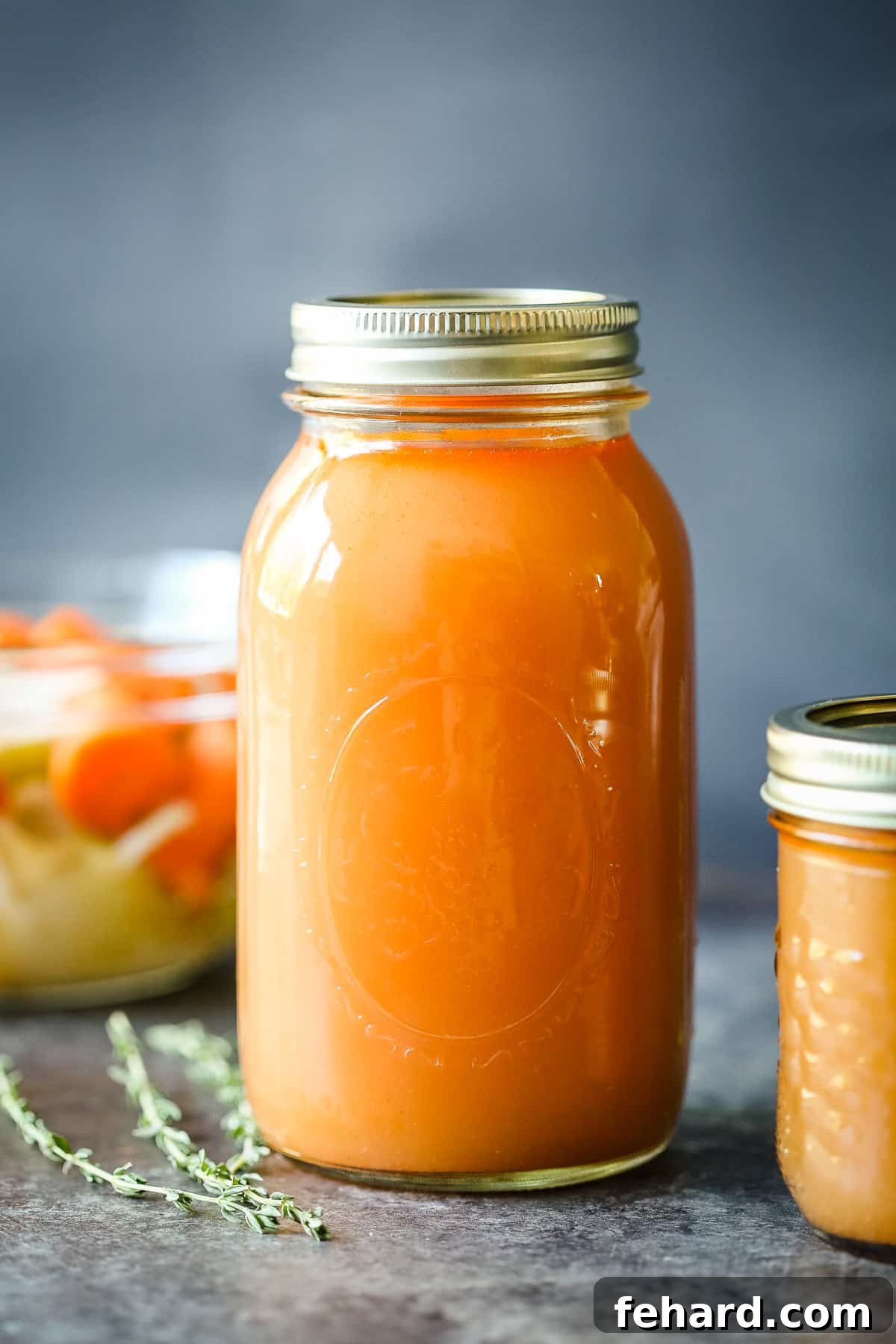
Imagine a rich, aromatic broth simmering gently on your stovetop, filling your home with an inviting fragrance. This isn’t just any broth; it’s a homemade vegetable broth that is not only incredibly delicious but also significantly cheaper and healthier than anything you can buy in a store. Best of all, it takes less than an hour to prepare, making it a perfect addition to your culinary repertoire. Once you master this simple recipe, you’ll find countless uses for it in your kitchen – from nourishing soups and hearty stews to flavorful chili and risotto.
There’s a universally acknowledged truth in cooking: “everything homemade is better.” This philosophy rings especially true for foundational ingredients like broths and sauces. Embracing homemade versions gives you unparalleled control over ingredients, ensuring freshness and quality. Just as I love crafting my own tomato sauce and salad dressing, preparing homemade chicken and vegetable broth has become a cherished kitchen ritual. It’s a simple step that elevates every dish it touches, transforming ordinary meals into extraordinary culinary experiences.
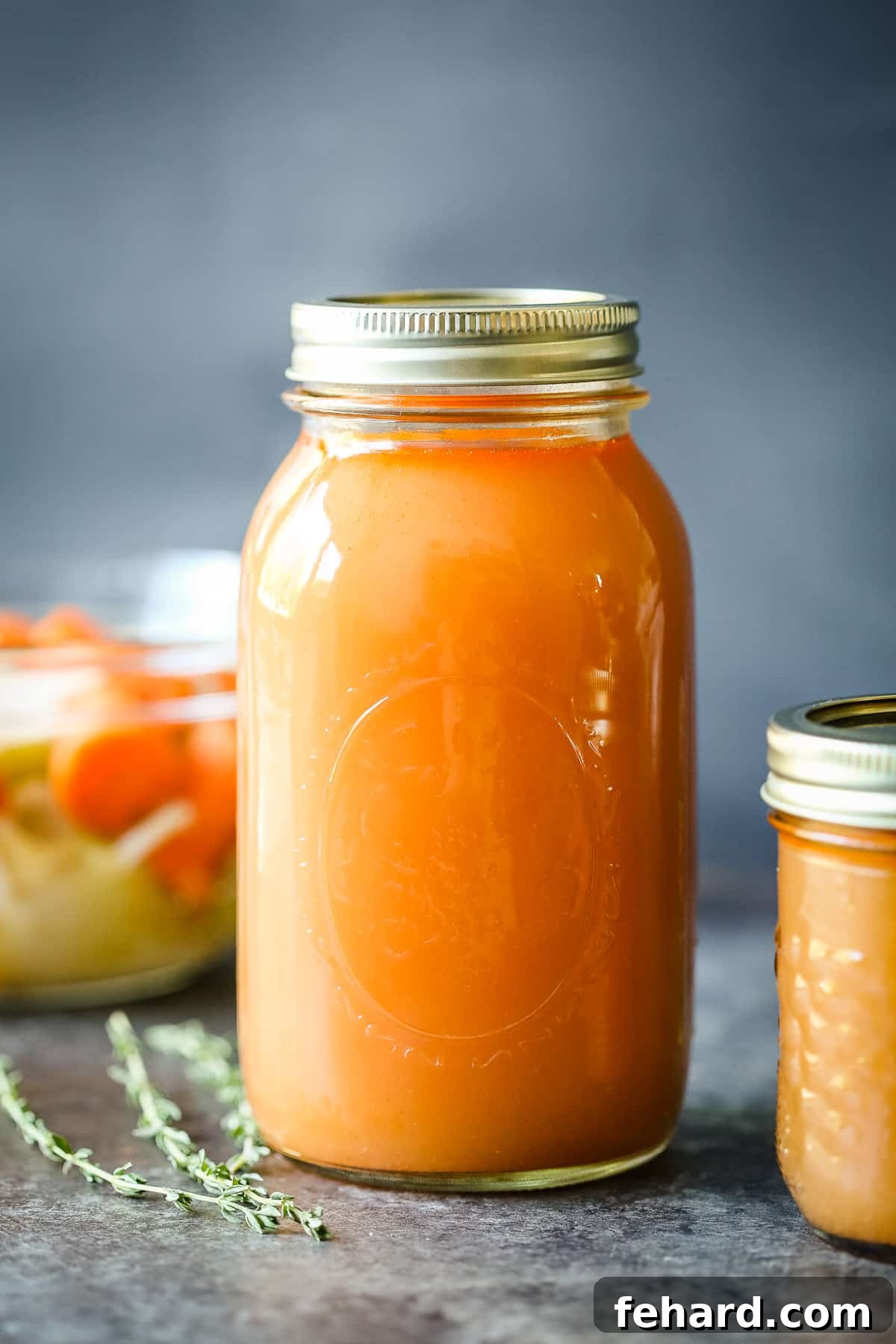
Why Choose Homemade Vegetable Broth?
Beyond the undeniable satisfaction of creating something from scratch, making your own vegetable broth offers a multitude of benefits:
- Unmatched Flavor and Aroma: Store-bought broths, even organic ones, often lack the vibrant, complex depth that comes from fresh, slowly simmered vegetables. Homemade broth provides a clean, pure base that enhances the natural flavors of your dishes without overwhelming them with artificial notes or excessive sodium. This deep, authentic taste is the primary reason to choose homemade.
- Cost-Effective Cooking: This recipe is incredibly economical. You can often use vegetable scraps that would otherwise be discarded – onion skins, carrot tops, celery ends, mushroom stems – transforming them into a valuable culinary asset. This zero-waste approach not only saves money but also promotes sustainable cooking practices, making it a smart choice for any budget-conscious kitchen.
- Complete Control Over Ingredients: When you make broth at home, you dictate what goes into your pot. This means no hidden sugars, unhealthy oils, artificial flavors, preservatives, or excessive sodium. It’s an excellent way to manage dietary needs, allergies, and ensure you’re consuming only the freshest, healthiest components.
- Healthier Meals: By controlling salt content and avoiding artificial additives, your homemade broth becomes a healthy foundation for countless recipes. It’s naturally low in calories and packed with beneficial nutrients extracted from the vegetables, supporting a wholesome diet.
- Aromatic Kitchen: The process itself is a delight. As the vegetables simmer, your kitchen will fill with a warm, inviting aroma that signals deliciousness is on its way, creating a cozy and welcoming atmosphere.
In essence, creating your own vegetable broth is an investment in better health, richer flavor, and smarter cooking. It’s one of those essential pantry staples that once you start making, you’ll wonder how you ever lived without.
The Simple Steps to a Perfect Batch
The beauty of this easy vegetable broth recipe lies in its simplicity. You don’t need any fancy equipment or advanced culinary skills. The basic process involves chopping a few key vegetables, covering them with water, infusing them with aromatic herbs, and letting time and gentle heat do their magic. In less than an hour, you’ll have a golden, savory liquid that far surpasses any store-bought alternative in both taste and purity.
This batch will provide you with enough wholesome broth to fuel your cooking for weeks to come. Stock up your fridge and freezer with this versatile liquid, ready to be incorporated into your favorite soups, comforting chili, hearty stews, bubbly casseroles, and perfectly cooked rice dishes. On busy weekends, I often double up on these foundational recipes. For instance, I’ll make a big batch of this vegetable broth alongside my Instant Pot Meat Sauce, ensuring my fridge is stocked with flavorful homemade staples ready for quick weeknight meals.
Expert Tips for Making the Best Homemade Vegetable Broth
While the process is straightforward, a few key tips can elevate your broth from good to truly exceptional:
- Optimal Vegetable to Water Ratio: Achieving a well-balanced flavor depends on the right proportions. A general guideline is to fill your pot about halfway with chopped vegetables, then add enough water to cover them by an inch or two. This ensures sufficient vegetable mass to infuse the water with deep, rich flavor without diluting it. For this recipe, approximately 8 cups of water for the specified vegetables works wonderfully, yielding a robustly flavored broth.
- Embrace Vegetable Scraps for Zero Waste: This is where the cost-saving and sustainability aspects really shine. Don’t discard onion skins, carrot peels, celery ends, mushroom stems, or the outer layers of leeks! Collect these nutritious scraps in a freezer bag throughout the week. Once you accumulate about 2 cups (or more!), they become the perfect base for your next batch of broth. This practice not only minimizes food waste but also adds layers of complex flavor. Think of it as liquid gold made from ingredients you already have, much like how you might save trimmings when making my Easy Roasted Vegetables Recipe.
- Don’t Skimp on Simmer Time: Flavor development is crucial. While the broth is quick to prepare, it needs adequate time to simmer. Aim for a minimum of 45 minutes to allow the vegetables and herbs to fully release their essential oils and flavors into the liquid. Simmering for less time will result in a weak, watery broth that lacks the desired depth and richness. However, be mindful not to simmer for *too* long (e.g., several hours) as some vegetables can start to break down too much and produce a slightly bitter taste.
- Aromatic Foundation: Starting with a quick sauté of the aromatics (onions, garlic, celery, carrots) in a touch of olive oil before adding water is a game-changer. This step, often called “sweating” the vegetables, softens them and helps release their natural sugars, building a foundational layer of flavor that will permeate the entire broth and contribute to its complexity.
- Resist the Urge to Salt Early: It’s best to add salt to your vegetable broth only after it has been made and cooled, or even better, when you’re ready to use it in a recipe. This allows you to control the sodium content of your finished dish precisely, as broth can reduce during cooking, concentrating flavors (and salt!).
- Strain Thoroughly: For a clear, pure broth, strain it through a fine-mesh sieve. For an even clearer result, line the sieve with a few layers of cheesecloth. This removes all solid particles, leaving you with a beautifully golden, sediment-free liquid that’s visually appealing and free from unwanted textures.
What Vegetables to Avoid in Your Broth
While the idea of using “any” vegetable scrap is appealing for zero-waste cooking, not all vegetables contribute positively to the flavor profile of a good broth. Certain types can introduce undesirable tastes, textures, or colors. To ensure your homemade vegetable broth is always top-notch, steer clear of the following:
- Starchy Vegetables: Potatoes, sweet potatoes, and corn can release too much starch into the broth, resulting in a cloudy, gummy, or overly thick consistency rather than a clear, light liquid. This can negatively impact the mouthfeel and appearance of your finished dishes.
- Strong-Tasting or Bitter Vegetables:
- Cabbage, Brussels Sprouts, Broccoli, Cauliflower, Turnips: These cruciferous vegetables belong to the brassica family and can impart a strong, sometimes overpowering, sulfurous aroma and bitter taste to your broth, especially if simmered for too long. Their distinctive flavors can dominate and make the broth less versatile.
- Beets: While beautiful, beets will turn your broth a deep red or purple color, which might not be desirable for all recipes. They also have a very earthy, distinct flavor that can easily overpower the intended subtle notes of a vegetable broth.
- Zucchini and Green Beans: These vegetables can introduce a slightly bitter note to the broth, particularly if they are overcooked or not fresh. Their delicate flavors can turn unpleasant during prolonged simmering.
- Asparagus: Known for its strong, slightly grassy flavor, asparagus can make the broth taste a bit too “green” and sometimes bitter, which might not be appealing as a neutral base.
- Tomatoes: While a small amount of tomato paste is used in this recipe for a touch of umami and color, fresh tomatoes (especially in large quantities) can make the broth overly acidic and alter its intended flavor profile for many uses. Stick to a small amount of paste for depth, if desired, but avoid adding whole fresh tomatoes, especially ripe ones.
Sticking to the classic aromatics like onions, carrots, celery, and leeks, along with milder root vegetables and fresh herbs, will consistently produce a clean, versatile, and delicious vegetable broth that serves as a perfect foundation for a wide range of recipes.
Easy Homemade Vegetable Broth Recipe
Easy Homemade Vegetable Broth Recipe
Author: Olivia Ribas
Servings: 6 cups
Prep Time: 10 minutes
Cook Time: 45 minutes
Total Time: 55 minutes
Easy Homemade Vegetable Broth that is delicious, cheaper than store-bought, and takes less than an hour to make. You can use it for soups, stews, chili, and so on.
Ingredients
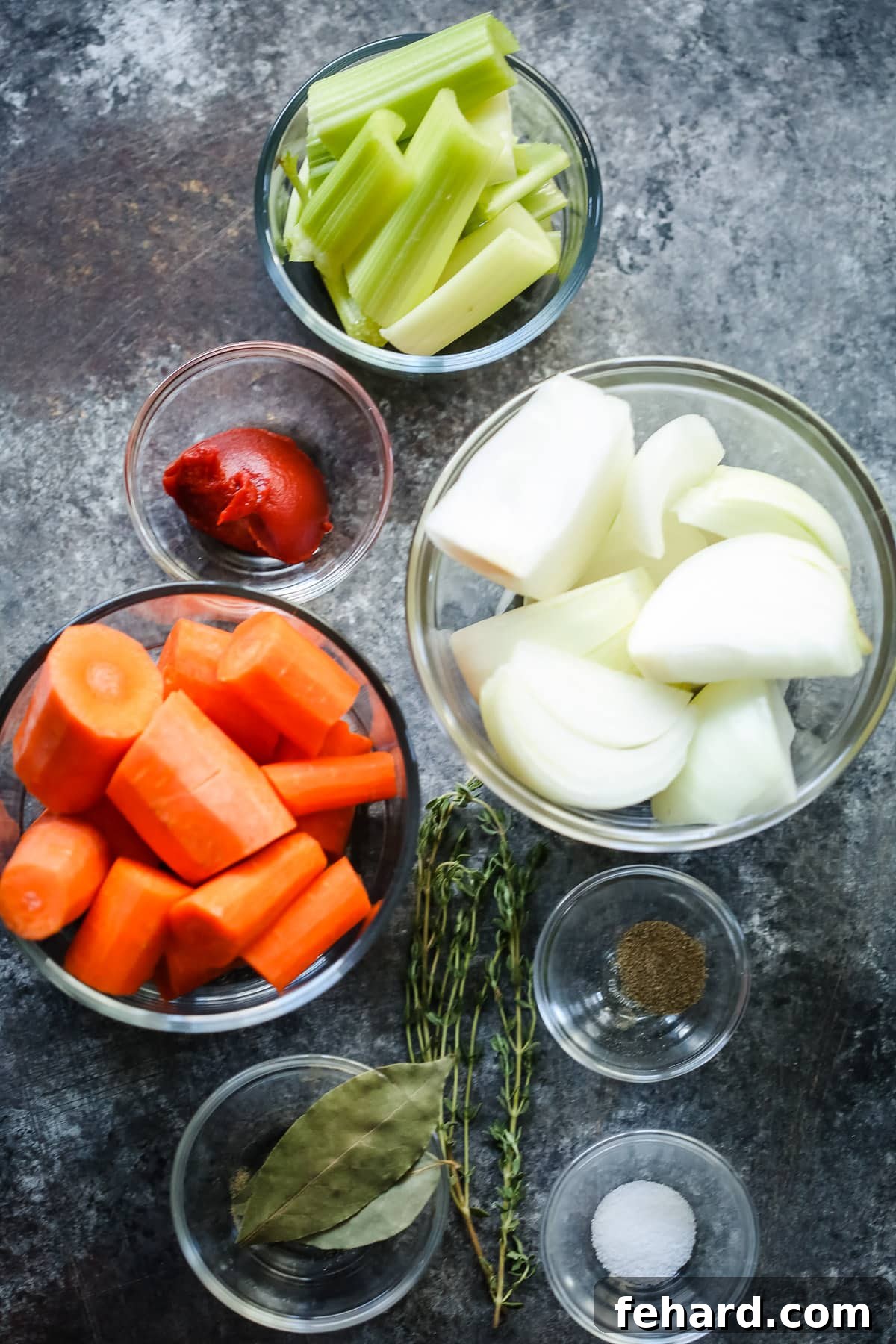
- 1 tablespoon olive oil
- 4 cloves garlic, minced
- 2 large onions, roughly chopped
- 4 ribs celery, roughly chopped
- 3 carrots, chopped
- 1 tablespoon tomato paste (optional, for depth of color and umami)
- 8 cups water
- 3 dried bay leaves
- A few sprigs of fresh parsley and thyme
- Salt and pepper to taste (add at the end or when using)
Instructions
- In a large Dutch oven or stockpot, heat the olive oil over medium heat.
- Add the minced garlic, roughly chopped onions, celery, and carrots. Sauté for about 5-7 minutes, stirring often, until the vegetables begin to soften and become fragrant. This step is crucial for building a rich flavor base.
- If using, add the tomato paste and cook for one more minute, stirring constantly, to deepen its flavor.
- Pour in the 8 cups of water. Add the dried bay leaves, fresh parsley, and thyme sprigs.
- Bring the mixture to a rolling boil over medium-high heat. Once boiling, reduce the heat to low, cover the pot partially (allowing some steam to escape), and let it simmer gently for at least 45 minutes. You can simmer for up to 1 hour and 30 minutes for an even richer flavor, but avoid simmering for excessively long periods (e.g., 3+ hours) as some vegetables can start to break down and introduce bitterness.
- Once the simmering time is complete, carefully strain the vegetable broth into a large heat-proof bowl or clean pot. Use a fine-mesh sieve to remove all the solid vegetables and herbs. For an extra clear broth, you can line the sieve with cheesecloth. Discard the strained vegetables; they have given all their flavor to the broth.
- Your homemade vegetable broth is now ready to use immediately! If not using right away, let the broth cool down completely to room temperature before storing. Once cooled, transfer it to airtight containers or freezer bags for longer preservation.
Notes
- Ingredient Quality: Always use fresh, good-quality vegetables and herbs for the best flavor. While vegetable scraps are excellent, ensure they are clean and free from spoilage.
- Avoid Specific Vegetables: To prevent bitter, gummy, or off-flavored broth, avoid starchy vegetables like potatoes, strongly flavored cruciferous vegetables like cabbage or broccoli, and bitter ones like zucchini or asparagus. Beets can also change the color dramatically.
- Usage Versatility: This versatile homemade vegetable broth can be used in any recipe that calls for commercial vegetable broth or stock. It’s perfect for gravies, risottos, stews, soups, braises, and even for cooking grains.
- To Store in the Fridge: Once completely cooled, transfer the broth to an airtight container (like mason jars) and store it in the refrigerator for up to 5-7 days.
- To Freeze for Longer Storage: For extended shelf life, freeze the vegetable broth. Pour approximately 2 cups (or desired portion sizes) into freezer-safe bags, leaving some headspace for expansion, or freeze in ice cube trays for smaller portions. Once frozen, transfer cubes to a freezer bag. Frozen broth can be stored for up to 6 months. Label with the date.
Nutrition
Serving: 1/6, Calories: 50kcal, Carbohydrates: 7g, Protein: 1g, Fat: 2g, Sodium: 102mg, Potassium: 237mg, Fiber: 2g, Sugar: 2g
Nutrition information is automatically calculated, so should only be used as an approximation.
Creative Ways to Use Your Flavorful Homemade Broth
Having a stash of homemade vegetable broth on hand opens up a world of culinary possibilities. Its clean, rich flavor forms the backbone of countless dishes, far surpassing the utility of just soups and stews:
- Soups and Stews: The most obvious use, but homemade broth truly makes a difference. From a simple minestrone to a hearty lentil stew, the depth of flavor will shine through, making your comfort food even more comforting.
- Cooking Grains: Use broth instead of water when cooking rice, quinoa, couscous, or farro. It infuses the grains with an extra layer of savory taste, making them more flavorful and nutritious side dishes.
- Risottos: Essential for a creamy, authentic risotto. The slow addition and absorption of warm broth are key to achieving that perfect al dente texture and rich, layered flavor.
- Sauces and Gravies: A fantastic base for pan sauces, gravies, or reductions. It can deglaze a pan after sautéing vegetables or searing proteins, capturing all the delicious browned bits (fond) and adding incredible depth to your sauces.
- Braising: Ideal for braising vegetables or plant-based proteins, providing moisture and a concentrated flavor bath that tenderizes ingredients beautifully.
- Steaming Vegetables: Steam vegetables in a shallow amount of broth instead of plain water for added flavor, making your steamed greens and root vegetables much more appealing.
- Healthy Beverage: Sometimes, a warm mug of seasoned vegetable broth is a soothing, hydrating, and low-calorie pick-me-up, especially during cold weather or when feeling under the weather. It’s a comforting drink that nourishes the soul.
Storage Solutions for Maximum Freshness and Convenience
Proper storage ensures that your efforts in making this delicious broth pay off for weeks or even months. Maximizing its shelf life allows you to always have a healthy, flavorful base at your fingertips, ready to elevate any meal.
- Cooling Safely: After straining, it’s crucial to cool the broth as quickly as possible to prevent bacterial growth. You can do this by letting it sit at room temperature for an hour (no longer than two hours), then transferring it to smaller containers and placing them in an ice bath or directly into the refrigerator. Never put a large pot of hot broth directly into the fridge, as it can raise the internal temperature of your appliance and affect other foods.
- Refrigeration: Once completely cooled, transfer your broth to clean, airtight containers, such as mason jars or food-grade plastic containers. Stored this way, it will remain fresh and delicious in the refrigerator for 5 to 7 days. Make sure the containers are sealed tightly to prevent absorption of other fridge odors and maintain peak flavor.
- Freezing for Long-Term: Freezing is the best method for long-term storage, allowing you to enjoy your homemade broth for up to 6 months (and often longer, though quality may subtly diminish after 6 months).
- Freezer Bags: The most space-efficient method. Pour cooled broth into heavy-duty freezer bags (ziploc style), filling them to about 2/3 capacity to allow for expansion. Lay them flat on a baking sheet in the freezer until solid, then stack them vertically to save space. Label with the date and quantity (e.g., “2 cups Veg Broth – 10/26”).
- Ice Cube Trays: Perfect for small, single-serving portions. Pour broth into ice cube trays, freeze until solid, then pop the frozen cubes into a larger freezer bag. This is ideal for adding a splash of flavor to pan sauces, deglazing, or quickly cooking grains.
- Freezer-Safe Containers: Use rigid, freezer-safe plastic containers or glass containers with airtight lids. Again, leave about an inch of headspace at the top to account for expansion during freezing.
- Thawing Tips: To use frozen broth, simply transfer it to the refrigerator overnight to thaw. For quicker thawing, place the frozen broth in a pot on the stove over low heat or use the defrost setting on your microwave. Always bring the broth to a boil before incorporating it into your recipe to ensure food safety and optimal flavor.
Frequently Asked Questions About Homemade Vegetable Broth
Here are answers to some common questions that arise when making your own vegetable broth, ensuring you feel confident in your homemade culinary endeavors:
- Q: Can I use frozen vegetables for broth?
- A: Absolutely! Frozen vegetables work perfectly well for broth, especially if they are mild-flavored like carrots, celery, or onions. This is a great way to utilize vegetables that are past their prime for fresh eating but still full of flavor. Just avoid starchy or strong-tasting frozen veggies, as discussed in the “What to Avoid” section.
- Q: Do I need to peel the vegetables before making broth?
- A: Generally, no. Onion skins, carrot peels, and even the outer layers of leeks contribute significantly to both flavor and color. Just make sure all vegetables are thoroughly washed to remove any dirt or impurities. If using vegetable scraps, ensure they are clean to avoid any unwanted grit.
- Q: What is the difference between vegetable broth and vegetable stock?
- A: While often used interchangeably, there’s a subtle distinction in traditional culinary terms. Broth is typically made with vegetables (and sometimes meat) and is simmered for a shorter period, often already seasoned and ready to drink. Stock is traditionally made with bones (for meat stock) and/or vegetables, simmered longer to extract gelatin (from bones) and deeper, unseasoned flavors, meant to be a base for other dishes. For vegetable versions, the terms are practically synonymous, and this recipe produces a rich, flavorful liquid that functions perfectly as both a broth and a stock.
- Q: Can I add salt to the broth while it simmers?
- A: It’s best to avoid adding salt during the simmering process. As the broth cooks and reduces, the flavors (and any salt added) will concentrate significantly. By salting at the end, or even better, when you’re using the broth in a specific recipe, you have much more control over the final sodium content and can adjust it perfectly to your dish’s requirements.
- Q: How can I make my vegetable broth even richer?
- A: To achieve an even richer broth, you have a few options: you can roast your vegetables until slightly caramelized before simmering them; this browning adds a deep, savory, and slightly sweet flavor. You can also add dried mushrooms (like shiitake or porcini) for an umami boost, or a small amount of nutritional yeast for a cheesy, savory depth. Increasing the quantity of aromatic vegetables can also intensify the flavor.
And if you’re looking for something sweet to complement your savory kitchen adventures this weekend, why not whip up a batch of my delightful Peanut Butter White Chocolate Chip Cookies? They’re the perfect treat to enjoy after a productive cooking session!
Elevate Your Cooking with Homemade Goodness
Making your own easy homemade vegetable broth is a simple yet incredibly rewarding endeavor. It’s a fundamental step towards healthier, more flavorful, and more sustainable cooking, empowering you with a versatile ingredient that forms the backbone of countless delicious meals. By taking a little time to prepare this kitchen staple, you’re not just making broth; you’re investing in the quality and taste of every meal you prepare. Say goodbye to bland, overly salted store-bought versions and hello to the vibrant, pure taste of homemade goodness. Give this recipe a try this weekend, and experience the transformative power of a truly great broth in your kitchen!