
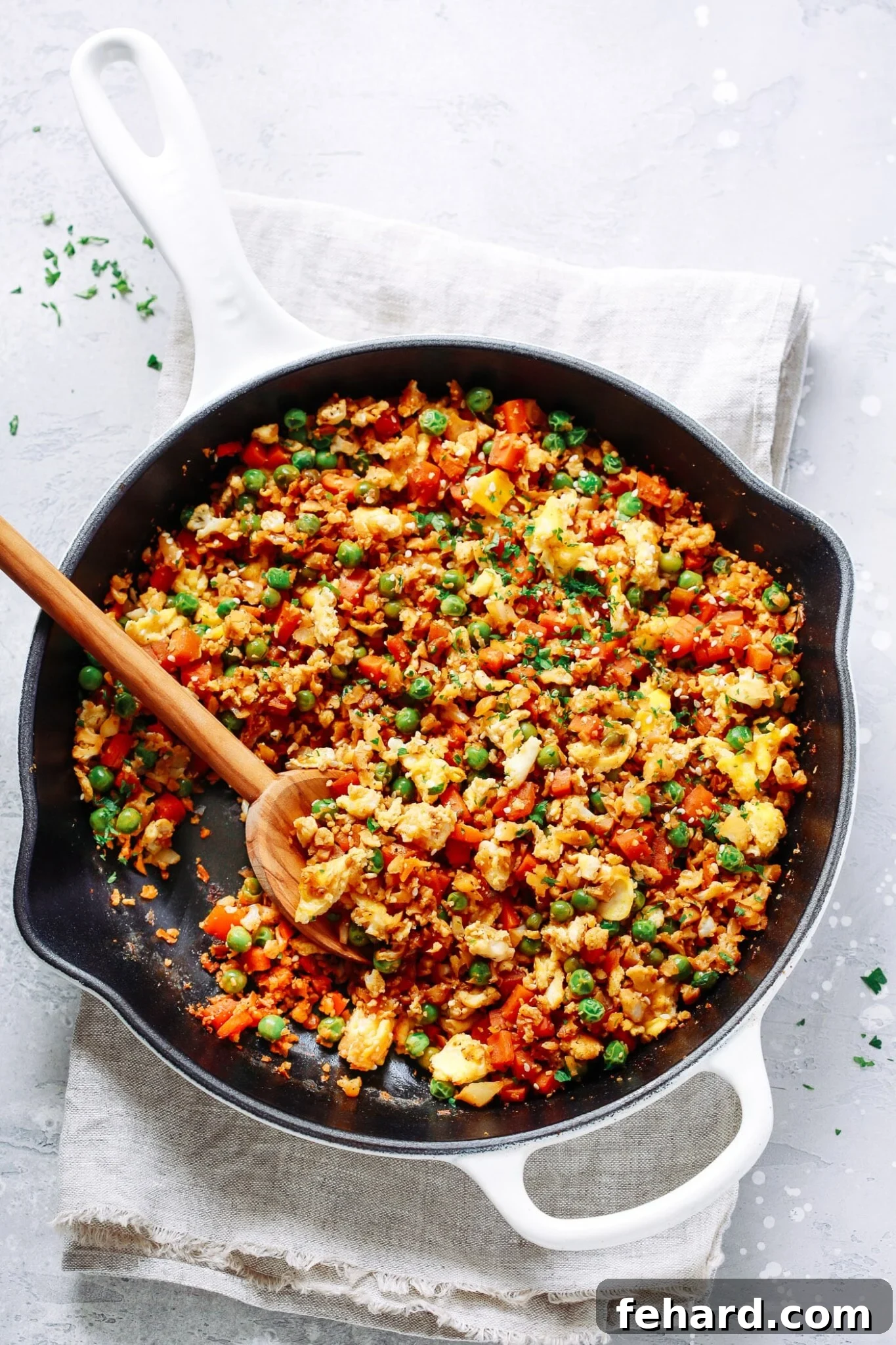
If you love the irresistible flavors of traditional fried rice but are seeking a lighter, more nutrient-dense alternative, then this Cauliflower Fried Rice recipe is about to become your new favorite. This vibrant, vegetable-packed dish delivers all the savory satisfaction you crave in under 20 minutes, making it an ideal choice for busy weeknights or whenever you need a quick, healthy meal. Infused with fresh ingredients like crisp cauliflower, aromatic onions, sweet carrots, and tender green peas, it’s a culinary delight that doesn’t compromise on taste or texture. Prepare to be amazed at how easily cauliflower transforms into a delicious, low-carb foundation for this beloved classic.
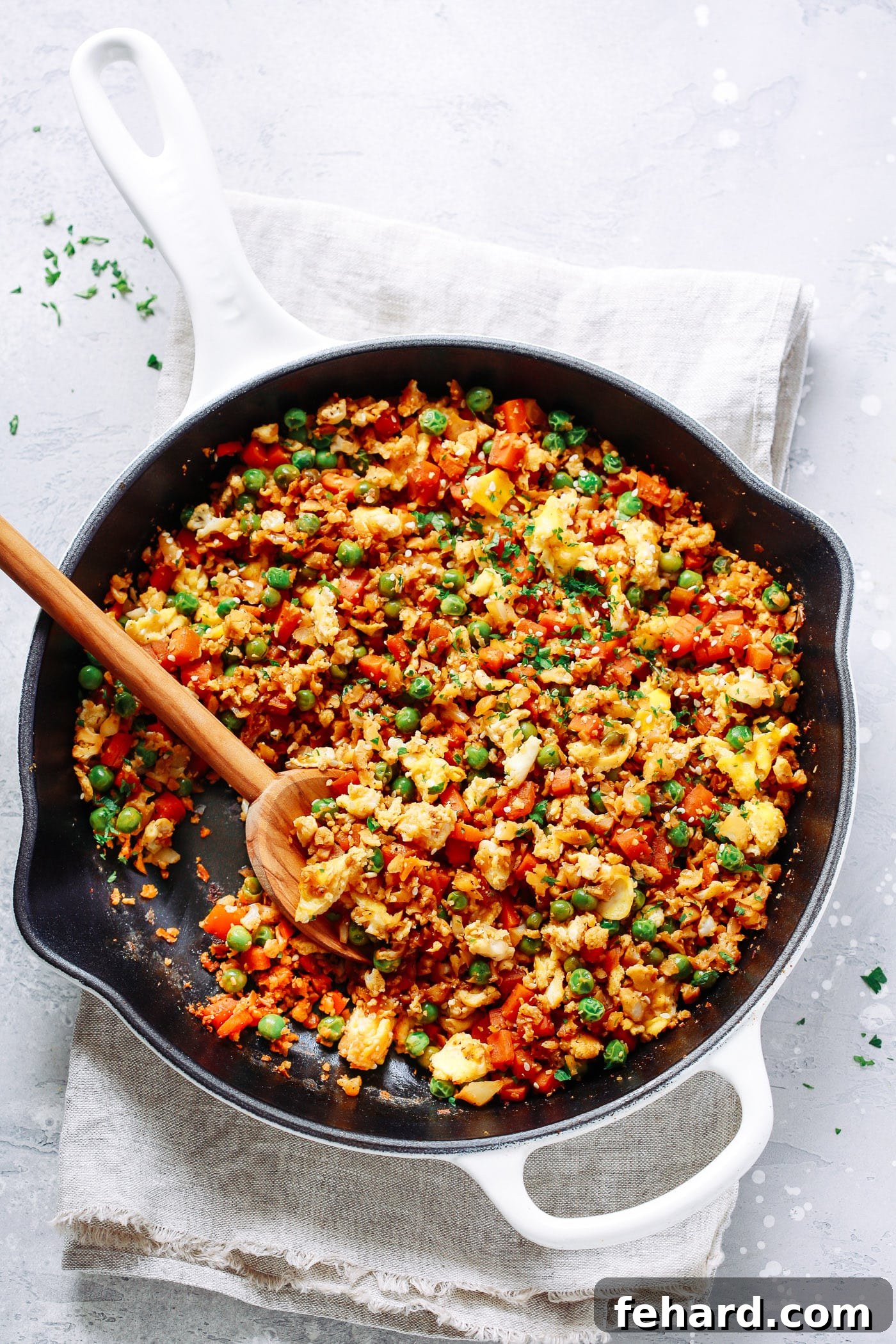
Why This Cauliflower Fried Rice Will Be Your New Go-To Recipe:
- **Lightning-Fast Preparation:** Life gets busy, and cooking shouldn’t add to the stress. This recipe is meticulously designed to be ready in under 20 minutes from start to finish. It’s perfect for those evenings when you’re craving something homemade and healthy but have minimal time to spare. Forget takeout; this quick cauliflower fried rice is faster and fresher. Its rapid preparation ensures you can enjoy a wholesome, flavorful meal even on your busiest days.
- **A Healthier Twist on a Classic:** By intelligently swapping traditional white rice for nutrient-rich cauliflower “rice,” we significantly reduce the carb count and boost the overall vegetable intake. This makes it a fantastic option for anyone following a low-carb, keto, or gluten-free diet, or simply looking to add more wholesome vegetables to their daily meals without sacrificing a single ounce of flavor. It offers that satisfying chew and texture of fried rice but leaves you feeling light, nourished, and energized, rather than heavy. This healthy alternative allows you to indulge guilt-free.
- **Incredibly Versatile and Customizable:** One of the most appealing aspects of this cauliflower fried rice is its remarkable adaptability. It serves as a perfect culinary canvas for your creativity and dietary preferences. You can effortlessly incorporate your favorite protein to make it a more substantial meal, such as succulent shrimp, tender chicken breast, savory tofu, or even thinly sliced beef strips. Beyond protein, feel free to load it up with extra vegetables like colorful bell peppers, earthy mushrooms, crisp broccoli florets, or sweet snap peas to enhance its nutritional profile and make it even more filling. This dish truly allows you to make it your own, catering to your specific tastes, available ingredients, and desired dietary focus.
What is Cauliflower Fried Rice?
Cauliflower fried rice is a popular and innovative take on the traditional Asian stir-fried rice dish, replacing conventional rice with finely chopped or “riced” cauliflower. This ingenious substitution dramatically lowers the carbohydrate content and calorie count while simultaneously increasing the fiber and nutrient density of the entire meal. The process involves pulsing fresh cauliflower florets in a food processor until they achieve a texture remarkably similar to grains of rice. This cauliflower base is then expertly stir-fried with a medley of classic fried rice ingredients, typically including scrambled eggs, aromatic onions, vibrant carrots, sweet green peas, and a rich, savory soy sauce mixture. The culmination of these ingredients results in a surprisingly authentic-tasting dish that offers a refreshing, light, and wonderfully healthy alternative to its carb-heavy counterpart. Its growing popularity stems from its ability to deliver all the beloved flavors and textures of fried rice while aligning with various health goals, making it a staple for health-conscious eaters and those adhering to specific dietary plans such as ketogenic, paleo, or gluten-free diets.
Key Ingredients for Flavorful Cauliflower Fried Rice:
Crafting the perfect cauliflower fried rice hinges on a few essential ingredients, each playing a crucial role in delivering that authentic, savory taste and delightful texture. Here’s a closer look at what you’ll need and why each component is vital for a truly outstanding dish:
- Cauliflower (medium head, florets riced): This humble vegetable is the undisputed star, transforming into a brilliant rice substitute. For the absolute best results and a texture that truly mimics rice, I highly recommend ricing a fresh head of cauliflower yourself. When pulsed in a food processor, fresh cauliflower yields a superior texture that holds up beautifully to the high heat of stir-frying without becoming mushy or watery, which can sometimes happen with pre-packaged options. Aim for a consistency resembling small grains of rice, not a fine paste. This meticulous preparation creates the ideal low-carb foundation for a truly satisfying and authentic-feeling fried rice experience.
- Sesame Oil: Far more than just a cooking oil, sesame oil is a flavor powerhouse that defines the authentic taste of this dish. Using a good quality, toasted sesame oil for your stir-fry introduces an unmistakable nutty aroma and a profound depth of savory flavor that elevates the entire culinary experience. My own kitchen experiments have shown that while other vegetable oils can cook the ingredients, they simply miss the complex, nuanced layer of flavor that sesame oil provides, making it an irreplaceable component for true fried rice authenticity.
- Eggs: Incorporating eggs is absolutely essential, both for providing a significant protein boost and for creating those classic, fluffy “fried rice” flecks and textural variation. The eggs are typically scrambled separately and then folded into the dish at the end, scattering golden bits throughout the cauliflower rice. In my testing, omitting them left the dish feeling less substantial, visually incomplete, and lacking the signature richness that defines fried rice.
- White Onion: As a foundational aromatic, white onion adds a delicate, aromatic sweetness and a savory background flavor that forms the base of the dish. I recommend chopping it finely to ensure it sautés quickly and evenly integrates into every bite, contributing to a well-rounded and harmonious flavor profile without overwhelming the other components. Its translucency signals the perfect stage for adding other vegetables.
- Carrots & Frozen Green Peas: These vibrant vegetables are indispensable not only for their inviting color but also for the natural sweetness, pleasant textural contrast, and a healthy dose of essential nutrients they bring to the dish. The finely diced carrots offer a subtle crunch and earthy sweetness, while the tender frozen green peas provide delightful pops of freshness. For those closely monitoring carbohydrate intake, orange bell pepper makes an excellent low-carb substitute for carrots, maintaining both visual appeal and a similar sweet flavor profile.
- Garlic (Minced): A cornerstone of almost all Asian-inspired cuisine, freshly minced garlic adds a pungent, aromatic depth that is absolutely crucial for a well-rounded and complex fried rice flavor. Its distinctive aroma, released as it cooks, pairs perfectly with the sesame oil and soy sauce, creating a fragrant base that is undeniably delicious.
- Gluten-Free Soy Sauce: This ingredient acts as the ultimate umami component, bringing essential salinity and a rich depth of flavor that expertly ties all the individual ingredients together. Opting for a high-quality gluten-free soy sauce ensures the dish is accessible to a broader audience, including those with gluten sensitivities, without compromising on any of the authentic taste or savory complexity. If gluten is not a concern, regular soy sauce works perfectly. For a paleo-friendly alternative, coconut aminos can be used as a flavorful substitute.
- Fresh Black Pepper: A simple yet incredibly effective seasoning, fresh black pepper adds a touch of warmth and a subtle, invigorating kick that enhances the overall flavor profile of the fried rice without dominating it. Grind it fresh for the best aroma and taste.
- Green Onions & Sesame Seeds (for garnishing): These final touches are far more than just decorative. Minced green onions provide a fresh, pungent, and slightly sharp finish that cuts through the richness of the stir-fry, while a sprinkle of toasted sesame seeds adds a delightful nutty crunch and visual appeal. Always add these garnishes just before serving to maximize their fresh flavor and textural impact.
Making Your Own Cauliflower Rice or Buying It Conveniently
One of the beauties and conveniences of preparing cauliflower fried rice lies in the flexibility of how you obtain your “rice.” While I wholeheartedly recommend and provide detailed instructions in the recipe card below for making your own from a fresh head of cauliflower—a method that often yields the best and most consistent texture—the fantastic news is that you absolutely can buy pre-riced cauliflower. This option offers unparalleled convenience and can be a true game-changer on those particularly busy days when every minute in the kitchen counts.
Most local grocery stores now prominently stock both fresh and frozen varieties of cauliflower rice, pre-cut and ready to cook. Utilizing these pre-packaged options can significantly cut down on your meal preparation time, allowing you to get dinner on the table even faster. When selecting store-bought cauliflower rice, it’s always a good practice to look for brands that list 100% cauliflower with no other added ingredients, ensuring you get a pure and wholesome product. Beyond physical stores, various online retailers also offer different forms of cauliflower rice, including innovative air-dried versions that can serve as a reliable pantry staple for quick meal solutions. Moreover, the versatility of cauliflower has led to a surge in other exciting products, such as delicious cauliflower pizza crusts, which you can now easily find at many local food markets and online, further demonstrating this vegetable’s incredible culinary range.
Whether you choose the homemade route or opt for the convenience of store-bought, a crucial tip for achieving optimal texture is to ensure your cauliflower rice is as dry as possible before it makes contact with the hot skillet. Cauliflower naturally contains a significant amount of water, and excess moisture can lead to a steamed, rather than fried, and ultimately soggy dish. A simple yet effective technique is to spread the cauliflower rice on a clean kitchen towel or several layers of paper towels and gently pat it dry. This small extra step can make a profound difference, ensuring your cauliflower fried rice achieves that desirable slightly crisp, non-soggy texture that makes it so enjoyable.
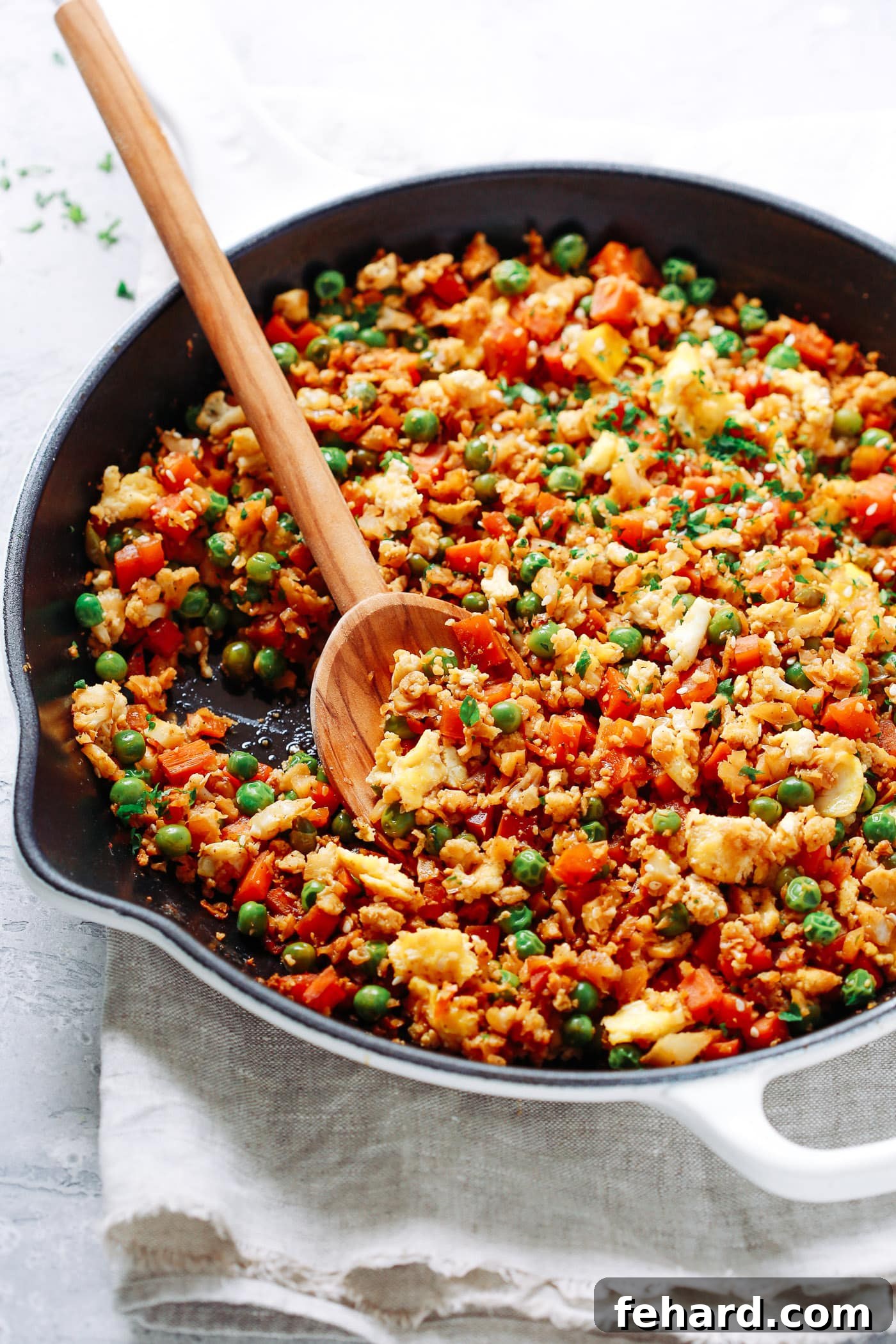
How Much Cauliflower Rice Does One Head Yield?
Understanding the yield from a single head of cauliflower is helpful for meal planning and ensuring you have enough for your recipe. The amount of “rice” you’ll get can vary slightly depending on the specific size of your cauliflower head. However, as a general guideline, a medium-sized head of cauliflower typically yields approximately 4 cups of cauliflower rice. This is the perfect quantity for this particular recipe, which is thoughtfully designed to serve four people generously. If you prefer a more cauliflower-heavy dish or want to ensure you have a little extra, it’s always a good idea to select a slightly larger head. When you’re purchasing pre-riced cauliflower, you’ll find that a standard bag usually weighs around 12 to 16 ounces, which conveniently translates to roughly 3 to 4 cups, fitting perfectly within the requirements of this delicious and healthy recipe.
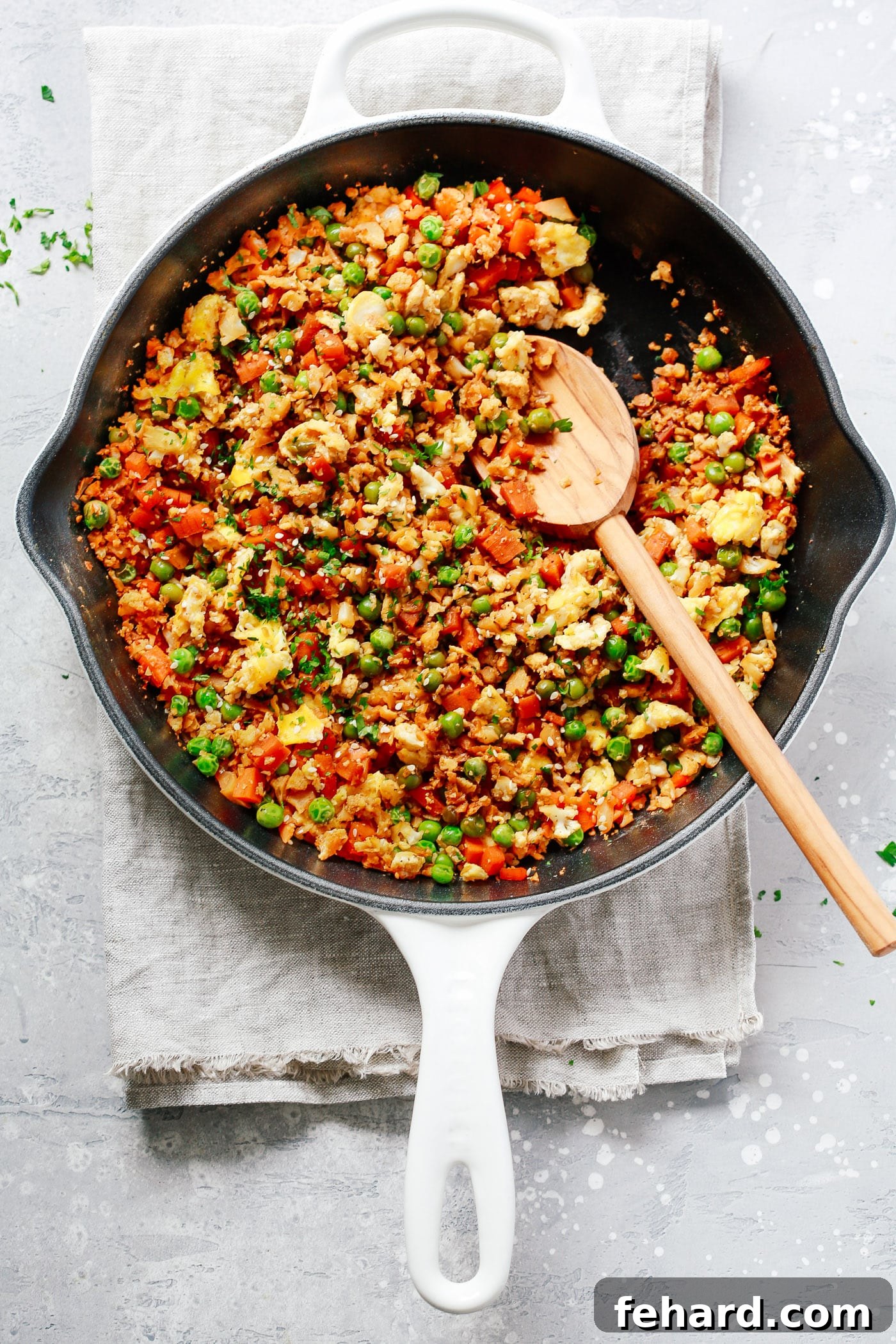
Expert Tips for Perfect Cauliflower Fried Rice
Achieving the ideal texture and flavor for your cauliflower fried rice is simple with these crucial tips, ensuring a consistently delicious and satisfying result every time:
- Avoid Over-Processing the Cauliflower: This is arguably the most critical step when you’re making homemade cauliflower rice. When utilizing a food processor, pulse the cauliflower florets in short, controlled bursts. Your goal is to achieve a texture that closely resembles small grains of rice, similar to couscous. It’s imperative to be mindful and stop before it turns into a mushy paste. Over-processing will cause the cauliflower to release too much water during cooking, inevitably leading to a soggy and unappetizing dish.
- Ensure the Cauliflower Rice is Dry Before Cooking: Moisture is the ultimate adversary of good fried rice, and cauliflower naturally contains a high water content. After processing, if your cauliflower rice feels noticeably damp, take an extra moment to spread it out in a single layer on a clean kitchen towel or several layers of paper towels. Gently pat it dry to absorb any excess moisture. This seemingly small but vital step is instrumental in preventing sogginess, allowing the cauliflower to truly “fry” and develop a desirable, slightly crispy texture in the hot pan, rather than steaming.
- Use a Hot Skillet or Wok: High heat is absolutely essential for creating authentic fried rice flavor and texture. Before adding any oil or ingredients, preheat your large skillet or wok over medium-high heat until it’s sizzling hot. This high temperature promotes rapid cooking and helps to quickly cook the vegetables and cauliflower, creating that coveted “wok hei” flavor—a smoky, caramelized essence characteristic of professional stir-fries. It also ensures the cauliflower develops delicious, slightly crispy edges instead of merely steaming in its own moisture.
- Do Not Overcook the Cauliflower Rice: Unlike traditional rice, cauliflower rice cooks remarkably quickly. It typically requires only about 5-6 minutes of cooking time in a hot skillet to reach perfection. Overcooking is a common pitfall that will lead to a soft, mushy, and watery texture, completely ruining the desired fried rice experience. Maintain a vigilant eye on it and stir frequently, removing it from the heat as soon as it reaches a tender-crisp consistency.
- Don’t Crowd the Pan: For the best results, it’s crucial to avoid overloading your skillet or wok. If you are preparing a larger batch of cauliflower fried rice, it is far better to cook the cauliflower rice in two separate, smaller batches. Crowding the pan significantly lowers the cooking temperature and causes ingredients to steam rather than fry, releasing excessive moisture and leading to a less flavorful, soggy outcome. Give your ingredients space to breathe and brown beautifully.
Customizing Your Cauliflower Fried Rice
This recipe provides a fantastic and flavorful foundation, but don’t hesitate to unleash your culinary creativity and make it uniquely your own! Here are some exciting ideas to customize and elevate your cauliflower fried rice, adapting it to your taste preferences and what you have available:
- **Add Protein:** To transform this side dish into a more substantial and complete meal, boost its protein content with your favorite additions. Cooked and diced chicken breast, succulent shrimp, thinly sliced lean beef, or even crispy baked or pan-fried tofu are all excellent choices. For best results, cook your chosen protein separately and then add it back into the pan with the vegetables, just before you introduce the cauliflower rice.
- **Extra Vegetables:** Enhance both the nutritional value and textural complexity with an array of additional vegetables. Consider incorporating diced bell peppers (any color for a vibrant touch), thinly sliced mushrooms, small broccoli florets, tender snap peas, crisp bok choy, or even a handful of corn kernels (if not strictly low-carb). For optimal cooking, add harder vegetables like bell peppers or broccoli along with the carrots and onions, and softer ones like mushrooms or spinach later in the cooking process.
- **Spice It Up:** If you enjoy a little heat, it’s incredibly easy to add a spicy kick. Stir in a pinch of red pepper flakes with the garlic, a dash of sriracha sauce, or a few drops of chili oil along with the soy sauce mixture. Adjust the quantity to your preferred level of spiciness.
- **Nutty Flavor and Crunch:** For an extra layer of savory flavor and a delightful textural contrast, try adding a tablespoon of chopped roasted peanuts, cashews, or even toasted slivered almonds during the last minute of cooking. Alternatively, sprinkle them generously on top just before serving for maximum crunch.
- **Fresh Herbs:** A sprinkle of fresh, vibrant herbs can add a bright, aromatic, and refreshing touch to the finished dish. Freshly chopped cilantro, mint, or even Thai basil can provide an unexpected but welcome burst of flavor. Add them right before serving to preserve their delicate aroma and color.
More Delicious Cauliflower Rice Inspirations
If you’ve enjoyed this versatile and healthy recipe, explore other exciting ways to incorporate cauliflower rice into your meals and discover new favorites!
Garlic Parmesan Cauliflower Rice Recipe
Total Time: 35 mins
Italian Sausage Cauliflower Rice Skillet
Total Time: 35 mins
Mushroom Cauliflower Rice Skillet Recipe
Total Time: 20 mins
Easy Zucchini Cauliflower Rice
Total Time: 20 mins
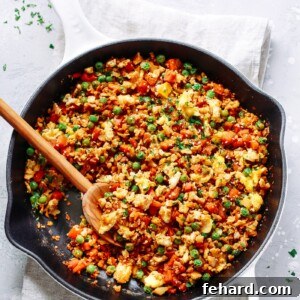
Cauliflower Fried Rice Recipe
★★★★☆
Olivia Ribas
4
people
10
8
18
Recipe Video
For a visual guide to making this delicious recipe, please refer to our helpful video tutorial.
Ingredients
- 1 medium head of cauliflower cut into florets
- 2 tablespoons sesame oil divided
- 3 eggs beaten
- ½ cup white onions diced
- 1 cup carrots diced
- 2 cloves garlic minced
- 1 cup frozen green peas
- 2 tablespoons gluten-free soy sauce
- fresh black pepper to taste
- 6 green onions minced, for garnishing
- sesame seeds for garnishing
Instructions
-
**Prepare the Cauliflower Rice:** If using a fresh head of cauliflower, begin by cutting it into manageable florets. Place these florets into a food processor and pulse in short bursts for about 25-30 seconds until the cauliflower achieves a consistent, rice-like texture. It’s crucial not to over-process, as this can result in a mushy consistency. If your cauliflower rice appears wet after processing, spread it evenly on a clean kitchen towel and gently pat it dry to remove excess moisture.
-
**Cook the Eggs:** Heat a large skillet or wok over medium heat and add 1 tablespoon of sesame oil. Once the oil is shimmering, pour in the beaten eggs. Scramble the eggs, stirring continuously, until they are fully cooked through and form small, fluffy pieces. Once cooked, carefully remove the scrambled eggs from the skillet and set them aside on a plate.
-
**Sauté the Aromatics and Vegetables:** Return the same skillet to the heat and add the remaining 1 tablespoon of sesame oil. Once hot, add the diced white onions, diced carrots, and minced garlic to the pan. Sauté these vegetables for approximately 3-5 minutes, stirring frequently, until the carrots are tender-crisp and the onions have become translucent and fragrant.
-
**Combine and Fry:** Now, add the prepared cauliflower rice, frozen green peas, gluten-free soy sauce, and a generous amount of fresh black pepper to the skillet with the sautéed vegetables. Return the previously cooked eggs to the pan. Stir all the ingredients together thoroughly, ensuring everything is well combined and coated with the savory sauce. Continue to cook for another 5-6 minutes, being extremely careful not to overcook the cauliflower, as it can quickly become soggy. The aim is a light, slightly firm, and ‘fried’ texture.
-
**Garnish and Serve:** Once your cauliflower fried rice is cooked to perfection, transfer it immediately to individual serving bowls. Before serving, generously sprinkle with minced green onions and a handful of sesame seeds. These garnishes add a delightful burst of fresh flavor and an appealing crunchy texture. Serve hot and enjoy your healthy, homemade fried rice!
Chef’s Notes & Storage Tips
- **Time-Saving Tip:** To significantly reduce your prep time, don’t hesitate to use pre-riced cauliflower that you can find in most grocery stores. Just remember to pat it dry before adding it to the pan for the best texture.
- **Pan Size Matters:** Always opt for a large skillet or wok when making fried rice. This ample space allows the ingredients to spread out and truly “fry” rather than steam, which is critical for achieving a delicious, non-soggy result.
- **Even Cooking:** For consistent cooking and optimal texture throughout the dish, ensure all your vegetables—especially onions, carrots, and garlic—are finely and uniformly diced. This promotes even sautéing and flavor distribution.
- **Storage:** Any leftover cauliflower fried rice can be conveniently stored in an airtight container in the refrigerator. It will maintain its freshness and quality for approximately 3 to 4 days.
- **Reheating:** To enjoy leftovers, simply reheat individual portions in the microwave until thoroughly warmed through. For an even better texture that mimics freshly cooked fried rice, you can also reheat it in a skillet over medium heat, stirring occasionally, until it’s hot and lightly crisped. Avoid prolonged reheating to prevent mushiness.
Nutrition Information (Approximate Per Serving)
Serving Size:
1/4 of recipe
,
Calories:
210kcal
,
Carbohydrates:
15.1g
,
Protein:
9g
,
Fat:
13.2g
,
Cholesterol:
127mg
,
Sodium:
549mg
,
Fiber:
4.4g
,
Sugar:
5.9g
Nutrition information is automatically calculated, so should only be used as an approximation. It may vary based on specific brands, ingredient preparation, and serving sizes.