
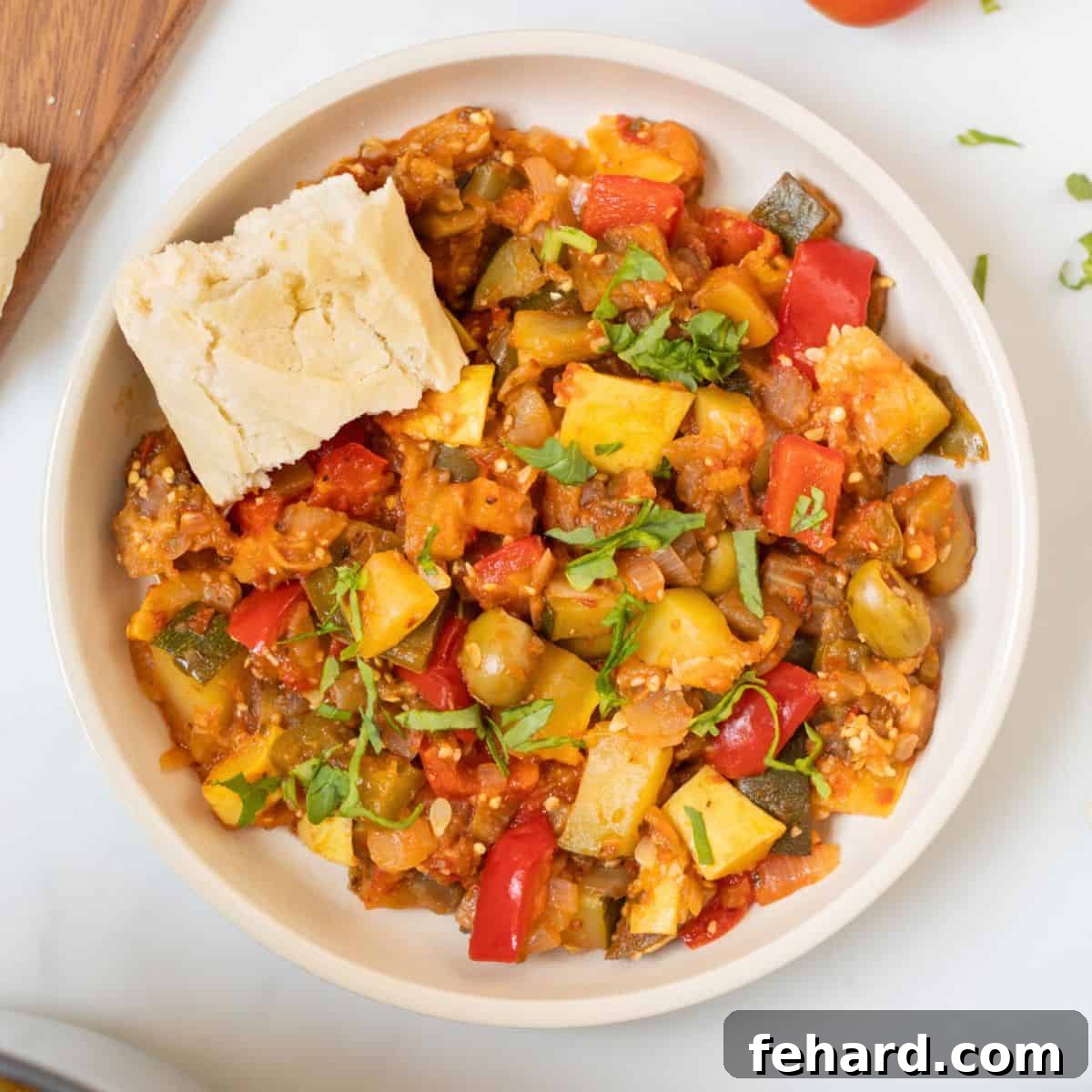
Transport your taste buds to the sun-drenched fields of Provence with this delightful Ratatouille recipe. A true emblem of French country cooking, this vibrant vegetarian stew masterfully combines summer’s freshest bounty: tender eggplant, sweet bell peppers, succulent zucchini, and ripe tomatoes, all simmered with fragrant garlic and rich olive oil. The result is a dish that is deeply comforting, incredibly flavorful, yet remarkably light and fresh.
Whether you’re a seasoned chef or a home cook exploring classic French cuisine, this easy-to-follow recipe will guide you to a perfect Ratatouille every time. It’s not just a meal; it’s an experience, celebrating the simple beauty of seasonal vegetables.
Eager to explore more timeless French dishes? Be sure to check out my recipes for French Onion Soup, Quiche Lorraine, Green Beans Almondine, Instant Pot Coq au Vin, and Instant Pot Beef Bourguignon.
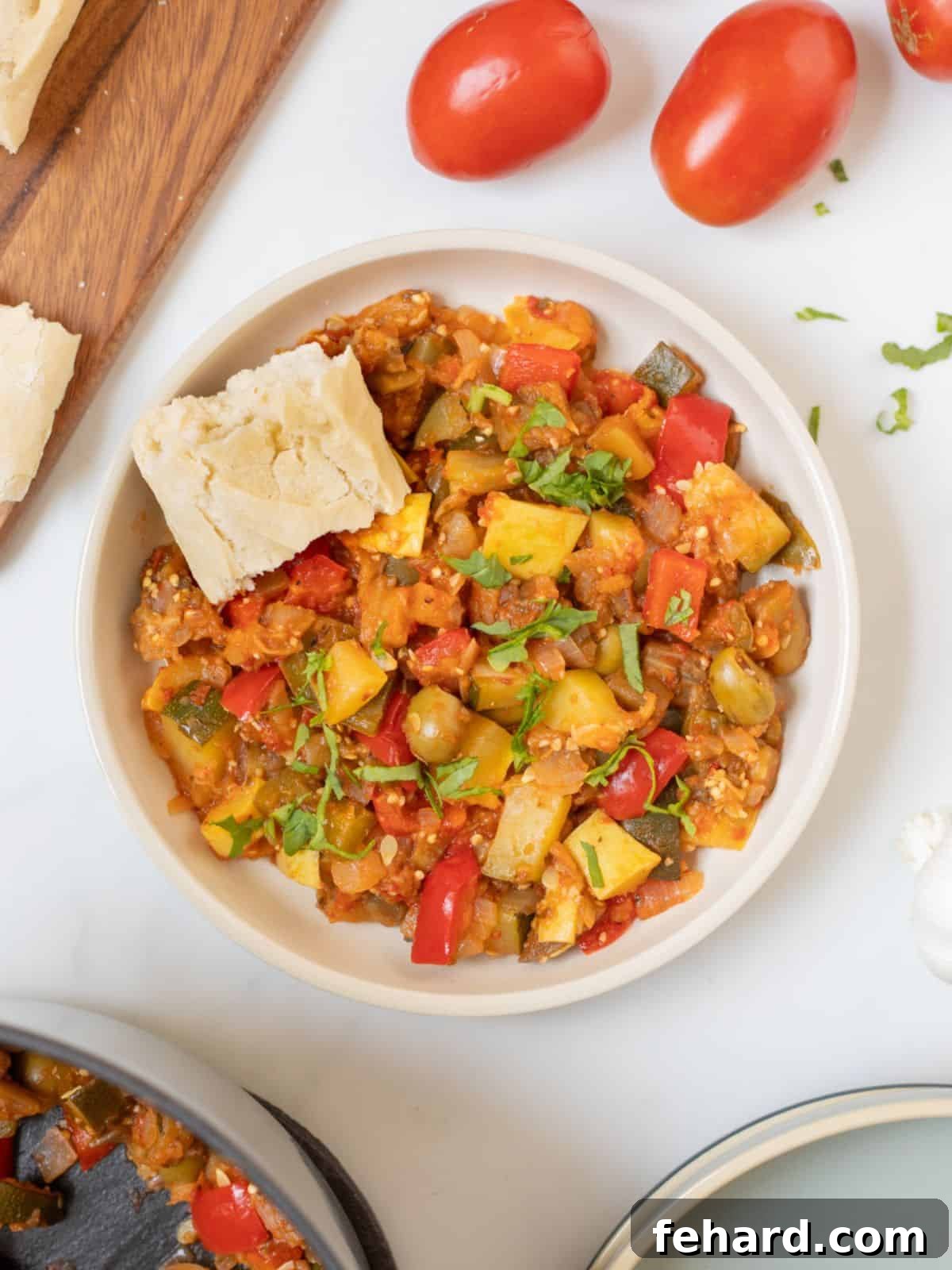
Why You’ll Adore This Classic Ratatouille Stew

If your garden is overflowing with late summer produce, or you simply crave a dish that bursts with fresh flavors, Ratatouille is an unparalleled choice. This recipe brings together cozy warmth with bright, simple ingredients, creating a truly memorable classic French experience.
- Humble Ingredients, Extraordinary Flavor. The true magic of Ratatouille lies in its simplicity. Everyday vegetables transform into a rich, complex stew. Feel free to adapt with whatever seasonal produce you have on hand – it’s wonderfully forgiving!
- Surprisingly Easy to Master. Don’t let its French origins intimidate you. This stew doesn’t require advanced culinary skills. With straightforward steps and common ingredients, even novice cooks can achieve a delicious, restaurant-quality dish. It’s more about patience and layering flavors than intricate techniques.
- A Classic French Profile with a Modern Touch. Our Ratatouille builds upon the beloved foundations of the traditional Provençal stew. However, a delicate splash of dry white wine and the briny zest of olives elevate it from rustic farmhouse fare to a more refined, sophisticated creation. It’s a subtle twist that enhances the overall depth.
- Naturally Allergy-Friendly & Wholesome. This versatile dish is a dream come true for various dietary needs. It’s naturally gluten-free, dairy-free, egg-free, soy-free, and nut-free. This makes Ratatouille a fantastic option for family dinners, potlucks, and accommodating guests with different sensitivities, ensuring everyone can enjoy a nourishing and delicious meal.
- Perfect for Meal Prep. Ratatouille tastes even better the next day, as the flavors meld and deepen. It’s an ideal candidate for meal prepping, offering delicious and healthy lunches or dinners throughout the week.
Essential Ratatouille Ingredients for the Best Flavor
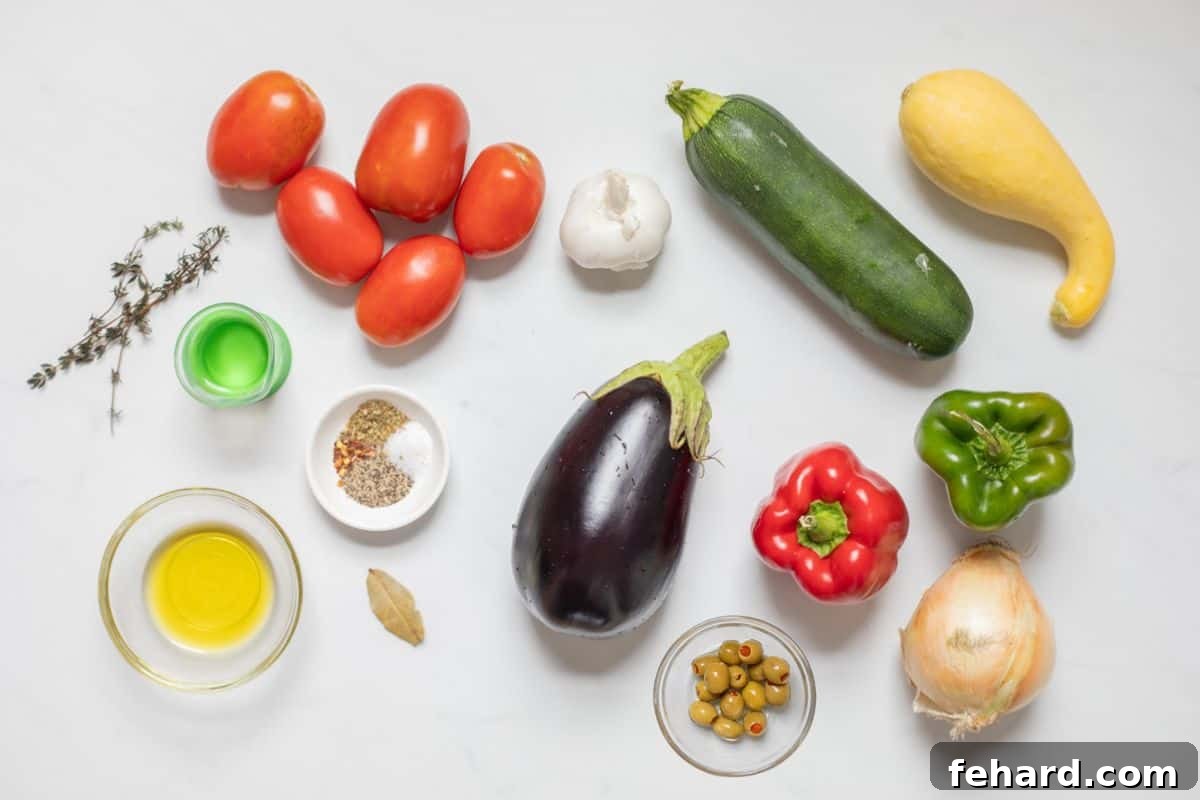
The beauty of Ratatouille hinges on the quality and freshness of its ingredients. While traditionally a summer harvest dish, most of these components are available year-round, allowing you to enjoy this stew whenever the craving strikes.
- The Core Vegetables: At its heart, Ratatouille is a celebration of the garden’s finest.
- Eggplant: A cornerstone of the dish. Choose a medium-sized eggplant that feels firm and heavy for its size. Peeling is optional but often preferred for a smoother texture in a stew.
- Bell Peppers: Any color works beautifully, adding sweetness and vibrant color. Red, yellow, or orange peppers are generally sweeter than green.
- Yellow Onions: These provide a crucial aromatic base, caramelizing to create a foundational sweetness.
- Summer Squash (Zucchini and/or Yellow Squash): These absorb the flavors of the stew wonderfully, adding a delicate texture. Look for firm, medium-sized squash.
- Tomatoes: The Heart of the Sauce: For an authentic taste, fresh tomatoes are highly recommended.
- Fresh Options: Roma, beefsteak, or even cherry tomatoes are excellent choices. They offer a brighter, more natural acidity.
- Convenience Option: If fresh tomatoes aren’t in season or readily available, a good quality can of crushed tomatoes (15 oz) can be a perfectly acceptable substitute, ensuring the stew remains rich and flavorful.
- Olive Oil: Liquid Gold: The choice of olive oil significantly impacts the flavor profile.
- Extra Virgin Olive Oil (EVOO): For the most robust and authentic Mediterranean flavor, extra virgin olive oil is preferred for both sautéing and finishing. Its fruity and peppery notes truly shine.
- Quality is Key: Any high-quality olive oil will work, contributing to the stew’s characteristic richness.
- Aromatic Flavors: Building Depth: These ingredients create the complex aroma and taste that define Ratatouille.
- Garlic: Generous amounts of freshly minced garlic are essential for that savory depth.
- Fresh Thyme: Fragrant and earthy, fresh thyme sprigs infuse the stew with classic Provençal essence. Dried thyme can be used as an alternative (use half the amount).
- Dried Oregano: Adds a subtle, complementary herbal note.
- Bay Leaf: A single bay leaf contributes an underlying aromatic quality that deepens as the stew simmers.
- Red Pepper Flakes (Optional): A pinch adds a very subtle warmth and kick, enhancing the overall flavor without making it spicy. Adjust to your preference.
- White Wine: A Splash of Sophistication:
- Dry White Wine: A dry white wine like Pinot Grigio or Sauvignon Blanc adds a beautiful acidic undertone and complexity, deglazing the pan and brightening the vegetable flavors.
- Alcohol-Free Alternatives: If you prefer not to use wine, vegetable broth or chicken stock are excellent non-alcoholic substitutes that still contribute rich liquid and flavor.
- Olives: The Salty Finish (A Personal Touch):
- Spanish Green Olives: While not strictly traditional in every Ratatouille, a personal touch of Spanish green olives, as my mom always added, brings a delightful briny, salty finish and an interesting textural contrast.
- Variations: Feel free to omit them if you prefer a purist approach, or experiment with other briny olives like Kalamata for a different twist.
How to Make the Perfect Ratatouille: Step-by-Step
Creating Ratatouille is a labor of love that rewards patience with incredible flavor. While there are several steps and a good amount of simmering time involved, none of the processes are overly complicated. The magic happens as humble garden vegetables transform into something truly spectacular.
Preparation is Key
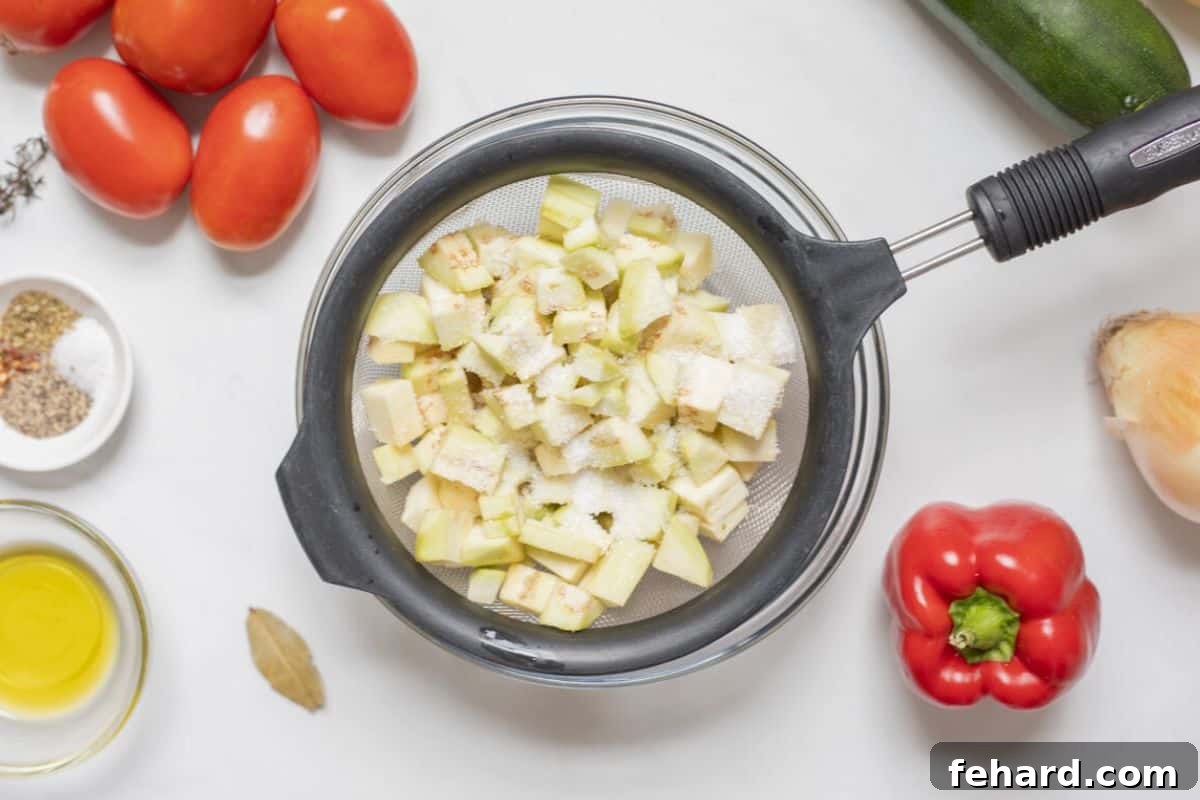
- Salt the Eggplant for Optimal Texture and Flavor. Begin by peeling and dicing your eggplant into uniform ½-inch cubes. Place these cubes in a large colander set over a mixing bowl (to catch the drained liquid) or spread them on a baking sheet lined with a rack. Sprinkle the eggplant generously with kosher salt. Allow the eggplant to rest for 30 minutes to 1 hour. This crucial step draws out excess moisture and significantly reduces the natural bitterness of the eggplant, resulting in a more tender and flavorful stew. After resting, rinse the eggplant thoroughly under cold water to remove the salt, then pat it very dry with paper towels.
Why Salt Eggplant?
Salting eggplant is a traditional technique that serves two primary purposes: it removes excess water, which prevents the eggplant from becoming soggy during cooking, and it helps to mitigate any inherent bitterness. This step is key to achieving a truly delicious Ratatouille stew and other eggplant-based dishes like eggplant parmesan.
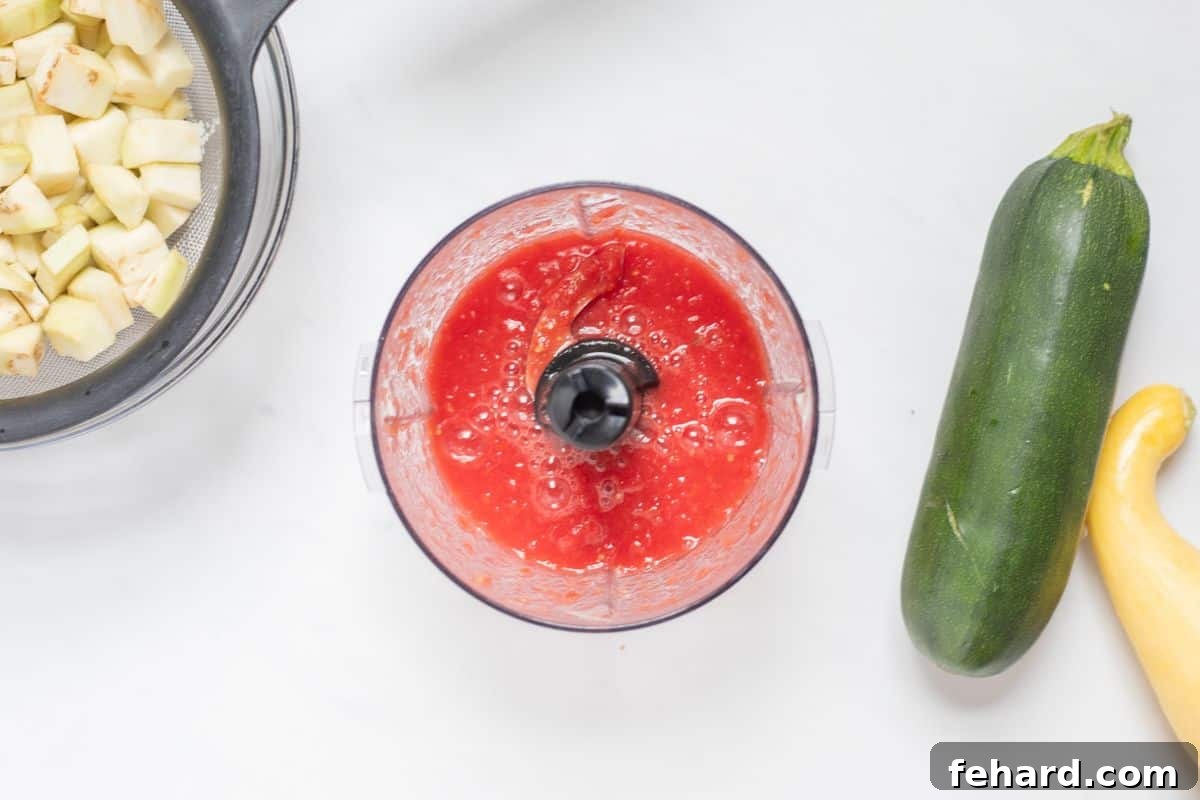
- Prepare the Fresh Tomato Base. Since Ratatouille celebrates fresh produce, making your own tomato puree provides the best flavor. Roughly chop your chosen fresh tomatoes (Roma, beefsteak, or cherry). Transfer them to a food processor fitted with an S-blade or a blender and process until completely smooth. There’s no need to skin the tomatoes beforehand, as the processing will break down the skins sufficiently. Set this vibrant tomato puree aside.
Building the Flavor Layers
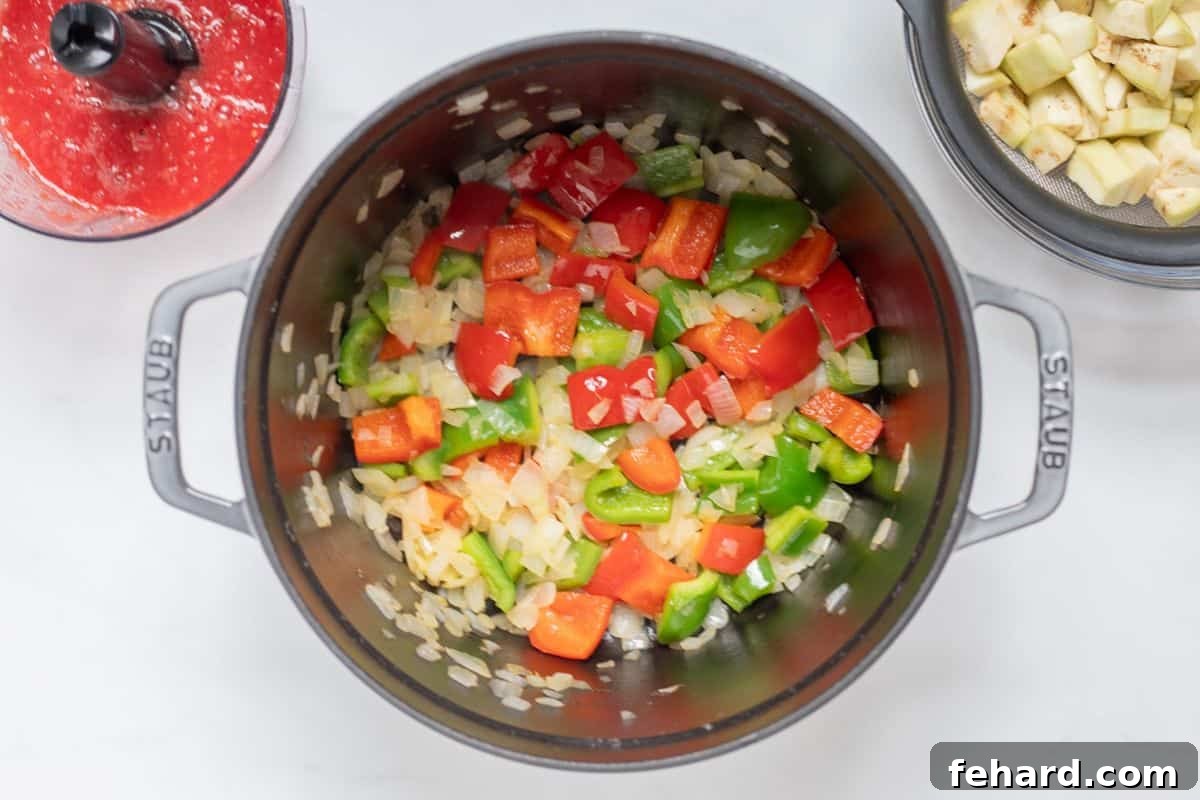
- Sauté Onions and Peppers to Sweet Perfection. In a large, heavy-bottomed stock pot or Dutch oven, heat 2 tablespoons of olive oil over medium heat. Once shimmering, add the minced yellow onion along with ¼ teaspoon of kosher salt. Sauté, stirring frequently, for 4-6 minutes until the onions are translucent, glistening, and lightly softened. Next, add the diced bell peppers to the pot and continue to sauté for another 3-4 minutes until they begin to soften. This initial sautéing develops a sweet, aromatic foundation for your stew.
- Toast the Spices for Enhanced Aroma. To the softened onions and peppers, add the minced garlic, dried oregano, crushed red pepper flakes (if using), and fresh thyme leaves. Sauté for just 30-60 seconds, stirring constantly. This brief toasting step awakens the essential oils in the spices and herbs, intensifying their flavors and aromas. Be careful not to burn the garlic.
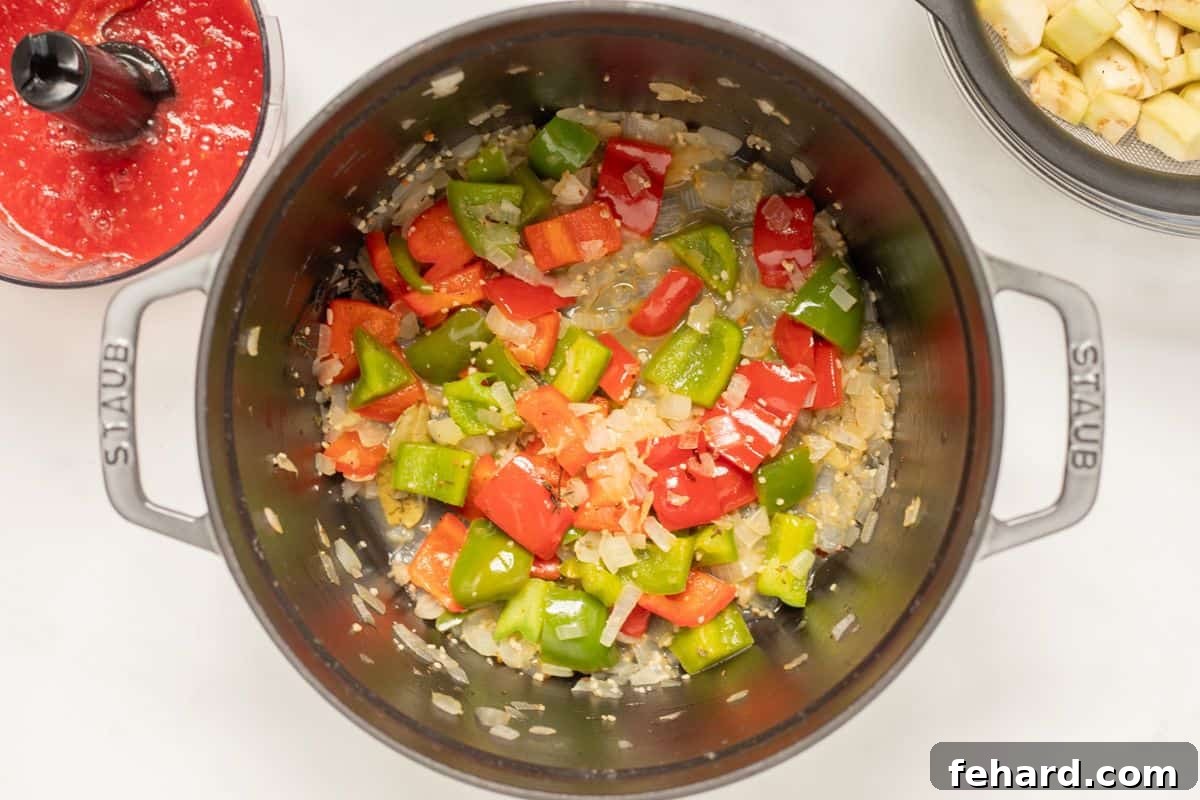
- Deglaze the Pan: Unlocking Hidden Flavors. Pour in the dry white wine (or vegetable/chicken broth). Use a wooden spoon to scrape up any browned bits that have accumulated at the bottom of the pan. These “fond” are packed with concentrated flavor, and deglazing releases them back into the stew, adding incredible depth. Let the liquid simmer for 1-2 minutes, allowing some of the alcohol to cook off (if using wine), then turn off the heat temporarily.
Combining and Simmering for Perfection
- Add Tomatoes and Squash to the Pot. Return the pot to medium heat. Stir in the freshly processed tomato puree, diced zucchini and/or yellow squash, the bay leaf, and the halved olives (if using). Season the mixture with ½ teaspoon of kosher salt and ½ teaspoon of black pepper. Bring everything to a gentle simmer, ensuring all ingredients are well combined and coated in the aromatic sauce.
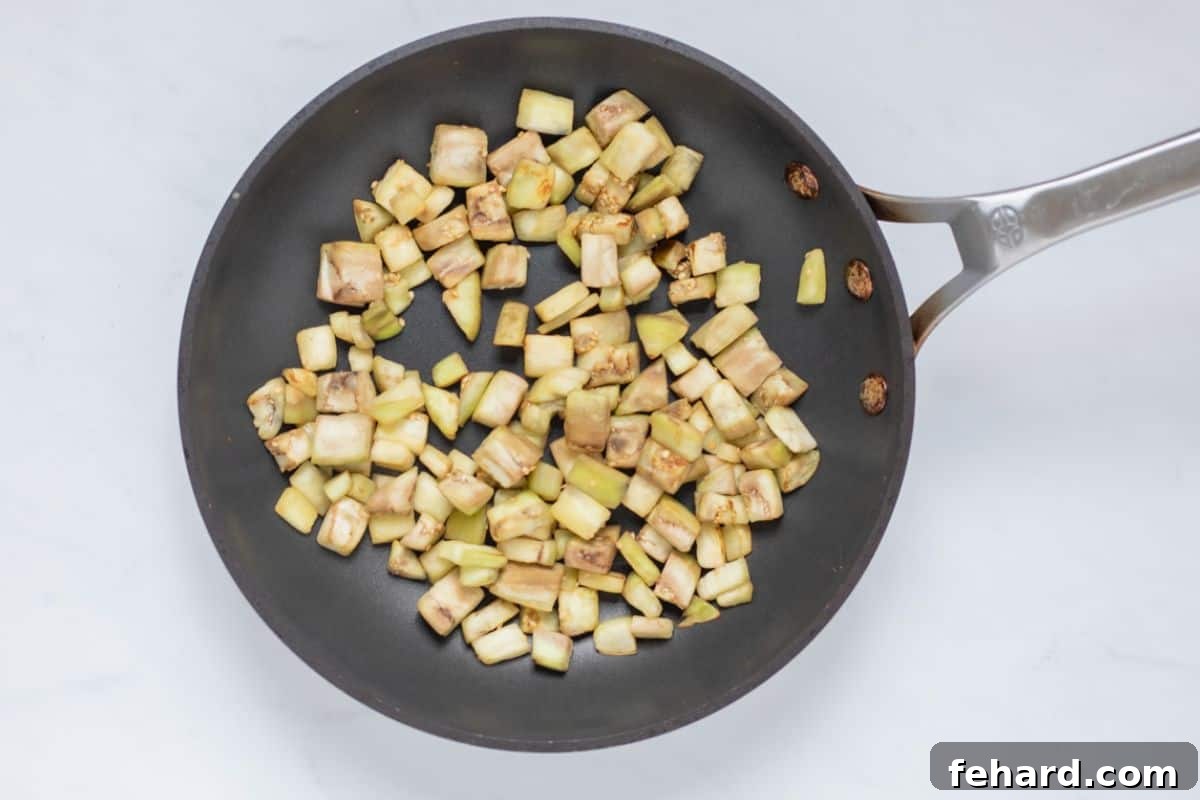
- Separately Sauté the Eggplant for Texture. While the main stew is coming to a simmer, heat the remaining ½ tablespoon of olive oil in a separate large nonstick or stainless steel skillet over medium-high heat. Once hot, add the dried, salted eggplant cubes. Sauté for 3-5 minutes, stirring occasionally, until the eggplant pieces are lightly golden and their edges begin to caramelize. Sautéing the eggplant separately prevents it from becoming mushy and adds a desirable texture and depth of flavor that wouldn’t be achieved by simply adding it raw to the stew.
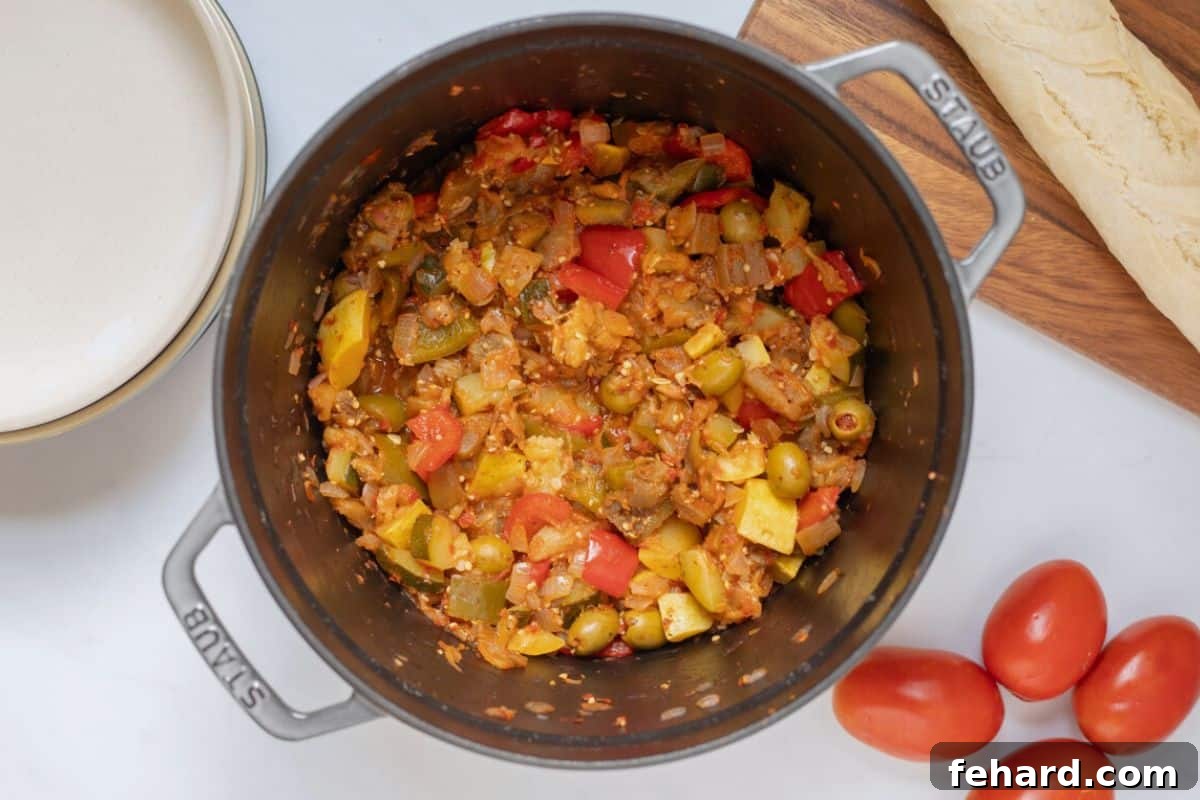
- Simmer the Ratatouille to Develop Rich Flavors. Carefully add the sautéed eggplant to the large stock pot with the simmering stew. Stir everything together gently. Once the mixture is simmering again over medium heat, reduce the heat to low. Allow the Ratatouille to simmer, uncovered, for at least 45 minutes to 1 hour, or until the liquid has significantly reduced, and all the vegetables are fork-tender. Stir occasionally to prevent sticking and ensure even cooking. The longer it simmers, the more the flavors will meld and deepen, creating a truly rich and harmonious stew.
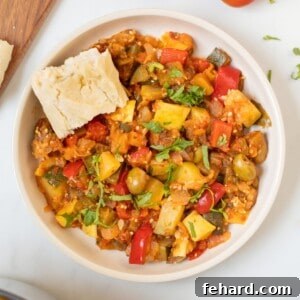
- Serve and Enjoy. Before serving, remove the bay leaf. Taste the Ratatouille and adjust seasonings (salt, pepper, or red pepper flakes) as needed. For an extra touch of richness and flavor, drizzle with a little additional extra virgin olive oil and garnish with fresh basil leaves.
How to Serve Ratatouille: Versatile and Delicious
Ratatouille is wonderfully versatile and can be enjoyed in countless ways, making it a fantastic dish for any meal. Its rich flavors and satisfying texture lend themselves to diverse presentations.
- As a Hearty Vegetarian Entree: Serve warm Ratatouille as the main course, accompanied by crusty Italian bread or a baguette for dipping into the flavorful sauce. A crisp, refreshing tossed Greek salad or a classic Caesar salad would make perfect accompaniments, balancing the richness of the stew. For an added protein boost, you could serve it alongside grilled halloumi or a sprinkle of toasted chickpeas.
- As a Flavorful Sauce for Grains and Pasta: The thick, savory stew makes an incredible sauce. Ladle it generously over your favorite cooked pasta, fluffy Instant Pot Quinoa, or wholesome Instant Pot Brown Rice. For those with picky eaters (or simply a preference for a smoother texture), you can blend a portion or all of the Ratatouille into a velvety sauce before serving over pasta, creating a hidden vegetable powerhouse.
- As an Elegant Tapenade or Appetizer Spread: Spread warm or chilled Ratatouille onto crackers, crostini, or slices of toasted bread. This makes for an impressive and easy appetizer. Enhance the experience by crumbling some feta or goat cheese on top, adding a creamy, tangy contrast. A drizzle of balsamic glaze can also elevate this simple starter.
- As a Delicious Filling or Side Dish: Repurpose leftovers as a fantastic filling. Incorporate it into fluffy omelets or savory scrambled eggs for a gourmet breakfast or brunch. It also makes an excellent base or filling for quiches, frittatas, or even savory crepes. You can also serve it as a vibrant side dish to grilled chicken, fish, or lamb, adding a burst of Mediterranean flavor to any main course.
Ratatouille Variations and Tips for Success
While the classic Ratatouille is perfect as is, don’t hesitate to customize it to your taste or what’s available. Here are some ideas to make this dish truly your own:
- Add More Vegetables: Consider adding sliced mushrooms, finely diced carrots, or even some spinach in the last few minutes of cooking for extra nutrients and flavor.
- Spice It Up: If you love heat, increase the amount of red pepper flakes, or add a pinch of smoked paprika for a different smoky undertone.
- Herb Variations: Experiment with other fresh herbs like basil (always a winner), marjoram, or even a hint of rosemary. Add fresh herbs at the end for maximum aroma.
- A Touch of Sweetness: A tiny pinch of sugar can help balance the acidity of the tomatoes, especially if using canned varieties.
- For a Heartier Meal: Stir in a can of drained cannellini beans or chickpeas during the last 15-20 minutes of simmering for added protein and fiber, making it even more filling.
- Cooking Method Alternatives: While stovetop simmering is traditional, Ratatouille can also be made in a slow cooker (with slightly adjusted liquid) or even baked in the oven for a hands-off approach.
Storage and Make-Ahead Tips
Ratatouille is an excellent dish for making ahead and enjoying throughout the week, as its flavors often deepen and improve over time.
- Refrigeration: Leftover Ratatouille can be stored in an airtight container in the refrigerator for up to 5 days.
- Freezing: For longer storage, Ratatouille freezes beautifully. Allow it to cool completely, then transfer to freezer-safe containers or bags. It can be frozen for up to 3 months. Thaw overnight in the refrigerator before reheating.
- Reheating: Reheat gently on the stovetop over medium-low heat, stirring occasionally, until warmed through. You may need to add a splash of water or broth to loosen it up. It can also be reheated in the microwave.
More Delightful Summer Vegetable Recipes
Make the most of the season’s fresh produce with these other fantastic vegetable-focused recipes:
- Summer Squash Sauté
- Italian Roasted Vegetables
- Grilled Vegetable Kabobs
- Air Fryer Zucchini Fries
Did you make this recipe?
If you enjoyed this recipe, please leave a comment with a 5-star review at the bottom of the post. Your feedback helps us share more delicious recipes!
Ratatouille Stew
Ingredients
- 1 medium eggplant, peeled and diced into ½-inch cubes
- 4 medium Roma tomatoes, seeded, peeled, and chopped (or 1 (15 oz) can crushed tomatoes)
- 2 ½ tablespoons extra virgin olive oil, divided, plus additional for serving
- 1 large yellow onion, minced
- 2 large bell peppers (any color), deseeded and cut into ½-inch chunks
- 1 teaspoon dried oregano
- ¼ teaspoon crushed red pepper flakes, optional
- 2 sprigs fresh thyme, or ½ teaspoon dried thyme leaves
- 4 cloves garlic, minced
- ¼ cup dry white wine, or vegetable broth or chicken stock
- 2 medium zucchini and/or yellow squash, sliced into ½-inch chunks
- 1 dried bay leaf
- ½ cup Spanish Green Olives, halved (optional, but recommended)
- ½-1 teaspoon kosher salt, + more for salting eggplant
- ½ teaspoon black pepper
- Fresh basil leaves, for serving
Instructions
- Peel and dice the eggplant into ½-inch cubes. Place it in a colander over a large bowl or on a baking sheet lined with a rack. Sprinkle generously with kosher salt. Let sit for 30 minutes to 1 hour, then rinse well and pat dry.
- Coarsely chop the tomatoes and place them in a food processor or blender. Process until smooth. Set aside.
- Heat 2 tablespoons of olive oil in a large heavy-bottomed stock pan over medium heat. Add minced onion and ¼ teaspoon kosher salt. Sauté for 4-6 minutes, stirring often, until softened.
- Add diced bell peppers to the onions and sauté for 3-4 minutes to soften. Then add 1 teaspoon oregano, ¼ teaspoon crushed red pepper flakes (if using), 4 cloves minced garlic, and thyme leaves. Sauté for 30-60 seconds to toast.
- Add ¼ cup of wine (or vegetable broth) to deglaze the pan, scraping up any browned bits from the bottom. Cook for 1-2 minutes, then turn off the heat.
- Add the processed tomatoes, diced zucchini/yellow squash, olives, and bay leaf to the pan. Season with ½ teaspoon kosher salt and ½ black pepper. Bring the mixture to a simmer over medium heat.
- In a separate large nonstick skillet, heat ½ tablespoon of oil over medium-high heat. Add the prepared eggplant and sauté for 3-5 minutes, until slightly golden and the edges are a bit caramelized.
- Add the sautéed eggplant to the stew. Once simmering, turn the heat to low and simmer, uncovered, for 45 minutes to 1 hour, or until the liquid has reduced and the vegetables are tender, stirring often.
- Remove the bay leaf, taste and adjust seasonings. Drizzle with additional olive oil and top with fresh basil if desired. Serve warm.
Notes
Olives: Spanish green olives add a unique salty finish, though not strictly traditional. Feel free to omit or use Kalamata olives.
Red Pepper Flakes: Omit entirely if you prefer no heat.
Storage: Leftover Ratatouille can be stored in an airtight container in the refrigerator for up to 5 days, or frozen for up to 3 months.
Nutrition
Carbohydrates: 16g
Protein: 3g
Fat: 8g
Saturated Fat: 1g
Polyunsaturated Fat: 1g
Monounsaturated Fat: 6g
Sodium: 193mg
Potassium: 625mg
Fiber: 6g
Sugar: 9g
Vitamin A: 2298IU
Vitamin C: 92mg
Calcium: 49mg
Iron: 1mg
Nutrition information is automatically calculated, so should only be used as an approximation.