The Ultimate Guide to Perfectly Crispy Oven-Baked Bacon
Tired of splattering grease and unevenly cooked strips? Discover the culinary secret to perfectly crisp, mess-free bacon every single time: baking it in the oven. This comprehensive guide will walk you through everything you need to know, from selecting the right bacon to mastering the technique, ensuring you achieve restaurant-quality results with minimal effort and easy cleanup. Say goodbye to greasy stovetops and hello to hands-off perfection!
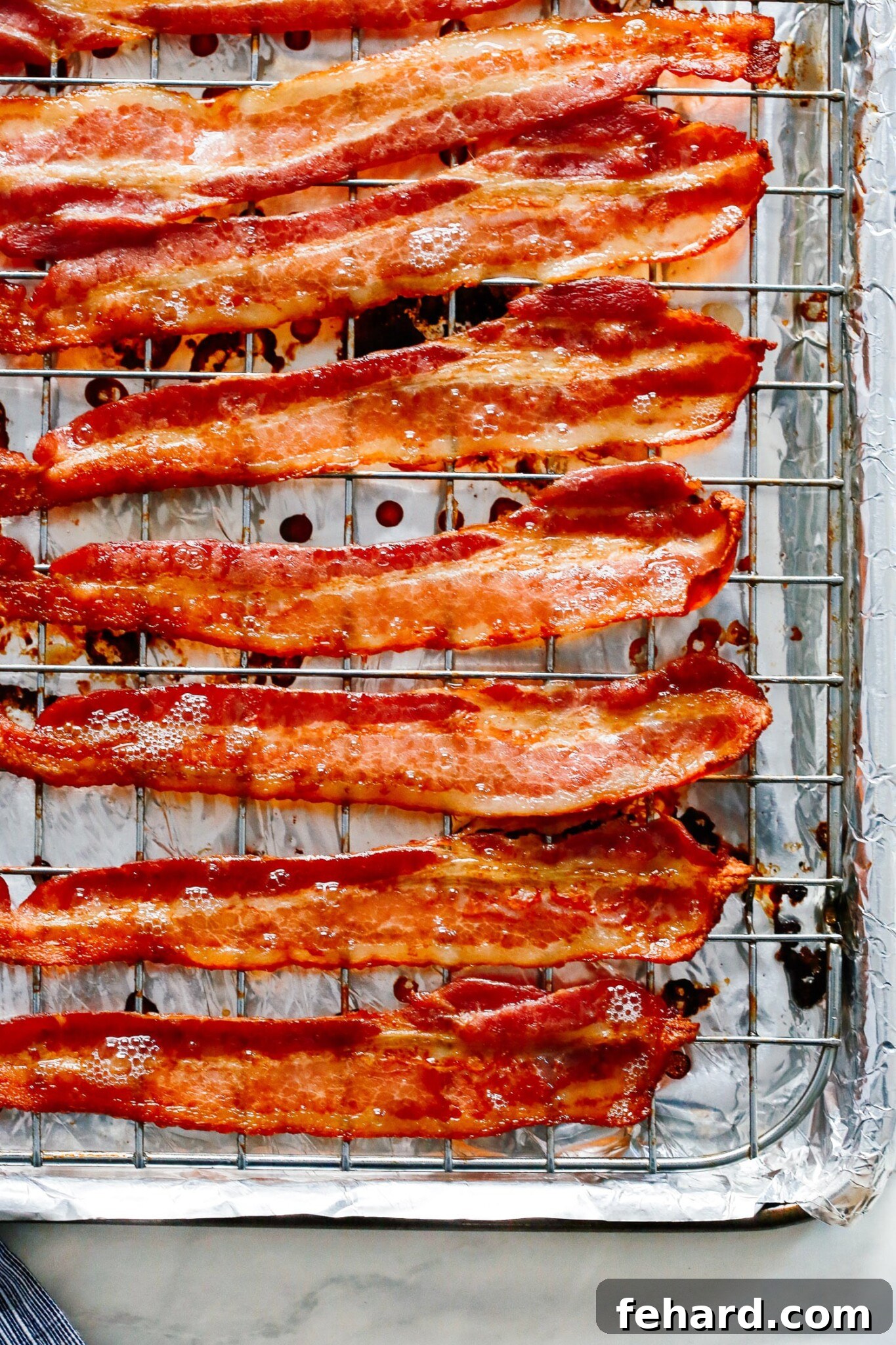
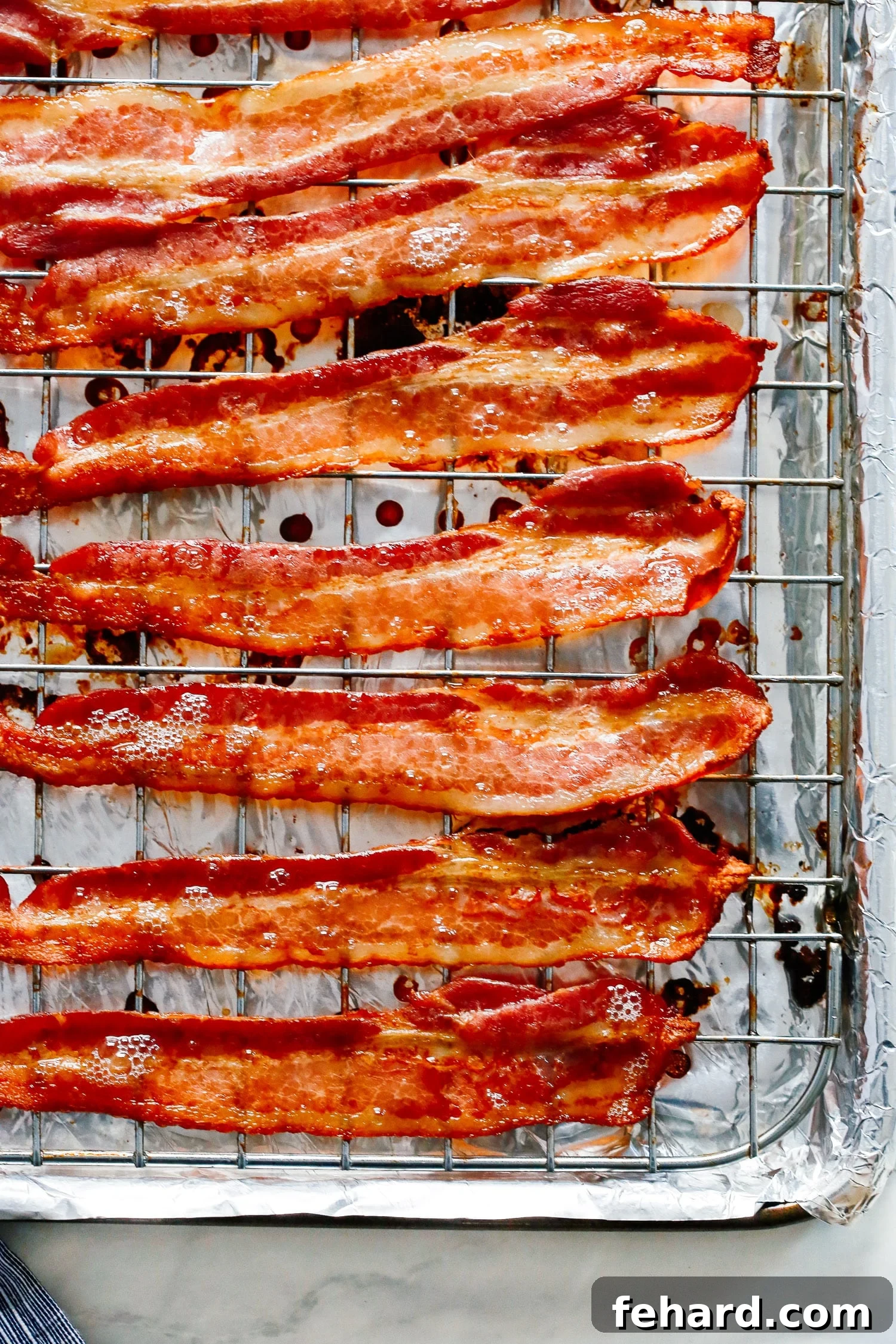
Achieve perfectly golden and crispy bacon with this simple oven method.
Oven-baked bacon isn’t just a convenience; it’s a revelation. Imagine waking up to the irresistible aroma of sizzling bacon without having to stand over a hot stove, constantly flipping. This life-changing technique allows you to cook a large batch of bacon with less splattering, more consistent crispness, and an effortlessly quick cleanup. Whether you’re making breakfast for a crowd, prepping for a week of meals, or simply craving that perfect crispy strip, the oven method is your new best friend.
Why Oven Baking is the Superior Bacon Method
There are numerous reasons why baking bacon in the oven trumps traditional stovetop frying. Once you try it, you’ll likely never go back:
Unmatched Convenience: No more standing over a hot pan, dodging grease splatters, or constantly flipping individual strips. Simply arrange your bacon on a sheet pan, slide it into the oven, and let the heat do all the work. This frees you up to prepare other elements of your meal or simply relax.
Effortless Cleanup: The biggest headache of cooking bacon is often the cleanup. With the oven method, you line your baking sheet with aluminum foil or parchment paper. As the bacon cooks, the grease drips onto the lining, which you can then simply crumple up and discard. The baking sheet itself remains virtually spotless!
Consistent Crispness: The circulating hot air in the oven ensures that each strip of bacon cooks evenly from all sides. This results in uniformly crispy bacon, without the chewy spots often found in pan-fried versions. Using a wire rack elevates the bacon, allowing air to circulate fully and grease to drip away, leading to an even crispier result.
Reduced Splattering: By containing the bacon within the oven, you significantly reduce the amount of grease splattering onto your stovetop, countertops, and even your clothes. This makes for a much cleaner cooking environment.
Ideal for Batch Cooking: Need to cook a pound or more of bacon? The oven method is perfect. You can easily fill a large baking sheet with a generous amount of bacon, making it an excellent choice for family breakfasts, brunch gatherings, or meal prepping for the week ahead.
Repeatable Perfection: Once you find your preferred baking time and temperature for your specific bacon thickness and desired crispness, you can replicate perfect results every time. It takes the guesswork out of cooking bacon.
Selecting the Best Bacon for Oven Roasting
While the oven method will make almost any bacon taste great, starting with high-quality bacon will elevate your results even further. The type of bacon you choose can significantly impact the final flavor and texture. Consider these options:
Strip of Bacon — The only ingredient you’ll truly need is some high-quality bacon. Decide what type of bacon you prefer: Applewood, hickory smoked, cured, uncured, natural, thick-cut bacon, thin bacon, etc.
Thick-Cut vs. Regular: Thick-cut bacon yields a chewier interior with crispy edges and a more substantial bite. Regular-cut bacon will generally cook faster and become uniformly crispy. Adjust baking times accordingly – thick-cut will need a few extra minutes.
Smoked Varieties: Explore different smoking methods for unique flavor profiles. Hickory-smoked bacon offers a robust, classic flavor, while Applewood smoked bacon provides a sweeter, fruitier note. Pecanwood, cherrywood, or even maple-smoked options are also available for adventurous palates.
Cured vs. Uncured: Most bacon is cured with nitrates or nitrites, which contribute to its color and preserve it. Uncured bacon, often labeled “natural,” uses natural curing agents like celery powder, which still contains naturally occurring nitrates. Choose based on your preference and dietary considerations.
Natural/Organic Options: For those seeking fewer additives or specific farming practices, many brands offer natural, organic, or ethically sourced bacon. These often come from pigs raised without antibiotics or hormones.
Flavor Infusions: Some specialty bacons might come seasoned with black pepper, brown sugar, or even chili flakes. These can add an exciting twist to your oven-baked strips.
Ultimately, the “best” bacon is a matter of personal taste. Experiment with different types to find your favorite, remembering that the oven method enhances the qualities of whatever bacon you choose.
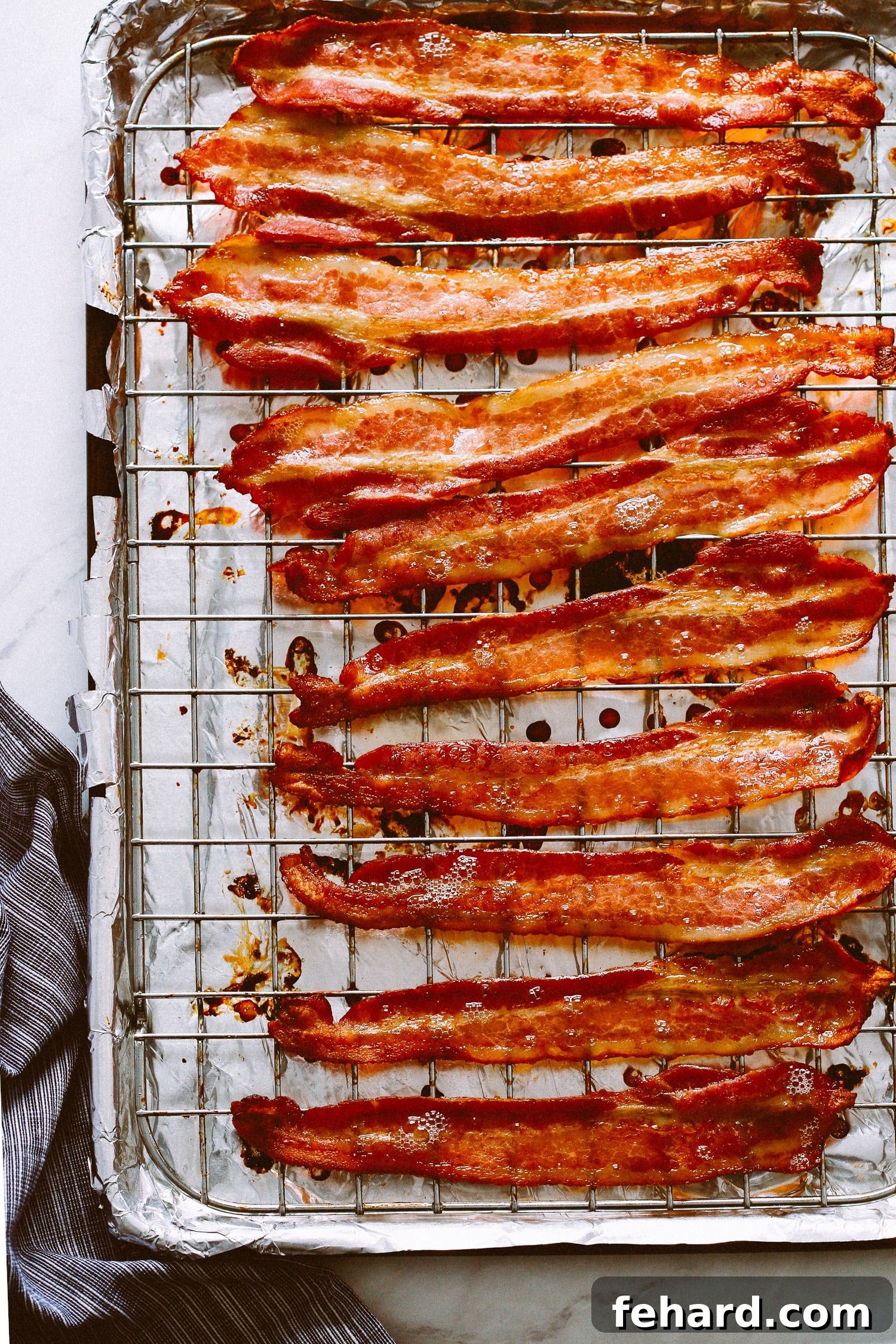
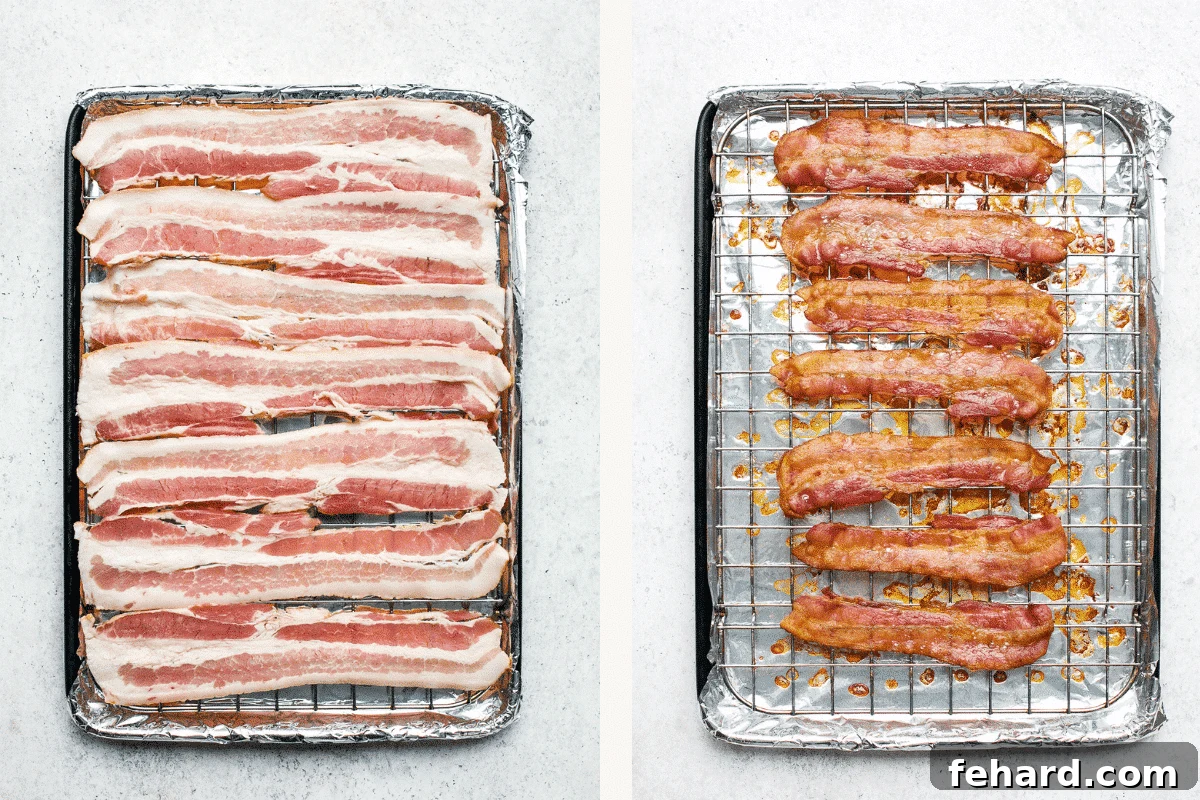
Arrange bacon in a single layer for optimal cooking and crispness.
Essential Equipment for Oven-Baked Bacon
Before you start, gather these simple tools to ensure a smooth and successful bacon-baking experience. These items are readily available and make all the difference in achieving perfect results and easy cleanup.
Required Tools:
Rimmed Baking Sheet (or Sheet Pan): This is non-negotiable. A rimmed baking sheet prevents the rendering bacon grease from dripping off the pan and into your oven, which can cause smoke and a messy oven to clean. A standard half-sheet pan (approximately 13×18 inches) is ideal for a pound of bacon.
Aluminum Foil or Parchment Paper: Both work wonderfully for easy cleanup.
Aluminum Foil: Great for containing grease. Make sure to use enough to extend up and over the edges of the baking sheet to prevent any leaks.
Parchment Paper: Offers a non-stick surface, which can be helpful if you’re worried about bacon sticking. It also makes cleanup a breeze.
Wire Cooling Rack (Oven-Safe): While optional, a wire rack is highly recommended for the crispiest bacon. It elevates the bacon, allowing hot air to circulate all around each strip and for excess fat to drip below. This prevents the bacon from frying in its own grease, leading to a superior, more evenly cooked, and less greasy final product. Ensure it’s oven-safe and fits comfortably inside your baking sheet.
Tongs: Essential for safely handling hot bacon strips, transferring them from the rack, and draining them without burning your fingers.
Paper Towels: For blotting any remaining excess grease from the cooked bacon, especially if you opted not to use a wire rack.
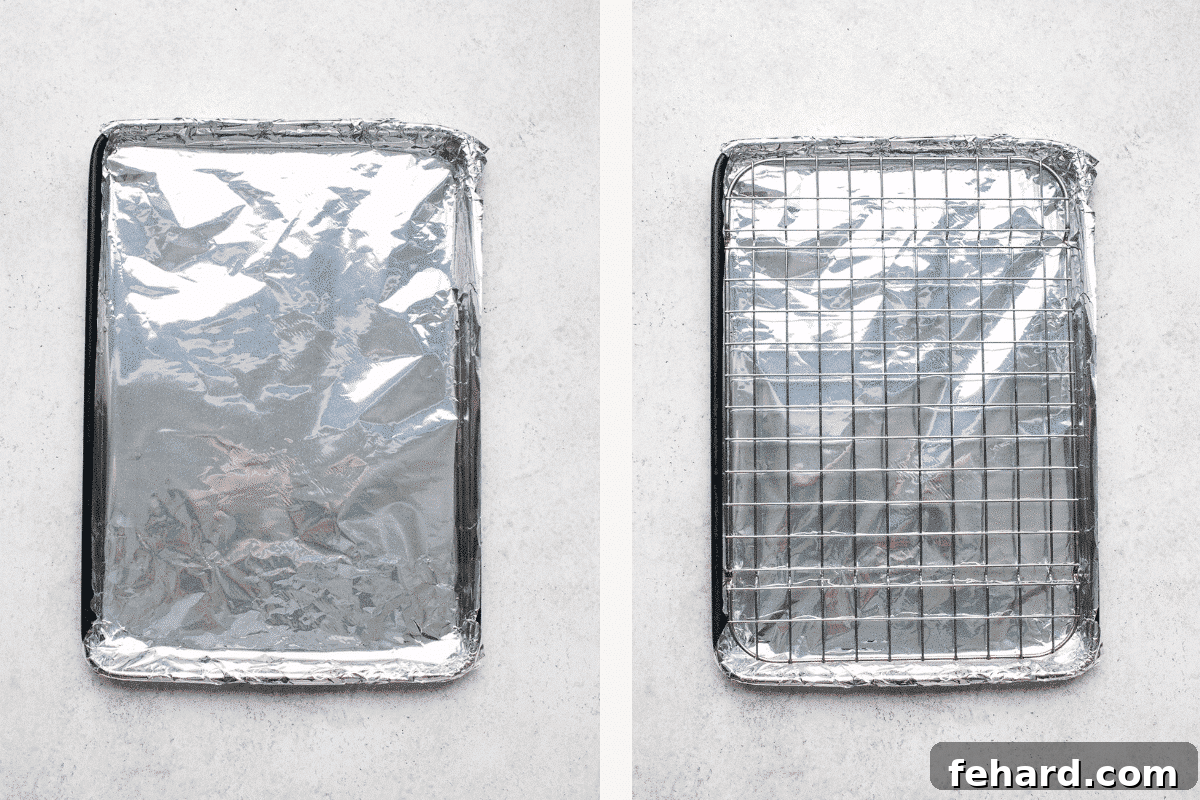
Properly lining your baking sheet is key for easy cleanup and preventing grease spills.
Step-by-Step Instructions: How to Cook Bacon in the Oven
Follow these simple steps to achieve perfectly crispy bacon with minimal fuss. This method is incredibly straightforward and yields consistently delicious results every time.
Baking Instructions
Preheat your oven to 400°F (200°C). Proper preheating is crucial for consistent cooking and crispiness. Don’t put cold bacon into a cold oven, as it will cook unevenly and might not achieve the desired texture.
Prepare the baking sheet: Line a large, rimmed baking sheet generously with aluminum foil or parchment paper. Make sure the lining extends up and over the edges of the pan. This creates a barrier that catches all the rendered bacon grease, making cleanup incredibly simple. If using a wire cooling rack, place it directly on top of the foil-lined baking sheet.
Arrange the bacon: Lay the bacon slices in a single layer on the wire rack (or directly on the foil/parchment if not using a rack). It’s okay if the pieces slightly touch, as they will shrink during cooking. However, avoid excessive overlapping, which can lead to uneven cooking and less crisp results. For the crispiest outcome, ensure each strip has a little space.
Bake until crispy: Place the baking sheet in the preheated oven. Bake for approximately 20-25 minutes. The exact cooking time will vary based on your oven’s calibration, the thickness of your bacon, and your desired level of crispness.
For regular-cut bacon, start checking around 15-18 minutes.
For thick-cut bacon, it may take 25-30 minutes or even slightly longer.
Look for a deep golden-brown color and a firm, crisp texture. Keep a close eye on it during the last few minutes to prevent burning.
Remove and drain: Once the bacon reaches your desired crispness, carefully remove the baking sheet from the oven. Using tongs, transfer the crispy bacon from the wire rack to a plate lined with several layers of paper towels. This step allows any remaining excess grease to drain off, enhancing the crispness.
Serve and enjoy! Allow the bacon to cool for a minute or two on the paper towels before serving. It will crisp up even further as it cools. Serve immediately as a delicious side or incorporate it into your favorite recipes.
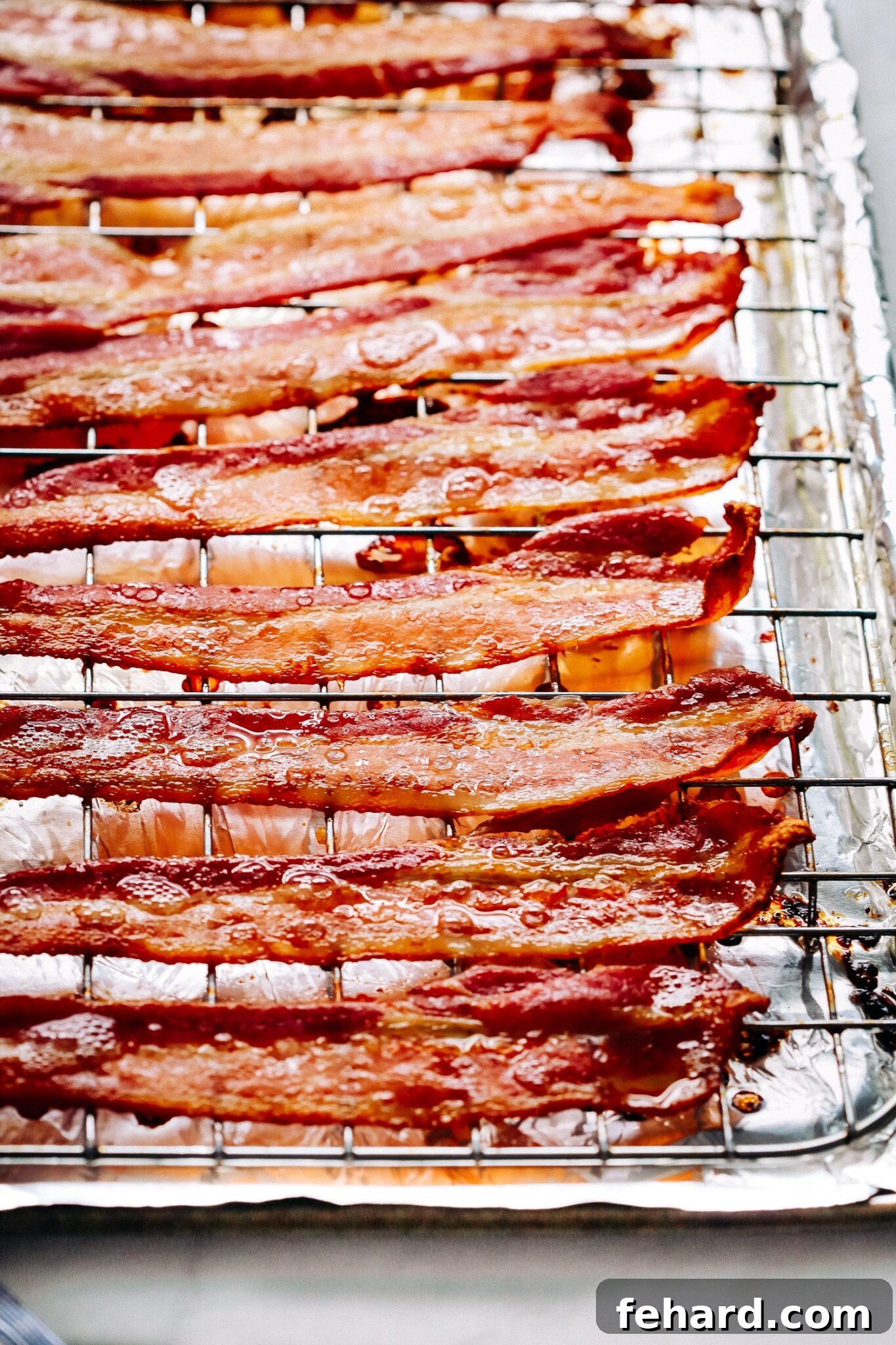
From raw to perfectly crispy: the magic of oven-baked bacon.
Expert Tips for Perfect Oven-Baked Bacon
While the basic instructions are straightforward, a few extra tips can help you achieve bacon perfection every single time:
Don’t Crowd the Pan: For truly crispy bacon, adequate airflow is key. Ensure bacon slices are laid in a single layer with a little space between them. Overlapping will steam the bacon rather than fry it, resulting in less crispy results.
Adjust for Thickness: Thick-cut bacon takes longer to cook than regular or thin-cut. Be prepared to add an extra 5-10 minutes (or more) to the baking time for thicker slices. Monitor closely towards the end of cooking.
Always Use a Wire Rack (If Possible): We can’t stress this enough! The rack allows fat to drip away and air to circulate, resulting in bacon that is uniformly crisp and less greasy. If you skip the rack, the bacon will cook in its own fat, which can make it chewier and require more draining.
Watch Closely Towards the End: Bacon can go from perfectly crisp to burnt in a matter of seconds. Stay near the oven during the last 5-7 minutes of baking and check frequently, especially if it’s your first time using this method or cooking a new type of bacon.
Consider a Cold Oven Start: Some chefs prefer starting bacon in a cold oven and then turning it on. This allows the bacon to gradually render its fat as the oven heats up, which can result in very flat, evenly cooked strips. However, our recommended preheated oven method is generally faster and equally effective for crispness.
Season Your Bacon: For an extra layer of flavor, consider sprinkling a little black pepper, brown sugar (for candied bacon!), or a dash of cayenne pepper over your raw bacon strips before baking.
Handle Hot Grease Safely: Once the pan has cooled slightly, carefully pour the rendered bacon grease into a heat-safe container (like a mason jar or old metal can). Never pour hot grease down your drain, as it can solidify and clog pipes.
The irresistible allure of perfectly crispy oven-baked bacon.
Creative Ways to Enjoy Your Oven-Cooked Bacon
Oven-cooked bacon is incredibly versatile and can be used in countless ways beyond just a breakfast side. Its consistent crispness and rich flavor make it a fantastic addition to meals throughout the day.
Delicious Serving Suggestions:
Classic Breakfast Side: The most obvious, yet always satisfying! Serve alongside eggs, pancakes, waffles, or French toast.
Bacon Crumbles: Transform crispy bacon into delightful crumbles for various dishes:
Sprinkle on top of a breakfast casserole or frittata.
Add to scrambled eggs or omelets for a savory boost.
Mix into creamy soups (like potato or corn chowder) or sprinkle over roasted vegetables.
Top baked potatoes, macaroni and cheese, or green bean casserole.
Lunchtime Reinvented:
Salads: Elevate almost any salad – from a simple green salad to a Cobb or spinach salad – with the hearty texture and salty crunch of bacon bits.
Sandwiches & Wraps: Essential for a classic BLT, club sandwich, or any hearty wrap.
Protein Boxes: Create an easy and satisfying meal prep protein box with slices of bacon, hard-boiled eggs, cheese cubes, and some fresh fruit or vegetables.
Dinner Delights:
Burgers & Hot Dogs: Layer full strips of bacon on your burger or hot dog for an irresistible upgrade.
Roasted Vegetables: Pair it with roasted Brussels sprouts, asparagus, broccoli, or green beans for a flavorful side dish.
Pasta Dishes: Use it to add depth to pasta carbonara, or crumble it into other creamy pasta sauces.
Pizza Topping: Crispy bacon is a fantastic addition to homemade pizzas.
Unique Applications:
Savory Baked Goods: Mix bacon bits into these savory breakfast scones or a breakfast salad for an unexpected burst of flavor.
Candied Bacon: For a sweet and savory treat, brush bacon with maple syrup and a sprinkle of brown sugar during the last 5-10 minutes of baking.
Storing and Reheating Oven-Baked Bacon
One of the many advantages of oven-baked bacon is its suitability for meal prep. You can cook a large batch and enjoy it throughout the week. Proper storage and reheating will ensure your bacon remains delicious.
Cool Completely Before Storing: Always allow cooked bacon to cool completely to room temperature before storing. This prevents condensation from forming in the container, which can make the bacon soggy.
Refrigeration: Store leftover cooked bacon in an airtight container or a sealed plastic bag in the refrigerator for up to 5 days.
Freezing: For longer storage, cooked bacon freezes beautifully. Place cooled bacon strips in a single layer on a parchment-lined baking sheet and freeze until solid (about 1-2 hours). Then, transfer the frozen strips to a freezer-safe bag or container, removing as much air as possible. Frozen cooked bacon can be stored for up to 3 months.
Reheating Options:
Oven: For the best results, reheat bacon in a preheated oven at 350°F (175°C) for about 5-8 minutes, or until warmed through and crisp. This is ideal for larger quantities.
Microwave: For a quick reheat of a few slices, place them on a paper towel-lined plate and microwave for 20-30 seconds, or until warm. Be aware that microwave reheating might make the bacon slightly less crisp.
Skillet: Reheat in a dry skillet over medium-low heat for a few minutes, flipping occasionally, until crisp again.
Cleaning Up Bacon Grease Safely and Sustainably
The easily contained grease is a major benefit of oven baking bacon, but knowing how to handle it properly is important for your plumbing and even for future cooking endeavors.
Never Pour Down the Drain: Bacon grease solidifies as it cools and can quickly clog your kitchen pipes, leading to costly plumbing issues. This applies to hot and cold grease.
Collection and Disposal: Once the baking sheet and grease have cooled slightly (but before the grease fully solidifies), carefully pour the liquid fat into a heat-safe, disposable container. An old metal can (like a coffee can), an empty glass jar (like a mason jar), or a sturdy paper cup lined with foil are excellent choices. Once the grease has completely solidified, you can simply toss the container in the trash.
Save It! (Optional): Bacon grease is a flavorful fat that can be used in other cooking! Strain any bacon bits out of the cooled grease, then store the clean fat in an airtight container in your refrigerator. It can be used to fry eggs, sauté vegetables, make gravies, or even add depth to cornbread. Just be sure to use a clean spoon each time to avoid contamination.
Frequently Asked Questions About Oven-Baked Bacon
Here are some common questions people ask about cooking bacon in the oven:
Can I use parchment paper instead of aluminum foil?
Absolutely! Parchment paper is an excellent alternative to aluminum foil. It provides a non-stick surface, which can be beneficial, and it also makes cleanup incredibly easy. Just like foil, ensure it extends up the sides of your baking sheet to contain any grease.
Is a wire rack really necessary for oven bacon?
While not strictly “necessary,” a wire rack is highly recommended for the best results. It allows air to circulate around all sides of the bacon and helps the fat drain away, resulting in much crispier and less greasy bacon. If you don’t use a rack, your bacon will cook directly in its rendered fat, leading to a chewier texture and requiring more blotting with paper towels.
How do I make my oven bacon extra crispy?
For maximum crispness, follow these key steps: use a wire rack, ensure bacon is in a single layer without overcrowding, and make sure your oven is fully preheated to 400°F (200°C). Cooking for the full 20-25 minutes (or slightly longer for thick-cut) and watching for deep golden-brown edges will also help achieve that perfect crunch.
Can I cook bacon from frozen in the oven?
Yes, you can! Lay frozen bacon strips directly onto your prepared baking sheet and rack. It will take longer to cook, usually an additional 5-10 minutes. Monitor it closely as it thaws and begins to crisp up.
What temperature is best for oven-baked bacon?
A consistent temperature of 400°F (200°C) is generally ideal for oven-baked bacon. This temperature is hot enough to render the fat and achieve crispness without burning the bacon too quickly. Some recipes suggest 375°F (190°C) for slightly slower cooking, but 400°F delivers excellent results for most people.
How do I prevent bacon from smoking in the oven?
Smoking can occur if the oven is too hot or if there are old grease splatters in the oven itself. Ensure you use a clean, rimmed baking sheet lined properly to contain fresh grease. While some minor smoke is normal as fat renders, excessive smoke could indicate your oven needs cleaning or the temperature is set too high for the bacon type.
The Oven-Baked Bacon Recipe
How to Cook Bacon in the Oven
Author:
Olivia Ribas
Servings: 10 slices
Prep Time: 5 minutes
Cook Time: 25 minutes
Total Time: 30 minutes
Learn how to cook bacon in the oven, it’s mess-free and super easy! All you need is aluminum foil, a cooling rack, a rimmed baking sheet and of course, bacon.
Video
Watch how easy it is to cook perfect bacon in the oven!
Ingredients
10 slices bacon (nitrate-free and sugar-free recommended)
Instructions
Preheat oven to 400°F (200°C).
Line a large baking sheet with foil or parchment paper. Make sure you have enough to fold the edges up to prevent grease from running out. If using a wire rack, place it on the lined baking sheet.
Lay bacon in a single layer onto the prepared baking sheet or cooling rack, ensuring no excessive overlap.
Bake until it gets crispy (according to your taste). This will take about 20-25 minutes for regular-cut bacon. For thick-cut, allow a few extra minutes. After 20 minutes, watch closely to avoid burning.
Remove from the oven. Using tongs, transfer the cooked bacon to a plate lined with paper towels to drain excess grease.
Serve immediately and enjoy!
Notes
Ensure bacon slices don’t overlap too much so they cook evenly and crisp up properly.
Thicker bacon will require additional baking time, usually 5-10 minutes more.
Using an oven-safe wire rack will significantly help fat separate from the bacon, leading to a crispier and less greasy final product.
Store excess bacon grease in a heat-safe container (like a mason jar) once cooled, and refrigerate for use in other recipes!
To store: Refrigerate leftover cooked bacon in an airtight container for up to 5 days.
To reheat: Reheat bacon using the oven (best for crispness), microwave, or in a skillet on the stovetop.
To freeze: Freeze cooled, cooked bacon in a single layer on a sheet pan until solid, then transfer to a freezer-safe bag for up to 3 months.
Nutrition
Serving: 1 /10
, Calories: 70 kcal
, Carbohydrates: 1 g
, Protein: 3 g
, Fat: 6 g
, Cholesterol: 12 mg
, Sodium: 100 mg
Nutrition information is automatically calculated, so should only be used as an approximation and can vary based on bacon type and brand.
Mastering oven-baked bacon is a game-changer for any home cook. It’s a simple, mess-free method that guarantees perfectly crispy, flavorful bacon every time. From quick weeknight dinners to impressive brunch spreads, your perfectly cooked bacon will be a welcome addition to countless dishes. So, preheat that oven, lay out those strips, and get ready to enjoy the best bacon you’ve ever made!
We hope this guide has inspired you to try this fantastic technique and make oven-baked bacon a staple in your kitchen. Happy cooking!