
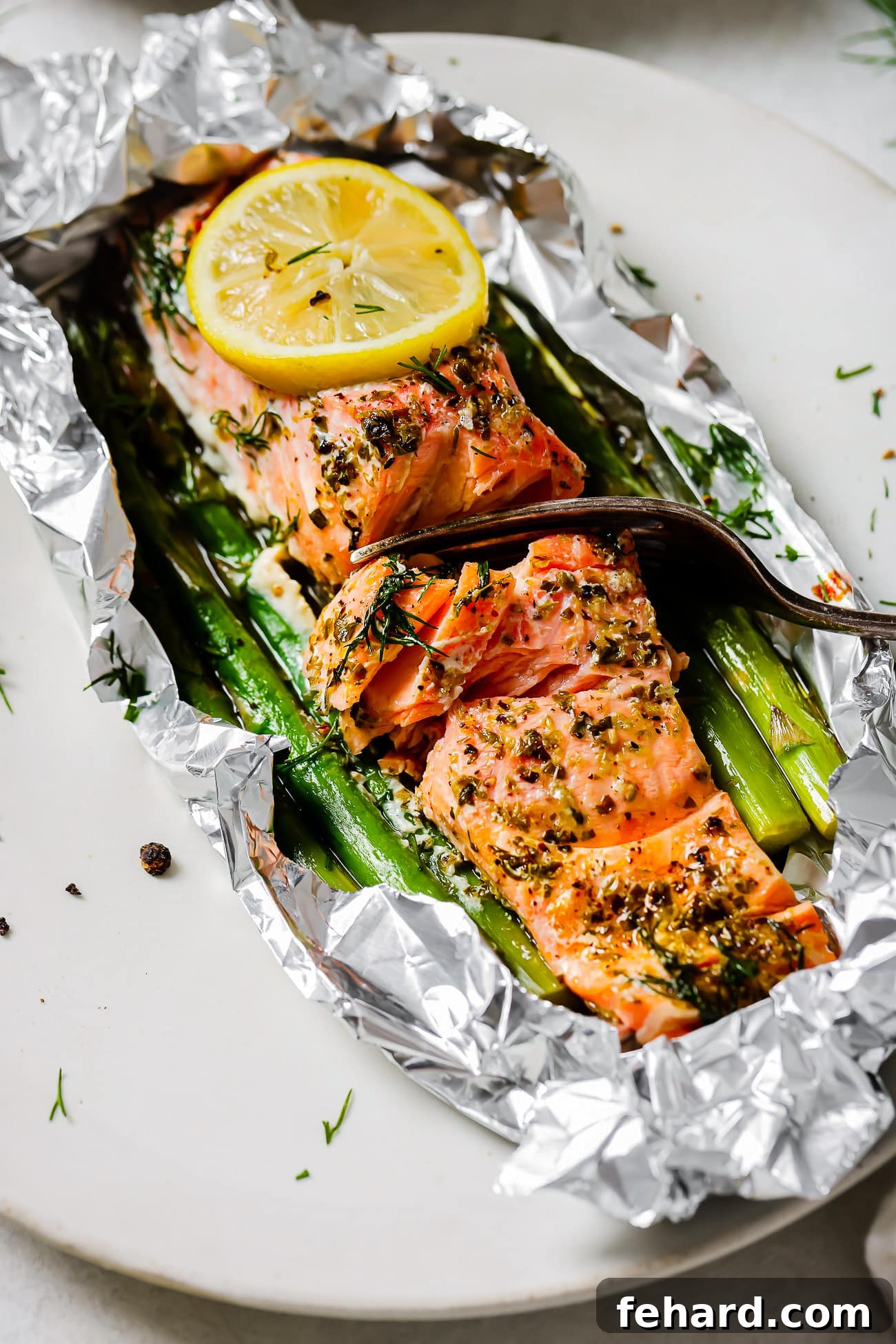
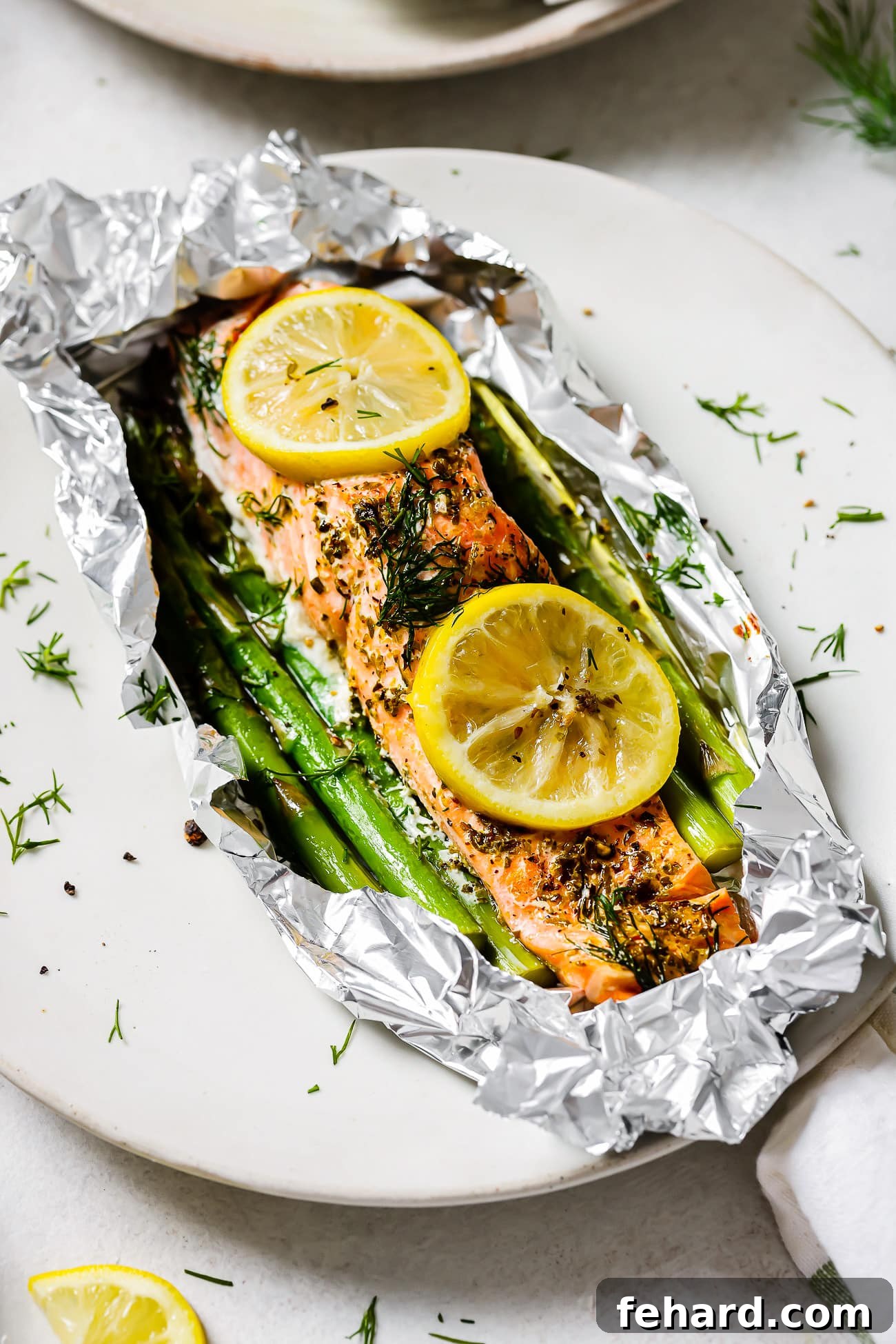
Welcome to the ultimate guide for preparing the most tender, flavorful Oven Baked Salmon in Foil. This incredibly simple yet sophisticated recipe is designed for those busy weeknights when you crave a healthy, delicious meal without the fuss. Imagine perfectly cooked salmon, infused with vibrant lemon and fresh dill, nestled on a bed of crisp asparagus, all baked effortlessly within a foil packet. The magic of this method lies in how the foil locks in moisture, steaming the fish and vegetables to tender perfection while concentrating all those wonderful flavors.
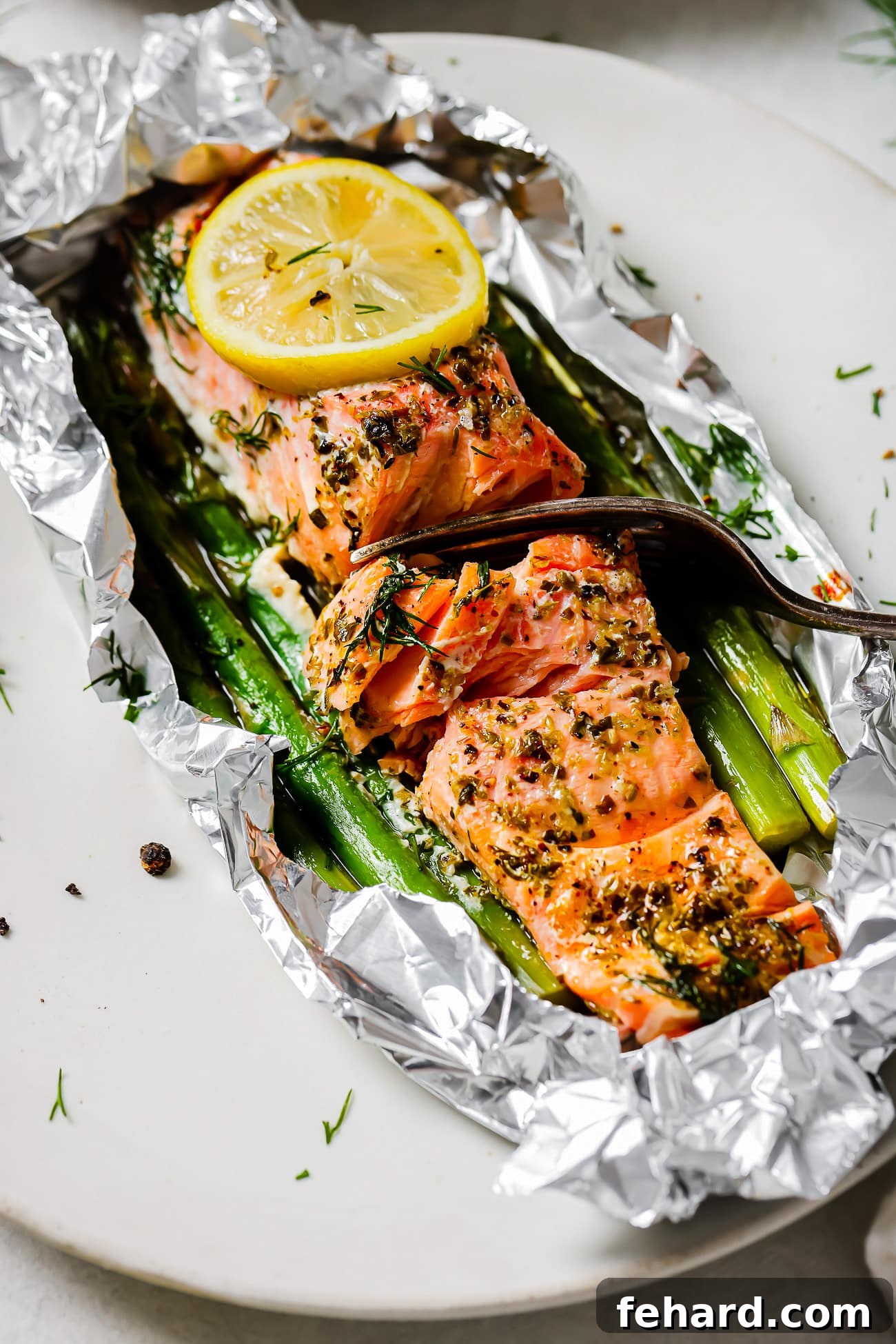
As the year seems to fly by, maintaining healthy eating habits can be a challenge. That’s why this foil baked salmon recipe has become a staple in my kitchen. It’s a dish that genuinely meets all the criteria for a fantastic meal: it’s quick, incredibly tasty, and surprisingly easy to prepare, making it ideal for anyone looking to eat fresh and wholesome dishes consistently.
Whether you’re a seasoned home cook or just starting your culinary journey, this recipe promises success. It’s a testament to how simple ingredients, when combined with a smart cooking technique, can yield extraordinary results. Say goodbye to complicated recipes and stacks of dirty dishes; with our easy salmon dinner, you’re just minutes away from a delightful and nutritious meal that the whole family will adore.
Why You’ll Love This Oven Baked Salmon in Foil Recipe
There are countless reasons why this Oven Baked Salmon in Foil will quickly become a favorite in your recipe rotation. It’s not just another fish dish; it’s a culinary solution for modern living:
- Effortlessly Delicious: This recipe delivers consistently tender, flaky salmon packed with flavor. The foil packet acts like a mini steamer, locking in moisture and ensuring every bite is succulent. Plus, the combination of fresh lemon and dill creates a bright, aromatic profile that’s simply irresistible.
- Unbeatably Quick & Easy: Perfect for busy weeknights, this quick salmon recipe requires minimal hands-on time. You can have it prepped in under 10 minutes and baked to perfection in just 15-20 minutes, bringing a healthy, gourmet-quality meal to your table in less than half an hour.
- Minimal Cleanup: One of the greatest perks of foil packet cooking! The foil lines your baking sheet, containing all the juices and seasonings. Once dinner is done, simply discard the foil, and your cleanup is virtually nonexistent. No scrubbing baking pans required!
- Complete Meal in One Packet: With tender salmon and crisp-tender asparagus cooked together, you’ve got your protein and vegetable side dish all in one go. This simplifies meal planning and ensures a balanced meal without the need for multiple pots and pans.
- Versatile & Customizable: This healthy salmon meal is a blank canvas for your culinary creativity. While lemon and dill are a classic pairing, you can easily swap seasonings, add different herbs, or incorporate various vegetables to suit your taste or what you have on hand.
- Nutrient-Packed: Salmon is a powerhouse of omega-3 fatty acids, essential for heart and brain health. Combined with fiber-rich asparagus, this meal is not only delicious but also incredibly good for you, supporting your healthy eating goals.
From its incredible flavor to its sheer convenience, this foil packet salmon method truly transforms dinner preparation into an enjoyable, stress-free experience.
The Magic of Foil Packet Cooking
Understanding why foil packet cooking is so effective helps appreciate the brilliance of this oven baked salmon recipe. When you tightly seal ingredients in foil, you create a miniature oven or steamer. This method achieves several culinary benefits:
- Moisture Retention: The foil prevents steam from escaping, ensuring that the salmon remains incredibly moist and flaky. Dry, overcooked fish is a common culinary pitfall, but foil packets virtually eliminate this risk.
- Flavor Infusion: All the delicious seasonings, herbs, and citrus juices are trapped within the packet, allowing them to deeply penetrate the salmon and asparagus, resulting in a more intensely flavored dish. Every component gets a chance to meld and harmonize.
- Even Cooking: The contained environment ensures that the heat circulates evenly around the food, cooking both the fish and vegetables uniformly. This is particularly beneficial for delicate ingredients like salmon and tender-crisp vegetables like asparagus.
- Effortless Cleanup: As mentioned, the foil acts as a protective barrier, keeping your baking sheets clean and drastically reducing post-dinner dishwashing. It’s a win-win for taste and tidiness!
This technique is not only practical but also produces consistently excellent results, making it perfect for novice cooks and experienced chefs alike. It’s a simple trick that elevates a basic meal into something special.
Key Ingredients for Perfect Foil Baked Salmon
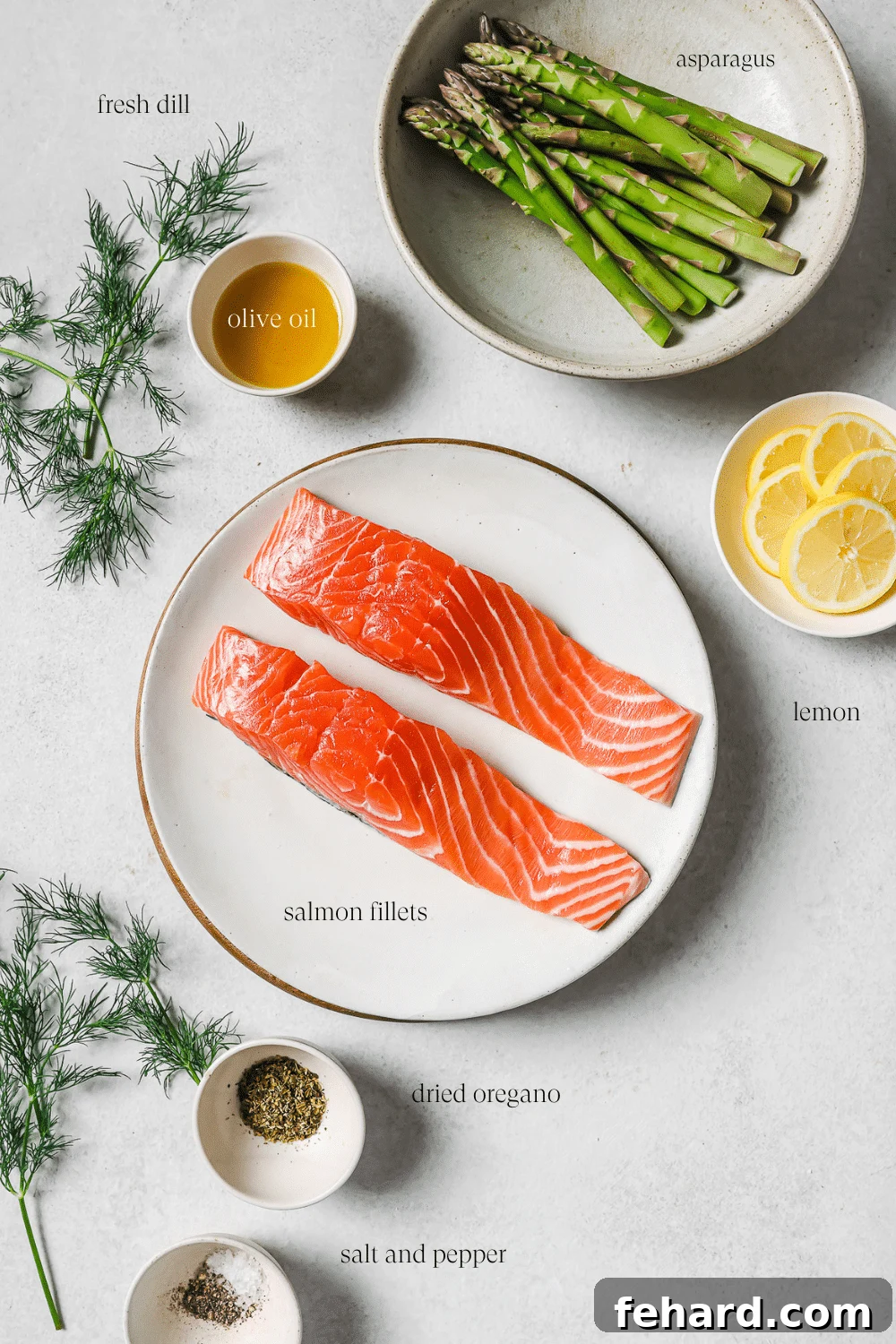
The beauty of this Oven Baked Salmon in Foil lies in its straightforward ingredients that come together to create a harmonious and flavorful dish. Here’s a closer look at what you’ll need and potential substitutions:
Salmon Fillets: The star of our show! For the best flavor and texture, I highly recommend opting for wild-caught salmon. Varieties like Sockeye or Coho offer a richer, less oily profile and bake beautifully. If using farmed salmon, ensure it’s high-quality. Aim for fillets that are similar in thickness, ideally 1 to 1.5 inches at their thickest part, to ensure even cooking. You can use pre-portioned fillets or a larger piece cut into individual servings.
Olive Oil: Extra-virgin olive oil provides a light, fruity base that beautifully complements the lemon and fresh herbs. It also helps the seasonings adhere to the salmon and prevents it from sticking to the foil. If you prefer a milder taste, avocado oil is an excellent alternative. For a richer flavor, a drizzle of melted unsalted butter can also be fantastic.
Seasonings: While I typically stick to a simple blend of dried oregano, kosher salt, and freshly ground black pepper, this recipe is incredibly adaptable. Feel free to experiment with your favorite spice blends. Lemon pepper adds an extra citrusy kick, Italian seasoning offers a savory depth, or for a Mediterranean twist, a spoonful of pesto spread over the salmon before baking is divine. Smoked paprika or garlic powder can also be wonderful additions.
Asparagus: Our vibrant green side dish! Choose asparagus spears that are uniform in size to ensure they cook evenly. Look for firm, bright green stalks with tight tips. Remember to trim the tough, woody ends before cooking – you can easily snap them off or use a knife. If asparagus isn’t in season or you fancy a change, many other vegetables roast wonderfully alongside salmon:
- Green Beans: Tossed with a little olive oil, salt, and pepper, they cook similarly to asparagus.
- Broccoli Florets: Small florets work well, adding a nice crunch.
- Zucchini or Yellow Squash: Sliced into half-moons or spears, they become tender and absorb flavors beautifully.
- Cherry Tomatoes: They burst with flavor as they roast, creating a simple sauce.
- Baby Potatoes: For a heartier meal, halve small potatoes and toss them with oil and seasonings. Since potatoes take longer to cook, consider par-boiling them for 5-7 minutes before adding them to the foil packet, or roast them separately for 10-15 minutes before adding the salmon.
Lemon: Fresh lemon slices are non-negotiable! They add a crucial brightness and a zesty zing that perfectly balances the richness of the salmon. Placing slices directly on the fish allows the lemon essence to infuse as it bakes. For an extra pop of flavor, a final squeeze of fresh lemon juice just before serving truly elevates the dish.
Fresh Herbs: Dill is my absolute favorite with salmon, imparting a delicate, refreshing, and slightly anise-like note. It’s a classic pairing for a reason! However, feel free to explore other fresh herbs. Fresh parsley offers a clean, herbaceous flavor and a beautiful touch of color. Chives add a mild oniony zest. Rosemary or thyme can also be lovely for a more earthy profile. Don’t underestimate the power of fresh herbs to brighten and finish your dish.
How To Make Oven Baked Salmon In Foil: Step-by-Step
Creating this delicious and healthy oven baked salmon in foil is incredibly simple. Follow these easy steps for a perfect meal every time:
1. Preheat Your Oven: Begin by preheating your oven to 400°F (200°C). This ensures that your oven is at the correct temperature for even and efficient cooking from the moment your foil packets go in.
2. Prepare the Salmon: Place your salmon fillets in a shallow bowl or on a plate. Drizzle them generously with extra-virgin olive oil, then season evenly with dried oregano, kosher salt, and freshly ground black pepper. Gently rub the seasonings into the fish to ensure every part is coated. This step is crucial for building a foundational layer of flavor.
3. Prepare the Foil Packets: Tear off two pieces of heavy-duty aluminum foil. Each piece should be large enough to comfortably wrap around one salmon fillet and a portion of asparagus with plenty of room to seal the edges. You can also use parchment paper for a non-reactive alternative.
4. Assemble the Packets: Lay the asparagus spears (about 8 per packet for two servings) in the center of each foil sheet, creating a bed for the salmon. Next, place one seasoned salmon fillet on top of the asparagus. Finish by topping each salmon fillet with 2-3 slices of fresh lemon and a sprig of fresh dill. These aromatics will infuse the fish and vegetables with incredible flavor as they cook.
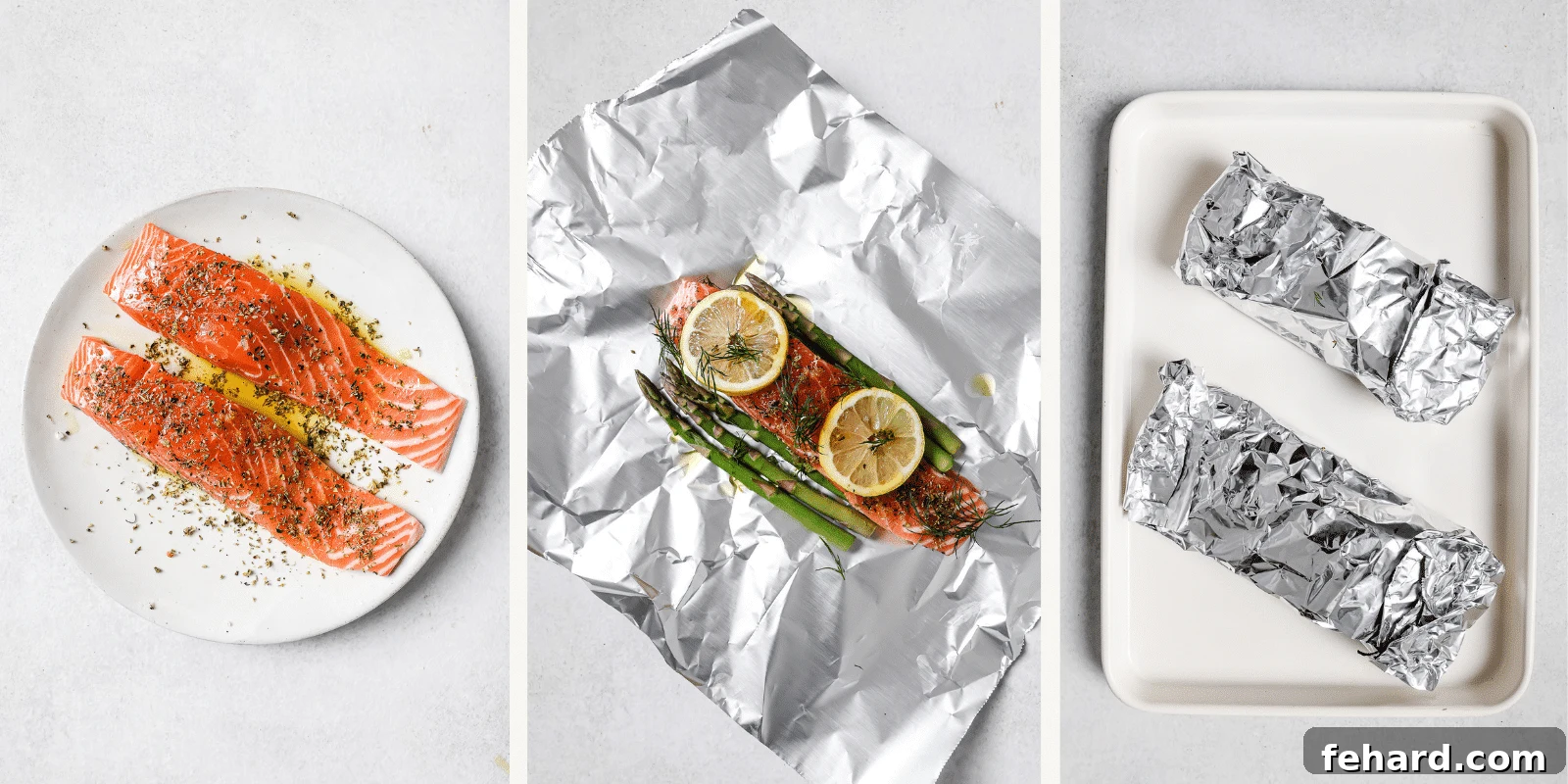
5. Seal the Packets: Bring the long sides of the foil together over the salmon and fold them down tightly to create a sealed seam. Then, fold the short ends inwards towards the center, creating a secure packet. Ensure the packets are sealed well to trap all the steam and flavors inside. Avoid wrapping too tightly, as this can sometimes cause the salmon skin to stick to the foil. You want a snug but not overly compressed seal.
6. Bake to Perfection: Carefully transfer the sealed foil packets to a baking sheet. This makes it easier to handle them and catches any potential drips, though well-sealed packets typically don’t leak. Place the baking sheet in your preheated oven and bake for 15-20 minutes. The exact cooking time will depend on the thickness of your salmon fillets and the specific heat of your oven. Thicker fillets will require a few extra minutes.
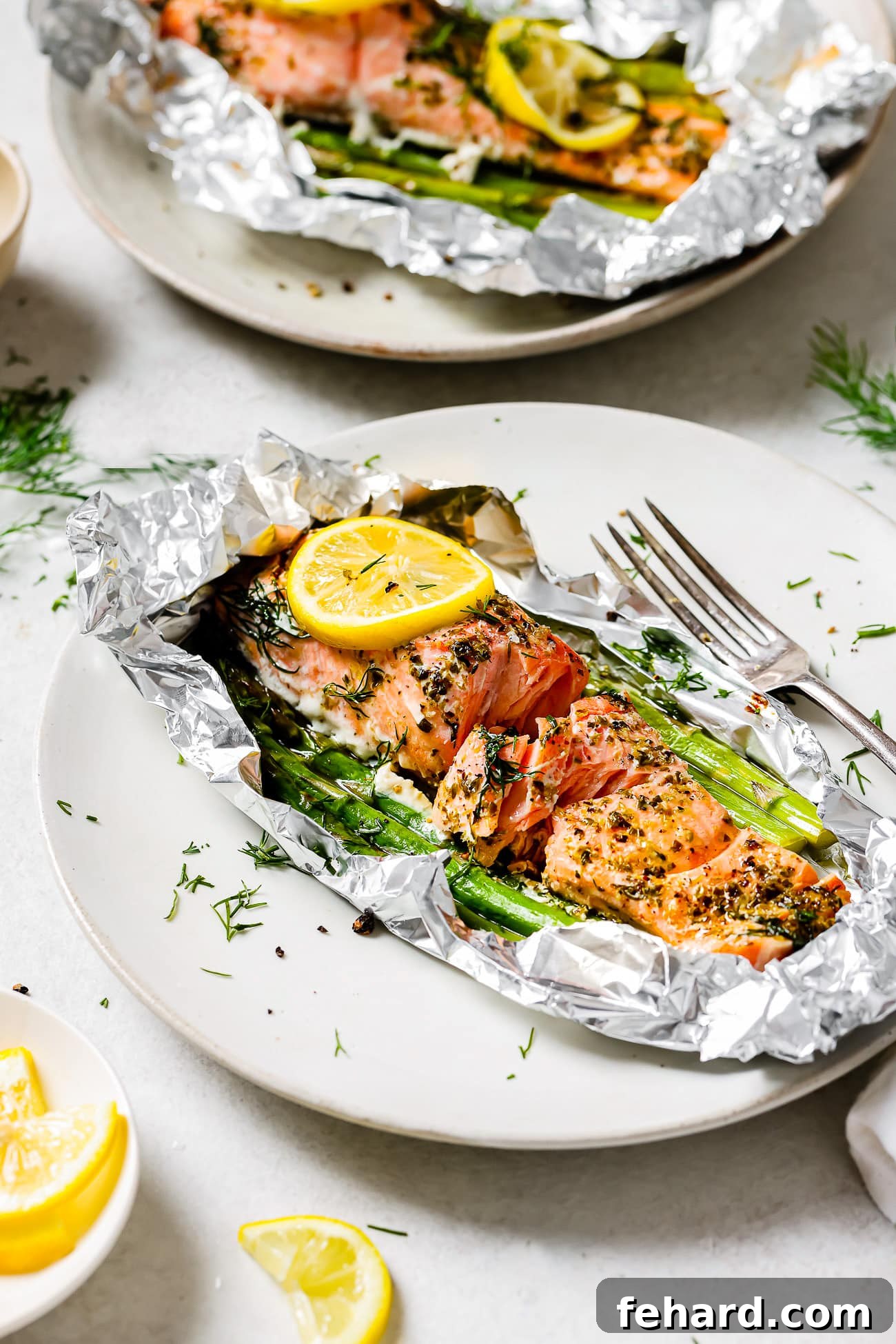
7. Serve and Enjoy: Once baked, carefully remove the baking sheet from the oven. Using tongs or oven mitts, transfer the hot foil packets directly to individual plates. Exercise extreme caution when unwrapping the packets, as a burst of hot steam will escape. Use a large spatula to transfer the tender oven baked salmon and asparagus from the foil to a plate, discarding any excess liquid if desired. Garnish with additional fresh dill or a lemon wedge, and serve warm immediately!
Expert Tips for Flawless Foil Packet Salmon
Achieving perfectly cooked oven baked salmon in foil is simple, but a few expert tips can elevate your results from good to exceptional:
- Steam Safety First: Always open your foil packets carefully, away from your face. The steam trapped inside is incredibly hot and can cause burns. A safe technique is to pierce the top of the foil with a fork to release some steam before fully opening, or use a knife to slice open the top down the middle.
- Manage Moisture Levels: It’s common to find a small amount of liquid pooled at the bottom of the foil packet after cooking. This is perfectly normal; it’s the delicious juices released by the salmon and asparagus. You can either spoon this liquid over your salmon for added moisture and flavor or carefully drain it before serving, depending on your preference.
- Proper Asparagus Prep: Don’t overlook trimming the woody ends of your asparagus. These fibrous parts are unpleasant to eat. The easiest way to do this is to hold an asparagus spear by both ends and bend it gently; it will naturally snap at the point where the woody part begins. Alternatively, you can line up several stalks and trim off the bottom inch or two with a sharp knife.
- Foil Alternatives: If you’re hesitant about cooking directly in aluminum foil or simply prefer another option, parchment paper works beautifully for this recipe. You can create similar packets by folding and crimping the edges of parchment paper. It will achieve the same steaming effect, resulting in tender, flavorful salmon.
- Ensuring Perfect Doneness: The key to delicious salmon is not to overcook it. Salmon is perfectly cooked when its internal temperature reaches 145°F (63°C) at its thickest part. Using an instant-read thermometer is the most accurate way to check. If you don’t have a thermometer, you can test for doneness by inserting a fork into the thickest part of the fillet; fully cooked salmon will flake easily. A slight translucency in the very center is acceptable, as it will continue to cook slightly after removal from the oven (carry-over cooking).
- Don’t Overcrowd: When placing the foil packets on the baking sheet, ensure they are in a single layer and not overlapping. This allows for even heat circulation and consistent cooking.
- Personalize Your Flavors: Don’t be afraid to experiment with different herbs and spices based on your preference. A pinch of red pepper flakes for a subtle kick, a sprinkle of fresh parsley for a brighter note, or a touch of garlic powder can all transform the dish.
Frequently Asked Questions
Here are answers to some common questions about making Oven Baked Salmon in Foil:
How do I know when the salmon is fully cooked?
The most reliable method is to use a meat thermometer. Insert it into the thickest part of the salmon fillet; it should read 145°F (63°C) for food safety. If you don’t have a thermometer, you can test it with a fork: perfectly cooked salmon will flake easily when gently pressed, and the flesh will turn from translucent to opaque throughout.
Can I use different vegetables with this recipe?
Absolutely! This recipe is incredibly versatile. Besides asparagus, green beans, broccoli florets, sliced zucchini, bell pepper strips, and even small amounts of cherry tomatoes or snap peas work wonderfully. For root vegetables like baby potatoes or carrots, you might need to par-boil them slightly or cut them into very small pieces to ensure they cook through at the same rate as the salmon.
What other seasonings can I try?
The possibilities are endless! Experiment with a variety of spice blends. Garlic powder, onion powder, paprika (smoked or sweet), chili powder, a touch of brown sugar for a sweet glaze, or even a pre-made seafood seasoning blend can be delicious. Fresh herbs like parsley, chives, rosemary, or thyme are also excellent choices.
Can I make this recipe on the grill instead of in the oven?
Yes, foil packet salmon is fantastic on the grill! It’s an ideal recipe for summer outdoor cooking. Prepare the packets exactly as described, then place them directly on a preheated grill over medium heat. Cook for approximately 12-18 minutes, depending on the thickness of the salmon and the heat of your grill. Always check for doneness using a thermometer or fork.
Can I prepare the foil packets ahead of time?
Yes, you can prep the packets up to a few hours in advance. Assemble the salmon, vegetables, and seasonings in the foil, then seal them tightly. Store the packets in the refrigerator until you’re ready to bake. This makes weeknight dinners even more convenient!
Serving Suggestions
While this Oven Baked Salmon in Foil with asparagus is a complete meal on its own, you can easily enhance it with additional side dishes to create a more elaborate spread:
- Grain-Based Sides: Serve alongside fluffy white rice, brown rice, couscous, or a vibrant quinoa salad. These absorb the delicious juices from the foil packets beautifully.
- Simple Salads: A fresh green salad with a light vinaigrette or a crisp cucumber and tomato salad provides a refreshing contrast.
- Roasted Potatoes: For a heartier meal, serve with roasted baby potatoes, sweet potato fries, or garlic parmesan roasted Brussels sprouts.
- Crusty Bread: A warm, crusty baguette is perfect for soaking up any remaining flavorful juices.
- Lemon Wedges: Always have extra lemon wedges on hand for a final squeeze over the salmon, enhancing its fresh, bright flavor.
- Dipping Sauce: A simple lemon-dill yogurt sauce or a light aioli can add another layer of flavor.
Storage and Reheating Tips
Properly storing and reheating your oven baked salmon ensures you can enjoy delicious leftovers:
- To Store: Allow any leftover salmon and asparagus to cool completely to room temperature. Transfer them to an airtight glass container and store in the refrigerator for up to 3 days.
- To Reheat: For best results, gently rewarm leftovers.
- Microwave: Place salmon and asparagus on a microwave-safe plate, cover loosely, and heat in 30-second intervals until just warmed through. Be careful not to overheat, as this can dry out the salmon.
- Air Fryer: For crispier reheating, place salmon in a single layer in the air fryer basket. Air fry at 350°F (175°C) for 3-5 minutes, or until heated through.
- Oven: Place salmon and asparagus in a small, oven-safe dish, cover loosely with foil, and reheat in a preheated oven at 275°F (135°C) for 10-15 minutes, or until warmed.
- To Freeze: If you wish to freeze cooked salmon, ensure it has cooled completely. Place individual fillets in a freezer-safe bag or airtight container, removing as much air as possible to prevent freezer burn. Freeze for up to 4 months. Thaw overnight in the refrigerator before reheating.
More Delicious Salmon Recipes to Try:
If you loved this Oven Baked Salmon in Foil, you’re in for a treat! Explore these other fantastic salmon recipes that offer variety and equally impressive flavors:
- Easy Cedar Plank Salmon: Elevate your grilling game with this flavorful cedar plank salmon. Rubbed with zesty Cajun seasoning and slow-grilled over a soaked cedar plank, it infuses your fish with a uniquely delicious smoky aroma and taste.
- Quick Easy Broiled Salmon: When time is of the essence, this simple broiled salmon recipe is your go-to. Requiring only four ingredients, it delivers a tasty and heart-healthy meal in minutes, perfect for your busiest weeknights.
- Garlic Butter Salmon in Foil: Another incredible foil packet meal! This super easy dinner is ready in under 25 minutes, featuring succulent salmon drenched in a savory garlic butter sauce. It pairs wonderfully with fresh salads, crispy Garlic Parmesan Roasted Brussels Sprouts, or spicy Baked Sweet Potato Fries.
- Salmon Chopped Salad Recipe: Have salmon leftovers? Transform them into this quick and satisfying chopped salad. It’s an excellent way to enjoy the goodness of salmon in a fresh, vibrant, and incredibly delicious meal.
- Air Fryer Salmon: For an alternative cooking method that yields amazing results, try this air fryer salmon. Ready in less than 20 minutes, it consistently produces moist, flaky, and perfectly tender salmon with a delightful crispy exterior.
Oven Baked Salmon in Foil Recipe Card
Oven Baked Salmon in Foil Recipe
Oven Baked Salmon In Foil is the easiest way to make tender, flavorful salmon every time. The foil packets lock in moisture and infuse the salmon with lemon and fresh dill. Baked over a bed of asparagus, it’s the perfect recipe for a quick and healthy weeknight meal!
Author: Olivia Ribas
Servings: 2 people
Prep Time: 10 minutes
Cook Time: 20 minutes
Total Time: 30 minutes
Ingredients
- 2 salmon fillets
- 1 tbsp extra-virgin olive oil
- Salt and pepper to taste
- 1 tsp dried oregano
- 16 asparagus spears, woody ends trimmed
- 4 slices of lemon
- 1 tsp fresh dill, chopped (plus sprigs for garnish)
Instructions
- Preheat oven to 400°F (200°C).
- In a bowl, place the two pieces of salmon. Pour 1 tbsp olive oil and sprinkle with salt, pepper, and dried oregano. Gently rub seasonings onto the salmon.
- Cut two sheets of heavy-duty aluminum foil (or parchment paper), each large enough to wrap a salmon fillet and asparagus.
- First, arrange about 8 asparagus spears on each sheet of foil. Layer one seasoned salmon fillet over the asparagus. Then, top each salmon fillet with about 2 lemon slices and a sprig of fresh dill.
- Bring the long sides of the foil inward over the salmon, folding tightly to create a sealed seam. Then, fold the top and bottom ends of the foil to enclose the packet securely.
- Place the foil packets in a single layer on a baking sheet.
- Bake in the preheated oven for about 15-20 minutes. The cooking time may vary based on the thickness of your salmon fillets and your oven’s power.
- Carefully unwrap the packets (beware of hot steam!). Using a large spatula, transfer the oven-baked salmon and asparagus to plates. Serve warm.
Notes
- Be very careful when opening the foil packet as the steam inside is extremely hot.
- You may find a bit of flavorful liquid in the packets; you can spoon it over the salmon or drain it before serving.
- Ensure you trim the woody ends from the asparagus for the best texture.
- If you prefer not to use foil, parchment paper works just as well to create sealed packets.
- Salmon is perfectly cooked when its internal temperature reaches 145°F (63°C) in the thickest part. Use an instant-read thermometer for accuracy.
- Do not wrap the salmon too tightly in the foil, as this can cause the fish to stick when unwrapping.
- There’s no need to flip the foil packs during baking.
- To store: Place leftover salmon and asparagus in an airtight glass container and refrigerate for up to 3 days.
- To reheat: Rewarm leftovers gently in the microwave, air fryer, or a low-temperature oven to prevent drying out.
- To freeze: Once cooled to room temperature, freeze salmon fillets in a freezer-safe bag or container for up to 4 months. Thaw completely before reheating.
Nutrition
Serving: 1/2, Calories: 280kcal, Carbohydrates: 8.5g, Protein: 35.9g, Fat: 14g, Cholesterol: 73.1mg, Sugar: 3.2g
Nutrition information is automatically calculated and should only be used as an approximation.