
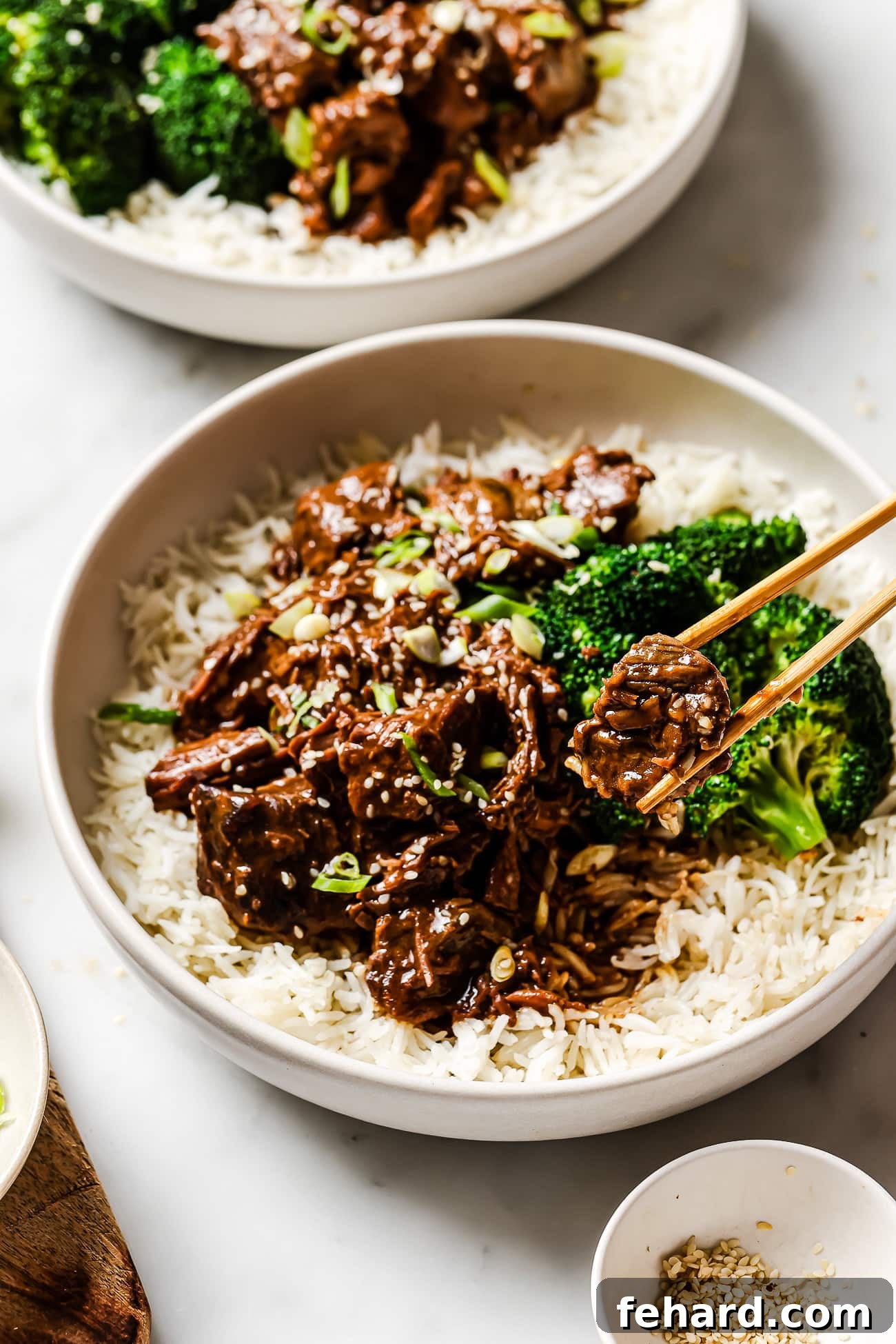
Craving a deeply flavorful, effortlessly tender meal that practically cooks itself? Look no further than this incredible Slow Cooker Korean Beef recipe. Imagine succulent beef, slow-simmered for hours in a rich, sweet, and savory sauce with just a hint of spice, melting in your mouth with every bite. This dish isn’t just easy; it’s a culinary experience designed for busy weeknights, offering maximum flavor with minimal effort. With only about 10 minutes of hands-on prep time, your slow cooker takes over, transforming humble ingredients into a masterpiece that tastes even better than your favorite takeout.
Perfectly suited for a cozy family dinner or impressive enough for guests, Slow Cooker Korean Beef promises to become a staple in your meal rotation. Serve it warm from the crock-pot over a bed of fluffy white rice, wholesome brown rice, or a lighter cauliflower rice alternative. Add a vibrant side of steamed vegetables, and you have a complete, satisfying, and utterly delicious meal ready to be savored.
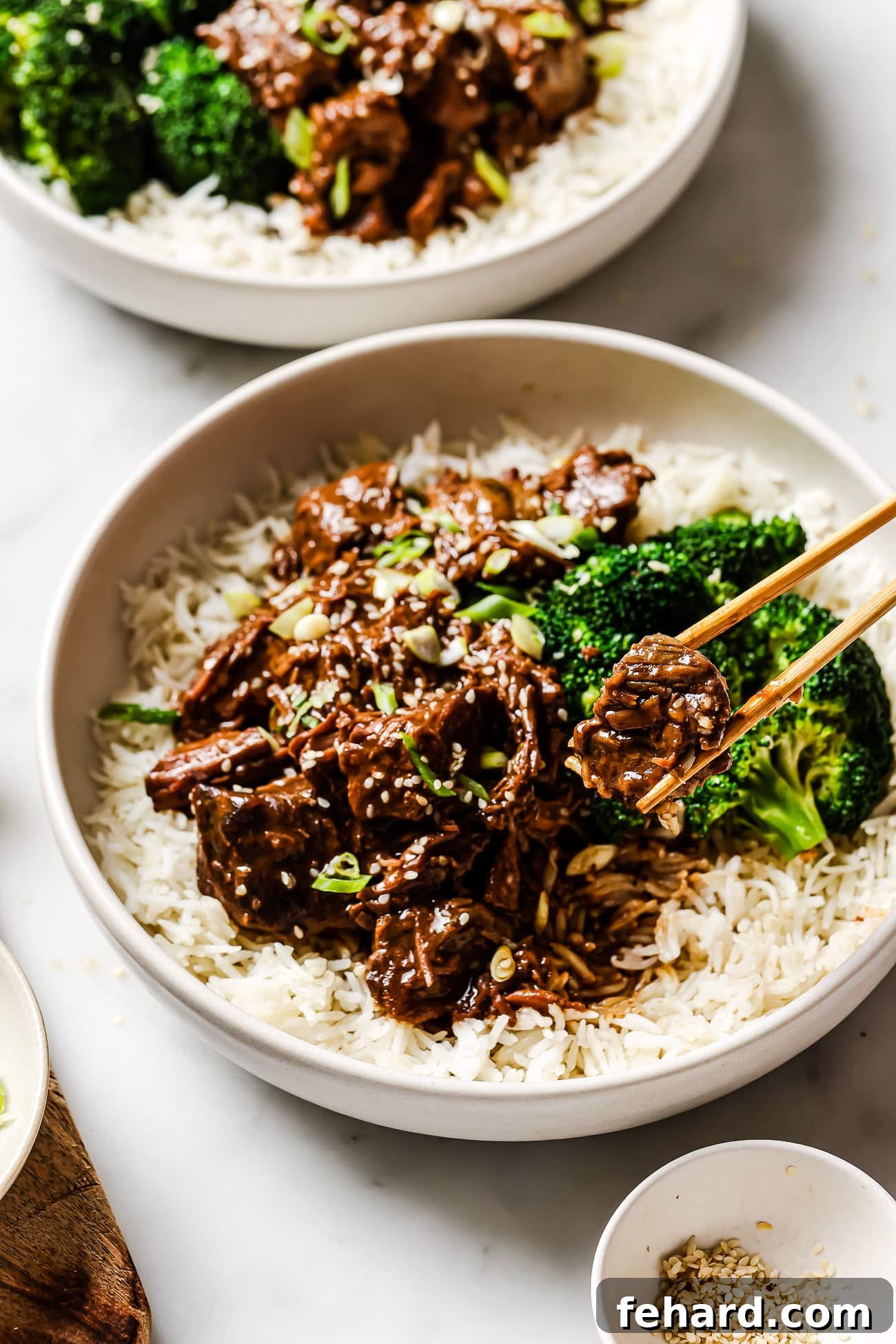
What is Slow Cooker Korean Beef? Unlocking the Flavor Profile
Slow Cooker Korean Beef is an inspired dish that captures the essence of traditional Korean flavors, delivering them through the convenience of slow cooking. At its heart, it features tender cuts of beef—typically chuck roast—gently simmered for hours in a deeply aromatic, sweet-savory sauce. This signature sauce is a harmonious blend of fundamental Asian ingredients like reduced sodium soy sauce, fresh minced garlic, pungent grated ginger, fragrant sesame oil, and a touch of sweetness from brown sugar, often balanced with a subtle kick of spice from Sriracha.
The beauty of this slow-cooked rendition lies in its ability to transform tougher, more affordable cuts of beef into incredibly tender, fall-apart morsels. The prolonged cooking time allows the connective tissues and marbling in the meat to break down slowly, absorbing all the nuanced flavors of the sauce. This process results in a dish that is rich, complex, and incredibly satisfying, with beef so tender it practically melts in your mouth. While traditional Korean beef dishes like Bulgogi often involve marinating and grilling thinly sliced beef, our slow cooker version simplifies the process, making it accessible for any home cook without compromising on authentic taste or luxurious texture. It’s a testament to how simple ingredients, combined with the magic of a slow cooker, can create an extraordinary meal with minimal fuss.
Why You’ll Love This Easy Korean Beef Recipe
If you’re searching for a go-to dinner that combines ultimate convenience with captivating flavors, this Slow Cooker Korean Beef is about to become your new favorite. Here’s why this recipe stands out and why it’s perfect for your kitchen:
- Effortless Preparation: This recipe is designed for busy schedules. With just about 10 minutes of active prep, you can combine the ingredients, set your slow cooker, and let it do all the work. It truly is a “set it and forget it” meal that frees up your precious time.
- Unforgettable Flavor Profile: The sauce is a masterpiece of balance – perfectly sweet, deeply savory, and with just the right amount of spicy warmth. The combination of soy sauce, brown sugar, garlic, ginger, and sesame oil creates a rich, complex taste that is both comforting and exotic, appealing to a wide range of palates.
- Melt-in-Your-Mouth Tenderness: The long, slow cooking process is key to transforming a tougher cut like chuck roast into incredibly succulent, fall-apart beef. The meat becomes so tender you can easily shred it with a fork, absorbing all the incredible flavors of the sauce.
- Incredibly Versatile: This dish serves as an excellent base for various meals. It’s fantastic over rice, delicious in wraps or tacos, and can be easily adapted with different vegetables or garnishes to create a unique meal every time.
- Ideal for Meal Prep: This recipe yields fantastic leftovers that taste even better the next day, as the flavors have more time to meld and deepen. It’s perfect for packing lunches, enjoying quick reheat dinners, or freezing for future meals.
- Crowd-Pleaser: Its universally appealing flavors make it a guaranteed hit with families and guests alike. Prepare for empty plates and requests for the recipe!
Key Ingredients for Authentic Flavor and Texture
Achieving the perfect Slow Cooker Korean Beef relies on a few core ingredients that deliver both incredible flavor and that desirable melt-in-your-mouth texture. Here’s a closer look at what you’ll need to create this amazing dish:
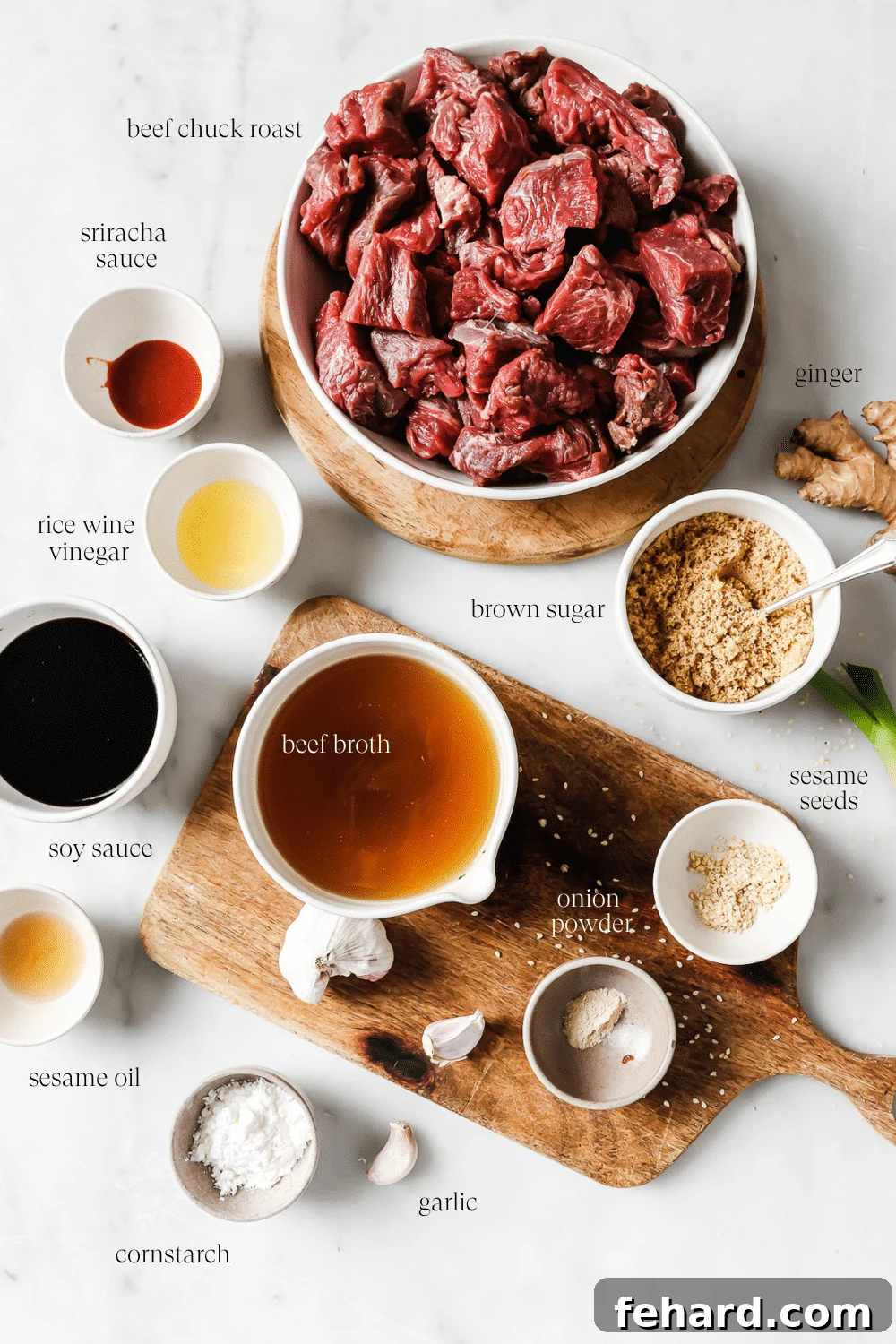
The Best Beef Cut: Chuck Roast
For this recipe, boneless beef chuck roast is unequivocally the star. This cut is highly recommended for its generous marbling of fat and connective tissue. While these elements make it a tougher cut for quick cooking methods, they are precisely what make it ideal for slow cooking. As it simmers for hours, the collagen and fat slowly break down into gelatin, infusing the beef with rich moisture and unparalleled tenderness. This transformation results in that desirable fall-apart texture that is synonymous with perfectly slow-cooked meat.
While you can use flank steak as a leaner alternative, be aware that it might not achieve the same luscious tenderness and juiciness that a chuck roast provides, often requiring a slightly shorter cooking time to prevent drying out. For the best results and the most tender beef, stick with chuck roast. Avoid very lean cuts like sirloin or round, as they lack the marbling necessary to stay moist and tender during the extended cooking process and tend to become dry and stringy.
The Flavorful Sauce Base
The magic of Slow Cooker Korean Beef truly lies in its signature sweet, savory, and slightly spicy sauce. Each component plays a crucial role in building this complex flavor:
- Beef Broth: Provides a rich, umami-filled liquid base that helps to braise the meat and infuse it with deep savory notes.
- Reduced Sodium Soy Sauce: A cornerstone of Asian cuisine, soy sauce offers a profound umami flavor and saltiness. Opting for reduced sodium allows you to control the overall salt level, ensuring the dish isn’t overly salty and you can season to taste.
- Brown Sugar (packed): Delivers the essential sweetness that balances the savory and salty components. It also helps to create a beautiful glaze on the beef and contributes to the sauce’s slight caramelization.
- Fresh Garlic (minced): A non-negotiable ingredient in Korean cooking, fresh garlic provides an aromatic depth and pungent flavor that is irreplaceable. Minced garlic integrates smoothly into the sauce, distributing its flavor evenly.
- Sesame Oil: Adds a distinct nutty aroma and rich flavor, a hallmark of many Asian dishes. Use toasted sesame oil for a more intense and complex fragrance.
- Rice Wine Vinegar: Provides a subtle tang and essential acidity, which brightens the sauce, cuts through the richness of the beef, and balances the sweetness. If you’re out of rice vinegar, balsamic vinegar can be a substitute, but be mindful that it will impart a slightly darker color and a fruitier, more intense flavor.
- Freshly Grated Ginger: Essential for a warm, zesty, and aromatic kick that elevates the entire dish. Fresh ginger offers a vibrant flavor that ground ginger cannot fully replicate, making it a key component.
- Sriracha: Offers a manageable level of heat and a subtle garlicky undertone. The amount can be easily adjusted to suit your personal spice preference, from a mild hint to a fiery kick.
- Onion Powder: Enhances the savory depth and provides a consistent, mellow onion flavor throughout the sauce without adding texture.
The Thickening Agent: Cornstarch
Cornstarch is vital for creating the luscious, glossy, and thick sauce that beautifully coats the tender beef. When mixed with cold water to form a “slurry,” it’s added during the final stages of cooking. This method allows the sauce to thicken efficiently without the risk of lumps, resulting in a perfectly consistent and appealing sauce that clings to the meat.
Note for Gluten-Free: To make this delicious recipe completely gluten-free, simply substitute traditional soy sauce with tamari sauce. Tamari offers the same rich umami flavor but is naturally gluten-free. Always ensure your beef broth is also certified gluten-free.
Homemade Korean Beef: A Simple Four-Step Process
Creating this flavorful Slow Cooker Korean Beef is incredibly straightforward, allowing you to enjoy a gourmet-quality meal with minimal fuss. Follow these four easy steps for perfectly tender beef and a rich, aromatic sauce every time.
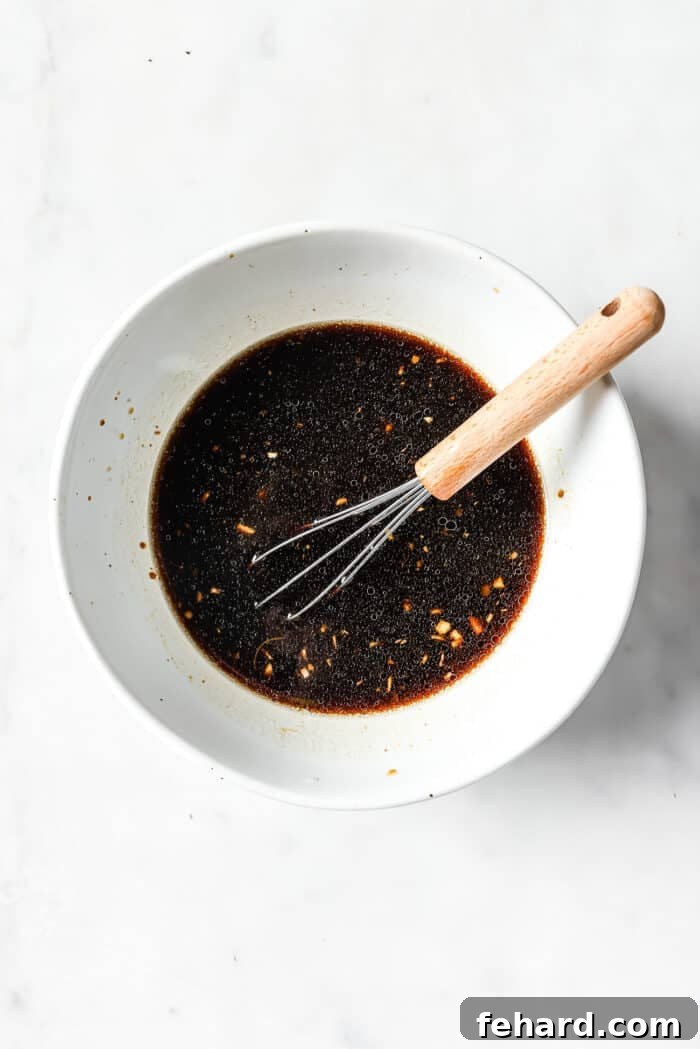
First: Prepare the Flavorful Sauce. In a medium-sized mixing bowl, combine all the sauce ingredients: beef broth, reduced sodium soy sauce, packed brown sugar, minced garlic, sesame oil, rice wine vinegar, freshly grated ginger, Sriracha, and onion powder. Whisk thoroughly until all ingredients are completely well combined and the brown sugar has fully dissolved. This step is crucial for ensuring an even distribution of flavor throughout your beef.
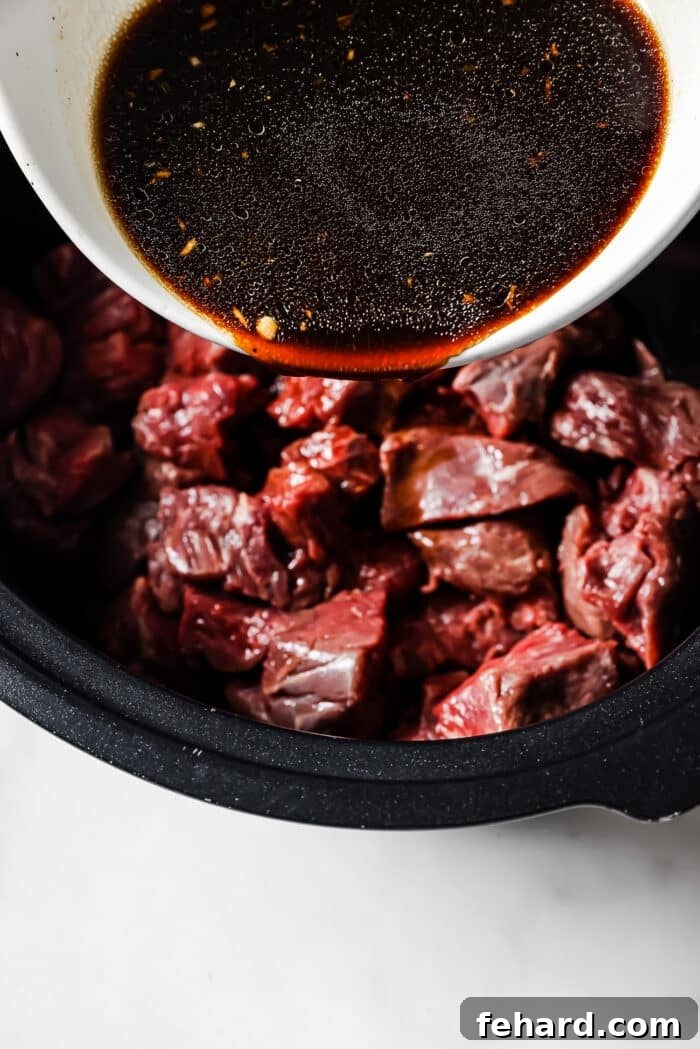
Second: Combine Beef and Sauce in Slow Cooker. Take your boneless beef chuck roast and place it on a clean cutting board. Carefully cut the beef into approximately 1-inch cubes, aiming for relatively uniform pieces to ensure consistent cooking. Transfer all the cubed beef into the basin of your slow cooker. Next, pour the freshly prepared Korean sauce evenly over the beef, ensuring that every piece is generously coated and submerged in the flavorful liquid.
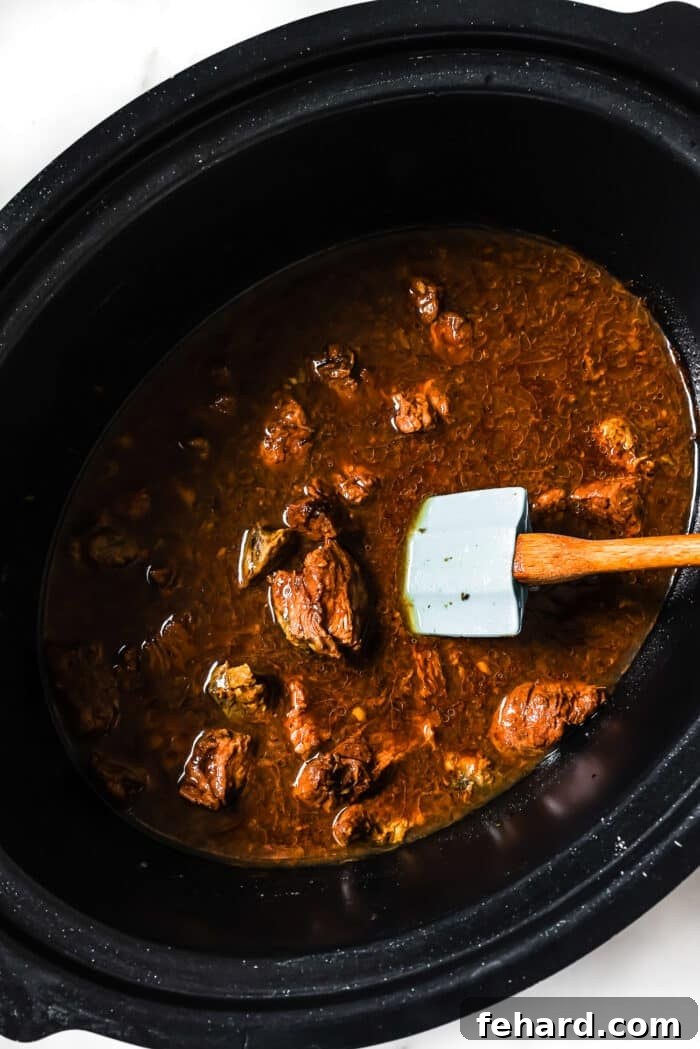
Third: Slow Cook to Tender Perfection. Secure the lid tightly on your slow cooker. Cook on the LOW heat setting for 7-8 hours, or if you’re short on time, use the HIGH heat setting for 3-4 hours. The ultimate goal is for the beef to become incredibly tender—so tender that it easily pulls apart with minimal effort using a fork. To maintain consistent cooking temperature and prevent heat loss, resist the urge to lift the lid frequently during this process.
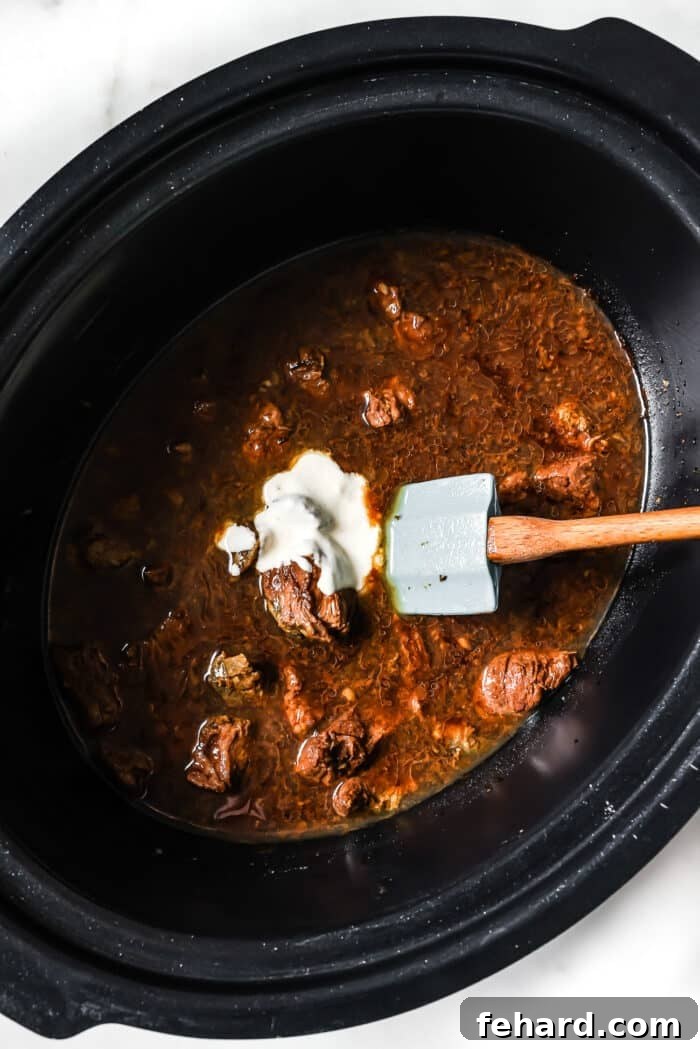
Fourth: Thicken the Sauce and Serve. Approximately 30 minutes before the end of the cooking time, prepare a cornstarch slurry. In a small separate bowl, whisk together 2 tablespoons of cornstarch with 2 tablespoons of cold water until you achieve a smooth, lump-free mixture. Carefully stir this slurry into the slow cooker with the beef and its sauce. Replace the lid and continue cooking for the remaining 30 minutes, or until the sauce has thickened to your desired consistency and the meat is perfectly fork-tender. Then, it’s ready to be served and enjoyed!
Pro Tip for the Best Slow Cooker Korean Beef
Maximize your meal prep efficiency and ensure juicy, flavorful beef by preparing ahead! Cube your chuck roast and mix all the sauce ingredients the night before. Store the beef and the prepared sauce separately in airtight containers in the refrigerator. In the morning, simply combine everything in the slow cooker, set it, and let it work its magic. This strategy eliminates morning rush and ensures you come home to a delicious, perfectly cooked Korean beef dinner with minimal effort.
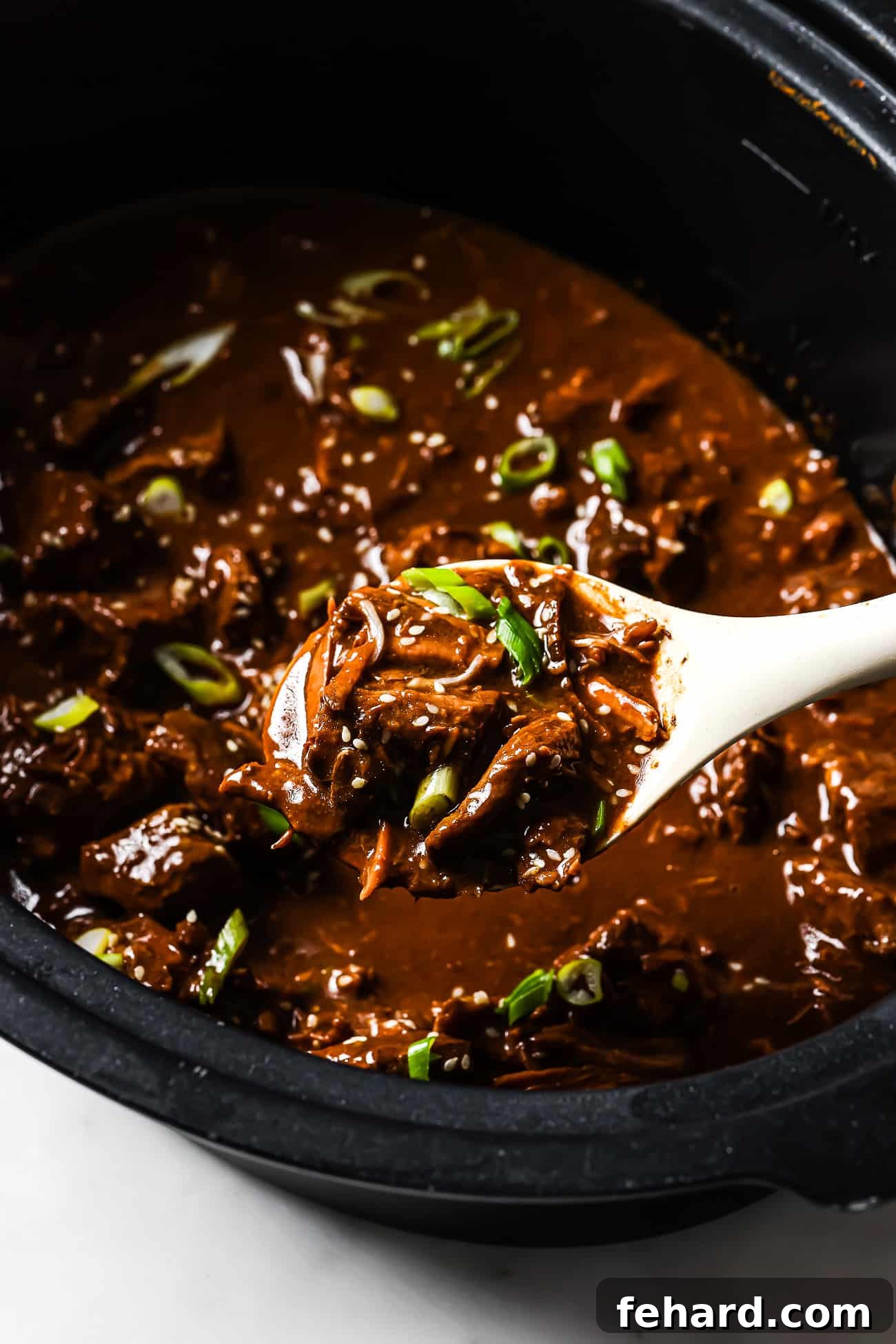
Customizing Your Slow Cooker Korean Beef: Flavor Variations and Add-Ins
One of the best aspects of this Slow Cooker Korean Beef recipe is its fantastic adaptability. Feel free to experiment and tailor it to your personal taste, dietary needs, or what you have on hand. Here are some fantastic ways to switch up the recipe and make it truly your own:
Add a Vegetable Boost
For a complete and healthier one-pot meal, incorporating vegetables is a brilliant idea. Heartier vegetables like diced carrots, sliced bell peppers (red or yellow work wonderfully), or quartered button mushrooms can be added during the last hour of cooking in the slow cooker. For quicker-cooking greens, such as broccoli florets, tender snap peas, or fresh spinach, stir them in during the final 30 minutes of cooking, or steam them separately and add them at serving time. This method ensures they retain their vibrant color, crisp-tender texture, and nutritional value.
Elevate with More Garnishes
Garnishes are not just for visual appeal; they also contribute fresh textures and layers of flavor that can significantly enhance the dish. Beyond the traditional thinly sliced green onions and toasted sesame seeds, consider these additions:
- Fresh cilantro or chopped parsley for a bright, herbaceous burst of freshness.
- Thinly sliced radishes or crisp cucumber ribbons for a refreshing crunch and slight peppery note.
- A sprinkle of crispy fried onions or shallots for an added savory texture and depth.
- A drizzle of extra toasted sesame oil or a squeeze of fresh lime juice just before serving for an extra aromatic kick.
- Crushed peanuts or cashews for a nutty crunch.
Turn Up the Heat: Make it Spicier
If you’re a fan of fiery flavors, it’s incredibly easy to adjust the spice level of your Korean beef. Simply increase the amount of Sriracha added to the sauce to your liking. For a more intense and authentic Korean heat, consider stirring in a tablespoon or two of gochujang (Korean chili paste) with the other sauce ingredients. A pinch of red pepper flakes or a dash of chili oil stirred in at serving time can also provide a pleasant, warming kick.
Swift Protein Swaps
While chuck roast is the preferred choice for its tenderness, you can certainly experiment with other proteins if desired:
- Ground Beef: For a much faster weeknight meal that doesn’t require a slow cooker, brown 1.5-2 lbs of ground beef on the stovetop. Drain any excess fat, then add the prepared sauce and simmer until the sauce thickens and coats the beef, about 15-20 minutes.
- Chicken Thighs: Boneless, skinless chicken thighs can be used for a flavorful poultry alternative. They will cook faster than beef, typically requiring 3-4 hours on low or 2-3 hours on high, ensuring they remain juicy and tender.
- Pork Shoulder: Similar to chuck roast, pork shoulder (often labeled as pork butt) will yield incredibly tender results in the slow cooker with similar cooking times, making for a delicious Korean pulled pork.
Dietary Adjustments
- Gluten-Free: As previously mentioned, use tamari instead of regular soy sauce. Always verify that your beef broth is also gluten-free.
- Lower Sodium: Opt for low-sodium soy sauce and low-sodium beef broth. Taste the sauce before adding any additional salt, as these ingredients already provide significant salinity.
- Lower Sugar: If you prefer a less sweet dish, you can reduce the amount of brown sugar in the sauce by half initially. Taste towards the end of cooking and add more if needed. Sugar-free alternatives like erythritol or stevia can also be used, adjusting the quantity to taste as their sweetness potency varies.
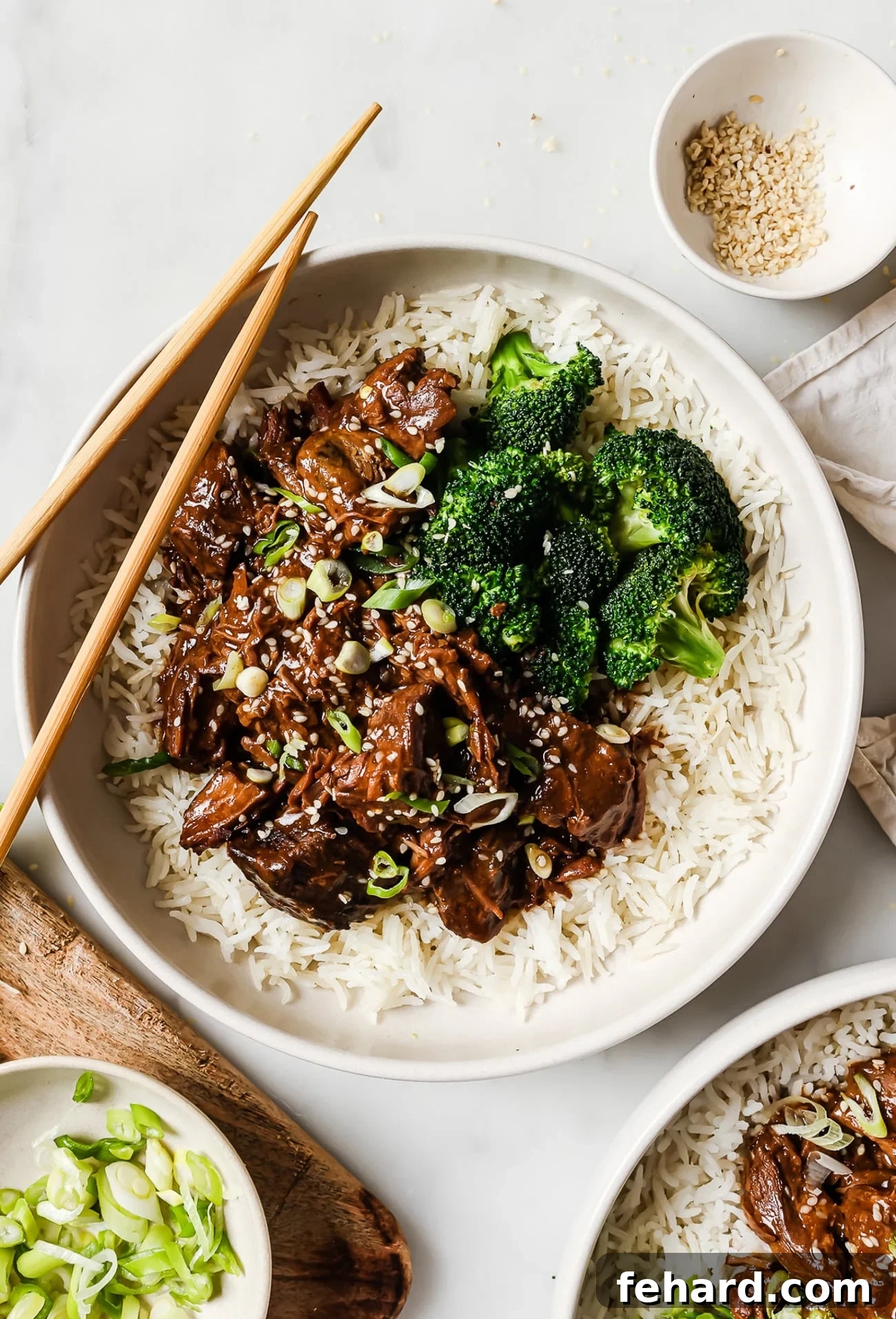
Serving Suggestions: Complete Your Delicious Meal
Once your Slow Cooker Korean Beef is perfectly tender and coated in its rich, glossy sauce, it’s time to decide how to serve it! The versatility of this dish allows for numerous delicious pairings, whether you prefer classic combinations or creative, fusion-inspired meals.
Classic Pairings for a Wholesome Meal
- Rice: The most traditional and universally loved accompaniment. Serve a generous portion over warm fluffy white rice, nutritious brown rice, or a lighter option like cauliflower rice or quinoa. The rice acts as a perfect canvas, soaking up all the incredible sweet and savory sauce, making every bite flavorful and comforting.
- Steamed or Roasted Vegetables: Complement the rich beef with fresh, crisp, or tender-crisp vegetables. My personal favorites include air fryer broccoli, simple steamed green beans, roasted carrots, or sautéed shiitake mushrooms. A side of broccoli kale slaw or a simple cucumber salad also adds a wonderful crunch and refreshing counterpoint to the rich beef.
- Garnish for Perfection: Don’t forget the finishing touches! A generous sprinkle of toasted sesame seeds and thinly sliced green onions (scallions) not only adds visual appeal but also provides an extra layer of nutty flavor and subtle oniony bite that truly makes this dish shine. I promise, with these touches, it’s just as good (and often even better) than your favorite takeout!
Creative Serving Ideas for Variety
- Korean Beef Tacos or Wraps: Spoon the tender, shredded beef into warm flour tortillas, crisp corn tortillas, or fresh lettuce cups for a fun, fusion-style meal. Top with a sprinkle of shredded cabbage, a dollop of sriracha mayo, some fresh cilantro, or quick-pickled radishes for an unforgettable “Taco Tuesday” or light lunch twist.
- Noodle Bowls: Serve the Korean beef over a bed of ramen noodles, udon noodles, or rice vermicelli. Enhance your noodle bowl with additional toppings like soft-boiled eggs, a sprinkle of fresh herbs, and some steamed bok choy.
- Korean BBQ Sliders or Sandwiches: Pile the shredded beef onto soft brioche buns or slider rolls. Add a quick, spicy kimchi slaw or some pickled vegetables for a delicious Korean BBQ-inspired sandwich that’s perfect for entertaining.
- Bibimbap-Inspired Bowl: Create a deconstructed Bibimbap by placing the Korean beef as your protein base, surrounded by various sautéed or pickled vegetables, a perfectly fried egg, and a drizzle of gochujang for extra spice.
Storage and Reheating Made Easy
This Slow Cooker Korean Beef is an excellent candidate for meal prepping as it stores and reheats beautifully. In fact, many find that the flavors meld and deepen even further overnight, making it taste even better the next day. Here’s how to ensure your leftovers stay fresh and delicious:
Storing Leftovers
- Refrigeration: Once your Korean beef has cooled completely to room temperature (within two hours of cooking), transfer any leftover beef and its rich sauce into an airtight container. Properly stored, it will keep fresh and delicious in the refrigerator for up to 4 days. This makes it perfect for packing lunches or having quick dinners throughout the week.
- Freezing: For longer-term storage, this dish freezes exceptionally well. Place the cooled beef and sauce in a freezer-safe airtight container or heavy-duty freezer bags (removing as much air as possible). It can be safely stored in the freezer for up to 3 months. When you’re ready to enjoy it, thaw overnight in the refrigerator before proceeding with reheating.
Reheating Methods
Reheating your Korean beef is simple, allowing a delicious and satisfying meal to be just minutes away:
- Stovetop (Recommended): My preferred method for maintaining the best texture and moisture. Transfer the desired amount of beef and sauce to a saucepan or skillet over medium-low heat. Stir occasionally, breaking up the beef if necessary, until it is thoroughly heated through. If the sauce appears too thick, you can easily thin it out by stirring in a splash of beef broth or water.
- Microwave: For the quickest reheating option, place the beef in a microwave-safe dish. Cover loosely with a lid or microwave-safe plastic wrap (vented) and heat in 1-minute intervals, stirring in between, until the beef is piping hot. Be careful not to overheat, which can dry out the beef.
Frequently Asked Questions (FAQ) About Slow Cooker Korean Beef
Here are some common questions and helpful answers to ensure your Slow Cooker Korean Beef turns out perfect every time:
Q: Can I brown the beef before slow cooking?
A: Browning the chuck roast cubes in a hot pan before adding them to the slow cooker is an optional but highly recommended step. While not strictly necessary for achieving tenderness (the slow cooker does that beautifully), searing the beef for a few minutes per side creates a rich, caramelized crust. This process, known as the Maillard reaction, significantly deepens the overall flavor profile of the dish. If you have the extra 10-15 minutes, it’s a worthwhile enhancement for an even more robust taste.
Q: What if my sauce is too thin or too thick after cooking?
A: If your sauce is too thin after adding the initial cornstarch slurry and cooking for 30 minutes, you can easily fix it. Create a second, smaller slurry by whisking 1 teaspoon of cornstarch with 1 teaspoon of cold water, then stir it into the slow cooker and cook for another 15-20 minutes until it reaches your desired consistency. Conversely, if the sauce becomes too thick, simply whisk in a tablespoon or two of beef broth or water until it loosens up to your preference.
Q: Can I use frozen beef for this recipe?
A: It is generally recommended to use thawed beef for slow cooking. Placing frozen meat directly into a slow cooker can cause it to remain in the “danger zone” (between 40°F and 140°F / 4°C and 60°C) for too long, preventing it from reaching a safe cooking temperature quickly enough. This can potentially lead to bacterial growth. Always ensure your beef is completely thawed in the refrigerator before preparing this recipe.
Q: How can I make this dish less sweet?
A: If you prefer a less sweet flavor profile, you can reduce the amount of brown sugar in the sauce by half initially. Taste the sauce towards the end of cooking (before adding the cornstarch slurry) and adjust by adding more sugar if needed. You can also balance the sweetness by adding an extra splash of rice wine vinegar or a bit more Sriracha to introduce more tang or heat.
Q: Is this recipe suitable for an Instant Pot?
A: Yes, this Slow Cooker Korean Beef recipe can be adapted for an Instant Pot for a significantly faster cooking time. You would typically brown the beef using the Instant Pot’s sauté function (optional), then add the sauce and pressure cook for about 45-60 minutes on high pressure, followed by a natural release. After cooking, you would then add the cornstarch slurry and sauté again until the sauce thickens. Always refer to your specific Instant Pot’s instructions and recommended pressure cooking times for beef.
Q: Can I prepare this recipe with other types of meat?
A: Absolutely! While chuck roast is ideal, this versatile sauce works well with other proteins. As mentioned in the “Swift Protein Swaps” section, boneless, skinless chicken thighs or pork shoulder are excellent alternatives. Just be mindful that cooking times will vary depending on the type and cut of meat you choose. Chicken will cook much faster, while pork shoulder will have similar long cooking times to chuck roast.
There you have it – a truly simple yet spectacularly flavorful Slow Cooker Korean Beef recipe that promises to deliver tender, saucy perfection every time. Whether you’re a slow cooker novice or a seasoned culinary enthusiast, this dish offers an exciting and accessible journey to the vibrant flavors of Korea right from your kitchen. It’s the ultimate comfort food, perfect for busy schedules, family dinners, and satisfying those deep cravings for something both comforting and exotic. Enjoy the rich aromas as it simmers throughout the day, and get ready to indulge in a meal that everyone will love.
More Irresistible Slow Cooker Beef Recipes
Slow Cooker Pepper Steak
4 hrs 7 mins
Healthier Slow Cooker Beef Stew Recipe
5 hrs 20 mins
Slow Cooker Beef Stew
5 hrs 10 mins
Slow Cooker Barbacoa
5 hrs 10 mins
Pin
Slow Cooker Korean Beef Recipe
Equipment
-
1 Slow Cooker
Ingredients
- 1 cup beef broth
- ½ cup reduced sodium soy sauce
- ½ cup brown sugar packed
- 5 cloves garlic minced
- 1 tablespoon sesame oil
- 1 tablespoon rice wine vinegar
- 1 tablespoon freshly grated ginger
- 1 teaspoon Sriracha
- ½ teaspoon onion powder
- 3.5 lb boneless beef chuck roast cut into 1-inch cubes
- 2 tablespoons cornstarch
- 3 green onions thinly sliced
- Sesame seeds for seasoning
Instructions
-
Prepare the Sauce: In a medium bowl, whisk together the beef broth, soy sauce, brown sugar, minced garlic, sesame oil, rice wine vinegar, grated ginger, Sriracha, and onion powder until well combined.
-
Add Ingredients to the Slow Cooker: Place the cubed beef chuck roast into the slow cooker. Pour the prepared sauce over the beef, ensuring all the pieces are evenly coated.
-
Cook: Cover and cook on low heat for 7–8 hours or high heat for 3–4 hours, until the beef is tender and easily pulls apart.
-
Thicken the Sauce: In a small bowl, mix 2 tablespoons of cornstarch with 2 tablespoons of water to make a slurry. Stir this mixture into the slow cooker during the last 30 minutes of cooking to thicken the sauce.
-
Serve: Serve hot over rice or steamed broccoli. Garnish with green onions and a sprinkle of sesame seeds. Enjoy!
Notes
- I like to use reduced-sodium soy sauce and add salt to taste.
- Fresh garlic and ginger are best in this recipe. But, if you don’t have them on hand you can use garlic powder and ground ginger instead.
- Cut the beef into similar-sized cubes so they all cook at the same time. If you buy pre-cubed meat then you may need to cut the larger pieces in half.
Nutrition
Nutrition information is automatically calculated, so should only be used as an approximation.