
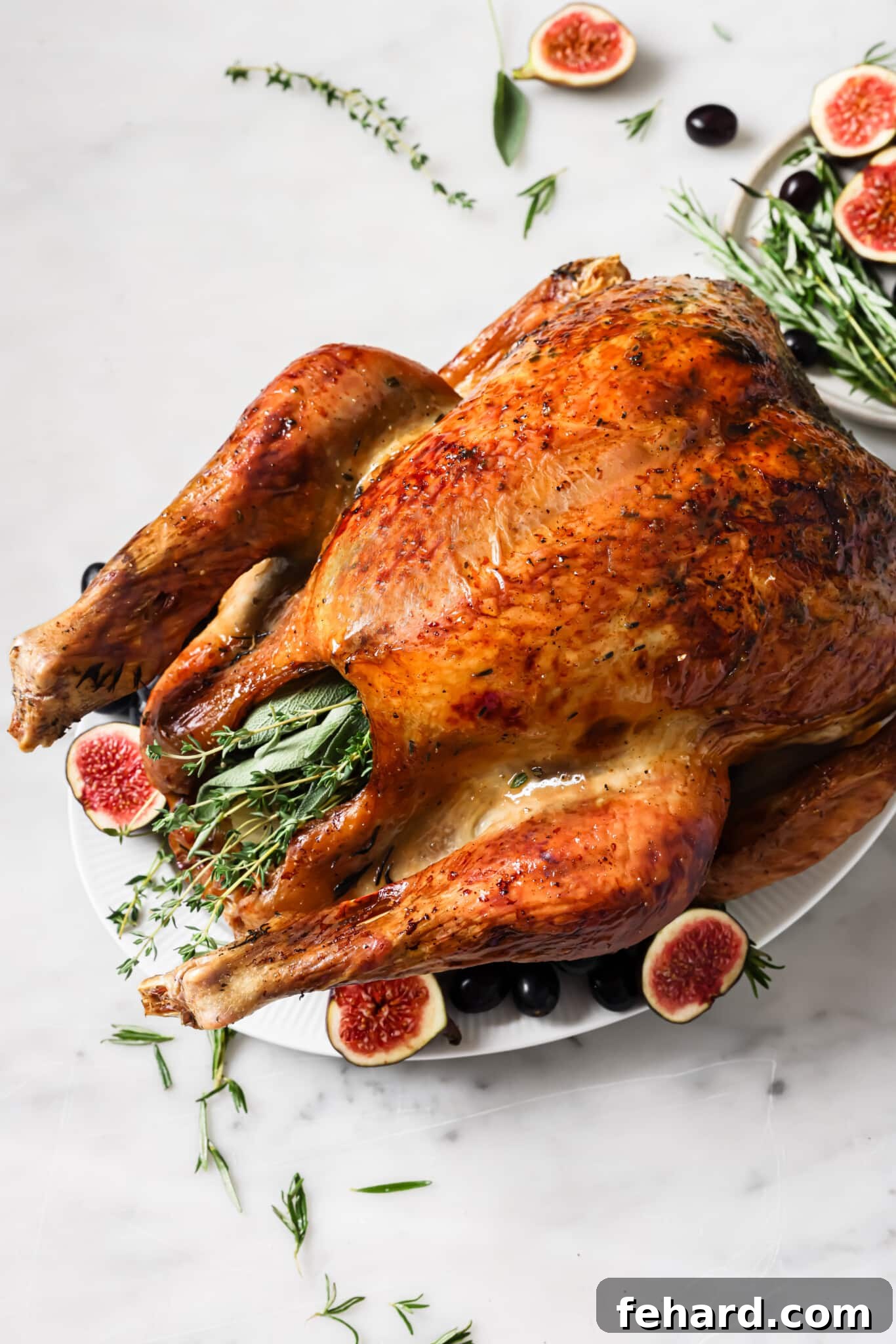
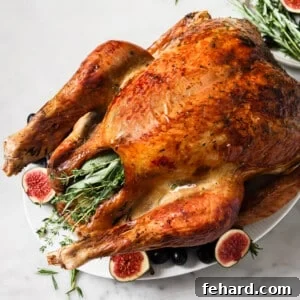
As the holiday season approaches, anticipation builds for that quintessential Thanksgiving centerpiece: a perfectly roasted turkey. Forget dry, bland birds of the past! This Garlic Butter Roasted Turkey recipe promises a showstopper that is incredibly juicy, bursting with flavor, and surprisingly straightforward to prepare. Infused with aromatic ingredients, a generous medley of fresh herbs, and a decadent compound butter, this recipe elevates your Thanksgiving feast to an unforgettable culinary experience.
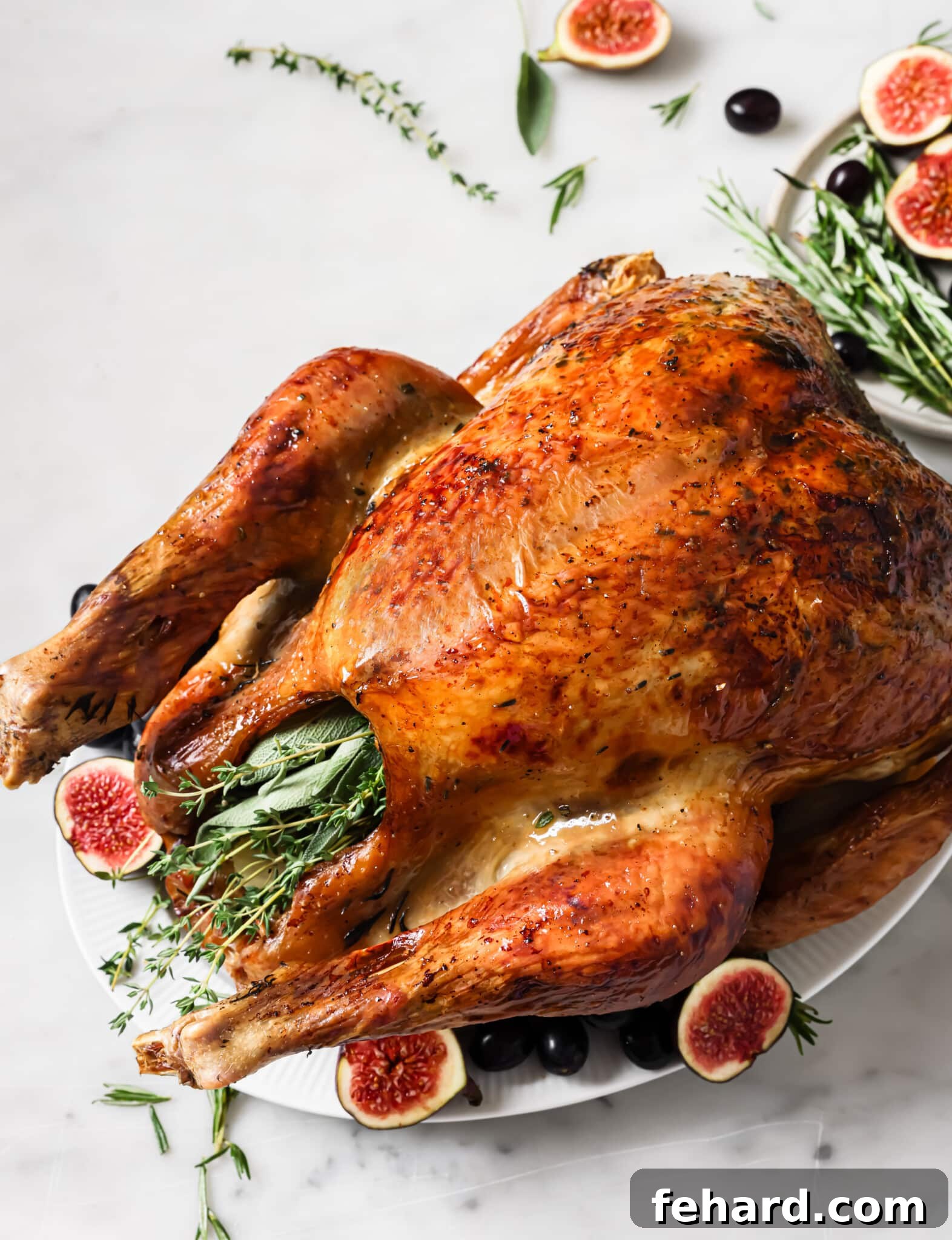
This cherished family recipe has graced our holiday table for over three decades, a testament to its enduring appeal and consistent deliciousness. Handed down by my mother-in-law, who has perfected it through countless Thanksgiving celebrations, it’s a tried-and-true method that guarantees a tender, moist turkey every time. You can rest assured that this traditional Thanksgiving turkey recipe will delight all your guests and quickly become a beloved part of your family’s holiday traditions. The secret lies in the harmonious blend of savory garlic, fragrant herbs, and the luxurious butter, all working together to create an unparalleled flavor profile and succulent texture.
One of the most appealing aspects of this roasted turkey recipe is its efficiency. Despite its impressive presentation, the entire preparation and cooking process can be completed in approximately 3 to 3.5 hours, depending on the size of your bird. This means no more waking up at the crack of dawn to get your Thanksgiving main course ready! You can enjoy a relaxed morning, knowing that a magnificent, flavorful turkey will be ready to grace your holiday table without excessive effort or stress, leaving you more time to spend with loved ones or prepare other festive dishes.
If you’re hosting a more intimate gathering or simply prefer not to roast an entire bird, you can still enjoy the incredible flavors of roasted turkey with smaller portions. Consider exploring other delicious turkey recipes such as my Roasted Turkey Breast, perfect for a tender, juicy cut, or my Roasted Turkey Leg, offering a rich, darker meat option. For those who adore the garlic butter infusion, my mouthwatering Garlic Butter Turkey Breast offers a scaled-down version of this very recipe, ensuring you get that signature taste without the full commitment of a whole turkey.
Essential Ingredients for a Perfectly Roasted Turkey
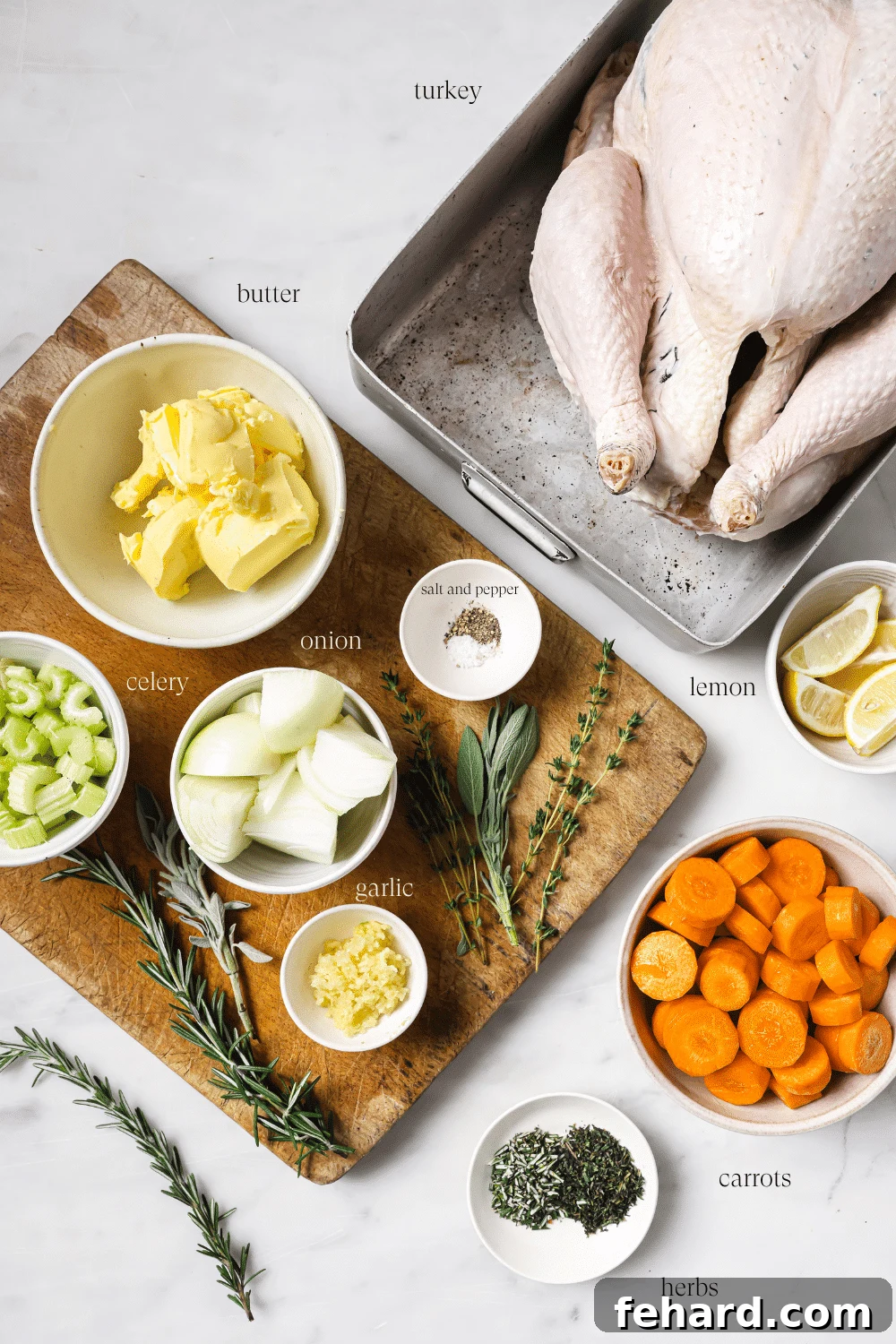
- Whole Turkey — The star of your holiday table! When selecting your turkey, plan for approximately 1.5 pounds per guest to ensure ample servings and delicious leftovers. For instance, if you’re hosting 8 people, a 12-pound turkey (8 x 1.5 = 12) would be ideal. Ensure your turkey is fully thawed before beginning the recipe.
- Onions — You’ll need two medium-sized onions, either white or yellow, for their aromatic qualities. One will be used to stuff the cavity, imparting a subtle sweetness and depth of flavor to the meat, while the other will form part of the flavorful vegetable bed in the roasting pan.
- Citrus — Lemon is my preferred choice for its ability to add a bright, zesty note that beautifully complements the richness of the turkey and cuts through the savory flavors. An orange can also be used for a slightly sweeter and more fragrant alternative, adding another layer of aromatic complexity.
- Fresh Herbs — The classic flavors of Thanksgiving truly shine through with fresh rosemary, thyme, and sage. These robust herbs infuse the turkey with an incredible, earthy aroma and taste. Using fresh herbs makes a significant difference compared to dried, providing a more vibrant and potent flavor.
- Other Vegetables — Beyond onions, celery and carrots are my go-to vegetables for the roasting pan. They not only add another layer of flavor to the drippings (which are excellent for gravy!) but also create a natural roasting rack, lifting the turkey slightly and promoting even cooking. Feel free to use other root vegetables like parsnips or leeks if you prefer.
- Garlic — A generous handful of freshly minced garlic is crucial for our signature garlic butter. For ultimate flavor, I always recommend fresh cloves, but if you’re short on time, a jar of pre-minced garlic can be a convenient substitute without compromising too much on taste.
- Seasonings — Keeping it simple yet impactful is key. A blend of good quality kosher salt and freshly ground black pepper is all you need to enhance the natural flavors of the turkey and the aromatic butter. Adjust quantities to your personal taste.
- Butter — Unsalted butter is highly recommended as it allows you complete control over the salt content in your compound butter and the overall seasoning of the turkey. However, if salted butter is all you have on hand, simply reduce the amount of added salt in the compound butter and when seasoning the bird. Ensure the butter is at room temperature for easy mixing and spreading.
Step-by-Step Instructions to Roast a Flavorful Turkey
Preparing Your Turkey for Roasting: A Foundation for Flavor
- Begin by preheating your oven to a precise 325°F (163°C). This moderate temperature ensures slow, even cooking and helps prevent the turkey from drying out. Position an oven rack in the lower third of your oven, which is ideal for roasting larger birds, allowing ample space and preventing the top from browning too quickly.
- Carefully remove your fully thawed turkey from the refrigerator. Locate and extract the giblets, neck, and any gravy packet from within the turkey cavity. These items are typically tucked inside and should be removed before cooking. You can discard them or save the giblets and neck to make homemade gravy or stock if desired.
- Using paper towels, thoroughly pat the turkey dry, both inside the cavity and all over the exterior. This crucial step is often overlooked but is essential for achieving beautifully crispy skin. A dry surface allows the skin to crisp up rather than steam. Once dry, generously season the entire inside cavity and the outside of the bird with kosher salt and freshly ground black pepper. Don’t be shy with the seasoning; a large bird needs a good amount of flavor. Tuck the wings of the turkey underneath the bird; this helps them cook evenly and prevents them from burning.
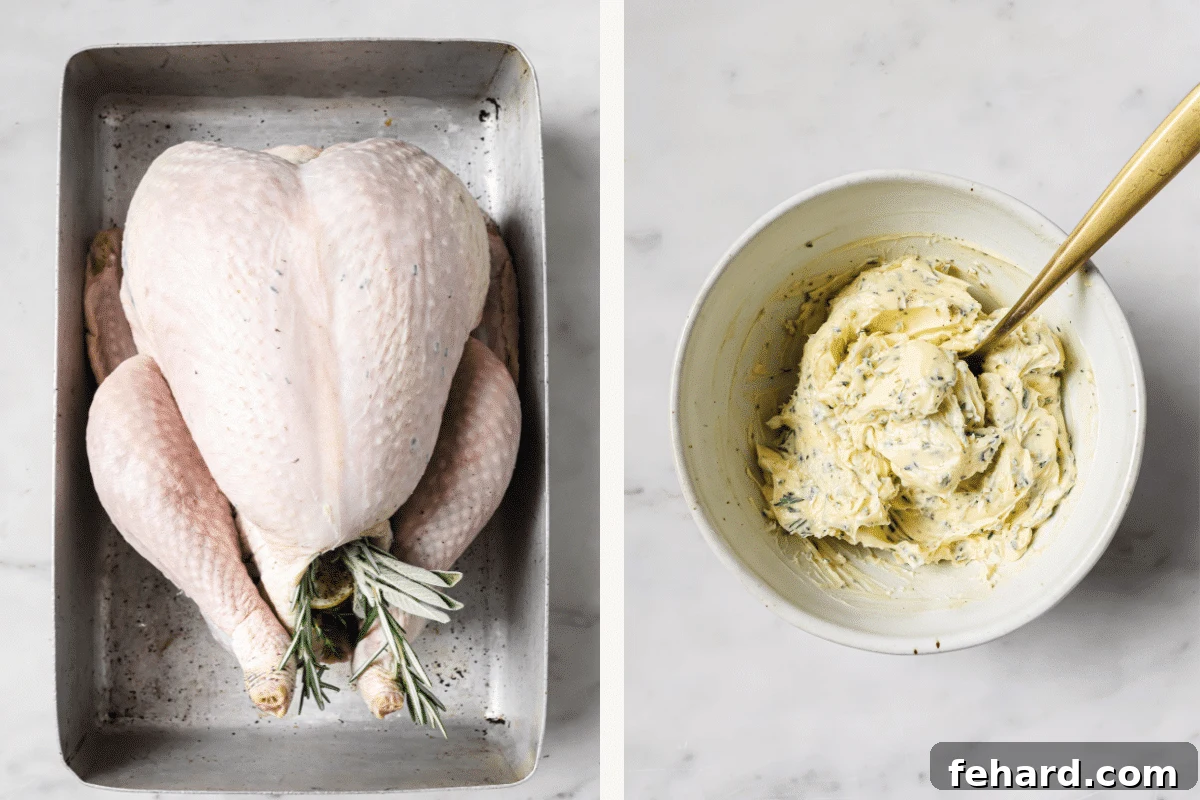
- Now, it’s time to infuse your turkey with incredible internal aromatics. Fill the turkey cavity with the peeled and quartered onion, quartered lemon, and fresh herbs (rosemary, thyme, and sage sprigs). These will release their fragrant oils and steam throughout the cooking process, subtly flavoring the meat from the inside out.
- Next, prepare your compound butter—this truly is the star component that elevates this roasted turkey to the next level. In a small bowl, combine your softened, room-temperature unsalted butter with fresh minced garlic, finely chopped fresh rosemary and thyme, and a pinch of salt and pepper. Mix these ingredients thoroughly until they are smoothly combined, ensuring all the flavors are evenly distributed. This herb-garlic butter mixture will create a rich, savory crust and keep the meat incredibly moist.
Applying the Butter and Roasting to Golden Perfection:
- This step requires a gentle touch. Starting from the turkey cavity opening, very carefully work your hand or a spoon between the skin of the turkey and the breast meat. Slowly and gently separate the skin from the meat, creating a pocket. Be patient and deliberate to avoid tearing the skin, as an intact skin helps hold the butter in place and creates an even, golden exterior.
- Once the skin is loosened, generously spread about three-quarters of your aromatic compound butter directly onto the turkey breasts, underneath the loosened skin. This direct application ensures the breast meat stays exceptionally moist and flavorful. Reserve the remaining quarter of the herb butter and rub it all over the outside of the turkey. This external layer will crisp the skin and add another burst of flavor. Follow this by sprinkling a little extra salt and pepper over the entire exterior for enhanced seasoning.
- Retrieve your sturdy roasting pan. Fill the bottom with a bed of chopped onion, celery, and carrots. These vegetables serve a dual purpose: they act as a natural roasting rack, elevating the turkey for better air circulation and even cooking, and they contribute incredible flavor to the pan drippings, which are essential for making a rich, savory gravy. While you can certainly use a metal roasting rack if you prefer, the vegetables perform this function beautifully in this recipe.
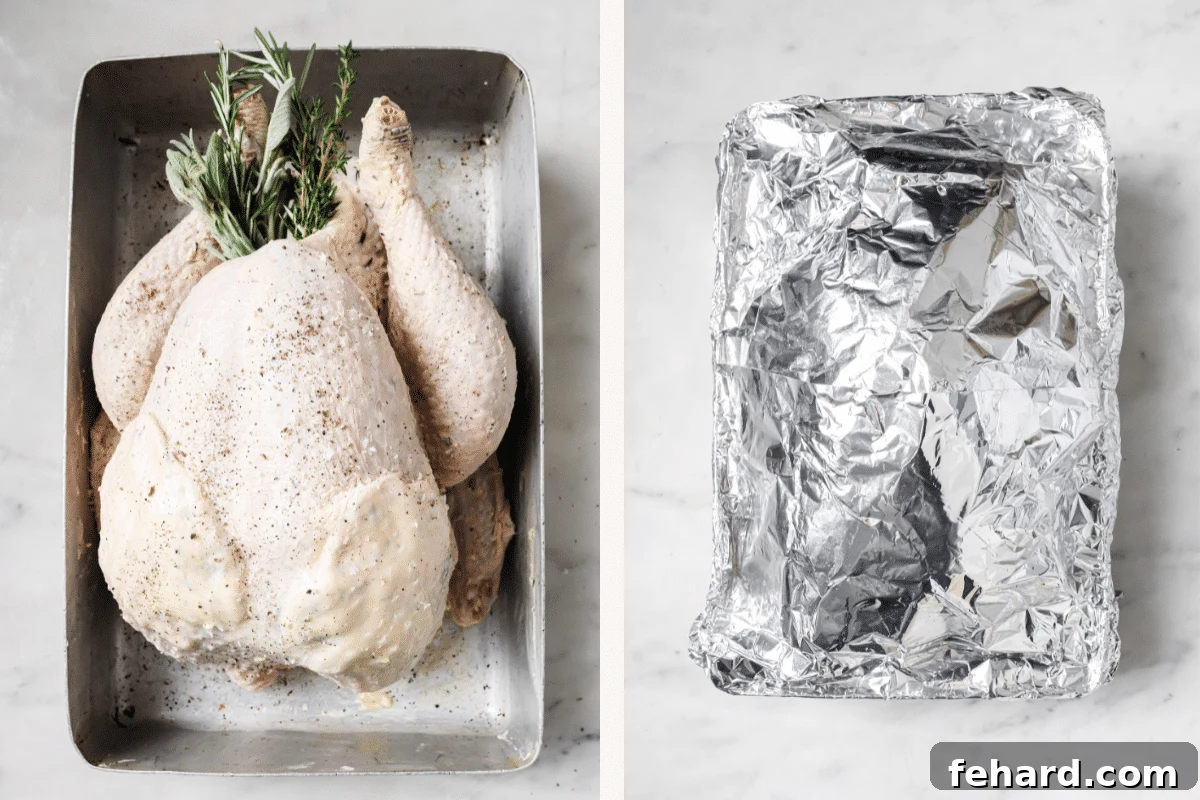
- Carefully place the turkey breast-side up atop the prepared bed of vegetables in the roasting pan. Loosely cover the entire turkey with aluminum foil. This initial covering helps to trap moisture and prevent the turkey from browning too quickly in the early stages of roasting. Place the roasting pan into your preheated oven.
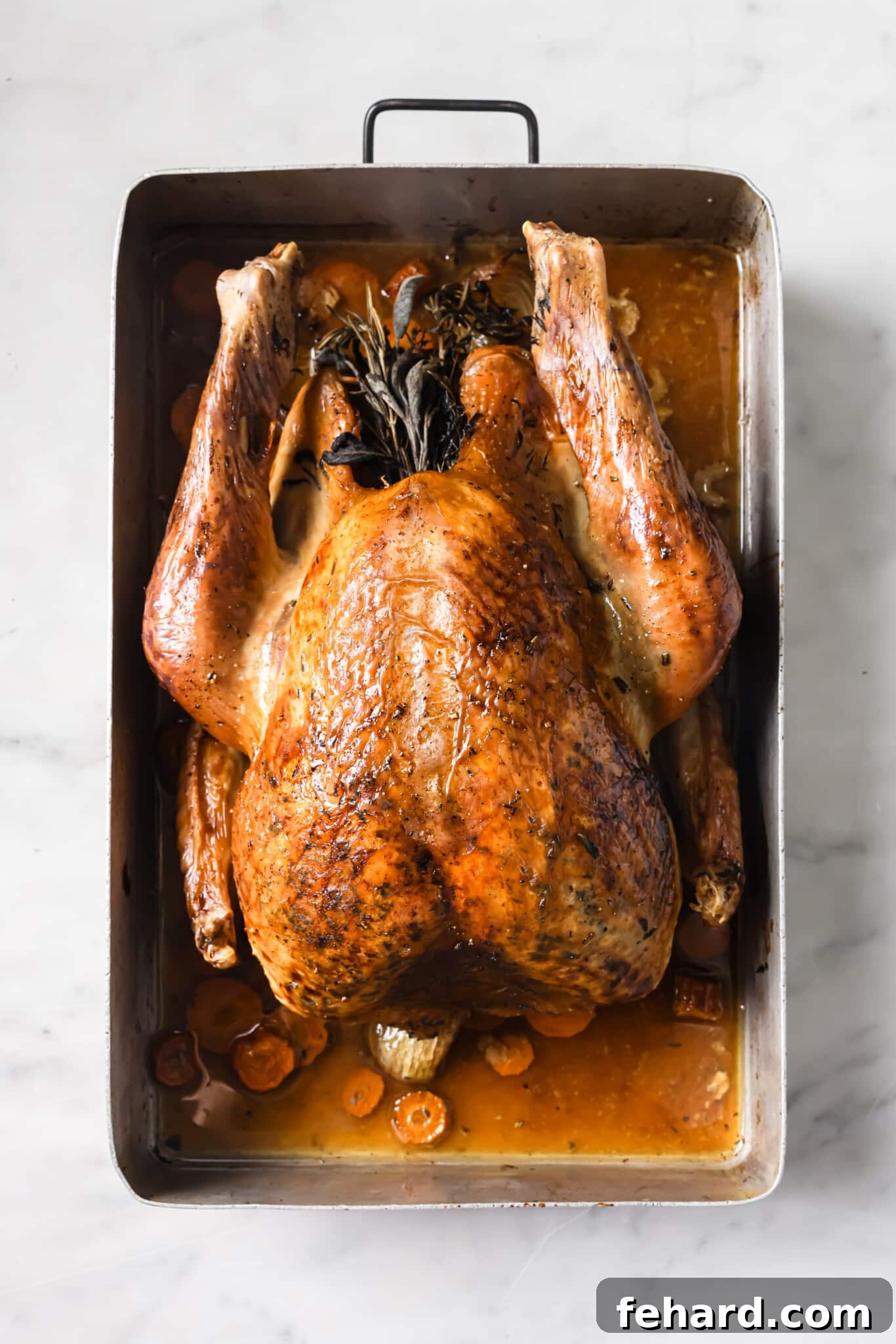
- Bake the turkey until an internal temperature of 160°F (71°C) is registered at the thickest part of the thigh, ensuring the thermometer does not touch the bone. The turkey will continue to cook and rise to the safe internal temperature of 165°F (74°C) as it rests. The exact roasting time will vary depending on the size of your turkey and the calibration of your oven; for a 12-14 pound turkey, mine typically takes around 3 hours. For the final 30 minutes of roasting time, remove the foil. This allows the turkey’s skin to achieve that desirable golden-brown, irresistibly crispy exterior.
Because we’ve applied a generous amount of rich compound butter directly under the skin, basting your turkey during cooking becomes completely unnecessary for this recipe. Constantly opening the oven door not only prolongs the cooking time but can also lead to heat loss, potentially drying out your bird. Similarly, brining is not required; the garlic butter and cavity aromatics provide all the moisture and flavor needed.
Resting and Serving Your Masterpiece:
- Once the garlic butter roasted turkey reaches the appropriate internal temperature, remove it from the oven. Carefully tent the turkey loosely with aluminum foil and allow it to rest undisturbed for a minimum of 30 minutes. This resting period is crucial; it allows the muscle fibers to relax and the juices to redistribute throughout the meat, resulting in an incredibly tender and juicy turkey.
- During this resting time, the meat’s internal temperature will continue to rise a few degrees, typically reaching the final safe internal temperature of 165°F (74°C). Always use a reliable meat thermometer to accurately check the temperature, ensuring your roasted turkey is cooked to perfection—tender, juicy, and safe to eat.
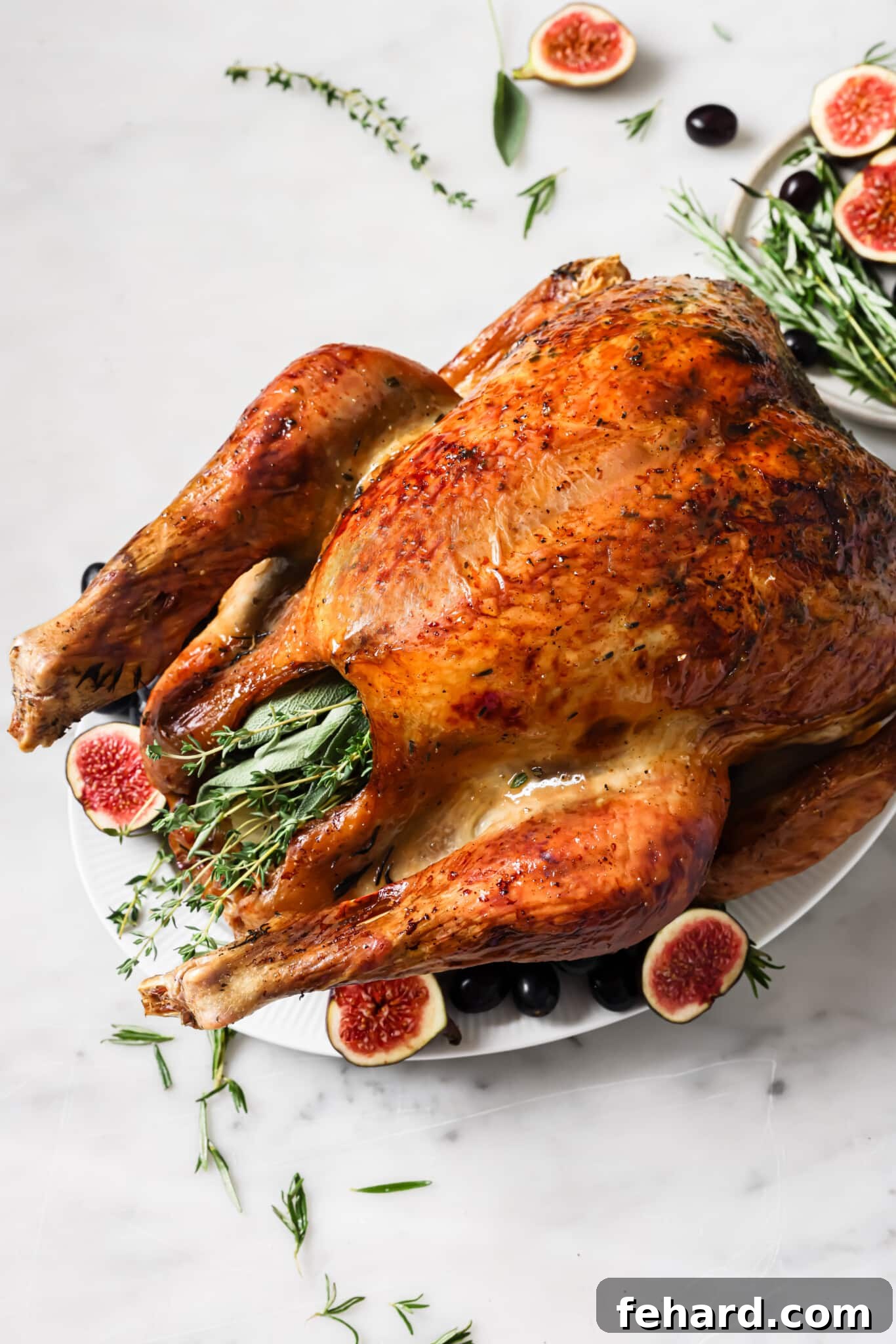
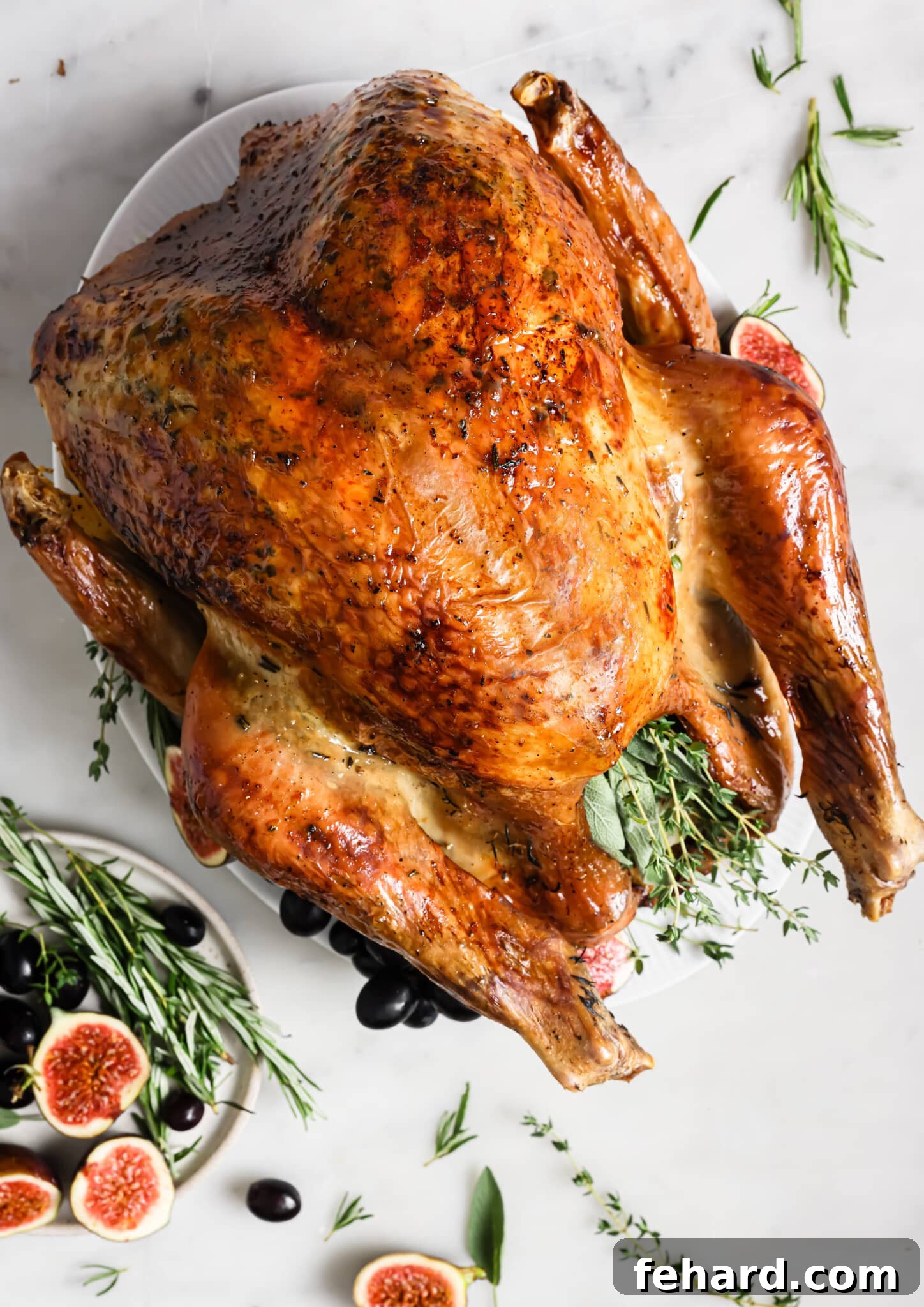
- After resting, the turkey is ready to be carved. Slice the succulent meat, arrange it beautifully on a serving platter, and present your magnificent holiday centerpiece. Get ready to enjoy the fruits of your labor! Happy Thanksgiving!
Do I Need to Baste My Turkey? The short answer for this recipe is no! In fact, continuously opening the oven to baste can actually be counterproductive. Each time you open the oven door, the internal temperature drops, extending the overall baking time and potentially drying out your turkey as it struggles to come back up to temperature. With the rich compound butter spread directly under and over the skin, the meat will be incredibly flavorful and moist from the aromatics, seasonings, and the butter itself, eliminating the need for basting.
Expert Tips for a Flawless Roast Turkey
- Turkey Size Calculation: To ensure you have enough for your guests and some delicious leftovers, plan for approximately 1.5 pounds of turkey per person. For example, if you’re hosting 8 guests, a 12-pound turkey (8 x 1.5 = 12 pounds) is a good target.
- Compound Butter Application: When gently loosening the turkey skin over the breast meat to apply the compound butter, patience is key. Work slowly and carefully with your fingers or a spoon to avoid tearing the skin. An intact skin is essential for keeping the flavorful butter in place, which is crucial for ensuring incredibly juicy and tender breast meat.
- Thawing Your Turkey: Proper thawing is vital for both food safety and even cooking. A frozen turkey requires approximately 24 hours in the refrigerator for every 4-5 pounds of weight. This means a 12-pound turkey will need 3 days to fully thaw. Plan ahead to ensure your turkey is completely thawed before you start preparing it.
- The Importance of Resting: Do not skip the resting step! After roasting, allowing the turkey to rest, tented loosely with foil, for at least 30 minutes (or even up to an hour for larger birds) is critical. This resting period allows the meat’s juices to redistribute throughout the bird, resulting in a significantly more tender, moist, and flavorful turkey when carved.
- Making Gravy from Drippings: While your turkey rests, seize the opportunity to make a delicious gravy using the flavorful pan drippings. Carefully transfer the rested turkey to a cutting board, cover it again with foil, and use the rich juices accumulated in the roasting pan as the base for your homemade gravy.
- To Truss or Not to Truss: Trussing (tying the legs together) is an optional step. Tying the legs can help the meat cook more evenly and keep it moist, particularly the breast, by shielding it slightly. However, untied legs allow for more exposure to the oven’s heat, which can result in a crispier skin all around. Choose based on your preference for moistness versus crispy skin.
Storing and Reheating Your Leftover Turkey
To Store Leftovers: The joy of Thanksgiving often extends to enjoying leftovers. Once your roasted turkey has cooled to room temperature, carve the remaining meat away from the bones. Place the carved turkey meat in an airtight container to prevent drying and refrigerate it promptly. Properly stored, your delicious turkey leftovers will stay fresh and flavorful for up to 3 to 4 days, ready for sandwiches, salads, or quick reheat meals.
Freezer Instructions: For longer preservation, turkey leftovers freeze beautifully. Place the cooled, carved meat in an airtight, freezer-safe container or a heavy-duty freezer bag, ensuring as much air as possible is removed to prevent freezer burn. Store frozen for an impressive duration of up to 6 months. When you’re ready to enjoy it, simply thaw overnight in the refrigerator.
To Reheat Leftover Turkey: Reheating turkey can sometimes be a challenge, as it tends to dry out. My favorite method for restoring moisture and flavor is to gently reheat it in the microwave. Before heating, cover the turkey with a damp paper towel; the steam helps to rehydrate the meat. For an extra touch of deliciousness, spoon a little warm gravy over the turkey after reheating, and it will taste almost as fresh and juicy as it did on Thanksgiving day!

Enhance Your Cooking
Recommended: Meat Thermometer
Achieving the perfect level of doneness in your roasted turkey is paramount for both taste and safety. We absolutely love this meat thermometer as it ensures that your meat is cooked to the right internal temperature, guaranteeing a juicy, tender, and safe-to-eat bird every time. It’s an indispensable tool for any home cook, especially when tackling a significant roast like a holiday turkey.
Perfect Pairings: What to Serve with Roasted Turkey
- Potatoes: No Thanksgiving spread is complete without a variety of potato dishes, which pair exquisitely with tender turkey and rich gravy. Opt for classic mashed potatoes for a comforting side, indulge in cheesy potatoes au gratin for an elegant touch, or bring a touch of sweetness with my delightful sweet potato casserole featuring a brown sugar topping.
- Any Kind of Bread! From fluffy dinner rolls to savory cornbread, bread is essential for soaking up all the delicious pan juices and gravy. Crunchy garlic bread is always a welcome accompaniment, adding a wonderful texture and aromatic kick that perfectly complements your Thanksgiving turkey.
- Veggie Casseroles: Elevate your main course with some traditional and healthful holiday veggie casseroles. My healthier green bean casserole offers a lighter twist on a classic, or try the robust flavors of roasted Brussels sprouts with garlic and Parmesan for a sophisticated side that adds a welcome touch of bitterness.
- Other Holiday Classics: Don’t forget the foundational elements that truly complete the holiday meal! Ensure you have homemade cranberry orange sauce for a burst of tart freshness, a hearty gluten-free cornbread recipe for those with dietary restrictions, or a luxurious baked brie with cranberry sauce as an appetizer. And of course, a rich gravy recipe without drippings (or with them, if you’re making your own!) and a savory sausage stuffing are absolute must-haves.
- Light and Fresh Salads: To balance the richness of the main meal, offer some crisp, refreshing salads. An arugula blackberry salad or a vibrant Brussels sprouts and bacon salad provide a delightful textural contrast and a refreshing lightness that pairs exceptionally well with roasted turkey.
Recipe Variations and Creative Customizations
- Compound Butter Creativity: While my go-to mix includes garlic, rosemary, thyme, salt, and pepper, the beauty of compound butter is its versatility. Feel free to experiment with other fresh herbs like finely chopped parsley, oregano, or even chives for a different aromatic profile. For an extra bright and citrusy kick, consider adding some lemon or orange zest to the butter.
- Stuffing and Cavity Aromatics: Don’t limit yourself to just onions and lemons for the turkey cavity. Get creative and stuff the turkey with a variety of aromatics for unique and delightful flavors. Halved apples, citrus wedges (lemons, oranges, or limes), fennel bulbs, or even a few slices of fresh ginger can infuse the turkey with intriguing notes as it roasts.
- Roasting Bed Vegetables: The bed of onions, carrots, and celery at the bottom of the roasting pan is fantastic for flavor and as a natural rack. However, you can easily switch it up based on your preferences or what you have on hand. Consider adding sliced leeks, quartered turnips, parsnips, or even chunky potatoes to create a different flavor base and a bonus side dish.
- Adapting for Chicken: This incredible garlic butter and herb roasting method isn’t just for Thanksgiving turkey! You can absolutely make this recipe with a whole chicken. Simply adjust the roasting time down significantly (a whole chicken typically cooks much faster than a turkey) and ensure the internal temperature reaches 165°F (74°C) in the thickest part of the thigh. It’s a fantastic way to enjoy these flavors year-round!
Print Recipe
Garlic Butter Roasted Turkey
Ingredients
For the turkey:
- 12 to 18 pound turkey fully thawed
- 1 onion peeled and quartered
- 1 lemon quartered
- 2 sprigs fresh rosemary
- 2 sprigs fresh thyme
- 2 sprigs fresh sage
- kosher salt and black pepper
For the herb butter
- 1 cup unsalted butter room temperature
- 7 cloves garlic minced
- Salt and black pepper to taste
- 1 tablespoon fresh rosemary finely chopped
- 1 tablespoon fresh thyme finely chopped
For the vegetables under the turkey
- 1 onion peeled and quartered
- 3 ribs celery roughly chopped
- 3 carrots roughly chopped
Instructions
-
Preheat your oven to 325°F (163°C).
-
Remove the giblets from the turkey’s cavity and pat it dry with paper towels. Season the inside of the turkey with kosher salt and black pepper. Stuff it with the quartered onion, lemon, and fresh herbs (rosemary, thyme, and sage).
-
In a mixing bowl, combine unsalted butter, minced garlic, finely chopped rosemary and thyme, and salt and black pepper. Mix well.
-
Carefully separate the skin from the turkey breast by gently sliding your fingers or spoon between the skin and the meat. Spread a generous amount of the herb butter under the skin of the turkey breast. This will help keep the breast meat moist and flavorful. Then, spread the remaining herb butter all over the entire outside of the turkey. Season the outside of the turkey with additional salt and black pepper to taste.
-
In the bottom of a roasting pan, place the quartered onion, chopped celery, and chopped carrots. These will serve as a flavorful bed for the turkey.
-
Place the seasoned turkey on top of the bed of vegetables in the roasting pan. Cover the turkey loosely with aluminum foil and transfer it to the preheated oven. Roast until the internal temperature of the turkey reaches 160°F in the thickest part of the thigh; it will continue to rise to 165°F as it rests outside the oven. The exact cooking time depends on the size of your turkey; for reference, mine took 3 hours. During the final 30 minutes, remove the foil to allow the turkey to achieve that desirable golden brown color.
-
Once the turkey is done, remove it from the oven, tent it with foil, and allow it to rest for at least 30 minutes. This allows the juices to redistribute, resulting in a moist and flavorful turkey. Then, carve the turkey and serve it with your favorite Thanksgiving side dishes.
Recipe Notes and Essential Tips
- I recommend purchasing 1 & 1/2 pounds of turkey per guest. For 8 people, you’d want want a 12-pound turkey (8 x 1.5 = 12)!
- Be patient and work very slowly when loosening the skin over the breast meat for compound butter. Try to avoid tears.
- It can take multiple days for a turkey to fully thaw in the refrigerator, so be sure to plan accordingly.
- Be sure to let your turkey rest before carving for extra juicy meat!
- To Store: Allow leftovers to cool. Carve remaining meat from the bone and place in an airtight container. Refrigerate for up to 3 to 4 days.
- To Freeze: Place leftover meat in an airtight, freezer-safe container or bag and store frozen for up to 6 months!
- To Reheat: I typically reheat leftover turkey in the microwave and have often found that covering it with a damp paper towel restores moisture.
Nutrition Facts
Nutrition information is automatically calculated, so should only be used as an approximation.