
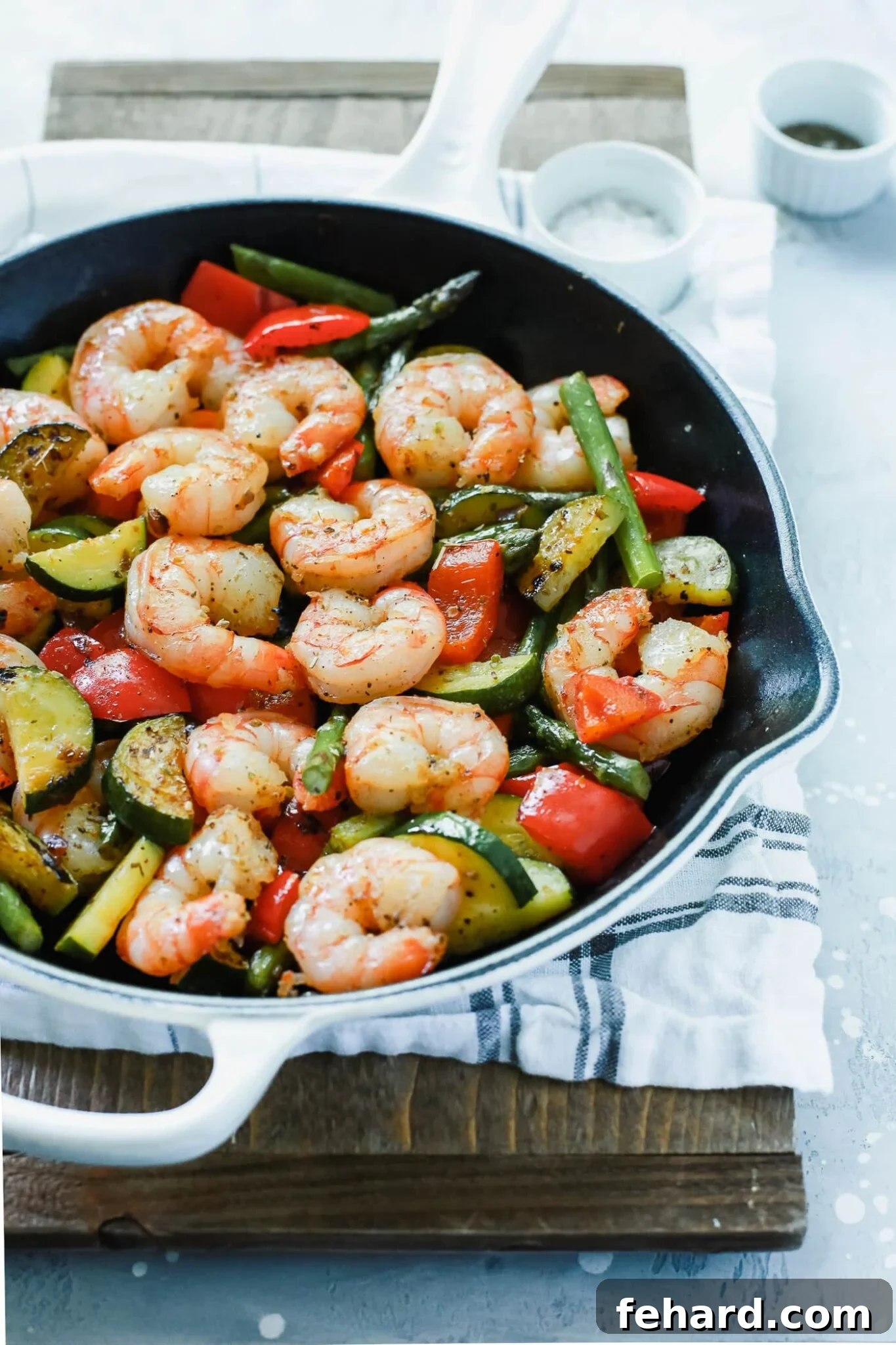
Quick & Healthy Shrimp and Vegetable Skillet: Your New Favorite Weeknight Meal
Discover the ultimate weeknight hero: this incredibly easy and flavorful Shrimp and Vegetable Skillet recipe! Packed with vibrant vegetables, perfectly seasoned shrimp, and aromatic spices, it’s a wholesome meal that comes together in under 30 minutes. Whether you’re looking for a quick family dinner or a smart meal prep solution for lunches throughout the week, this one-pan wonder is designed to simplify your cooking without compromising on taste or nutrition.
If you’re a fan of shrimp and searching for more delightful recipes, don’t miss out on these other fantastic options: Garlic Butter Shrimp, Air Fryer Shrimp, and a delicious Shrimp Fried Rice.
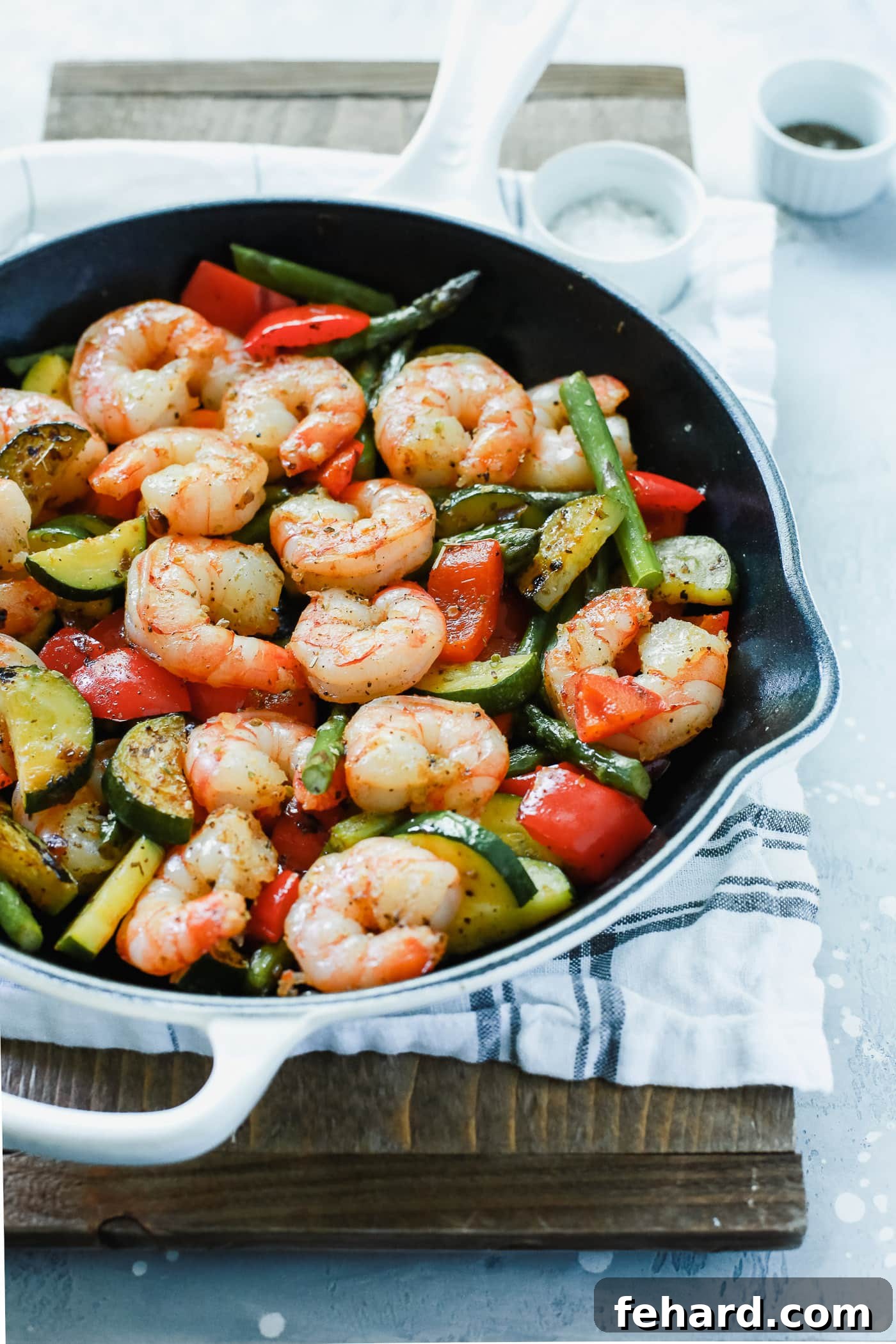
Believe it or not, this Shrimp and Vegetable Skillet stands out as one of the simplest and fastest dishes you can prepare. It’s a delectable seafood stir-fry where most of the work involves just a few minutes of chopping. Simply prep your onion, bell pepper, zucchini, and asparagus, and you’re almost ready to cook!
To make your cooking experience even smoother, opt for shrimp that’s already peeled and deveined. This small shortcut drastically cuts down on prep time, allowing you to get dinner on the table even faster. The cooking process is straightforward: first, quickly sear the shrimp to perfection, then sauté your fresh vegetables. Once cooked, everything comes together beautifully and is ready to be served over a bed of cauliflower rice or creamy mashed cauliflower for a low-carb option. It’s truly an effortless meal!
Craving more nutrient-rich, veggie-packed dishes? Explore my Easy Roasted Vegetables Recipe, the versatile Sheet Pan Chicken With Vegetables, and a comforting Easy Vegetable Frittata for other wholesome ideas.
How To Master Your Shrimp And Vegetable Skillet
Creating a truly exceptional shrimp and vegetable skillet involves selecting the right ingredients and following a few simple techniques. This section will guide you through each component, ensuring a flavorful and perfectly cooked meal every time.
Ingredients for a Flavorful Skillet
Each ingredient plays a crucial role in building the robust flavors and appealing textures of this skillet meal. Here’s a detailed look at what you’ll need and how to make the best choices:
- Seasoning: Our foundational blend includes onion powder, garlic powder, smoked paprika, salt, and black pepper. This combination provides a smoky, savory base that complements the shrimp and vegetables beautifully. For a touch of heat, consider adding red pepper flakes, or a vibrant kick with a sprinkle of Cajun seasoning. A dash of soy sauce can also introduce a delightful umami depth, especially if you enjoy Asian-inspired flavors. Feel free to adjust these to your personal preference!
- Shrimp (Large or Jumbo): The star of our dish! For maximum convenience and to save precious time, I highly recommend purchasing raw, peeled, and deveined shrimp. Using larger shrimp (like large or jumbo varieties) is also beneficial as they are less prone to overcooking compared to smaller shrimp, retaining their juicy tenderness.
- Olive Oil: Essential for searing the shrimp and sautéing the vegetables. Extra virgin olive oil adds a lovely Mediterranean flavor, but you can certainly substitute it with any high smoke point oil you prefer, such as avocado oil.
- Bell Peppers: These add a wonderful sweetness and vibrant color. While any bell pepper works, red or orange varieties are often sweeter than green bell peppers, enhancing the overall flavor profile of the dish. Chop them into bite-sized pieces for even cooking.
- Onion: A staple in many savory dishes, onions provide a foundational flavor. White onion is my go-to for its crispness and mild pungency, but yellow or sweet onions will also work wonderfully, each adding its own subtle nuance to the skillet.
- Chicken Stock or Broth: Used to deglaze the pan and create a light sauce, adding moisture and flavor to the vegetables. If you’re mindful of your sodium intake, opt for a low-sodium chicken stock or broth.
- Asparagus: These tender-crisp spears add an elegant touch and delicate flavor. When buying asparagus, look for firm stalks with tight tips. Avoid any that appear wilting, dry, or slimy, as these indicate they are past their prime. Cut them diagonally for a more appealing presentation.
- Zucchini: A fantastic addition for its mild flavor and quick cooking time. I prefer smaller zucchinis because they tend to be less watery, ensuring your skillet doesn’t become soggy. If you’re looking for a noodle-like texture, zucchini noodles can be a fun alternative.
- Parsley: A fresh sprinkle of herbs always brightens a dish. Fresh parsley adds a beautiful pop of color and a fresh, herbaceous note. Cilantro can also be used if you prefer its distinctive flavor.
- Cauliflower Rice: To keep this recipe low-carb and incredibly healthy, I love serving it with homemade cauliflower rice. It’s a fantastic way to enjoy a satisfying meal without heavy grains.
Optional Flavor Boost: For those who appreciate a touch of Asian flair, don’t hesitate to add some freshly grated ginger to the dish during the vegetable cooking phase. It pairs wonderfully with shrimp and brightens the overall flavor.
Step-by-Step Instructions to Cook Your Skillet
This recipe is designed for maximum efficiency and flavor. Follow these simple steps for a perfect Shrimp and Vegetable Skillet:
Prepare the Shrimp
- In a small bowl, combine the onion powder, garlic powder, smoked paprika, salt, and black pepper. Stir well to create your spice blend.
- Transfer the raw shrimp into a large bowl. Sprinkle the spice mixture over the shrimp, ensuring each piece is evenly coated. Mix thoroughly to combine, using your hands if necessary, for the best coverage.
Cook the Shrimp
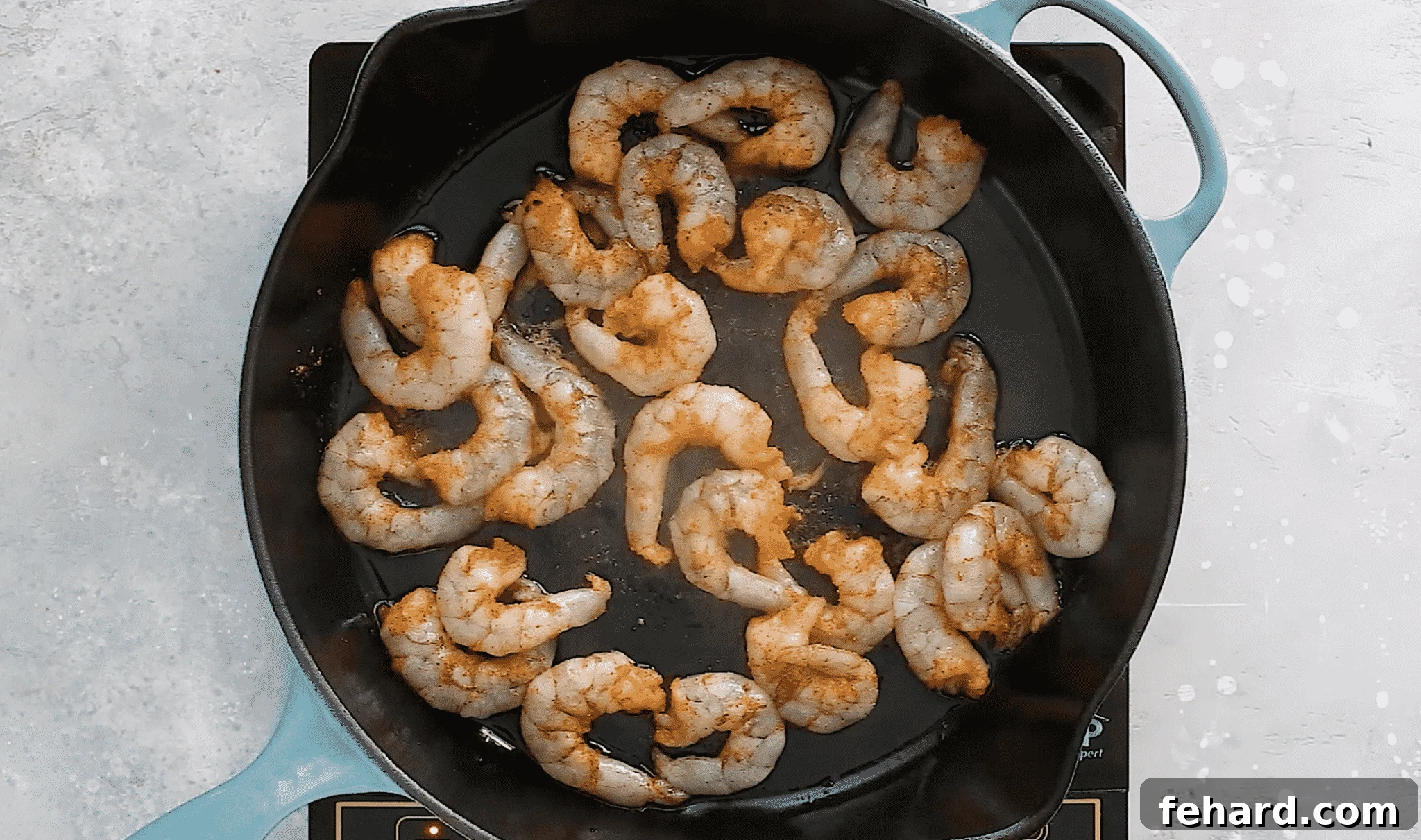
- Heat one tablespoon of olive oil in a cast-iron skillet over medium-high heat. Allow the skillet to get hot enough so the shrimp will sear quickly.
- Once the oil is shimmering, add the seasoned shrimp in a single layer. Cook for approximately 1-2 minutes per side, or until the shrimp turn pink and opaque, indicating they are fully cooked through. Be careful not to overcrowd the pan; cook in batches if needed to ensure a proper sear rather than steaming. Remove the cooked shrimp from the skillet and set aside on a plate.
Cook the Vegetables
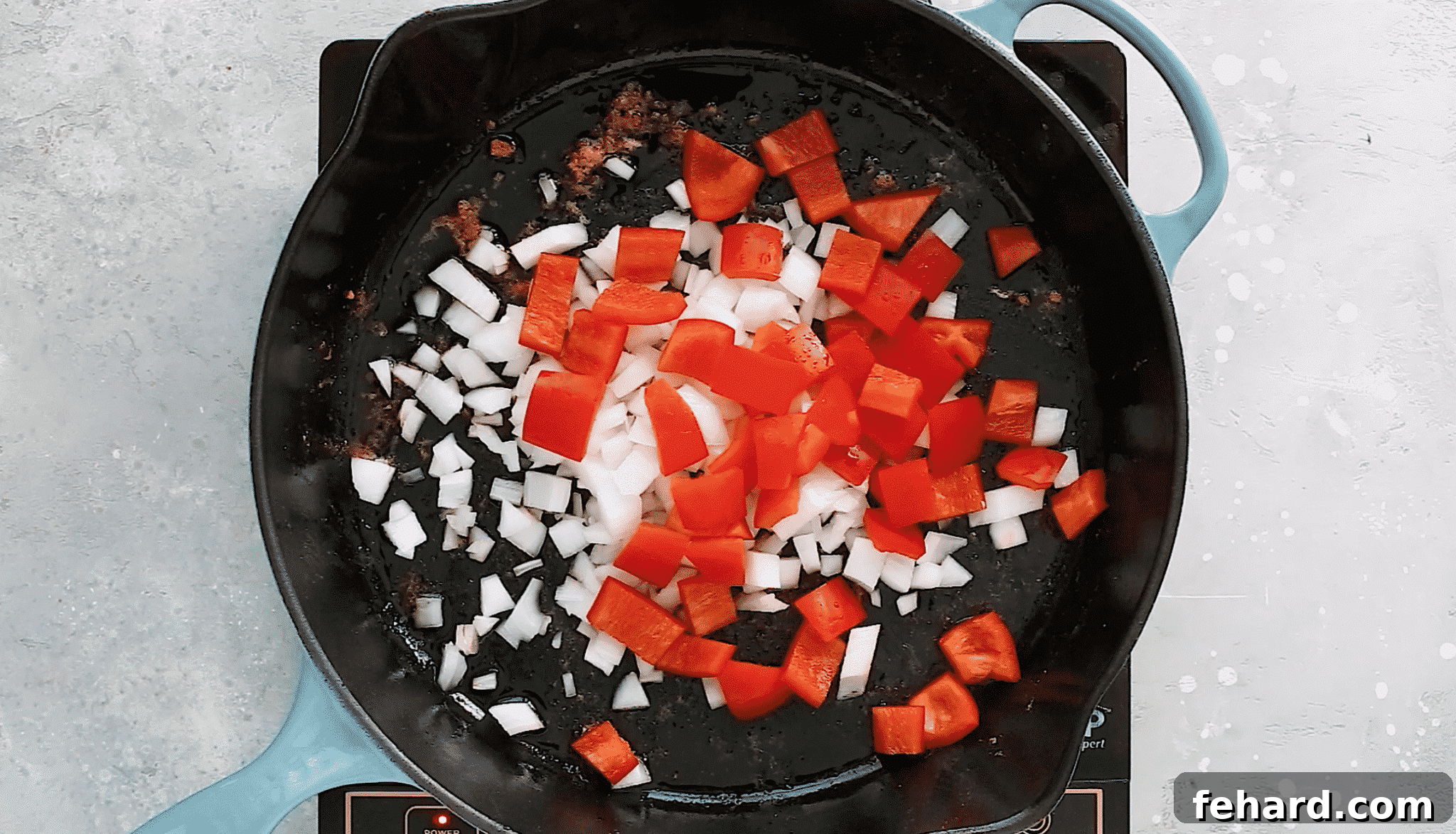
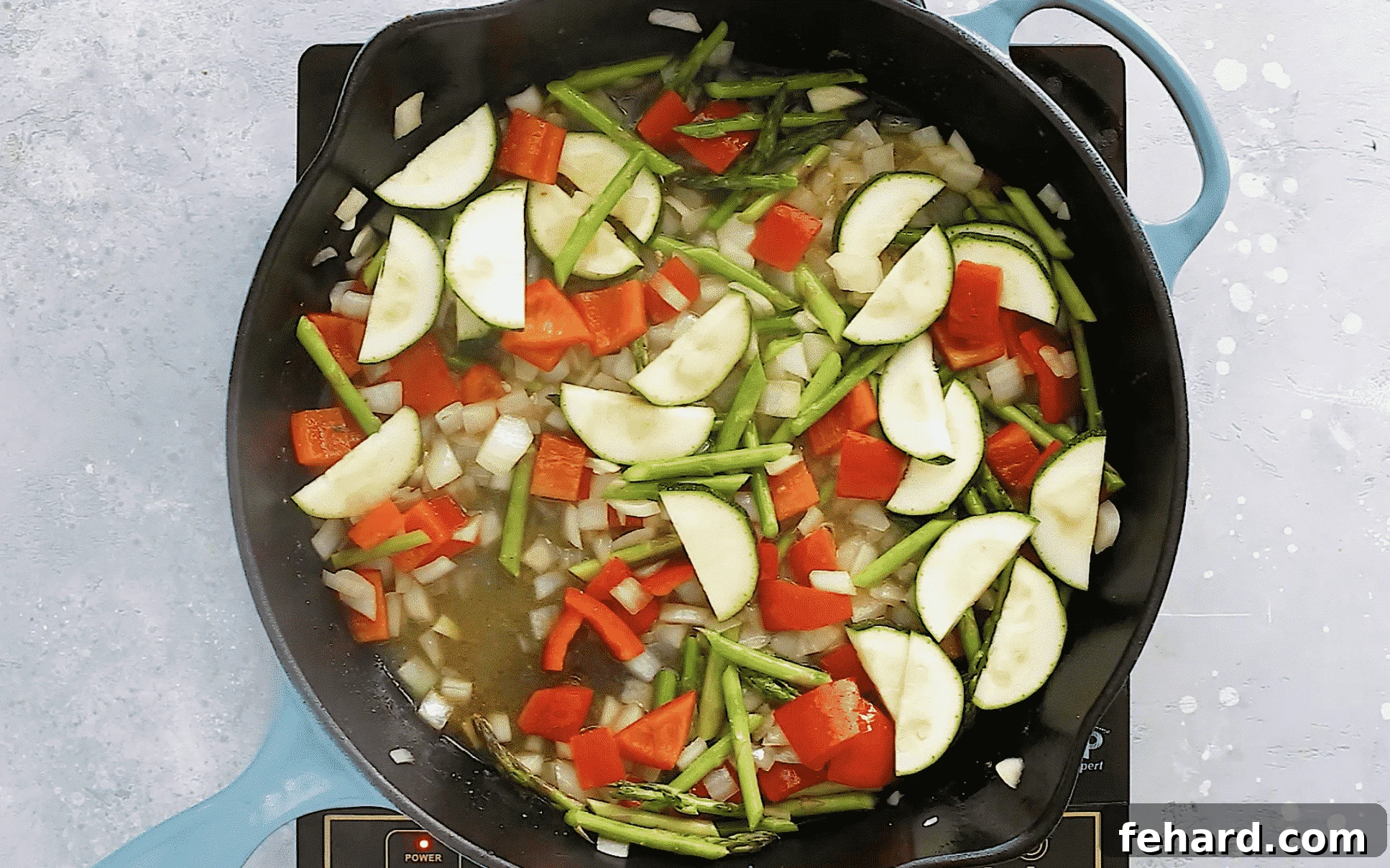
- In the same skillet (no need to clean it – those browned bits add flavor!), add the remaining tablespoon of olive oil. Add the chopped white onions and red bell peppers. Sauté for about 4 minutes, stirring occasionally, until they begin to soften and become fragrant.
- Pour in the chicken broth and add the asparagus spears to the skillet. Place a lid on the skillet and allow the vegetables to steam for just 2 minutes, stirring once to ensure even cooking. This quick steam helps tenderize the asparagus while keeping it crisp.
- Next, add the diced zucchini to the skillet. Replace the lid and continue to cook for another 3 minutes. The zucchini cooks quickly, so this short period is enough to bring it to tender-crisp perfection without it becoming mushy.
Put It All Together
- Return the cooked shrimp to the cast iron skillet, nestling it among the tender vegetables. Cook for an additional 30 seconds to 1 minute, just enough to warm the shrimp through without overcooking them.
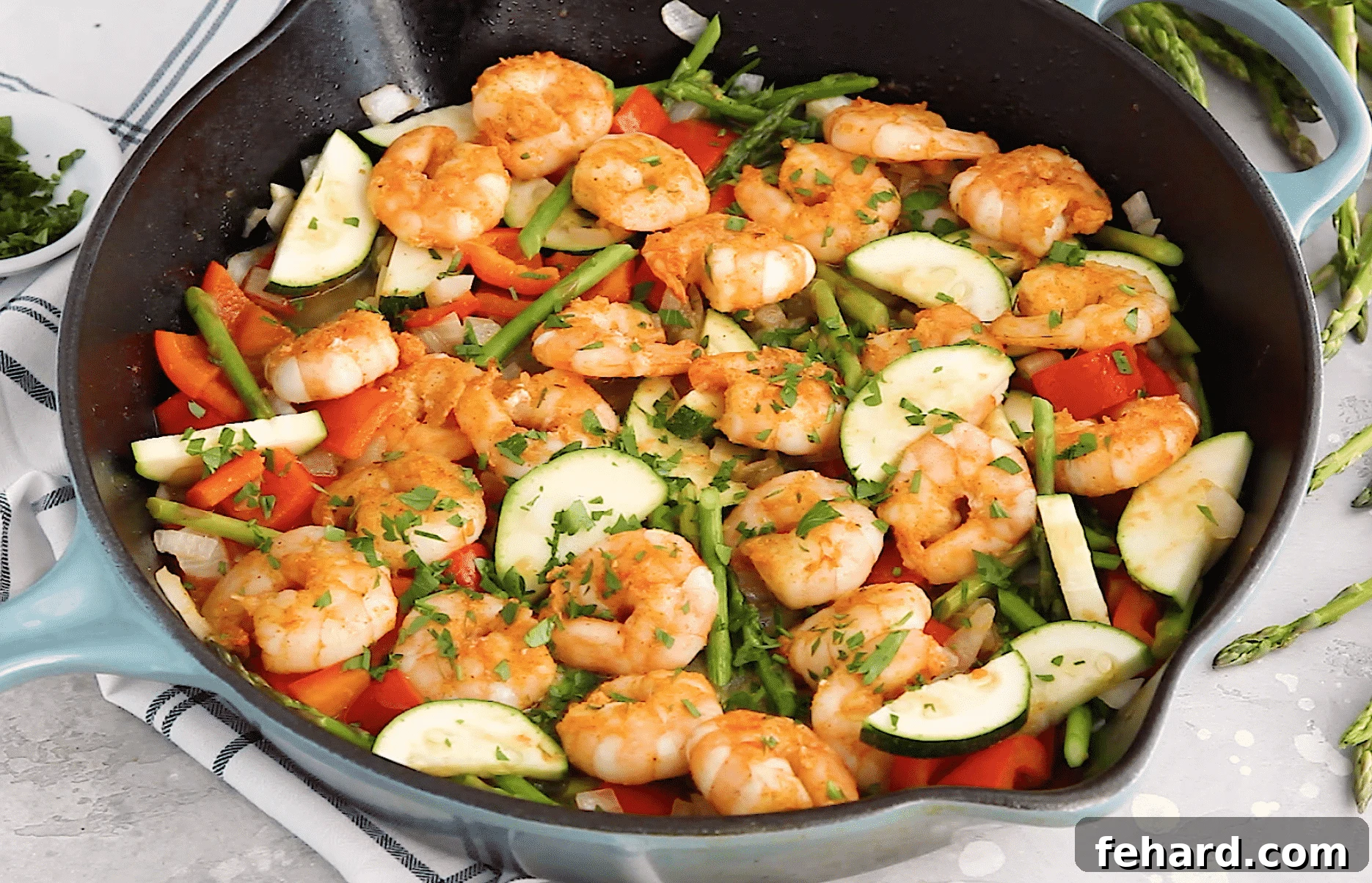
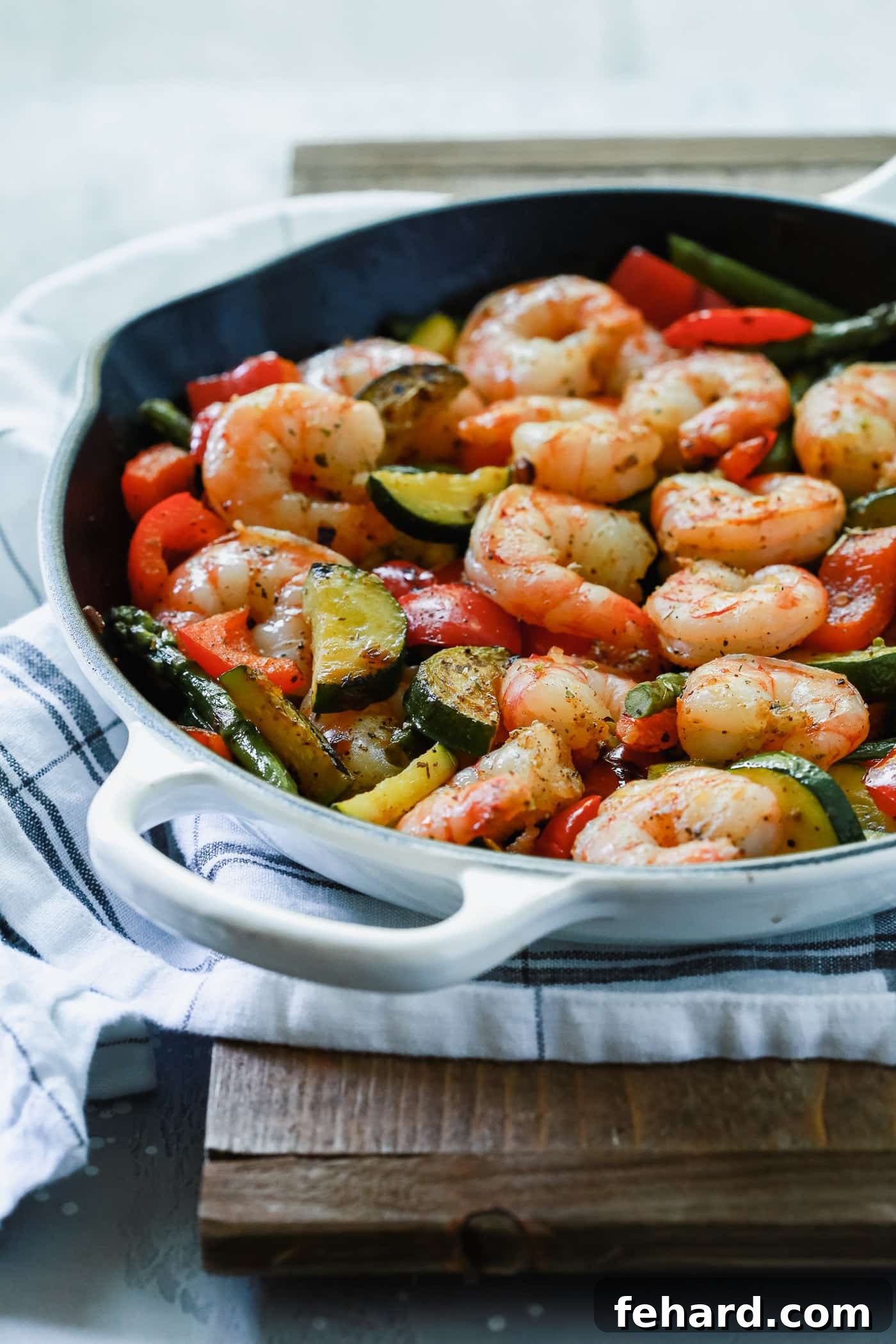
- Garnish generously with freshly chopped parsley just before serving. The fresh herbs add a final touch of color and brightness to this delectable dish.
Choosing Your Shrimp: Fresh vs. Frozen
Both fresh and frozen shrimp are excellent sources of lean protein, making them a healthy choice for any meal. My personal preference leans towards wild-caught shrimp because it often boasts a cleaner, more robust flavor profile compared to conventionally farmed shrimp. However, don’t hesitate to use any variety of shrimp you have readily available.
To further streamline your cooking process, I highly recommend purchasing shrimp that has been pre-peeled and deveined. This simple step eliminates a significant portion of prep work. You can also opt for shrimp with the tails removed, depending on your serving preference.
How To Properly Thaw Frozen Shrimp
If you’re using frozen shrimp, proper thawing is key to ensuring the best texture and flavor for your skillet. Here are two effective methods:
- Overnight in the Refrigerator: This is the gentlest method and my preferred approach. Simply transfer your frozen shrimp to a bowl and place it in the refrigerator overnight. By morning, your shrimp will be perfectly thawed and ready for cooking.
- Quick Thaw Under Cold Water: For times when you need shrimp in a hurry, you can quickly thaw them in your sink. Place the frozen shrimp in a bowl or colander. Run cold water over the shrimp for 5 to 10 minutes, giving the bowl or colander a gentle shake every few minutes. This ensures the cold water reaches all the shrimp, thawing them evenly.
Important Tip: Regardless of the thawing method you choose, it is crucial to thoroughly pat the thawed shrimp dry with paper towels before cooking. Excess moisture will cause the shrimp to steam in the skillet instead of developing a beautiful sear, resulting in a rubbery texture. Dry shrimp means perfectly cooked shrimp!
Essential Recipe Tips for Success
- Pre-Preparation is Key: The vegetables used in this skillet do not require peeling, which saves time! However, always make sure to give all your produce a thorough cleaning and pat them dry before you start chopping. This helps to remove any dirt and ensures optimal searing.
- Avoid Overcrowding the Skillet: This is a golden rule for skillet cooking. If your skillet is small, or if you have a large batch of ingredients, sear the shrimp and sauté the vegetables in batches. Overcrowding lowers the pan’s temperature, leading to steaming instead of a desirable sear, which can make your food soggy and less flavorful.
- Versatile Vegetable Swaps: This recipe is incredibly adaptable! Feel free to experiment with other vegetables you have on hand or prefer. Excellent additions or substitutions include broccoli florets, fresh spinach, hearty kale or collard greens, sliced mushrooms, crisp green beans, or sweet snow peas and snap peas. Adjust cooking times as necessary for different vegetables.
Why I Adore My Cast Iron Skillet for This Recipe
A cast iron skillet isn’t just a piece of cookware; it’s a culinary powerhouse, and definitely my favorite pan to cook in. Its unparalleled versatility makes it ideal for almost any cooking task. For dishes like this Shrimp and Vegetable Skillet, a cast iron skillet is the perfect tool for achieving that desirable sear, thanks to its superior heat retention and distribution.
Beyond searing, cast iron excels at sautéing, simmering, braising, baking, roasting, and frying. Think of how perfectly it cooks my Asparagus Sweet Potato Chicken Skillet and Ground Turkey Sweet Potato Skillet Recipe. If you have a cast iron grill pan, you can even achieve beautiful grill marks, like on my Grilled Chicken Avocado Salad.
One of the most impressive qualities of cast iron is its adaptability to various heat sources. It performs exceptionally well on gas, electric, induction, and ceramic glass-top stoves, and it’s perfectly safe for oven use. For the adventurous cook, it’s also fantastic for outdoor cooking over a grill or open fire and coals – perfect for camping!
The consistent and even heat retention of cast iron ensures that food cooks uniformly and develops a fantastic crust. I rely on two trusted cast iron skillets: a more premium Le Creuset model and a more budget-friendly yet equally reliable Lodge skillet. Both deliver excellent results. If you’re looking to get the most out of your cast iron, check out these inspiring collections: Cast Iron Skillet Recipes and Skillet Dinner Recipes.
Storage and Reheating Your Shrimp and Vegetable Skillet
This shrimp and vegetable skillet is fantastic for meal prep, making your busy weeknights even easier. Here’s how to handle leftovers:
- Leftovers: Any remaining shrimp and vegetables should be transferred to an airtight container and stored in the refrigerator. They will keep fresh and delicious for up to 3 days.
- Freezer: I generally do not recommend freezing this recipe. Vegetables like zucchini can change their texture significantly upon thawing, becoming watery and mushy. It’s best enjoyed fresh or from the fridge.
- Reheating: To reheat, you have a couple of convenient options. You can gently warm the leftovers in the microwave until heated through. Alternatively, for a slightly crisper texture, reheat them in a skillet on the stovetop over medium heat, stirring occasionally, until hot.
More Delicious Skillet Recipes to Explore
If you love the convenience and flavor of skillet meals, you’re in luck! Here are some other fantastic shrimp and vegetable skillet recipes to add to your repertoire:
- Creamy Parmesan Shrimp Skillet: This recipe is a lifesaver when you’re short on time but craving something rich and indulgent. It literally comes together in minutes for a quick and satisfying meal.
- Sweet Potato, Kale and Shrimp Skillet: With just four main ingredients, this dish is incredibly simple to prepare, yet bursting with wholesome flavors and nutrients.
- Garlic Shrimp Asparagus Skillet: A family favorite, this shrimp skillet recipe is renowned for its incredible flavor and straightforward preparation, perfect for any night of the week.
- Shrimp, Bell Pepper and Onions Skillet: This meal is a delicious, quick-to-make option that’s loaded with vibrant colors and robust flavors, proving healthy eating can be exciting.
More Skillet Dinners To Try
Shrimp Asparagus Recipe
25 mins
Skillet Chicken Fajitas Recipe
35 mins
Garlic Herb Lamb Chops Recipe
20 mins
Garlic Butter Steak Bites
15 mins
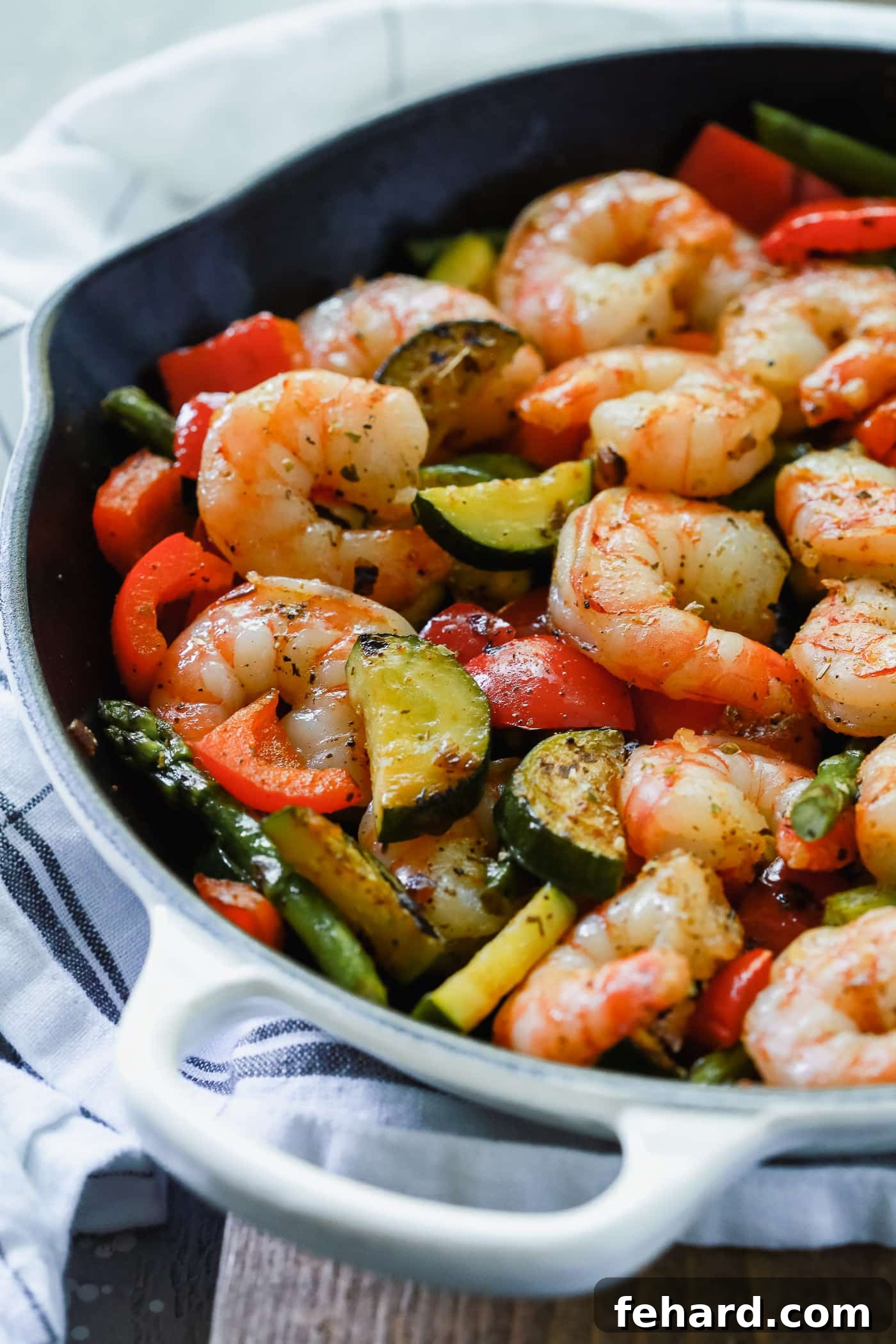
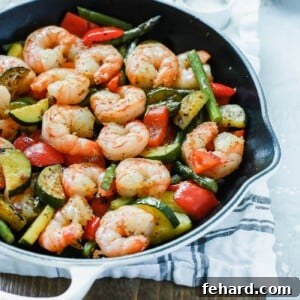
Shrimp and Vegetable Skillet Recipe
Author: Olivia Ribas
Servings: 4 people
Prep Time: 10 minutes
Cook Time: 20 minutes
Total Time: 30 minutes
This ultra-easy Shrimp and Vegetable Skillet recipe is loaded with veggies, flavorful spices, and shrimp. It’s a meal that is ready in less than 30 minutes and perfect to take to work for lunch.
Ingredients
- ½ teaspoon onion powder
- ½ teaspoon garlic powder
- ½ teaspoon smoked paprika
- Kosher salt and fresh ground black pepper (to taste)
- 1 pound raw shrimp, peeled and deveined with tail on (large or jumbo recommended)
- 2 tablespoons extra virgin olive oil, divided
- 1 cup red bell pepper, chopped
- 1 cup white onions, chopped
- ½ cup chicken broth (low-sodium if preferred)
- 1 cup asparagus, spears cut at a diagonal in 2-3-inch pieces
- 1 cup zucchini, diced (smaller zucchinis preferred)
- Freshly chopped parsley, for garnishing
- 1 recipe cauliflower rice, for serving
Instructions
- In a small bowl, combine onion powder, garlic powder, smoked paprika, salt, and black pepper. Mix together thoroughly.
- In a large bowl, add the shrimp and the prepared spice mixture. Toss everything well to combine, ensuring the shrimp is fully coated.
- Heat 1 tablespoon of olive oil in a cast iron skillet over medium-high heat until shimmering.
- Add the seasoned shrimp to the hot skillet and cook for about 1-2 minutes per side, or until they turn pink and are cooked through. Do not overcrowd; cook in batches if necessary. Remove shrimp and set aside on a plate.
- In the same skillet, add the remaining 1 tablespoon of olive oil, along with the chopped white onions and red bell peppers.
- Sauté for about 4 minutes, stirring occasionally, until the vegetables begin to soften and become fragrant.
- Add the chicken broth and asparagus to the skillet. Place a lid on the skillet and cook for only 2 minutes, stirring occasionally, to tenderize the asparagus.
- Add the diced zucchini, replace the lid, and cook for 3 minutes more, until the zucchini is tender-crisp.
- Return the cooked shrimp to the skillet, gently tossing with the vegetables.
- Cook for an additional 30 seconds to 1 minute, just to warm the shrimp through without overcooking.
- Garnish generously with freshly chopped parsley before serving.
- Meal Prepping Tip: Divide an even amount of cauliflower rice into 4 separate glass containers. Distribute the shrimp and vegetable skillet mixture into these 4 portions. Cover with lids and store in the refrigerator for up to 4 days. Reheat in the microwave for about 2 minutes.
Notes
- Serve this versatile recipe over cauliflower rice or mashed cauliflower for a low-carb option. It also pairs wonderfully with traditional rice or mashed potatoes.
- Always ensure all vegetables are thoroughly washed before use.
- If your skillet is small, cook the shrimp and then the vegetables in separate batches to prevent overcrowding and ensure proper searing.
- To store: Leftovers can be kept in an airtight container in the refrigerator for up to 3 days.
- To reheat: Reheat leftovers in the microwave or in a skillet on the stovetop over medium heat until warmed through.
Nutrition Information (Approximate Per Serving)
Serving: 1/4 of recipe
- Calories: 195 kcal
- Carbohydrates: 11g
- Protein: 18g
- Fat: 8g
- Cholesterol: 166mg
- Sodium: 651mg
- Potassium: 161mg
- Fiber: 3g
- Sugar: 6g
- Calcium: 80mg
- Iron: 1.3mg
Nutrition information is automatically calculated and should only be used as an approximation.