
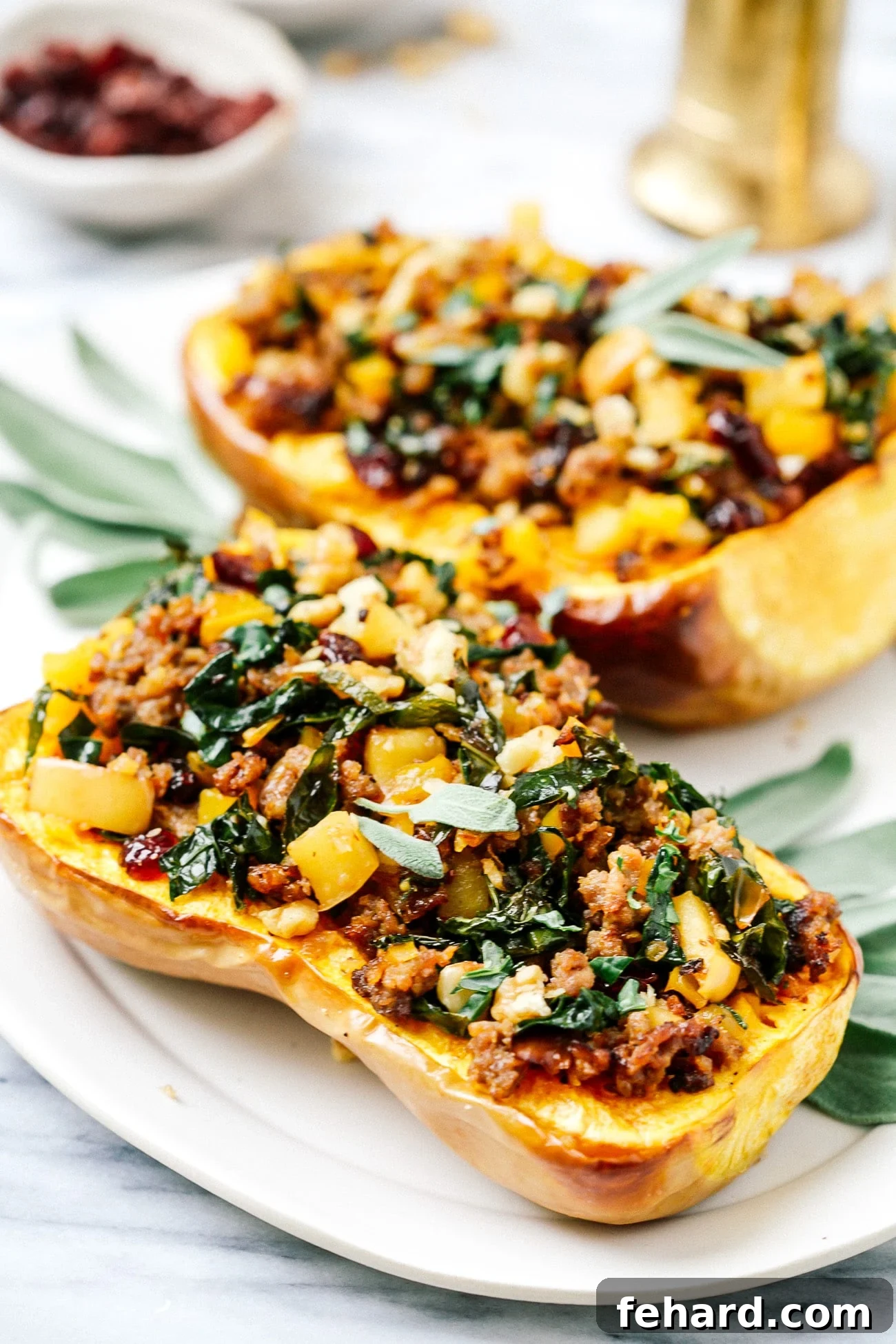
Welcome to your new favorite fall and winter comfort food! This incredible Stuffed Butternut Squash with Italian Sausage recipe is a true celebration of seasonal flavors, combining fresh, wholesome ingredients into a meal that is both hearty and incredibly satisfying. Imagine perfectly roasted butternut squash halves, tender and sweet, filled to the brim with a rich, savory mixture of Italian sausage, nutrient-dense kale, aromatic sage, and a delightful hint of sweetness from dried cranberries and crisp diced apple. For that essential textural contrast, a generous sprinkle of crunchy walnuts completes this culinary masterpiece.
Stuffed squash recipes, in general, are cherished for their ability to deliver warmth, flavor, and a truly filling experience. They offer a comforting embrace on chilly evenings and are an absolutely perfect candidate for a festive side dish during the holiday season, from Thanksgiving gatherings to Christmas dinners. What makes this particular recipe even more appealing is its surprising ease of preparation, ensuring that you can bring this delicious meal to your family’s table without extensive effort. It’s a dish that promises to be a crowd-plepleaser, guaranteed to be enjoyed by everyone from the youngest to the oldest.
If you find yourself captivated by the versatility and deliciousness of butternut squash, you’re in for a treat! Our kitchen is brimming with ideas to help you incorporate this fantastic fall vegetable into even more meals. Be sure to explore other popular recipes like our No Bean Butternut Squash Chili, a robust and flavorful stew perfect for cooler days. For something quick and soothing, our 20-Minute Butternut Squash Soup offers a creamy, velvety texture in no time. And for a unique and complete meal, don’t miss these satisfying Ground Beef Butternut Squash Bowls, packed with flavor and goodness.
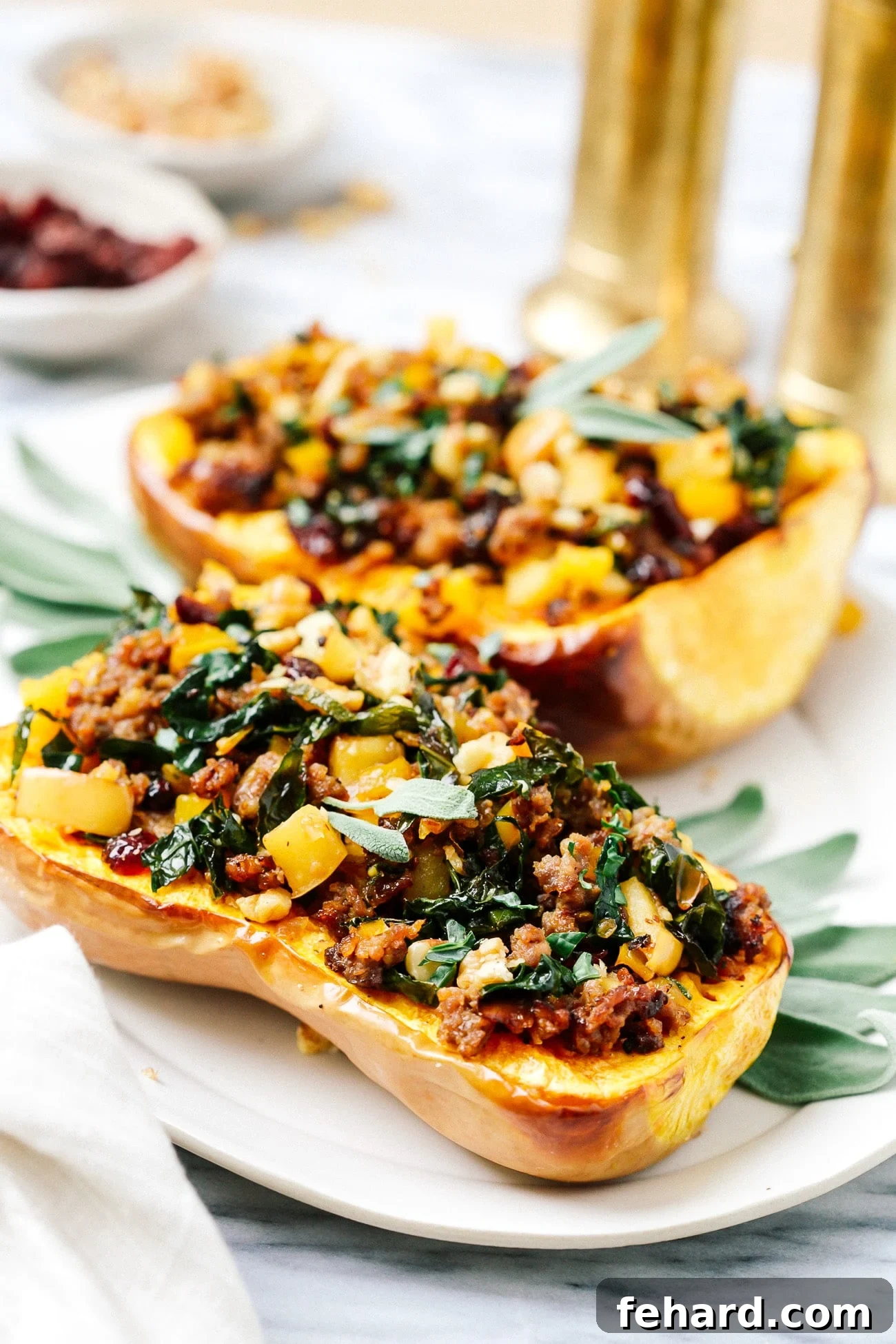
The arrival of butternut squash season is always a joyous occasion in any kitchen. This incredibly versatile fall favorite can be transformed into countless delicious meals, making it a staple during the cooler months. Beyond its culinary potential, there’s a simple pleasure in preparing this delightful squash: roasting a butternut squash in your oven not only softens its flesh to perfection but also fills your home with an irresistibly warm and dreamy aroma that signals comfort and deliciousness is on its way. It’s truly an experience for all the senses.
The Magic of Butternut Squash: Selection and Preparation Tips
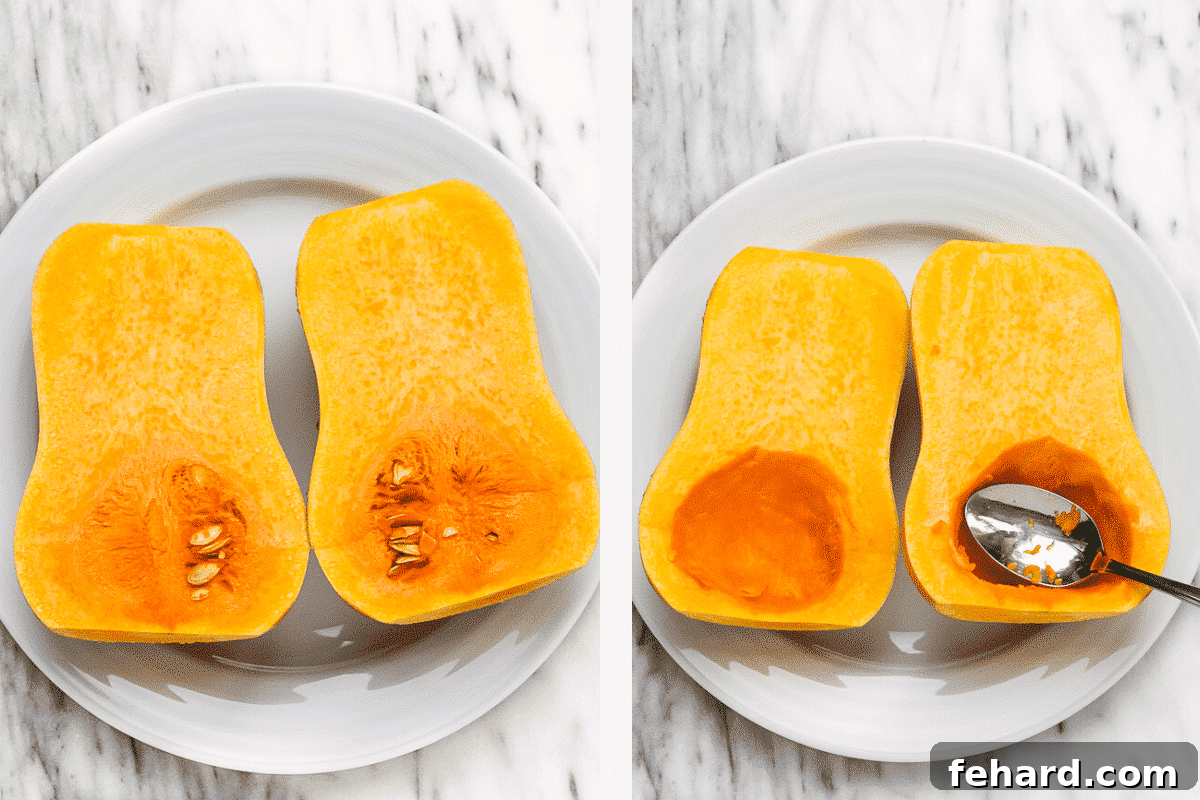
Butternut squash isn’t just delicious; it’s also packed with nutritional benefits, including high levels of vitamins A and C, fiber, and potassium. Choosing the right squash is key to a successful dish. When selecting your butternut squash at the grocery store or farmer’s market, look for one that is firm to the touch, heavy for its size, and has a consistent, matte, light tan skin without any green patches. Green spots indicate immaturity, which can result in a less sweet and flavorful squash. The skin should be tough, signaling ripeness, rather than glossy. Once you have your perfect squash, preparing it for roasting is straightforward. A common challenge can be cutting the squash due to its hard exterior. A safe and effective tip is to microwave the whole squash for 1-2 minutes before cutting. This softens the skin just enough to make slicing much easier and safer. Always use a sharp, heavy chef’s knife and cut it lengthwise from stem to end. A sturdy spoon works wonders for scooping out the seeds and stringy bits, creating a clean cavity ready for your delectable filling.
Essential Ingredients for Your Stuffed Butternut Squash
Crafting the perfect stuffed butternut squash requires a thoughtful selection of ingredients that harmonize beautifully to create a balanced and memorable flavor profile. Here’s a deeper look at the stars of this dish:
- Butternut Squash: The foundation of our dish. As mentioned, look for a ripe, firm squash with a light tan skin. Its naturally sweet and nutty flavor provides the ideal canvas for the savory filling.
- Onion: A staple in savory cooking, yellow onions offer a balanced sweetness and pungency that mellows beautifully when sautéed. White onions can be used as a substitute if preferred.
- Garlic: Essential for depth of flavor. We recommend one to two large cloves, minced, to infuse the filling with its irresistible aroma and taste.
- Yellow Bell Pepper: Adds a pop of vibrant color, a fresh, sweet crunch, and additional vitamins. While yellow is specified, feel free to experiment with red bell pepper for extra sweetness or orange for a slightly different hue.
- Seasoning: Keeping it simple yet effective, this recipe relies on just salt and freshly ground black pepper to enhance the natural flavors of all the components. Adjust to your taste preferences.
- Italian Pork Sausage: The heart of the savory filling. Italian sausage brings a wonderfully seasoned, robust flavor that perfectly complements the sweetness of the squash and apple. You can opt for mild or hot Italian sausage depending on your spice preference.
- Kale: These hearty greens add a fantastic nutritional boost, a slightly earthy flavor, and a beautiful texture contrast. Kale wilts down beautifully into the filling, absorbing all the delicious juices.
- Apple: A crucial element for balancing the richness of the sausage and the earthiness of the kale. A crisp, sweet-tart apple, like Pink Lady or Honeycrisp, diced into small pieces, adds a refreshing burst of flavor and moisture.
- Dried Cranberries: These jewel-toned berries introduce a delightful tartness and chewiness, cutting through the savory notes and enhancing the autumn-inspired profile of the dish.
- Sage: The signature herb of fall and winter cooking, sage offers an earthy, slightly peppery, and incredibly aromatic essence. Freshly chopped sage is highly recommended for its potent flavor, but dried sage can also be used in a pinch (use about one-third the amount of dried for fresh).
- Walnuts: For that much-needed textural complexity, walnuts provide a satisfying crunch and a subtly bitter, nutty flavor that pairs wonderfully with the other ingredients. If walnuts aren’t your preference, chopped pecans or even roasted pumpkin seeds make excellent alternatives.
Step-by-Step Instructions: Crafting Your Stuffed Butternut Squash
Creating this delicious stuffed butternut squash is an enjoyable process that yields spectacular results. Follow these simple steps for a perfect meal:
Prepare Butternut Squash:
- Preheat your oven to a robust 400°F (200°C). This ensures the squash roasts evenly and becomes beautifully tender.
- Carefully cut the squash in half lengthwise. If you’re struggling with the hard skin, microwave the whole squash for 1-2 minutes to soften it slightly before cutting. Use a sturdy spoon to neatly scoop out all the seeds and fibrous strands from the center of each half. Discard the seeds or save them for roasting later!
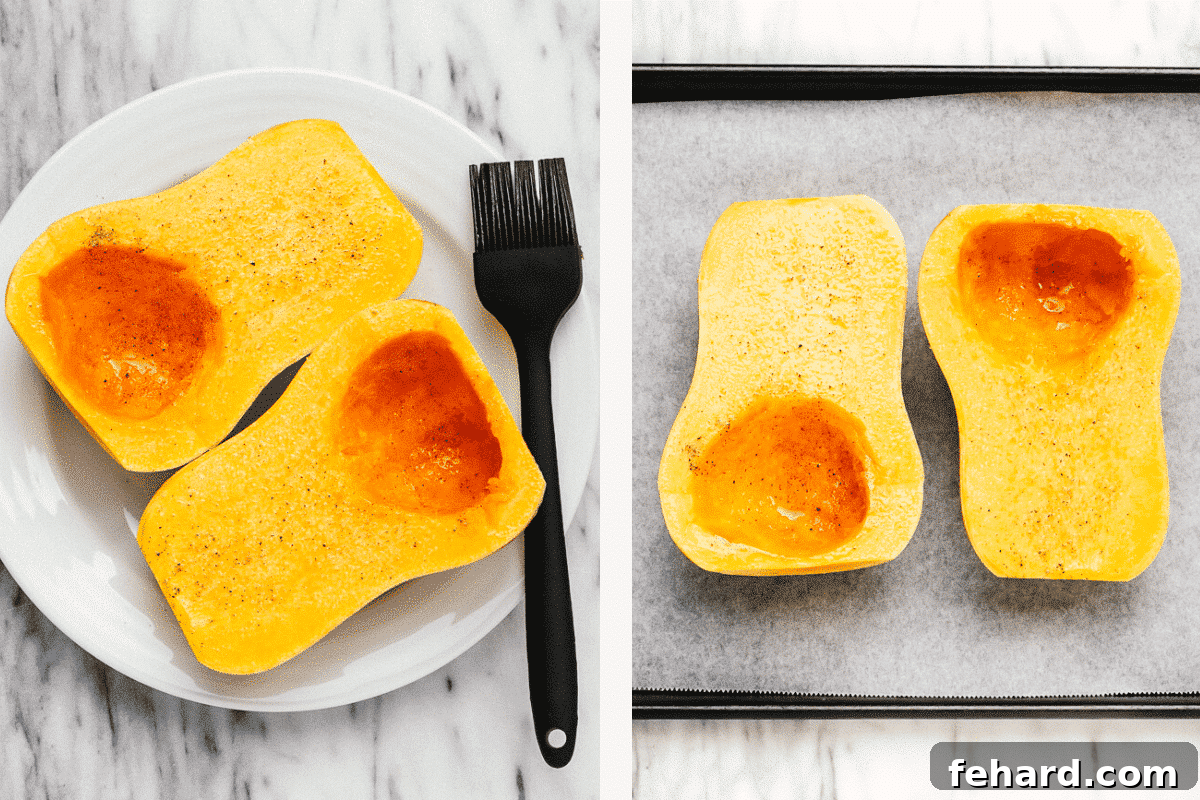
- Season the squash: Brush the cut surface of each squash half generously with olive oil. Then, sprinkle them liberally with salt and black pepper. This seasoning will seep into the squash flesh as it roasts, enhancing its natural sweetness.
- Roast until tender: Place the seasoned squash halves, cut-side up, on a baking sheet lined with parchment paper. This prevents sticking and makes cleanup a breeze. Bake for 40-45 minutes, or until the squash is perfectly fork-tender. The edges might even get a little caramelized, adding more flavor.
Prepare the Flavorful Filling:
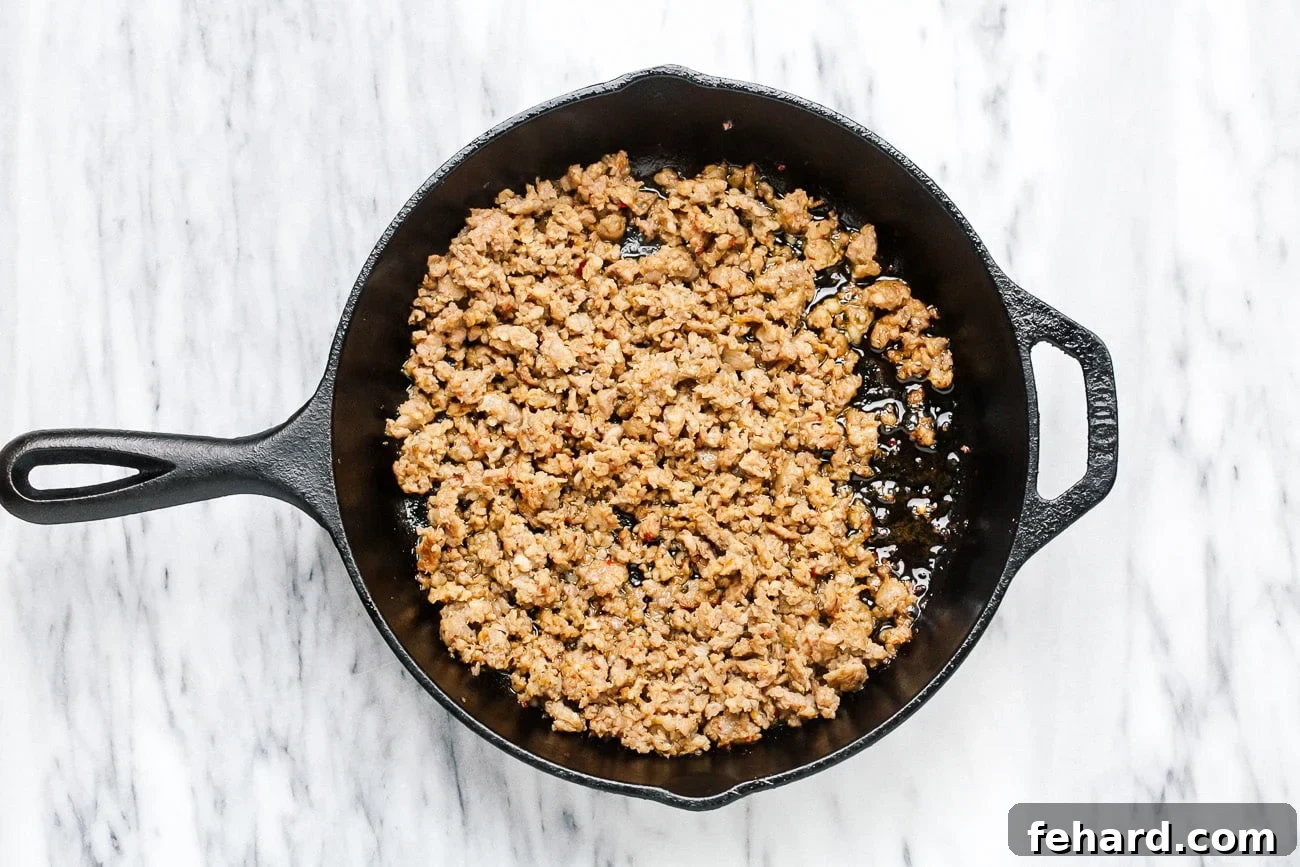
- While your squash is roasting, begin preparing the filling. Place a large, heavy-bottomed skillet (a cast iron skillet works wonderfully) on your stovetop and turn the heat to medium-high. Add a tablespoon of olive oil. If your Italian sausage is in a casing, remove it and crumble the sausage directly into the hot skillet. Use a wooden spoon to break the meat apart into smaller pieces, allowing it to brown completely and cook through. Cook until no pink remains, about 5-7 minutes. Drain any excess fat if desired.
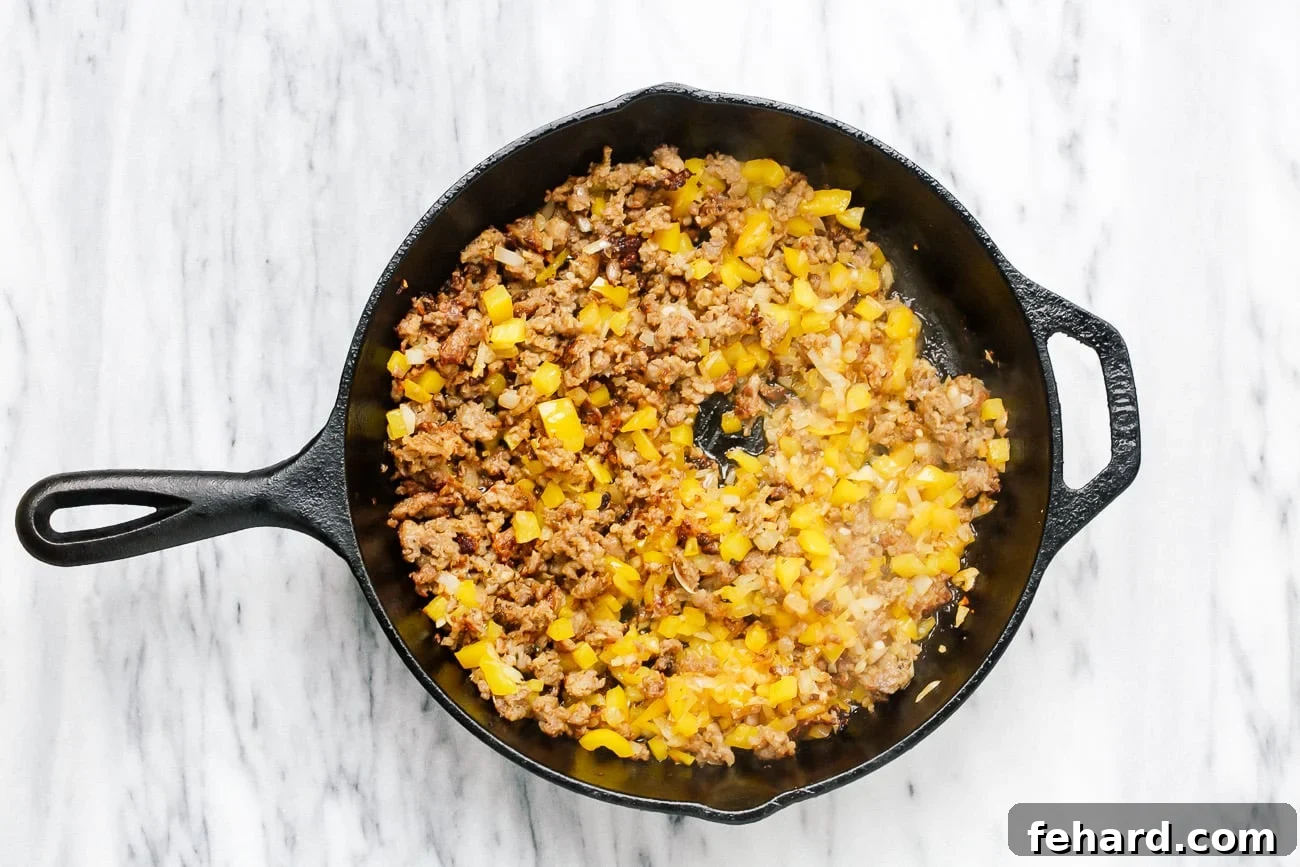
- Sauté the aromatics and bell pepper: To the browned sausage, add the diced onion, diced bell pepper, and minced garlic. Stir everything together and sauté the vegetables until they begin to soften and become fragrant. This usually takes about 3-5 minutes. The bell pepper should still have a slight bite.
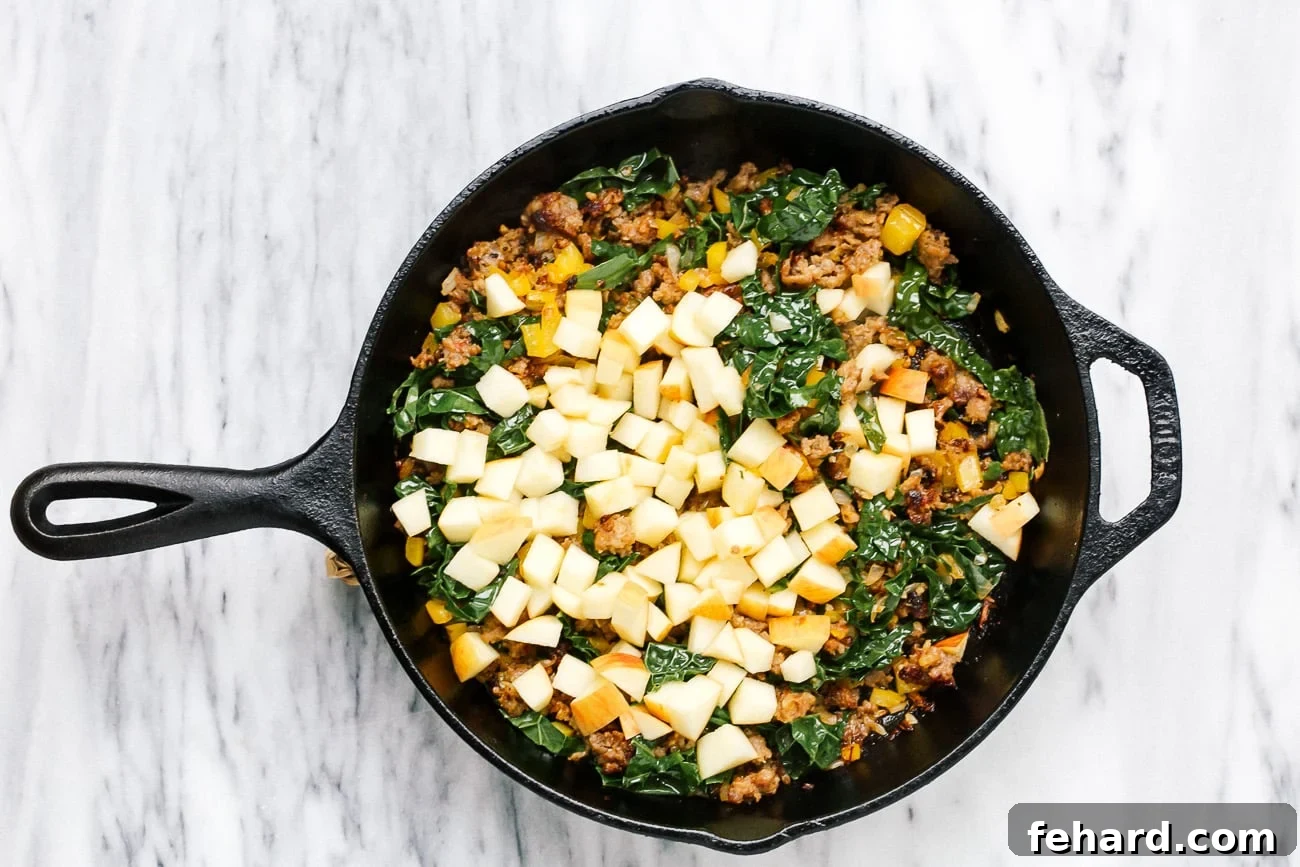
- Incorporate kale, apple, and sage: Add the chopped kale to the pan. Stir continuously until the kale wilts down, which will happen quite quickly, usually within 2-3 minutes. Next, stir in the diced apple and fresh sage. Continue to cook for another 2-3 minutes, allowing the apple to soften slightly and the sage to release its beautiful aroma. Remove the skillet from the heat.
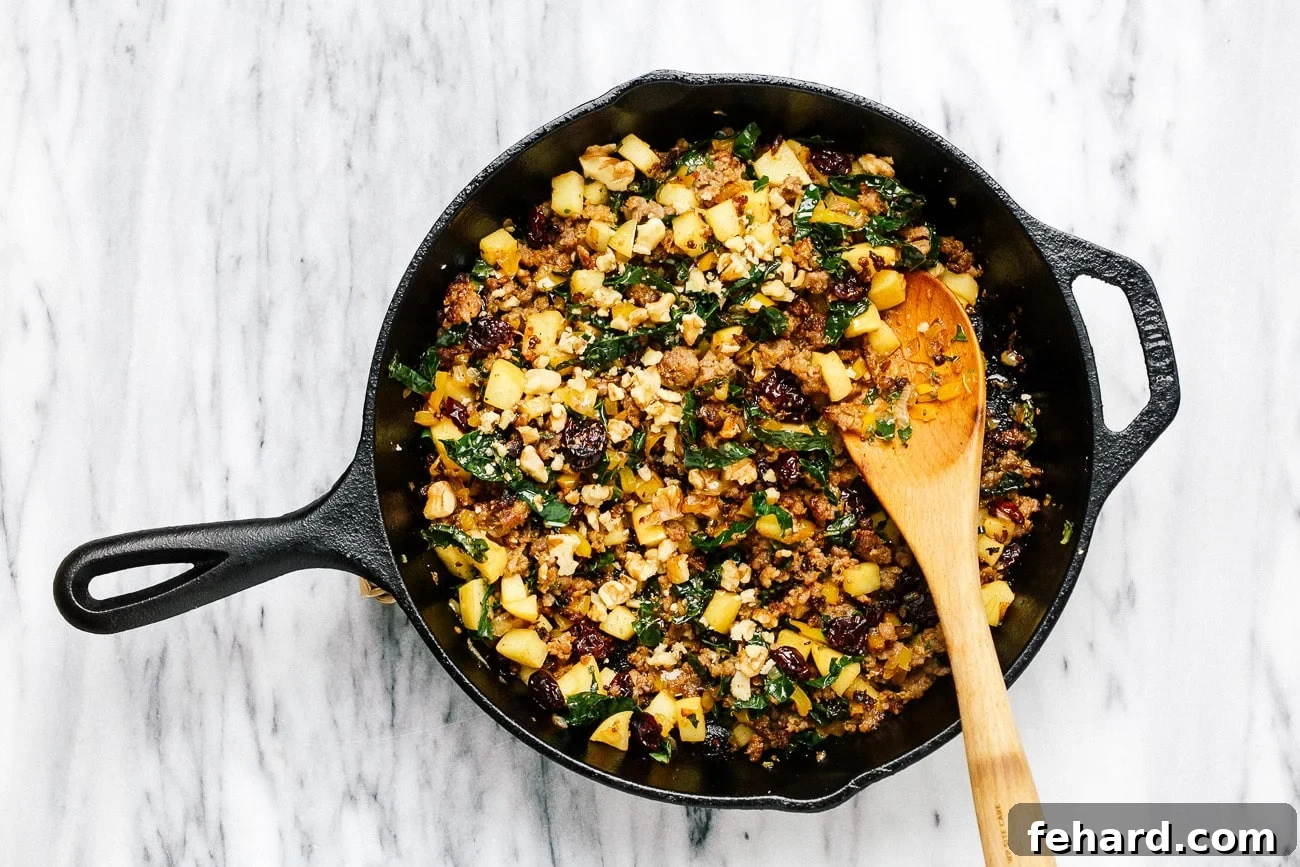
- Finish the filling: Finally, stir in the chopped walnuts and dried cranberries. Mix until all ingredients are well combined. The warmth from the pan will slightly plump up the cranberries, and the walnuts will maintain their crunch.
Assemble and Serve Your Stuffed Butternut Squash:
- Once the butternut squash is perfectly roasted and tender, carefully remove it from the oven. Allow it to cool slightly so it’s easier to handle. With a fork, gently scoop out a small amount of the cooked butternut squash flesh from the center of each half. This creates a larger cavity, ensuring ample space for your generous filling. Don’t discard the scooped-out squash! You can use these extras to make a small batch of Roasted Butternut Squash Mash for another meal.
- Generously stuff each roasted squash half with the prepared filling. Mound the filling high for a truly satisfying presentation. If you desire, add a final sprinkle of extra fresh chopped sage for an added touch of aroma and visual appeal. This dish is wonderful served as a main course on its own, offering a complete and balanced meal. Alternatively, it pairs beautifully with a simple green salad or a side of fluffy rice for a more substantial dinner. Enjoy the rich blend of savory and sweet flavors!

Delicious Variations to Customize Your Dish
One of the beauties of this stuffed butternut squash recipe is its adaptability. Feel free to get creative and customize it to your personal preferences or what you have on hand:
- Cheese Power-Up: For an extra layer of richness and flavor, sprinkle your stuffed squash with a handful of shredded cheddar, robust Asiago, or nutty Parmesan cheese during the last 10 minutes of baking, or right before serving. Crumbled goat cheese would also add a delightful tangy creaminess that beautifully contrasts with the savory filling.
- Spice it Up (or Down): While the current seasoning is simple, you can certainly play with more complex spice profiles. For a hint of warmth and sweetness, add a dusting of cinnamon, nutmeg, or a pinch of ground cloves to your filling. If you prefer more savory and earthy notes, experiment with dried oregano, thyme, or rosemary. A touch of smoked paprika or cumin could also introduce a wonderful depth of flavor.
- Different Squashes, Same Great Filling: Don’t limit yourself to butternut! This versatile filling can be used with other winter squashes. Try honeynut squash for a smaller, sweeter option, kabocha squash for a denser, slightly nutty texture, acorn squash for individual servings (just like our Sausage & Apple Stuffed Acorn Squash!), or even spaghetti squash for a unique, strand-like texture that can mingle with the filling.
- Make it Vegetarian: To transform this into a vegetarian-friendly meal, simply omit the Italian pork sausage. You can substitute it with crumbled plant-based sausage, sautéed mushrooms for an earthy umami, cooked lentils for protein, or a mixture of roasted chickpeas and extra vegetables like diced carrots and celery.
- Swap the Nuts: While walnuts provide a great crunch, toasted pecans or even roasted pumpkin seeds (pepitas) can be excellent alternatives, each offering a slightly different flavor and texture.
- Herb Garden Freshness: Beyond sage, consider adding other fresh herbs like thyme, rosemary, or parsley, either mixed into the filling or as a garnish for an elevated presentation and aroma.
How to Store and Reheat Leftovers
This stuffed butternut squash makes excellent leftovers, perfect for a quick and satisfying meal the next day or even weeks later. Proper storage ensures both safety and flavor retention:
- Refrigeration: Allow any leftover stuffed butternut squash to cool completely to room temperature before storing. Transfer the halves to an airtight container. If you don’t have a container large enough, you can wrap them tightly in plastic wrap or aluminum foil. Stored this way, the squash will remain fresh in the refrigerator for up to 3 days.
- Freezing for Longer Storage: For longer preservation, this dish freezes beautifully. Once cooled, wrap each stuffed squash half tightly in plastic wrap, ensuring it’s sealed well to prevent freezer burn. Then, place the wrapped halves into a freezer-safe Ziploc bag or a sturdy freezer-safe container. Stored properly, the stuffed butternut squash can be kept in the freezer for approximately 3 months. This is a fantastic option for meal prepping or having a delicious, ready-made meal on hand for busy days.
- Reheating Instructions:
- From Frozen: If frozen, it’s best to allow the squash to thaw overnight in the refrigerator before reheating. This ensures even heating and better texture.
- Microwave Method: For a quick reheat, place a thawed squash half on a microwave-safe plate. Microwave on high in 30-second increments, checking and stirring the filling occasionally, until it is thoroughly warmed through. Be careful not to overcook, as this can make the squash mushy.
- Oven Method (Recommended for Best Texture): For the best texture, especially if you want to crisp up the top of the filling, reheating in the oven is ideal. Preheat your oven to 350°F (175°C). Place the thawed stuffed squash halves on a parchment paper-lined baking sheet. Cook until hot throughout, which usually takes about 20-30 minutes, depending on the size of the squash. If the topping starts to brown too quickly, you can loosely cover it with foil.
If you’ve fallen in love with this stuffing recipe and are eager to explore more comforting stuffed vegetable dishes, you absolutely must try our delightful Sausage & Apple Stuffed Acorn Squash. It offers a similar savory-sweet combination but in a different, equally charming squash. And for a unique twist on a classic, our mouthwatering Southern Stuffed Sweet Potatoes are an absolute treat, bringing a different kind of sweetness and spice to your table. They are all incredibly good and perfect for any occasion!
Frequently Asked Questions About Stuffed Butternut Squash
To help you perfect this delicious dish, here are answers to some common questions:
- Can I make this recipe ahead of time?
- Yes, absolutely! You can prepare the filling ahead of time and store it in an airtight container in the refrigerator for up to 2-3 days. The butternut squash can also be roasted a day in advance. When ready to serve, simply reheat the squash and fill it with the warmed filling, then briefly bake to warm through if desired.
- What if I don’t like Italian sausage?
- No problem! The Italian pork sausage can be easily swapped for other ground meats. Ground chicken, turkey, or beef would work wonderfully. You can also opt for a vegetarian version by using plant-based sausage, lentils, or a mixture of sautéed mushrooms and root vegetables.
- How do I choose a good butternut squash?
- Look for a squash that is firm to the touch, heavy for its size, and has a smooth, unblemished skin with a consistent, matte, light tan color. Avoid any squash with green patches, as this indicates it’s unripe, or any soft spots, which suggest spoilage.
- Is it difficult to cut butternut squash?
- The hard rind can indeed be challenging. A great tip is to microwave the whole squash for 1-2 minutes before cutting it. This softens the skin enough to make it much easier and safer to slice lengthwise with a sharp, heavy knife.
- Can I use frozen butternut squash?
- While fresh butternut squash is preferred for roasting halves, you could potentially use frozen, pre-cut butternut squash cubes for the filling if you’re not making the “stuffed” version and just want the flavor. However, for the aesthetic and structural integrity of a stuffed squash, fresh whole squash is essential.
- What can I serve with this stuffed butternut squash?
- This dish is robust enough to be a stand-alone main course. However, it pairs beautifully with a simple green salad dressed with a vinaigrette, a side of quinoa or wild rice for extra texture, or even a light vegetable soup. For a holiday meal, it complements roasted meats like turkey or ham perfectly.

Stuffed Butternut Squash with Italian Sausage
Ingredients
For the Butternut Squash
- 1 butternut squash
- 1 tablespoon extra virgin olive oil
- Salt and Pepper to taste
For the Filling
- 1 tbsp olive oil
- 1/2 cups onion diced
- 1 tbsp garlic minced
- 1 cup yellow bell pepper diced
- 1/2 lb Italian pork sausage
- Salt and pepper to taste
- 2 cups kale chopped
- 1 cup medium apple chopped
- 1 tbsp fresh sage chopped
- 1/4 cup dried cranberry
- 2 tbsp walnut chopped
Instructions
- Preheat oven to 400°F (200°C).
- Carefully cut the butternut squash in half lengthwise and remove seeds with a spoon.
- Brush the cut sides of the squash with olive oil, then sprinkle generously with salt and pepper.
- Place the halved squash on a parchment paper-lined baking sheet. Bake for 40-45 minutes, or until the flesh is fork-tender.
- While the butternut squash is roasting in the oven, begin making the filling. Heat 1 tablespoon of olive oil in a large skillet over medium-high heat.
- Add the Italian sausage (removed from casing if applicable) to the skillet. Use a wooden spoon to break up the meat and cook until it is completely browned. Season with salt and pepper to taste.
- Add the diced onions, minced garlic, and diced bell pepper to the skillet. Sauté for about 3-5 minutes, until the vegetables begin to soften.
- Stir in the chopped kale and cook for 2-3 minutes, or until the kale has wilted. Then, add the diced apple and fresh sage. Cook for another 2-3 minutes, allowing the apple to soften slightly. Remove the pan from the heat and stir in the dried cranberries and chopped walnuts.
- Once the roasted butternut squash halves are done, remove them from the oven. Gently scoop out a little bit of the flesh with a fork to create more space for the filling. Stuff each squash half generously with the prepared filling. Garnish with extra chopped sage if desired, before serving. Enjoy this comforting meal!
Notes
- A short, stout butternut squash will generally work best for this recipe as it provides a good cavity for the filling.
- If you encounter difficulty cutting your butternut squash, you can safely microwave it whole for approximately 2-3 minutes to soften the skin just enough for easier slicing.
- Feel free to substitute the yellow bell pepper with any color bell pepper you prefer. Green bell peppers are the least sweet, while red bell peppers offer the most sweetness.
- If you prefer a different ground meat, such as ground chicken or beef, it can be used interchangeably in place of the Italian pork sausage in the filling. Adjust seasonings as needed.
- To store: Store leftover stuffed butternut squash in an airtight container in the refrigerator for up to 3 days. If a large container is unavailable, wrap individual halves tightly in plastic wrap or foil.
- To reheat: Reheat the butternut squash in the microwave for quick warming or in the oven at 350°F (175°C) for about 20-30 minutes, until heated through.
Nutrition
Serving: 1/4, Calories: 301kcal, Carbohydrates: 32g, Protein: 11g, Fat: 16g, Cholesterol: 32mg, Sodium: 405mg, Potassium: 444mg, Fiber: 5g, Sugar: 17g
Nutrition information is automatically calculated and should only be used as an approximation.