
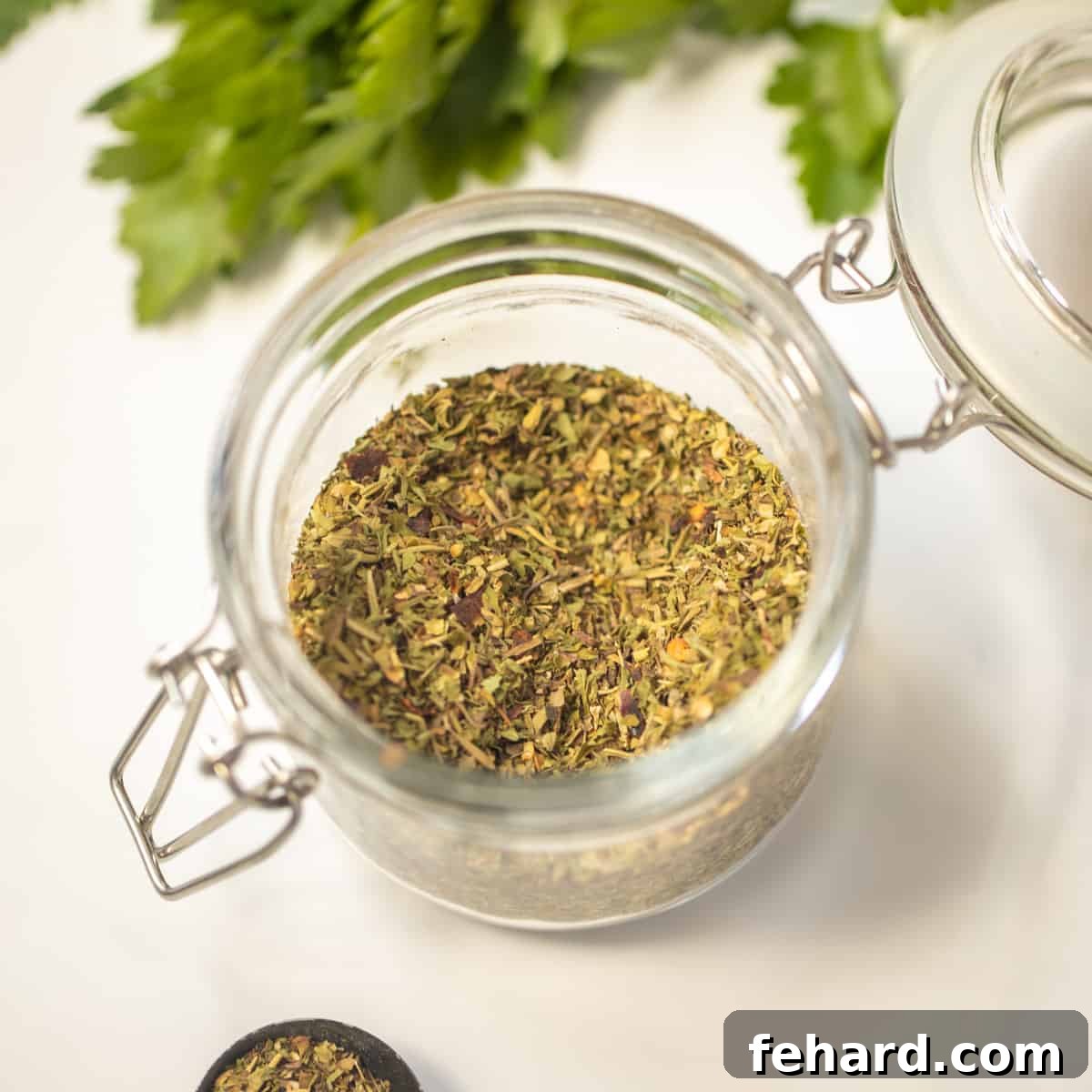
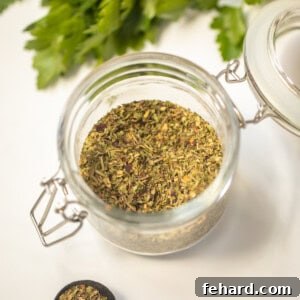
Transform your kitchen with this incredibly versatile homemade Italian Seasoning recipe! Crafted from a thoughtful combination of dried herbs, this blend delivers a rich tapestry of earthy, floral, pungent, sweet, and savory notes. It’s an indispensable staple, ready to infuse authentic Italian flavor into your sauces, pastas, soups, roasted vegetables, and so much more.
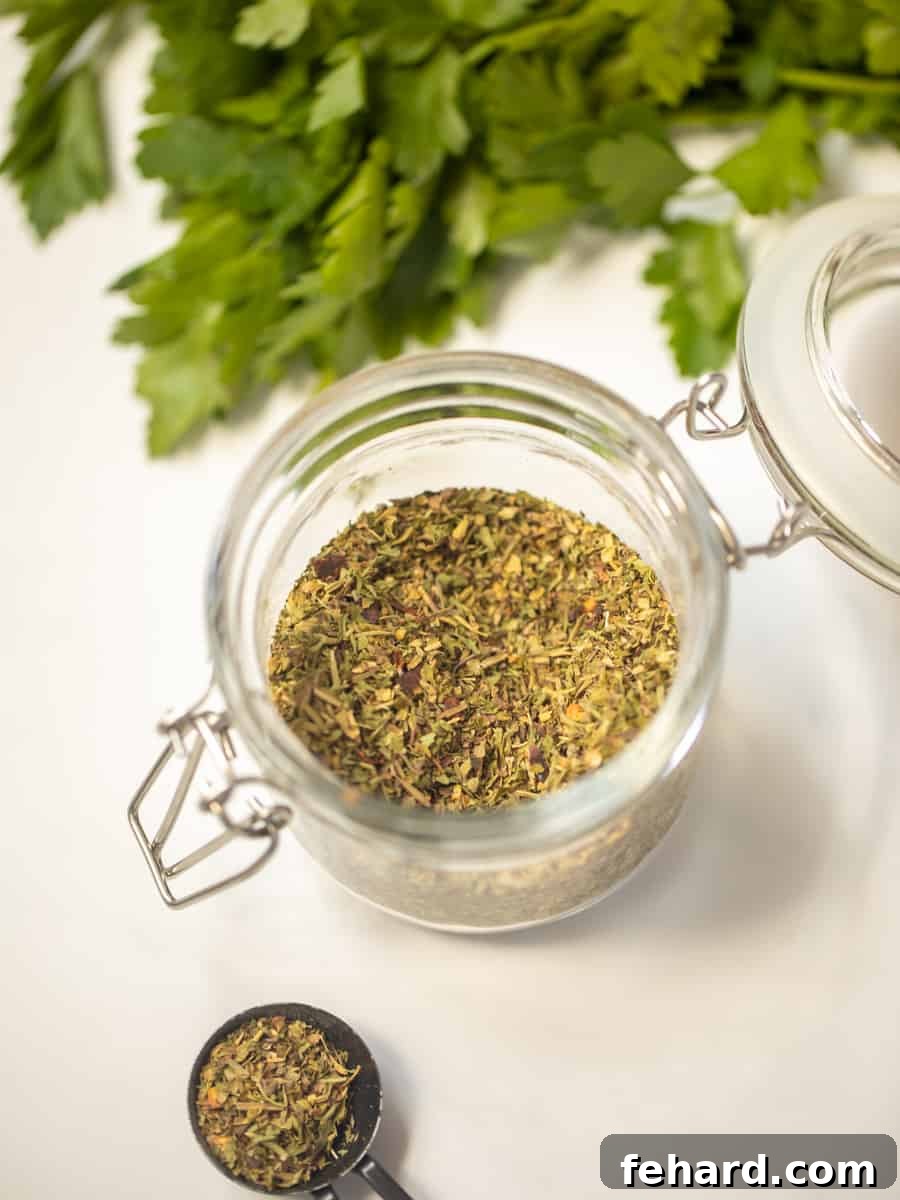
An Essential Pantry Staple: Why Homemade is Best

Embarking on the journey of making your own seasoning blends is one of the simplest yet most impactful ways to elevate your home cooking while also saving money in the long run. There’s a profound satisfaction in knowing exactly what goes into your food, free from additives or excessive salt often found in store-bought options.
Among the many spice mixes you’ll discover in my own pantry, Italian seasoning stands out as a true go-to. Alongside other favorites like taco seasoning, seasoned salt, chili seasoning, and Cajun seasoning, this Italian blend is constantly in rotation. Its customizable nature and absence of added salt allow me to control the flavor profile and sodium content of every dish.
This perfectly balanced homemade blend means I can effortlessly impart an authentic Italian flair to a vast array of culinary creations – from hearty pasta dishes and vibrant salad dressings to comforting vegetable sides and simmering soups. The depth and freshness of the herbs truly make a difference, transforming everyday meals into extraordinary dining experiences.
Happy Cooking! xo Kristen
Article Highlights
- Why Make Your Own Italian Seasoning?
- The Essential Herbs in Italian Seasoning
- Customizing Your Italian Seasoning Blend
- Optimal Storage for Freshness
- Creative Ways to Use Italian Seasoning
- Homemade Italian Seasoning Recipe
- More Homemade Spice Blends to Explore
Why Make Your Own Italian Seasoning?
Opting for a homemade Italian seasoning blend offers numerous advantages over store-bought versions. Beyond the sheer satisfaction of creating something yourself, there are tangible benefits:
- Unmatched Freshness and Flavor: Store-bought seasonings can sit on shelves for extended periods, causing their potency to diminish. Crafting your own ensures you’re using fresh, vibrant dried herbs, leading to a much more aromatic and flavorful final product in your cooking.
- Complete Control Over Ingredients: Many commercial blends contain anti-caking agents, preservatives, or excessive amounts of salt. When you make it yourself, you dictate exactly what goes in, ensuring a pure, unadulterated blend tailored to your dietary needs and preferences.
- Cost-Effectiveness: Buying individual dried herbs and blending them at home is often far more economical than purchasing pre-mixed seasoning blends, especially if you cook frequently. You’ll likely get more mileage out of your investment.
- Customization Opportunities: Your palate is unique! Homemade blends allow you to adjust ratios, add optional ingredients like red pepper flakes for heat, or include garlic powder for an extra savory kick, creating a blend that perfectly suits your taste.
- Reduced Waste: By having a customizable blend on hand, you’re less likely to buy multiple specialty seasonings for different dishes, streamlining your pantry and potentially reducing food waste.
The Essential Herbs in Italian Seasoning
Our Italian Seasoning is a harmonious blend of carefully selected dried herbs, each contributing a unique element to its complex flavor profile. This simple yet profound mix is surprisingly easy to create. Feel empowered to adjust the proportions or include/exclude spices based on your personal taste preferences or what you currently have in your spice cabinet.
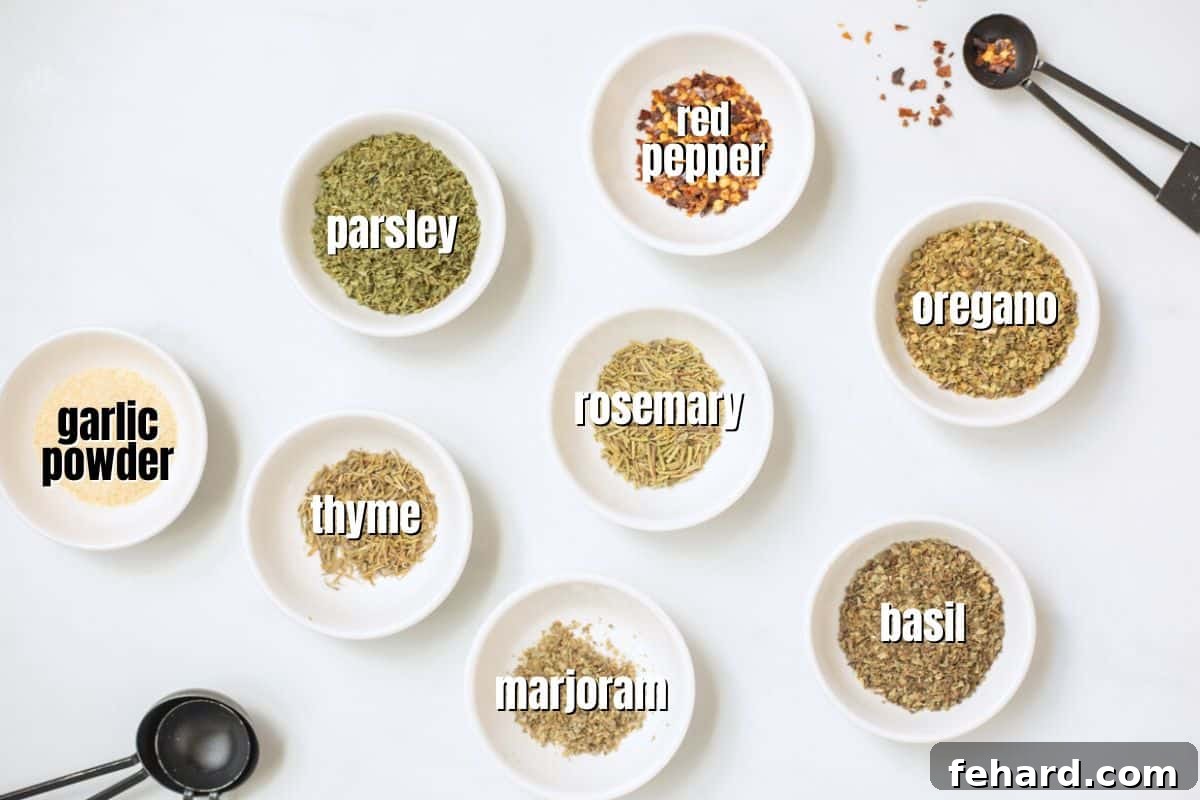
- Dried Oregano: This robust herb forms the backbone of Italian seasoning, offering an earthy, slightly bitter, and peppery flavor. It’s crucial to use dried oregano specifically labeled as “Oregano,” “Greek Oregano,” or “Mediterranean Oregano.” Avoid “Mexican Oregano” as its distinct, more citrusy, and slightly licorice-like flavor profile is different and can alter the desired Italian taste.
- Dried Parsley: Known for its fresh, slightly peppery, and grassy notes, dried parsley brightens the blend and adds a touch of visual appeal. It contributes a subtle lift without overpowering the other, stronger herbs.
- Dried Basil: Sweet, aromatic, and slightly peppery, basil is a quintessential Italian herb. It brings a fragrant, warm sweetness that is indispensable to the characteristic Italian flavor.
- Dried Rosemary: Pungent, piney, and woody, rosemary adds a distinctive aromatic quality. For this blend, it’s essential to use dried rosemary *leaves* rather than ground rosemary. Ground rosemary can be overwhelmingly strong and woody, whereas the leaves provide a more balanced and pleasant essence.
- Dried Thyme: Earthy, minty, and subtly lemony, dried thyme complements the other herbs beautifully. Like rosemary, opt for dried thyme *leaves* for optimal flavor and texture, avoiding the more concentrated and sometimes dusty flavor of ground thyme.
- Dried Marjoram (Optional): Marjoram is a delightful herb with a delicate, slightly sweet, and citrusy flavor, akin to a milder version of oregano but with distinct subtle pine notes. While it enhances the complexity of the blend, it’s not always a pantry staple for everyone. If you don’t have it on hand, feel free to substitute with an equal amount of additional dried oregano.
- Garlic Powder (Optional but Recommended): For many, garlic is an absolute essential in Italian cuisine. Adding garlic powder to your blend infuses a foundational savory depth that ties all the flavors together. If you’re not a fan of garlic or need to avoid it for dietary reasons, it can certainly be omitted without compromising the core Italian flavor profile, though it will taste slightly different.
- Crushed Red Pepper Flakes (Optional): For those who appreciate a subtle warmth and a gentle kick, crushed red pepper flakes are a fantastic addition. They introduce a nuanced layer of spice that beautifully complements the savory and aromatic herbs. If you or those you’re cooking for are sensitive to heat, simply omit or reduce the quantity to your liking.
Kristen’s Pro Tip
To ensure the most vibrant and potent flavors, always use dried herbs that are no more than 6 months old. Over time, spices and dried herbs naturally lose their aromatic compounds and flavor intensity, becoming stale and less effective in your cooking. A quick sniff test can often tell you if your herbs are still fresh!
Customizing Your Italian Seasoning Blend
One of the greatest joys of making your own spice blends is the freedom to tailor them to your precise preferences. Think of this recipe as a starting point, a canvas for your culinary creativity:
- For a Spicier Kick: Increase the amount of crushed red pepper flakes. You could even add a pinch of cayenne pepper if you dare!
- More Garlicky Flavor: Double the garlic powder, or consider adding a touch of onion powder for additional allium depth.
- Herb-Forward: If you have a particular love for basil or oregano, slightly increase their quantities to make them more prominent.
- No Salt Added: Our recipe intentionally omits salt, giving you full control over the sodium in your dishes. This makes it incredibly versatile for various diets.
- Citrusy Brightness: For an extra layer of brightness, consider adding a tiny pinch of dried lemon peel or zest, especially if you plan to use the seasoning heavily in fish or vegetable dishes.
Optimal Storage for Freshness
Proper storage is key to preserving the potency and flavor of your homemade Italian seasoning. Once you have thoroughly mixed your dried herbs, transfer the blend to an airtight container or jar. A glass jar with a tight-fitting lid is ideal. Store this container in a dark, cool, and dry spot in your kitchen, such as a pantry or a dedicated spice cabinet.
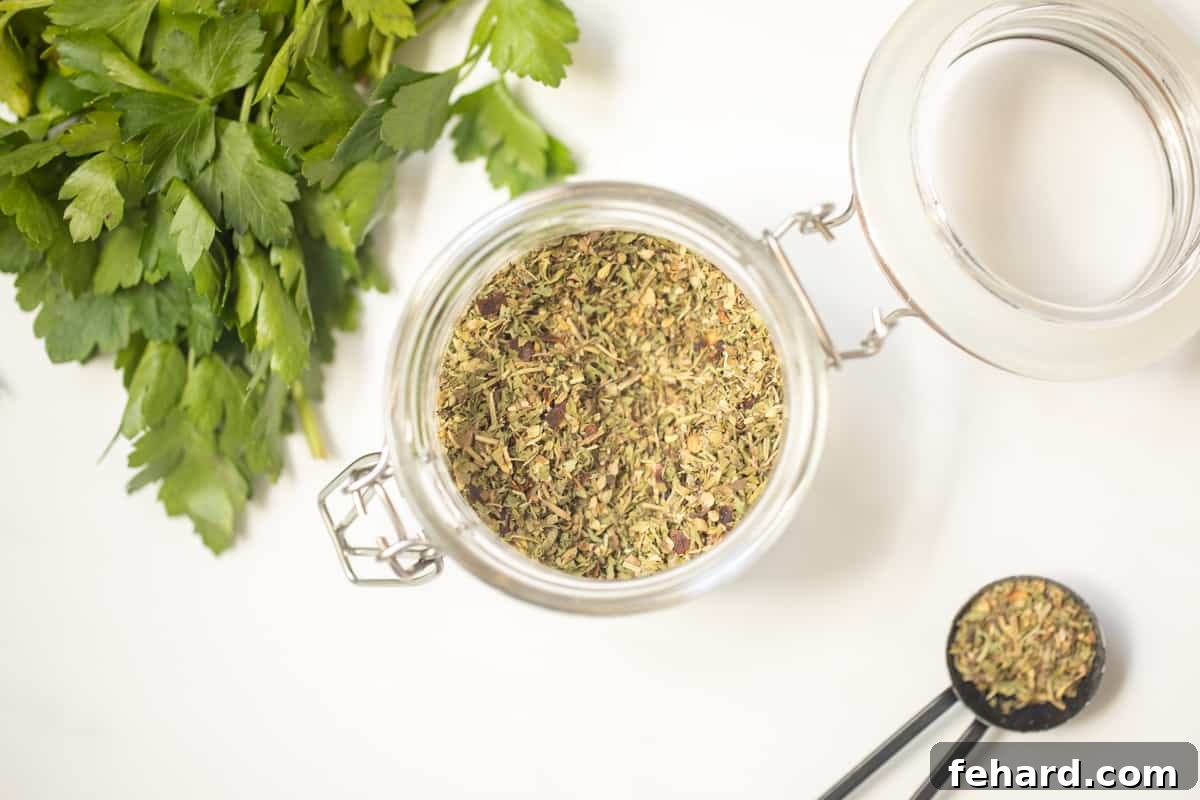
Under these conditions, your homemade Italian seasoning will maintain its peak flavor and aroma for up to 6 months. While it may still be safe to use beyond this period, its intensity will gradually diminish. For the best culinary results, aim to replenish your blend every six months.
Creative Ways to Use Italian Seasoning
Italian seasoning is not just for pasta sauce; it’s a truly all-purpose blend that can infuse earthy, floral, citrusy, and savory notes into an almost endless array of dishes. Its versatility makes it a true kitchen hero. Here are some of my favorite and most creative ways to incorporate this fantastic seasoning into your daily cooking:
- To Season Soups & Stews: Elevate the aromatic foundation of any soup. Add it to comforting classics like Italian wedding soup, a hearty Instant Pot minestrone, or a rich and warming lasagna soup. It also works wonders in vegetable broths or simple tomato-based stews.
- To Season Vegetables: Bring roasted, sautéed, or grilled vegetables to life. Sprinkle generously over Italian roasted vegetables, crispy roasted red potatoes, a vibrant sautéed summer squash, or perfectly cooked air fryer potatoes. It’s also excellent on zucchini, bell peppers, asparagus, and broccoli before roasting.
- To Season Proteins: Use it as a flavorful rub or marinade for meats and poultry. Create amazing homemade Italian sausage, or use it to flavor tender Instant Pot Italian beef, succulent marry me chicken, or its rapid counterpart, Instant Pot marry me chicken. It’s also a fantastic addition to marinades for fish or tofu.
- Add Flavor to Pasta Dishes: Beyond red sauce, Italian seasoning is your secret weapon for quick and easy pasta meals. Toss freshly cooked pasta with a drizzle of quality olive oil or a knob of butter and a generous sprinkle of Italian Seasoning for a simple yet satisfying meal. It’s also indispensable in recipes like a slow-cooked crockpot spaghetti sauce, an easy skillet lasagna, a nutritious kale pasta, or a rustic Tuscan white bean pasta.
- To Elevate Meatballs or Meatloaf: Infuse deep, savory flavor into ground meat dishes. Season your baked meatballs or a fun pizza meatloaf with this blend for an undeniable punch of Italian zest.
- Add to Potato Salad: Give a classic side dish an unexpected twist. Use this homemade blend of spices to create a light, zesty, and herb-filled Italian potato salad that’s perfect for picnics and gatherings.
- To Season Bread & Doughs: Incorporate it directly into dough for aromatic breads or use it to create savory toppings. Add a teaspoon or two to the dough for copycat Olive Garden breadsticks or flavorful pizza bread. Alternatively, mix it into butter for garlic bread or blend it with olive oil for a delightful herb bread dipping oil.
- To Make Homemade Italian Dressing: This seasoning is the foundational ingredient for a vibrant, flavorful dressing. It’s the key to crafting a truly zesty Italian dressing that will impress.
Homemade Italian Seasoning Recipe
Italian Seasoning
Kristen Chidsey
Approximately 12 servings (1/2 teaspoon per serving)
5 mins
5 mins
Print Recipe
Ingredients
- 2 tablespoons dried oregano
- 2 tablespoons dried parsley
- 1 ½ tablespoons dried basil
- 1 tablespoon dried rosemary leaves
- 1 tablespoon dried thyme leaves
- 2 teaspoons garlic powder (optional)
- ½ tablespoon dried marjoram, (optional)
- 1 teaspoon crushed red pepper flakes, (optional)
Instructions
-
In a medium bowl or a clean, dry jar, combine all the dried herbs: oregano, parsley, basil, rosemary, thyme, garlic powder (if using), marjoram (if using), and crushed red pepper flakes (if using).
-
Mix thoroughly with a spoon, or close the jar and shake vigorously, until all ingredients are evenly distributed.
-
Transfer the finished Italian Seasoning blend to an airtight container or back into the same jar if you used one. Store in a cool, dark place like your pantry or spice cabinet for up to 6 months for optimal freshness and flavor.
Notes
Rosemary and Thyme: Always use dried leaves for rosemary and thyme, not the ground versions. Ground forms can be too potent and sometimes have a dusty texture, which isn’t ideal for this blend.
Dried Marjoram: If you don’t have dried marjoram, an excellent substitute is an equal amount of additional dried oregano. While marjoram adds a lovely subtle sweetness, the blend will still be delicious without it.
Red Pepper Flakes: Adjust the amount of crushed red pepper flakes to suit your heat preference. If you prefer a milder seasoning, you can omit them entirely or reduce the quantity.
Garlic Powder: While optional, garlic powder adds a wonderful depth and savory note. If you’re not a fan of garlic, feel free to leave it out.
For optimum flavor and potency, it is highly recommended to use dried herbs that are no more than 6 months old. Spices gradually lose their aromatic oils and flavor intensity as they age in the pantry.
Nutrition
Calories: 7kcal
Carbohydrates: 2g
Protein: 0.3g
Fat: 0.1g
Saturated Fat: 0.05g
Polyunsaturated Fat: 0.04g
Monounsaturated Fat: 0.02g
Sodium: 4mg
Potassium: 34mg
Fiber: 1g
Sugar: 0.1g
Vitamin A: 93IU
Vitamin C: 1mg
Calcium: 30mg
Iron: 1mg
Nutrition information is automatically calculated and should be considered an approximation.
More Homemade Spice Blends to Explore
If you enjoy the simplicity and superior flavor of homemade seasoning blends, you’ll love exploring these other recipes. Crafting your own spice mixes is a rewarding way to elevate your cooking and keep your pantry stocked with fresh, vibrant flavors:
- Adobo Seasoning: A versatile Latin American blend perfect for meats and vegetables.
- Jamaican Jerk Seasoning: Bring the vibrant, spicy flavors of the Caribbean to your kitchen.
- Old Bay Seasoning: A classic seafood seasoning that’s also great on fries and poultry.
- Ranch Seasoning: Create your own creamy, tangy ranch flavor for dressings, dips, and more.
- Dried Onion Soup Mix: A convenient and flavorful base for soups, dips, and roasts.
- Fajita Seasoning: Perfect for sizzling fajitas and other Tex-Mex dishes.
- Salad Supreme Seasoning: Add a gourmet touch to your salads with this savory blend.
Did you make this recipe?
If you enjoyed crafting and cooking with this homemade Italian Seasoning, please consider leaving a comment and a 5-star review at the bottom of this post. Your feedback is greatly appreciated!
Tried this recipe? Mention @amindfullmom or tag #amindfullmom on Instagram!