
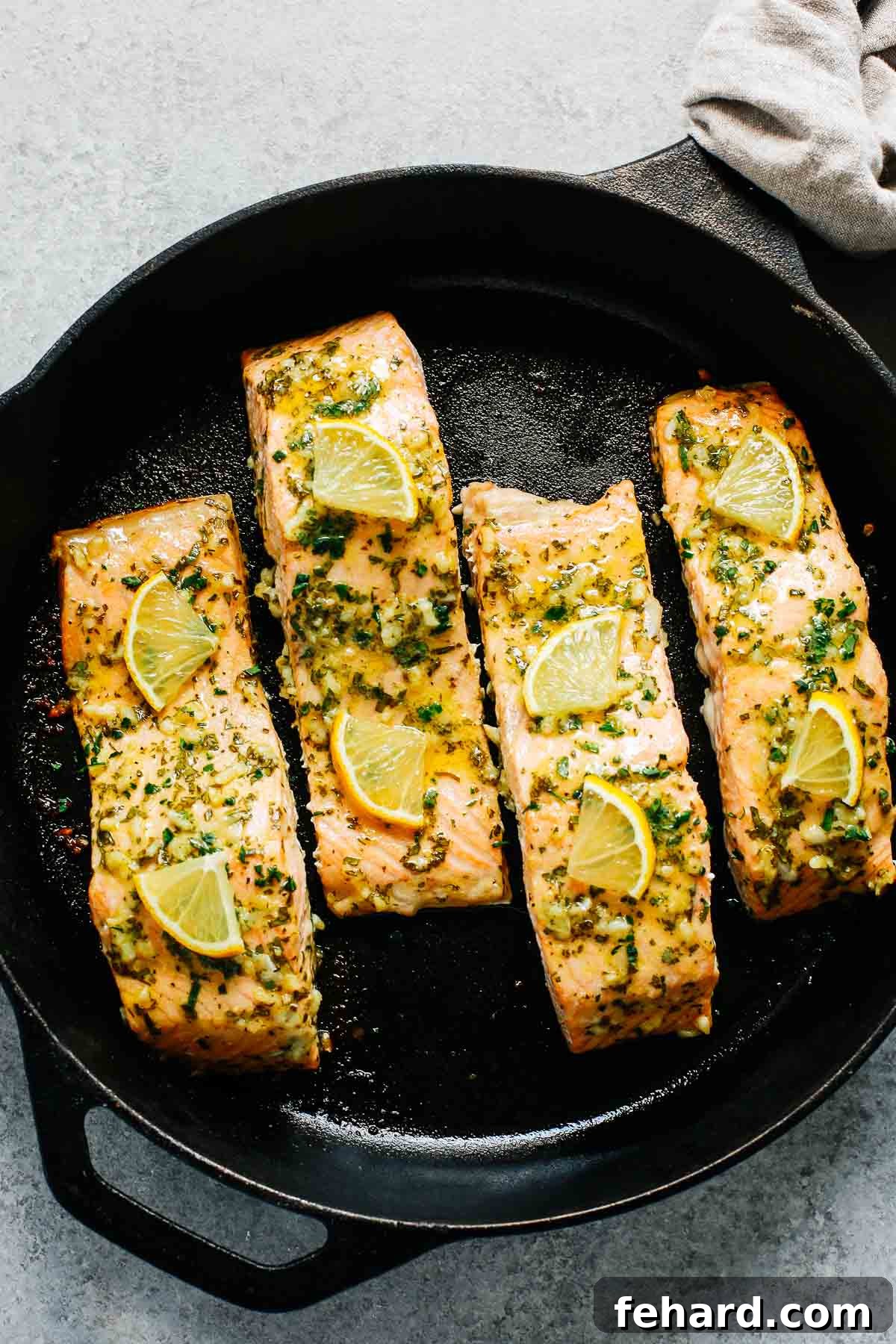
Dijon Mustard Salmon: Your Ultimate 15-Minute Weeknight Delight
Searching for a culinary masterpiece that’s both incredibly simple and bursting with flavor? Look no further than this Dijon Mustard Salmon recipe. It’s a game-changer for anyone craving a nutritious, satisfying meal that effortlessly transitions from oven to table in a mere 15 minutes. Requiring only a handful of staple ingredients, this dish proves that gourmet flavors don’t have to come with a lengthy cooking process or an extensive shopping list. Perfect for busy individuals and families, this salmon recipe quickly becomes a cherished favorite, offering a fresh, wholesome, and unbelievably delicious option for any day of the week.
Baked salmon recipes hold a special place in my kitchen, particularly those that demand minimal effort and time while delivering maximum taste. Much like my beloved Garlic Butter Salmon in Foil, the succulent Salmon Steak, the classic Baked Salmon recipe, my speedy Broiled Salmon Recipe, and the zesty Spicy Butter Salmon in Foil, this Dijon Mustard Salmon is designed for efficiency and enjoyment. These recipes are celebrated for their straightforward preparation, fresh ingredients, and robust flavors, making them ideal solutions for a hectic weeknight dinner.
This particular Dijon Mustard Salmon stands proudly among those top-tier, fuss-free options. Its simplicity is matched only by its incredible depth of flavor, derived from a harmonious blend of tangy Dijon mustard, pungent garlic, fragrant fresh parsley, bright lemon juice, and rich olive oil. It’s a testament to how humble pantry ingredients can combine to create something truly extraordinary.
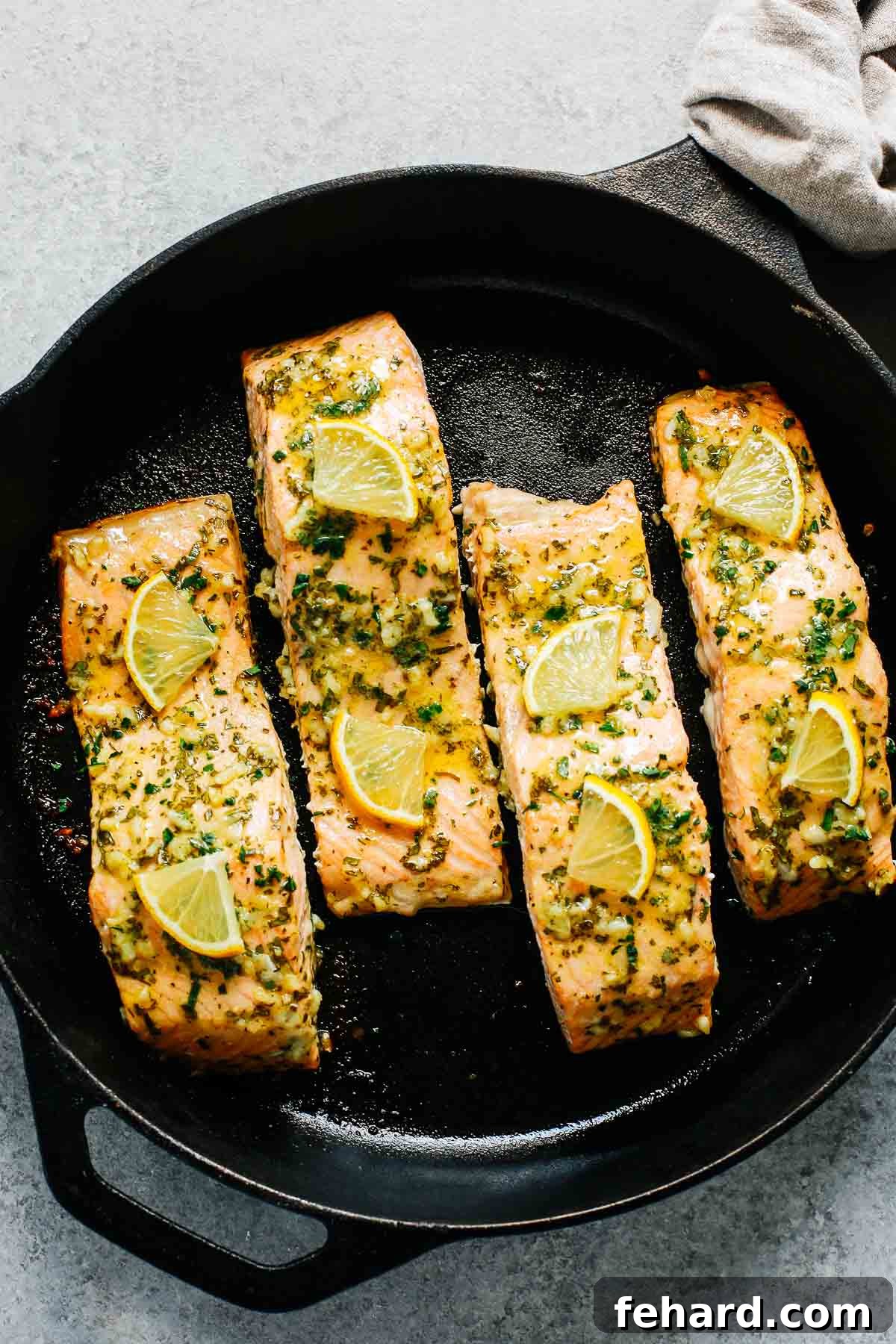
Why This Dijon Mustard Salmon Will Be Your New Favorite
This Dijon Mustard Salmon recipe is an excellent choice for navigating the demands of busy weeknights. Its rapid cooking time means less waiting and more savoring. The beauty of this recipe also lies in its adaptability; while the core Dijon-lemon sauce provides a foundational flavor profile, it can be easily customized with additional herbs or spices to suit your palate.
The star of the show is the simple yet powerful sauce, crafted from everyday pantry staples. The Dijon mustard introduces a delightful tang and a subtle warmth that beautifully complements the salmon. Fresh lemon juice further brightens the dish, creating a vibrant, zesty finish that invigorates every bite—a flavor profile I adore, similar to my popular Easy Dijon Chicken Thighs Recipe. Additionally, by keeping the skin on the salmon fillets, you ensure the fish remains perfectly tender, moist, and even develops a wonderfully crisp texture if cooked correctly.
The Benefits of Regular Salmon Consumption
Incorporating a reliable, easy salmon recipe into your weekly meal rotation is invaluable. For my family, baked salmon appears on the menu at least once a week, and for good reason. Salmon is a nutritional powerhouse, offering an abundance of high-quality protein, essential omega-3 fatty acids, and a rich array of vitamins and minerals. Despite its impressive nutritional profile, it remains a relatively affordable and accessible protein source, making it a smart choice for health-conscious diners.
This particular Dijon Mustard Salmon recipe is poised to become a family favorite in your home too. Its allure stems from a combination of readily available, flavor-packed ingredients. Think about it: Dijon mustard, garlic, fresh parsley, lemon juice, and olive oil – these are common items in most kitchens. With such a foolproof lineup, it’s virtually impossible to go wrong, even if you’re a novice cook. The preparation is straightforward, guaranteeing a delicious outcome every time.
Another fantastic aspect of this recipe is its minimal equipment requirement. Forget about fussing with parchment paper or baking sheets; a reliable cast-iron skillet is all you need. Cast iron skillets provide even heat distribution and help achieve a beautiful sear on the salmon, enhancing both its texture and flavor without the need for additional cookware.
Choosing and Prepping Your Salmon Fillets
The foundation of any great salmon dish starts with the quality of the fish itself. For this Dijon Mustard Salmon, selecting the right fillets is key. Here are some pointers to ensure you get the best results:
- Salmon Fillets: Opt for fillets with the skin on. The skin helps protect the delicate flesh during cooking, locking in moisture and flavor. If crisped properly, it can also be a delicious addition. Whenever possible, choose wild-caught salmon over farmed varieties. Wild salmon often boasts fewer calories, a higher mineral content, and a richer, more natural flavor. Look for firm, bright pink flesh without any strong “fishy” odor.
- Pat Dry for Perfection: Before applying any sauce or seasoning, always pat your salmon fillets thoroughly dry with paper towels. This crucial step helps create a better sear on the skin and prevents the fish from steaming rather than baking or roasting, which can lead to a less desirable texture.
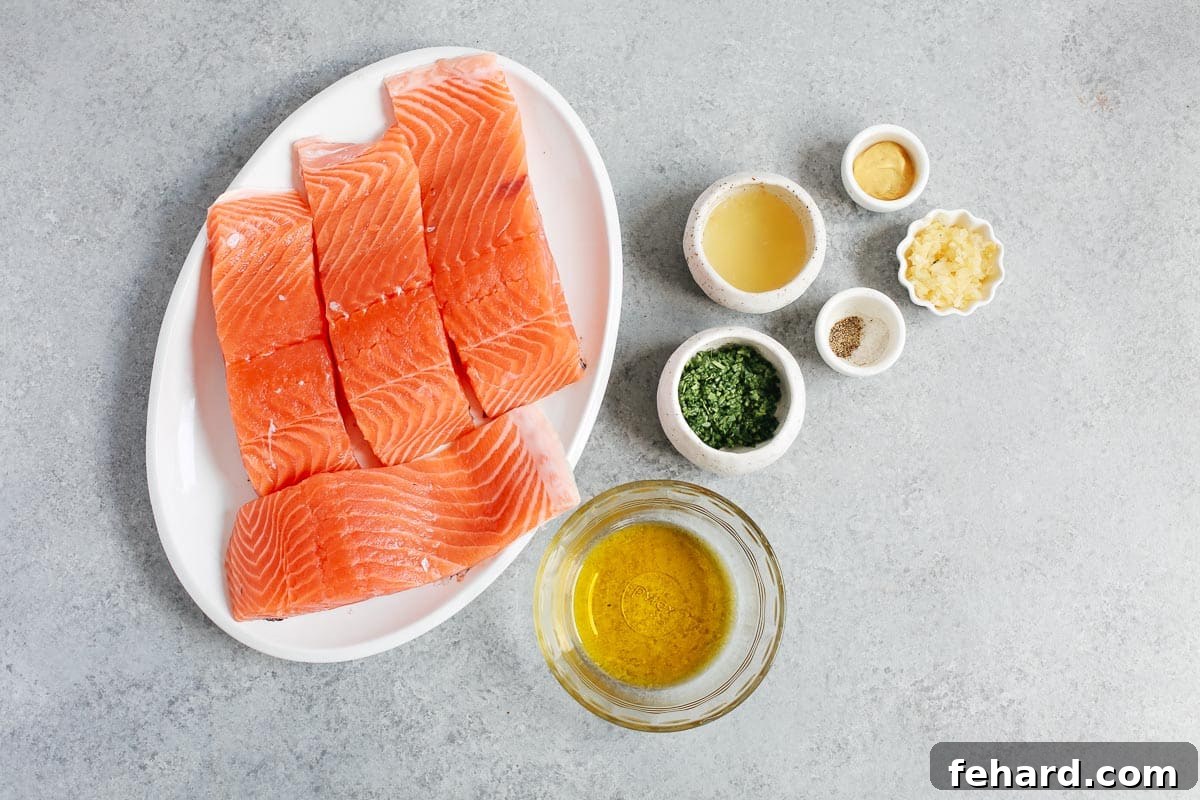
Essential Ingredients for Your Tangy Dijon Sauce
The magic of this recipe lies in its incredibly simple yet profound sauce. Each ingredient plays a vital role in creating a vibrant, balanced flavor profile that perfectly complements the rich salmon. Here’s what you’ll need:
- Dijon Mustard: This is the star! Dijon mustard contributes a distinctive tangy, slightly sharp, and savory flavor. It’s less harsh than yellow mustard and brings a sophisticated kick that elevates the salmon.
- Fresh Lemon Juice: Always use freshly squeezed lemon juice. Bottled lemon juice often lacks the bright, zesty aroma and flavor that fresh lemons provide, which is essential for cutting through the richness of the salmon and adding a refreshing note.
- Garlic: Minced or pressed, fresh garlic is non-negotiable. It provides a warm, aromatic depth that pairs beautifully with both the Dijon and lemon.
- Fresh Parsley: Chopped fresh parsley adds a pop of vibrant green color and a clean, herbaceous freshness. Feel free to experiment with other fresh herbs like dill or chives if you prefer.
- Olive Oil: A good quality extra virgin olive oil binds the sauce together and adds a touch of richness. If you don’t have olive oil, a neutral-flavored oil like avocado oil can be a suitable substitute.
- Onion Powder: A subtle hint of onion powder (as specified in the recipe card) rounds out the savory notes, adding another layer of flavor without overpowering.
- Salt and Black Pepper: These basic seasonings are crucial for enhancing all the other flavors. Season to taste, but a touch goes a long way.
How to Make Delicious Dijon Mustard Salmon: Step-by-Step
Creating this flavorful salmon dish is incredibly straightforward, even for novice cooks. Follow these simple steps for a perfect meal every time:
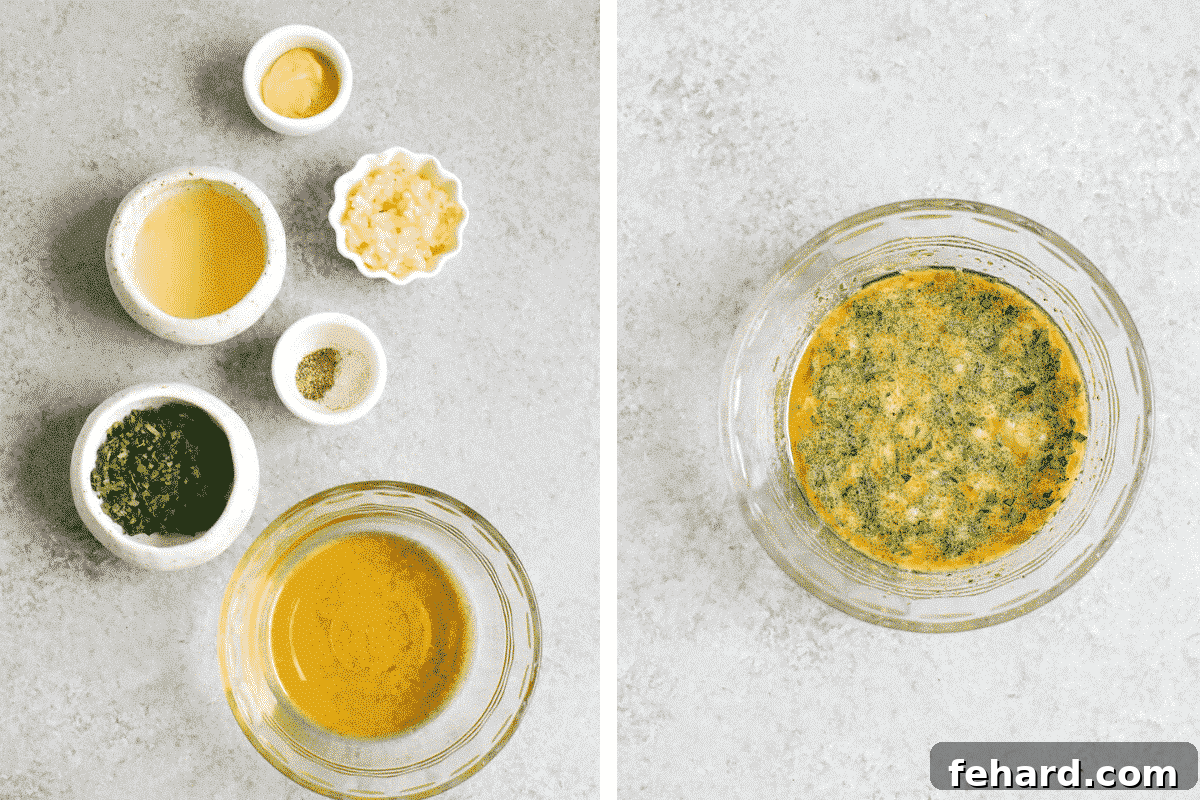
- Prepare the Sauce: In a small bowl, combine all the sauce ingredients: Dijon mustard, freshly squeezed lemon juice, minced garlic, chopped fresh parsley, olive oil, onion powder, and a touch of salt and black pepper. Whisk everything together thoroughly until you have a smooth, well-combined mixture. This is your flavor powerhouse!
- Arrange the Salmon: Place your salmon fillets, skin-side down, into a cast-iron skillet. The skin-side down position helps the skin crisp up while cooking and protects the delicate flesh from direct heat, preventing it from drying out. If you don’t have a cast-iron skillet, a heavy-bottomed oven-safe pan or a baking sheet lined with foil will also work, though a cast-iron skillet offers superior heat retention and a lovely sear.
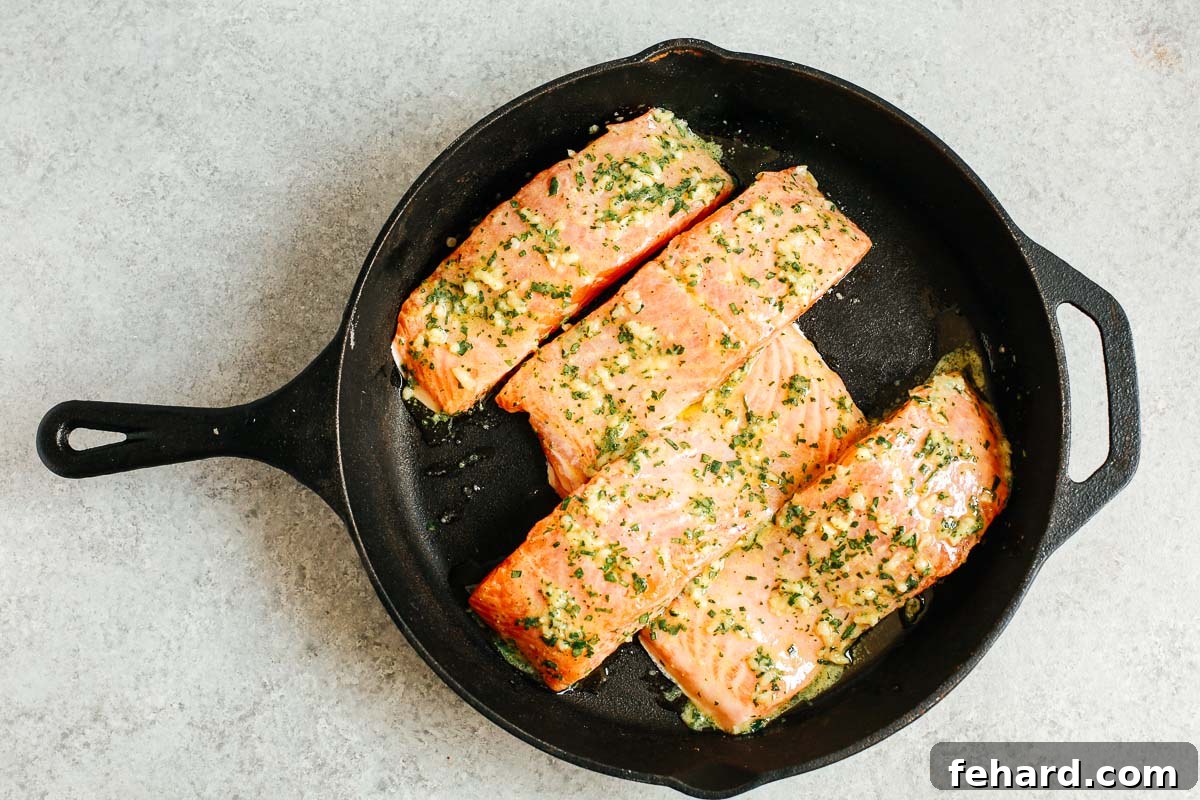
- Coat with Sauce: Generously pour the prepared Dijon sauce over the top of each salmon fillet. Don’t worry if some of the sauce runs down the sides and collects at the bottom of the pan; it will infuse the salmon with flavor as it bakes.
- Bake to Perfection: Transfer the skillet to your preheated oven and bake until the salmon is cooked through. The exact cooking time will vary based on the thickness of your fillets, but generally, it takes about 10-15 minutes at a high temperature (like 450°F). The salmon is done when its color changes from translucent to a light, opaque pink, and it flakes easily when gently pressed with a fork.
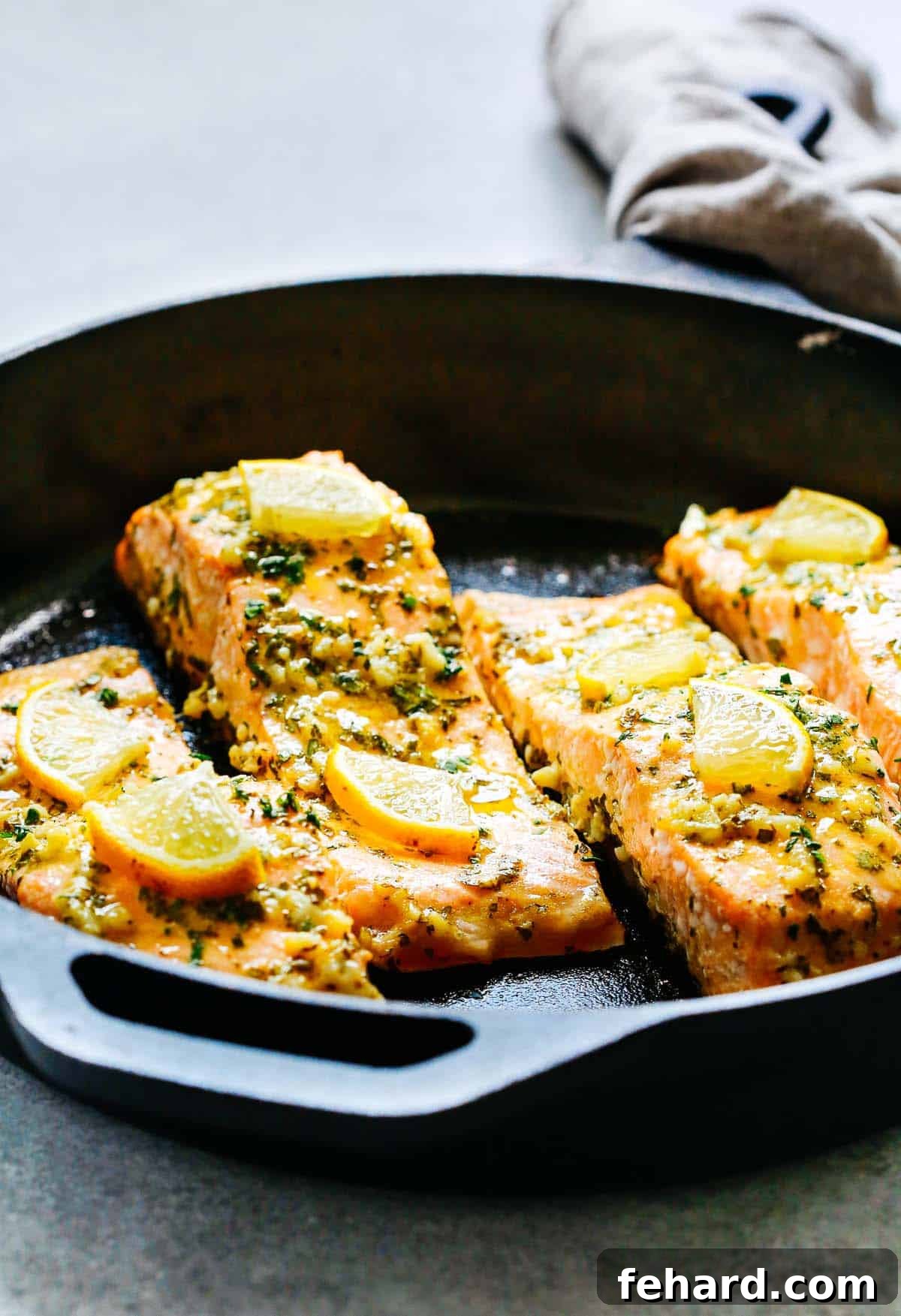
- Garnish and Serve: Once baked, remove the salmon from the oven. Garnish with fresh lemon slices for an extra burst of citrus and a beautiful presentation. Serve immediately with your favorite side dishes.
Pro Tips for Perfectly Cooked Salmon Every Time
Achieving perfectly cooked salmon is an art, but one that is easily mastered with a few key techniques:
- Don’t Overcook Your Salmon: This is arguably the most critical rule. Overcooked salmon becomes dry, tough, and loses its delicate, flaky texture. Aim for an internal temperature of 145°F (63°C) for medium-cooked salmon, or when it just begins to flake with a fork. It’s better to slightly undercook it and let it rest, as it will continue to cook slightly from residual heat.
- Keep the Skin On: Cooking salmon with the skin on offers several advantages. The skin acts as a protective barrier, keeping the flesh moist and preventing it from sticking to the pan. Plus, if cooked properly (especially in a cast-iron skillet), the skin can become wonderfully crispy and delicious. It’s perfectly safe and healthy to eat salmon skin. However, if you prefer to remove it, you can easily separate the meat from the skin with a spatula before plating, or simply eat around it.
- The Power of the Cast Iron Skillet: A cast-iron skillet is fantastic for baking salmon. It heats evenly and retains heat exceptionally well, promoting a beautiful crust on the skin and ensuring the fish cooks through uniformly without drying out. If you don’t have one, a regular baking sheet lined with foil (for easy cleanup) or a non-stick oven-safe pan will also work, but consider preheating it in the oven for a few minutes before adding the salmon to get a better sear.
How to Store and Reheat Cooked Salmon
Proper storage and reheating are essential to enjoy your leftover Dijon Mustard Salmon while maintaining its delicious flavor and texture:
- Storing Leftovers: Any leftover salmon should be wrapped tightly in aluminum foil or transferred to an airtight container. Store it in the refrigerator for up to 3-4 days to ensure freshness and safety.
- Reheating Cooked Salmon: To reheat, the key is to use a low temperature to prevent the fish from drying out. Place the salmon on a baking sheet and loosely cover it with foil. Bake in a preheated oven at approximately 275°F (135°C) for about 10-15 minutes, or until just warmed through. You can add a small pat of butter or a drizzle of olive oil to the salmon before reheating for added moisture. While you can technically reheat in a microwave or on the stovetop, the oven method generally yields the best results in terms of texture.
- Freezing Cooked Salmon: If you wish to store cooked salmon for a longer period, allow the fillets to cool completely to room temperature. Then, wrap each fillet individually in plastic wrap, followed by a layer of aluminum foil, and place them in a freezer-safe bag or airtight container. Cooked salmon can be frozen for up to 2-3 months. Thaw overnight in the refrigerator before reheating.
What to Serve with This Flavorful Salmon Recipe?
Dijon Mustard Salmon is wonderfully versatile and pairs beautifully with a wide array of side dishes. Here are some fantastic suggestions to complete your meal:
- Cauliflower Rice or Mashed Cauliflower: Light, low-carb alternatives that absorb the delicious sauce.
- Roasted Vegetables: Asparagus, broccoli, bell peppers, or zucchini tossed with olive oil and herbs create a healthy and colorful complement.
- Green Salad: A simple, crisp green salad with a light vinaigrette provides a refreshing contrast.
- Roasted Potatoes: Crispy on the outside, fluffy on the inside, roasted potatoes offer a comforting and hearty side.
- Broccoli Salad: A creamy or vinaigrette-based broccoli salad adds texture and nutrients.
- Garlic Butter Sautéed Zucchini: Quick to prepare and full of flavor, mirroring the garlic in the salmon.
- Couscous Salad: A light and fluffy couscous salad with fresh herbs and vegetables can be a delightful accompaniment.
- Spaghetti Squash or Zucchini Noodles: Excellent low-carb pasta alternatives that soak up the flavors of the sauce.
- Spicy Roasted Cauliflower: For those who enjoy a little heat, spicy roasted cauliflower adds a vibrant kick.
Frequently Asked Questions About Baking Salmon
How long do you cook salmon in the oven at 450°F?
The baking time for salmon at 450°F (230°C) is critically dependent on the size and thickness of your salmon fillet. My paramount advice is always: “don’t overcook your salmon.” Overcooked salmon tends to become dry, rubbery, and loses its desirable flaky texture.
For a very thick salmon fillet (e.g., over 1 inch), you might need approximately 10-12 minutes in the oven. For fillets of normal size and thickness (around 1 inch), about 8-10 minutes is usually sufficient. The best way to tell if salmon is done is by checking for doneness. It should be opaque and easily flake with a fork. For ultimate precision, use a meat thermometer inserted into the thickest part; salmon is cooked when it reaches an internal temperature of 145°F (63°C). Remember, a few minutes can make all the difference, so keep a close eye on it!
Can I use frozen salmon for this recipe?
Absolutely! If using frozen salmon fillets, ensure they are fully thawed before proceeding with the recipe. You can thaw them overnight in the refrigerator or by placing them in a sealed bag under cold running water. Once thawed, pat them very dry before seasoning and applying the sauce for the best results.
What if I don’t like Dijon mustard? Are there alternatives?
While Dijon mustard is central to this recipe’s distinct flavor, you can certainly adapt it. For a milder, sweeter profile, you could try a honey mustard sauce (combining honey, yellow mustard, and a touch of vinegar). A lemon-herb butter sauce (butter, lemon, fresh dill, garlic) is another delicious alternative that complements salmon beautifully.
More Delicious Salmon Recipes to Explore
If you’ve enjoyed this simple and delicious Dijon Mustard Salmon, you might be keen to explore other exciting ways to prepare this versatile fish. Here are a few more easy salmon recipes to add to your repertoire:
- Spicy Salmon Sweet Potato Skillet: This vibrant recipe features perfectly seasoned, crispy salmon paired with tender sweet potatoes and wilted kale. It’s a hearty and flavorful dish that makes for a fantastic lunch or dinner for the whole family, offering a delightful balance of sweet and spicy.
- Broiled Salmon with Cabbage and Green Beans (Meal-Prep): Bursting with flavor, this broiled salmon recipe is designed for ease and convenience. It’s an excellent option for a quick, healthy dinner or as a foundational component for your weekly meal prep lunches, ensuring delicious and nutritious meals are always within reach.
- Salmon Chopped Salad Recipe: Quick to prepare and incredibly satisfying, this salmon chopped salad is packed with lean protein, healthy fats, and a zesty lemon vinaigrette. It’s a refreshing and nourishing meal that’s perfect for a light lunch or dinner, offering a medley of fresh ingredients in every bite.
Dijon Mustard Salmon Recipe Card
Dijon Mustard Salmon Recipe
Love a super simple, yet incredibly flavorful salmon recipe? This Dijon Mustard Salmon is quick, easy, and packed with taste. Prepare this dish tonight for a meal that goes from oven to table in just 15 minutes, requiring only a few basic ingredients.
Author: Olivia Ribas
Yields: 4 servings
- Prep Time: 5 minutes
- Cook Time: 10 minutes
- Total Time: 15 minutes
Ingredients
- 4 medium salmon fillets (skin-on recommended)
- 1 tbsp fresh parsley, chopped
- 1 tbsp lemon juice (freshly squeezed)
- 4 tbsp olive oil
- 2 garlic cloves, minced
- ½ tbsp Dijon mustard
- ¼ teaspoon onion powder
- Salt and black pepper to taste
- Slices of lemon for garnishing
Instructions
- Preheat your oven to 450°F (230°C). In a small bowl, combine all the sauce ingredients (fresh parsley, lemon juice, olive oil, minced garlic, Dijon mustard, onion powder, salt, and pepper) and mix everything well until thoroughly combined.
- Place the 4 salmon fillets (skin side down) into a cast-iron skillet or an oven-safe baking dish. Generously spoon the Dijon mixture over the top and sides of the salmon fillets, ensuring they are well coated.
- Bake in the preheated oven at 450°F (230°C) for approximately 10-12 minutes. The exact cooking time will depend on the thickness of your salmon fillets; cook until the salmon is opaque throughout and flakes easily with a fork.
- Once cooked, garnish the salmon with fresh lemon slices. Serve immediately with your preferred side dishes such as cauliflower rice, green beans, roasted asparagus, or mashed cauliflower.
Notes
- Make sure to pat the salmon fillets dry with paper towels before cooking to ensure a nice sear and prevent steaming.
- Keeping the skin on the salmon helps to retain moisture and makes the fillets easier to handle.
- If you do not have a cast-iron skillet, you can use any oven-safe baking dish or a baking sheet lined with foil.
- To Store: Store leftover salmon in an airtight container in the refrigerator for up to 4 days.
- To Reheat: Reheat salmon gently in the oven at a low temperature (around 275°F or 135°C) until warmed through, or eat it chilled. Avoid high heat to prevent drying.
- To Freeze: Once cooled to room temperature, wrap individual salmon fillets tightly and freeze in a freezer-safe bag or container for up to 2-3 months.
Nutrition Information (Approximate)
- Serving: 1/4 of the recipe
- Calories: 329 kcal
- Carbohydrates: 7g
- Protein: 28g
- Fat: 20g
- Cholesterol: 79mg
- Sodium: 362mg
- Sugar: 4g
Nutrition information is automatically calculated and should only be used as an approximation.
We hope you thoroughly enjoy preparing and savoring this incredible Dijon Mustard Salmon. It truly embodies the perfect blend of simplicity, speed, and exceptional flavor, making it a valuable addition to your recipe collection. Whether you’re a seasoned chef or just starting your culinary journey, this recipe is designed to deliver delicious results every time.
Did You Make This?
We’d love to see your culinary creations! Follow @primaverakitchen on Instagram, snap a photo of your Dijon Mustard Salmon, and tag it #primaverakitchen. Share your delicious results with our community!