
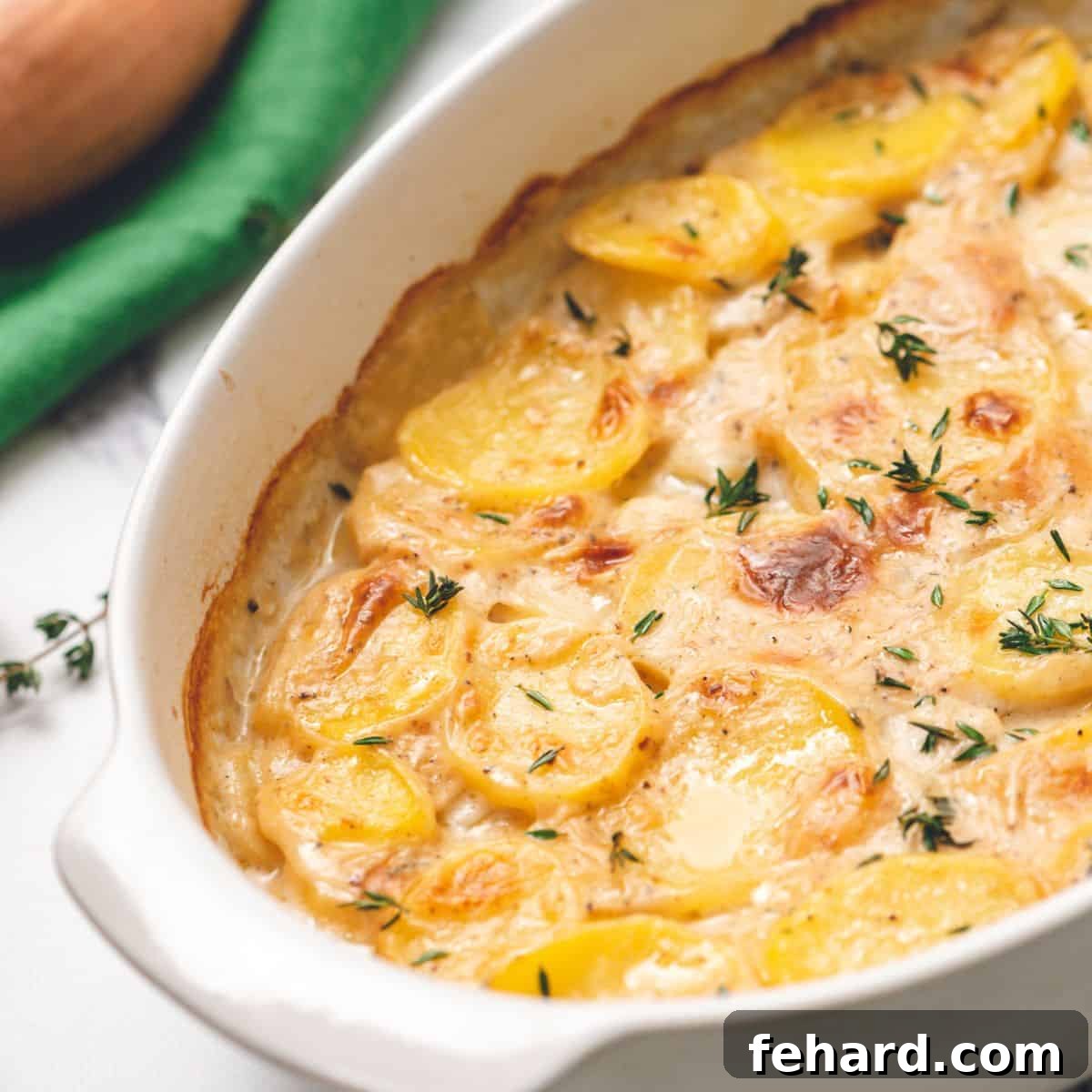
Are you searching for the quintessential traditional scalloped potatoes recipe? Look no further! This cherished classic features thinly sliced potatoes luxuriating in a rich, velvety cream sauce – entirely cheese-free – then baked to golden-brown perfection. Prepare to be captivated by these Homemade Scalloped Potatoes; they are truly irresistible!
These elegant Scalloped Potatoes are the ideal accompaniment for a celebratory feast. Imagine them alongside a succulent Baked Ham, a perfectly seared New York Strip Roast, or any grand main course, complemented by a vibrant Holiday Salad for an unforgettable meal experience.
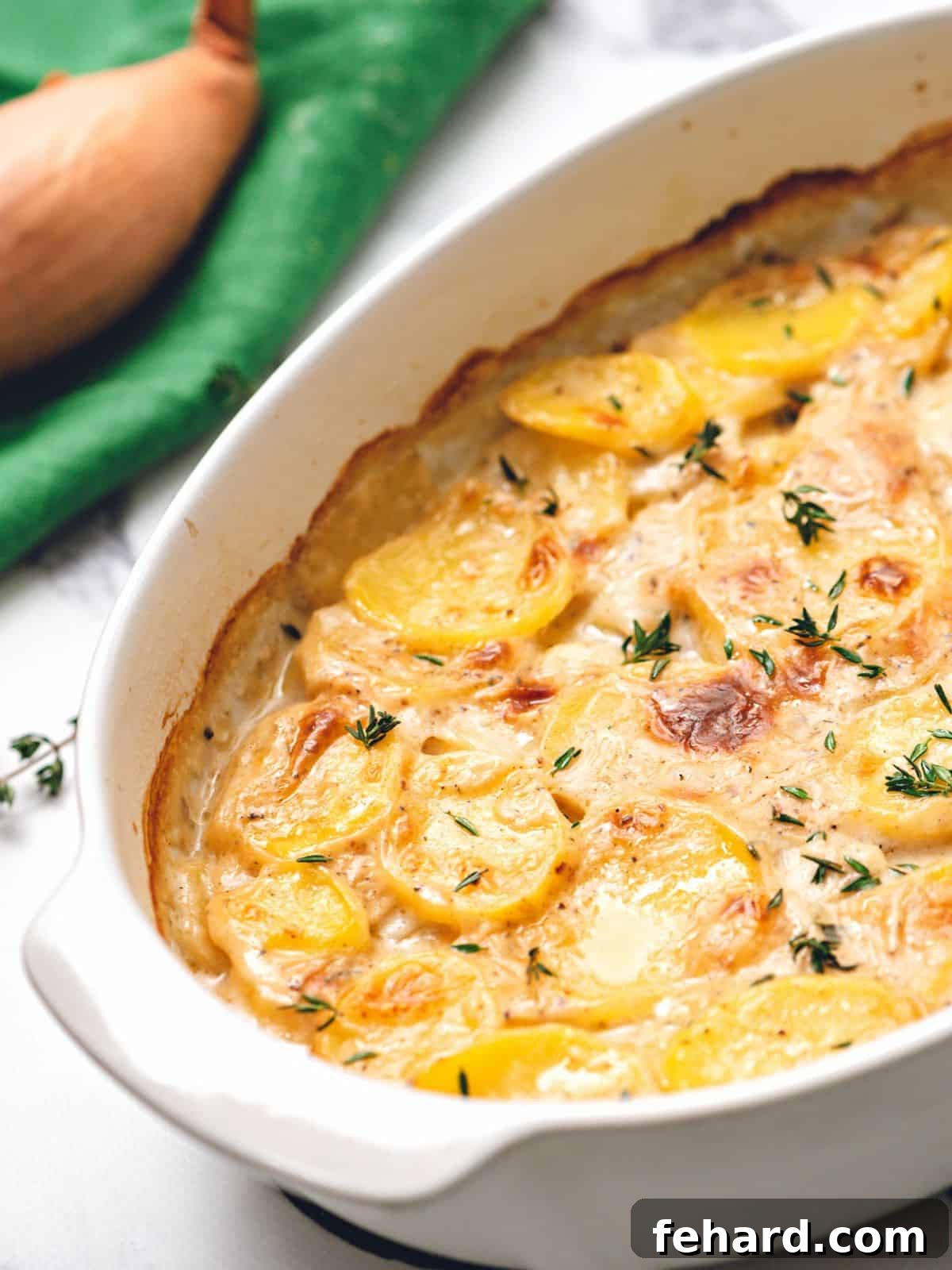
Discover the Timeless Appeal of Traditional Scalloped Potatoes
There’s a reason why scalloped potatoes have remained a beloved side dish for generations, especially during holidays and special gatherings. Unlike their cheesy cousins, Potatoes Au Gratin, traditional scalloped potatoes focus purely on the harmonious blend of tender potatoes and a luxurious, unadulterated cream sauce. This recipe honors that tradition, delivering a dish that is both comforting and sophisticated. The simplicity of the ingredients allows the natural sweetness of the potatoes and the richness of the dairy to truly shine, creating a depth of flavor that’s hard to achieve with other potato preparations. It’s a classic for a reason – every forkful is a warm, creamy embrace, guaranteed to bring smiles to your dinner table.
Mastering Scalloped Potatoes: Essential Tips for Success
Achieving perfectly tender, creamy, and flavorful scalloped potatoes is simpler than you might think, especially with a few expert insights. Here are the crucial elements to focus on that will elevate your dish from good to absolutely phenomenal:
- Select the Right Potato for Ultimate Creaminess. The foundation of exceptional scalloped potatoes lies in your potato choice. For this dish, you absolutely want a starchy potato. My top recommendation is Yukon Gold potatoes. Their waxy-starchy texture ensures they become incredibly creamy and tender as they bake, absorbing the rich sauce beautifully without falling apart. If Yukon Golds aren’t available, russet potatoes make an excellent stand-in. While they are starchier and can be a bit drier, they still yield fantastic results when thinly sliced and bathed in our decadent cream sauce. Avoid waxy potatoes like red or new potatoes, as they tend to hold their shape too well and won’t contribute to the desired creamy texture.
- Precision Slicing for Even Cooking. The secret to uniformly tender potatoes is thin, consistent slices. Aim for a thickness of approximately ⅛ inch. This ensures that all the potato layers cook evenly at the same rate, preventing some from being undercooked while others are perfectly soft. A mandolin slicer is undeniably the best tool for achieving these uniform slices quickly and safely. If you don’t have a mandolin, a food processor fitted with a slicing blade works wonderfully. Alternatively, a very sharp chef’s knife and a steady hand can get the job done, though it requires more patience and practice to maintain consistency. Remember, uniformity is key for that melt-in-your-mouth texture.
- Embrace the “No Cheese” Tradition. For a truly traditional scalloped potato dish, cheese is intentionally omitted. This is a fundamental distinction from Potatoes Au Gratin, where cheese is a prominent ingredient, often creating a crisp, golden crust. By leaving out the cheese, the focus remains squarely on the pure, unadulterated creaminess of the potatoes and the savory richness of the sauce. This allows the subtle flavors of the shallots, broth, and nutmeg to come through, creating a more elegant and refined profile. While my Cheesy Scalloped Potato recipe is delicious in its own right, for the classic experience, we stick to tradition!
Detailed Guide: How to Make Traditional Scalloped Potatoes
Follow these step-by-step instructions to create a batch of perfect homemade scalloped potatoes. The combination of simple techniques and quality ingredients will yield a truly memorable side dish.
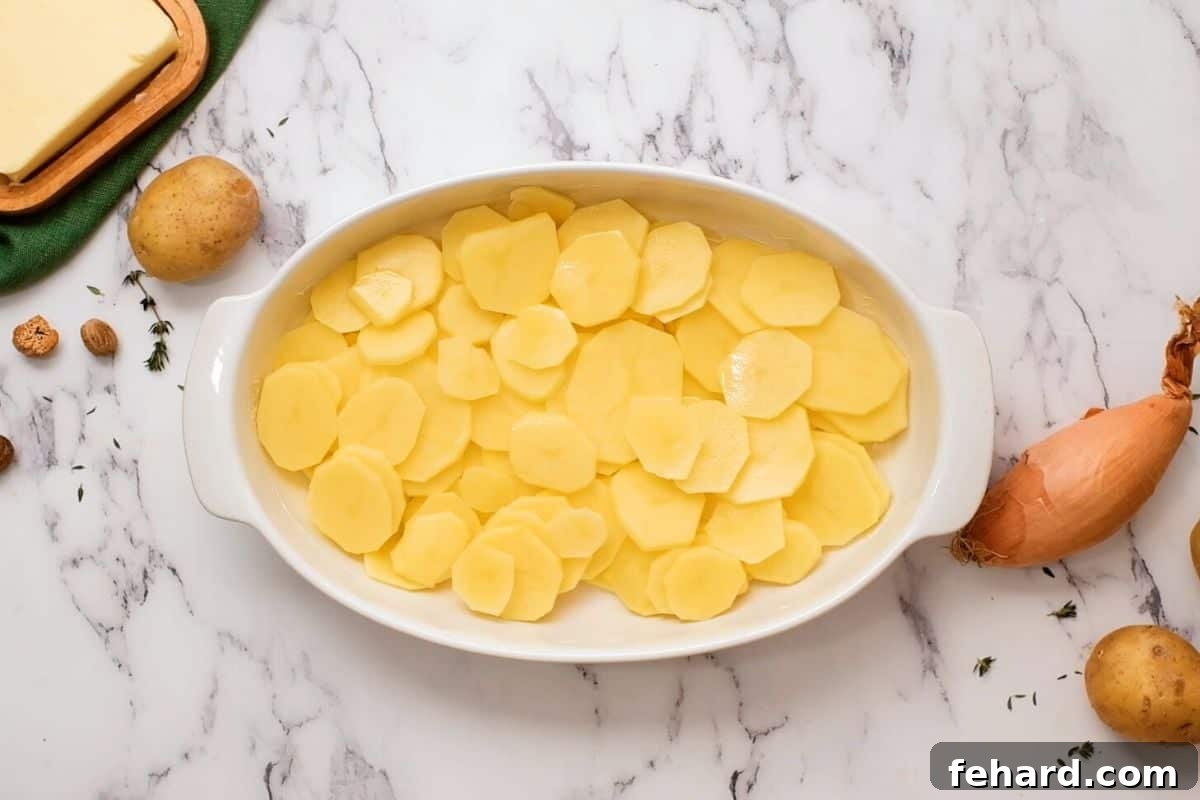
- Prepare Potatoes with Precision. Begin by preheating your oven to 375°F (190°C). Generously butter a 2-quart casserole dish; this not only prevents sticking but also adds an extra layer of flavor to the crust. Peel your chosen potatoes (Yukon Gold or russet). Using a mandoline or a food processor with a slicing blade, thinly slice the potatoes into uniform ⅛-inch thick rounds. Evenness is crucial for consistent cooking. Arrange these delicate slices in overlapping layers within your prepared baking dish. This creates beautiful visual appeal and allows the sauce to seep between every potato layer.
- Craft the Silky Cream Sauce. In a medium, heavy-bottomed saucepan, melt 2 tablespoons of unsalted butter over medium-low heat. Once melted, add 2 tablespoons of finely minced shallots and sauté gently for about 3 minutes, or until they become soft and translucent. Be careful not to brown or burn them, as this can impart a bitter flavor. Next, whisk in 2 tablespoons of all-purpose flour to create a roux, a thick paste that will serve as the base for our sauce. Cook this roux for 1 minute, stirring constantly, to cook out the raw flour taste.
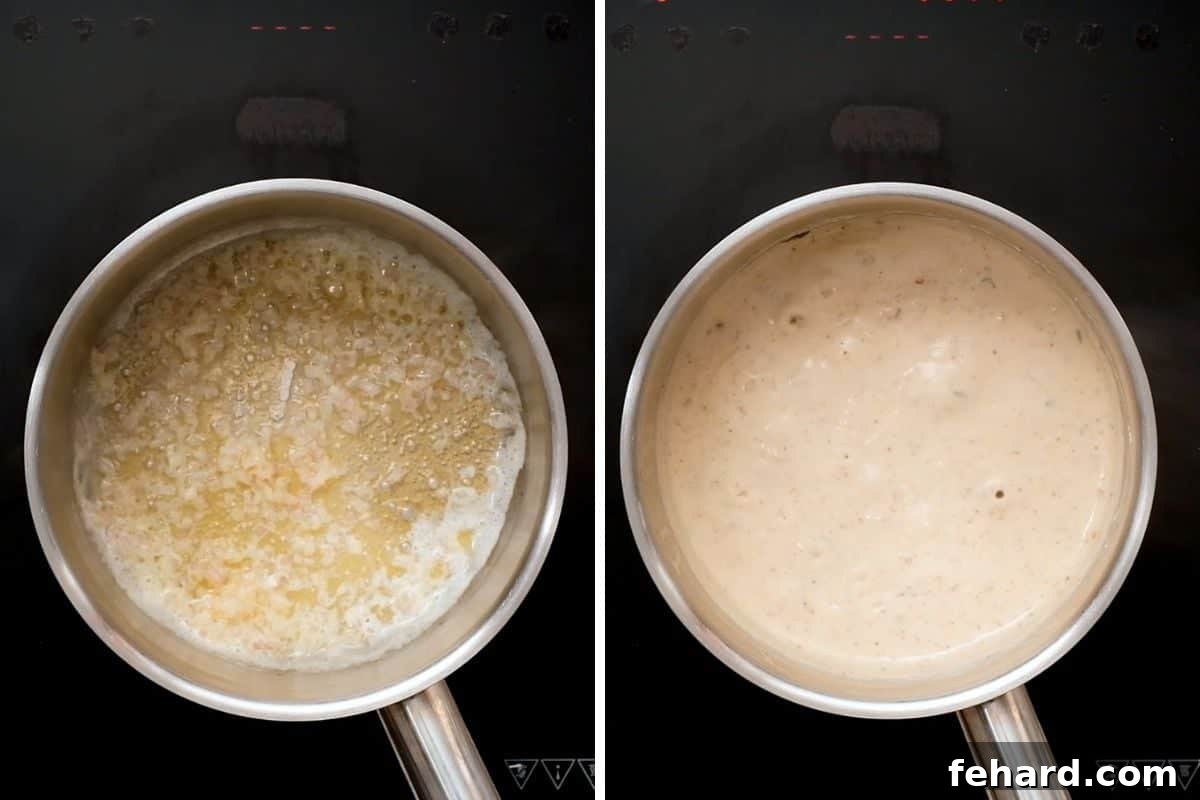
- Whisk in Liquids and Seasonings. Gradually add ½ cup of low-sodium vegetable or chicken broth to the roux, whisking continuously until smooth and fully incorporated. Then, slowly whisk in ¾ cup of half and half (or cream for extra richness) until the sauce is uniform and free of lumps. Season this exquisite sauce with 1 teaspoon of kosher salt, ¼ teaspoon of black pepper, ¼ teaspoon of freshly grated nutmeg (a key secret for traditional flavor!), and 2 teaspoons of fresh thyme leaves, if using. Bring the sauce to a gentle simmer over medium-low heat, whisking constantly, until it thickens to a consistency that lightly coats the back of a spoon and slowly drips off. This ensures your potatoes will be perfectly enveloped.
- Bake to Golden Perfection. Remove the thickened cream sauce from the heat and carefully pour it evenly over the layered potatoes in the casserole dish. Use your hands or a spoon to gently press down on the potatoes, ensuring they are fully submerged and coated by the sauce. This helps them absorb maximum flavor and cook tenderly. Cover the casserole dish tightly with aluminum foil to trap steam and promote even cooking. Bake in the preheated oven for 45 minutes. After this initial baking period, remove the foil and continue to bake for an additional 25-30 minutes, or until the potatoes are exquisitely tender when pierced with a fork and the top is beautifully golden brown and bubbly.
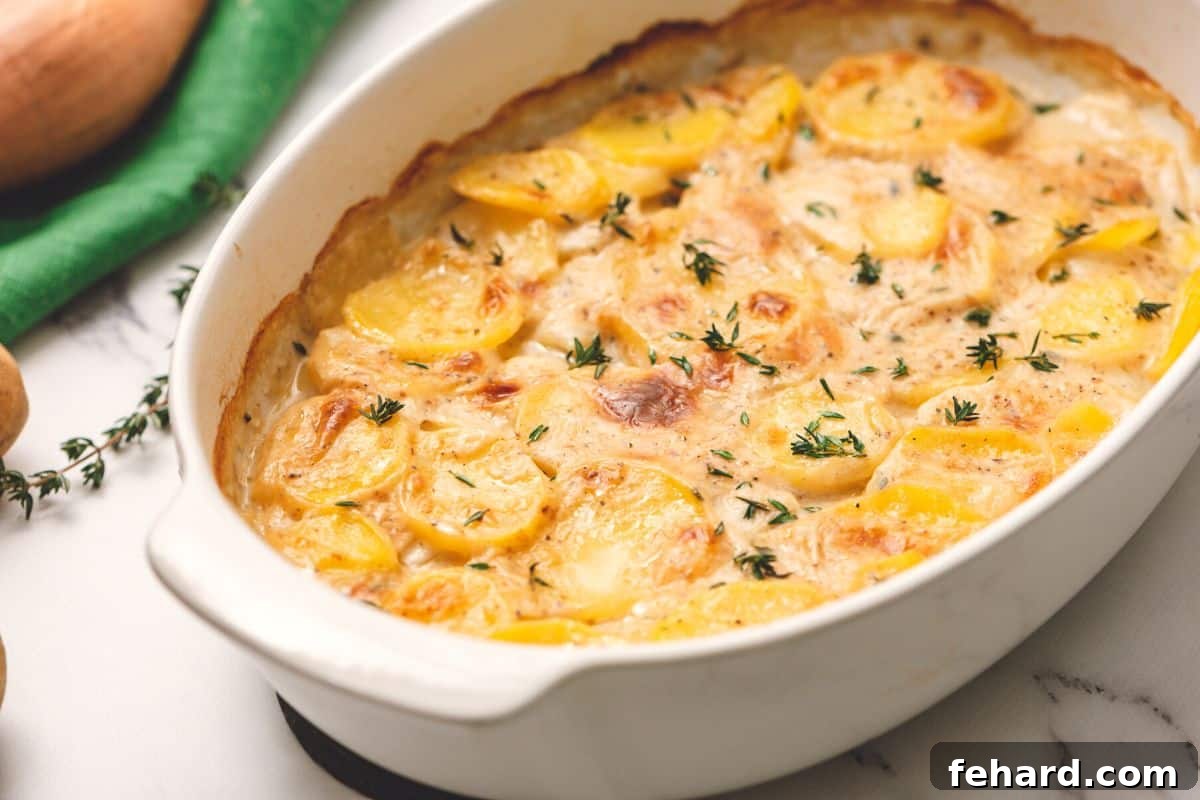
- Rest Before Serving. Once baked, remove the scalloped potatoes from the oven and let them rest for 10-15 minutes before serving. This crucial resting period allows the sauce to set and the flavors to meld, ensuring a cohesive and perfectly creamy dish. Serve warm and enjoy the ultimate comfort food!
Essential Recipe Details: Ingredients and Instructions
Servings: 6 | Prep Time: 15 mins | Cook Time: 1 hr 15 mins | Total Time: 1 hr 30 mins
Ingredients
- 2 pounds Yukon gold potatoes, about 4 cups sliced potatoes
- 2 tablespoons unsalted butter, plus more for greasing pan
- 2 tablespoons minced shallot
- 2 tablespoons all-purpose flour
- ½ cup low-sodium vegetable or chicken broth
- ¾ cup half and half, or cream
- 1 teaspoon kosher salt
- ¼ teaspoon black pepper
- ¼ teaspoon freshly grated nutmeg
- 2 teaspoons fresh thyme leaves, optional
Instructions
- Preheat the oven to 375℉ (190℃). Generously butter a 2-quart casserole dish.
- Peel 2 pounds of Yukon gold potatoes and thinly slice them into ⅛-inch rounds using a mandolin, food processor with a slicing blade, or a sharp knife. Arrange the sliced potatoes in even, overlapping layers in the buttered casserole dish.
- Melt 2 tablespoons of unsalted butter over medium-low heat in a heavy-bottomed medium saucepan. Add 2 tablespoons of minced shallot and sauté for about 3 minutes, or until softened, ensuring they do not burn.
- Add 2 tablespoons of all-purpose flour to the saucepan, whisking well to form a thick roux (paste). Cook for 1 minute to eliminate the raw flour taste.
- Slowly whisk ½ cup of low-sodium vegetable or chicken broth into the roux until fully incorporated. Then, slowly whisk in ¾ cup of half and half until incorporated. Season the sauce with 1 teaspoon of kosher salt, ¼ teaspoon of black pepper, ¼ teaspoon of grated nutmeg, and 2 teaspoons of fresh thyme leaves (if using). Allow the sauce to simmer on medium-low heat for several minutes until it has thickened, whisking constantly. The sauce is ready when it coats the back of a spoon and slowly drips off.
- Remove the cream sauce from the heat and pour it evenly over the prepared potatoes in the casserole dish. Gently push down on the potatoes to ensure they are fully covered by the sauce. Cover the dish tightly with aluminum foil.
- Bake, covered, for 45 minutes. After 45 minutes, remove the foil and continue to bake for an additional 25-30 minutes, or until the potatoes are tender and the top is golden brown.
- Let the scalloped potatoes rest for 10-15 minutes before serving warm.
Equipment
- 2 Quart Casserole Dish
- Mandolin slicer (optional, but highly recommended)
Recipe Notes for Perfection
- Potato Varieties: While Yukon Gold potatoes are preferred for their creamy texture without needing to be peeled (if desired), russet potatoes also work well. Always peel russet potatoes for the best, smoothest texture.
- Dairy Options: Feel free to substitute whole milk or heavy cream for half and half. However, avoid using skim milk, as it will significantly compromise the richness and creaminess of the sauce.
- Nutmeg Advice: For the most authentic and vibrant flavor, use a whole nutmeg bulb and grate it fresh with a Microplane. If you only have pre-ground nutmeg, it’s best to omit it rather than use a stale version that might detract from the dish.
- Gluten-Free Alternative: To make this recipe gluten-free, simply substitute the all-purpose flour with a 1:1 gluten-free flour blend. The thickening properties should be similar.
- Doubling the Recipe: This recipe scales up beautifully. To double it, use a larger 9×13-inch baking pan, but keep the baking time approximately the same, adjusting only if necessary to ensure tenderness and golden-brown finish.
Storage & Make-Ahead Instructions for Convenience
Scalloped potatoes are a fantastic make-ahead dish, perfect for holiday planning or busy weeknights. Proper storage also ensures you can enjoy leftovers efficiently.
- Storing Leftovers: Once your delicious scalloped potatoes have cooled slightly, transfer them to an airtight container. They will keep beautifully in the refrigerator for up to 4 days. Reheat gently in the oven or microwave until warmed through. It is generally not recommended to freeze scalloped potatoes, as the dairy-based cream sauce can separate and become grainy upon thawing, significantly impacting the texture and appeal of the dish.
- Prep-Ahead Strategy: For ultimate convenience, you can prepare and bake the scalloped potatoes fully as directed in the recipe. Once baked, allow them to cool completely to room temperature. Cover the casserole dish tightly with aluminum foil and refrigerate for up to 3 days. When you’re ready to serve, remove the dish from the refrigerator about 30 minutes before baking to allow it to come closer to room temperature. Then, bake, still covered with the foil, at 350 degrees Fahrenheit (175°C) for approximately 30 minutes, or until the potatoes are heated throughout and bubbly. If you desire a crisper top, you can remove the foil for the last 5-10 minutes.
Frequently Asked Questions About Scalloped Potatoes
- What is the difference between scalloped potatoes and au gratin potatoes?
The main difference lies in the ingredients and preparation. Traditional scalloped potatoes feature thinly sliced potatoes baked in a simple, rich cream sauce (often with aromatics like shallots and spices like nutmeg), without cheese. Potatoes Au Gratin, on the other hand, typically include cheese (such as Gruyère or cheddar) layered between the potatoes or mixed into the sauce, and are often topped with breadcrumbs for a crispy crust. - Do I need to peel the potatoes?
For Yukon Gold potatoes, peeling is optional. Their skin is thin and tender, and many enjoy the rustic look and added nutrients. However, if you prefer a smoother, more refined texture, or if you’re using russet potatoes, peeling is recommended as russet skins are thicker and can be less appealing. - How do I prevent the sauce from curdling or separating?
The key to a smooth sauce is to whisk continuously when adding the broth and cream, and to ensure the liquids are added slowly. Also, avoid bringing the sauce to a rolling boil; a gentle simmer is sufficient for thickening. Fresh, high-quality dairy also helps prevent separation. Finally, not freezing the dish after preparation helps maintain sauce integrity. - Can I use milk instead of half and half?
Yes, you can use whole milk or heavy cream as substitutes. Whole milk will result in a slightly lighter sauce, while heavy cream will make it even richer and more decadent. Avoid using skim milk, as it lacks the fat content necessary for a truly creamy and stable sauce. - Why are my scalloped potatoes not tender?
There are a few common reasons. Firstly, the potatoes might have been sliced too thickly, requiring a longer cooking time. Secondly, the oven temperature might have been too low, or the dish wasn’t covered properly during the initial baking phase, preventing steam from tenderizing the potatoes. Ensure your slices are uniformly thin (⅛ inch) and that the dish is tightly covered for the first 45 minutes of baking.
More Holiday-Worthy Side Dish Recipes to Explore
- Broccoli Rice Casserole
- Sweet Potato Casserole
- Corn Casserole
- Potatoes Romanoff
- Mashed Potato Casserole
- Creamy Parsnip Puree
If you’ve had the pleasure of trying this homemade scalloped potatoes recipe, please take a moment to leave a comment and a review below. Your feedback is invaluable!
This post was originally published in November 2018 but has been thoroughly updated and expanded in December 2019, with fresh pictures and a helpful video. It continues to be refined for the best user experience.
Nutrition Information (Approximate per Serving)
- Calories: 171 kcal
- Carbohydrates: 22g
- Protein: 5g
- Fat: 7g
- Saturated Fat: 5g
- Cholesterol: 26mg
- Sodium: 543mg
- Potassium: 663mg
- Fiber: 3g
- Vitamin A: 325 IU
- Vitamin C: 17.5 mg
- Calcium: 79mg
- Iron: 5mg
Nutrition information is automatically calculated and should only be used as an approximation.