
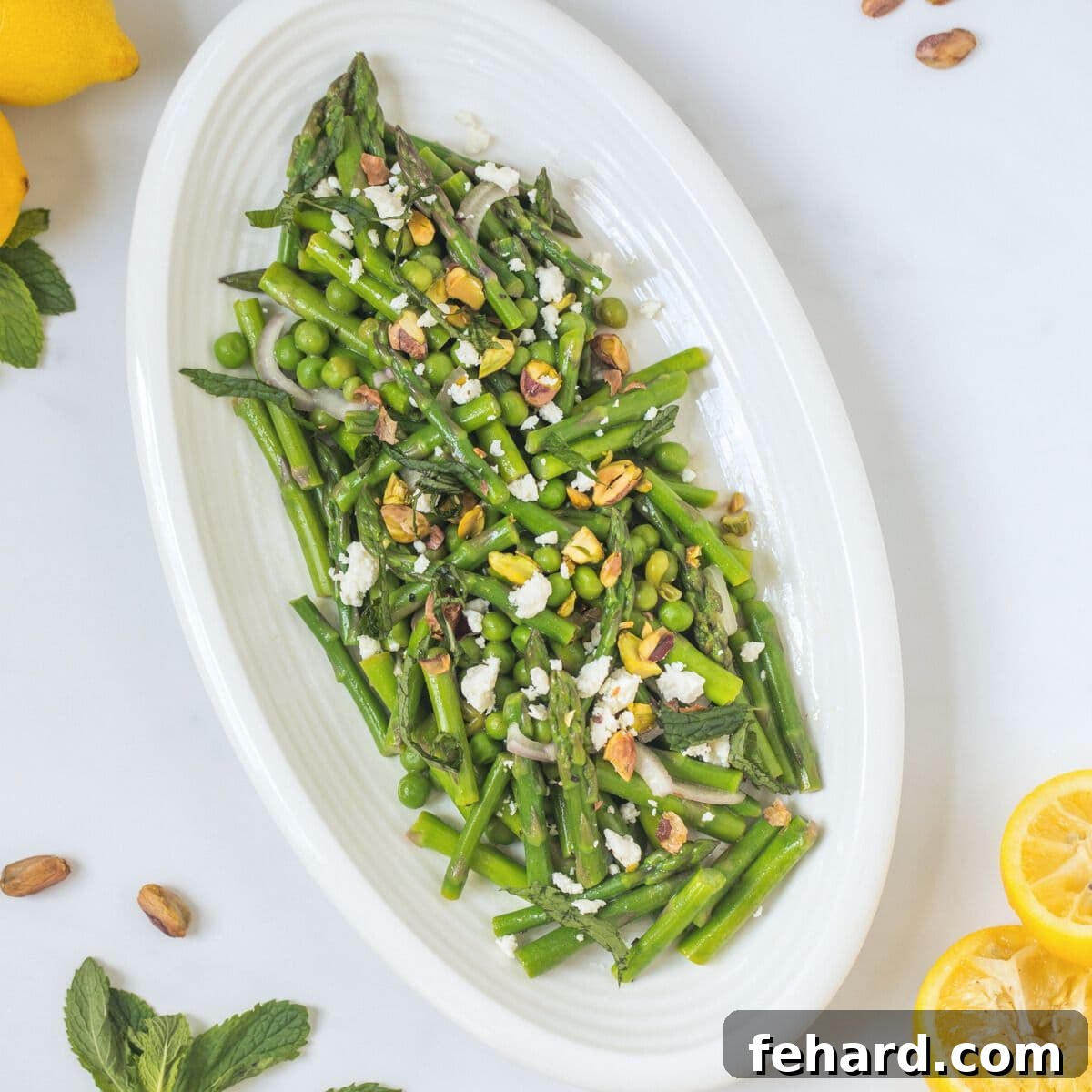
Prepare to be amazed by this **Asparagus Salad**, a true show-stopper that perfectly encapsulates the essence of spring. This vibrant dish combines crisp-tender asparagus with the delicate sweetness of fresh or frozen peas, all brought together by an irresistibly bright and tangy lemon dressing. It’s a testament to the beauty of seasonal produce, transformed into an easy yet sophisticated salad that will impress everyone at your table.
Eager for more delightful recipes featuring asparagus? Be sure to explore our Asparagus Frittata, a hearty and healthy breakfast or brunch option; this flavorful Chicken Asparagus Stir Fry for a quick weeknight meal; and our light and fresh Vegetable Primavera, another celebration of spring vegetables.
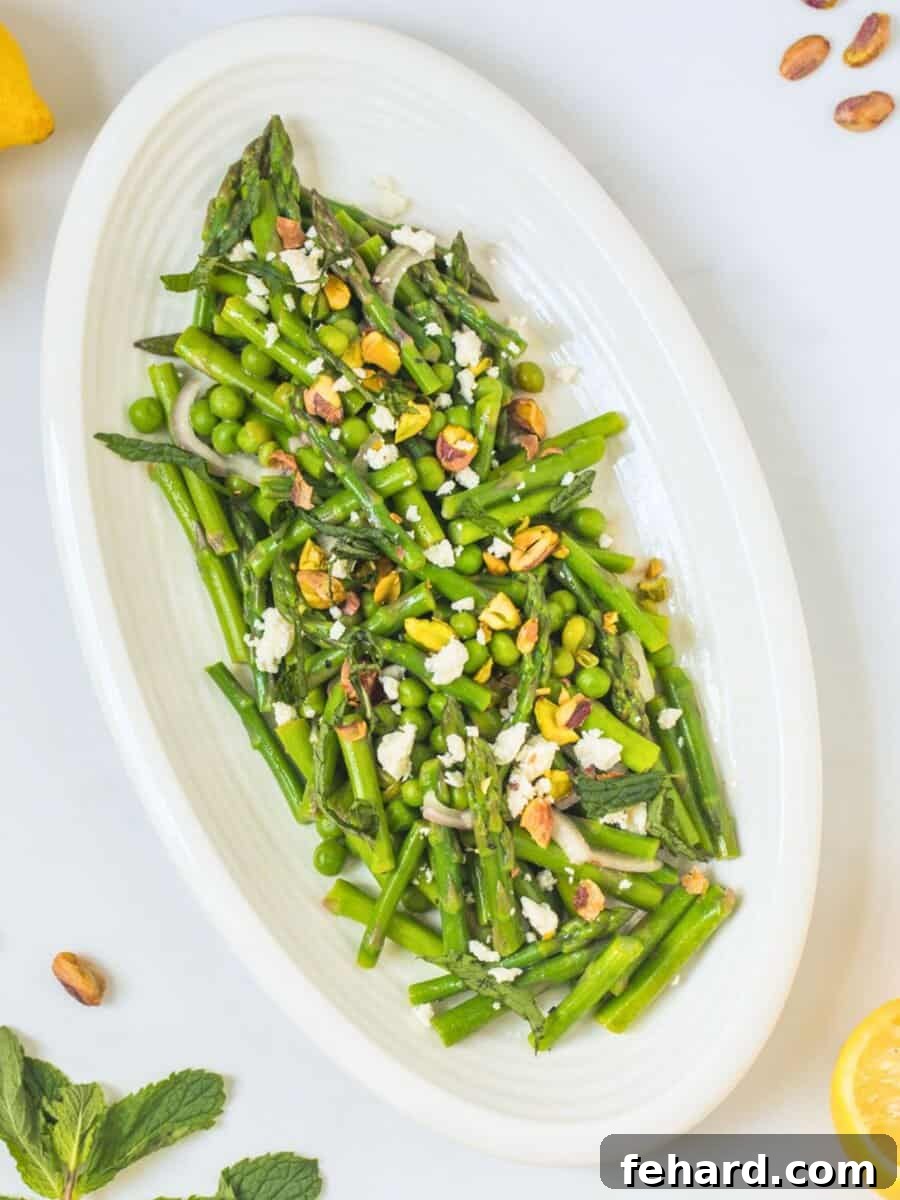
The Ultimate Chilled Asparagus Salad: A Springtime Delight

Let’s be candid for a moment. This chilled asparagus salad was initially conceived for pure self-indulgence, inspired by a truly memorable dish at a quaint local restaurant. The initial thought was to keep this exquisite creation all to myself. However, a recipe this good simply demanded to be shared. While my family typically adores classic preparations like roasted asparagus and air fryer asparagus, I harbored doubts about their reception of a cold asparagus salad adorned with peas, refreshing mint, salty feta, and crunchy pistachios. To my delightful surprise, I was entirely mistaken!
This salad quickly became an unexpected family favorite. The harmonious blend of salty feta, zesty lemon, aromatic mint, subtly sweet shallots, and the satisfying crunch of pistachios masterfully elevates the naturally earthy and slightly sweet notes of both the asparagus and peas. The result is an incredibly balanced and utterly impressive salad that has earned its permanent spot on our spring menu. Be prepared, however, for persistent requests to share this delightful creation once you introduce it!
This recipe isn’t just a side dish; it’s an experience. It proves that simple ingredients, when combined thoughtfully, can create extraordinary flavors. The textures are just as captivating as the tastes: the tender-crisp asparagus, the pop of sweet peas, the creamy feta, and the irresistible bite of pistachios. It’s truly a celebration of fresh, seasonal eating.
Happy Cooking! xo Kristen
Recipe Highlights
- Asparagus Salad Recipe Card
- Essential Ingredients & Tips
- Step-By-Step Preparation Guide
- Creative Serving Suggestions
- Variations & Expert Tips
Essential Ingredients for Your Spring Asparagus Salad
To ensure the most exquisite results, careful selection of ingredients is key. You’ll find the complete list of ingredients, including precise quantities, in the recipe card below. Here’s a detailed look at what you’ll need and expert tips for making the best choices.
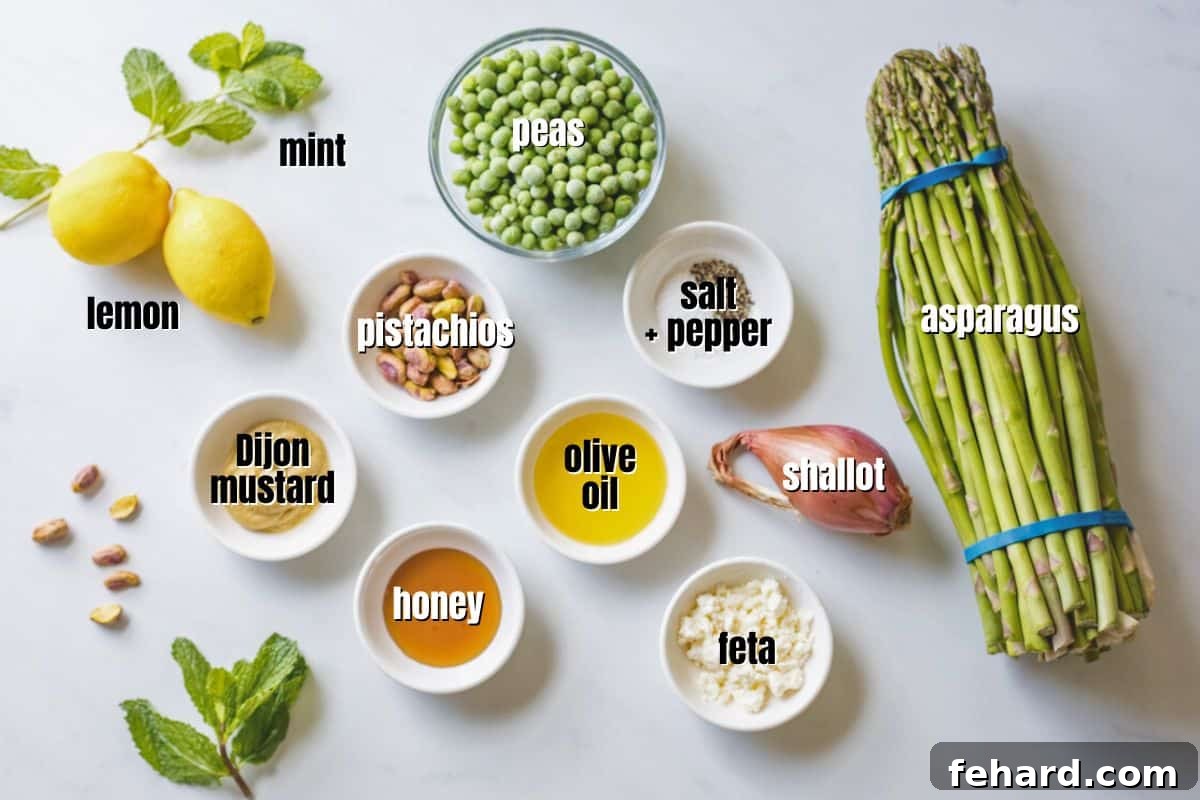
- Asparagus: The star of our show! When selecting asparagus, look for stalks that are a vibrant green color, firm to the touch, and have tightly closed tips. Avoid any with limp stalks or flowering/mushy tips, as these indicate older produce. Both thin and thick asparagus can be used, though thinner stalks tend to cook faster and offer a more delicate texture. Asparagus is not only delicious but also packed with vitamins K, A, C, and folate, making this salad wonderfully nutritious.
- Peas: While fresh, shelled green peas offer an unparalleled sweetness and tenderness, they can be a bit challenging to find and quite labor-intensive to shell. For convenience without compromising flavor, we highly recommend using frozen petite peas. These small, sweet peas are superior to larger green peas as they are naturally sweeter and have a softer, more desirable texture that perfectly complements the asparagus. They also cook very quickly, making meal prep a breeze.
- Shallot: This elegant member of the onion family is crucial for adding a mild, delicate oniony flavor without overwhelming the other ingredients. Shallots are sweeter and less pungent than regular onions, making them ideal for raw applications in salads. Ensure they are very thinly sliced to integrate seamlessly into the salad and provide a subtle aromatic bite.
- Pistachios: Though optional, chopped roasted pistachios introduce an incredible layer of texture and a wonderfully nutty flavor to the salad. Their vibrant green hue also adds to the visual appeal. Pistachios are rich in healthy fats, fiber, and protein. If you don’t have pistachios, or prefer an alternative, blanched and chopped almonds or walnuts can also provide a great crunch.
- Feta: Crumbled feta cheese is a game-changer in this recipe, offering a creamy texture and a delightful salty tang that balances the sweetness of the peas and the brightness of the lemon. Its crumbly nature distributes flavor throughout the salad. If you’re looking for a dairy-free option, simply omit it. Alternatively, crumbled goat cheese makes for a fantastic substitute, offering a slightly different, yet equally delicious, creamy and tangy profile.
- Mint: Fresh mint is more than just a garnish here; it’s an essential flavor component. The pairing of mint and peas is a classic for a reason, and mint also harmonizes beautifully with both lemon and asparagus. This aromatic herb infuses the dish with an incomparable freshness and lightness, truly making it taste like spring in a bowl. Always use fresh mint for the best results, slicing it into thin ribbons just before serving.
- Lemon Dressing: The dressing is where the magic happens, tying all the flavors together with its bright and tangy profile. It’s a simple perfection, crafted from **fresh lemon juice** for that essential zing, a touch of **honey** to balance the acidity and add a hint of sweetness, **Dijon mustard** for emulsification and a subtle peppery kick, and high-quality **extra virgin olive oil** to provide richness and body. Seasoned with **kosher salt** and **freshly ground black pepper**, this dressing is incredibly versatile and highlights the natural flavors of the vegetables.
Step-By-Step Guide: Crafting Your Perfect Chilled Asparagus Salad
Achieving perfect results with this salad is simple when you follow these helpful tips. You will find the exact ingredient quantities and detailed instructions clearly outlined in the recipe card at the bottom of this post.
- Prepare the Asparagus: Begin by washing your asparagus thoroughly under cold running water. To ensure only the tender parts are used, the best method for trimming asparagus is to gently hold one stalk at both ends and bend it. It will naturally snap at the point where the tough, woody end separates from the tender stalk. You don’t need to do this for every single stalk; once you have one as a guide, you can simply align the remaining bunch and cut them at the same point. After trimming, cut the asparagus stalks into uniform 2-inch pieces. This size is ideal for easy eating and ensures even cooking.
- Blanch Asparagus and Peas: Bring a large pot of water to a rolling, rapid boil. Simultaneously, prepare a large bowl filled with ice water and set it aside; this is your ice bath, critical for stopping the cooking process. Once your water is vigorously boiling, add a generous pinch of kosher salt – this helps to season the vegetables from within and enhances their vibrant green color. Carefully drop the trimmed asparagus and frozen petite peas into the boiling water. Cook them for only 2-3 minutes, or until they achieve a bright green color and are crisp-tender. The exact timing will depend on the thickness of your asparagus. Promptly, using a slotted spoon or a spider strainer, transfer the blanched vegetables from the boiling water directly into the waiting ice bath.
Using Fresh Peas?
If you’re fortunate enough to be using fresh, shelled peas, note that they require less cooking time than asparagus. To ensure both are perfectly cooked, add the fresh peas to the boiling water about 1 minute after the asparagus has started cooking.
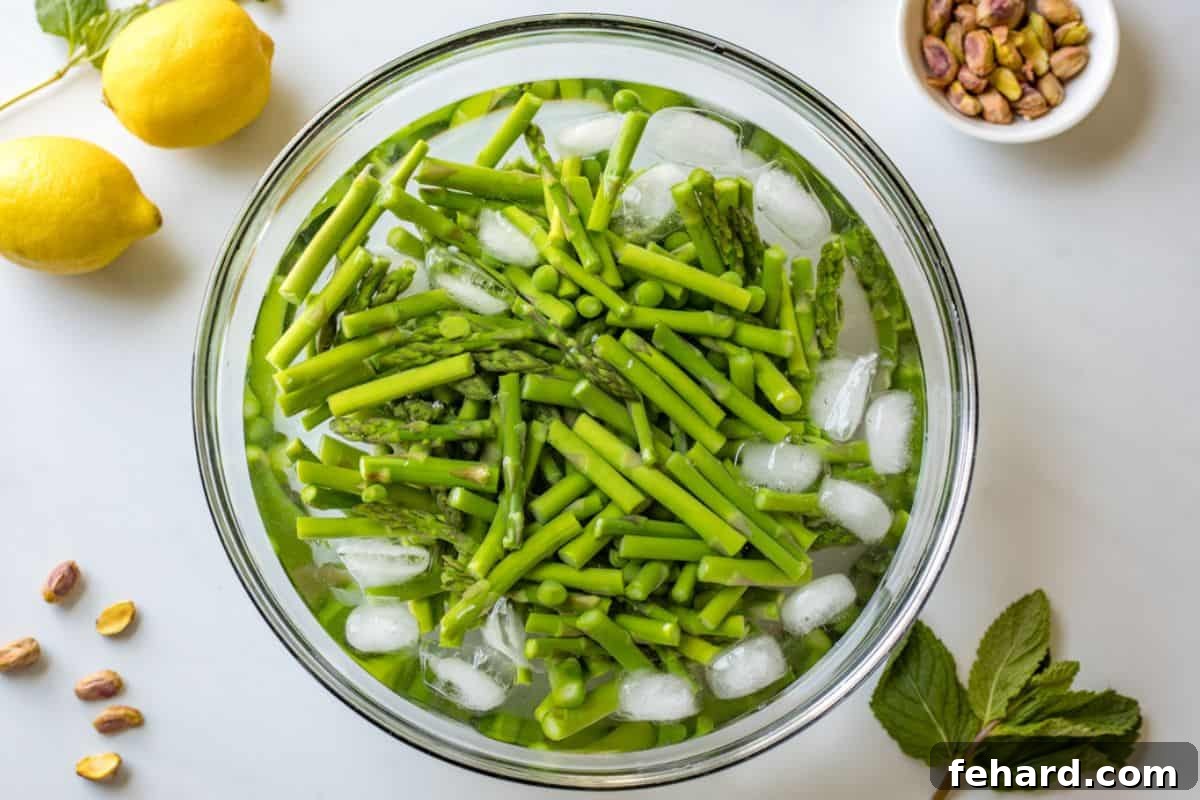
- Thoroughly Chill and Dry the Veggies: Allow the asparagus and peas to cool completely in the ice bath for approximately 2-3 minutes. This quick chilling not only stops the cooking but also locks in their beautiful bright green color and crisp texture. Once chilled, drain the vegetables thoroughly. It’s crucial to gently pat them dry with a clean kitchen towel or paper towels. Excess water will dilute the dressing and prevent it from coating the vegetables properly.
- Prepare the Zesty Lemon Dressing: In a large mixing bowl, combine the fresh lemon juice, extra virgin olive oil, Dijon mustard, honey, kosher salt, and black pepper. Vigorously whisk all these ingredients together until they are thoroughly combined and the dressing appears emulsified – meaning it’s thick and uniform, not separated. Taste the dressing and adjust seasonings if necessary, adding more salt, pepper, or a tiny bit more honey to achieve your desired balance of flavors.
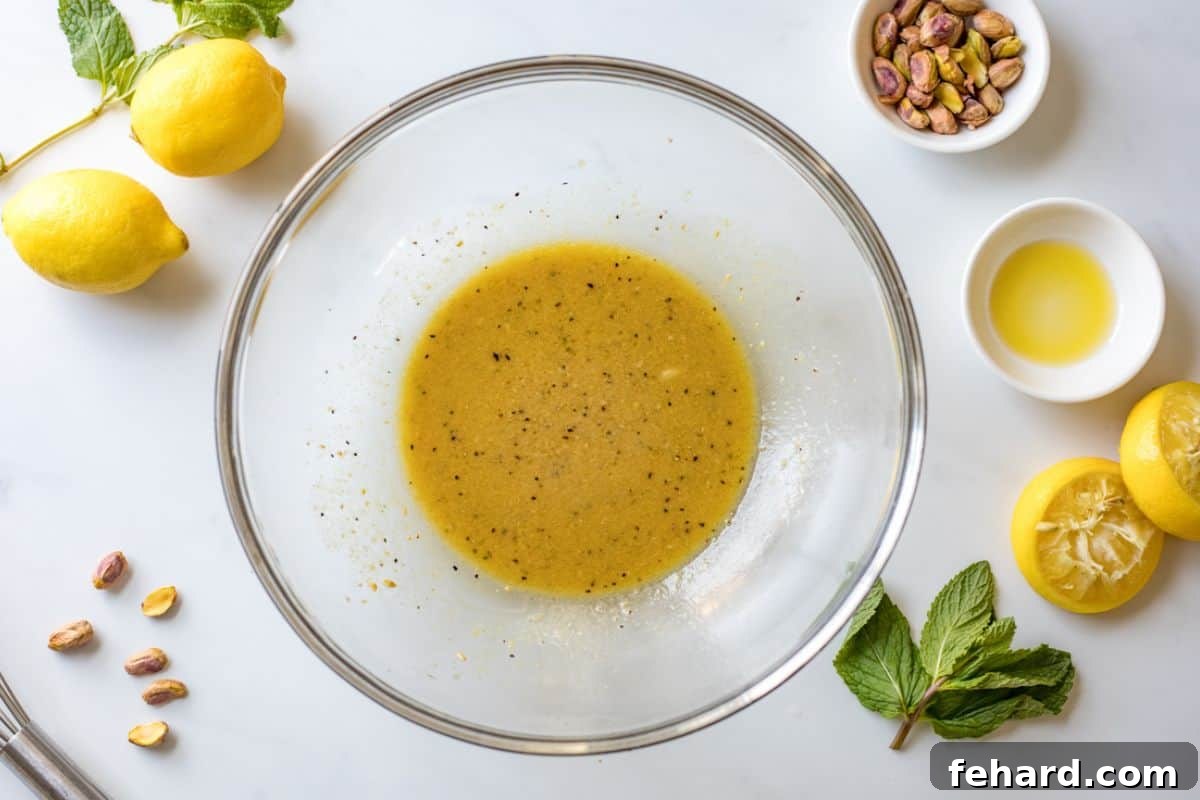
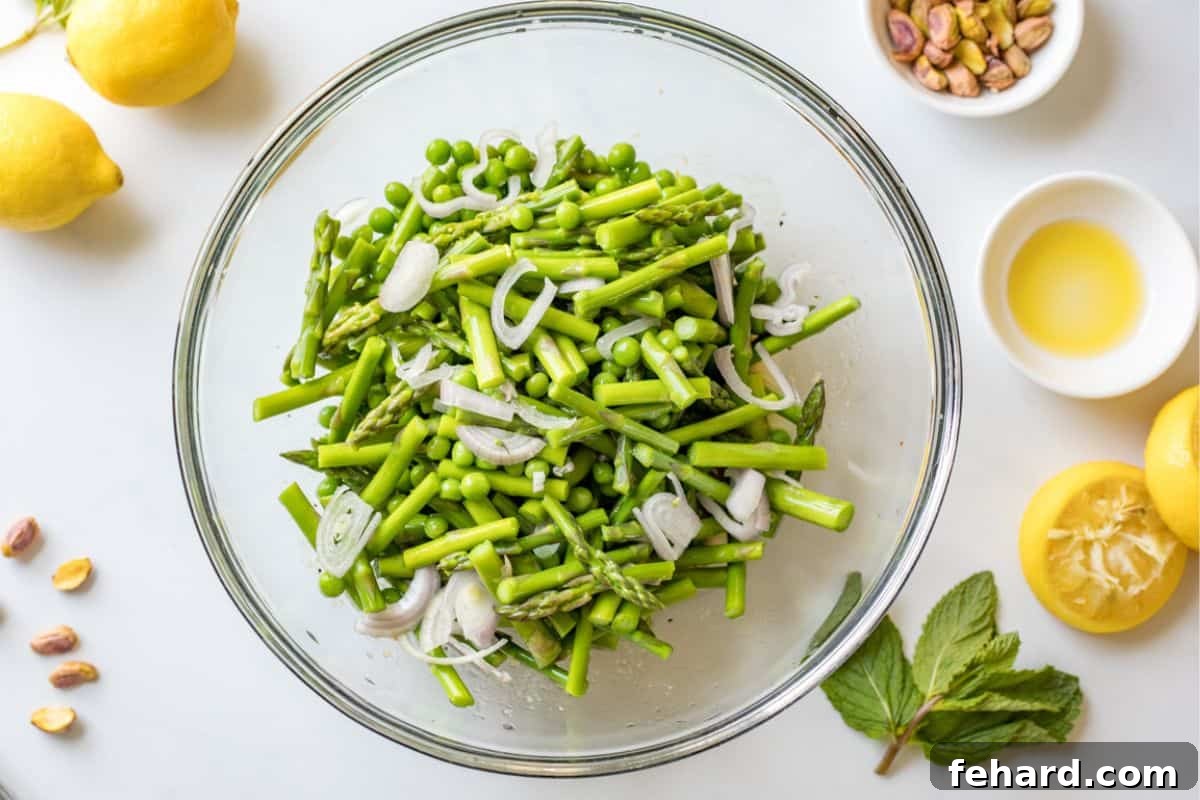
- Combine and Marinate: Add the perfectly blanched and dried asparagus and peas, along with the thinly sliced shallot, to the large mixing bowl containing your prepared lemon dressing. Gently toss all the ingredients together using a spatula or salad servers, ensuring that every piece of vegetable is evenly coated with the vibrant dressing. Be careful not to mash the ingredients; a light touch is best to maintain their integrity.
- Chill for Flavor Melding: At this stage, cover the mixing bowl tightly with plastic wrap or transfer the salad to an airtight container. Place the salad in the refrigerator to chill for a minimum of 30 minutes, or ideally, for up to 24 hours. This chilling period is essential as it allows the flavors to fully meld and deepen, transforming a simple mix of ingredients into a complex and delightful culinary experience. The longer it chills, the more pronounced and harmonious the flavors will become.
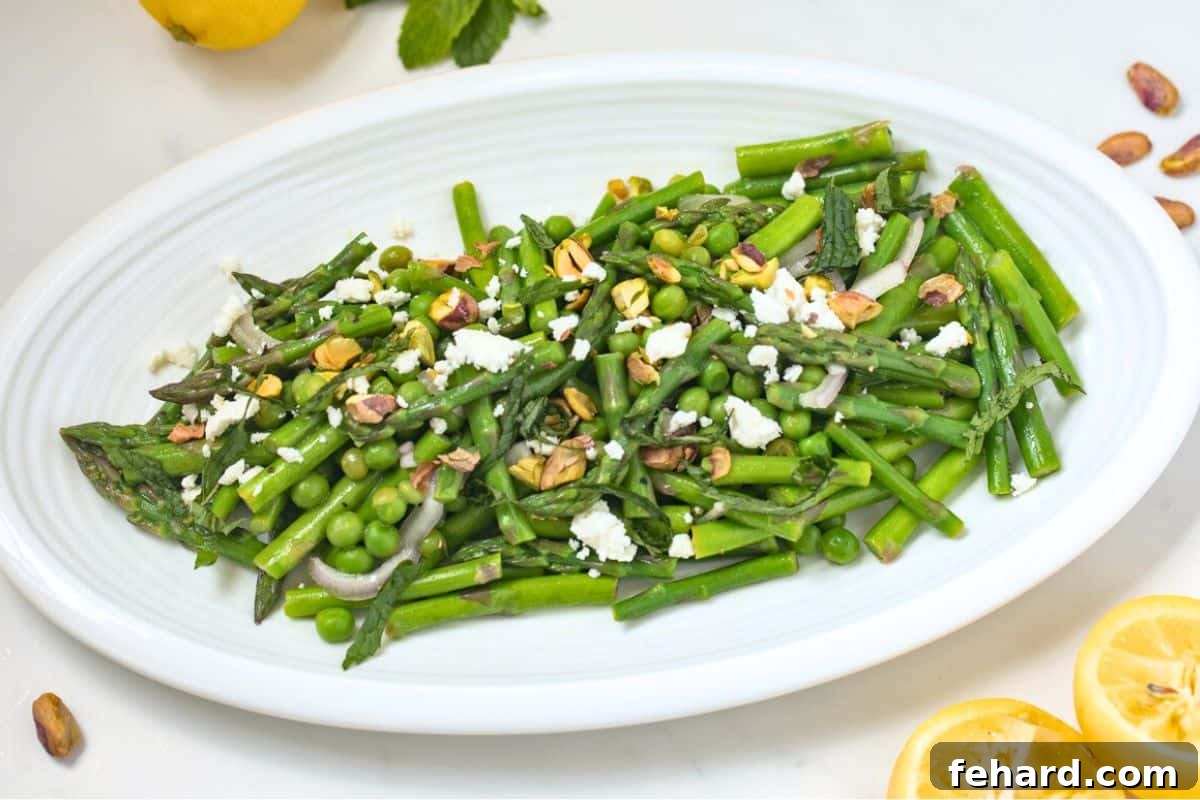
- Serve with Garnishes: When ready to serve, transfer the chilled, marinated vegetables to an elegant serving dish or individual plates. For the grand finale, generously top the salad with the crunchy chopped pistachios, delicate ribbons of fresh mint, and crumbled feta cheese. The vibrant colors and varied textures of these garnishes not only enhance the visual appeal but also add crucial layers of flavor and dimension. Serve immediately to enjoy the salad at its peak freshness and texture.
Creative Serving Suggestions for Your Asparagus Salad
This exquisite asparagus salad has rapidly become a beloved spring staple, perfect for enjoying throughout the entire season. Its versatility makes it an ideal companion for a light dinner, and it absolutely deserves a prominent spot on your festive Easter menu or any special occasion.
- As an Elegant Side Dish: This vibrant salad pairs beautifully with a wide array of main courses. Serve it alongside a perfectly seared ribeye steak for a sophisticated meal, complement a succulent honey lemon chicken skillet, or provide a fresh counterpoint to flaky baked salmon. For a vegetarian option, it’s a delightful accompaniment to a creamy white bean pasta, adding lightness and texture.
- For a Memorable Easter Brunch: Elevate your Easter brunch spread by featuring this colorful salad. It creates a stunning presentation and a refreshing palate cleanser when paired with a classic, savory quiche, a spicy and comforting green chile egg casserole, or a rich savory breakfast strata. Its bright flavors will awaken the senses and add a touch of spring elegance.
- For a Festive Easter Dinner: Guarantee an unforgettable Easter dinner by serving this asparagus salad alongside traditional holiday fare. It provides a much-needed burst of freshness next to a perfectly glazed Ham (or an effortless Instant Pot ham) and rich, creamy scalloped potatoes. The salad’s tanginess cuts through the richness of heavier dishes, creating a beautifully balanced meal.
- Light Lunch Option: For a quick and healthy lunch, enjoy a larger portion of this salad on its own, perhaps with some grilled chicken or chickpeas added for extra protein. It’s incredibly satisfying and revitalizing.
- Picnic Perfect: This chilled salad is an excellent choice for picnics or potlucks. Its flavors only deepen as it sits, and it travels wonderfully, making it a hassle-free addition to any outdoor gathering.
Variations & Expert Tips to Customize Your Asparagus Salad
This Asparagus Salad is a beautifully versatile dish that can be easily adapted to suit your taste preferences or whatever ingredients you have on hand. Don’t hesitate to experiment and make it your own!
- Add More Veggies: Enhance the nutritional value and texture by incorporating other spring vegetables. Thinly sliced radishes or cucumbers can add a refreshing crunch. Cherry tomatoes (halved) would provide a burst of color and sweetness.
- Different Herbs: While mint is a classic pairing, fresh dill or parsley could also offer a lovely herbaceous note. Experiment to find your favorite combination!
- Protein Boost: For a more substantial meal, consider adding cooked and cooled shrimp, grilled chicken strips, or even hard-boiled eggs to the salad. Canned chickpeas or cannellini beans would also be excellent plant-based protein additions.
- Nut Alternatives: If pistachios aren’t your preference, feel free to substitute with other chopped nuts like almonds, walnuts, or pecans for a different flavor profile and crunch. Toasted sunflower or pumpkin seeds can also work beautifully for a nut-free option.
- Cheese Swaps: As mentioned, goat cheese is a fantastic alternative to feta. For a milder, creamier touch, try small cubes of fresh mozzarella or even shaved Parmesan.
- Spicy Kick: A tiny pinch of red pepper flakes added to the dressing can introduce a subtle heat, if you enjoy a little spice.
- Make Ahead Tips: This salad is wonderfully suitable for meal prepping! You can blanch the vegetables and prepare the dressing up to 24 hours in advance. Store them separately in airtight containers in the refrigerator. Combine and dress the salad about 30 minutes before serving, then add the garnishes (pistachios, mint, feta) just before plating to maintain their freshness and crunch.
- Adjusting Sweetness/Tanginess: Always taste your dressing before combining it with the vegetables. If you prefer a sweeter dressing, add a touch more honey. For extra tang, a bit more lemon juice will do the trick.
- Asparagus Thickness: Keep in mind that thinner asparagus stalks will cook faster, so adjust your blanching time accordingly to avoid overcooking. The goal is always crisp-tender.
More Delightful Seasonal Spring Recipes
- Strawberry Spinach Salad: A refreshing blend of sweet and savory.
- Easy Glazed Carrots: A simple yet elegant side dish bursting with flavor.
- Instant Pot Artichokes: Perfectly cooked artichokes made effortlessly.
- Carrot Raisin Salad: A classic, comforting salad with a touch of sweetness.
- Strawberry Crumb Bars: A delicious dessert featuring juicy seasonal strawberries.
Did you try this recipe?
If you enjoyed making and tasting this delightful asparagus salad, we would love to hear from you! Please consider sharing your experience and leaving a 5-star review below. Your feedback helps other home cooks discover and enjoy these recipes. Thank you!
Asparagus Salad
Print Recipe
This vibrant Asparagus Salad is a celebration of spring, featuring crisp-tender asparagus, sweet peas, and a bright and tangy lemon dressing. Complemented by crunchy pistachios, creamy feta, and fresh mint, it’s an easy, yet sophisticated dish that highlights the best of seasonal produce.
Ingredients
- 1 lb asparagus
- 1 cup frozen petite peas
- 2 tablespoons extra virgin olive oil
- 1 tablespoon fresh lemon juice
- 1 tablespoon Dijon mustard
- 1 teaspoon honey
- 1 teaspoon kosher salt, + more for blanching
- ½ teaspoon pepper
- ½ small shallot, thinly sliced
- ¼ cup pistachios, shelled and chopped
- 4 fresh mint leaves, sliced into ribbons
- ¼ cup crumbled feta, optional
Instructions
- Wash 1 lb asparagus, trim and discard the woody bottoms, and chop into 2-inch pieces.
- Bring a large pot of water to a rapid boil. Set up a large bowl of ice water to the side. Once the water is boiling, heavily salt the water and drop the prepared asparagus and 1 cup frozen petite peas into the boiling water. Cook for 2-3 minutes, until the asparagus is just tender and still bright green. Timing will depend on thickness of asparagus. Immediately transfer the veggies to a bowl of ice water using a slotted spoon or spider strainer.
- Let the peas and asparagus chill in the ice bath for 2-3 minutes, then drain, and pat dry.
- In a large mixing bowl, whisk together 2 tablespoons extra virgin olive oil, 1 tablespoon fresh lemon juice, 1 tablespoon Dijon mustard, 1 teaspoon honey, 1 teaspoon kosher salt, and ½ teaspoon pepper together until well combined and emulsified.
- Add the blanched asparagus, peas, and ½ small shallot (thinly sliced) to the mixing bowl with the prepared dressing. Toss to coat and then cover and chill for at least 30 minutes or up to 24 hours.
- To serve, transfer the dressed vegetables to a serving dish and top with ¼ cup pistachios (shelled and chopped), 4 fresh mint leaves (sliced into thin ribbons), and ¼ cup crumbled feta. Serve immediately.
Notes
- Nutrition is based on 4 large servings with nuts and feta included.
- Fresh Peas: Fresh shelled peas need less time to cook, so wait to add them to the boiling water until the asparagus has been cooking for 1 minute.
- Nuts: Pistachios are optional. Feel free to omit them or use chopped almonds or walnuts in their place.
- Feta: Omit for a dairy-free option or swap it out for crumbled goat cheese.
- Storage: Store the salad in an airtight container for up to 48 hours. The pistachios will get a bit soggy and the mint may not be as vibrant green, but the salad will still be tasty.
Nutrition
- Calories: 196 kcal
- Carbohydrates: 15g
- Protein: 8g
- Fat: 13g
- Saturated Fat: 3g
- Polyunsaturated Fat: 2g
- Monounsaturated Fat: 8g
- Cholesterol: 8mg
- Sodium: 745mg
- Potassium: 434mg
- Fiber: 6g
- Sugar: 7g
- Vitamin A: 1258IU
- Vitamin C: 24mg
- Calcium: 100mg
- Iron: 4mg
Nutrition information is automatically calculated, so should only be used as an approximation.
Tried this recipe?
Mention @amindfullmom or tag #amindfullmom!