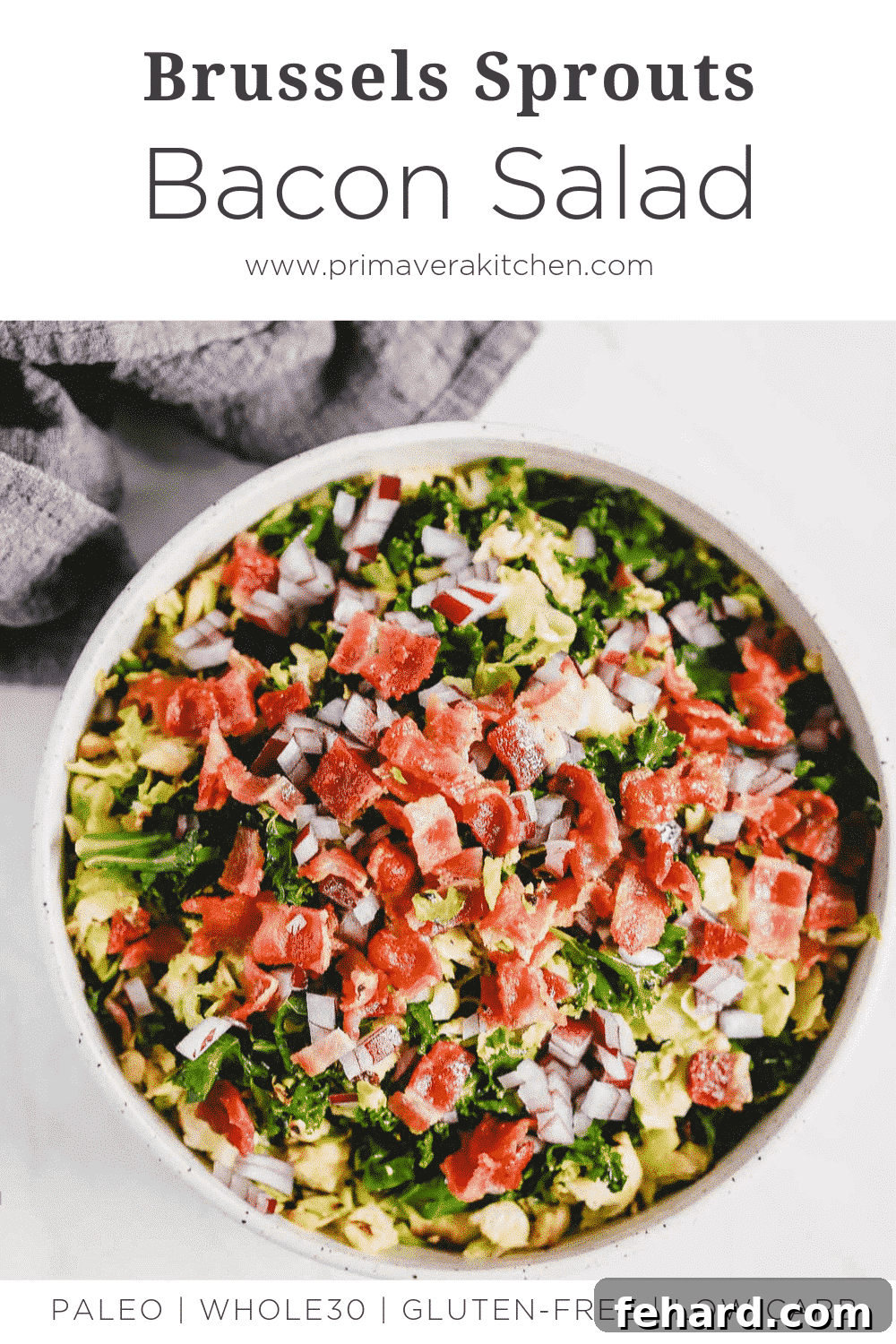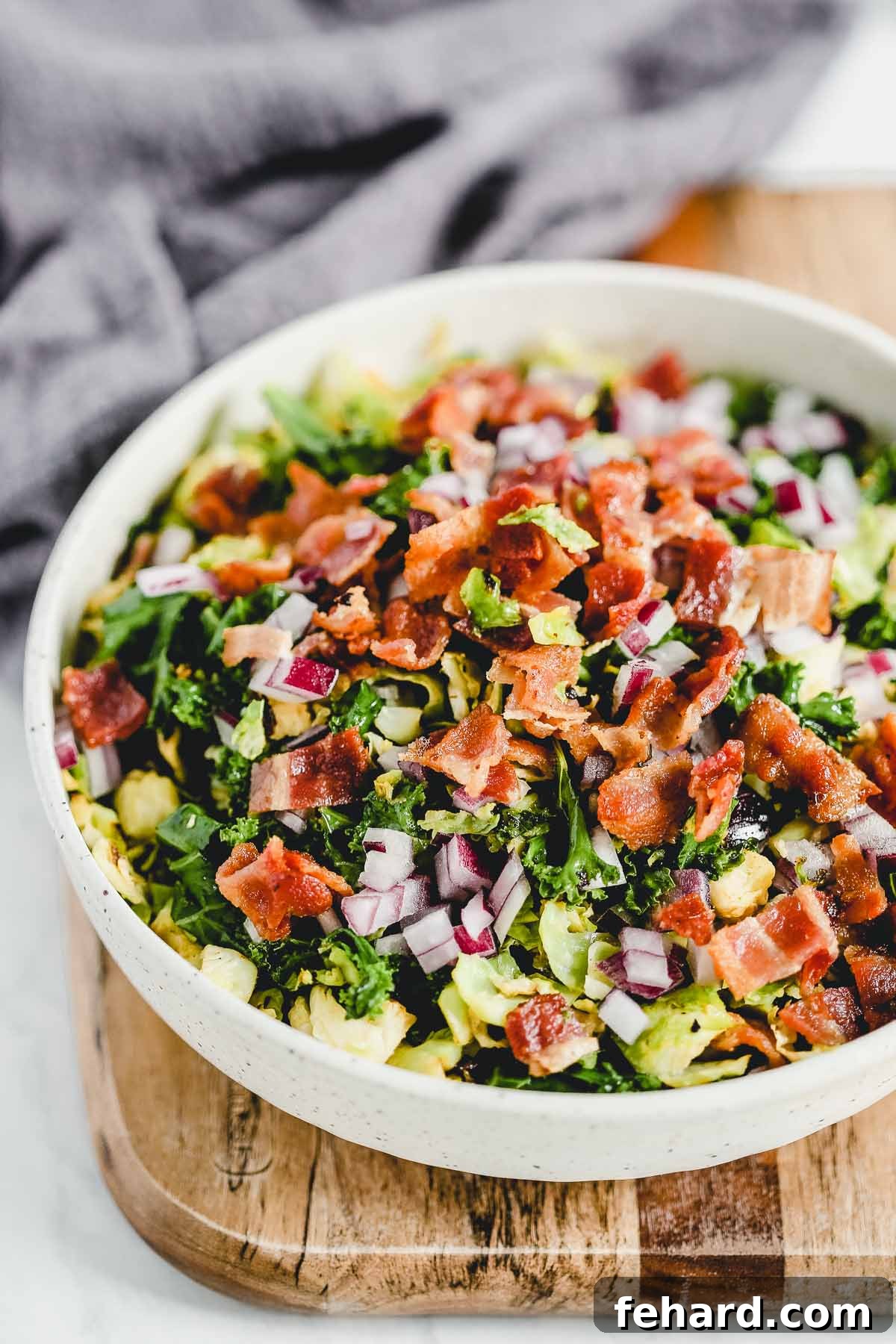
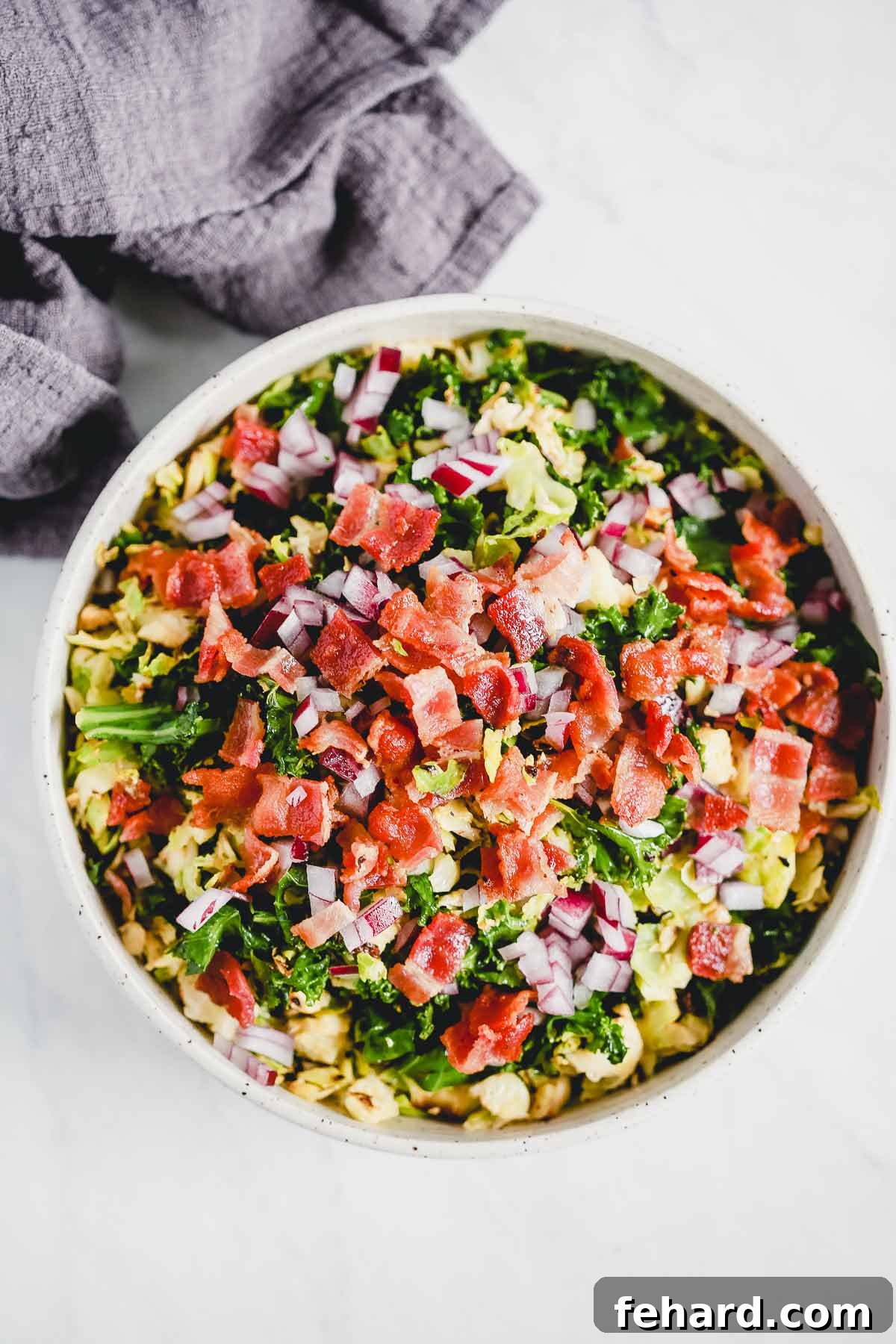
Transform your meals with this vibrant and satisfying Brussels Sprouts Bacon Salad. Bursting with bright flavors and incredible textures, this salad isn’t just a side dish – with its ample protein, it easily becomes a hearty and fulfilling lunch or a delightful main course for any occasion. Prepare to impress your taste buds and nourish your body with this easy-to-make, incredibly versatile recipe.
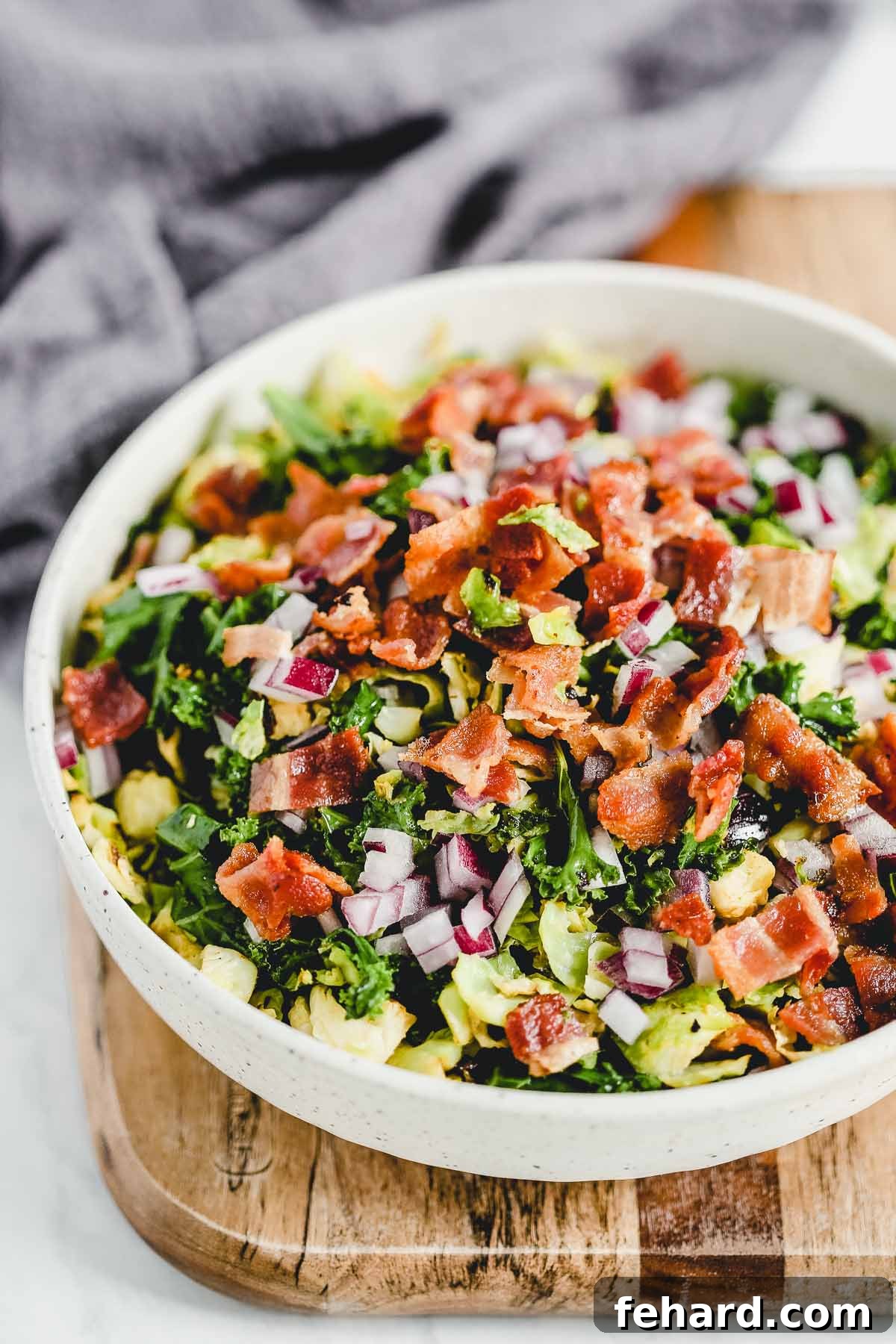
Why You’ll Love This Brussels Sprouts Bacon Salad
Brussels sprouts are truly one of my favorite vegetables to cook with, and for good reason! Their versatility shines in everything from comforting casseroles to fresh, crisp salads. On my blog, you’ll find a collection of beloved Brussels sprouts recipes, each highlighting their unique flavor and texture profile. Whether you prefer them roasted, sautéed, or fresh in a salad, these miniature cabbages offer a wealth of culinary possibilities.
This particular Brussels sprouts bacon salad recipe stands out for several reasons. It combines the earthy, slightly bitter notes of raw Brussels sprouts with the smoky, salty crunch of bacon, all brought together by a zesty homemade dressing. It’s a fantastic way to introduce more vegetables into your diet, offering a healthy yet incredibly flavorful option that doesn’t feel like a compromise. The added protein from the bacon makes it substantial enough to keep you satisfied, making it an ideal choice for a quick yet nourishing meal.
If you’re eager to explore more ways to enjoy this incredible vegetable, be sure to check out some of my other popular recipes:
- Parmesan Brussels Sprouts Salad: A savory twist with sharp cheese and a rich flavor.
- Brussels Sprouts Casserole Recipe: A warm and comforting dish, perfect for cooler weather or holiday gatherings.
- Sausage with Brussels Sprouts Skillet: A quick and easy one-pan meal that’s packed with flavor.
- Shredded Brussels Sprout Salad: Another delightful raw salad option with a different texture profile.
Mastering the Art of Slicing Brussels Sprouts
The key to an exceptional raw Brussels sprouts salad lies in how you prepare the sprouts themselves. Finely sliced or shredded Brussels sprouts offer a more delicate texture, making them easier to chew and allowing them to better absorb the delicious dressing. Here’s a comprehensive guide to achieving perfectly prepared Brussels sprouts for your salad:
Step-by-Step Preparation:
- Trim the Ends: Begin by removing the tough, woody root end of each Brussels sprout. Slice off about ⅛ inch from the bottom. This ensures a more pleasant eating experience and helps in separating the leaves.
- Clean Thoroughly: Brussels sprouts can sometimes harbor dirt between their leaves. To clean them effectively, place the trimmed sprouts in a bowl of cool water and let them soak for a few minutes. Any lingering dirt or debris will settle at the bottom of the bowl. Rinse them well after soaking.
- Dry Completely: Before slicing, ensure your Brussels sprouts are thoroughly dry. Excess moisture can dilute your dressing and affect the overall texture of your salad. Use a salad spinner or paper towels to pat them dry.
Choosing Your Slicing Method:
While Brussels sprouts are small, the effort you put into slicing them will significantly enhance your salad. You have a few excellent options, depending on your tools and preference:
- With a Sharp Knife: If you don’t have specialized equipment, a sharp chef’s knife will work perfectly. Cut each Brussels sprout in half lengthwise, then place the cut side down on your cutting board. Carefully slice the halves crosswise into very thin strips. This method requires a bit more time and precision but yields excellent results.
- Using a Food Processor: This is my absolute favorite and most efficient method, especially when dealing with a larger batch of sprouts. Attach the slicing blade to your food processor. Feed the trimmed Brussels sprouts through the chute, and in a matter of seconds, you’ll have perfectly uniform, thin slices. If you prefer a more shredded texture, which is also fantastic for salads, simply switch to the shredding blade. The food processor makes quick work of this task, saving you valuable prep time.
- With a Mandoline Slicer: For consistently thin, even slices, a mandoline slicer is an invaluable tool. It allows you to adjust the slice thickness, giving you complete control over the texture of your sprouts. Always use the safety guard that comes with your mandoline to protect your fingers, as the blades are extremely sharp. If you don’t own one, I highly recommend investing in a good quality mandoline – it’s a game-changer for many vegetable preparations.
Regardless of the method you choose, the goal is to achieve thinly shaved Brussels sprouts that are tender-crisp and ready to soak up all the delicious flavors of your dressing and other ingredients.
Raw vs. Lightly Cooked: Enjoying Brussels Sprouts and Kale in Your Salad
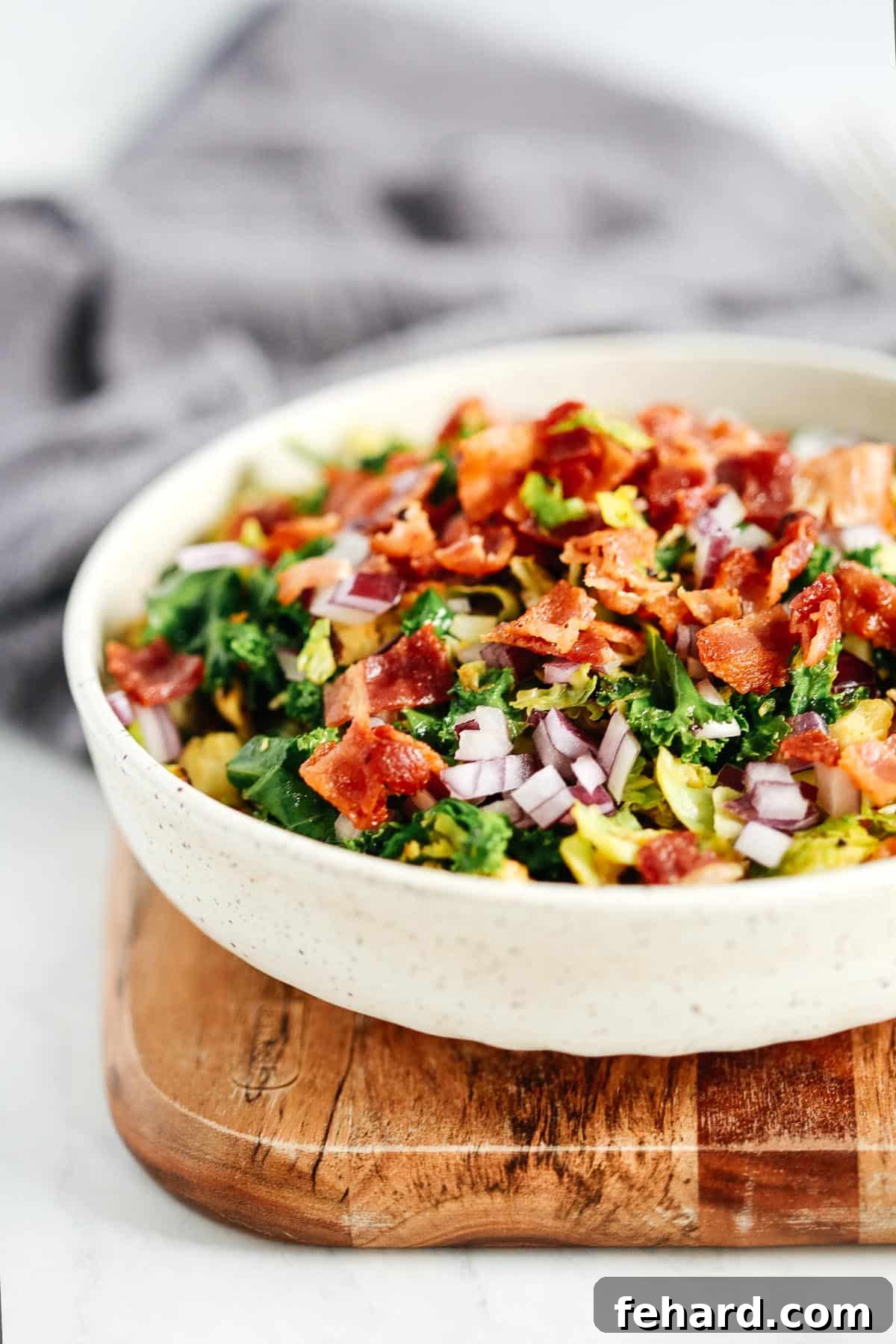
A common question when making salads with these robust greens is whether they are safe and palatable to eat raw. The good news is, both Brussels sprouts and kale are perfectly fine to enjoy in their raw form, as they are prepared in this delicious bacon salad. However, understanding their unique characteristics can help you tailor the salad to your preference.
Raw Benefits and Considerations:
- Brussels Sprouts: When eaten raw, Brussels sprouts offer a crisp texture and a slightly peppery, robust flavor that some describe as subtly bitter. They are packed with vitamins C and K, and a good amount of fiber. However, they contain certain difficult-to-digest sugars (oligosaccharides) that can cause stomach discomfort, gas, or bloating in some individuals. This is completely normal and varies from person to person. A short cooking time can break down these sugars, making them easier to digest for sensitive stomachs.
- Kale: Raw kale is a nutritional powerhouse, rich in vitamins A, C, and K, as well as antioxidants. Its texture can be quite tough, and its flavor can be distinctly bitter. To counteract this, many chefs recommend “massaging” raw kale with a bit of olive oil and a squeeze of lemon juice. This simple technique tenderizes the leaves and mellows their bitterness, making them much more enjoyable in a salad.
Sautéing for a Milder Flavor and Easier Digestion:
If you prefer a milder flavor profile or are concerned about digestive comfort, you have the option to lightly sauté both the Brussels sprouts and kale before adding them to your salad. This brief cooking process softens the vegetables, reduces bitterness, and breaks down some of those harder-to-digest compounds. A fantastic way to do this is to utilize the same pan you cooked the bacon in. The residual bacon grease will infuse the vegetables with an incredible smoky flavor, adding another layer of depth to your salad. Just a quick 3-5 minute sauté until they are slightly tender-crisp is all you need.
Whether you choose to keep them raw for maximum crunch and nutritional impact, or give them a quick sauté for a softer texture and mellower taste, this salad is designed to be customizable to your liking.
Crafting Your Own Zesty Brussels Sprouts Bacon Salad Dressing
While store-bought dressings offer convenience, there’s truly nothing quite like a homemade dressing. Creating your own not only guarantees a fresher, more vibrant flavor but also gives you complete control over the ingredients. You can avoid unnecessary sugars, artificial preservatives, and unhealthy oils often found in commercial options. Plus, it’s surprisingly simple and quick to whip up!
The Simple “Shake and Serve” Method:
For this Brussels sprouts bacon salad, the dressing is incredibly straightforward. You literally just combine all the ingredients in a jar, secure the lid, and shake vigorously until well blended. The combination of tangy apple cider vinegar and pungent mustard provides a bright, invigorating base that perfectly complements the rich bacon and earthy vegetables.
Tips for Customizing Your Homemade Dressing:
Don’t be afraid to get creative with your vinaigrette! Here are a few tips to personalize your dressing and make it truly your own:
- Emulsification for Smoothness: While shaking works, for a truly creamy and well-blended dressing, add the olive oil in a slow, steady stream while continuously whisking or blending. This emulsification process creates a more stable and cohesive dressing that clings beautifully to your salad ingredients.
- The Perfect Ratio: A classic vinaigrette typically follows a three-to-one ratio of oil to acid (vinegar or citrus juice). This balance ensures the vinegar is sufficiently suspended in the oil, creating a harmonious flavor without being overly oily or too sharp. Feel free to adjust slightly to your preference, but this is a great starting point.
- Always Include an Acid: An acid is the backbone of any good vinaigrette, providing brightness and cutting through richness. In this recipe, we use apple cider vinegar, known for its mild, fruity tang. However, the possibilities are endless! Experiment with fresh lemon or lime juice for a citrusy punch, or try other vinegars like red wine vinegar, sherry vinegar, or even balsamic for different flavor profiles.
- Introduce Fresh Herbs: Elevate your dressing with finely chopped fresh herbs such as dill, parsley, chives, or even a hint of rosemary or thyme. Herbs add a layer of freshness and complexity that can transform the entire salad.
- Add a Touch of Sweetness: A tiny bit of sweetness can balance the acidity and enhance other flavors. A drizzle of maple syrup, honey, or a pinch of sugar can work wonders, especially if you prefer a less tart dressing.
- Spice It Up: For a kick, add a pinch of red pepper flakes, a dash of hot sauce, or a bit of finely minced fresh chili.
- Make it Creamy: For a richer, creamier dressing, consider adding a tablespoon of Greek yogurt, mayonnaise, or even mashed avocado.
Storage and Serving Suggestions for Homemade Dressing:
- Shelf Life: A vinaigrette like this one, made with oil and vinegar, will generally last about two weeks when stored properly in the refrigerator. This makes it a fantastic candidate for meal prepping – make a big batch at the beginning of the week and use it on salads, roasted vegetables, or as a marinade.
- Temperature Matters: Store your dressing in the refrigerator to maintain freshness. However, oil-based dressings can thicken and solidify when cold. For the best flavor and pourability, remember to bring your dressing to room temperature for about 15-30 minutes before serving. Give it another good shake or whisk before drizzling over your salad.
- Table Stability: Once at room temperature and served, the dressing is quite stable and will be fine sitting on the table for a while during a meal.
More Inspiring Brussels Sprouts Recipes to Explore
If you’ve enjoyed this Brussels Sprouts Bacon Salad and are looking for even more ways to incorporate these nutrient-dense vegetables into your diet, you’re in luck! Brussels sprouts are incredibly versatile and can be transformed into a variety of delicious dishes. Here are a few more recipes from my collection that I highly recommend you try:
- Warm Quinoa Brussels Sprouts Salad: A hearty and comforting salad, perfect for a light dinner or substantial side.
- Turkey Sausage Skillet with Brussels Sprouts and Sweet Potatoes: An easy one-pan meal, ideal for busy weeknights.
- Roasted Brussels Sprouts Quinoa Salad: Combines the nutty flavor of roasted sprouts with wholesome quinoa.
- Easy Baked Chicken with Brussels Sprouts: A simple, flavorful, and complete meal baked to perfection.
- Pomegranate Glazed Brussels Sprouts: A festive and elegant side dish with a sweet and tangy glaze.
- Shredded Brussels Sprout Salad: Another fantastic raw salad, focusing on texture and freshness.
- Garlic Parmesan Roasted Brussel Sprouts: A classic and universally loved way to prepare Brussels sprouts, crispy and savory.
Brussels Sprouts Bacon Salad
Author: Olivia Ribas
Servings: 4 People
Prep Time: 10 minutes
Cook Time: 6 minutes
Total Time: 16 minutes
The bright flavor of this Brussels sprouts bacon salad is a great addition to any meal. Plus, with some protein added in, it makes a hearty and satisfying lunch.
Ingredients
For the Salad
- 1 lb Brussels sprouts, trimmed, finely grated or shredded
- 6 slices bacon
- 3 cups kale, chopped
- ¼ cup red onions, thinly sliced
For the Dressing
- ¼ cup olive oil
- 1 tsp yellow mustard
- ½ tsp garlic, minced
- 1 tsp apple cider vinegar
- Salt and black pepper, to taste
Instructions
FOR THE DRESSING
- Combine all the ingredients for the dressing (olive oil, yellow mustard, minced garlic, apple cider vinegar, salt, and pepper) in a small mason jar. Close with the lid and shake well until all ingredients are thoroughly combined. Set aside.
FOR THE SALAD
- First, prepare the Brussels sprouts. Add them to a food processor with the slicing attachment and pulse until the Brussels sprouts are thinly sliced. Alternatively, use a mandoline slicer for uniform thin slices, or a very sharp knife for manual slicing.
- Heat a skillet over medium-high heat. Add the bacon slices and cook until they are golden brown and crispy, typically about 5-7 minutes. Once cooked, transfer the crispy bacon to a paper towel-lined plate to drain excess grease. Once cooled, chop the bacon into bite-sized pieces.
- In a large mixing bowl, combine the thinly sliced Brussels sprouts, chopped kale, and sliced red onion.
- Drizzle the prepared dressing over the vegetables in the bowl. Toss the salad thoroughly to ensure all ingredients are evenly coated with the dressing.
- Season the salad with additional salt and black pepper to taste, adjusting according to your preference.
- Just before serving, sprinkle the chopped crispy bacon over the top of the salad for an irresistible crunch and smoky flavor.
Notes
- For Milder Flavor/Easier Digestion: If you prefer not to eat raw kale or Brussels sprouts, or find them difficult to digest, you can lightly sauté them. Use about 1 tablespoon of the reserved bacon fat in the same skillet to sauté the sprouts and kale for 3-5 minutes until slightly tender-crisp.
- Time-Saving Tip: To save on prep time, you can purchase pre-bagged shredded Brussels sprouts from most grocery stores.
- Dressing Variations: Feel free to substitute the apple cider vinegar in the dressing with other acidic components like fresh lemon juice, lime juice, red wine vinegar, or sherry vinegar for different flavor notes.
- Storage: To maintain the best texture and prevent sogginess, it is recommended to store the salad ingredients and the dressing separately in airtight containers in the refrigerator. Before serving, bring the dressing to room temperature and toss it with the salad.
Nutrition
Serving: 1/4, Calories: 200kcal, Carbohydrates: 10g, Protein: 6g, Fat: 16g, Cholesterol: 4mg, Sodium: 1095mg, Potassium: 522mg, Fiber: 5g, Sugar: 3g
Nutrition information is automatically calculated and should be used as an approximation. Individual results may vary based on exact ingredient amounts and brands used.