
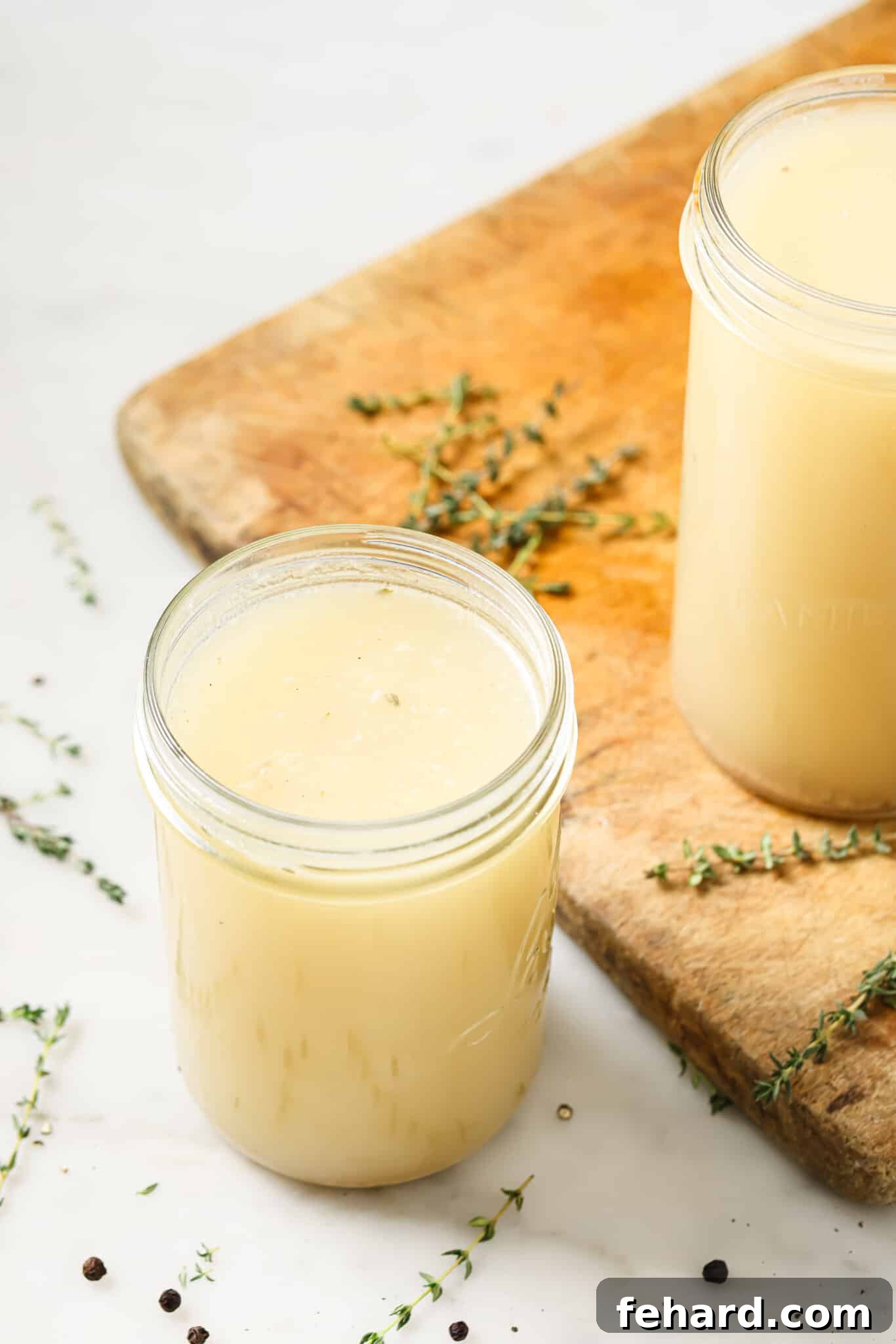
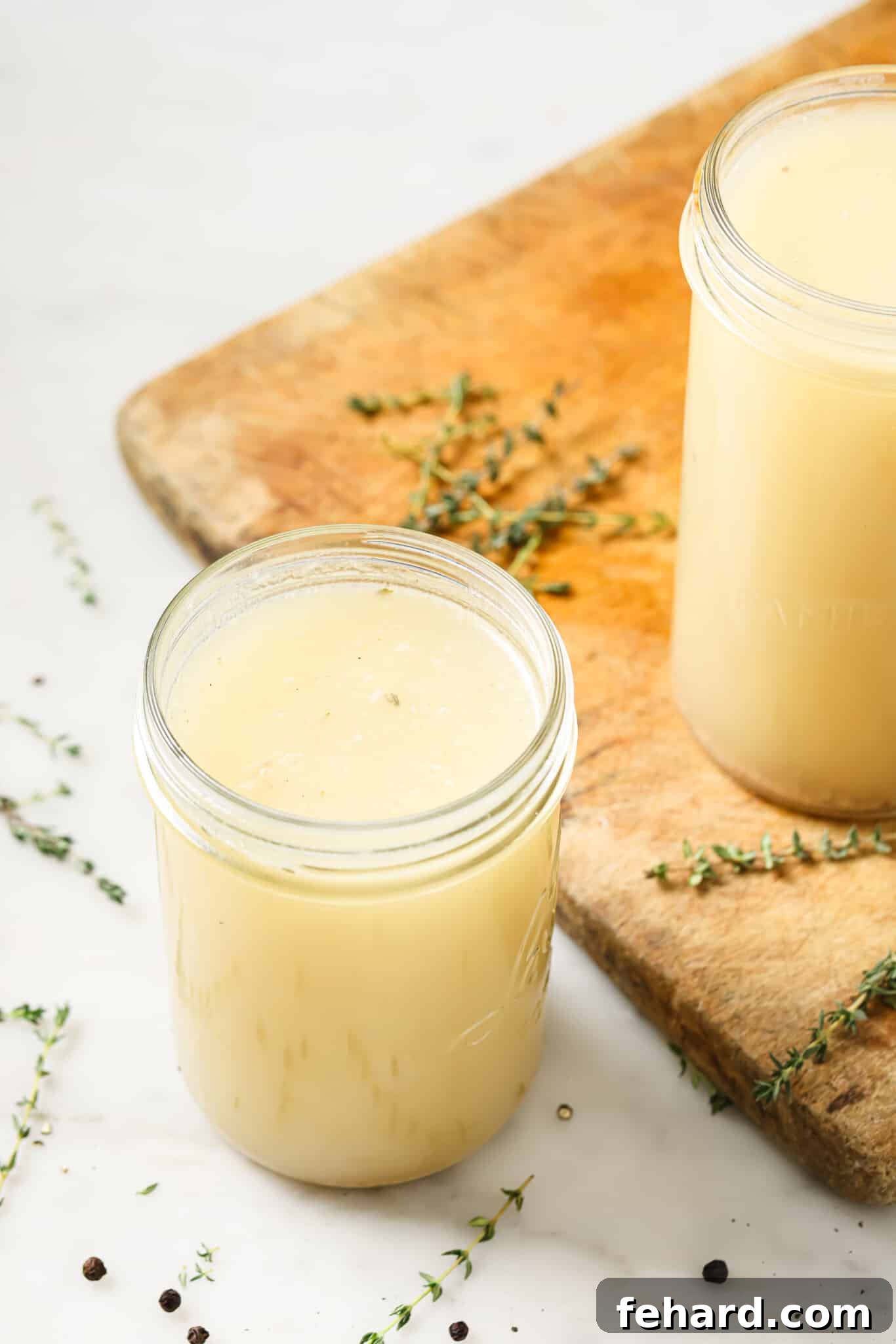
Transforming your Thanksgiving turkey carcass into a rich, aromatic, and incredibly flavorful broth is one of the most rewarding culinary experiences after the holiday feast. This homemade turkey broth recipe is not just simple; it’s an act of culinary magic, converting what might otherwise be discarded into a liquid gold that elevates countless dishes. Perfectly seasoned with fresh herbs and earthy aromatics, this turkey broth becomes the secret ingredient that adds profound depth and savory notes to your soups, velvety sauces, hearty Dutch oven beef stew, and all your favorite holiday recipes throughout the season.
Crafting this delicious turkey broth requires only a handful of everyday ingredients and a little patience. The active preparation time is surprisingly minimal—just about 5 to 10 minutes to gather and combine everything in a pot. The real work is done by time and gentle heat as the broth slowly simmers, allowing the flavors to meld and intensify, creating a deeply satisfying base for your cooking endeavors. This hands-off approach makes it an ideal post-holiday project, allowing you to maximize the value of your Thanksgiving turkey while savoring the calm after the celebration.
The foundation of an outstanding turkey broth begins with a well-cooked, flavorful turkey. If you’re roasting a whole bird, consider using my acclaimed Garlic Butter Roasted Turkey recipe for an unforgettable main course that yields an equally magnificent carcass. For those catering to a smaller gathering, my Air Fryer Turkey Breast or Garlic Butter Turkey Breast recipes are excellent choices, providing succulent meat and a flavorful bone structure perfect for broth. And for an intimate Thanksgiving feast for two, my Easy Roasted Turkey Leg is an ideal solution, leaving you with enough bones for a small batch of delicious broth. The key is to ensure as much meat as possible has been removed from the bones before starting, as residual meat can cloud the broth.
Beyond the broth, your Thanksgiving table can be brimming with culinary delights. For even more delectable recipe ideas and to plan your entire holiday spread, be sure to explore my comprehensive Thanksgiving Dinner Menu. It’s packed with inspiration to make your holiday meal truly special, from appetizers to desserts.
How To Make Flavorful Turkey Broth
Making homemade turkey broth is a straightforward process that yields incredible results, far superior to store-bought options. It’s a fantastic way to utilize every part of your roasted turkey, ensuring nothing goes to waste while enriching your culinary repertoire. Follow these steps for a perfectly clear and deeply flavored broth.
Ingredients for Your Rich Turkey Broth
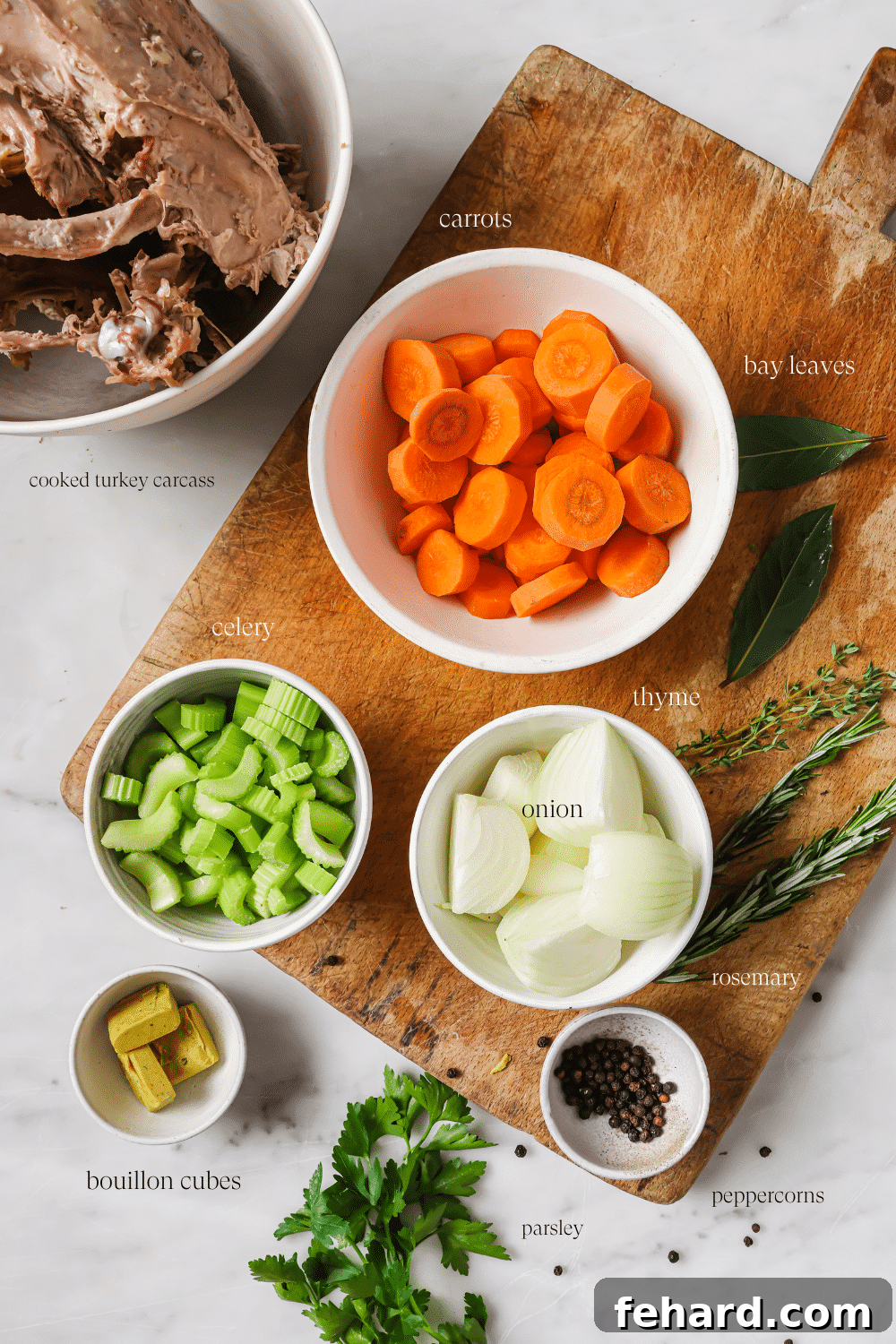
The beauty of homemade turkey broth lies in its simplicity and the ability to customize flavors. Here are the essential ingredients you’ll need:
- Cooked Leftover Turkey Carcass: This is the star of your broth. Ensure most of the meat has been removed, leaving primarily bones. Breaking the turkey bones into smaller pieces will help extract more collagen and flavor. Don’t worry if you don’t have a turkey carcass; a chicken carcass can be used to make equally delicious chicken broth.
- Fresh Vegetables: A classic combination known as mirepoix forms the aromatic base. You’ll need substantial pieces of yellow onion, crisp celery stalks, and sweet carrots. These vegetables release their sugars and savory notes, contributing to the broth’s complexity without overpowering the turkey flavor.
- Whole Black Peppercorns: Unlike ground pepper, whole peppercorns infuse a gentle, earthy spice into the broth without making it cloudy.
- Fragrant Fresh Herbs: A generous handful of fresh herb sprigs is crucial for an aromatic broth. Incorporate sprigs of fresh parsley, aromatic rosemary, and earthy thyme directly into the pot. These herbs impart a classic, comforting flavor profile.
- Bay Leaves: Just a couple of dried bay leaves add a subtle, savory depth and herbaceous aroma that is essential to any good stock or broth.
- Chicken Bouillon (Optional, but Recommended for Extra Depth): For an extra layer of savory richness, especially if your carcass isn’t particularly robust, a high-quality chicken bouillon is an excellent addition. You can use Better Than Bouillon chicken paste or a few chicken bouillon cubes. This acts as a flavor booster, ensuring your broth is intensely savory.
Step-by-Step Instructions for Homemade Turkey Broth
Creating your own turkey broth is a remarkably simple process that requires minimal active cooking time. Follow these detailed steps to achieve a perfectly flavorful and clear broth.
Step 1: Gather and Prepare Ingredients in the Pot
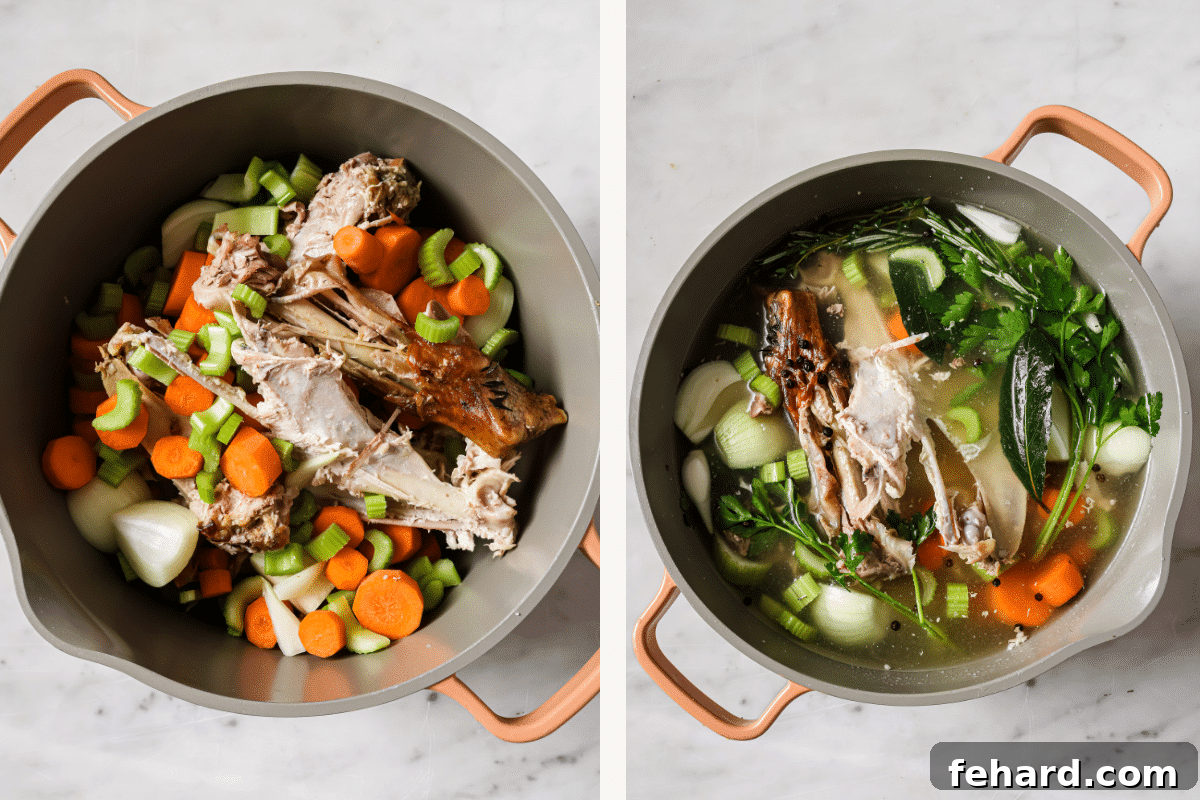
- Begin by placing the broken pieces of your cooked turkey carcass into a large Dutch oven or a substantial stockpot. The larger the pieces, the longer they may take to release flavor, so breaking them up is beneficial.
- Next, add your prepared vegetables: the quartered onions, roughly chopped celery, and peeled carrots. There’s no need for fine dicing, as these will be strained out later.
- Carefully add the whole black peppercorns, the fresh herb sprigs (parsley, rosemary, thyme), and the bay leaves.
- Finally, incorporate the chicken bouillon. If using bouillon cubes, you have a couple of options: you can either crush them directly into the pot to distribute their flavor, or for a more even dissolve, mix them first in about a cup of hot water before pouring the mixture into the pot.
- Pour enough cold water into the pot to completely submerge all the ingredients. The exact volume will vary based on the size of your pot and the amount of carcass, but typically, this will be anywhere from 12 to 16 cups. Using cold water is important as it slowly heats up, allowing impurities to rise to the surface for skimming, and helps extract maximum flavor from the bones.
Step 2: Boil and Gently Simmer for Flavor Development
- Place your large stockpot on the stovetop over medium-high heat. Bring the mixture to a vigorous boil.
- As soon as it reaches a rolling boil, reduce the heat significantly to low. The goal is a very gentle simmer, where only small bubbles occasionally break the surface, rather than a rapid boil. Cover the pot with a lid.
- Allow the broth to gently simmer for 2 to 3 hours. This extended, low-heat cooking time is crucial for allowing all the flavors from the bones, vegetables, and herbs to fully meld together, creating a rich and complex broth.
- Throughout the simmering process, occasionally use a slotted spoon to skim off any foam, scum, or impurities that rise to the top. This step is vital for achieving a clear and clean-tasting broth.
Step 3: Strain the Rich Broth
- Once the turkey bone broth has simmered for the recommended 2 to 3 hours and has developed its deep flavor, remove the pot from the heat.
- It’s best to let the broth cool slightly before straining to handle it more safely.
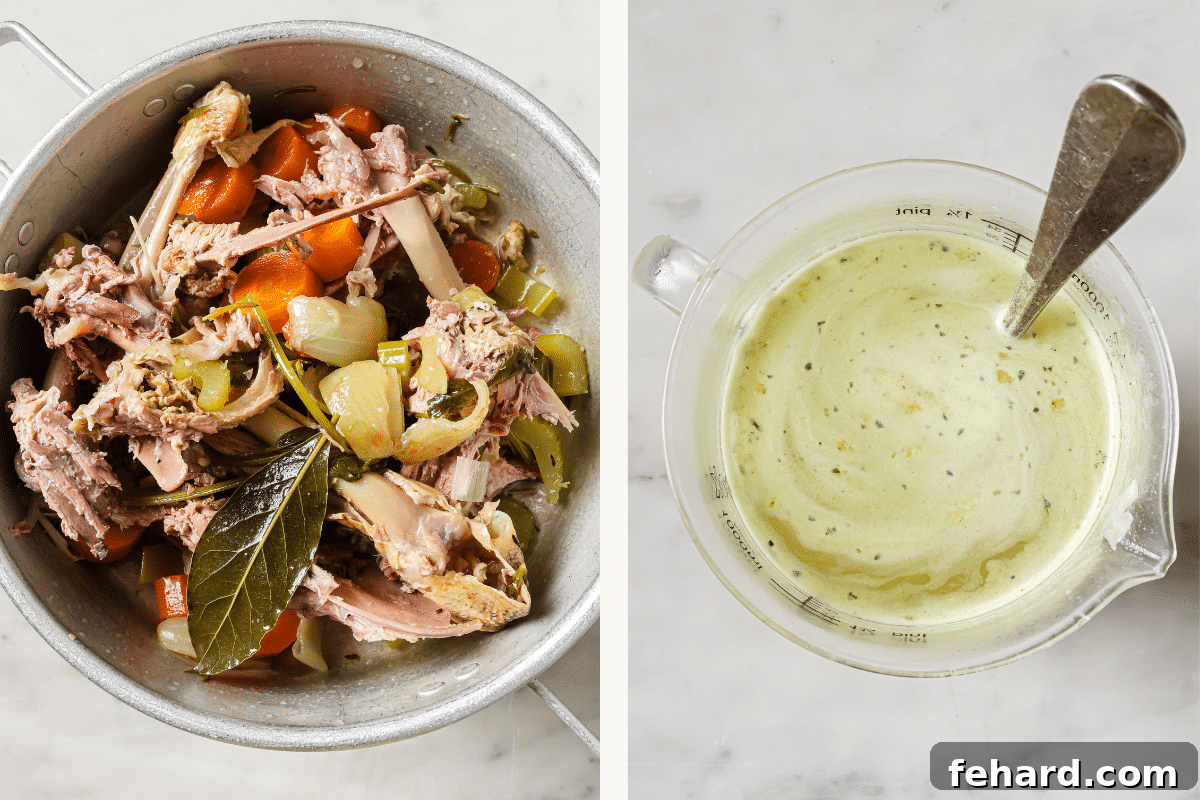
- Carefully strain the liquid into a large heat-proof bowl or another clean pot using a fine-mesh strainer. For an even clearer broth, you can line the strainer with cheesecloth.
- Once all the liquid is strained, discard or compost all the solid ingredients from the pot. They have given all their flavor to the broth.
Step 4: Chill and Remove Excess Fat
- Allow the strained turkey broth to cool completely to room temperature. This can take several hours. Do not rush this step, as putting hot broth directly into the refrigerator can raise the internal temperature of your fridge, affecting food safety.
- Once it has reached room temperature, place the broth in the refrigerator. Chill it overnight or until it is thoroughly cold.
- When the broth is completely chilled, any residual fat will have solidified on the surface, forming a cap. Use a spoon to easily skim off and discard this solidified fat layer. This step results in a lighter, healthier broth that is less greasy and more palatable.
Step 5: Store and Enjoy Your Homemade Broth
- At this point, your magnificent homemade turkey broth is ready to be enjoyed!
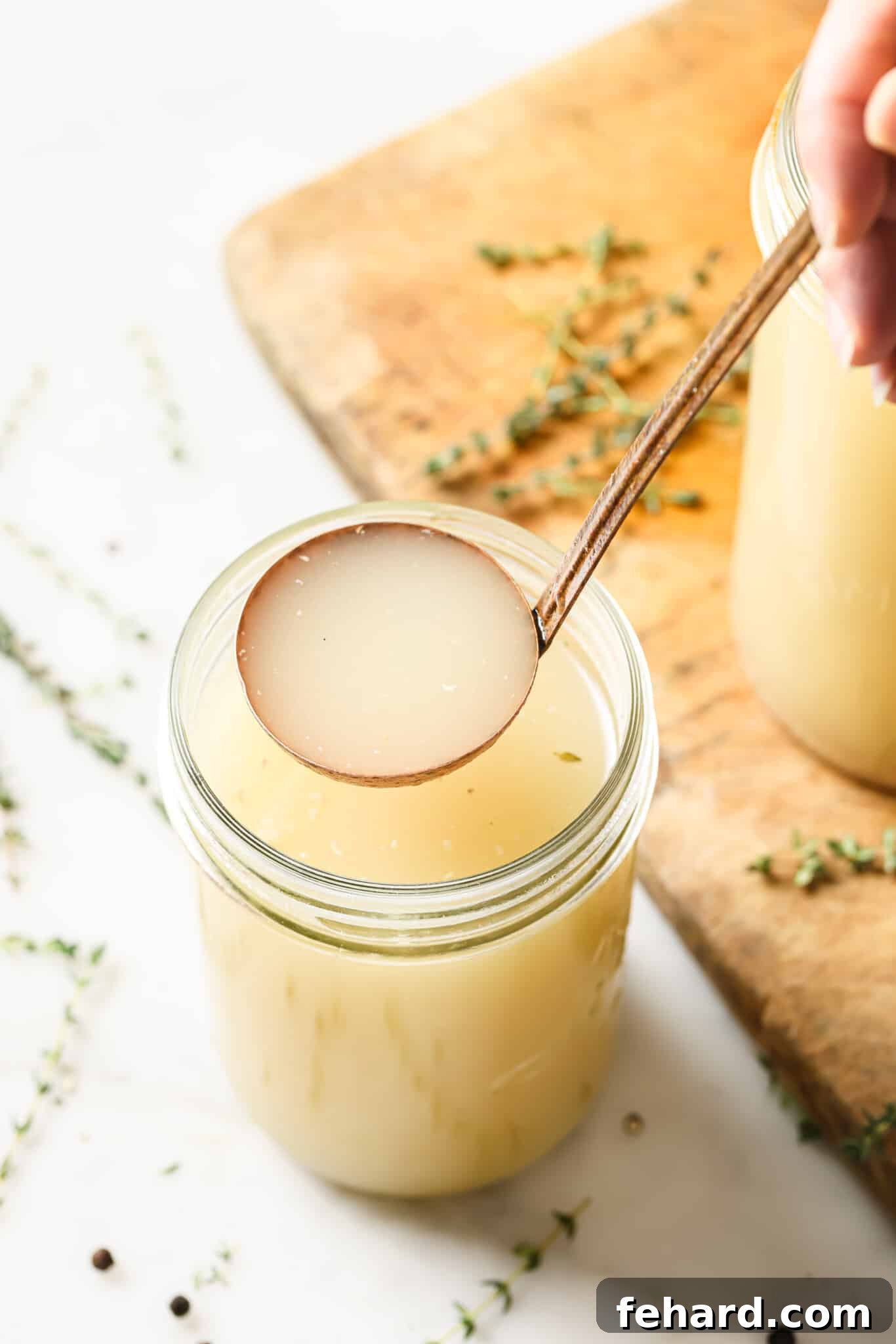
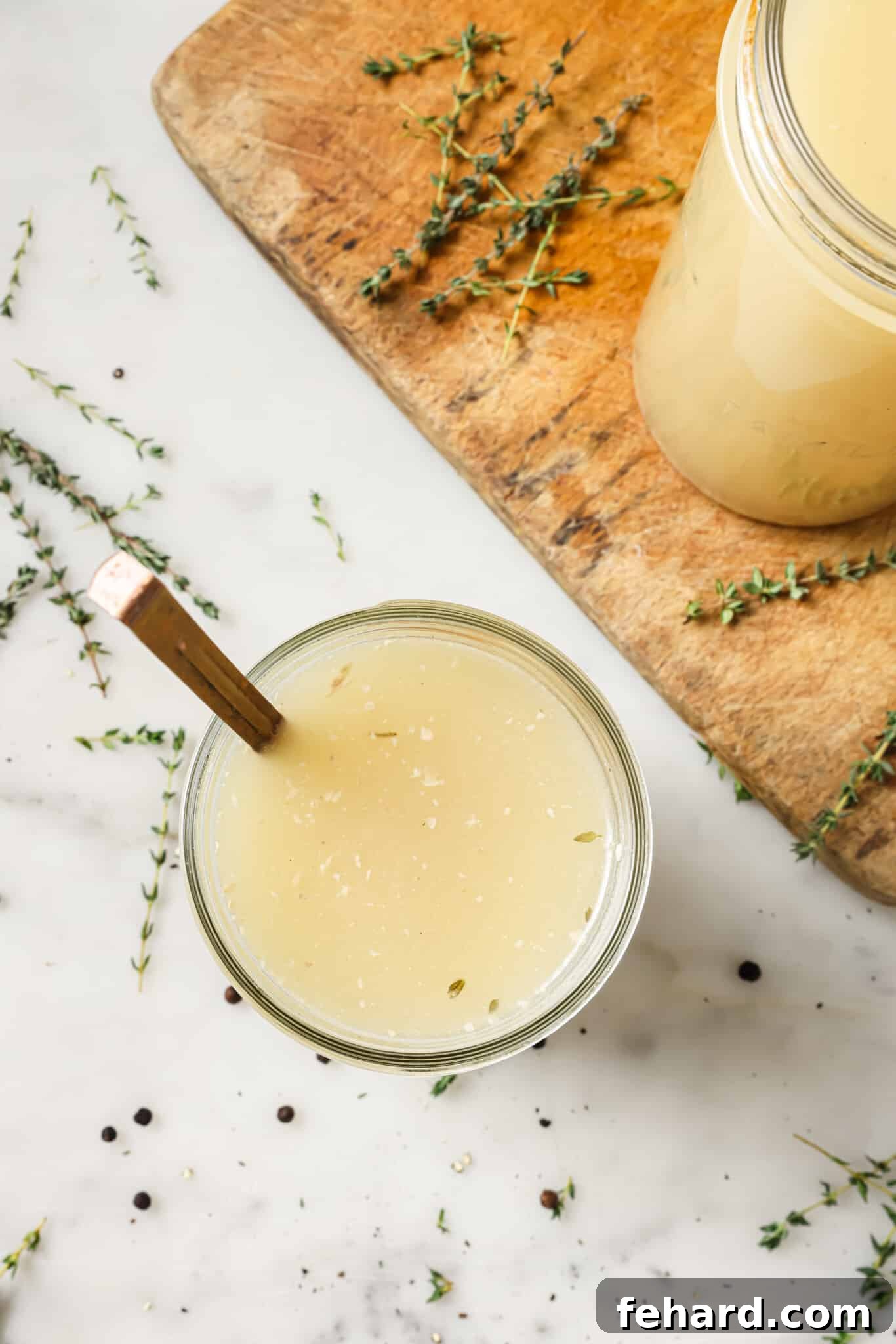
- Divide the clear, golden broth into airtight storage containers or mason jars. It’s now perfectly prepared for use in your favorite recipes or for sipping on its own.
Expert Tips for the Best Turkey Broth
- Break Down the Carcass: Use strong kitchen shears or a sharp knife to help divide the turkey carcass into smaller pieces. This exposes more surface area of the bones, allowing more collagen and flavor to be extracted during simmering. Kitchen shears are often easier and safer for this task than a knife.
- Low and Slow is the Golden Rule: The key to exceptional broth is a gentle simmer, not a vigorous boil. A slow and gentle simmer (just tiny bubbles breaking the surface) allows the flavors to gradually develop, creating a richer, clearer, and more deeply flavored broth. Boiling too intensely can emulsify fats and impurities, leading to a cloudy broth.
- Defatting for Clarity and Health: If, after chilling, your strained broth still appears fatty, don’t worry. Refrigerating it overnight allows the fat to fully solidify at the top, making it effortless to skim off the next morning. This step not only improves the broth’s texture and clarity but also reduces its fat content.
- Embrace the Gelatin: Don’t be alarmed if your turkey broth has a slight “jiggle” or gelatinous texture after it’s been refrigerated. This is a sign of a truly rich and nutrient-dense broth! This texture comes from the collagen in the turkey bones, which breaks down into beneficial gelatin as the broth simmers. It’s a hallmark of a well-made stock/broth.
- Choose Your Vegetables Wisely: While mirepoix is classic, avoid using starchy vegetables like potatoes, which can make the broth too thick and cloudy. Similarly, strong-tasting vegetables such as asparagus, cabbage, or beets can easily overpower the delicate turkey flavor. Vegetables like zucchini and green beans might also impart a bitter taste. Stick to the traditional onion, carrot, and celery for the best results.
- Consider Roasting Bones (Optional): For an even deeper, roasted flavor, you can briefly roast your turkey carcass pieces (after removing most meat) in the oven at 400°F (200°C) for 20-30 minutes before adding them to the pot. This caramelizes the bones and any residual meat, adding a layer of complexity to the broth.
- Don’t Skimp on Water, But Don’t Drown It: Ensure all ingredients are covered by water, but avoid overfilling your pot. Too much water will dilute the flavor. Aim for just enough to cover, leaving some headroom for simmering.
How To Store Your Homemade Turkey Broth
Proper storage is essential to keep your homemade turkey broth fresh and ready for future use. Here’s how to store it effectively:
- To Store in the Refrigerator: Once your broth has cooled to room temperature and you’ve skimmed off the fat, divide it into airtight storage containers or sturdy mason jars. Ensure the containers are clean and sealed tightly. Stored in the refrigerator, your fresh turkey broth will remain good for up to 5 days.
- To Freeze for Longer Storage: For extended preservation, turkey broth freezes beautifully. Pour the cooled and defatted broth into freezer-safe containers, leaving at least an inch of headspace at the top. This is crucial because liquids expand as they freeze, preventing your containers from cracking. You can also freeze broth in ice cube trays for smaller, individual portions, then transfer the frozen cubes to a freezer bag. Store in the freezer for up to 6 months for optimal freshness.
- To Reheat: When you’re ready to use your frozen turkey broth, simply transfer it to the refrigerator to thaw overnight. Once thawed, you can reheat it gently in the microwave or, preferably, on the stovetop over medium heat until warmed through. Bring it to a simmer before adding to your dishes.
What To Make with Your Flavorful Turkey Broth
Homemade turkey broth is an incredibly versatile ingredient, lending its rich, savory character to a wide array of dishes. It’s truly a culinary backbone that can elevate everyday meals and special occasions alike.
- Cozy and Hearty Soups: Naturally, turkey broth makes an exceptional base for your favorite soups. Its deep flavor adds incredible richness and comfort. Use it in my comforting turkey vegetable soup, a creamy butternut squash soup, classic chicken noodle, or any other soup recipe where you’d typically use chicken broth.
- Rich and Silky Sauces: Elevate your gravies and pan sauces with homemade turkey broth. It adds a depth of flavor that store-bought options simply can’t match, making your gravy without drippings truly shine, or enhancing a simple mushroom sauce for chicken or pork.
- Flavorful Holiday Sides: Turkey broth is a game-changer for holiday side dishes. Use it instead of water when cooking grains like rice or quinoa for extra savoriness. It’s particularly wonderful for moistening and enriching sausage stuffing or dressing, ensuring a moist and flavorful result.
- Braising Liquids: Turn tough cuts of meat into tender, falling-off-the-bone masterpieces by braising them in turkey broth. It infuses the meat with incredible flavor as it slowly cooks.
- Risottos and Grains: For an incredibly flavorful risotto, replace plain water or wine with warm turkey broth. It will imbue your risotto with a complex, savory taste. Similarly, use it to cook couscous, farro, or any other grain for an instant flavor upgrade.
- Sipping Broth for Wellness: Turkey broth isn’t just an ingredient; it’s also a delightful and comforting beverage on its own. Warm a mug of broth for a soothing, nutrient-rich sip, especially when you’re feeling under the weather or simply want a savory treat. Pair it with a slice of fresh garlic bread or a piece of tender gluten-free cornbread for a light and satisfying snack.
More Homemade Kitchen Staples
Homemade Vegetable Broth
55 mins
How to Make Tomato Sauce
1 hr 30 mins
Vinaigrette Recipe
5 mins
1-Minute Homemade Mayonnaise
1 min
Turkey Broth Recipe
Servings: 8 cups
Prep Time: 5 minutes
Cook Time: 3 hours
Total Time: 3 hours 5 minutes
This easy Turkey Broth recipe transforms your Thanksgiving turkey carcass into a rich, flavorful broth. Perfectly seasoned with fresh herbs and aromatics, turkey broth adds flavor to sauces, soups, and your favorite holiday recipes.
Ingredients
- 1 cooked turkey carcass (meat mostly removed and bones broken into large pieces)
- 2 large onions, quartered
- 3 stalks celery, chopped
- 4 large carrots, peeled and chopped
- 1 teaspoon whole black peppercorns
- 2 sprigs of fresh parsley, rosemary, and thyme
- 2 bay leaves
- 1 tablespoon Better Than Bouillon chicken paste or 3 chicken bouillon cubes
Instructions
- In a large stockpot or a large Dutch oven, place the turkey carcass pieces. Add the quartered onions, chopped celery, and peeled carrots to the pot.
- Next, add black peppercorns, fresh herbs, bay leaves, and chicken bouillon (paste or cubes). If using chicken bouillon cubes, you can either crush them and sprinkle them into the pot or dissolve them in a cup of hot water and pour the mixture into the pot.
- Pour enough cold water into the pot to cover all the ingredients. The amount of water needed will depend on the size of your pot and the amount of turkey carcass, but generally, it’s about 12-16 cups of water.
- Place the pot on the stove over medium-high heat. Bring the mixture to a boil. Once it reaches a boil, reduce the heat to low, cover the pot, and let it simmer gently for 2-3 hours. This will allow all the flavors to meld together.
- While the broth simmers, skim off any foam or impurities that rise to the surface with a slotted spoon.
- After simmering, remove the pot from the heat. Let it cool slightly, then strain the broth through a fine-mesh strainer or a cheesecloth into a large bowl or another pot. Discard the solids.
- Allow the strained broth to cool completely to room temperature, then refrigerate it. Once it’s chilled, you can easily skim off any fat that solidifies on the surface. Your homemade turkey broth is now ready to use in soups, sauces, or other recipes.
Nutrition Information
Serving: 1/8, Calories: 70kcal, Carbohydrates: 14g, Protein: 2g, Fat: 1g, Sodium: 242mg, Potassium: 382mg, Fiber: 3g, Sugar: 5g
Nutrition information is automatically calculated and should only be used as an approximation.
Making your own turkey broth is a simple yet profoundly rewarding culinary practice. It’s a testament to mindful cooking, transforming leftovers into a foundation for future delicious meals. Not only does it enrich your dishes with unparalleled flavor, but it also offers a sense of satisfaction in reducing food waste and embracing the wholesome goodness of homemade ingredients. So next time you finish your holiday turkey, remember that the feast isn’t truly over until you’ve extracted every last drop of goodness from its carcass. Happy cooking!