
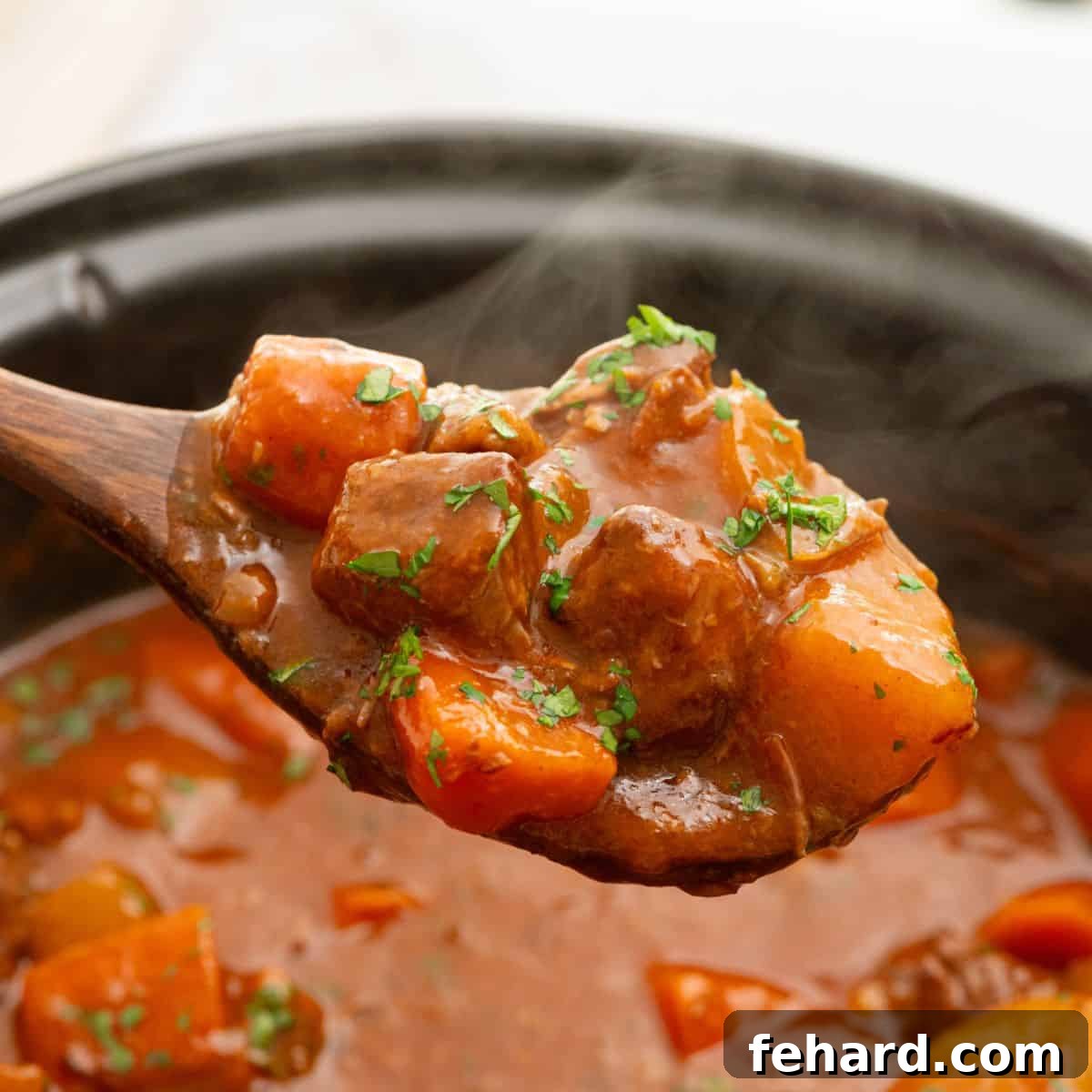
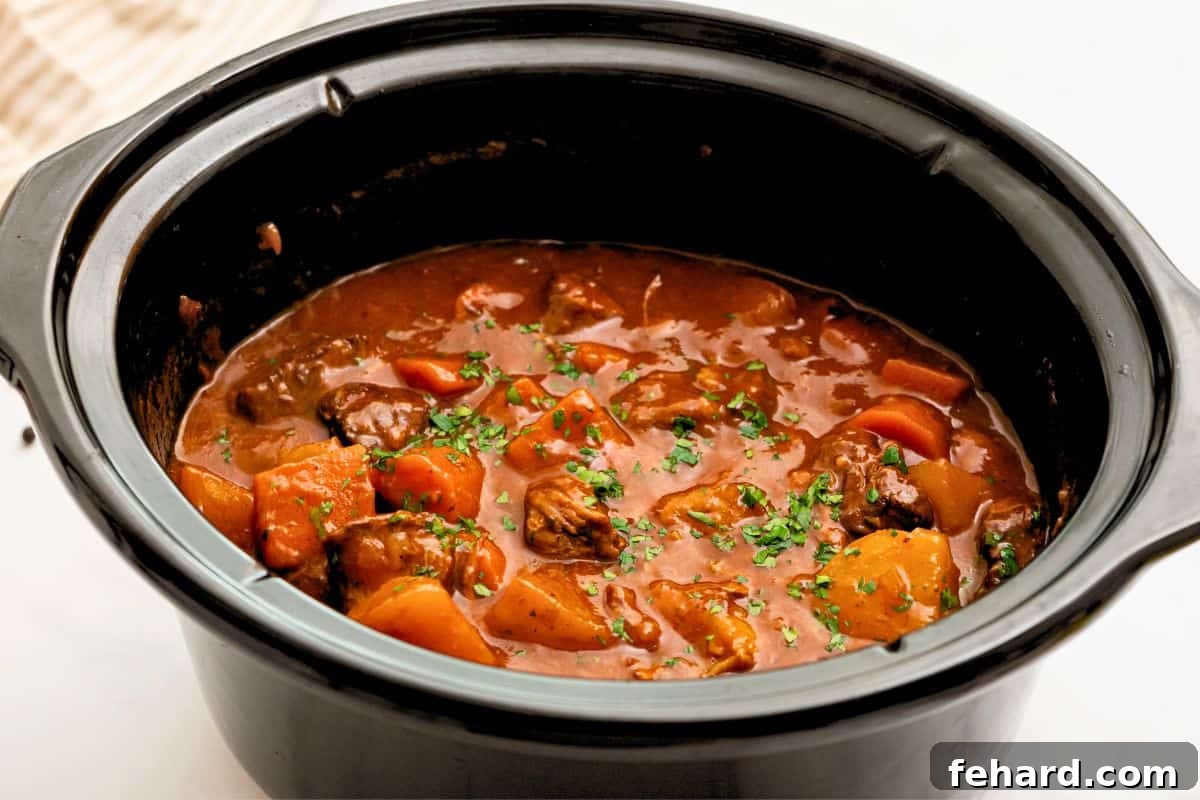
There’s nothing quite like the comforting embrace of a warm, hearty beef stew, especially one that has simmered slowly all day, filling your home with an irresistible aroma. This Crockpot Beef Stew recipe delivers just that: generous chunks of incredibly tender beef, perfectly cooked vegetables, and a rich, savory broth that will have everyone asking for seconds. It’s the quintessential family favorite, offering profound flavor with surprisingly minimal effort, making it ideal for busy weeknights or relaxed weekends.
Imagine coming home to a hot, homemade meal after a long day, without the stress of last-minute cooking. This slow cooker stew is designed for maximum flavor development and melt-in-your-mouth texture, thanks to its low and slow cooking process. If you’re short on time but still crave that deep, slow-cooked taste, consider my Instant Pot Beef Stew for a faster alternative that doesn’t compromise on flavor.
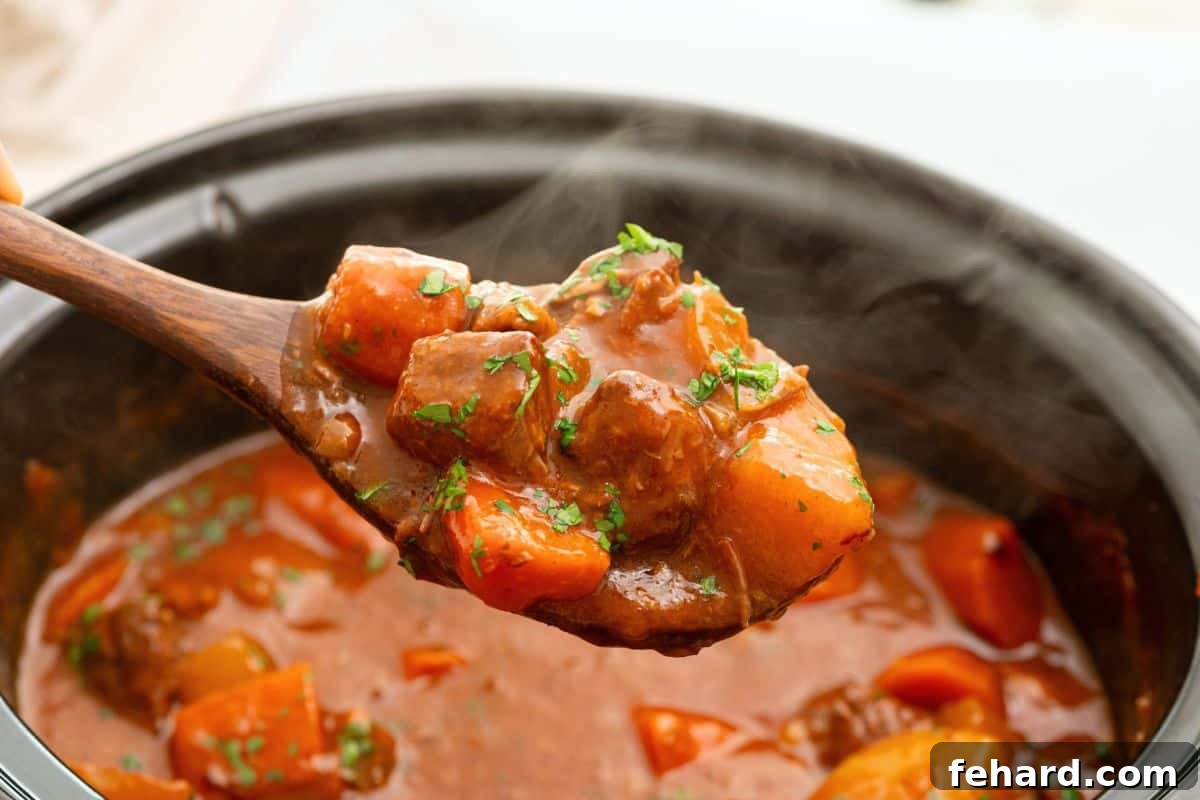
Unlock Unforgettable Flavor: Kristen’s Essential Tips for Crockpot Beef Stew
While slow cooker recipes often imply a “set it and forget it” approach, a few crucial steps elevate this Crockpot Beef Stew from good to absolutely legendary. By following these simple yet powerful techniques, you’ll create a stew so exceptional, it’ll become a cherished family recipe passed down for generations. These aren’t just suggestions; they are the secrets to a truly unforgettable beef stew.
- Don’t Skip Browning the Beef and Sautéing the Onions. I understand the temptation to toss everything directly into the slow cooker—I’ve tried it myself! However, searing the beef before slow cooking creates a beautiful, caramelized crust and locks in moisture, forming a robust foundation of flavor through the Maillard reaction. This extra step develops complex, nutty notes that simply can’t be achieved otherwise. Similarly, sautéing onions until they are softened and lightly golden sweetens them and deepens their flavor, adding another layer of richness to your broth. These initial steps are the cornerstone of a truly exceptional stew.
- Embrace the Depth of Dry Red Wine (Optional, but Highly Recommended). A splash of dry red wine, such as Cabernet Sauvignon, Merlot, or Malbec, introduces a sophisticated depth and balance to the stew that truly makes it sing. The acidity in the wine helps tenderize the beef and provides a nuanced complexity to the broth that’s hard to replicate. While you won’t distinctly taste the wine in the final dish, its presence elevates the overall flavor profile. If you prefer to omit alcohol, a good quality beef stock can be used as a perfectly fine substitute, though the wine offers a subtle advantage in complexity.
- The Unsung Heroes: Horseradish and Worcestershire Sauce. These two ingredients are the difference-makers, quietly building incredible depth and umami without overpowering the stew. You won’t actually taste the individual notes of horseradish or Worcestershire sauce; instead, they work synergistically to tenderize the beef and create a more complex, savory flavor profile that will leave you craving more. They add a subtle tang and richness that brightens the stew and prevents it from tasting flat. Trust me, these secret ingredients are worth seeking out!
- The Magic of “Low and Slow” Cooking. The true enchantment of a perfectly tender beef stew unfolds around the 8-hour mark on the low setting. This extended cooking time allows the collagen in the beef to slowly break down into gelatin, resulting in incredibly tender, fall-apart beef that melts in your mouth. Rushing the process on a higher heat can still yield a tasty stew, but it won’t achieve the same profound depth of flavor or the unparalleled tenderness that only patient, low-temperature cooking can provide. The flavors also have ample time to meld and deepen, creating a harmonious and robust broth.
Ingredient Insights & Clever Substitutions for Your Perfect Stew
Crafting an amazing Crockpot Beef Stew starts with selecting the right ingredients and understanding how to make smart substitutions. While the complete list is available in the recipe card below, these helpful tips will guide you in choosing the best building blocks for a truly spectacular stew.
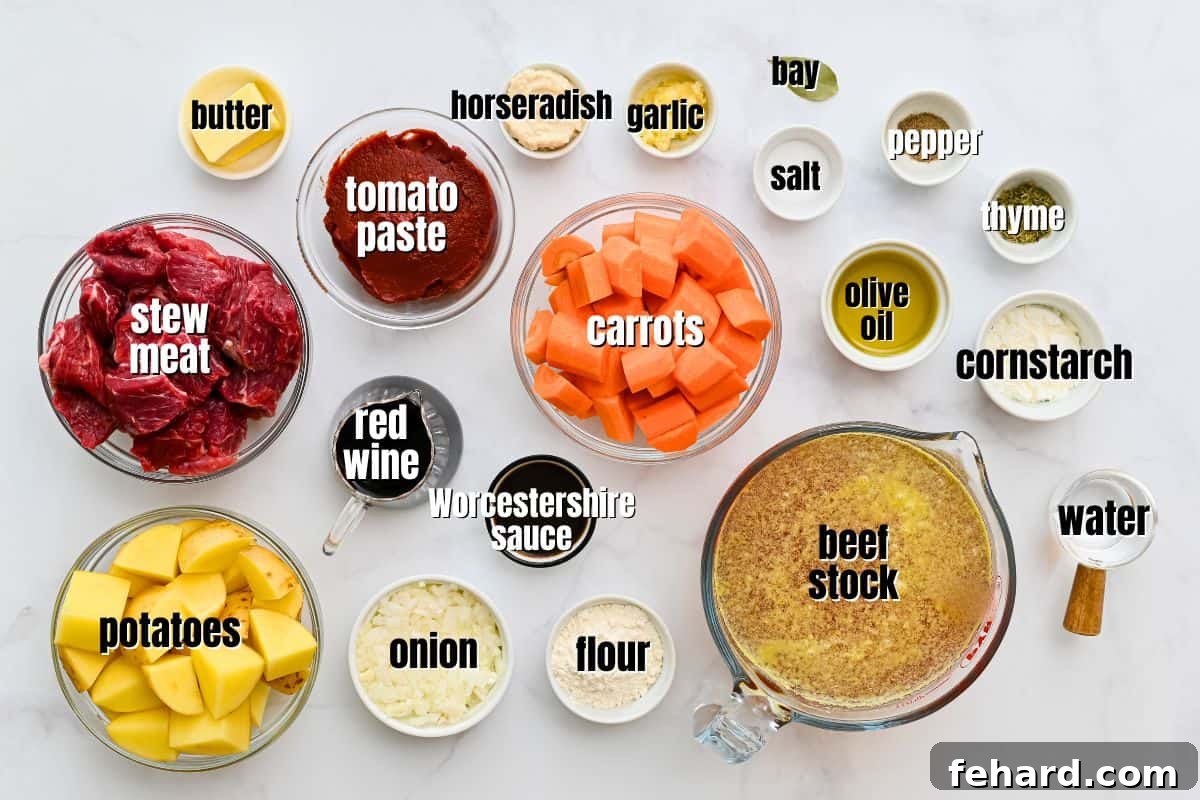
- Beef Selection: The gold standard for tender beef stew is a chuck roast. This cut, with its excellent marbling and connective tissue, transforms into luxuriously tender, melt-in-your-mouth beef when slow-cooked. Its inherent richness also contributes significantly to the stew’s savory broth. While chuck roast is highly recommended, you can certainly use a package labeled “stew meat” for convenience (often pre-cut chuck). Alternatively, brisket or beef shank are excellent choices that also benefit greatly from long, slow cooking, yielding similarly tender results.
- Beef Broth for Flavor Control: I strongly advocate for using low-sodium beef broth. This allows you complete control over the final saltiness of your stew. It’s much easier to add more salt to taste at the end of cooking than it is to fix an overly salty dish. If low-sodium broth isn’t available, simply reduce the amount of added salt in the recipe by half and adjust as needed after the stew has finished simmering. Always taste and adjust!
- Choosing Your Red Wine: If you choose to incorporate red wine, select a dry red that you would genuinely enjoy drinking. Varieties like Cabernet Sauvignon, Merlot, or Malbec are excellent choices. There’s no need for an expensive bottle; a good table wine will suffice. For example, Trader Joe’s “Two Buck Chuck” (now often “Five Buck Chuck”) works wonderfully. The key is to **never** use “cooking wine,” which often contains added salts, sugars, and preservatives that can impart an artificial and unpleasant flavor to your stew.
- Prepared Horseradish vs. Horseradish Sauce: This distinction is crucial for the intended flavor profile. You need prepared horseradish, which typically consists only of grated horseradish root, vinegar, and salt. It’s found in the refrigerated section of most grocery stores, often near pickles, sauerkraut, or deli meats. Avoid “horseradish sauce,” which is usually a creamy condiment containing dairy (like sour cream or mayonnaise) and other additives, and will not provide the same subtle depth or tenderizing effect.
- Versatile Vegetables: My preferred combination for this stew includes classic Yukon gold potatoes and carrots. Yukon golds hold their shape well and offer a creamy texture. Feel free to swap them for red potatoes or even russet potatoes (though russets may break down a bit more, creating a slightly thicker stew). For added nutrition and flavor, consider incorporating other root vegetables like parsnips, turnips, or even a handful of frozen peas or chopped celery during the last hour of cooking. Mushrooms also make a fantastic addition, adding an earthy umami.
- Thickening Agents: While cornstarch is my go-to for thickening the stew to a luscious, velvety consistency at the end of cooking, arrowroot powder is an excellent alternative. Use an equal amount of arrowroot powder if you prefer, or if you’re avoiding cornstarch. Both create a smooth, glossy finish without altering the flavor. You could also create a flour roux at the beginning if you prefer a thicker base from the start, though cornstarch slurry is easier to control at the end.
Mastering the Art of Slow Cooker Beef Stew: A Step-by-Step Guide
Don’t be intimidated by the idea of making an incredibly flavorful beef stew from scratch. This step-by-step guide is designed to walk you through each part of the process, ensuring you achieve perfect, restaurant-quality results every time. While there are a few initial steps on the stovetop, I promise you, the payoff in flavor and tender beef is absolutely worth the minimal effort!
Step One: Preparing and Browning the Beef for Maximum Flavor
The secret to a rich, silky beef stew with unparalleled depth of flavor lies in properly seasoning and browning your beef. This initial stage is crucial for developing the foundation of taste that will permeate the entire dish.
- Season and Coat the Beef. Begin by placing your beef chunks, all-purpose flour, a generous amount of kosher salt, and freshly ground black pepper into a large, sturdy storage bag. Seal the bag, removing as much air as possible, and give it a vigorous shake until each piece of beef is uniformly coated with the flour and seasonings. The flour serves a dual purpose here: it helps to create a beautiful, savory crust when the beef is browned, and it acts as a thickening agent for the stew later on, ensuring a velvety broth.
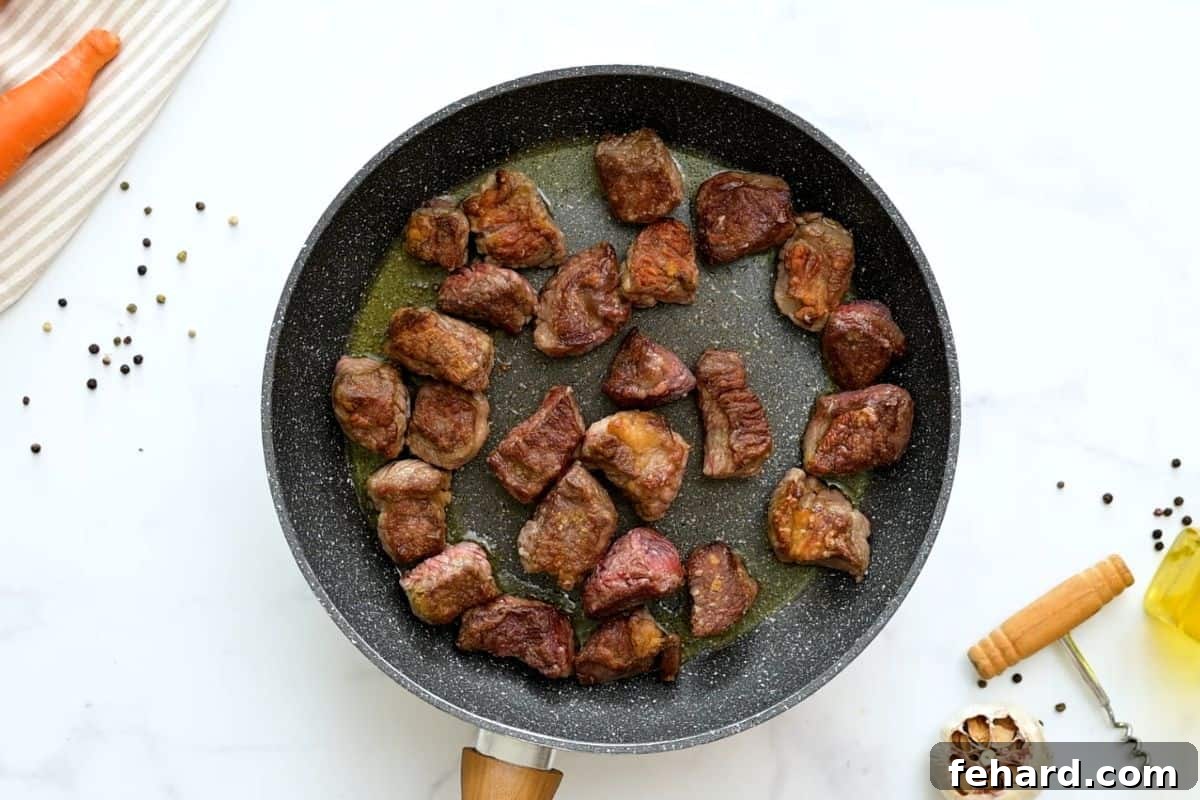
- Brown the Beef to Perfection. Heat 2 tablespoons of extra virgin olive oil in a large, heavy-bottomed skillet, Dutch oven, or stockpot over medium-high heat until it shimmers and is just about to smoke. Carefully add the seasoned beef to the hot pan in a single layer, ensuring not to overcrowd the pot. Allowing ample space for each piece is critical for proper browning. Let the beef sear undisturbed for 2-3 minutes per side until it develops a rich, deep brown crust. Once browned, transfer the beef to your slow cooker.
👉🏻A Note on Browning in Batches. It is absolutely essential to avoid overcrowding the pan when searing the beef. If too much meat is added at once, the temperature of the pan will drop, and the beef will steam instead of brown. Steamed meat lacks the deep, caramelized flavors that are so vital to a rich stew. Work in small batches if necessary, allowing each piece to achieve that beautiful, dark crust before moving on. This patience will be richly rewarded in the final flavor of your stew.
Step Two: Building Aromatics – Sautéing Onions and Garlic
After browning the beef, the next step involves developing the aromatic foundation of your stew. The caramelized flavors from the onions and garlic will infuse the broth with a wonderful depth.
In the same pan you used for the beef (don’t clean it yet – those browned bits are flavor gold!), add the remaining tablespoon of olive oil, followed by the minced yellow onion. Sauté the onion over medium heat, stirring frequently, for 3-5 minutes. Continue cooking until the onion softens, becomes translucent, and begins to caramelize, developing a slight golden hue and a sweet aroma. Then, add the minced garlic and cook for just about 1 minute more, stirring constantly. Be careful not to burn the garlic, as burnt garlic can taste bitter; you want it lightly toasted and fragrant.
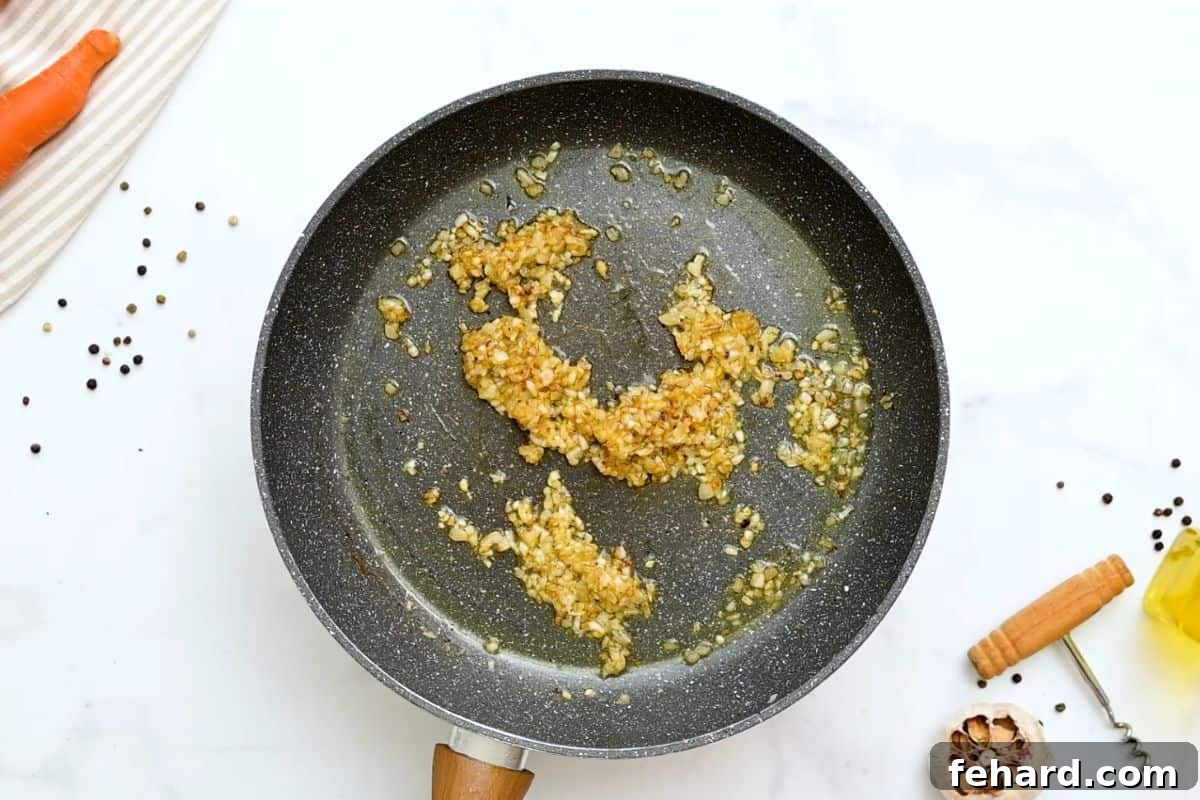
Step Three: Deglazing for Unrivaled Flavor Depth
This is another key technique for extracting maximum flavor from your pan and translating it directly into your stew. Those caramelized bits, known as “fond,” left at the bottom of the skillet from browning the beef and caramelizing the onions, are packed with intense savory goodness. Deglazing ensures none of that precious flavor goes to waste.
- Deglaze with Wine (or Broth). Pour the dry red wine (or additional beef broth, if omitting wine) into the hot pan. Immediately use a wooden spoon or spatula to scrape up all those wonderful browned bits from the bottom. As the liquid simmers and reduces for a couple of minutes, it will dissolve the fond, creating a deeply flavored base. This liquid, now enriched with all those complex flavors, will form the backbone of your stew’s broth.
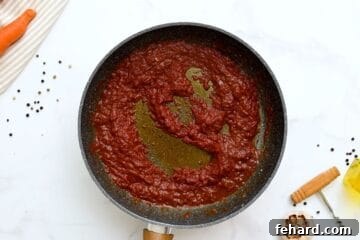
- Intensify Tomato Paste Flavor. Once the wine has reduced slightly, add the tomato paste to the pan. Whisk it into the simmering liquid until it’s smooth and fully incorporated. Continue to cook, stirring, for about 1 minute. This crucial step, known as “blooming” the tomato paste, intensifies its flavor, deepens its color, and cooks out any raw, metallic canned taste, transforming it into a rich, concentrated savory element.
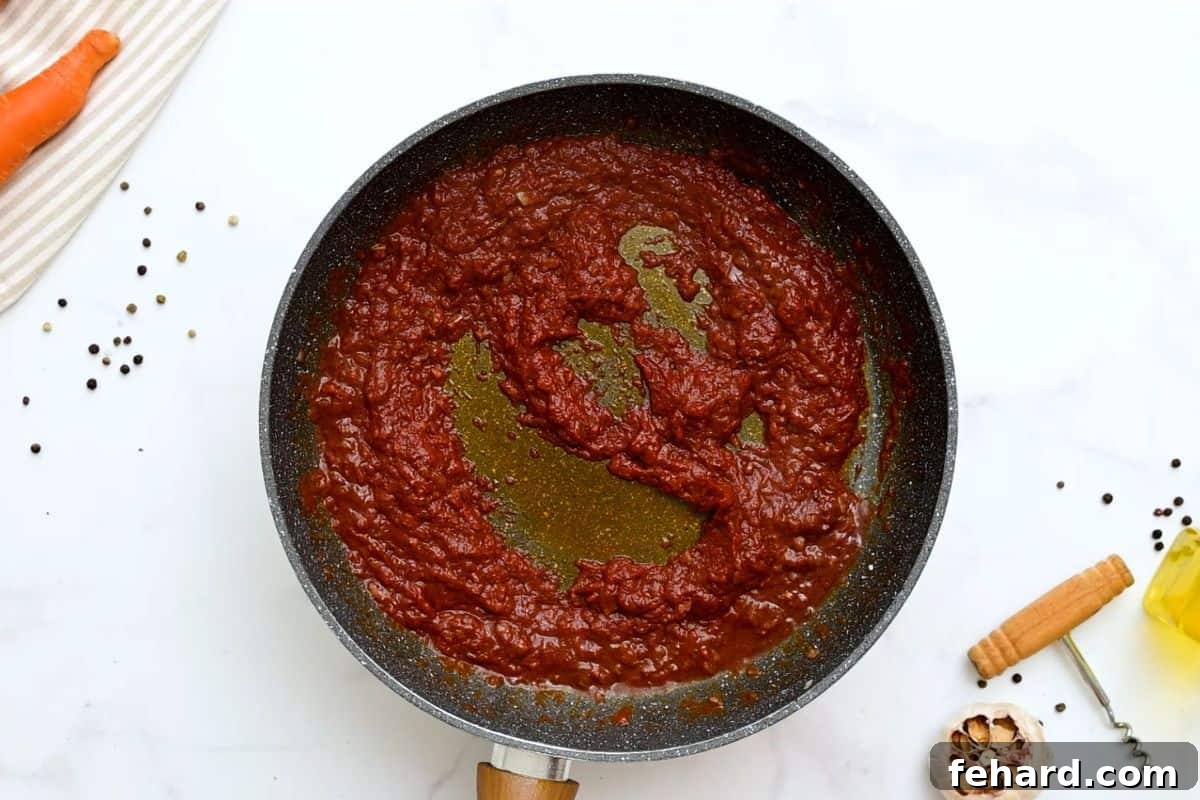
Step Four: Combining All Ingredients in the Slow Cooker
Now comes the truly easy part, where the slow cooker takes over and works its magic. All the carefully prepared ingredients come together, ready to transform into a comforting masterpiece.
Transfer the rich, deglazed onion and tomato paste mixture from the skillet into the slow cooker, joining the browned beef. Then, add the remaining liquid ingredients: the low-sodium beef stock, Worcestershire sauce, and the prepared horseradish (remember, not horseradish sauce!). Incorporate your herbs and spices: the dried thyme leaves and the bay leaf. Finally, add your hearty vegetables – the cubed potatoes and chopped carrots. Give everything a gentle stir to ensure all ingredients are well combined and submerged in the flavorful liquid. The prep work is done; now, let the slow cooker do the heavy lifting!
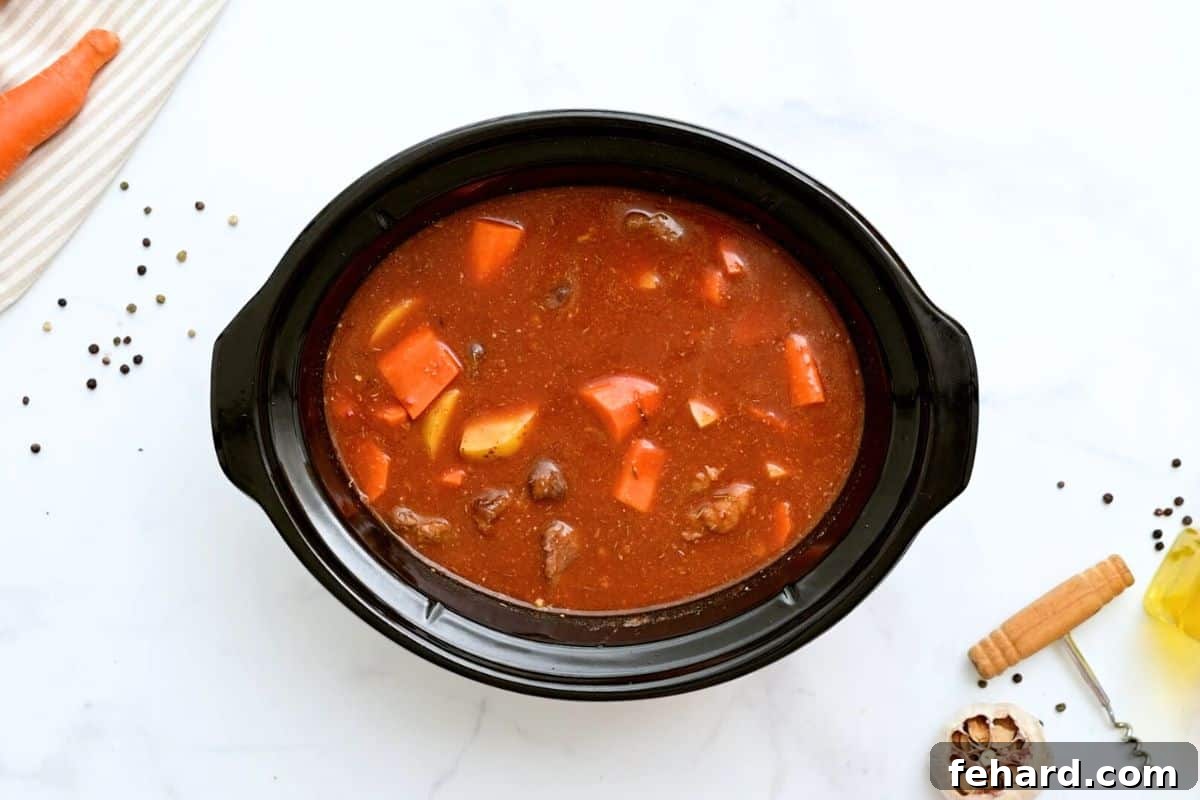
Step Five: The Magic of Slow Cooking – Patient Perfection
This is where the transformation happens. The low and slow cooking process in the crockpot is what truly breaks down the tougher cuts of beef and allows all the flavors to meld into a deeply satisfying stew.
Secure the lid on your slow cooker and set it to cook on the low setting for 8-10 hours, or on the high setting for 3-4 hours. The precise cooking time will depend on your slow cooker model and the size of your beef chunks, but the goal is for the beef to be fork-tender and the vegetables to be perfectly soft without being mushy. Resist the urge to lift the lid too frequently, as each peek releases heat and extends the cooking time.
👉🏻Prioritize “Low Heat” for Optimal Results. While cooking on high heat offers a quicker path to a delicious stew, if time truly permits, always opt for the low heat setting. The extended, gentle heat on low allows the connective tissues in the beef to gradually break down, rendering the meat exceptionally tender and moist. Moreover, the longer simmering time gives the flavors ample opportunity to deepen, marry, and develop a more complex and robust profile that is simply unbeatable.
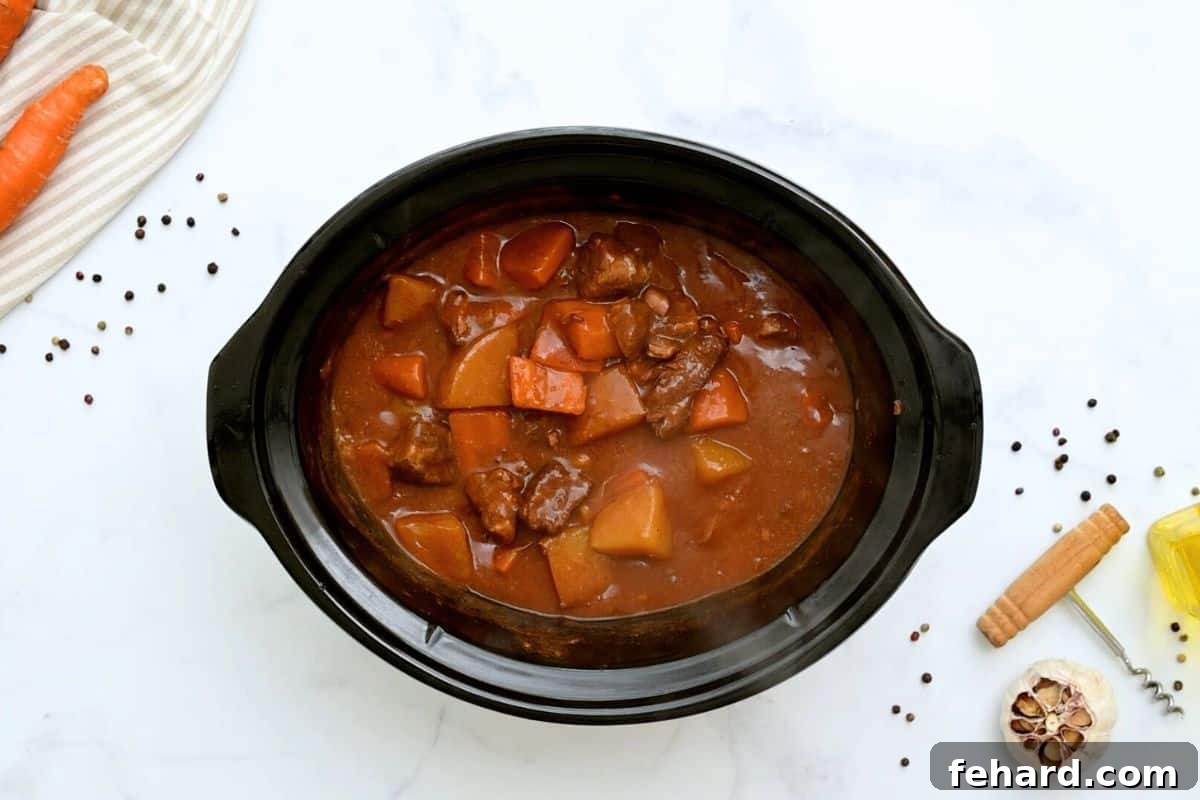
Step Six: Achieving the Perfect Velvety Broth
The texture of your stew’s broth is a matter of personal preference. If you enjoy a thinner, lighter broth, feel free to skip this step. However, for those who crave a rich, luxurious, and velvety-thick stew, this final step is absolutely essential and brings the dish to its ultimate comforting conclusion.
- Prepare a Smooth Cornstarch Slurry. In a small bowl, whisk together 2 tablespoons of cornstarch with 3 tablespoons of cold water until a smooth, lump-free slurry is formed. It’s important to use cold water to prevent the cornstarch from clumping when added to the hot liquid.
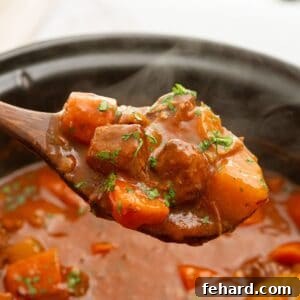
- Thicken to Perfection. Slowly pour the cornstarch slurry into the hot stew in the slow cooker, stirring continuously to ensure it disperses evenly throughout the broth. Cover the slow cooker and increase the heat to high. Allow it to cook for an additional 10-15 minutes, or until the stew has thickened to your desired consistency. The heat activates the cornstarch, causing the broth to become rich and glossy.
- Add a Touch of Butter (Optional, but Recommended). For a truly luxurious finish that rounds out all the deep, savory flavors, stir in 2 tablespoons of unsalted butter just before serving. The butter will melt into the hot stew, adding a beautiful sheen, a silky mouthfeel, and an extra layer of richness that perfectly complements the robust flavors. It’s a small addition that makes a big difference!
Perfect Pairings: What to Serve with Your Hearty Beef Stew
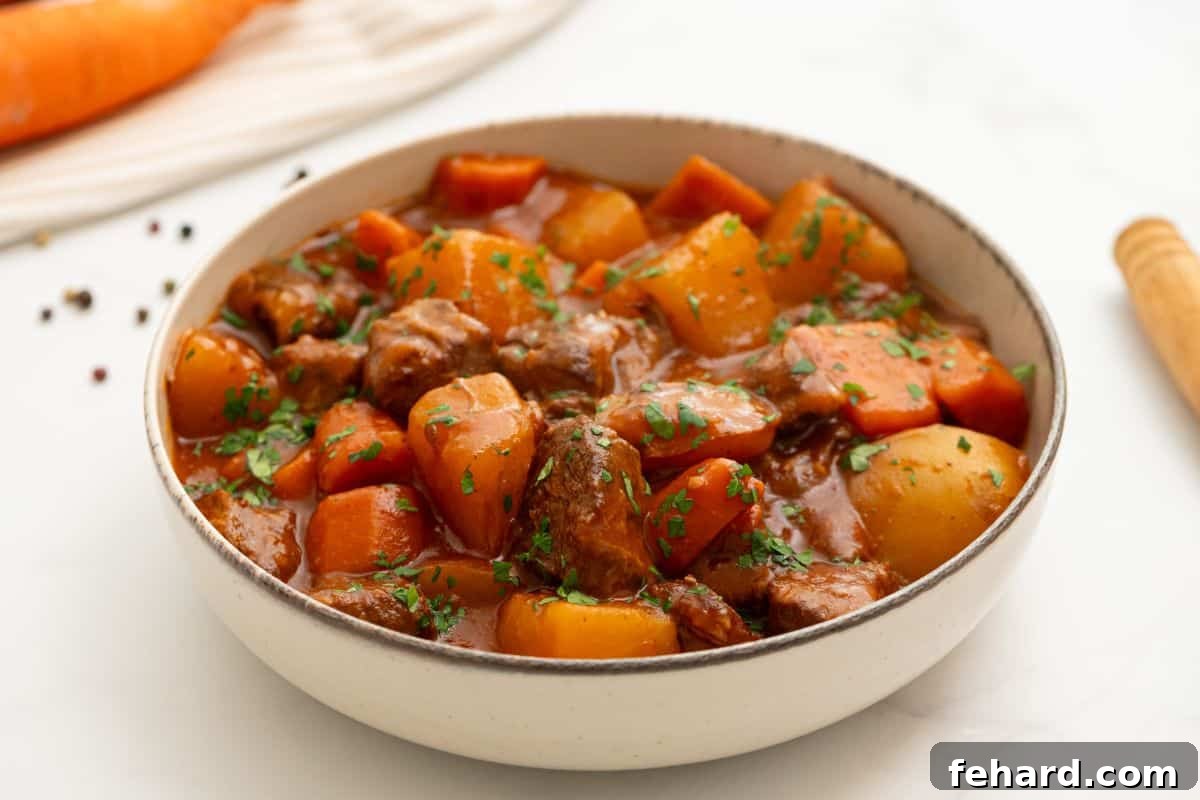
While this Crockpot Beef Stew is a wonderfully complete and satisfying meal on its own, pairing it with the right side dishes can elevate the experience even further. The rich, savory broth and tender ingredients cry out for something to soak up every last delicious drop.
I highly recommend serving warm, fluffy dinner rolls, sweet and crumbly homemade cornbread, or a rustic loaf of crusty bread alongside your stew. These options are perfect for scooping up the luscious broth and ensuring no flavor goes to waste. If you’re looking for a more substantial side to complement the stew, consider a bed of creamy mashed potatoes (if your stew doesn’t already have potatoes), polenta, or even steamed rice to absorb the savory liquid.
Craving a Fresh Counterpoint? To balance the richness of the stew, a light and vibrant green salad makes a wonderful addition. Serve a simple tossed mixed greens salad dressed with a bright balsamic vinaigrette or a zesty Italian dressing. The crispness and acidity of the salad will provide a refreshing contrast to the hearty stew, cleansing the palate and enhancing the overall meal experience.
Storage & Reheating for Easy Meal Prep
This Crockpot Beef Stew is not only delicious freshly made but also excellent for meal prepping and enjoying as leftovers. Proper storage ensures you can savor its comforting flavors for days to come.
- Refrigerate for Freshness: Once your stew has cooled down to room temperature, transfer any leftovers into an airtight container. Store it in the refrigerator, where it will remain fresh and flavorful for up to 4 days. This makes it perfect for delicious lunches or quick dinners throughout the week.
- Freezing for Long-Term Storage: You can absolutely freeze portions of this beef stew for longer storage. Place cooled stew in freezer-safe containers or heavy-duty freezer bags (removing as much air as possible) and store in the freezer for up to 3 months. However, it’s important to note a common challenge with freezing stews: the texture of potatoes tends to change. Upon defrosting and reheating, potatoes can become slightly mushy or grainy. If this is a concern, you might consider cooking and adding fresh potatoes when reheating the frozen stew.
- Effortless Reheating: To reheat refrigerated stew, simply transfer your desired portion into a microwave-safe bowl. Cover it with a damp paper towel to prevent drying and microwave in 60-second intervals, stirring in between, until it is thoroughly warmed through. For frozen stew, allow it to defrost overnight in the refrigerator first, then reheat as described above. You can also reheat larger quantities gently on the stovetop over medium-low heat, stirring occasionally, until hot.
More Cozy Crockpot Comfort Food Favorites
If you love the ease and deliciousness of this Crockpot Beef Stew, you’ll surely enjoy these other comforting slow cooker recipes that bring warmth and flavor to your table with minimal effort:
- Hearty Slow Cooker Chili
- Effortless 5-Ingredient Crockpot Pot Roast
- Savory Crockpot Pork Loin with Apples
- Classic Crockpot Pork and Sauerkraut
Crockpot Beef Stew
Rate
Ingredients
- 3 tablespoons extra virgin olive oil, divided
- 1 pound beef stew meat, cut into 1-inch chunks (chuck roast recommended)
- Kosher salt and pepper, to taste (approximately 1 teaspoon each)
- ¼ cup all-purpose flour
- 1 small yellow onion, minced
- 2 cloves garlic, minced
- ½ cup dry red wine (Cabernet, Merlot, or Malbec recommended, or additional beef stock)
- 6 ounces tomato paste
- 4 cups low-sodium beef stock
- 2 tablespoons Worcestershire sauce
- 1 tablespoon prepared horseradish, *not horseradish sauce
- 1 teaspoon dried thyme leaves
- 1 dried bay leaf
- 1 pound potatoes, cut into 1-inch cubes (Yukon gold, red, or russet)
- 4 large carrots, peeled and cut into 1-inch chunks
- 2 tablespoons cornstarch
- 3 tablespoons water
- 2 tablespoons unsalted butter (optional, for finishing)
Instructions
-
Place the beef in a large storage bag. Add 1 teaspoon kosher salt, 1 teaspoon black pepper, and ¼ cup all-purpose flour. Close the bag and toss vigorously until the beef is evenly coated with the flour and seasonings.
-
Heat 2 tablespoons of olive oil in a large, deep skillet or stockpot over medium-high heat for 1-2 minutes until shimmering. Once heated, remove the beef from the bag, shaking off any excess flour, and add it to the pan in a single layer. Brown for 2-3 minutes per side until a deep crust forms, working in batches if necessary to avoid overcrowding. Transfer the browned beef to your slow cooker.

-
Add the additional tablespoon of olive oil to the same stockpot, along with the minced onion. Cook, stirring often, for 3-5 minutes, or until the onion has softened and started to caramelize to a light golden hue. Add the minced garlic and cook for 1 minute more until fragrant, being careful not to burn it.
-
Pour ½ cup dry red wine (or additional beef stock if preferred) into the pan. Use a wooden spoon to scrape up all the delicious browned bits (fond) from the bottom of the pan. Let this mixture simmer for just a minute or two to reduce slightly. Remove from heat. Whisk in the 6 ounces of tomato paste until smooth, cooking for another minute to deepen its flavor. Transfer this rich mixture to the slow cooker.
-
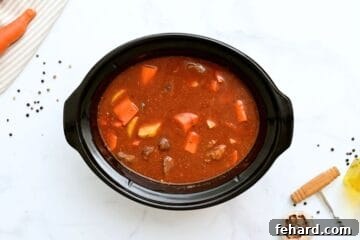
To the slow cooker, add the 4 cups low-sodium beef stock, 2 tablespoons Worcestershire sauce, 1 tablespoon prepared horseradish, 1 teaspoon dried thyme leaves, 1 dried bay leaf, and the prepared potatoes and carrots. Stir everything gently to combine all ingredients.
-
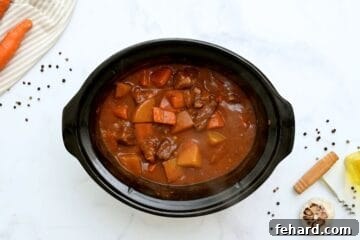
Cover the slow cooker and cook on the low setting for 8-10 hours, or on the high setting for 3 to 4 hours, until the beef is fork-tender and the vegetables are soft.
-
To thicken the stew, whisk 2 tablespoons of cornstarch with 3 tablespoons of cold water in a small bowl until a smooth slurry forms. Slowly add this slurry to the hot stew, stirring continuously to incorporate it. Cover the slow cooker and continue to cook on high for about 10 minutes, or until the stew has thickened to your desired consistency.
-
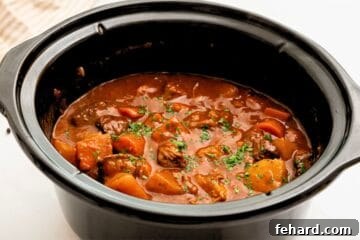
Uncover the stew, turn off the heat, and stir in the 2 tablespoons of unsalted butter (if using) until it is fully melted and incorporated. Serve hot with your favorite accompaniments.



Equipment
-
6-8 quart Slow Cooker
-
Large Skillet or Dutch Oven
Notes
Red Wine: For the best results, use a dry red wine such as Merlot, Malbec, or Cabernet Sauvignon that you would enjoy drinking. If you prefer to avoid alcohol, simply use an equal amount of additional beef broth. Avoid “cooking wine.”
Horseradish: Ensure you use prepared horseradish (typically found in the refrigerated section, made with grated horseradish, salt, and vinegar), not creamy horseradish sauce which contains dairy and other ingredients.
Potatoes: Yukon gold, red, or new potatoes hold their shape well and offer a creamy texture. Russet potatoes have a higher starch content and may break down more, which can naturally thicken the stew further.
Storage: Leftovers can be stored in an airtight container in the refrigerator for up to 4 days. For longer storage, you can freeze the stew in a freezer-safe container for up to 3 months, though be aware that the texture of the potatoes may become slightly mushy after freezing and reheating.
Nutrition
Carbohydrates: 35g
Protein: 24g
Fat: 8g
Saturated Fat: 4g
Polyunsaturated Fat: 0.5g
Monounsaturated Fat: 3g
Trans Fat: 0.2g
Cholesterol: 57mg
Sodium: 713mg
Potassium: 1399mg
Fiber: 5g
Sugar: 9g
Vitamin A: 8583IU
Vitamin C: 27mg
Calcium: 80mg
Iron: 4mg
Nutrition information is automatically calculated, so should only be used as an approximation.