
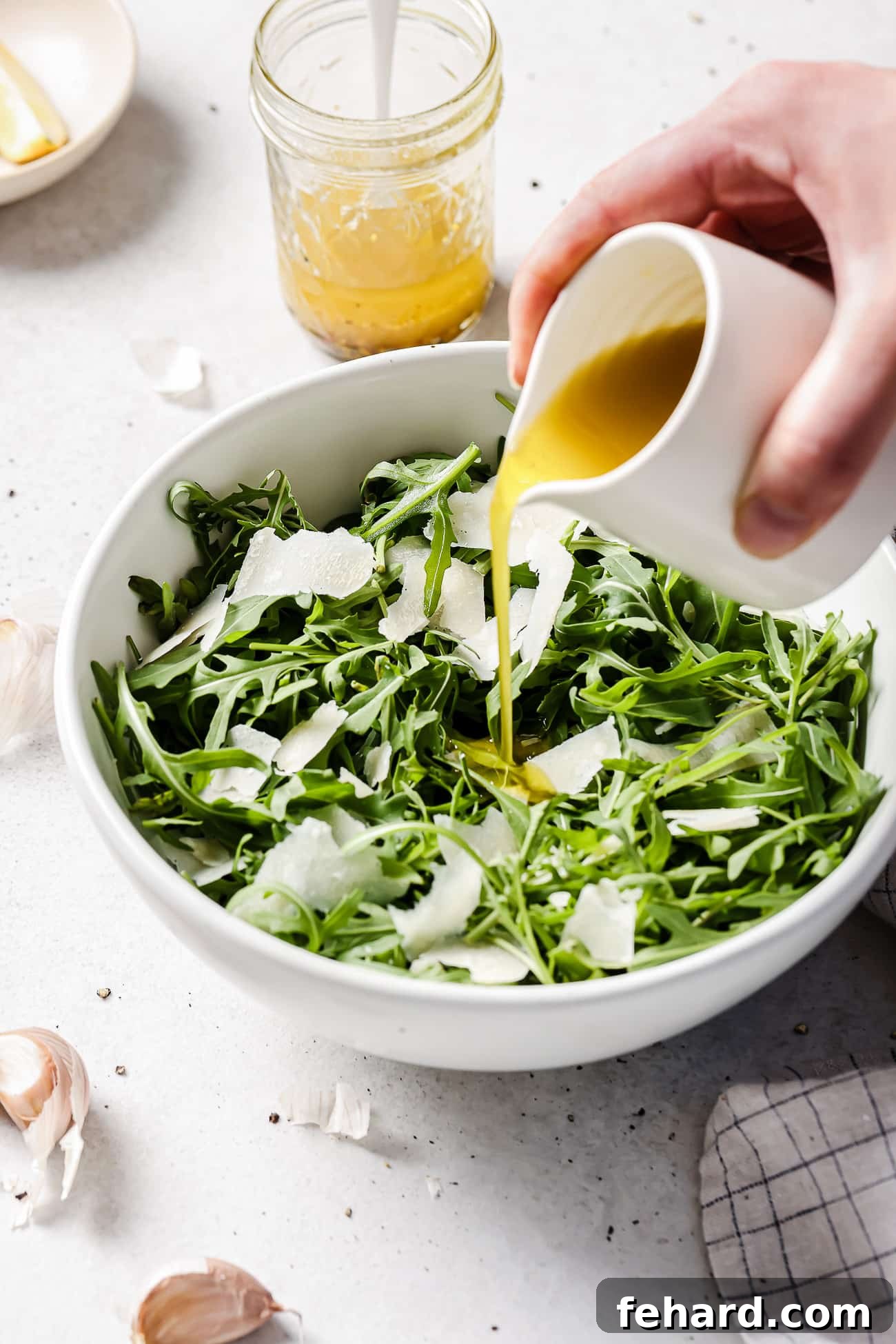
Unlock the secret to vibrant, flavorful meals with this unbelievably easy Vinaigrette Recipe, ready in just five minutes! Forget store-bought dressings laden with preservatives and artificial flavors. This homemade elixir, crafted from simple pantry staples like rich olive oil, bright lemon juice, pungent mustard, and a hint of seasoning, is a game-changer. It’s not just a salad dressing; it’s a versatile culinary companion perfect for drizzling over crisp greens, tossing with roasted vegetables, or infusing proteins as a zesty marinade. Prepare to transform your everyday dishes with a burst of fresh, tangy goodness!
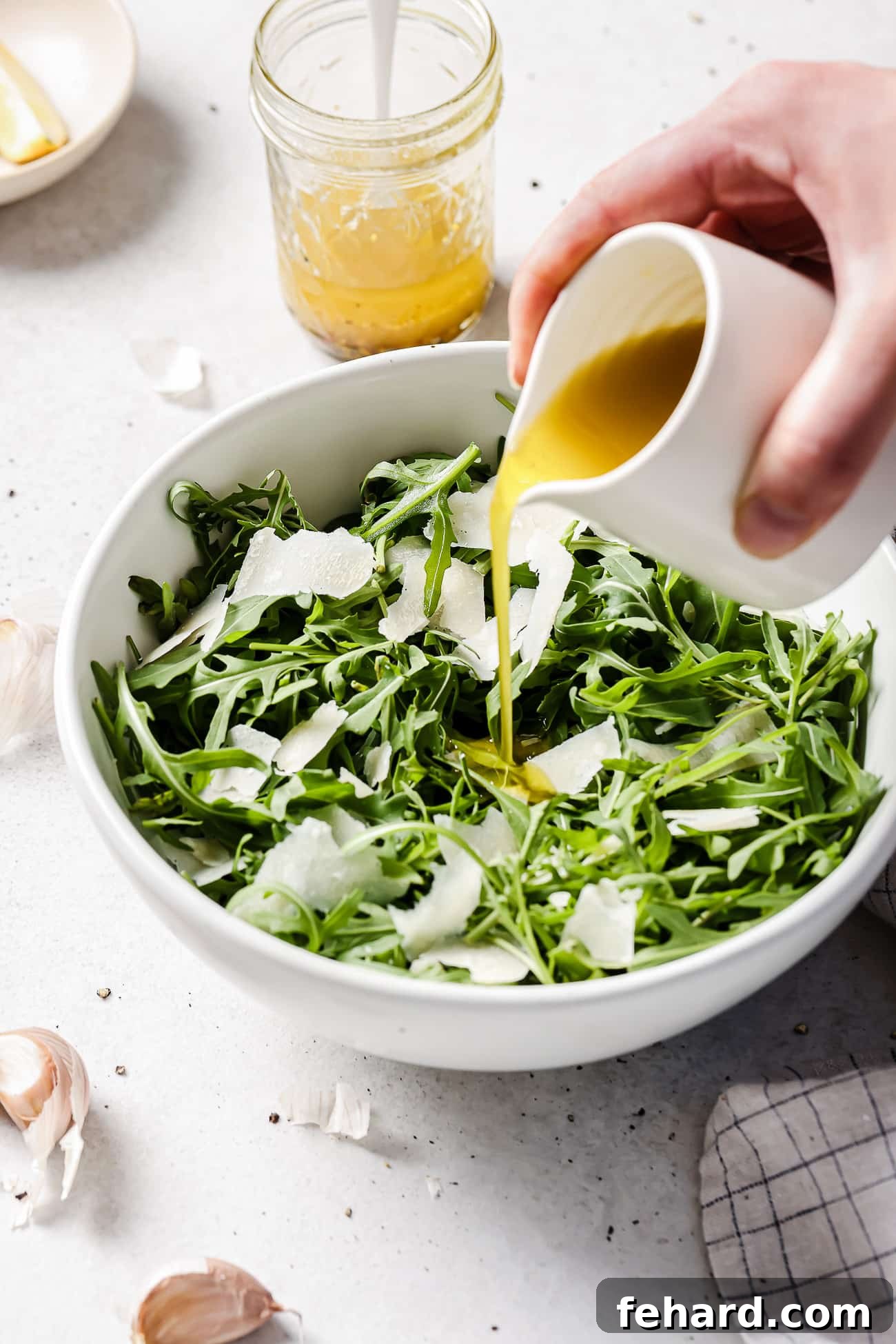
Among the essential items I always keep stocked in my kitchen, a reliable, basic homemade vinaigrette stands out. It’s one of those fundamental kitchen staples that’s shockingly simple to prepare, yet delivers incredible depth of flavor and countless culinary possibilities. The process is straightforward: combine your chosen ingredients in a jar, then either whisk vigorously or give it a good shake, and voilà – you have a fresh, flavorful dressing ready to elevate any meal. The beauty truly lies in its simplicity and speed.
Given our family’s love for crisp, fresh green salads, especially during the sun-kissed days of spring and summer, this particular lemon garlic dressing makes a frequent appearance on our menu, often multiple times a week. My preference for homemade vinaigrettes over their store-bought counterparts stems from a desire for fresh, wholesome ingredients and a firm stance against unnecessary preservatives. This allows me complete control over the quality and taste, ensuring every drop is exactly how I like it.
While this super simple lemon vinaigrette recipe is undeniably excellent for salads, its applications extend far beyond the greens. Its vibrant, tangy profile makes it a fantastic drizzle for almost anything you can imagine! Use it as a vibrant salad dressing, a tenderizing marinade for various proteins, or even a light, refreshing dip. The versatility of this homemade vinaigrette means you’ll discover endless ways to incorporate its delightful flavors into your daily cooking routine.
Key Ingredients for the Perfect Homemade Vinaigrette
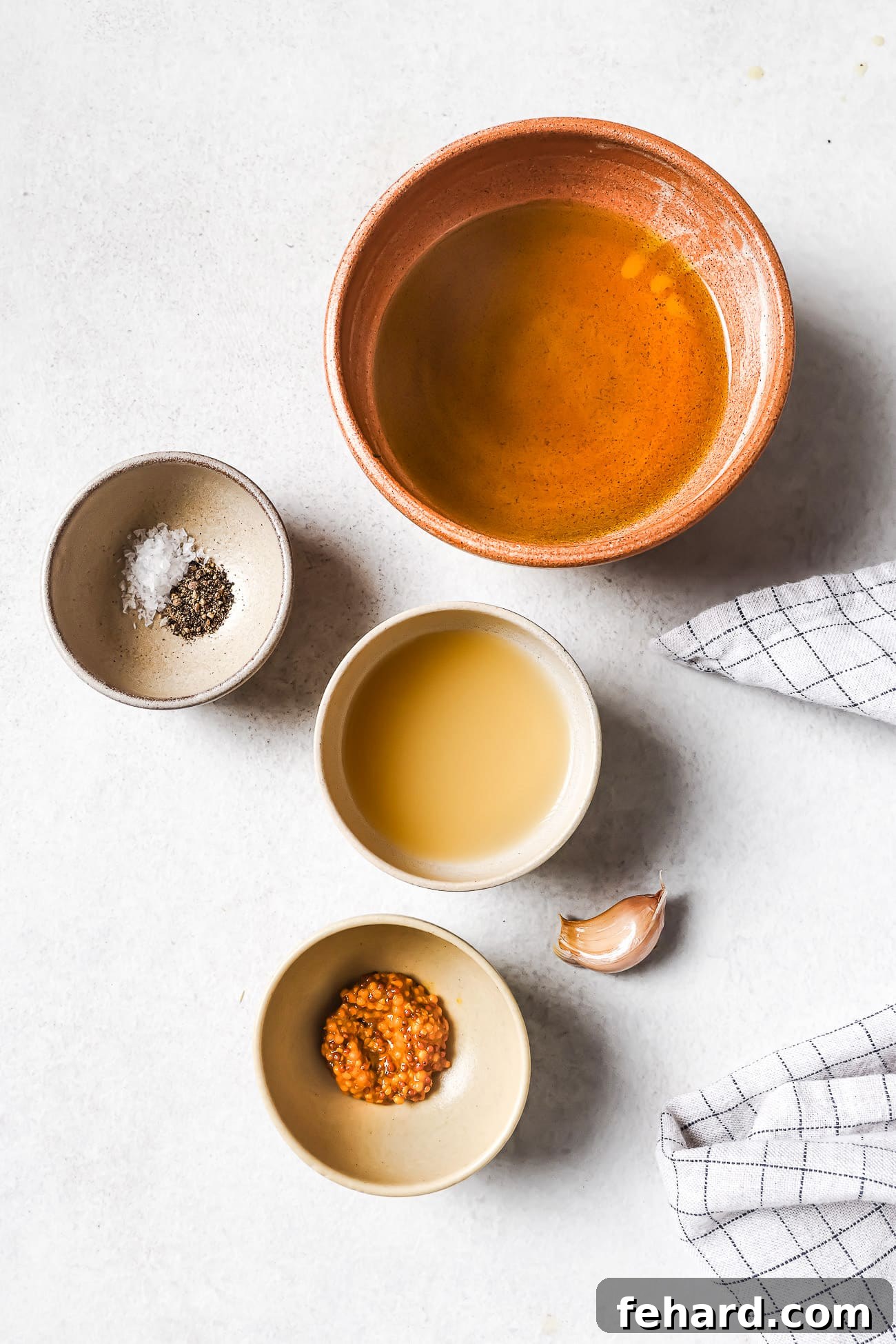
Crafting a stellar vinaigrette starts with understanding the role each ingredient plays. This recipe highlights a perfect balance of components, but also offers flexibility for customization. Here’s a detailed look at what goes into our go-to simple vinaigrette:
- Acid: The Foundation of Flavor
After countless experiments with various acidic components, fresh lemon juice has emerged as my unequivocal favorite, imparting a bright, zesty tang that truly awakens the palate. However, the world of vinegars offers a spectrum of exciting alternatives.- White Vinegar: Offers a sharp, clean acidity. Excellent for a very traditional, straightforward vinaigrette.
- Red Wine Vinegar: Provides a more robust, fruity, and slightly tangy flavor, ideal for Mediterranean-inspired salads or heartier greens.
- Balsamic Vinegar: Delivers a complex, sweet-sour depth. Perfect for richer dressings or when you want a touch of sweetness without added sugar.
- Apple Cider Vinegar: Known for its mild, fruity, and slightly tart notes, it brings a distinctive character and is often favored for its health benefits.
Choosing your acid allows you to steer the flavor profile of your vinaigrette in many delicious directions.
- Oil: The Heart of the Vinaigrette
Extra-virgin olive oil forms the luxurious base of this dressing. Through extensive testing, I’ve consistently found that investing in a good quality olive oil significantly elevates the overall flavor. A superior EVOO brings fruity, peppery, and sometimes grassy notes that cheap oils simply cannot replicate. While extra-virgin olive oil is preferred for its flavor and health benefits, you could experiment with other neutral oils like avocado oil or grapeseed oil for a milder taste, though they may lack the distinctive character of olive oil. - Garlic: Aromatic Depth
I typically opt for garlic that’s very finely minced or crushed. This method helps distribute the garlic’s flavor evenly throughout the dressing without overwhelming it, making it less potent than roughly chopped pieces. If you’re generally sensitive to the strong taste of raw garlic, crushing it is a fantastic technique to mellow its intensity while still benefiting from its aromatic qualities. For an even mellower, sweeter garlic flavor, consider using roasted garlic. - Dijon Mustard: The Essential Emulsifier
Dijon mustard is a crucial player in this recipe, acting as an emulsifying agent. Its unique properties help to bind the oil and acid together, preventing them from separating and creating a smooth, cohesive, and creamy texture. Without it, your vinaigrette would quickly separate into distinct layers. While whole-grain Dijon offers a delightful texture and a slightly milder flavor, smooth Dijon can also be used for a classic finish. If Dijon isn’t to your taste, a touch of honey mustard could work, but be aware it will add sweetness. - Seasonings: Simple Enhancers
I prefer to keep the seasonings straightforward, relying on the purity of good quality sea salt and freshly ground black pepper. These two staples enhance all the other flavors without overshadowing them. Feel free to adjust the amounts to your taste preferences. For an extra layer of flavor, consider adding a pinch of onion powder or a dash of dried Italian herbs.
Crafting Your Vinaigrette: A Step-by-Step Guide
Making homemade vinaigrette is incredibly rewarding and simple. Follow these steps to create a perfect, emulsified dressing every time:
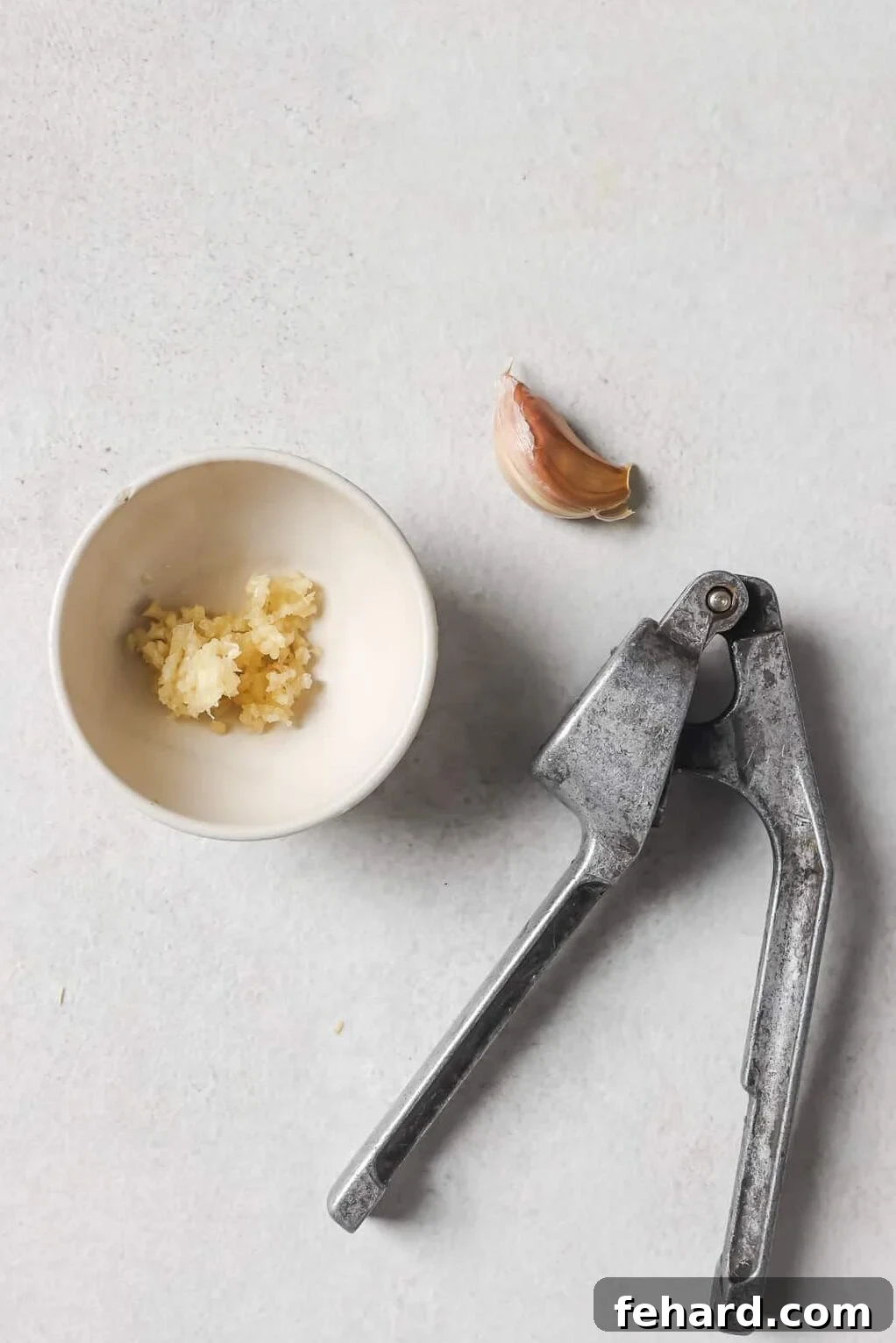
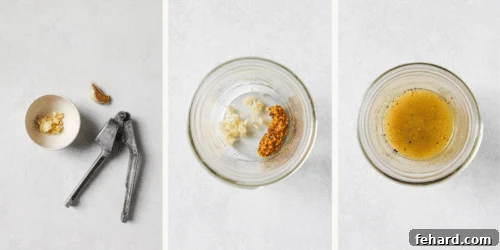
Step One: Prepare Your Aromatics. Begin by finely mincing or crushing your garlic. A garlic press works wonderfully here to achieve a smooth consistency that integrates seamlessly into the dressing. Place the prepared garlic in a mason jar or a small mixing bowl. This foundational step ensures a well-distributed garlic flavor without any harsh raw notes.
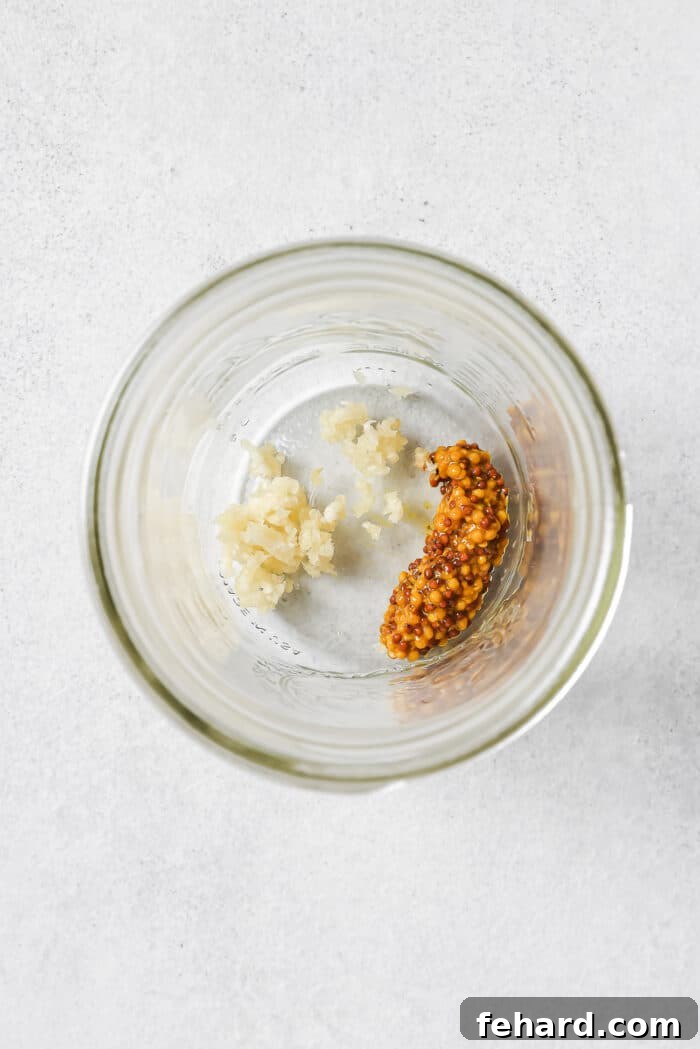
Step Two: Combine Initial Ingredients. To the jar or bowl containing the garlic, add your preferred Dijon mustard. The mustard is key here, not just for flavor, but for its emulsifying properties that will later bind the oil and acid. Ensure all ingredients are at room temperature for optimal mixing.
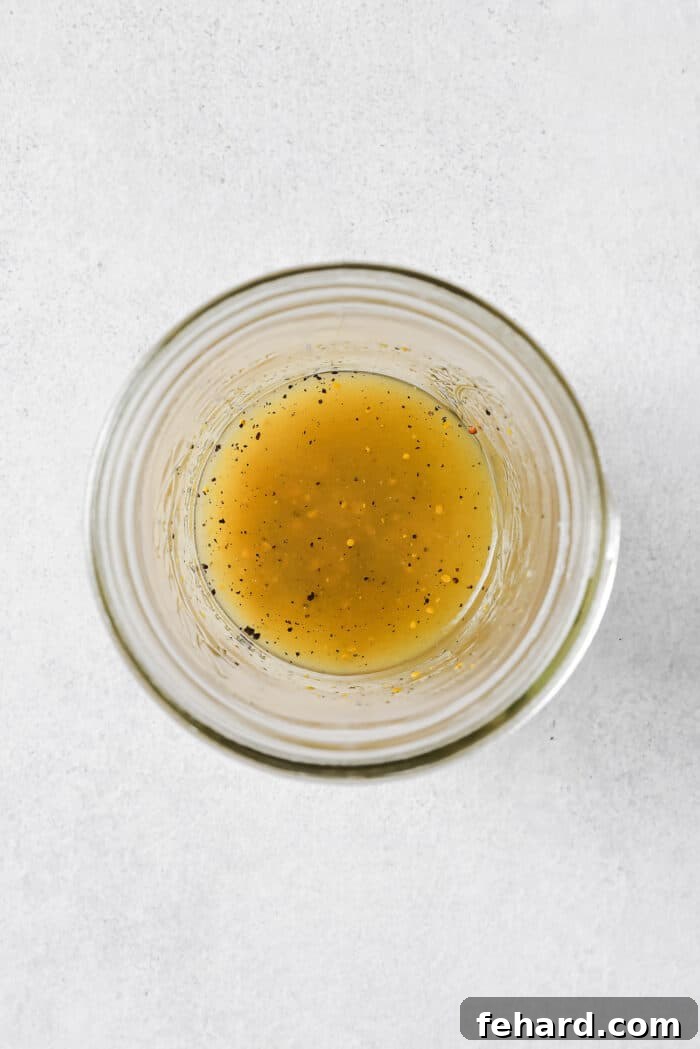
Step Three: Incorporate Acid and Seasonings. Pour in the fresh lemon juice (or your chosen vinegar). Now, season generously with sea salt and freshly ground black pepper. This is the stage to begin developing the core flavor profile. Whisk all these ingredients vigorously until they are well combined. If using a jar, secure the lid tightly and shake until fully blended. This initial mixing helps dissolve the salt and pepper and begins the emulsification process.
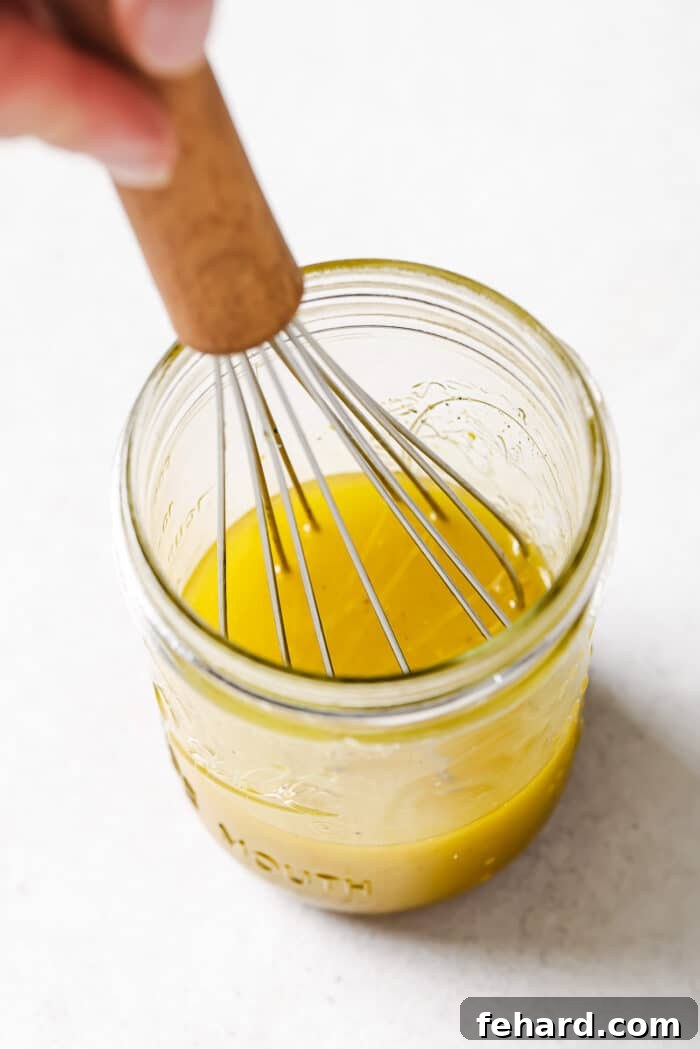
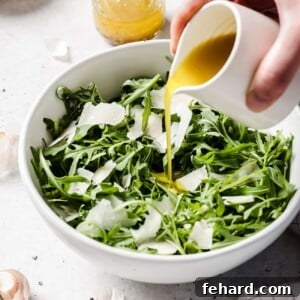
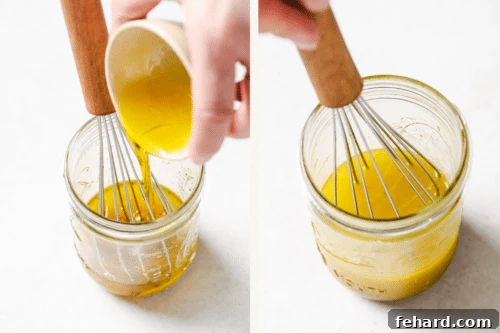
Step Four: Emulsify with Olive Oil. This is the most crucial step for achieving a smooth, stable vinaigrette. While continuously whisking, slowly drizzle in the extra virgin olive oil in a steady, thin stream. The constant agitation combined with the gradual addition of oil will allow the mustard to create a beautiful, creamy emulsion. Continue whisking until the dressing is thick and uniform. Once fully combined, taste and adjust the seasonings as needed. You might want a little more salt, pepper, or a touch more lemon for brightness. Drizzle generously over your favorite salad or dish and savor the delicious homemade taste!
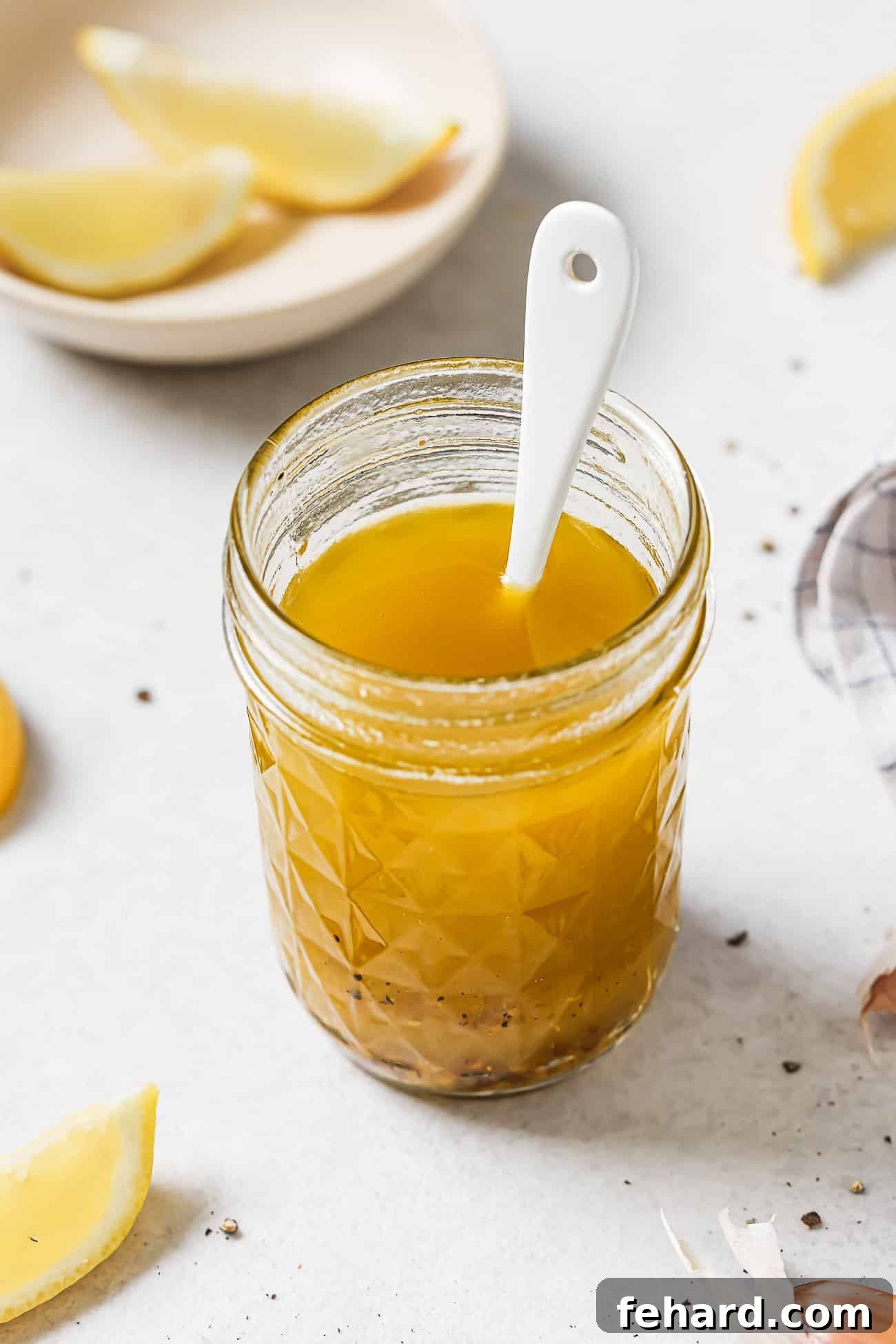
Chef’s Note: Vinaigrettes, by nature, tend to separate over time as the oil and water-based ingredients settle. This is completely normal and expected. Simply give your vinaigrette a quick, vigorous shake or a thorough whisk before each use to re-emulsify it and restore its smooth consistency.
Beyond Salads: Creative Ways to Utilize Your Vinaigrette
This versatile dressing is far more than just a complement to leafy greens. Its bright, tangy, and aromatic qualities make it a fantastic enhancement for a wide array of dishes. Here are some of our favorite ways to put your homemade vinaigrette to work:
- Elevate Your Salads: Naturally, this vinaigrette is a perfect match for any fresh salad. It shines on simple garden salads, but truly transforms more elaborate creations like Greek salads brimming with juicy tomatoes, crisp cucumbers, and salty feta cheese, or a vibrant Italian pasta salad. The lemon and garlic notes perfectly cut through richness and add a refreshing zest.
- Revitalize Cooked Grains: Don’t let your cooked grains be bland! Drizzling this vinaigrette over warm or cold quinoa, fluffy couscous, or even brown rice gives them an instant flavorful upgrade. It’s an easy way to turn a simple side dish into a gourmet experience.
- Brighten Roasted Vegetables: Roasted vegetables, with their inherent sweetness and caramelized edges, are beautifully complemented by the tang of this vinaigrette. Drizzle it over hot-from-the-oven asparagus, crispy potatoes, tender broccoli, or flavorful cauliflower. You can add it before roasting for a more infused flavor, or after for a fresh, zesty finish.
- Quick & Flavorful Marinade: This vinaigrette doubles as an exceptional, speedy marinade for a variety of proteins. Its acidic components work to tenderize meats, while the garlic, lemon, and mustard infuse them with incredible flavor. It’s perfect for chicken breasts, fish fillets, shrimp, beef skewers, or even firm tofu, making it an indispensable tool for grilling or baking. Marinate for at least 30 minutes, or up to a few hours for deeper flavor.
- Irresistible Dipping Sauce: For a truly delightful appetizer, serve this fresh garlic bread alongside a small bowl of vinaigrette for dipping. The crisp bread soaking up the zesty, garlicky oil is a simple pleasure. It also makes a wonderful dip for fresh crudités or artisanal bread.
Customizing Your Vinaigrette: Endless Recipe Variations
One of the greatest joys of homemade vinaigrette is the ability to easily customize it to suit your taste or the dish you’re preparing. Here are some fantastic ways to get creative:
- Infuse with Fresh Herbs: Elevate the aroma and flavor by incorporating finely chopped fresh herbs. Parsley and thyme are excellent choices, offering bright and earthy notes respectively. Other great options include delicate chives, fragrant dill, refreshing mint, or robust rosemary. Experiment to find your favorite combinations!
- Boost the Flavor Profile: For an extra layer of complexity, consider these add-ins:
- Minced Shallot: Adds a milder, sweeter onion flavor than garlic.
- Miso Paste: A spoonful can introduce a savory, umami depth.
- Anchovies (finely mashed): Don’t be scared! They dissolve into the dressing, adding a rich, salty, umami kick without a “fishy” taste.
- Roasted Garlic: For a sweeter, more mellow garlic flavor, replace raw garlic with roasted cloves.
- Spice It Up: A pinch of red pepper flakes or a dash of your favorite hot sauce can add a pleasant kick.
You can also replace the lemon juice entirely with your favorite vinegar (e.g., balsamic, apple cider, red wine vinegar) to dramatically change the character of the dressing.
- Achieve Creamy Perfection: For a rich, smooth, and creamy vinaigrette, simply whisk in a dollop of plain Greek yogurt or a spoonful of tahini. This adds body and a delightful creaminess that can transform the dressing into a more substantial sauce, perfect for grain bowls or as a dip.
- Sweeten the Deal: If you prefer a touch of sweetness to balance the tang, a small amount of honey, maple syrup, or agave nectar can be whisked in. Start with a quarter teaspoon and add more to taste.
More Essential Homemade Pantry Staples
1-Minute Homemade Mayonnaise
1 min
Fresh Basil Pesto Recipe
5 mins
Chicken Broth
1 hr 10 mins
How to make Tomato Sauce
1 hr 30 mins
Pin
Vinaigrette Recipe – Homemade Lemon Garlic Dressing in Minutes!
Equipment
-
1 Mason Jar
Ingredients
- 1 teaspoon clove garlic
- 1 teaspoon whole grain dijon mustard
- 2 tablespoons lemon juice or white-wine vinegar
- ¼ teaspoon kosher salt
- ¼ teaspoon freshly ground black pepper
- 6 tablespoons extra-virgin olive oil
Instructions
-
Finely mince a clove of garlic. Place it in a mason jar with the whole grain dijon mustard. Pour the lemon juice into the mixture with kosher salt and black pepper.

-
Whisk to combine all the ingredients. Slowly pour extra-virgin olive oil, whisking as you go to mix.
-
Taste to check the seasoning and it is done. Enjoy it on your favorite salad!
Notes
- For a little sweetness, you can add a splash of honey or maple syrup.
- Instead of whisking, you can add everything to a mason jar, tighten the lid, and shake to combine. Then use the same jar to store the vinaigrette.
How to store:
This vinaigrette will stay fresh in the fridge for up to a week. Plus, the beauty of making it in a mason jar is that you can store it right in the jar!
Keep in mind, that the dressing will separate in the fridge. So, be sure to shake it well before you use it.
Nutrition
Calories: 186kcal,
Carbohydrates: 1g,
Fat: 21g,
Sodium: 99mg,
Potassium: 13mg
Nutrition information is automatically calculated, so should only be used as an approximation.
Did You Make This?
Follow @primaverakitchen on Instagram, snap a photo, and tag it #primaverakitchen. We’d love to see your recreation.