
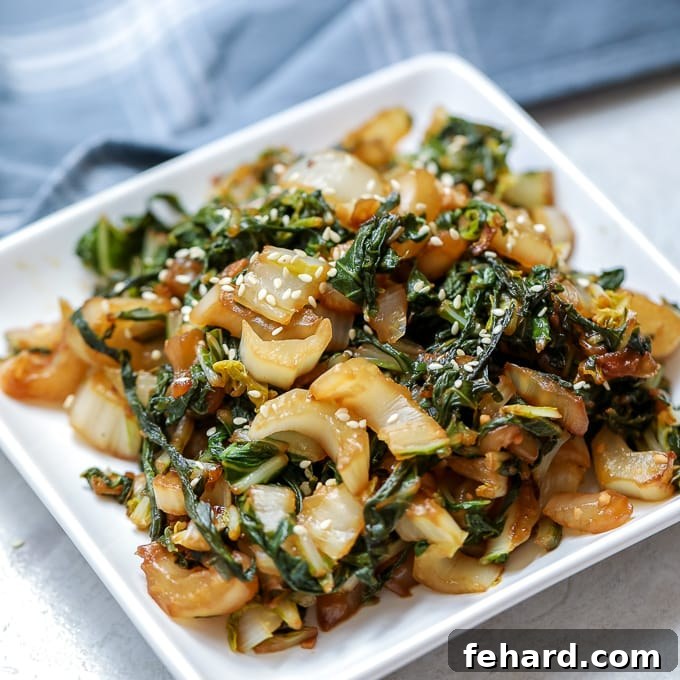
Elevate your weeknight meals with this incredibly quick and utterly delicious Bok Choy Stir-Fry! Fresh bok choy is swiftly sautéed and then coated in a rich, savory, and slightly sweet garlic maple soy sauce, creating a flavor-packed side dish that comes together in under 10 minutes.
Whether you’re searching for an exciting way to enjoy bok choy or a simple yet elegant side dish to complement your favorite Asian entrées, this Stir-Fried Bok Choy recipe is an absolute game-changer. Its vibrant flavors and satisfying textures make it a perfect pairing for dishes like Homemade Orange Chicken, Hunan Beef, or even a simple grilled fish. The irresistible sweet and savory glaze, infused with aromatic garlic and ginger, is guaranteed to transform this healthy green into a family favorite.
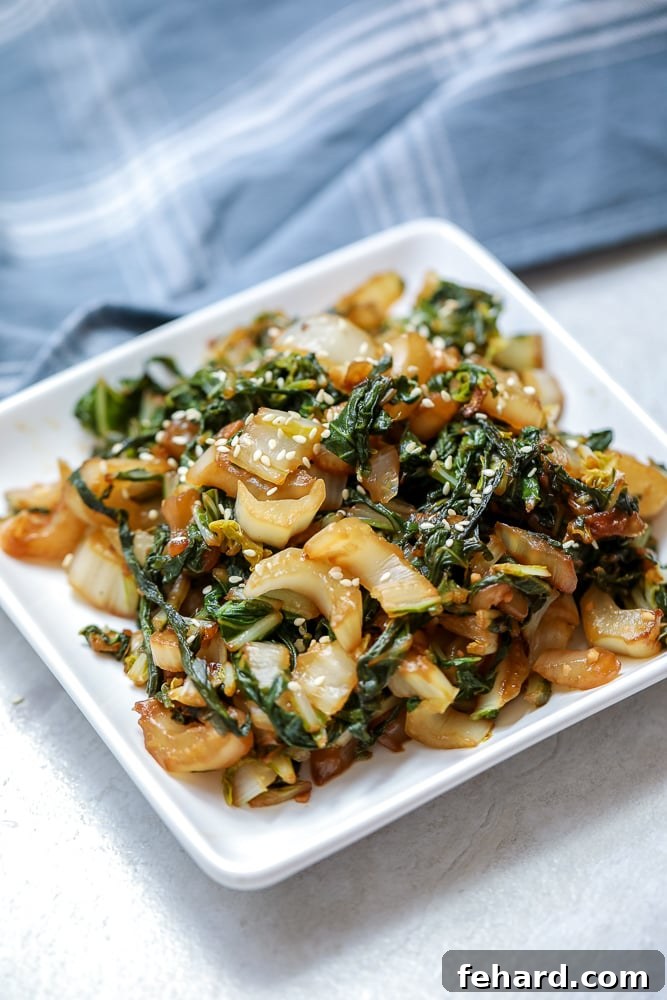
What Exactly Is Bok Choy? Unveiling This Versatile Chinese Cabbage
Bok Choy, also known as pak choi or spoon cabbage, is a remarkably popular variety of Chinese cabbage renowned for its crisp texture and mild, slightly sweet flavor. This leafy green vegetable is an essential ingredient in countless Asian cuisines, prized not only for its culinary versatility but also for its impressive nutritional profile. It’s a powerhouse of essential vitamins and minerals, including Vitamins K, A, and C, as well as folate and calcium.
What makes bok choy truly shine in dishes like this stir-fry is its unique dual texture. The crisp, white stems offer a satisfying crunch, while the dark green leaves wilt beautifully, becoming tender and absorbing flavors wonderfully. This contrast ensures every bite is a delightful experience. While bok choy is often found in hearty soups like Homemade Ramen or served alongside proteins in recipes like Stir-Fry Chicken with Bok Choy, this particular recipe demonstrates how it can stand alone as an incredibly flavorful and satisfying vegetable side dish.
The secret to perfect stir-fried bok choy lies in its quick cooking method. A rapid sauté allows the tender green leaves to soften just enough, while the sturdy stems retain their desirable crisp-tender bite. This method, combined with our signature garlicky maple soy glaze, ensures a harmonious blend of textures and tastes.
Why This Bok Choy Stir-Fry Will Become Your Go-To Side Dish
This isn’t just another vegetable recipe; it’s a culinary revelation that combines speed, health, and incredible flavor in one simple dish. Here’s why you’ll want to add this Bok Choy Stir-Fry to your regular meal rotation:
- Lightning-Fast Preparation: From start to finish, this dish is ready in just 10 minutes. It’s perfect for busy weeknights when you need a nutritious side without the fuss.
- Explosion of Flavor: The star of this recipe is undoubtedly the homemade garlic maple soy glaze. It strikes a perfect balance between savory soy, sweet maple, pungent garlic, fresh ginger, and a hint of tang from rice vinegar, creating an utterly addictive coating for the bok choy.
- Healthy and Nutritious: Bok choy is low in calories but rich in vitamins K, A, and C, making this dish a fantastic way to boost your nutrient intake. It’s a wholesome addition to any meal.
- Delightful Texture Contrast: Experience the best of both worlds with crisp-tender bok choy stems and softly wilted, flavorful green leaves.
- Incredibly Versatile: This stir-fry pairs beautifully with a wide array of main courses, from roasted chicken and pan-seared fish to tofu and various noodle or rice dishes.
- Simple Ingredients, Impressive Results: You don’t need exotic ingredients to create something truly delicious. This recipe uses pantry staples and fresh bok choy to deliver restaurant-quality taste at home.
Essential Ingredients for Your Perfect Bok Choy Stir-Fry
Crafting this flavorful bok choy stir-fry requires a handful of fresh ingredients and pantry staples. Each component plays a vital role in building the dish’s distinct taste profile. Here’s a detailed look at what you’ll need and some helpful notes for selection and substitution:
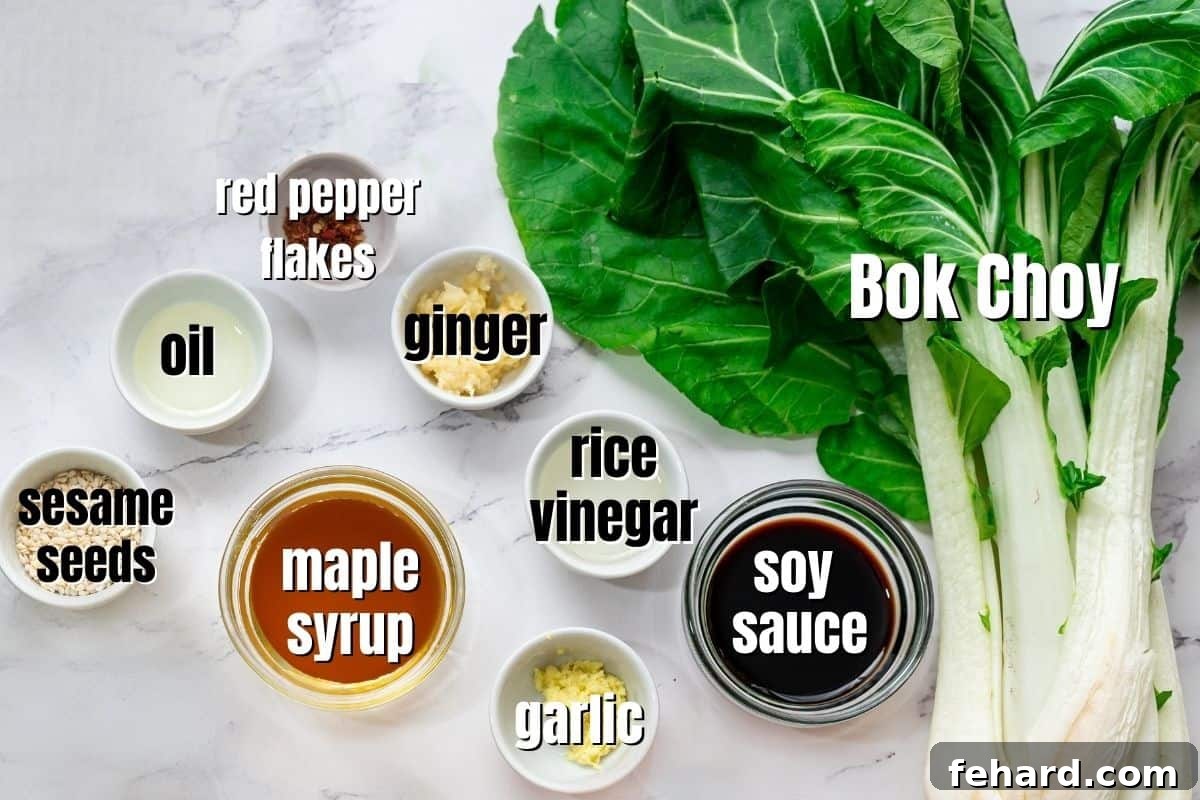
- Bok Choy: The star of our show! You can use either baby bok choy or full-grown bok choy for this stir-fry. Both varieties hold up exceptionally well to the quick cooking process, offering a great crisp-tender texture. Baby bok choy tends to be slightly sweeter and more tender overall, while mature bok choy has heartier stems and a more pronounced “cabbage” flavor. When selecting, look for vibrant green leaves and firm, unblemished white stalks. Avoid any bok choy that appears slimy, bruised, or has yellowing leaves at the base. One pound typically equates to 6-8 baby bok choy or 1 large head of mature bok choy.
- Oil: For stir-frying, it’s crucial to select a neutral oil with a high smoke point. This ensures that the oil can withstand the high heat required for quick cooking without burning and imparting off-flavors. Excellent choices include canola oil, avocado oil, grapeseed oil, or vegetable oil. Olive oil is generally not recommended due to its lower smoke point and stronger flavor.
- Garlic: Freshly minced garlic is non-negotiable for that authentic aromatic base. It provides a pungent, savory depth that is characteristic of many Asian dishes.
- Ginger Root: Just like garlic, fresh ginger root adds an indispensable layer of warm, zesty flavor. It complements the garlic beautifully and brightens the overall taste. Always opt for freshly grated ginger root over ground ginger powder for the best, most vibrant flavor.
- Maple Syrup: Pure maple syrup introduces a wonderful natural sweetness that perfectly balances the savory soy sauce and the slight bitterness inherent in bok choy. Its nuanced flavor is superior to granulated sugar. If you don’t have maple syrup, honey makes an excellent substitute, offering a similar depth of sweetness. Ensure you use pure syrup/honey, not artificial pancake syrup.
- Soy Sauce: This provides the foundational savory, umami flavor. We recommend using reduced-sodium soy sauce to give you more control over the saltiness of the dish, allowing you to add more if needed without over-salting. For those with dietary restrictions, liquid aminos or coconut aminos are fantastic gluten-free and soy-free alternatives that deliver a similar umami punch.
- Water: A small amount of water helps create steam, which tenderizes the bok choy and ensures the sauce distributes evenly without becoming too thick too quickly.
- Rice Vinegar: Also known as rice wine vinegar, this ingredient adds a subtle tang and brightness that cuts through the richness of the glaze, elevating all the other flavors. If you don’t have rice vinegar on hand, other mild vinegars like apple cider vinegar can be used as a substitute, though the flavor profile will be slightly different.
- Red Pepper Flakes: A pinch of crushed red pepper flakes adds a delightful, subtle warmth and a gentle kick, waking up the palate. This ingredient is entirely optional, so feel free to omit it if you are sensitive to spice or cooking for children.
- Sesame Seeds: Used as a garnish, toasted sesame seeds add a lovely nutty flavor and a pleasing textural crunch to the finished stir-fry. While optional, they significantly enhance the overall presentation and eating experience.
Mastering the Stir-Fry: A Step-by-Step Guide to Perfection
Achieving a perfectly cooked bok choy stir-fry is simple with the right technique. The key is in proper preparation and quick, high-heat cooking. Follow these steps for an irresistible side dish:
Step 1: Thoroughly Clean and Prepare the Bok Choy
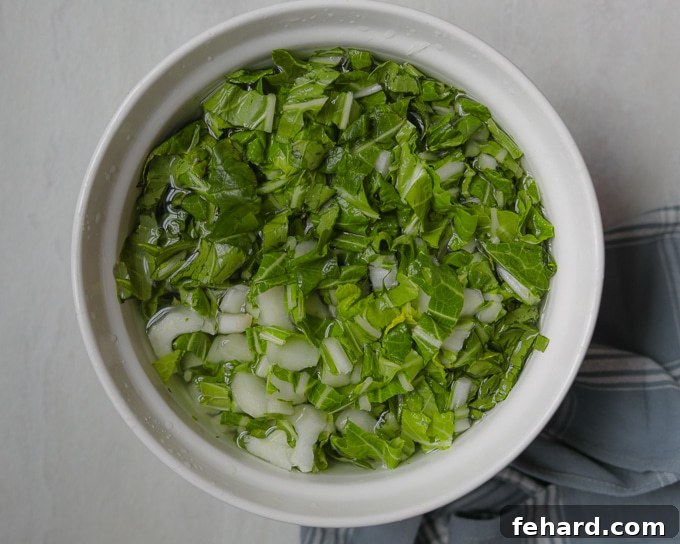
Before cooking, it is absolutely essential to clean your bok choy properly. The tightly packed leaves at the base often trap dirt, grit, and even small amounts of sand, much like leeks or spinach. Don’t skip this step!
- First, trim off the very bottom of the bok choy head. For baby bok choy, you can often keep the heads intact or halve them lengthwise. For larger bok choy, separate the individual stalks.
- Next, cut the bok choy into roughly 1-inch strips, separating the white stems from the green leaves if desired for more precise cooking, though it’s not strictly necessary for this quick stir-fry.
- Place the cut bok choy into a large bowl of cold water. Use your hands to swish the cabbage around vigorously, helping to dislodge any trapped dirt and debris. Repeat this process if the water looks particularly cloudy.
- Drain the bok choy thoroughly using a colander. Rinse it under cold running water one last time to ensure all dirt is gone.
- Crucially, dry the bok choy completely. Excess moisture will steam the bok choy instead of stir-frying it, preventing that desired crisp-tender texture and diluting the sauce. Use a clean kitchen towel to pat it dry, or for best results, use a salad spinner to remove as much water as possible.
Step 2: Aromatic Foundation
- Heat a large nonstick sauté pan or wok over medium-high heat. Ensure your pan has a tight-fitting lid; if not, a baking sheet can serve as a makeshift cover. Allow the pan to heat for a minute or two until hot.
- Add a tablespoon of your chosen neutral oil to the hot pan. Let it shimmer for about 30 seconds.
- Immediately add the minced garlic and freshly grated ginger to the oil. Sauté for a brief 30 seconds, stirring constantly, until the aromatics become fragrant. Be extremely careful not to let the garlic or ginger burn, as burnt aromatics will impart a bitter taste to your dish.
Step 3: Stir-Fry the Bok Choy to Perfection
- Add the cleaned and dried bok choy to the pan with the fragrant garlic and ginger. Toss everything together vigorously to ensure the bok choy is evenly coated with the aromatics.
- Pour in the soy sauce, maple syrup, and 1 tablespoon of water. Toss again to coat the bok choy evenly with this sweet and savory glaze.
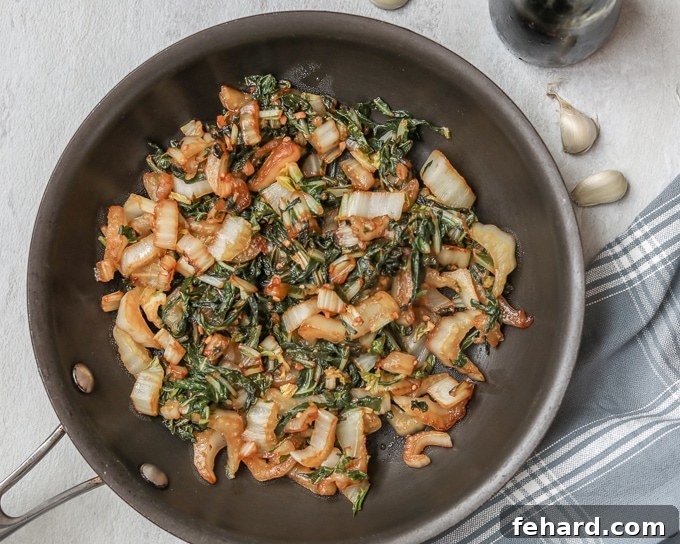
- Cover the skillet with the lid and allow it to cook for 2-3 minutes. This crucial step creates steam, helping to tenderize the tougher bok choy stems while slightly wilting the leaves.
Step 4: Finish and Garnish
- Uncover the skillet. Add the rice wine vinegar. Continue to stir-fry, stirring frequently, for another 1-2 minutes. During this stage, the greens will continue to wilt, and any excess liquid from the sauce will be absorbed or evaporate, leaving you with beautifully glazed bok choy. The stems should be crisp-tender, and the leaves soft.
- Turn off the heat. Transfer the stir-fried bok choy to a serving dish.
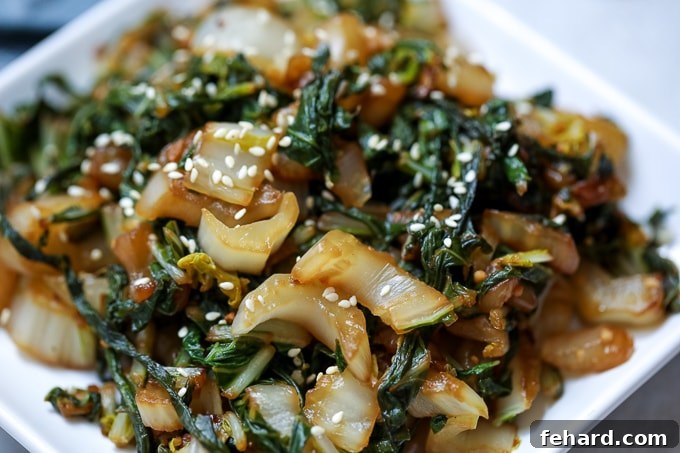
- Optionally, garnish with a sprinkle of toasted sesame seeds for added crunch and nutty flavor, and a dash of crushed red pepper flakes for a touch of heat. Serve immediately and enjoy!
Expert Tips for Your Best Bok Choy Stir-Fry Ever
While this recipe is straightforward, a few expert tips can elevate your stir-fry from good to extraordinary:
- Mise en Place is Key: “Mise en place” means having all your ingredients prepped and ready before you start cooking. Stir-frying is a fast process, so you won’t have time to chop garlic or measure soy sauce once the pan is hot. Have your bok choy cleaned and chopped, garlic and ginger minced, and sauce ingredients measured out and mixed beforehand.
- Don’t Overcrowd the Pan: For best results, avoid cramming too much bok choy into your pan. If your skillet is too small for a pound of bok choy, cook it in two batches. Overcrowding lowers the pan’s temperature, causing the bok choy to steam rather than stir-fry, resulting in a soggy texture.
- High Heat, Quick Cook: Stir-frying thrives on high heat and quick cooking. This allows the bok choy to achieve that crisp-tender texture without becoming mushy.
- Adjust Sweetness and Spice: Feel free to customize the glaze to your taste. If you prefer a sweeter sauce, add a touch more maple syrup. For more heat, increase the red pepper flakes or add a dash of sriracha.
- Taste and Adjust: Always taste your sauce before adding the bok choy, and then taste the cooked bok choy before serving. You can always add a little more soy sauce for saltiness, maple syrup for sweetness, or vinegar for tang.
Serving Suggestions for Your Flavorful Bok Choy Stir-Fry
This versatile bok choy stir-fry makes an excellent side dish for a wide range of meals. Here are some ideas to inspire your next dinner:
- Classic Asian Pairing: Serve it alongside popular dishes like General Tso’s Chicken, Beef and Broccoli, Sweet and Sour Pork, or any of your favorite stir-fried meats or tofu.
- With Rice or Noodles: It’s fantastic with a bowl of steamed jasmine rice, brown rice, or mixed into a simple noodle dish like lo mein or ramen.
- Grilled or Roasted Proteins: The bright, savory flavors of the bok choy perfectly complement grilled chicken, pan-seared salmon, roasted pork loin, or baked tofu.
- As Part of a Bowl: Integrate it into a healthy grain bowl with quinoa or farro, topped with your favorite protein and other roasted vegetables.
- Alongside Soups: Enjoy it as a fresh, vibrant contrast to heartier Asian soups.
Storage and Reheating
This Bok Choy Stir-Fry is best enjoyed fresh, right off the pan, when its textures are at their peak. However, if you happen to have leftovers, they can be stored and enjoyed within a few days.
- Storage: Allow the stir-fry to cool completely before transferring it to an airtight container. Store it in the refrigerator for 3-4 days. This dish does not freeze well, as the bok choy will become mushy upon thawing.
- Reheating: For best results, gently reheat the leftovers in a nonstick skillet over medium heat for a few minutes, stirring occasionally, until warmed through. Avoid microwaving if possible, as it can make the bok choy less crisp. If using a microwave, reheat in short bursts, stirring in between.
Frequently Asked Questions (FAQs)
Here are some common questions about cooking with bok choy and this specific stir-fry recipe:
Q: What’s the difference between baby bok choy and regular bok choy?
A: Baby bok choy is simply a younger, smaller version of regular bok choy. It tends to be more tender, slightly sweeter, and cooks a bit faster. Regular bok choy has larger, more fibrous white stems and can sometimes have a slightly stronger, more peppery flavor. Both work beautifully in this stir-fry, but you might need to cook regular bok choy for an extra minute or two to achieve tenderness.
Q: Can I make this recipe gluten-free?
A: Absolutely! To make this Bok Choy Stir-Fry gluten-free, simply substitute regular soy sauce with tamari, liquid aminos, or coconut aminos. All other ingredients are naturally gluten-free.
Q: Can I add other vegetables to this stir-fry?
A: Yes, this recipe is quite adaptable! Feel free to add other quick-cooking vegetables like sliced bell peppers, snow peas, sliced mushrooms, or broccoli florets. Add tougher vegetables (like broccoli) early in the cooking process, and more tender ones (like bell peppers) towards the end, to ensure everything cooks evenly.
Q: How do I select the freshest bok choy at the grocery store?
A: Look for bok choy with vibrant green leaves that are crisp and free from yellowing, brown spots, or wilting. The white stalks should be firm and unblemished, without any sliminess or soft spots. Smaller heads are generally more tender.
Q: Is bok choy healthy?
A: Yes! Bok choy is an incredibly healthy vegetable. It’s low in calories and rich in vitamins A, C, and K, as well as folate, calcium, and potassium. It’s also a good source of dietary fiber, contributing to digestive health. It’s an excellent choice for a nutritious diet.
More Delicious & Easy Vegetable Side Dishes You’ll Love
If you enjoyed this quick and healthy Bok Choy Stir-Fry, be sure to explore these other fantastic vegetable side dish recipes:
- Orange Glazed Carrots
- Green Beans Almondine
- Oven Roasted Broccoli
- Roasted Brussels Sprouts
- Oven Roasted Asparagus
- Maple Roasted Acorn Squash
We hope you adore this simple yet sensational Bok Choy Stir-Fry recipe! If you tried it, please be sure to leave a comment and review below to share your experience and tips.
5 out of 5 stars from 27 votes
Bok Choy Stir Fry
By: Kristen Chidsey
Servings: 6
Prep: 3 mins
Cook: 6 mins
Total: 9 mins
Rate
Quickly sautéed and then glazed in a rich, garlicky, maple soy sauce, Bok Choy Stir Fry is a flavor-packed side dish that is ready in just 10 minutes!
Ingredients
- 1 pound regular or baby bok choy
- 1 tablespoon neutral oil, such as avocado or canola
- 2 garlic cloves, minced
- 1 teaspoon freshly grated ginger root
- 1 tablespoon soy sauce
- 1 tablespoon pure maple syrup
- 1 tablespoon water
- ½ tablespoon rice wine vinegar
- ¼ teaspoon crushed red pepper flakes
- Toasted sesame seeds for garnish
Instructions
- Drain and rinse 1 pound regular or baby bok choy, then dry the bok choy thoroughly using a clean kitchen towel or a salad spinner. Chop into 1-inch thin strips.
- Heat a large nonstick sauté pan or wok over medium-high heat. Ensure your pan has a lid, or use a baking sheet to cover if you do not have a fitted lid.
- Add 1 tablespoon neutral oil and heat for 30 seconds. Then add 2 minced garlic cloves and 1 teaspoon freshly grated ginger root and sauté for another 30 seconds, or until fragrant. Be careful not to let the garlic or ginger burn.
- Add the chopped, washed, and dried bok choy to the pan and toss to coat with the garlic and ginger. Add 1 tablespoon soy sauce, 1 tablespoon pure maple syrup, and 1 tablespoon water. Cover the skillet with its lid and cook for 2-3 minutes.
- Uncover the pan and add ½ tablespoon rice wine vinegar. Stir the bok choy and continue to sauté, stirring frequently, until the greens are wilted and most of the liquid is absorbed, about 1-2 minutes longer.
- Turn off the heat. Top with toasted sesame seeds and ¼ teaspoon crushed red pepper flakes if desired. Serve immediately.
Notes
Storage: Leftovers can be stored for 3-4 days in a sealed container in the refrigerator. This dish cannot be frozen.
Bok Choy: 6-8 baby bok choy typically equates to 1 pound, but weigh them for accuracy. 1 regular bok choy typically weighs about 1 pound.
Maple Syrup: Use pure maple syrup or substitute with honey. Avoid artificial syrup, as it will make the dish overly sweet.
Toasting Sesame Seeds: To toast sesame seeds, add them to a dry skillet over medium heat for 2-4 minutes or until lightly browned, stirring occasionally.
Nutrition
Carbohydrates: 4g
Protein: 2g
Fat: 2g
Saturated Fat: 2g
Sodium: 217mg
Potassium: 204mg
Fiber: 1g
Sugar: 3g
Vitamin A: 3378IU
Vitamin C: 34mg
Calcium: 85mg
Iron: 1mg
Nutrition information is automatically calculated, so should only be used as an approximation.
Tried this recipe? Mention @amindfullmom or tag #amindfullmom!