
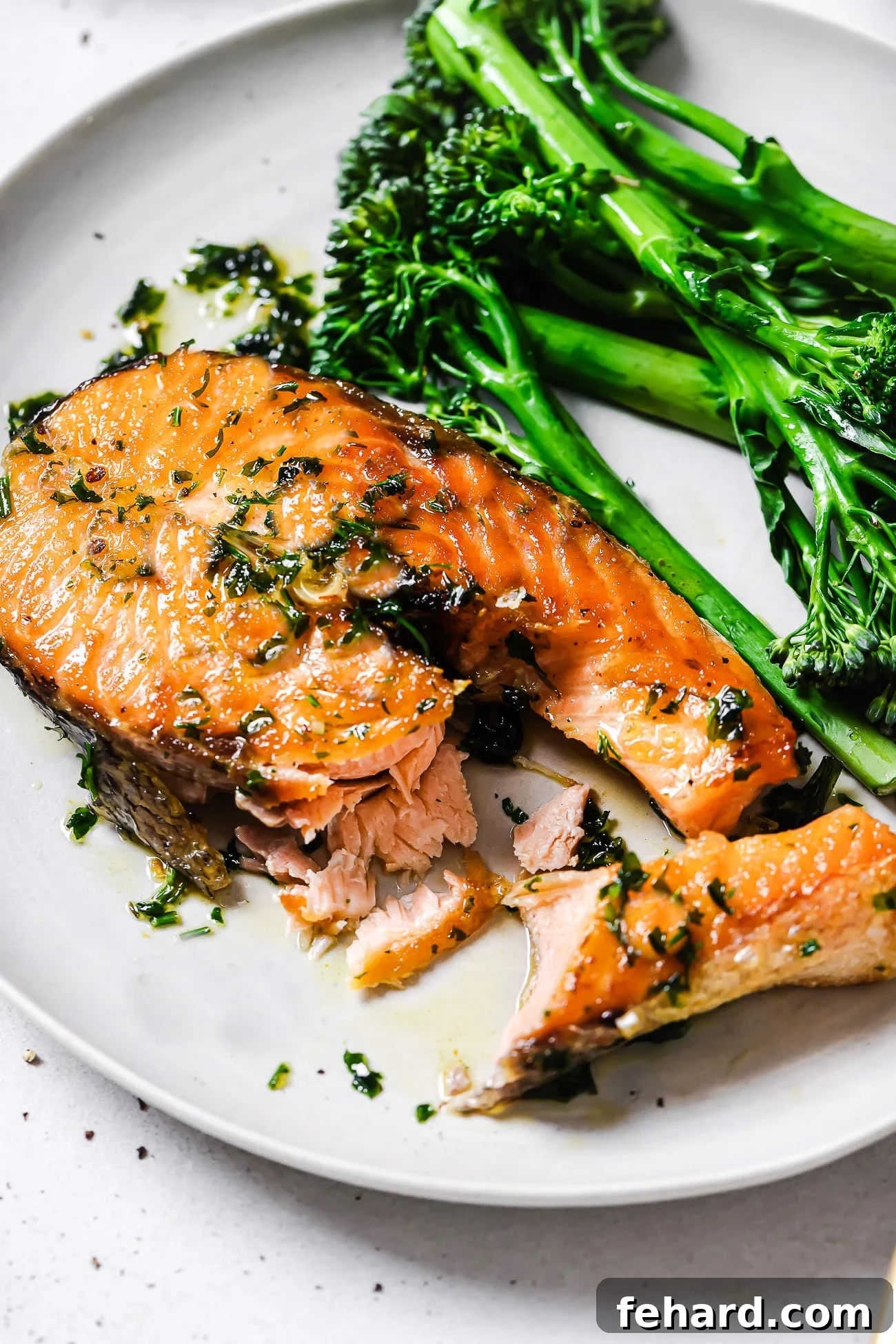
Discover how to effortlessly create the most succulent and flavorful Garlic Butter Salmon Steak right in your kitchen. This quick and simple recipe, featuring a delectable homemade compound butter, transforms fresh salmon into an unforgettable meal in just 15 minutes. Whether you’re seeking a speedy weeknight dinner solution or an elegant dish to impress guests, this pan-seared salmon steak recipe is your go-to choice. It’s not just a meal; it’s an experience of tender, flaky fish with a perfectly crispy skin, all elevated by the rich aroma and taste of garlic-infused butter.
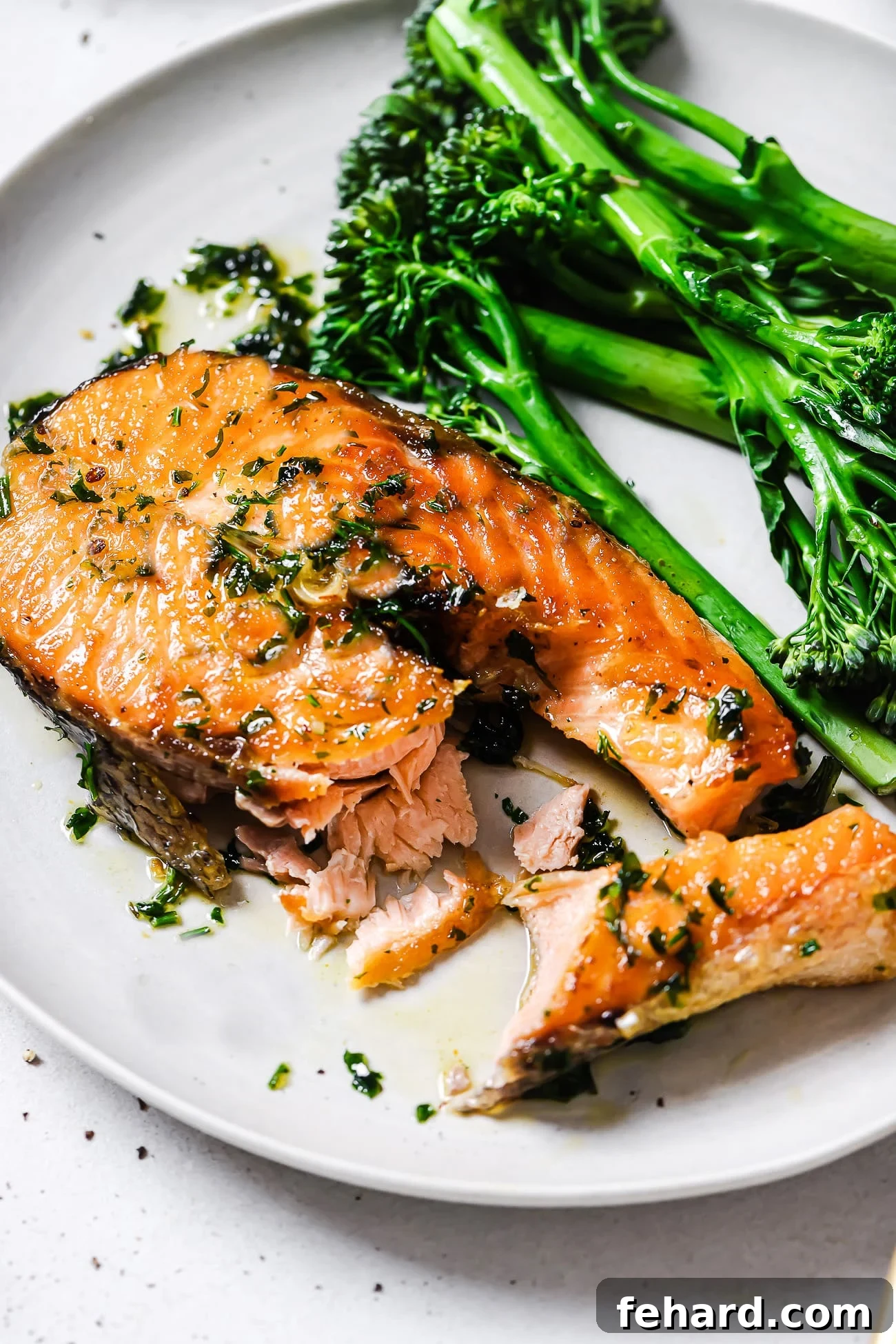
There’s a reason this garlic butter salmon steak becomes a family favorite so quickly. Each bite offers a delightful contrast: the robust exterior developed from a perfect pan-sear, giving way to an incredibly tender and moist interior. The homemade garlic herb butter melts luxuriously over the fish, infusing every morsel with an irresistible depth of flavor that will leave everyone craving more. Salmon is a nutritional powerhouse, rich in omega-3 fatty acids, protein, and vitamins, making it not only delicious but also a wonderfully healthy addition to your diet.
Our kitchen celebrates the versatility of salmon with many beloved recipes. If you’re looking for more ways to enjoy this incredible fish, explore some of our other popular preparations:
- Maple Mustard Salmon
- Baked Salmon Recipe
- Blackened Salmon
Recipe Ingredients
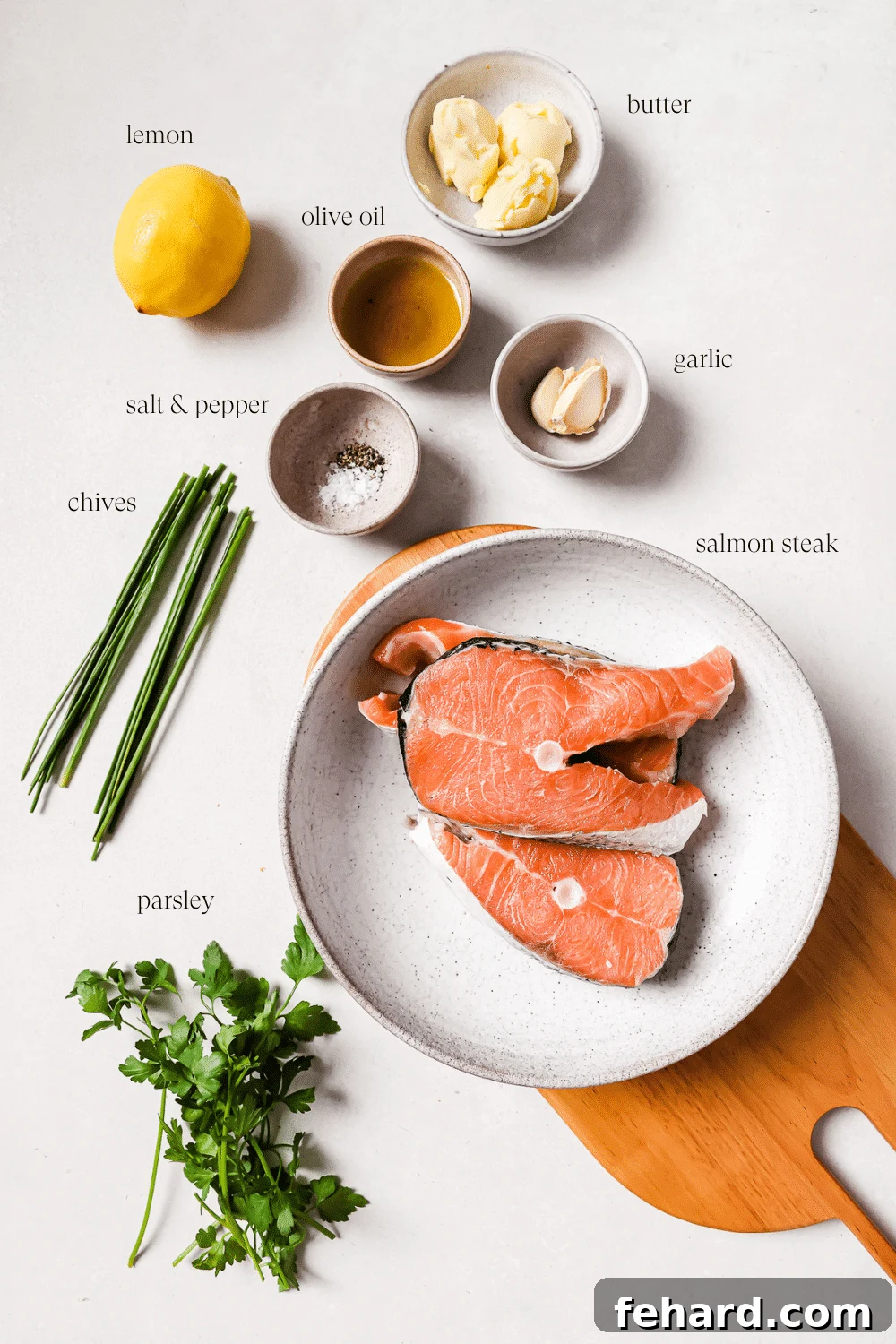
Crafting the perfect garlic butter salmon steak begins with selecting high-quality ingredients. Here’s what you’ll need to create this simple yet spectacular dish:
Butter — For this recipe, I highly recommend using good quality salted butter. The salt content in the butter not only enhances the overall flavor of the dish but also contributes to the savory compound butter. If you’re conscious about sodium intake, unsalted butter is a perfectly fine alternative; just remember to adjust the additional salt to your preference.
Garlic — Fresh garlic is key to achieving that vibrant, aromatic flavor in your compound butter. Two cloves, finely minced or grated, will provide a potent burst of flavor without overpowering the delicate taste of the salmon. Avoid pre-minced garlic from a jar if possible, as its flavor can be less intense and sometimes slightly bitter compared to fresh.
Fresh Herbs and Seasonings — A delightful mix of freshly chopped chives and parsley brings bright, fresh notes and a pop of color to the compound butter. These herbs complement salmon beautifully. If fresh herbs aren’t available, dried herbs can be used, but use about one-third of the amount, as their flavor is more concentrated. Always season with salt and freshly ground black pepper to taste, both in the butter mixture and on the salmon itself.
Salmon Steaks — Opt for fresh, wild-caught salmon steaks if available, as they often boast a richer flavor and firmer texture. Salmon steaks are cross-sections of the fish, typically thicker and containing a central bone, which helps keep the fish moist during cooking. If using frozen salmon steaks, ensure they are fully thawed overnight in the refrigerator before preparation. Look for steaks that are about 1-inch thick for even cooking.
Olive Oil — Extra virgin olive oil is my preferred choice for searing. Its mild, fruity notes complement the salmon beautifully, and it has a high enough smoke point for pan-searing over medium-high heat. You can also use other high-heat oils like avocado oil if preferred.
Seasonings for the Salmon Steak — A simple seasoning of Kosher salt and freshly ground black pepper is all you need for the salmon itself. These basic seasonings enhance the fish’s natural flavors. While optional, serving with fresh lemon wedges is highly recommended; a squeeze of fresh lemon juice brightens the entire dish and adds a delightful tang.
How To Make Garlic Butter Salmon Steak
Achieving perfectly pan-seared garlic butter salmon steaks is straightforward. Follow these steps for a restaurant-quality meal at home:
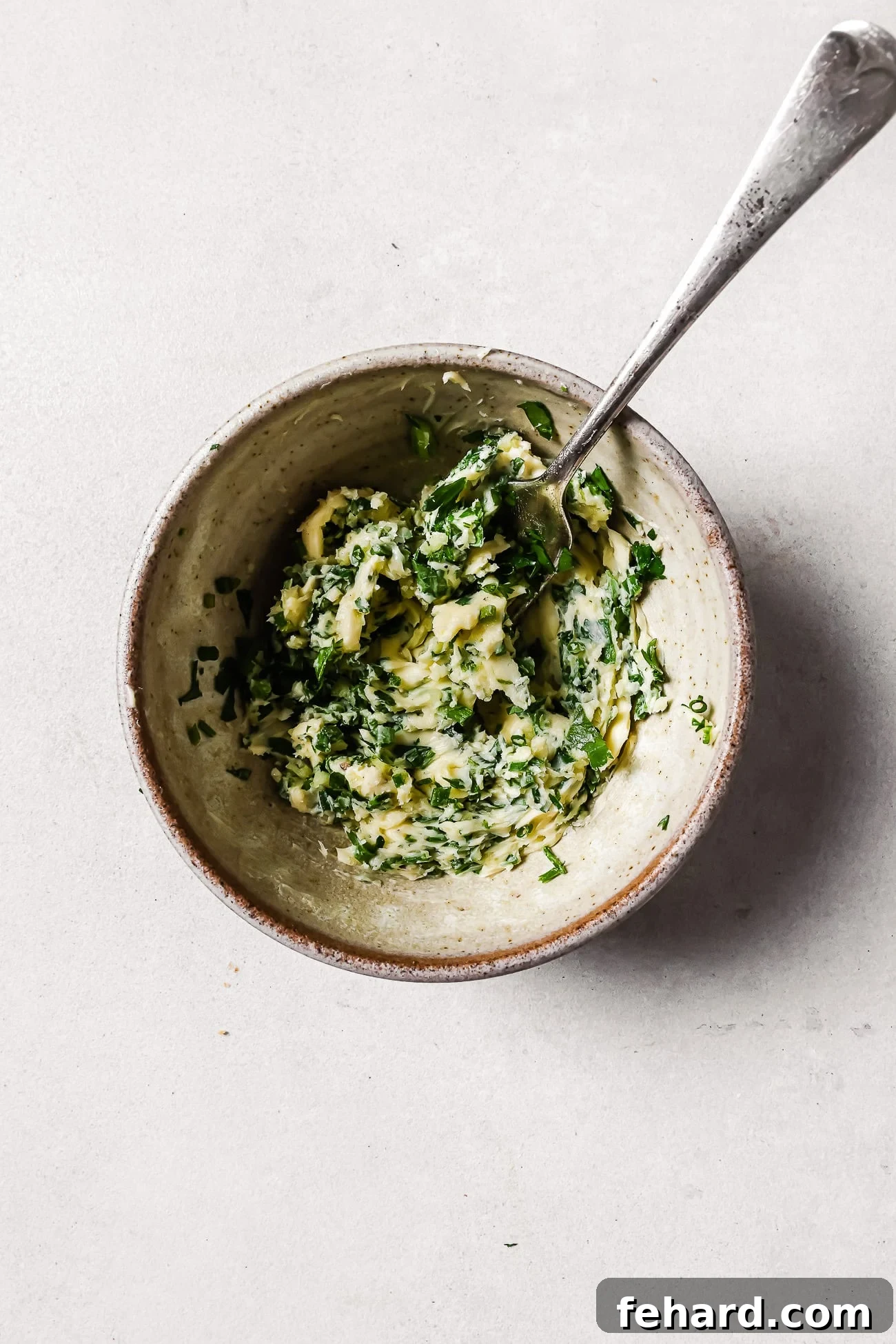
Prepare the Compound Butter:
- In a small bowl, combine the softened butter, minced fresh garlic, chopped fresh herbs (chives and parsley), a pinch of salt, and freshly ground black pepper. Use a fork or a small spatula to mix all the ingredients thoroughly until well combined and uniform. Setting the butter aside allows the flavors to meld beautifully.
Season and Cook the Salmon Steaks:
- First and foremost, pat the salmon steaks thoroughly dry on all sides using paper towels. This crucial step removes excess moisture, which is essential for achieving a crispy skin and a good sear.
- Once dry, season both sides of each salmon steak generously with Kosher salt and freshly ground black pepper. Don’t be shy with the seasoning, as it forms the initial flavor layer.
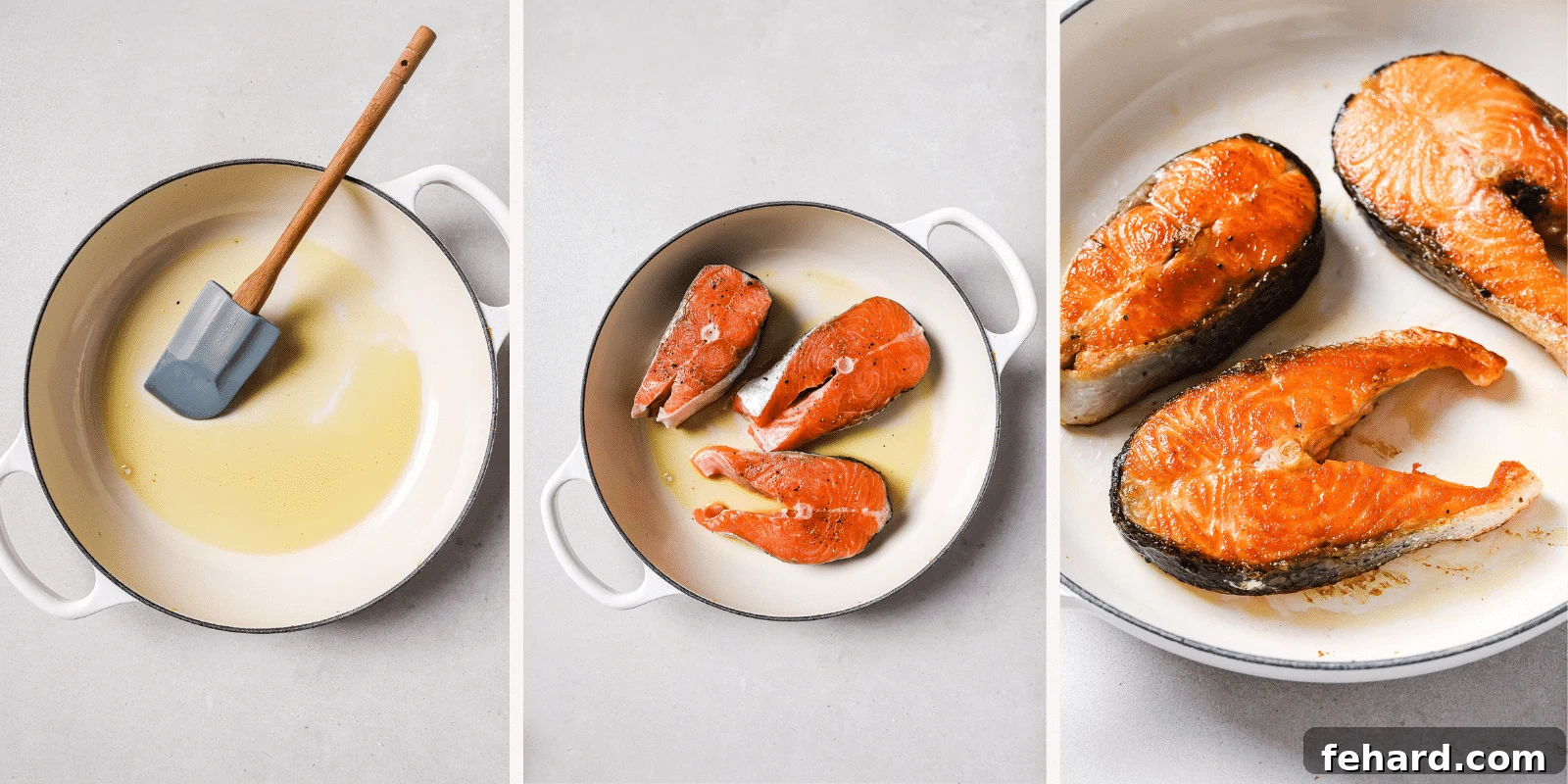
- Heat the olive oil in a cast iron skillet (or any heavy-bottomed pan) over medium-high heat. A cast iron skillet is excellent for even heat distribution and achieving a superior sear. Ensure the oil is hot and shimmering, but not smoking, before adding the fish.
- Carefully place the seasoned salmon steaks, skin-side down if applicable, into the hot skillet. Sear undisturbed for 3-5 minutes on the first side. This allows a beautiful, golden-brown crust to form. The cooking time may vary slightly depending on the thickness of your salmon steaks; thicker steaks will require a minute or two longer per side.
- After the first side is nicely seared, carefully flip the salmon steaks. Immediately add the prepared compound butter (butter sauce) to the hot pan. As the butter melts, use a spoon to continuously baste the melting garlic herb butter over the fish. This technique infuses the salmon with incredible flavor and keeps it wonderfully moist as it finishes cooking.
Serve and Enjoy:
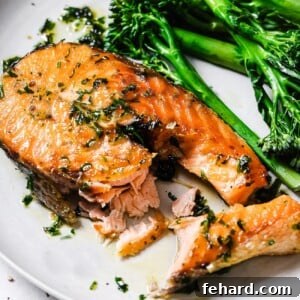
- Your salmon is perfectly cooked when its center turns opaque, and the fish easily flakes apart with a fork. For precise doneness, an instant-read meat thermometer inserted into the thickest part of the fish should read 145°F (63°C).
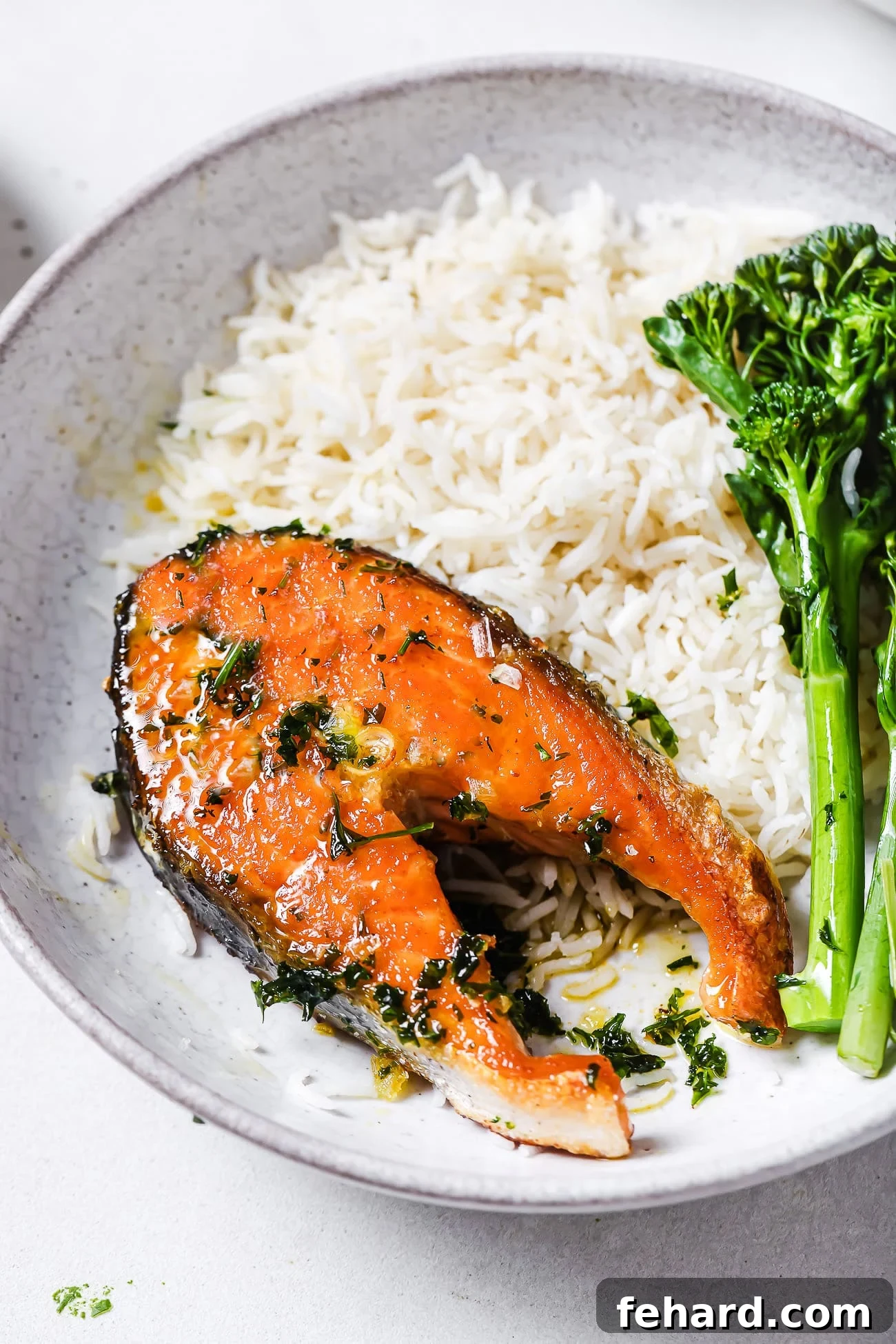
- Transfer the garlic butter salmon steaks to serving plates. Garnish with fresh lemon wedges, allowing everyone to squeeze fresh lemon juice over their fish for a bright, zesty finish. Serve immediately with your favorite complementary side dishes.
Frequently Asked Questions About Salmon Steaks
Typically, salmon steaks are cut across the fish, meaning they include a portion of the central bone, as well as some smaller pin bones. This is a defining characteristic that differentiates them from fillets. While you might occasionally find pre-trimmed or specialty cuts that minimize bones, traditional salmon steaks will usually have them. The bone helps retain moisture and flavor during cooking.
The most accurate way to check for doneness is with a meat thermometer inserted into the thickest part of the fish. Salmon is cooked when it reaches an internal temperature of 145°F (63°C). Visually, the salmon’s flesh will turn from translucent to opaque throughout, and it should easily flake apart with a fork when gently pressed. Be careful not to overcook, as salmon can dry out quickly.
Absolutely! This garlic butter recipe works wonderfully with salmon fillets as well. Fillets are boneless cuts taken lengthwise from the fish. If using fillets, be mindful that they are generally thinner than steaks and will cook faster. Adjust your cooking time accordingly, typically 2-4 minutes per side, to prevent them from drying out. The key is to watch them carefully and use the visual and temperature cues for doneness.
The primary difference lies in how they are cut and their bone structure:
- Salmon Steaks: These are cross-section cuts of the fish, similar to a beef steak. They are typically thicker, rounder, and include a central bone and sometimes a bit of skin. The bone helps them stay moist, making them great for grilling or pan-searing.
- Salmon Fillets: These are boneless cuts taken lengthwise from the fish, usually thinner and often with the skin on one side. They cook faster and are generally easier to eat without worrying about bones.
Yes, salmon is incredibly healthy! It’s an excellent source of high-quality protein, essential for muscle repair and growth. It’s also rich in omega-3 fatty acids (EPA and DHA), which are known for their heart-healthy benefits, reducing inflammation, and supporting brain function. Additionally, salmon provides significant amounts of Vitamin D, Vitamin B12, selenium, and potassium, all vital nutrients for overall well-being.
While a cast iron skillet is ideal for its heat retention and even searing, you can still achieve excellent results with a good quality heavy-bottomed stainless steel or non-stick pan. The key is to ensure your chosen pan is heated thoroughly before adding the salmon to get that perfect crispy exterior.
Chef’s Tips for Perfect Salmon Steaks
- **Room Temperature Butter:** Bringing the butter to room temperature before mixing will make it much easier to combine with the garlic and herbs, ensuring a smooth, uniform compound butter.
- **Evenly Sized Steaks:** Always try to buy salmon steaks that are similar in size and thickness. This ensures they cook evenly and are all perfectly done at the same time.
- **Hot Pan for Sear:** To achieve the best sear and a beautiful golden-brown crust, make sure your olive oil is nice and hot (but not smoking) before carefully placing the salmon steaks in the pan. A sizzling sound upon contact is a good indicator.
- **Pat Dry for Crispy Skin:** Don’t skip the step of thoroughly patting your salmon steaks dry with paper towels. Any residual moisture will steam the fish instead of searing it, preventing that desirable crispy skin.
- **Don’t Overcrowd the Pan:** Cook salmon steaks in batches if necessary to avoid overcrowding the skillet. Too many pieces at once will lower the pan’s temperature and lead to steaming rather than searing.
- **Rest the Fish:** Once cooked, allow the salmon steaks to rest for a minute or two on a plate before serving. This allows the juices to redistribute, resulting in a more tender and flavorful fish.
How To Store Leftovers
Properly storing and reheating your garlic butter salmon steaks ensures you can enjoy them for days to come. Salmon leftovers make for fantastic quick meals!
To Store: Allow any leftover salmon steaks to cool completely to room temperature. Then, transfer them to an airtight container and store them in the refrigerator for up to 3 days. For convenient meal prep, I often portion out the cooled leftovers into individual meal prep containers, making lunches throughout the week incredibly easy and delicious.
To Freeze: These garlic butter salmon steaks freeze exceptionally well! Once cooled, transfer the cooked salmon to a freezer-safe container or a heavy-duty freezer bag. Ensure as much air as possible is removed from the bag to prevent freezer burn. Freeze for up to 4 months. When ready to enjoy, thaw the frozen salmon overnight in the refrigerator before reheating.
To Reheat: For the best possible texture and to avoid drying out the fish, I prefer to reheat leftover salmon in a skillet over medium-low heat with a tiny bit of olive oil or butter. Heat gently until warmed through, usually just a few minutes per side. You can also reheat it in an oven preheated to 275°F (135°C) for about 10-15 minutes, or until just heated through.
What To Serve With This Garlic Butter Salmon Steak Recipe
Garlic butter salmon steaks are incredibly versatile and pair beautifully with a wide array of side dishes. Here are some of my favorite accompaniments to create a complete and satisfying meal:
Fluffy Grains: A classic and comforting choice, fluffy grains provide a wonderful base to soak up all that delicious garlic butter sauce. My go-to sides are perfectly fluffy rice or nutritious quinoa. For a fantastic low-carb alternative that’s equally satisfying, try this flavorful golden cauliflower rice.
Plenty of Veggies: Round out your meal with a generous serving of nutritious vegetables. Their freshness and texture provide a lovely contrast to the rich salmon. Some excellent choices include tender roasted cauliflower, crisp air fryer asparagus, vibrant roasted green beans, creamy mashed potatoes, or a medley of roasted vegetables. In the warmer months, sautéed zucchini with garlic butter is a phenomenal pairing.
A Fresh Side Salad: When I crave something lighter or want to add a refreshing crunch, a simple side salad is the perfect companion. Try my peppery arugula salad with juicy blackberries, a classic Caprese salad with fresh mozzarella and basil, or an easy creamy coleslaw recipe to serve alongside these pan-seared salmon steaks.
As a true salmon enthusiast, I’m delighted to share even more recipes for you to explore. My personal favorites include the incredibly convenient Air Fryer Salmon and the perfectly seared Pan Seared Salmon. And for those times when you’re entertaining, this elegant How to Bake Salmon recipe is always a hit.
More Delicious Salmon Recipes
Panko Crusted Salmon
25 mins
How to Cook Salmon in the Oven
20 mins
Dijon Mustard Salmon Recipe
15 mins
Broiled Salmon
14 mins
Print Recipe
Garlic Butter Salmon Steak
Rated 5 out of 5 stars by 4 votes.
Olivia Ribas
3 people
5 minutes
10 minutes
15 minutes
Ingredients
For the compound butter
- 3 tablespoons salted butter softened
- 2 garlic cloves minced
- 2 tablespoons fresh herbs chives and parsley, chopped
- Salt and freshly ground black pepper to taste
For the salmon
- 3 1-inch thick salmon steaks
- 1 tablespoon olive oil
- Salt and fresh ground black pepper
- Lemon wedges for serving
Instructions
-
In a small bowl, combine softened butter, minced garlic, fresh herbs, salt, and black pepper. Mix well and set aside.
-
Thoroughly pat the salmon steaks dry with paper towels to ensure a crisp sear.
-
Season both sides of each salmon steak generously with salt and black pepper.
-
Heat olive oil in a cast iron skillet over medium-high heat until shimmering.
-
Place the salmon steaks in the hot skillet and sear undisturbed for 3-5 minutes on each side. Adjust cooking time based on the thickness of your steaks for optimal doneness.
-
After flipping the salmon to the second side, add the prepared compound butter mixture to the pan. Spoon the melted butter over the fish continuously as it cooks, infusing it with flavor.
-
The salmon is ready when the center turns opaque and easily flakes apart with a fork. Serve immediately with fresh lemon wedges for squeezing over the fish.
Notes
- Bringing the butter to room temperature will make it much easier to mix in the garlic and herbs evenly.
- Always pat the salmon steaks very dry with a paper towel to absorb any excess moisture, which is crucial for achieving a crispy skin.
- For consistent cooking results, aim to buy salmon steaks that are similar in size and thickness.
- To get the best sear and a golden crust, make sure the oil in your skillet is hot (but not smoking) before adding the salmon.
- Avoid overcrowding the pan; cook in batches if necessary to maintain consistent heat and ensure a proper sear.
- For a more intense flavor, prepare the compound butter ahead of time and allow it to chill in the refrigerator for at least 30 minutes.
Nutrition
Calories: 361kcal
Carbohydrates: 1g
Protein: 26g
Fat: 22g
Cholesterol: 97mg
Nutrition information is automatically calculated, so should only be used as an approximation.